


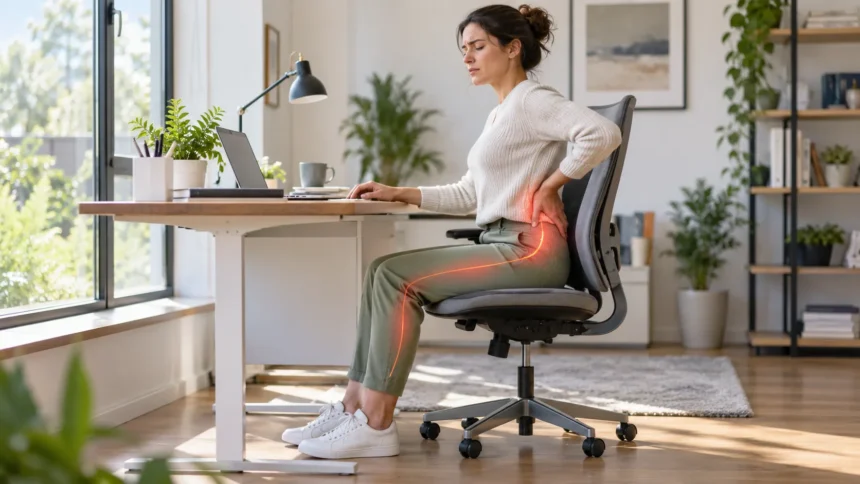
Sciatica can make something as simple as sitting feel surprisingly difficult. Pain may start in the lower back or buttock and travel down the leg, sometimes with tingling, burning, numbness, or a heavy sensation. Because sitting can increase pressure around the lower spine and hips, the way you position yourself may noticeably affect how comfortable you feel.
There is no single perfect sitting posture for everyone with sciatica. The most helpful setup usually combines good support, relaxed positioning, frequent movement, and avoiding positions that clearly increase leg symptoms. Understanding how to sit with sciatica can make work, driving, meals, and other daily activities easier while you recover.
Why Sitting Can Make Sciatica Worse
Sciatica usually refers to symptoms caused by irritation of the sciatic nerve or the nerve roots that contribute to it. A herniated disc, spinal narrowing, inflammation, or other lower-back problems can sometimes trigger these symptoms. Sitting may aggravate the area because it changes spinal loading and keeps the hips flexed for extended periods.
Slouching can further increase stress around the lower back in some people. When the pelvis rolls backward and the spine stays rounded, certain irritated tissues may become more sensitive. However, constantly forcing yourself into a rigid upright position can also create muscle tension, so comfort and movement matter more than maintaining a perfectly fixed posture.
The amount of time spent sitting is often just as important as the exact position. Even a supportive chair may become uncomfortable if you remain still for hours. Regularly changing position, standing, and walking for short periods can reduce stiffness and prevent one area from carrying the same load continuously.
Choose a Chair That Supports Your Lower Back
A supportive chair can make sitting with sciatica more manageable. Look for a seat that allows your feet to rest comfortably on the floor and provides some support around the lower back. The chair should feel stable enough that you do not constantly slide forward or sink deeply into the seat.
Lumbar support can help maintain a comfortable curve in the lower spine. Some office chairs have adjustable support, but a small rolled towel or cushion can also work. Place it around the natural curve of your lower back rather than pushing it so firmly that your spine feels forced forward.
Avoid very soft couches for long periods if they make you sink down and round your lower back. Deep seating can make it harder to stand and may increase pressure around the buttocks and hips. If a softer chair feels best, use pillows strategically so your pelvis and lower back remain comfortably supported.
Adjust Your Sitting Position Step by Step
Start by sitting back in the chair instead of balancing near the front edge. Let the backrest support your trunk, then place both feet comfortably on the floor. Your hips should feel supported without excessive pressure behind the thighs or along the painful side of the buttock.
Keep your knees around the same height as your hips or slightly lower if that feels better. If the chair is too high, use a footrest so your legs are not hanging unsupported. If it is too low, raising the seat may reduce excessive hip flexion and make it easier to maintain a comfortable pelvic position.
Allow your shoulders and jaw to relax rather than bracing your entire body against the pain. You do not need to hold your abdominal muscles tightly all day. A supported, easy posture that lets you breathe normally is usually more sustainable than trying to sit rigidly upright for long periods.
Avoid Crossing Your Legs for Long Periods
Crossing one leg over the other is not automatically harmful, but it can rotate the pelvis and place more pressure on one hip. If your sciatica is sensitive to asymmetrical positions, staying crossed for a long time may increase discomfort. Pay attention to whether symptoms spread farther down the leg when you sit this way.
A better option is usually to keep both feet supported and allow your knees to rest comfortably apart. This creates a more balanced base and reduces the need for one side of the pelvis to carry extra pressure. Small changes like this can matter if sitting itself is already an aggravating activity.
If you naturally change positions frequently, occasional leg crossing may not cause any problem. The main issue is staying in one twisted posture for too long. Use your symptoms as feedback and return to a more neutral position whenever you notice increased burning, tingling, or radiating pain.
Use a Cushion or Lumbar Roll When Needed
A small cushion can sometimes make sitting more comfortable by changing pressure around the lower back and pelvis. Lumbar rolls are especially useful for people who tend to collapse into a rounded sitting position. The support should feel gentle and should not force the spine into an exaggerated arch.
Seat cushions may also help when pressure around the buttock increases symptoms. A firm, supportive cushion is usually more useful than one that lets you sink deeply. If you experiment with wedge cushions or coccyx cutout cushions, judge them by whether they reduce symptoms rather than assuming one design works for everyone.
Avoid stacking several thick cushions beneath you without checking your overall position. Raising your body too much may leave your feet unsupported or create pressure behind the thighs. Any cushion should improve the entire sitting setup, not simply move discomfort from one area to another.
Set Up Your Desk to Reduce Sciatica Irritation
Your workstation can influence how much strain builds up during the day. Position your monitor close to eye level so you do not repeatedly bend your neck and upper body forward. Keep the keyboard and mouse close enough that your elbows remain relaxed rather than reaching across the desk.
Support your forearms when possible and avoid leaning heavily to one side. Frequently used items should stay within easy reach so you are not repeatedly twisting from the lower back. Small ergonomic adjustments can reduce unnecessary movement patterns that become irritating when the sciatic nerve is already sensitive.
A sit-stand desk can be useful if it helps you change positions more often, but standing all day is not necessarily better. Alternate between sitting, standing, and short walking breaks instead. The goal is to vary loading throughout the day rather than searching for one position that you must maintain continuously.
Take Movement Breaks Instead of Sitting Through Pain
Frequent movement breaks are one of the most practical strategies for people whose sciatica worsens with sitting. Consider standing or walking briefly every 20 to 40 minutes, depending on your tolerance. Even a minute or two of movement can interrupt prolonged pressure and help you assess whether symptoms are settling or increasing.
Do not wait until pain becomes severe before moving. If you know that symptoms usually start after thirty minutes, change position slightly earlier. This proactive approach can be more effective than repeatedly pushing through discomfort and then needing a much longer period to calm the symptoms afterward.
Gentle mobility outside your sitting time may also help you feel less stiff. Short walks and easy morning stretches can support general movement without requiring an intense routine. Choose motions that feel comfortable and stop if a stretch clearly increases pain traveling farther down the leg.
How to Sit with Sciatica While Driving
Driving can be difficult because it combines prolonged sitting with limited opportunities to move. Adjust the seat so you can reach the pedals without stretching your leg fully or leaning forward. Sit close enough that your knees remain slightly bent and your lower back stays supported by the seat.
Keep the backrest relatively upright but comfortable. Reclining too far can encourage you to reach toward the steering wheel, while sitting completely vertical may feel too rigid. Adjust the steering wheel so your shoulders remain relaxed and your elbows maintain a slight bend instead of locking straight.
On longer trips, take breaks when safely possible and walk for a few minutes. Keeping a small lumbar roll in the car may also help if the seat lacks support. If driving repeatedly causes severe pain, numbness, or weakness in the leg, consider discussing those symptoms with a healthcare professional.
How to Sit on a Couch Without Making Symptoms Worse
Couches often create problems because they are lower and softer than standard chairs. When you sink into the cushions, your hips may drop lower than your knees and your lower back may round. If this position increases sciatica symptoms, place a firmer cushion behind your lower back and consider sitting closer to the edge.
You can also place a cushion beneath you to raise your hips slightly. Keep both feet supported instead of stretching your legs far forward if that increases pulling along the back of the leg. Experiment with small changes and note whether symptoms remain closer to the lower back or begin traveling farther down the leg.
Avoid staying curled sideways on the couch for long periods if that position clearly aggravates symptoms. Comfort is important, but prolonged twisting may become irritating. Change position regularly and stand up periodically, even when you are watching television or relaxing for an extended period.
Common Sitting Mistakes with Sciatica
One common mistake is trying to maintain a perfect posture all day. Constantly bracing your back, pulling your shoulders back, and tightening your core can become tiring and increase muscle tension. A good sitting strategy allows small movements and position changes while keeping the body reasonably supported.
Another mistake is placing a wallet, phone, or bulky object in a back pocket while sitting. This can create uneven pressure around one buttock and tilt the pelvis slightly. Removing bulky items before sitting is a simple adjustment that may help if direct pressure around the hip or buttock increases your symptoms.
Ignoring worsening neurological symptoms is also a concern. If sitting causes numbness to spread, weakness to increase, or pain to travel progressively farther down the leg, repeatedly pushing through may not be helpful. Change position, reduce the aggravating activity, and seek assessment when neurological symptoms persist or worsen.
Should You Sit, Stand, or Lie Down with Sciatica?
No single position is best for everyone with sciatica. Some people feel better standing, while others find temporary relief lying down or walking. The most useful strategy is often rotating between comfortable positions rather than trying to spend the entire day in whichever position initially feels least painful.
Too much bed rest can increase stiffness and reduce normal activity tolerance. Unless a clinician has advised otherwise, gentle movement is generally preferable to remaining completely inactive. Short periods of rest can be useful during a flare, but they work best when combined with gradual return to comfortable movement.
Your symptoms can help guide your choices. A position that causes pain to move farther down the leg may be less helpful than one that keeps symptoms localized around the lower back or buttock. If you cannot find any tolerable position or pain is becoming progressively worse, professional evaluation is appropriate.
When to See a Doctor for Sciatica
Consider seeing a healthcare professional if sciatica lasts for several weeks, keeps returning, or significantly interferes with work, sleep, walking, or daily activities. A clinician or physical therapist can examine strength, sensation, reflexes, spinal movement, and hip function. This can help identify what positions or movements may be contributing to your symptoms.
Seek earlier evaluation if numbness becomes persistent or muscle weakness develops. Difficulty lifting the front of the foot, climbing stairs, or controlling the leg may indicate greater nerve involvement. These symptoms deserve more attention than ordinary soreness because they can affect normal nerve and muscle function.
Emergency assessment is needed for new loss of bladder or bowel control, numbness around the groin or inner thighs, or rapidly worsening weakness in both legs. These signs can indicate severe nerve compression. They are uncommon, but they should not be managed by simply adjusting your chair or waiting for symptoms to pass.
Conclusion
Learning how to sit with sciatica involves more than finding one perfect posture. A supportive chair, comfortable lumbar support, well-positioned feet, relaxed shoulders, and balanced hip positioning can all reduce unnecessary strain. The most important factor is often avoiding long periods in the same position when sitting clearly increases symptoms.
Regular movement breaks can make a major difference during work, driving, and relaxation. Alternate sitting with short walks, standing, and gentle mobility instead of waiting until pain becomes intense. Use cushions and ergonomic adjustments only when they make symptoms more comfortable rather than following rigid posture rules that do not suit your body.
Pay attention to symptoms such as increasing numbness, weakness, or pain spreading farther down the leg. Persistent sciatica deserves professional assessment, particularly when it limits normal activities or continues despite basic adjustments. Severe neurological warning signs, including bladder or bowel changes, require urgent medical attention rather than home-based sitting modifications.
FAQs
What is the best sitting position for sciatica?
Sit with your lower back supported, both feet resting comfortably, and your hips around the same height as or slightly above your knees. Change position frequently rather than remaining perfectly still.
How long should I sit if I have sciatica?
There is no exact limit for everyone. If symptoms increase after prolonged sitting, try standing or walking every 20 to 40 minutes and adjust the timing based on your tolerance.
Is a hard or soft chair better for sciatica?
A supportive chair is usually more helpful than an extremely soft surface that allows you to sink deeply. However, comfort varies, so choose a seat that reduces rather than increases leg symptoms.
Should I use a cushion when sitting with sciatica?
A lumbar roll or firm seat cushion may help improve comfort and reduce pressure. The cushion should support your position without raising you so high that your feet become unsupported.
Can sitting too long make sciatica worse?
Yes. Prolonged sitting can increase stiffness and aggravate sensitive spinal or nerve structures in some people. Regular movement breaks and position changes can help reduce the stress of extended sitting.