


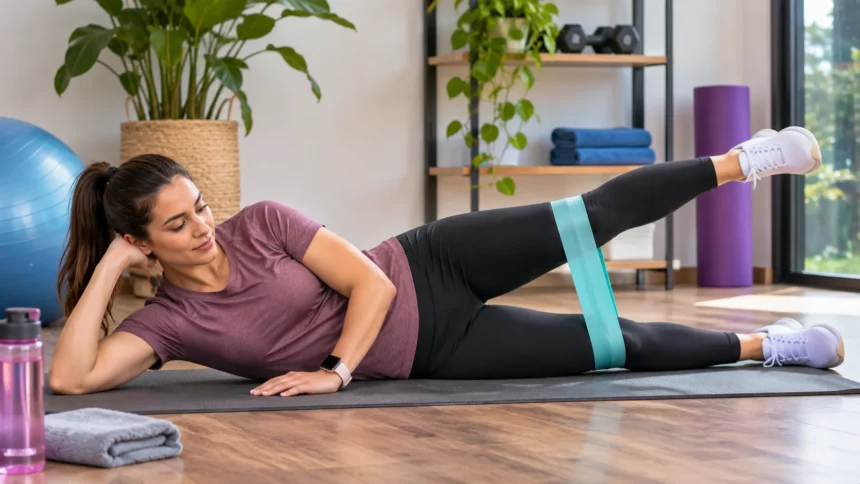
What Is Gluteal Tendinopathy?
Gluteal tendinopathy is a condition that affects the tendons connecting the gluteal muscles to the outer part of the hip. These tendons help stabilize the pelvis and support movements such as walking, climbing stairs, and standing on one leg. When they become irritated or sensitive to loading, discomfort may develop around the outer hip, especially during everyday activities.
Common symptoms include tenderness on the outside of the hip, discomfort when lying on the affected side, and pain during prolonged walking. Some people also experience symptoms when climbing stairs or getting up from a chair. The discomfort may extend along the outside of the thigh. However, similar symptoms can occur with other conditions, making proper assessment important.
Gluteal tendinopathy exercises can help improve hip strength, movement control, and the ability of affected tendons to tolerate everyday activities. The most effective approach usually combines progressive strengthening with changes to activities that aggravate symptoms. Recovery takes time, and pushing through significant pain can make symptoms worse. Starting with manageable movements provides a safer foundation for gradual improvement.
Why Exercises Help Gluteal Tendinopathy
Exercise plays an important role in managing gluteal tendinopathy because tendons respond to appropriate physical loading. Carefully selected strengthening movements help the surrounding muscles support the hip during daily activities. Over time, progressive resistance training can improve strength and functional capacity. However, the amount of exercise must match individual symptoms, current ability, and recovery progress.
The gluteus medius and gluteus minimus muscles are especially important for pelvic stability. They help control the position of the pelvis when walking, climbing stairs, or balancing on one leg. Weakness or reduced load tolerance in this area can make certain movements more uncomfortable. Strengthening these muscles gradually may improve control and reduce stress during routine activities.
Exercise also supports confidence when returning to movements that have become uncomfortable. A structured rehabilitation program begins with manageable tasks and gradually introduces more demanding activities as symptoms improve. This approach helps people understand which movements their hips can tolerate. Consistency, realistic expectations, and appropriate rest are more useful than attempting difficult exercises before the body is ready.
How to Prepare for Gluteal Tendinopathy Exercises
Before starting a rehabilitation routine, consider getting an assessment from a qualified physiotherapist or healthcare professional. Outer hip pain does not always indicate gluteal tendinopathy, and other conditions may require different treatment. An assessment can identify contributing factors and suitable starting exercises. This is particularly helpful when symptoms persist, affect sleep, or interfere with normal walking.
Choose a comfortable exercise area with enough space to move safely. A stable chair, exercise mat, and light resistance band may be useful, although many beginner movements require no special equipment. Wear comfortable clothing that allows natural hip movement. Begin with gentle movements rather than aggressive stretching or resistance exercises, especially when the affected area is sensitive.
Pay attention to how your hip responds during and after each activity. Mild, manageable discomfort may occur during rehabilitation, but sharp pain, worsening symptoms, or increased discomfort the next morning suggest that the load may be excessive. Reduce the difficulty when necessary. A physiotherapist can help establish appropriate pain limits and adjust the program according to your response.
Seated Isometric Hip Abduction: Form and Benefits
Seated isometric hip abduction is a gentle strengthening exercise that activates the muscles on the outside of the hips. Sit upright in a stable chair with both feet resting flat on the floor. Place a resistance band or secure exercise strap around your thighs just above the knees. Keep your knees comfortably apart and maintain a relaxed upper-body position.
Slowly press your knees outward against the resistance without allowing your hips to move significantly. Hold the effort for approximately five to ten seconds while breathing normally. Release the pressure gradually and rest before repeating. Beginners may try four to six comfortable repetitions, adjusting the effort and duration according to symptoms and professional guidance.
This exercise activates the hip abductor muscles without requiring large movements through the hip joint. It can be useful during early rehabilitation when walking or standing exercises feel uncomfortable. The seated position also provides stability and allows resistance to be adjusted. Avoid pushing with maximum force, and stop if the movement causes worsening or persistent pain.
Standing Wall Press for Hip Stability
The standing wall press is an isometric exercise used to activate the muscles responsible for moving and stabilizing the hip. Stand sideways beside a wall with a cushion positioned at the outside of the knee closest to it. Keep the opposite foot firmly planted and use a stable support for balance. Maintain an upright posture without twisting your pelvis.
Gently press the knee nearest the wall outward into the cushion while keeping your trunk steady. Hold the pressure briefly without leaning heavily against the wall or holding your breath. Release slowly and repeat only while the movement remains comfortable. If standing on the affected hip increases symptoms, adjust the position or choose a supported alternative.
Wall presses may help improve hip muscle activation and control during weight-bearing activities. They can be useful preparation for walking, balancing, and more demanding strengthening exercises. However, standing variations can place substantial demand on the supporting hip. Begin with light effort and avoid forcing the movement when the outer hip is particularly sensitive.
Glute Bridges: A Beginner-Friendly Strengthening Exercise
Glute bridges help strengthen the muscles around the hips and support controlled movement through the pelvis. Lie on your back with your knees bent and feet placed comfortably on the floor. Keep your arms relaxed beside your body and your spine in a natural position. Position your feet approximately hip-width apart without forcing the knees together.
Gently tighten your gluteal muscles and slowly raise your hips a comfortable distance from the floor. Keep your pelvis level and avoid excessively arching your lower back. Pause briefly at the top before lowering yourself with control. Start with a small number of comfortable repetitions and stop if the exercise increases outer hip pain.
Bridges can improve hip extension strength and help prepare the body for functional movements such as standing and climbing stairs. They also allow resistance to be increased gradually as strength improves. However, more difficult variations are not necessary during early recovery. Focus on smooth movement, comfortable positioning, and consistent technique rather than lifting the hips as high as possible.
Sit-to-Stand Exercises for Everyday Movement
Sit-to-stand exercises strengthen the muscles used when getting out of chairs and performing everyday activities. Begin by sitting near the front of a stable chair with your feet flat on the floor. Keep your knees and feet comfortably aligned, avoiding unnecessary inward movement of the knees. Use the armrests or another stable support if needed.
Lean your upper body forward slightly and push through your feet to stand up smoothly. Keep your weight reasonably balanced and avoid dropping your knees inward. Once standing, pause briefly before slowly lowering yourself back onto the chair. Choose a chair height that allows comfortable movement, and use your hands when additional assistance is necessary.
This exercise develops functional strength in the hips and legs while improving movement control. It can also help people regain confidence in activities that require repeated standing. Higher chairs generally make the movement easier, while lower seats increase the demand. Adjust the height and number of repetitions according to symptoms rather than pushing through uncomfortable movements.
Step-Ups to Improve Hip and Leg Strength
Step-ups are useful for strengthening the hips and legs while practicing movements similar to climbing stairs. Begin with a low, stable step that has a non-slip surface. Stand close to the step and hold a secure handrail or support if needed. Keep your body upright and your movements slow enough to maintain control.
Place one foot on the step and gently push through that leg to lift your body upward. Avoid allowing the working knee to collapse inward or the pelvis to drop sideways. Step down slowly rather than dropping your weight onto the lower foot. Begin with a low height and only a few repetitions that feel manageable.
Step-ups can improve functional strength, balance, and control during activities that place weight through one leg. They may be introduced when simpler exercises are comfortable and everyday walking is becoming easier. However, stair-related movements can aggravate gluteal tendinopathy when introduced too early. Reduce the step height or return to easier exercises if symptoms increase.
Resistance Band Side-Steps for Glute Strength
Resistance band side-stepping is a strengthening exercise that targets the muscles responsible for moving the legs sideways. It is generally more suitable after basic hip exercises become comfortable. Place a light resistance band around your thighs above the knees and stand with your feet apart. Keep your knees slightly bent and your body upright.
Take a small step sideways while maintaining gentle tension in the band. Follow with the other foot without allowing your knees to collapse inward or your feet to come completely together. Continue for a few controlled steps before changing direction. Avoid deep squats, exaggerated movements, or resistance levels that create discomfort around the outer hip.
Side-stepping can strengthen the hip abductors and improve pelvic control during movement. It may also support activities requiring lateral movement, such as changing direction while walking. However, strong resistance can overload sensitive tendons if introduced too quickly. Start with light resistance and short distances, increasing the challenge only when your symptoms remain stable.
Walking, Sleeping, and Everyday Load Management
Walking is an important daily activity, but long distances or steep hills may temporarily aggravate gluteal tendinopathy. Shorter walks on level ground can be easier to manage during recovery. Choose a distance that does not cause a noticeable increase in symptoms afterward. Gradually extend walking time as your comfort and activity tolerance improve.
Sleeping position can also influence discomfort because direct pressure and certain hip positions compress sensitive tendons. Avoid lying directly on the painful hip when possible. If sleeping on the opposite side, place a pillow between your knees to support a comfortable position. Sleeping on your back may provide another option when side sleeping remains uncomfortable.
Everyday postures can affect tendon loading even when you are not exercising. Sitting with crossed legs, standing with your weight resting heavily on one hip, and repeatedly leaning sideways may increase compression around the affected tendons. Try keeping your weight evenly distributed and changing positions regularly. Small adjustments can support recovery without requiring major changes to your routine.
How to Build a Safe Exercise Routine
A useful rehabilitation routine combines manageable strengthening exercises with normal daily movement. Early sessions may include seated hip abduction, supported wall presses, and comfortable bridges. More demanding exercises, such as step-ups and resisted side-stepping, can be introduced as tolerance improves. The correct starting point depends on pain levels, physical ability, and the results of a professional assessment.
Strengthening exercises are often performed on alternating days to allow recovery between more demanding sessions. Some people may benefit from gentle isometric exercises more frequently when these movements are comfortable and appropriately prescribed. Exercise intensity should increase gradually rather than changing dramatically from one session to another. Your rehabilitation plan should also account for walking, work activities, and other sources of hip loading.
Progress is best measured through comfortable movement and improved function rather than exercise difficulty alone. Notice whether walking, standing, climbing stairs, and sleeping become easier over time. Temporary changes in symptoms can occur, but persistent worsening suggests that the program needs adjustment. Recovery may take several weeks or months, depending on symptom duration, severity, and individual circumstances.
Common Exercise Mistakes and When to Seek Help
One common mistake is stretching the outer hip aggressively to relieve discomfort. Positions involving strong hip adduction, such as pulling the leg across the body, can increase compression around sensitive gluteal tendons. Deep stretching is therefore not always helpful during rehabilitation. Strengthening within comfortable positions and managing irritating activities are generally more appropriate starting strategies.
Another mistake is increasing exercise difficulty before the body has adapted to previous movements. Adding heavy resistance, performing demanding single-leg exercises, or walking much farther than usual can trigger symptom flare-ups. Rehabilitation should involve gradual progression and sufficient recovery between challenging activities. Consistent moderate effort is generally more useful than alternating complete inactivity with overly demanding sessions.
Seek medical assessment if pain persists, progressively worsens, or significantly affects walking and sleep. Sudden severe hip pain, inability to bear weight, fever with a painful hip, or symptoms following a significant fall require urgent evaluation. These signs may indicate a problem other than tendinopathy. A qualified clinician can identify the cause and recommend appropriate treatment.
Conclusion
Gluteal tendinopathy exercises can support recovery by improving hip strength, pelvic stability, and tolerance for everyday movement. Gentle isometric exercises often provide a manageable starting point, while bridges, sit-to-stands, and step-ups introduce additional challenges as symptoms improve. The most suitable routine depends on individual needs. Appropriate loading and gradual progression are essential for building strength without unnecessarily irritating sensitive tendons.
Recovery also involves managing activities and positions that increase discomfort around the outer hip. Adjusting sleeping positions, avoiding prolonged hip compression, and choosing comfortable walking distances can make daily life easier. Exercise should complement these changes rather than replace them. Monitoring symptoms helps identify when to progress, maintain, or reduce the intensity of a rehabilitation program.
The best results usually come from a consistent routine that matches the person’s current abilities and recovery goals. Avoid rushing into difficult movements or expecting immediate improvement after only a few sessions. A physiotherapist can provide personalized guidance, especially when symptoms are persistent or complex. With appropriate assessment, progressive strengthening, and patience, many people can improve hip function and return to normal activities.
Frequently Asked Questions (FAQs)
What are the best exercises for gluteal tendinopathy?
Seated isometric hip abduction, supported wall presses, glute bridges, and sit-to-stands are common options. The best exercises depend on symptom severity, current strength, and how comfortably the hip tolerates loading.
How often should you do gluteal tendinopathy exercises?
Strengthening exercises are often scheduled on alternating days, although frequency varies with the routine and symptoms. A physiotherapist can recommend suitable sessions, repetitions, and recovery periods based on individual tolerance.
Can walking make gluteal tendinopathy worse?
Yes, long walks, steep hills, or sudden increases in activity may aggravate symptoms. Shorter walks on level ground are often easier to tolerate, with distance increased gradually as comfort improves.
Should you stretch your glutes with gluteal tendinopathy?
Aggressive gluteal stretching may increase compression around sensitive tendons and worsen discomfort. Gentle movement and appropriate strengthening are often preferred. A physiotherapist can help determine which stretches, if any, are suitable.
How long does gluteal tendinopathy take to heal?
Recovery varies and may take several weeks to months, sometimes longer. Symptom duration, tendon sensitivity, activity levels, and rehabilitation consistency influence progress. Persistent or worsening pain should be assessed professionally.