


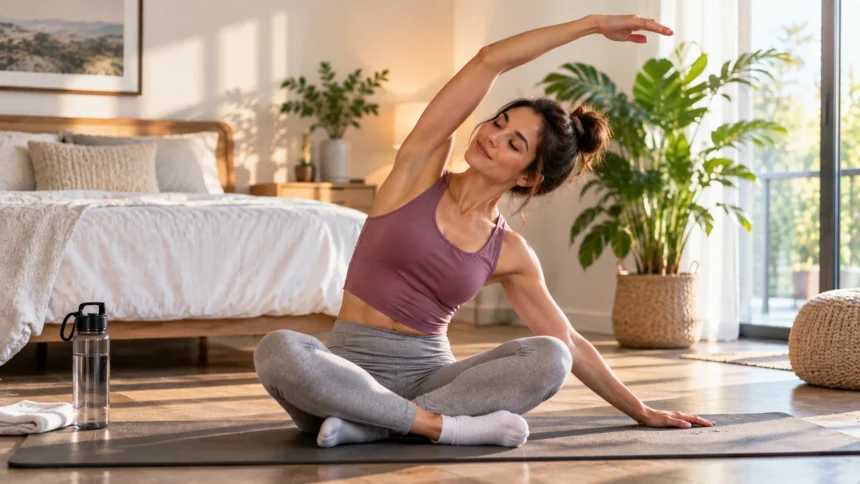
Morning stretches can help your body feel less stiff after several hours of sleep and make it easier to transition into daily movement. Gentle mobility for the neck, shoulders, spine, hips, and legs can improve comfort without requiring a long workout. A short stretching routine may be especially useful if you wake up feeling tight or spend much of the day sitting.
The best morning stretches are simple, controlled, and comfortable. You do not need to force deep positions immediately after getting out of bed. Starting with easy movements, breathing normally, and gradually increasing range can help prepare your muscles and joints for walking, work, exercise, and everyday activities.
Why Morning Stretching Can Feel Helpful
During sleep, your body remains relatively still for several hours. Muscles and joints may therefore feel stiff when you first wake up, especially if you sleep in one position for a long time. Gentle stretching introduces movement back into areas that have been inactive overnight and can make everyday motion feel smoother.
Morning movement can also increase awareness of how your body feels before the day becomes busy. You may notice one hip, shoulder, or side of the back feels tighter than the other. This awareness can help you adjust your activity, posture, or workout rather than ignoring discomfort until it becomes more noticeable later.
Stretching also gives you a chance to begin the day at a calmer pace. Slow breathing combined with gentle movement may help reduce unnecessary muscle tension. The goal is not to become dramatically more flexible in one session, but to help your body move comfortably after rest.
Best Neck and Shoulder Stretch in the Morning
Start by sitting or standing tall with your shoulders relaxed. Slowly tilt your head toward one shoulder until you feel a mild stretch along the opposite side of the neck. Avoid pulling aggressively with your hand or forcing the ear as close to the shoulder as possible.
Hold the position for around 15 to 20 seconds while breathing normally, then repeat on the other side. Keep the shoulder on the stretched side relaxed rather than lifting it toward your ear. This can help reduce the neck and upper-trapezius tension that sometimes develops from awkward sleeping positions.
You can follow the stretch with slow shoulder rolls in both directions. Move the shoulders up, back, down, and forward using a comfortable range. These movements are simple but can help the upper body feel less rigid before you begin working, driving, or exercising.
Cat-Cow Stretch for the Spine
Cat-cow is a gentle spinal mobility exercise performed on your hands and knees. Begin with your hands beneath your shoulders and knees beneath your hips. Slowly round your back upward, allowing the head to relax, then reverse the movement by gently lifting the chest and allowing the spine to extend.
Move between the two positions smoothly rather than trying to create the largest possible range. The exercise should feel like a controlled wave through the spine. Five to ten slow repetitions can be enough to reduce the sense of stiffness around the upper and lower back.
Coordinate the movement with your breathing if that feels comfortable. Exhale as you round the spine and inhale as you move into the opposite position. Stop or reduce the range if the exercise causes sharp pain, dizziness, or symptoms that travel into the arms or legs.
Child’s Pose for Back and Hip Mobility
Child’s pose can provide a gentle stretch through the back, hips, and shoulders. Start on your hands and knees, move your hips backward toward your heels, and reach your arms forward. Allow your chest to lower only as far as feels comfortable without forcing the knees or hips.
You can widen your knees slightly if that makes the position more comfortable. Keep your breathing slow and allow your upper back to relax rather than pressing aggressively toward the floor. Hold for about 20 to 30 seconds or move in and out of the position gently.
If kneeling is uncomfortable, use a supported version by placing your hands on a table or countertop and moving your hips backward. This creates a similar lengthening sensation through the spine and shoulders. Morning stretching should always be adapted to your current mobility rather than performed exactly the same way by everyone.
Morning Hamstring Stretch
Tight-feeling hamstrings are common after sleeping or sitting for long periods. A simple standing version involves placing one heel slightly in front of you with the knee mostly straight. Hinge forward gently from the hips until you feel a mild stretch along the back of the thigh.
Keep your spine relatively long rather than rounding excessively through the lower back. You do not need to reach your toes for the stretch to be effective. Hold for around 15 to 30 seconds, then repeat on the opposite side.
You can also perform the stretch lying on your back if balance is a concern. Raise one leg and support it behind the thigh while keeping the knee comfortably extended. Avoid pulling aggressively, especially first thing in the morning when the muscles may feel less prepared for deep stretching.
Hip Flexor Stretch After Waking Up
The hip flexors can feel tight after prolonged sitting or sleeping in a flexed position. A half-kneeling stretch is one option. Place one knee on a padded surface with the opposite foot in front, then gently shift your pelvis forward while keeping your torso upright.
You should feel a mild stretch at the front of the hip on the kneeling side. Avoid arching your lower back to move farther forward because this reduces the focus on the hip flexor. Lightly tightening the glute on the kneeling side can help maintain a more controlled pelvic position.
Hold for around 20 seconds before switching sides. If kneeling is uncomfortable, perform a standing version using a split stance and gently shifting forward. The goal is to create comfortable movement, not to force the hip into an extreme range before your body has fully warmed up.
Figure Four Stretch for the Glutes
The figure four stretch targets the glutes and deeper muscles around the hip. Lie on your back with both knees bent, then place one ankle across the opposite thigh. Reach behind the supporting leg and gently bring it toward your chest until you feel a stretch in the crossed-side buttock.
Keep the crossed foot relaxed but controlled and avoid pushing the knee downward aggressively. Your lower back and head should remain comfortable on the floor. Hold for around 20 to 30 seconds, then repeat on the opposite side.
This stretch can be helpful for people who wake with stiffness around the hips or buttocks. However, sharp pain, numbness, or tingling should not be treated as simple tightness. Reduce the stretch if you notice symptoms traveling down the leg.
Calf and Ankle Stretch for Easier Walking
The calves and ankles play an important role in your first steps of the day. A simple wall calf stretch can help restore movement. Place both hands against a wall, step one leg backward, keep the heel down, and lean forward gently until you feel tension through the calf.
Keep the back knee straight for one variation, then bend it slightly to emphasize a different part of the calf. Hold each version for around 15 to 20 seconds. Avoid bouncing into the stretch or forcing the heel to the floor if the ankle feels stiff.
You can also perform slow ankle circles or move the foot up and down several times. These movements can help prepare the ankle for walking and standing. If you have persistent or unexplained ankle pain, stretching alone may not be the right solution.
Morning Chest and Upper-Back Stretch
Sleeping on your side or spending long hours working at a desk can make the chest and upper back feel tight. A doorway chest stretch is a simple morning option. Place your forearm against a door frame and gently rotate your torso away until you feel a mild stretch across the chest.
Keep the shoulder relaxed rather than pushing it forward aggressively. Hold for about 15 to 30 seconds, then switch sides. A comfortable stretch through the chest can make it easier to move the shoulders and upper back without forcing posture into an artificial position.
Follow this with a gentle upper-back stretch by reaching both arms forward and allowing the shoulder blades to spread apart. This creates a mild stretch between the shoulder blades. Combining chest opening with upper-back movement can feel especially helpful after sleeping in a curled or side-lying position.
How Long Should a Morning Stretch Routine Take?
A useful morning stretching routine does not need to last 30 or 60 minutes. Five to ten minutes can be enough to move through the major areas that tend to feel stiff after sleep. Consistency is generally more useful than performing a very long routine only occasionally.
You can choose five or six stretches and hold each for 15 to 30 seconds. Add a few gentle dynamic movements such as shoulder rolls, ankle circles, or spinal rotations between longer holds. This keeps the routine simple enough to follow even on busy mornings.
If you have more time, you can gradually extend the routine or add light strengthening movements. The important point is that the session should leave you feeling more comfortable, not exhausted or sore. Morning stretching works best when it prepares you for the rest of the day.
Static vs Dynamic Morning Stretches
Static stretching involves holding one position for a period of time. Examples include a hamstring stretch, hip flexor stretch, or calf stretch. These can be useful in the morning when the intensity is gentle and you are not immediately preparing for explosive exercise.
Dynamic stretching involves moving through a range repeatedly rather than holding the end position. Shoulder circles, cat-cow, leg swings, and ankle movements are examples. Dynamic exercises are often useful when you want to wake up the body more actively and prepare for walking or training.
A combination of both approaches usually works well. Begin with dynamic movement to increase comfort and then add short static stretches to areas that still feel tight. Avoid long, aggressive static stretches immediately before high-intensity sprinting or jumping unless they are part of a broader warm-up.
Morning Stretches for People Who Sit All Day
If you work at a desk, prioritize areas that commonly become stiff during prolonged sitting. The hips, chest, upper back, hamstrings, and calves can all benefit from gentle morning movement. Starting the day with these areas already moving may make it easier to avoid feeling rigid by the afternoon.
However, morning stretching cannot cancel out eight or ten hours of uninterrupted sitting. Stand up, walk, and change position regularly throughout the workday. Short movement breaks every hour can be more useful than maintaining one supposedly perfect posture for the entire day.
Consider using the morning routine as the first of several short movement sessions rather than the only one. Two minutes of walking, a few shoulder rolls, or a quick hip stretch later in the day can maintain the benefits. Frequent movement is usually more realistic and effective than one intense session.
When Morning Stretching May Not Be Appropriate
Stretching should not be used to push through severe pain. If you wake with sharp pain, major swelling, weakness, or a recent injury, forcing the affected area may make symptoms worse. A gentle range may still be appropriate in some situations, but the cause should be considered first.
Radiating symptoms require particular caution. If you experience shooting leg pain with numbness, tingling, or weakness, aggressive hamstring or glute stretching may irritate a nerve rather than help it. Symptoms that travel farther during a stretch are a reason to stop and seek guidance.
Recent surgery or significant musculoskeletal injuries may also require specific movement restrictions. Follow the rehabilitation advice you were given rather than copying a general routine. A healthcare professional or physical therapist can help you identify safe stretches based on your condition and recovery stage.
Best Tips for a Safer Morning Stretch Routine
Move slowly during the first few minutes after waking. Your body may feel less mobile than it does later in the day, so there is no benefit in immediately pushing toward your deepest range. Start with small movements and let the range increase naturally as the muscles warm up.
Breathe normally throughout each stretch. Holding your breath often increases unnecessary tension and can make a position feel more intense than it needs to be. A mild stretching sensation is enough; pain is not required for flexibility or mobility benefits.
Choose stretches that match how your body feels rather than following a fixed routine every morning. Some days your hips may need more attention, while another day your neck or calves may feel tighter. Flexible routines are often more sustainable and better suited to normal day-to-day changes.
Conclusion
Morning stretches can help reduce the feeling of stiffness after sleep and prepare your body for walking, work, exercise, and daily activities. Simple movements for the neck, shoulders, spine, hips, hamstrings, and calves can create a comfortable transition from rest to activity.
The best routine is gentle, short, and consistent. Use controlled movement, breathe normally, and avoid forcing your body into deep positions immediately after waking. Combining static and dynamic stretches can provide a balanced approach without turning the routine into a demanding workout.
Stretching should make you feel better, not create sharp pain, numbness, or radiating symptoms. If you regularly wake with severe or unexplained discomfort, professional assessment may be more appropriate than repeatedly stretching the painful area. For most people, a few minutes of thoughtful movement can be a useful way to start the day.
FAQs
How long should I stretch in the morning?
Five to ten minutes is enough for many people. Choose several gentle movements and hold static stretches for around 15 to 30 seconds while keeping the overall routine comfortable.
Is it good to stretch immediately after waking up?
Yes, as long as the movements are gentle. Start with easy mobility and avoid immediately forcing deep stretches when your muscles and joints still feel stiff after sleep.
What are the best morning stretches?
Neck stretches, cat-cow, hip flexor stretches, hamstring stretches, figure four stretches, and calf stretches are useful options. The best routine depends on which areas feel stiff for you.
Should morning stretches hurt?
No. You should feel mild tension but not sharp pain, burning, numbness, or tingling. Reduce the range or stop if a stretch causes unusual or worsening symptoms.
Can morning stretching improve flexibility?
Yes, regular stretching can gradually improve comfortable range of motion. Consistency matters more than intensity, so gentle daily or frequent stretching is often better than occasional aggressive sessions.