


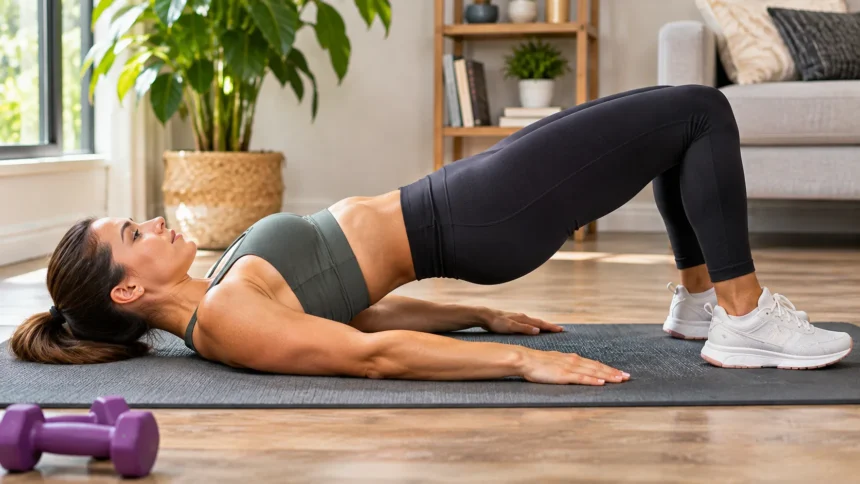
The glute bridge hold exercise is a simple yet effective movement for strengthening your glutes, improving hip stability, and supporting lower-body strength. Unlike exercises that involve continuous repetitions, this movement requires you to lift your hips and maintain a controlled position. It can be performed at home without expensive equipment, making it accessible to beginners and experienced fitness enthusiasts.
The exercise primarily targets the gluteal muscles while also engaging the hamstrings, abdominal muscles, and other supporting muscle groups. When performed correctly, it can help improve muscular endurance, movement control, and stability during everyday activities. However, proper technique is essential to avoid unnecessary strain on your lower back.
What Is a Glute Bridge Hold Exercise?
A glute bridge hold is an isometric exercise that involves lifting your hips from the floor and maintaining the raised position. Unlike traditional glute bridges, which involve repeatedly lifting and lowering the hips, this variation focuses on holding a steady contraction. The movement primarily engages the gluteal muscles while challenging your ability to maintain controlled lower-body alignment.
To perform the exercise, you lie on your back with your knees bent and feet resting flat on the floor. You then push through your feet to raise your hips until your torso and thighs form a relatively straight line. Instead of immediately lowering your body, you remain in that position for a comfortable period. This sustained contraction challenges muscular endurance.
The glute bridge hold is commonly included in strength training, rehabilitation programs, and lower-body exercise routines. It requires minimal space and can be adjusted according to individual strength and comfort. Beginners can start with shorter holds, while experienced individuals may explore more challenging variations. Its simplicity makes it a useful exercise for developing controlled hip extension.
What Muscles Does the Glute Bridge Hold Work?
The primary muscles targeted during a glute bridge hold are the gluteus maximus muscles. These large muscles are responsible for extending your hips and supporting movements such as standing, climbing stairs, and rising from a chair. When you lift and hold your hips, the gluteus maximus contracts to maintain the position. Proper alignment helps keep the exercise focused on these muscles.
The hamstrings, located along the backs of your thighs, also contribute to hip extension and help stabilize your legs. They work alongside the glutes to maintain the raised position. However, excessively relying on the hamstrings may cause cramping or reduce the intended gluteal emphasis. Adjusting foot placement and lifting height can help improve comfort and muscle engagement.
Your abdominal muscles and other trunk stabilizers also assist during the exercise. They help control your pelvis and limit excessive movement through the lower back. The gluteus medius and other hip muscles contribute to maintaining balanced leg alignment. Together, these muscle groups help you hold a steady position without unnecessary twisting or arching.
Benefits of the Glute Bridge Hold Exercise
One important benefit of the glute bridge hold exercise is developing strength and endurance in the muscles responsible for hip extension. Strong gluteal muscles contribute to everyday movements such as walking, standing, and climbing stairs. Holding the bridge position challenges the muscles to maintain tension over time. With consistent training, this may improve your ability to control similar movements.
Glute bridge holds can also support hip and pelvic stability when performed with proper technique. The movement encourages coordination between the glutes, hamstrings, and trunk muscles. This coordination is useful during exercises that require controlled lower-body positioning. However, bridge holds alone cannot guarantee improved posture or prevent every type of back or lower-body injury.
Another advantage is the exercise’s convenience and adaptability. You can perform a basic bridge hold on a comfortable floor surface without weights or specialized machines. The hold duration, lifting height, and exercise difficulty can be adjusted to match your current abilities. This flexibility makes the movement suitable for many home workouts and structured strength-training programs.
How to Prepare for a Glute Bridge Hold
Before starting, choose a flat, stable surface where you can lie comfortably on your back. An exercise mat can provide cushioning for your shoulders and spine, particularly on hard flooring. Wear comfortable clothing that allows unrestricted hip and knee movement. Make sure you have enough space to position your arms beside your body without hitting nearby objects.
Begin with a short warm-up that includes gentle walking or comfortable lower-body movements. This helps prepare your muscles for activity without immediately demanding a sustained contraction. You can also practice gently tightening and relaxing your glutes while lying down. These small movements may help you become more familiar with the muscles involved before attempting a longer bridge hold.
Position yourself with your knees bent, feet flat, and arms resting comfortably beside your body. Keep your feet approximately hip-width apart and pointing forward. Your heels should be positioned close enough that you can lift your hips comfortably without excessive hamstring strain. Check that your shoulders and upper back remain supported throughout the exercise.
How to Do a Glute Bridge Hold Step by Step
Start by lying on your back with your knees bent and your feet planted firmly on the floor. Place your arms beside your body with your palms resting comfortably downward. Keep your head and shoulders relaxed against the surface. Before lifting, gently engage your abdominal muscles to help maintain a controlled position through your pelvis and lower back.
Slowly push through your feet and tighten your glutes as you raise your hips. Continue lifting until your shoulders, hips, and knees form a roughly straight line, without arching your back. Keep both knees aligned with your feet instead of allowing them to collapse inward. Your weight should remain supported mainly through your feet and upper back.
Hold the raised position while maintaining steady breathing and gentle abdominal engagement. Begin with approximately 10 to 20 seconds if you are new to the exercise, or choose a shorter duration if needed. Lower your hips slowly until they return to the floor. Rest briefly before attempting another repetition, and stop if the movement causes pain.
Correct Glute Bridge Hold Form and Body Alignment
Proper body alignment helps you activate the intended muscles without placing unnecessary stress on nearby joints. During the hold, your hips should remain lifted while your shoulders and upper back stay comfortably supported. Avoid pushing your hips excessively high or forcing your spine into an exaggerated arch. A controlled position is more important than achieving maximum lifting height.
Your knees should remain approximately hip-width apart and generally point in the same direction as your toes. Allowing them to fall inward can make the movement less stable and may change how your muscles work. Keep your feet firmly planted without shifting onto the tips of your toes. Balanced foot pressure helps you maintain a comfortable and steady position.
Your head and neck should remain relaxed throughout the exercise. Avoid lifting your head to look at your hips because doing so may create unnecessary neck tension. Keep your arms on the floor for balance without using them to force your body upward. Maintaining a relaxed upper body allows you to concentrate on controlled glute engagement.
How Long Should You Hold a Glute Bridge?
The ideal glute bridge hold duration depends on your strength, experience, and ability to maintain proper form. Beginners may start with holds lasting approximately 10 to 20 seconds. This provides an opportunity to practice muscle engagement without excessive fatigue. If your hips begin dropping or your lower back becomes uncomfortable, end the hold rather than forcing additional time.
As your strength and muscular endurance improve, you may gradually increase the duration to around 20 to 30 seconds. Some experienced individuals can maintain comfortable holds for longer periods. However, longer holds are not automatically more effective if your technique begins to deteriorate. Consistent positioning and controlled breathing should remain your main priorities throughout each attempt.
A simple starting routine may include two or three sets with comfortable rest between them. You can adjust the number of sets based on your overall workout and recovery needs. Avoid attempting long holds simply to reach an arbitrary target. Gradual progression and good exercise quality are generally more useful than comparing your endurance with other people.
Common Glute Bridge Hold Mistakes to Avoid
One common mistake is lifting the hips excessively high by arching the lower back. This changes the intended movement and may create discomfort rather than improving glute activation. Focus on extending your hips while keeping your ribs and pelvis comfortably controlled. If your lower back feels compressed, lower your hips slightly and reset your position before continuing.
Another mistake is allowing the knees to move inward or outward during the hold. Poor leg alignment can reduce stability and make it harder to maintain even muscle engagement. Keep your feet planted and your knees comfortably aligned throughout the movement. If the position becomes difficult to maintain, shorten the hold until you develop better control.
Holding your breath is also a common problem during isometric exercises. Some people unintentionally stop breathing when trying to maintain muscle tension. Instead, breathe steadily and avoid unnecessary straining through your abdomen or neck. Rushing into longer holds, ignoring discomfort, and lifting with sudden movements can also interfere with safe and effective exercise performance.
Beginner-Friendly Glute Bridge Hold Modifications
Beginners can make the glute bridge hold easier by reducing the height of the hip lift. Instead of raising your hips to the full bridge position, lift them only as far as you can comfortably control. Maintain gentle glute engagement for a few seconds before lowering. This modification allows you to practice the movement without demanding excessive strength or endurance.
Shorter holds are another practical way to reduce difficulty. Begin with approximately five to ten seconds if maintaining the position feels challenging. Focus on keeping your feet stable, knees aligned, and breathing relaxed. As the movement becomes more familiar, gradually increase your holding time while maintaining the same level of comfort and control.
If you experience hamstring cramping, carefully adjust your foot placement or reduce the lifting height. Bringing your heels slightly closer to your hips may help some people feel greater glute engagement. However, foot positioning should remain comfortable for your knees and ankles. Persistent cramping or discomfort may indicate that the exercise needs further modification or professional guidance.
Advanced Glute Bridge Hold Variations
Once the standard glute bridge hold becomes comfortable, you can explore more challenging variations. A resistance band placed above the knees can create additional demand on the hip muscles. During the movement, maintain gentle outward pressure against the band without allowing your feet to shift. Choose light resistance initially so that your alignment remains stable throughout the hold.
A glute bridge march introduces an additional balance challenge. Begin in the regular bridge position, then slowly lift one foot a small distance from the floor while keeping your pelvis level. Return the foot before repeating with the opposite leg. This variation challenges trunk and hip control, but it should only be attempted when the basic hold feels stable.
The single-leg glute bridge hold is another progression that increases the demand on the working side. Keep one foot planted while the opposite leg remains comfortably raised, then lift your hips without twisting. This movement requires greater strength and stability than the standard version. Avoid advanced variations if you experience knee, hip, or lower-back discomfort during the exercise.
How to Add Glute Bridge Holds to Your Workout Routine
Glute bridge holds can be included in a lower-body workout, mobility session, or general strength-training routine. They are often used alongside exercises such as squats, step-ups, and controlled hip movements. Performing a short bridge hold during your warm-up may help you practice engaging the gluteal muscles. However, the exercise should complement rather than replace a balanced training program.
For a simple beginner routine, begin with a comfortable warm-up before performing two sets of glute bridge holds. Maintain each hold for approximately 10 to 20 seconds while paying attention to your form. Rest between sets and adjust the duration if you notice fatigue or discomfort. Gradually add difficulty only when the existing routine feels controlled and manageable.
You can also combine bridge holds with gentle stretching and other strengthening exercises for the hips and legs. Include sufficient recovery time when performing demanding lower-body workouts. Exercise frequency should reflect your experience, training goals, and response to activity. If pain or unusual discomfort develops, modify your routine rather than continuing through symptoms.
When Should You Avoid or Modify Glute Bridge Holds?
Although glute bridge holds are generally accessible, they may not be appropriate for everyone. People experiencing acute lower-back pain, significant hip discomfort, or recent lower-body injuries should avoid forcing the movement. Certain medical conditions and surgical procedures may also require temporary exercise restrictions. Consult a qualified healthcare professional before beginning if you have been advised to limit hip or spinal movements.
Stop the exercise if you experience sharp pain, tingling, numbness, or increasing discomfort in your back or legs. Mild muscular effort is expected, but joint pain should not be ignored. If symptoms disappear after adjusting your position, you may be able to continue with a gentler variation. Persistent or recurring symptoms deserve assessment before attempting more challenging exercises.
People recovering from surgery or participating in physical rehabilitation should follow their prescribed exercise plans. A physiotherapist can recommend suitable hold durations, positions, and modifications based on individual needs. Avoid using general exercise recommendations as a substitute for personalized medical advice. The goal is to improve strength safely while respecting your current mobility and recovery requirements.
Conclusion
The glute bridge hold exercise is a practical way to strengthen the gluteal muscles, improve muscular endurance, and support controlled hip movement. It requires minimal equipment and can be adjusted for different experience levels. By maintaining a stable raised position, you challenge several supporting muscle groups while practicing coordination. Proper alignment and steady breathing are essential for effective performance.
Beginners should focus on mastering the basic movement before increasing hold duration or attempting advanced variations. Keeping the knees aligned, avoiding excessive lower-back arching, and maintaining comfortable foot placement can improve exercise quality. Short, controlled holds are a reasonable starting point for developing confidence. Progress gradually according to your strength, comfort, and ability to maintain good technique.
Including glute bridge holds in a balanced exercise routine can support lower-body strength and everyday movement. Combine them with appropriate strengthening activities, comfortable mobility exercises, and sufficient recovery. Remember that consistency and controlled technique matter more than holding a difficult position for as long as possible. With regular practice, the exercise can become a useful part of your fitness routine.
Frequently Asked Questions
What is a glute bridge hold exercise good for?
A glute bridge hold helps strengthen the gluteal muscles, improve muscular endurance, and support hip stability. It also engages the hamstrings and trunk muscles while encouraging controlled lower-body movement.
How long should beginners hold a glute bridge?
Beginners can start with approximately 10 to 20 seconds, or shorter holds if needed. Focus on maintaining proper alignment and steady breathing before gradually increasing the duration as strength improves.
Does a glute bridge hold strengthen your core?
Yes, glute bridge holds engage abdominal and other trunk muscles to help stabilize your pelvis and spine. However, the exercise primarily targets your glutes rather than replacing a complete core-strengthening routine.
Should you feel glute bridge holds in your lower back?
You may notice some supporting muscle activity, but sharp or increasing lower-back pain is not expected. Reduce the lifting height, check your alignment, and stop if discomfort continues.
Can you do glute bridge holds every day?
Gentle bridge holds may be suitable on consecutive days for some people, depending on training intensity and recovery. However, demanding strength sessions require appropriate recovery, especially when muscles feel unusually sore or fatigued.