


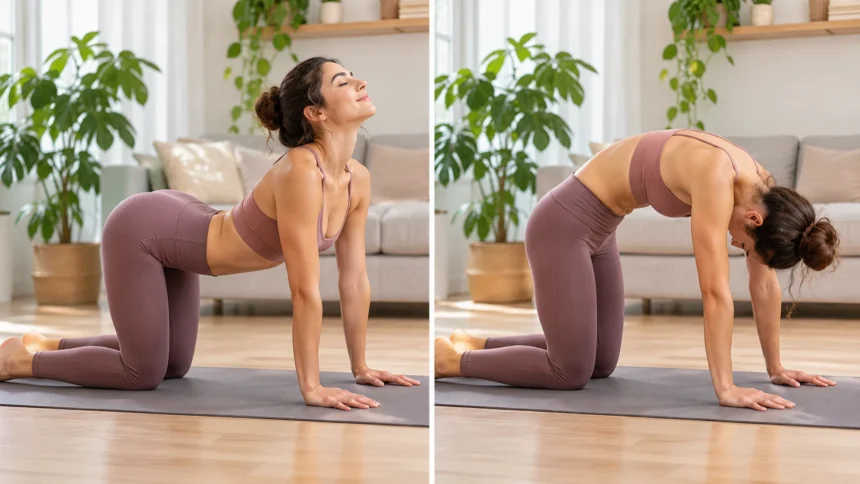
The cat cow stretch is a gentle yoga movement that helps improve spinal mobility, reduce everyday stiffness, and encourage better body awareness. It combines two simple positions that move the spine through controlled rounding and extension. Practicing cat cow stretch yoga can be a comfortable way to introduce movement into your daily routine without requiring advanced flexibility or complicated equipment.
Many people experience back stiffness after spending long hours sitting, working at a desk, or remaining in one position. The cat cow exercise encourages gentle movement through the neck, middle back, and lower back. It also connects breathing with movement, making it a popular addition to yoga warm-ups and basic mobility routines.
Although this stretch is generally accessible, proper technique is important for keeping the movement comfortable. Forcing the spine into extreme positions or ignoring pain can aggravate existing conditions. This guide explains how to perform the cat cow stretch safely, its potential benefits, common mistakes, useful variations, and practical tips for beginners.
What Is the Cat Cow Stretch in Yoga?
The cat cow stretch is a yoga movement that alternates between two spinal positions called Cat Pose and Cow Pose. Cat Pose, also known as Marjaryasana, involves gently rounding the back upward. Cow Pose, or Bitilasana, involves moving the spine into a comfortable extended position while opening the chest.
These two positions are commonly practiced together in a flowing sequence. The movement usually begins on the hands and knees, with the spine moving gradually between rounding and extension. Breathing helps guide the transition, although there is no need to force a specific rhythm if it feels uncomfortable.
Cat cow yoga is often included in beginner yoga classes, mobility exercises, and gentle stretching routines. It requires little space and can be adapted for different physical abilities. The main purpose is to encourage controlled spinal movement rather than achieve the deepest possible bend in either direction.
How Does the Cat Cow Stretch Work?
The cat cow stretch works by moving the spine through flexion and extension. Flexion occurs when the back rounds, while extension occurs when the chest opens and the spine gently arches. These movements involve coordinated activity from the muscles surrounding the spine, shoulders, abdomen, and pelvis.
During Cat Pose, the abdominal muscles contribute to rounding the back while the shoulder blades move apart. During Cow Pose, the spinal muscles help extend the back as the chest moves forward. The movement should be distributed comfortably through the spine rather than concentrated entirely in the lower back.
Alternating between these positions helps you explore your available spinal range of motion. It can also encourage awareness of how your pelvis and rib cage move together. However, the exercise does not realign the spine or correct structural conditions, and its effects depend on individual circumstances.
Key Benefits of Cat Cow Stretch Yoga
One of the main benefits of the cat cow stretch is maintaining comfortable spinal mobility. The gentle movement allows the back to bend in different directions without requiring heavy resistance. People who experience ordinary stiffness after prolonged sitting may find that controlled movement helps them feel more comfortable.
Cat cow yoga can also support body awareness by encouraging you to notice the relationship between breathing and movement. Moving slowly makes it easier to recognize unnecessary tension in the shoulders, neck, or lower back. This awareness may help you approach other exercises with greater control.
Another advantage is that the exercise can be performed without specialized equipment. It works well as part of a yoga warm-up, movement break, or gentle mobility session. However, cat cow stretching is not a guaranteed treatment for back pain and should complement appropriate strengthening and regular physical activity.
How to Do the Cat Cow Stretch Step by Step
Begin on your hands and knees on a comfortable exercise mat. Position your hands approximately beneath your shoulders and your knees beneath your hips. Keep your neck relaxed and allow your spine to settle into a comfortable neutral position before starting the movement.
To enter Cow Pose, inhale gently as you lift your chest and allow your abdomen to move slightly toward the floor. Let your pelvis tilt forward naturally while maintaining comfortable movement through your spine. Avoid dropping your lower back excessively or lifting your head into an uncomfortable position.
As you exhale, move into Cat Pose by gently rounding your back upward. Allow your head to follow the movement without forcing your chin toward your chest. Continue alternating between the positions for several slow repetitions, stopping if you experience sharp pain, dizziness, or increasing discomfort.
Understanding Cat Pose and Its Benefits
Cat Pose involves gently rounding the spine while maintaining support through the hands and knees. The pelvis tilts backward, and the abdominal muscles contribute to moving the back upward. This position can create a mild stretching sensation along the muscles surrounding the spine.
The movement may be particularly useful for exploring spinal flexion after spending time in positions that limit movement. It also encourages shoulder blade movement as the upper back rounds. However, the sensation should remain comfortable, and there is no need to push the back into an exaggerated curve.
Cat Pose is commonly combined with Cow Pose because alternating directions provides a broader mobility exercise. Practicing only one position is not necessarily harmful, but the full sequence offers more movement variety. People with certain spinal conditions may need to modify the range of flexion according to professional recommendations.
Understanding Cow Pose and Its Benefits
Cow Pose involves gentle spinal extension while the body remains supported on the hands and knees. The chest moves forward, the pelvis tilts anteriorly, and the abdomen lowers slightly. This position encourages movement through the back while allowing the shoulders and rib cage to participate.
Some people notice a mild opening sensation around the chest and front of the torso. The exercise may also help them become aware of how the middle back moves during extension. However, the movement should not involve forcing the lower back into an excessive arch.
Cow Pose works best when performed slowly and within a comfortable range. Allow your neck to follow the movement naturally instead of looking sharply upward. If extension creates pinching, radiating pain, or discomfort around the spine, reduce the movement or choose a suitable alternative.
How to Coordinate Breathing With Cat Cow Yoga
Breathing is commonly coordinated with the cat cow sequence to create a smooth movement pattern. Many yoga instructors recommend inhaling during Cow Pose and exhaling during Cat Pose. This rhythm can help practitioners maintain a steady pace and remain attentive to their movements.
During inhalation, allow the chest to open gently as the spine extends. During exhalation, round the back gradually without forcing air out or tightening the abdomen excessively. Breathing should remain comfortable rather than becoming a strict timing exercise.
If coordinating movement with breathing feels difficult, begin by moving at your own natural pace. You can add the traditional breathing pattern after becoming familiar with the positions. Avoid breath-holding or exaggerated inhalations, especially if you experience respiratory discomfort or dizziness.
Cat Cow Stretch for Lower Back Stiffness
Lower back stiffness can develop after prolonged sitting, unfamiliar exercise, or limited movement throughout the day. The cat cow stretch offers a gentle way to move the lumbar spine through comfortable flexion and extension. For some individuals, this movement may temporarily ease the sensation of stiffness.
Begin with small movements rather than attempting to create a dramatic curve in the lower back. Pay attention to whether rounding or extending the spine feels more comfortable. People with different spinal conditions may respond differently to these movements, so individual symptom response matters.
Cat cow yoga should not be used to push through persistent or severe lower back pain. If the exercise causes symptoms to travel into the legs or produces numbness or weakness, stop and seek professional guidance. Gentle mobility can support back care, but it does not replace assessment of underlying problems.
Cat Cow Yoga for Middle and Upper Back Mobility
The middle back, or thoracic spine, contributes to comfortable rotation, extension, and everyday upper-body movement. Prolonged sitting and repetitive tasks can make this region feel stiff. Cat cow stretching provides an opportunity to explore gentle movement through the thoracic area while keeping the body supported.
During the exercise, focus on allowing the movement to pass through your upper and middle back. Avoid performing the entire sequence by moving only your lower back. Small, controlled motions can help you recognize how different sections of the spine participate.
The exercise may be useful alongside other comfortable thoracic mobility movements. Seated rotations, shoulder rolls, and regular walking breaks can provide additional movement variety. However, persistent upper back pain should be evaluated appropriately because not every discomfort comes from ordinary muscular stiffness.
Can Cat Cow Stretch Help Improve Posture?
The cat cow stretch can support awareness of spinal positioning and the ability to move between different postures. It encourages controlled movement through the pelvis, rib cage, and back. However, posture is not determined by flexibility alone, and there is no single perfect position everyone must maintain.
People often assume that rounded sitting positions automatically cause back problems. In reality, discomfort can involve several factors, including prolonged inactivity, physical demands, and individual health conditions. Changing positions regularly may be more useful than attempting to hold one rigid posture throughout the day.
Cat cow yoga can complement strengthening exercises and general physical activity that support comfortable movement. It may help you recognize when your back or shoulders feel unnecessarily tense. However, the exercise does not permanently correct posture or guarantee protection against future spinal discomfort.
Cat Cow Stretch for Beginners
Beginners should prioritize comfortable technique rather than the size of their spinal movements. Start by positioning your hands and knees on a supportive surface. If your wrists or knees feel uncomfortable, use appropriate cushioning or choose a standing variation.
Move slowly between Cat Pose and Cow Pose while paying attention to your breathing. Five to eight comfortable repetitions may be enough for an introductory session. Keep your shoulders relaxed and avoid forcing your neck or lower back into extreme positions.
It is normal for the movement to feel unfamiliar during the first few attempts. Focus on developing coordination gradually rather than copying advanced demonstrations. If the exercise causes pain or feels unstable, stop and consider a modified version better suited to your abilities.
Seated Cat Cow Stretch for Office Workers
The seated cat cow stretch is a convenient alternative for people who spend long periods working at a desk. It allows gentle spinal movement without kneeling or placing weight through the wrists. This variation can be performed in a stable chair with enough space to move comfortably.
Sit upright with your feet resting on the floor and place your hands lightly on your thighs. Inhale as you gently lift your chest and extend your upper body. Exhale while rounding your back slightly and allowing your shoulders to move forward naturally.
Repeat the movement several times at a comfortable pace. Avoid gripping your knees or pulling your spine into a deeper stretch. Seated cat cow exercises can be included in movement breaks, although standing and walking periodically may also help reduce discomfort associated with prolonged sitting.
Standing Cat Cow Stretch Variation
Standing cat cow is another accessible variation that does not require floor-based movement. Begin with your feet comfortably apart and bend your knees slightly. Place your hands on your thighs while leaning forward only enough to maintain a stable position.
As you inhale, gently open your chest and allow your spine to extend. During exhalation, round your back upward while keeping your knees relaxed. The movement should remain controlled, with your hands providing light support rather than carrying excessive body weight.
Standing cat cow can be useful when kneeling is uncomfortable or an exercise mat is unavailable. It also provides an option for short mobility breaks during the day. If bending forward causes dizziness or discomfort, return to standing and choose a seated alternative.
Cat Cow Stretch During Pregnancy
Some pregnant individuals find modified cat cow movements comfortable because the exercise allows gentle spinal mobility. However, comfort and suitability can change throughout pregnancy. Body position, balance, and any pregnancy-related complications should be considered before beginning or continuing an exercise routine.
A hands-and-knees position may be comfortable for some people, while others prefer a seated or standing variation. Movements should remain gentle, and the abdomen should not be compressed or forced. Avoid positions that cause dizziness, pelvic discomfort, contractions, or other concerning symptoms.
Pregnant individuals with medical complications or exercise restrictions should follow advice from their maternity healthcare team. Cat cow stretching does not guarantee relief from pregnancy-related back discomfort. Professional guidance can help identify suitable exercises and modifications for different stages of pregnancy.
How Many Cat Cow Stretches Should You Do?
The appropriate number of repetitions depends on your comfort, mobility, and experience with the exercise. Beginners may start with five to ten slow cycles, provided the movement remains comfortable. There is no requirement to complete a large number of repetitions to benefit from gentle mobility practice.
Some people include cat cow yoga in a short morning routine, while others use it as a warm-up before exercise. You can adjust the repetitions according to how your body responds. The movement should remain smooth rather than becoming rushed or physically exhausting.
Performing additional repetitions is not necessarily more beneficial when the exercise already feels comfortable. Focus on technique and avoid continuing once pain or unusual symptoms develop. People recovering from injuries should follow any individualized limits recommended by their healthcare professional.
Common Cat Cow Stretch Mistakes to Avoid
One common mistake is forcing the spine into exaggerated curves during Cat Pose or Cow Pose. Excessive movement may place unnecessary stress on sensitive areas, particularly when someone already has spinal discomfort. Gentle mobility exercises should prioritize control rather than maximum flexibility.
Another mistake is allowing the shoulders and neck to become tense during the sequence. Looking sharply upward in Cow Pose or pulling the chin forcefully downward in Cat Pose can create discomfort. Keep your neck relaxed and let the head follow the natural movement of the spine.
Rushing through repetitions or holding your breath can also reduce movement quality. Moving too quickly makes it harder to notice discomfort or maintain coordination. A slow pace, comfortable breathing, and stable hand and knee positioning generally make the exercise easier to perform safely.
When Should You Avoid Cat Cow Yoga?
Cat cow stretching may need modification after recent spinal injuries, surgery, or certain medical conditions. People with significant osteoporosis, known spinal instability, or severe back pain should seek professional guidance before attempting unfamiliar spinal movements. Some individuals may need to limit flexion, extension, or weight-bearing positions.
Stop the exercise if you experience sharp pain, increasing numbness, tingling, or weakness. Symptoms traveling into an arm or leg may indicate nerve irritation that requires assessment. Continuing to stretch through these sensations can aggravate discomfort without addressing the underlying cause.
Seek urgent medical care for severe back pain following significant trauma, new bladder or bowel control problems, or rapidly progressive weakness. These symptoms should not be managed through yoga exercises alone. A healthcare professional can determine whether gentle mobility exercises are appropriate after evaluating the cause.
How to Include Cat Cow Stretch in Your Daily Routine
Cat cow stretching can be included in a short mobility routine without requiring major changes to your schedule. Some people prefer practicing after waking because it introduces gentle movement into the morning. Others use the exercise during breaks from desk work or before comfortable physical activity.
Start with a small number of repetitions and combine them with other suitable movements. Gentle walking, shoulder rolls, or comfortable hip mobility exercises may complement the sequence. Avoid creating a demanding routine when a few minutes of controlled movement are sufficient for your needs.
Consistency can help you become more familiar with spinal movement and comfortable exercise technique. However, there is no need to perform cat cow yoga every day if another activity feels more suitable. The goal is to maintain varied movement habits rather than depend on one specific stretch.
Simple Cat Cow Yoga Routine for Beginners
A simple routine begins with preparing a comfortable exercise space and choosing a suitable position. Place a mat or folded blanket beneath your knees if necessary. Begin on your hands and knees with your spine relaxed and your breathing steady.
Perform five slow cat cow cycles while allowing your spine to move gently between flexion and extension. Pause briefly in a neutral position if you need additional comfort. Follow the sequence with a relaxed resting position or another gentle movement that does not aggravate your back.
Finish by returning slowly to sitting or standing and noticing how your body feels. The routine should leave you comfortable rather than strained or exhausted. If the movements increase pain, reduce their range or stop until you receive appropriate professional advice.
Conclusion
The cat cow stretch yoga sequence is a simple way to encourage controlled spinal movement and improve body awareness. By alternating between Cat Pose and Cow Pose, you can explore gentle flexion and extension through the back. This exercise may help ease ordinary stiffness and can fit into many beginner-friendly mobility routines.
Proper technique involves moving slowly, breathing comfortably, and avoiding exaggerated spinal positions. Seated and standing variations provide alternatives for people who find kneeling uncomfortable. The most appropriate version is one that supports stable positioning and allows movement without sharp pain or unusual symptoms.
Although cat cow yoga can complement general mobility and relaxation practices, it is not a treatment for every type of back problem. Persistent pain or neurological symptoms require professional assessment. With sensible modifications and consistent attention to comfort, the cat cow stretch can become a useful part of an everyday movement routine.
Frequently Asked Questions
What is the cat cow stretch good for?
The cat cow stretch helps maintain spinal mobility and encourages awareness of movement through the back and pelvis. It may also reduce ordinary stiffness and support relaxation during gentle exercise.
How many times should I do cat cow stretches?
Beginners can start with approximately five to ten slow repetitions. Adjust the number according to comfort and stop if the movement causes pain, tingling, or increasing discomfort.
Can cat cow yoga help with lower back pain?
Cat cow yoga may help some people manage ordinary back stiffness, but it does not treat every cause of lower back pain. Persistent or worsening symptoms should receive professional medical assessment.
Is cat cow stretch safe for beginners?
Cat cow stretching is generally accessible for many beginners when performed gently. People with spinal injuries, significant osteoporosis, or other relevant conditions may need modifications or professional guidance.
Can I do the cat cow stretch every day?
Gentle cat cow movements can be practiced daily if they remain comfortable. Short sessions may support regular mobility, but there is no need to force the exercise when symptoms worsen.