


Pelvic stretches are gentle movements designed to improve flexibility and mobility around the hips, pelvis, lower back, groin, and surrounding muscles. They may target the hip flexors, glutes, adductors, hamstrings, and pelvic floor region depending on the exercise. These stretches can be useful for people who feel stiff after sitting, exercising, traveling, or spending long periods in one position.
The pelvis connects the upper and lower body, so restricted movement around this area can influence how you walk, squat, bend, and rotate. Good pelvic mobility allows your hips and lower spine to share movement more efficiently. Stretching does not need to be aggressive to be effective; slow, comfortable positions are usually more useful than forcing your body into a deeper range.
Pelvic stretching is often included in mobility routines, warm-ups, rehabilitation programs, and general flexibility training. However, not every feeling of tightness means a muscle literally needs to be stretched. Strength, movement habits, joint mobility, stress, and muscle coordination can also influence how your pelvis feels during everyday activities.
Key Benefits of Pelvic Stretches
One of the main benefits of pelvic stretches is improved range of motion around the hips. Better mobility can make everyday activities such as walking, climbing stairs, bending, and getting out of a chair feel more comfortable. It may also help you move through exercises such as squats and lunges with greater control when mobility limitations are affecting your technique.
Stretching can also reduce the sensation of stiffness that sometimes develops after prolonged sitting or inactivity. Moving the hips in different directions helps expose muscles and joints to ranges they may not regularly experience during the day. For desk workers, gentle pelvic mobility exercises can provide a useful movement break without requiring equipment or a lengthy workout.
Pelvic stretches may also support relaxation when performed slowly with controlled breathing. Gentle breathing encourages you to avoid unnecessary tension in the abdomen, hips, and surrounding muscles. This can be particularly helpful when your goal is comfortable mobility rather than trying to achieve extreme flexibility or reach a specific stretching position.
Hip Flexor Stretch for Pelvic Mobility
The hip flexors sit across the front of the hips and contribute to lifting your thighs and controlling pelvic movement. Long periods of sitting keep your hips flexed, which can make the front of the hip feel stiff afterward. A half-kneeling hip flexor stretch is a simple way to move the hip gently in the opposite direction.
Begin in a half-kneeling position with one knee on the floor and the opposite foot planted in front. Keep your torso upright, gently engage the glute on the kneeling side, and slightly tuck your pelvis. Shift forward only until you feel a mild stretch across the front of your hip without allowing your lower back to arch excessively.
Hold the position for around 20 to 30 seconds while breathing comfortably, then change sides. A deeper lunge is not always better because excessive forward movement can shift the stretch into your lower back. Keeping your pelvis controlled and your ribs stacked over your hips usually creates a more focused and comfortable stretch.
Butterfly Stretch for the Inner Thighs
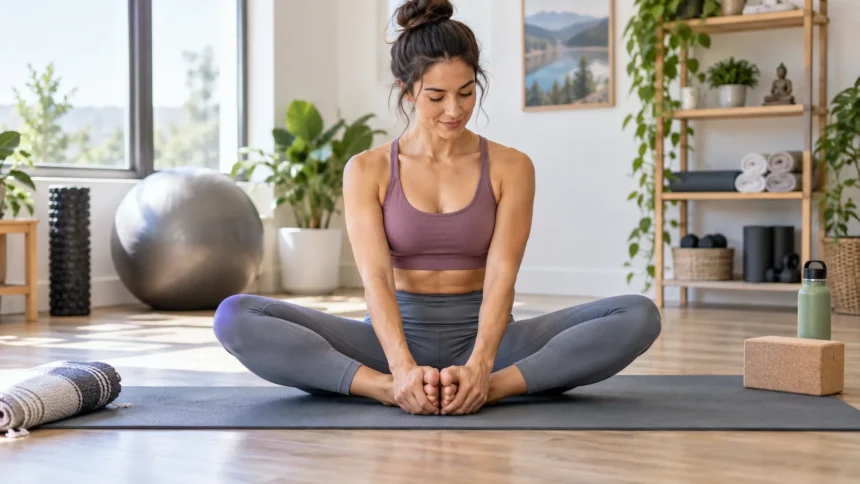
The butterfly stretch targets the inner thigh muscles, also known as the hip adductors. These muscles help stabilize the pelvis and move the legs toward the center of the body. Tightness around the inner thighs can sometimes make wide-stance movements, lateral lunges, or sitting positions feel restricted or uncomfortable.
Sit on the floor with the soles of your feet together and allow your knees to move outward. Hold your feet or ankles and sit as tall as comfortably possible. Instead of pressing your knees forcefully toward the floor, allow gravity to create a gentle stretch through the groin and inner thighs.
If sitting upright is difficult, move your feet slightly farther away from your body or place cushions beneath your knees for support. You can also sit on a folded towel to elevate your hips. Maintain slow breathing and avoid bouncing, since repeated forceful movement may make it harder to relax into the position comfortably.
Figure-Four Stretch for the Glutes and Hips
The figure-four stretch can help improve mobility through the glutes and outer hip muscles. It is often useful after long periods of sitting or lower-body exercise because these muscles contribute to hip stability and rotation. You can perform the stretch lying on your back, which provides support and makes it easier to control the amount of tension.
Lie on your back with both knees bent and place one ankle across the opposite thigh. Reach behind the supporting thigh and gently draw the leg toward your chest until you feel a stretch through the buttock and outer hip. Keep your head and shoulders relaxed while avoiding aggressive pulling with your arms.
Hold the stretch for around 20 to 30 seconds before changing sides. If you experience pinching at the front of your hip, reduce the range or adjust the position of your crossed leg. The goal is a comfortable stretch through the glutes rather than forcing your hip into a position that creates joint discomfort.
Child’s Pose for Gentle Pelvic and Back Mobility
Child’s pose is a relaxed position that can gently stretch the hips, lower back, and surrounding tissues. Begin on your hands and knees, then slowly move your hips backward toward your heels. Allow your arms to reach forward while keeping your movements comfortable and stopping before you experience pain or excessive pressure in your knees.
You can adjust the width of your knees to change how the stretch feels around your hips and pelvis. A slightly wider position may provide more room through the hips, while keeping the knees closer together may feel more comfortable for some people. Place a cushion beneath your hips or knees if you need additional support.
Slow breathing can make this stretch feel more relaxing and encourage gentle movement around the lower ribs, abdomen, and pelvis. Avoid forcing your hips toward your heels if your ankles, knees, or hips feel restricted. Child’s pose should feel like a manageable mobility position rather than an intense flexibility challenge.
Happy Baby Stretch for Hip Opening
Happy baby is a floor-based stretch that moves the hips into flexion and gentle external rotation. It can create a stretching sensation through the inner thighs, groin, glutes, and lower back. Because your back remains supported by the floor, many people find it easier to relax during this position compared with more demanding standing stretches.
Lie on your back and bring your knees toward your chest. Hold the backs of your thighs, ankles, or feet depending on your flexibility, then allow your knees to move gently toward the sides of your torso. Keep your lower back comfortable and avoid pulling your legs downward with excessive force.
You can gently rock from side to side if the movement feels comfortable, although remaining still is also effective. If reaching your feet causes your shoulders or neck to tense, hold behind your thighs instead. Adjusting the position allows you to receive the mobility benefits without turning the exercise into an uncomfortable test of flexibility.
Deep Squat Hold for Hip and Pelvic Mobility
A supported deep squat can help improve movement through the hips, ankles, and pelvis. Stand with your feet slightly wider than hip-width and lower yourself slowly toward a comfortable squat. Hold a stable surface such as a countertop, post, or sturdy chair if you need assistance with balance or cannot comfortably reach a deeper position.
Keep your feet firmly supported and allow your knees to track in the same general direction as your toes. Your torso can lean slightly forward while your hips descend between your legs. There is no need to force your heels onto the floor or reach a specific squat depth if your current mobility does not allow it.
Hold the position briefly while breathing comfortably, then use your support to return to standing. Regular practice may gradually improve confidence and mobility in the squat position. However, people with significant hip, knee, or ankle pain should modify the movement rather than pushing through discomfort simply to achieve a deeper squat.
Pelvic Tilts for Controlled Mobility
Pelvic tilts are small movements that help you become more aware of how the pelvis and lower back move together. Lie on your back with your knees bent and feet flat on the floor. Begin in a relaxed neutral position rather than intentionally flattening or arching your spine before starting the exercise.
Gently tilt your pelvis backward so your lower back moves slightly closer to the floor. Then reverse the movement by allowing a small natural arch to return beneath your lower back. Move slowly between the two positions without forcing the range or using your legs to create momentum.
Pelvic tilts are less about stretching one specific muscle and more about improving movement awareness and control. They can be useful as part of a warm-up before bridges, mobility exercises, or lower-body training. Keep the movement subtle because excessive arching or flattening is unnecessary for gaining benefit from the exercise.
How Posture and Whole-Body Mobility Affect the Pelvis
Pelvic mobility does not exist in isolation because movement throughout the body is interconnected. Your spine, hips, rib cage, shoulders, and legs all influence how you position yourself during walking, sitting, lifting, and exercise. A restriction or weakness in one area can sometimes cause another region to compensate during movement.
For example, your shoulder position can affect how your upper body moves during squats, carries, and rotational exercises. Understanding basic muscle function, including deltoid anatomy, can help you appreciate how upper-body stability contributes to coordinated whole-body movement. Good mobility training therefore considers more than the pelvis alone.
Rather than trying to maintain one perfect posture all day, aim to change positions regularly. Standing, walking, stretching, reaching, and rotating expose your body to movement variety. Your pelvis generally benefits more from regular movement and adequate strength than from attempting to hold a rigid sitting or standing posture for many hours.
Common Mistakes When Doing Pelvic Stretches
One common mistake is stretching too aggressively because you believe stronger tension will produce faster results. Intense stretching can cause your muscles to guard or leave you feeling sore afterward. A mild to moderate sensation is usually enough, especially when your primary goal is improving everyday mobility rather than training for an activity requiring extreme flexibility.
Another mistake is holding your breath. People often tense their jaw, shoulders, abdomen, or pelvic area when trying to move deeper into a stretch. Slow breathing helps you remain relaxed and makes it easier to notice whether a position feels comfortably challenging or is beginning to produce sharp, pinching, or unusual sensations.
Avoid comparing your flexibility with someone else’s because mobility varies according to anatomy, activity level, previous injuries, and training history. You do not need to touch the floor, perform a perfect split, or achieve an extremely deep squat for stretching to be worthwhile. Work within a range you can control and allow your mobility to progress gradually.
How Often Should You Do Pelvic Stretches?
Many people can perform gentle pelvic stretches several times per week, while some may prefer brief daily mobility sessions. Frequency depends on your activity level, symptoms, training goals, and how your body responds. Consistent moderate stretching is usually easier to maintain than occasional sessions in which you aggressively stretch for a long period.
Most stretches can be held for approximately 20 to 30 seconds and repeated once or twice per side. Longer holds may also feel comfortable, but they are not necessary for everyone. You can combine several exercises into a short five- to ten-minute mobility routine instead of performing every available pelvic stretch during each session.
Mobility work should also be balanced with strength training. Strong glutes, hips, abdominal muscles, and back muscles help you control the range you gain through stretching. Exercises such as bridges, squats, lunges, step-ups, and side-leg movements can complement a stretching routine and support stronger, more confident movement around the pelvis.
When to Be Careful With Pelvic Stretching
Pelvic stretches should generally create gentle tension rather than sharp or worsening pain. Stop if you notice severe groin pain, intense pelvic discomfort, numbness, tingling, or symptoms that travel down your leg. Continuing to push through these sensations may irritate an underlying injury or nerve-related problem rather than improving your mobility.
Extra caution may be necessary after recent surgery, significant injury, pregnancy-related complications, or when you have an existing hip, pelvic, or spinal condition. In these situations, exercises may need to be modified according to your individual circumstances. A healthcare or rehabilitation professional can help determine which stretches and strengthening exercises are appropriate.
Seek medical attention if pelvic pain is severe, persistent, unexplained, or accompanied by symptoms such as fever, unusual bleeding, bladder or bowel changes, or significant weakness. Stretching can be useful for ordinary muscular stiffness, but it should not be used to delay evaluation of symptoms that may require medical treatment.
Conclusion
Pelvic stretches can support comfortable movement by improving flexibility and mobility around the hips, glutes, groin, and lower back. Exercises such as hip flexor stretches, butterfly stretches, figure-four positions, child’s pose, and supported squats provide different ways to move the pelvis and surrounding joints. The best routine is one that feels controlled and suits your current mobility.
Proper form matters more than achieving an impressive range of motion. Use slow movements, comfortable breathing, and mild stretching tension rather than forcing yourself deeper into each position. Small adjustments, such as using cushions or holding onto support, can make an exercise more accessible while still allowing you to work on mobility effectively.
For the best long-term results, combine pelvic stretching with regular movement and strength training. Strong hips, glutes, core muscles, and back muscles help you control the mobility you develop. Pay attention to persistent or unusual symptoms, and seek professional guidance when pain rather than simple stiffness is limiting your movement.
FAQs
What are the best stretches for pelvic mobility?
Hip flexor stretches, butterfly stretches, figure-four stretches, child’s pose, and supported deep squats are useful options. The best exercises depend on which areas feel restricted and what movements you can perform comfortably.
Can pelvic stretches help with tight hips?
Yes, gentle pelvic and hip stretches may reduce the sensation of tightness and improve comfortable movement. Combining stretching with regular walking, position changes, and hip strengthening can provide a more balanced approach.
How long should I hold a pelvic stretch?
Around 20 to 30 seconds is a practical starting point for many stretches. Hold the position only while it feels comfortable, and avoid forcing your body into painful or excessively intense ranges.
Should I do pelvic stretches every day?
Gentle mobility work can often be performed daily if it feels comfortable. However, you do not necessarily need to stretch every day to improve mobility; consistency, strength training, and movement variety also matter.
Can pelvic stretching cause pain?
Stretching may create mild muscular tension, but it should not produce sharp, severe, or radiating pain. Stop the exercise and consider professional evaluation if pelvic stretches repeatedly cause unusual or worsening symptoms.