


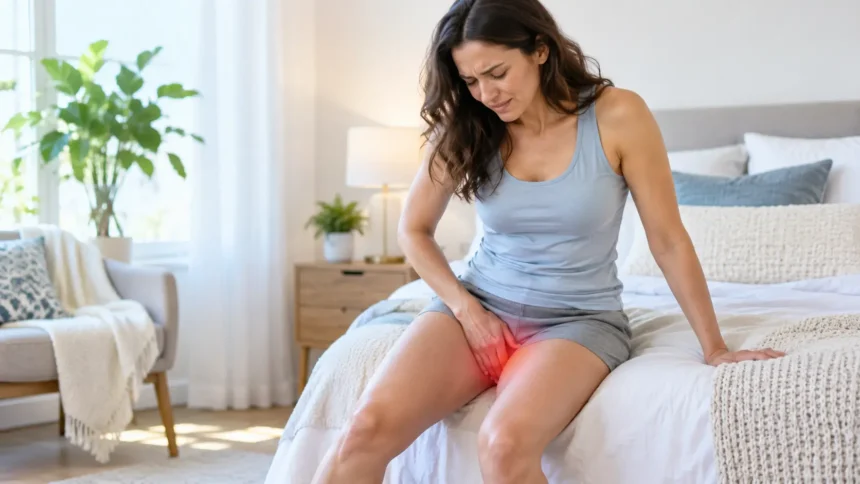
Pain in the inner thigh near the groin in females can range from a mild muscle ache to sharper discomfort that makes walking, sitting, or exercising difficult. Because the groin sits close to muscles, joints, nerves, blood vessels, and reproductive organs, several different conditions may create pain in this area. Understanding the pattern of symptoms can help narrow down possible causes.
Sometimes inner thigh and groin pain develops after exercise, overstretching, or sudden movement. In other cases, it may be related to the hip, pelvic floor, menstrual cycle, pregnancy, nerves, or another underlying health issue. Most minor causes improve with simple care, but persistent or severe symptoms deserve professional evaluation.
What Does Pain in the Inner Thigh Near the Groin Mean?
Pain in the inner thigh near the groin usually comes from structures located around the upper leg, hip, or pelvis. The inner thigh contains several adductor muscles that help bring the leg toward the body’s center. These muscles connect close to the groin, making strains and overuse injuries common sources of discomfort.
The exact sensation can provide useful clues about what may be happening. Muscle-related pain often feels sore, tight, or tender and may become stronger when squeezing the legs together. Nerve-related discomfort can feel burning, tingling, or electric, while joint problems may create deep aching that becomes worse with walking or certain hip movements.
Women may also experience groin discomfort because reproductive organs are located close to this region. Menstrual changes, ovarian conditions, pregnancy-related pelvic changes, or pelvic floor tension can sometimes cause pain that spreads toward the inner thigh. For this reason, the location alone cannot always identify the source of the problem.
Common Causes of Inner Thigh and Groin Pain in Females
Muscle strain is among the most frequent explanations for inner thigh pain close to the groin. It may happen after running, jumping, sudden direction changes, strength training, or stretching beyond a comfortable range. Even activities such as climbing stairs or walking longer distances than usual can irritate poorly conditioned muscles.
Hip-related conditions can also produce pain that feels as though it comes directly from the groin. Problems involving the hip joint, surrounding tendons, or nearby muscles may cause discomfort while standing, walking, rotating the leg, or getting out of a chair. The pain may occasionally travel into the upper thigh or toward the buttocks.
Other possible causes include pelvic floor tension, menstrual discomfort, ovarian cysts, pregnancy-related changes, nerve irritation, hernias, or enlarged lymph nodes. Less commonly, circulation problems or infections can cause inner thigh or groin symptoms. The surrounding symptoms, duration, severity, and activity triggers usually provide important clues about which explanation is more likely.
Inner Thigh Muscle Strain and Adductor Pain
The adductor muscles run along the inside of the thigh and attach near the pelvis. Their job is to stabilize the hip and help pull the legs inward during walking, running, and other movements. When one of these muscles is stretched too far or overloaded suddenly, a groin or inner thigh strain can develop.
A mild strain may cause tenderness, tightness, or aching when walking or moving the leg sideways. More significant injuries can produce sharper pain, swelling, bruising, or difficulty putting weight on the affected leg. Pain may become particularly noticeable when squeezing the knees together because this activates the injured adductor muscles.
Resting from activities that aggravate symptoms can allow a mild muscle injury to settle. Gradually returning to movement, stretching, and strengthening is usually more useful than remaining completely inactive for long periods. Severe pain, visible bruising, significant weakness, or symptoms that fail to improve should be assessed by a healthcare professional.
Hip Problems That Can Cause Groin and Inner Thigh Pain
The hip joint sits deep within the groin region, so hip problems often produce pain in the front of the groin rather than directly over the side of the hip. Discomfort may become worse when walking, climbing stairs, sitting for long periods, or rotating the leg. Some people also notice clicking, catching, or reduced hip movement.
Conditions affecting cartilage, tendons, or other tissues around the hip may create pain extending toward the inner thigh. Hip impingement and arthritis are examples of problems that can produce deep groin aching, particularly during repeated bending or rotation. Younger active women may also experience hip-related symptoms after sports or repetitive physical activity.
Not every hip ache indicates a serious joint disorder. Tight hip muscles, weakness, sudden increases in activity, or altered movement patterns may place extra strain around the groin. If pain continues for several weeks or noticeably limits movement, an examination can help determine whether the source is muscular, joint-related, or coming from another nearby structure.
Pelvic Floor Tension and Groin Pain
The pelvic floor is a group of muscles that supports the bladder, bowel, uterus, and other pelvic structures. Like muscles elsewhere in the body, these muscles can become overly tight, irritated, or poorly coordinated. When that happens, discomfort may be felt in the pelvis, groin, inner thigh, lower abdomen, or around the sitting bones.
Pelvic floor tension may sometimes occur alongside urinary urgency, difficulty relaxing during bowel movements, painful intercourse, or pelvic pressure. Some women notice symptoms after long periods of sitting, stressful periods, intense exercise, or previous pelvic injuries. The discomfort can be difficult to pinpoint because pelvic floor muscles connect and interact with surrounding hip muscles.
Treatment depends on what is contributing to the tension and should not simply involve strengthening exercises for everyone. Some women need relaxation, breathing, mobility work, or pelvic floor physical therapy rather than repeated contractions. A clinician familiar with pelvic health can evaluate whether pelvic floor dysfunction may be contributing to persistent groin or inner thigh discomfort.
Menstrual and Ovarian Causes of Groin Pain
Menstrual cramps can sometimes produce discomfort beyond the lower abdomen. Pain associated with the menstrual cycle may spread into the lower back, hips, groin, or upper thighs because nearby nerves and muscles share overlapping pathways. This type of discomfort commonly occurs around the beginning of a period and improves as menstrual symptoms settle.
Ovarian cysts can also occasionally produce one-sided pelvic or groin pain. Many ovarian cysts are small and cause no symptoms, while others may create pressure, fullness, or a dull ache in the lower abdomen. Pain can sometimes extend toward the upper inner thigh depending on the location and amount of irritation.
Sudden severe pelvic or groin pain, especially when accompanied by vomiting, dizziness, faintness, or heavy bleeding, should not be ignored. These symptoms can occasionally be associated with urgent gynecological problems requiring prompt assessment. Persistent one-sided pain or discomfort that repeatedly appears outside the usual menstrual pattern should also be discussed with a healthcare professional.
Can Pregnancy Cause Inner Thigh and Groin Pain?
Pregnancy can place additional stress on the muscles, joints, and ligaments around the pelvis. As the body changes to support the growing uterus, some women develop groin discomfort that travels toward the inner thighs. Hormonal changes can also increase joint flexibility, making certain movements feel uncomfortable or less stable than usual.
Round ligament discomfort is another possible source of pain during pregnancy. It commonly produces pulling or sharp sensations around the lower abdomen or groin, especially during sudden movement, coughing, standing quickly, or changing position. Pelvic girdle pain may also cause aching around the groin, hips, pubic area, and upper thighs.
Although many pregnancy-related aches are harmless, new or severe pain should still be discussed with a healthcare professional. Pain combined with vaginal bleeding, fever, fluid leakage, contractions, dizziness, or significant abdominal tenderness deserves prompt medical attention. Pregnant women should also seek personalized guidance before beginning new exercises or using medications for pain relief.
Nerve-Related Causes of Inner Thigh Pain
Several nerves travel from the lower spine and pelvis toward the thighs. Irritation or compression affecting these nerves may produce burning, tingling, numbness, or unusual sensitivity rather than a simple muscular ache. Symptoms may appear in the groin, front of the thigh, inner thigh, or other areas depending on which nerve is involved.
The obturator nerve, for example, provides sensation to part of the inner thigh and helps control muscles that bring the leg inward. Irritation affecting this nerve may cause inner thigh pain or weakness, although it is less common than a straightforward muscle strain. Lower back or pelvic conditions can sometimes influence nerves supplying the groin area as well.
Nerve pain often behaves differently from muscle soreness because it may travel, tingle, burn, or appear without obvious local tenderness. Increasing weakness, persistent numbness, or pain that spreads significantly should be professionally assessed. Determining whether symptoms are coming from the spine, pelvis, hip, or local tissues is important before choosing a treatment approach.
Can Sleeping Position or Posture Affect Groin Pain?
Sleeping position can occasionally contribute to groin discomfort when the hips remain in an awkward position for several hours. Side sleeping without enough leg support may allow the upper hip to rotate forward, placing additional tension through the inner thigh and pelvis. Symptoms may therefore feel stronger when getting out of bed but improve after gentle movement.
A pillow between the knees can help some side sleepers maintain more neutral alignment through the hips and pelvis. Back sleepers may find that a small pillow under the knees reduces tension through the lower back and hips. Similar positioning issues can contribute to discomfort elsewhere in the body, including upper back pain after sleeping.
Daytime posture matters as well, particularly when someone sits for many hours with the hips rotated, legs crossed, or body leaning toward one side. Changing positions regularly can reduce prolonged stress on muscles around the hips and groin. However, posture alone should not be blamed when pain is severe, persistent, or accompanied by other concerning symptoms.
How to Relieve Mild Inner Thigh and Groin Pain at Home
For mild pain that begins after activity, temporarily reducing movements that trigger discomfort can help irritated tissues recover. Cold therapy may be useful during the first day or two after a fresh muscle strain, particularly when swelling is present. Later, gentle warmth may feel more comfortable when stiffness and muscle tightness become the main symptoms.
Gentle walking and controlled movement can often prevent excessive stiffness once severe pain has settled. Stretching should feel mild rather than painful, and aggressive stretching of an injured groin muscle can sometimes delay recovery. Gradual strengthening of the hips, glutes, core, and adductor muscles may help improve stability after symptoms begin to resolve.
Over-the-counter pain medicines may help some people, but they are not appropriate for everyone. Medication choice can depend on pregnancy, stomach problems, kidney conditions, allergies, other medications, and additional health factors. When uncertain, asking a pharmacist or healthcare professional is safer than repeatedly using pain medication without understanding the underlying cause.
When Should You See a Doctor for Inner Thigh or Groin Pain?
Medical evaluation is worth considering when pain persists for more than several days without improvement or repeatedly returns during normal activity. Difficulty walking, significant hip stiffness, increasing swelling, or pain that consistently interrupts sleep may also justify an examination. Persistent symptoms can sometimes indicate more than a simple muscle strain.
Seek prompt care if groin pain develops with significant swelling, redness, warmth, fever, or sudden weakness. Severe pelvic pain accompanied by heavy vaginal bleeding, dizziness, fainting, or vomiting should also be assessed urgently. These symptoms may indicate conditions requiring faster medical attention rather than home treatment alone.
Sudden swelling and pain in one leg, particularly when combined with warmth or breathing difficulty, also requires urgent evaluation because circulation problems can occasionally cause serious complications. The majority of inner thigh aches are not emergencies, but paying attention to warning signs is important. When symptoms feel unusual or progressively worsen, professional assessment is the safest approach.
Conclusion
Pain in the inner thigh near the groin in females has many possible causes, ranging from a simple adductor strain to hip, pelvic floor, menstrual, pregnancy-related, or nerve problems. The pattern of pain can offer useful clues. Muscle soreness after exercise usually behaves differently from burning nerve pain or recurring pelvic discomfort.
For mild symptoms, temporary activity modification, gentle movement, comfortable positioning, and gradual strengthening may support recovery. Avoid repeatedly forcing painful stretches or assuming that every groin symptom comes from one specific muscle. When symptoms continue or interfere with normal movement, a healthcare professional can help identify the underlying source.
Severe pain, significant swelling, weakness, unusual vaginal bleeding, fever, faintness, or sudden one-sided leg swelling deserves faster medical attention. Paying attention to accompanying symptoms can help distinguish routine discomfort from problems needing investigation. Early evaluation is particularly valuable when pain is worsening rather than gradually improving.
FAQs
Why does my inner thigh hurt near my groin as a female?
Common causes include adductor muscle strain, hip problems, pelvic floor tension, menstrual discomfort, pregnancy-related changes, and nerve irritation. The likely cause depends on how the pain started and what other symptoms occur.
Can ovarian problems cause inner thigh and groin pain?
Yes, some ovarian conditions can cause pelvic pain that spreads toward the groin or upper thigh. Persistent one-sided pain, especially with unusual bleeding, nausea, or severe discomfort, should be medically evaluated.
How do I know if my groin pain is muscular?
Muscular groin pain often begins after exercise or sudden movement and becomes worse when squeezing the legs together, stretching, or walking. Tenderness over the inner thigh muscles may also suggest a strain.
Can sitting too long cause inner thigh groin pain?
Prolonged sitting can tighten the hip and pelvic muscles and increase pressure around the groin. Regular position changes, short walks, and better sitting alignment may help when prolonged sitting contributes to symptoms.
When is female groin pain an emergency?
Seek urgent care for severe sudden pain, heavy bleeding, fainting, fever, significant swelling, breathing difficulty, or sudden swelling of one leg. These symptoms can sometimes indicate a condition requiring immediate medical evaluation.