


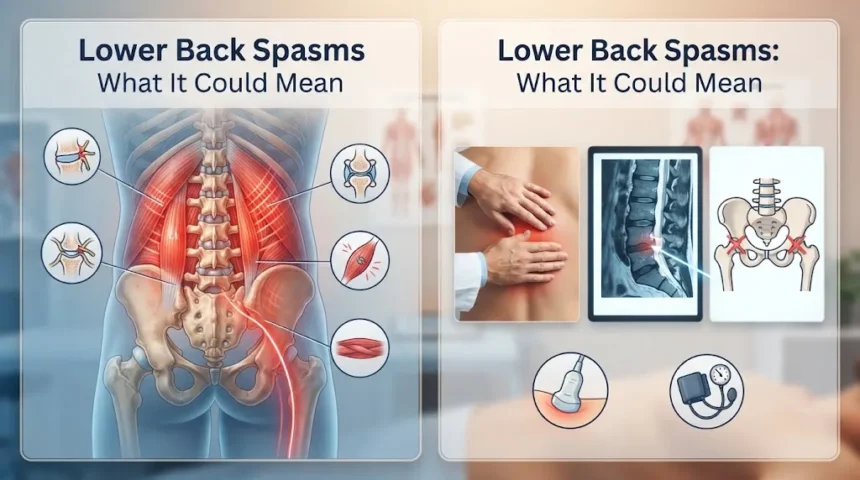
Lower back spasms happen when muscles in the lumbar region tighten suddenly and involuntarily. The sensation can range from mild twitching to intense cramping that makes standing, bending, or walking difficult. A spasm may last only a few seconds, come and go repeatedly, or leave the surrounding muscles sore and guarded for hours afterward.
Muscle spasms are often the body’s response to irritation, fatigue, or sudden stress on the lower back. They can occur after lifting, twisting, exercising, sitting awkwardly, or making an unfamiliar movement. Sometimes the muscle tightens to protect an irritated joint, disc, or nearby tissue, even when the muscle itself was not originally injured.
Most episodes improve with time and conservative care, especially when there are no neurological or systemic warning signs. However, recurring or severe spasms can sometimes point to an underlying back problem that deserves assessment. Paying attention to what triggered the spasm, where the pain travels, and whether weakness or numbness occurs can provide important clues.
Muscle Strain Is a Common Cause of Back Spasms
A strained muscle or ligament is one of the most common reasons the lower back suddenly spasms. This can happen after lifting something heavy, twisting while carrying weight, or performing exercise with more intensity than your body is prepared for. The muscles may tighten reflexively around the irritated area in an attempt to reduce movement.
Pain from a strain is often localized to one side or across the lower back and may become worse when bending, standing up, or changing position. The muscles can feel tender, stiff, or knotted when touched. Symptoms usually do not include significant numbness or weakness unless another structure, such as a nerve, is involved.
Relative rest can help during the first day or two, but complete bed rest is rarely useful for uncomplicated strains. Gentle movement, short walks, and avoiding the most painful activities can help you stay mobile without repeatedly irritating the tissue. Most mild strains improve gradually as the muscles recover and confidence in movement returns.
Overuse and Muscle Fatigue Can Trigger Spasms
Muscles can spasm when they become fatigued from repeated or unfamiliar activity. Long hours of manual work, heavy lifting, gardening, running, or an intense gym session can place more demand on the lower back than usual. When fatigue builds, the muscles may become less efficient at controlling movement and may respond with tightness or cramping.
Poor recovery can make this more likely. Training hard on consecutive days, sleeping poorly, or suddenly increasing workout volume gives muscles less time to adapt. People who rarely exercise can also experience spasms after a single demanding activity because the tissues have not developed enough endurance for the new workload.
The best response is usually to reduce the aggravating load temporarily rather than stop all movement. Resume activity gradually once the spasms settle and rebuild strength over time. Core, hip, and leg strengthening can improve how your body distributes force so the lower back does not repeatedly handle more work than it can comfortably tolerate.
Prolonged Sitting Can Make the Lower Back Tighten
Sitting for several hours can leave the lower back feeling stiff and more sensitive to sudden movement. The problem is not necessarily one specific posture but the lack of movement variety. When the spine and hips stay in the same position for too long, standing quickly or bending afterward can sometimes trigger protective muscle tightening.
Office workers, drivers, and people working from home may notice spasms after long periods at a desk. Weakness and fatigue around the trunk and hips can also make prolonged sitting less comfortable. Regular position changes can reduce stiffness better than trying to maintain one supposedly perfect posture throughout an entire working day.
Stand up every 30 to 60 minutes when possible and walk briefly or move through a comfortable range. Adjust your chair so your feet are supported and your screen does not force excessive reaching or slouching. Small movement breaks can be more practical and effective than waiting until the evening to stretch an already irritated lower back.
Disc Irritation Can Cause Protective Muscle Spasms
Spinal discs sit between the vertebrae and help distribute forces through the lower back. A disc can become irritated after repeated bending, heavy lifting, or age-related changes, and the surrounding muscles may tighten in response. This protective spasm can make the back feel locked or difficult to straighten, even when the original problem lies deeper.
Disc-related symptoms can remain localized to the back or travel into the buttock and leg if nearby nerve roots become irritated. Coughing, sneezing, prolonged sitting, or certain bending movements may sometimes increase discomfort. However, these patterns vary, and many disc changes seen on imaging are also found in people who have no back pain.
Most disc-related episodes improve without surgery. Gentle activity, gradual strengthening, and avoiding prolonged fear-based movement restriction can support recovery. If spasms occur with progressive weakness, persistent numbness, or severe leg pain, professional assessment is important because nerve involvement may change the treatment approach.
Sciatica and Nerve Irritation Can Feel Like Spasms
Nerve irritation from the lower back can sometimes create pain that feels like cramping or muscle spasm. Sciatica typically involves pain traveling from the lower back or buttock into the leg. Burning, tingling, electric sensations, numbness, or weakness can appear alongside the muscular tightness, making the episode feel very different from a simple strain.
The muscles around the painful area may tighten because the nervous system is trying to protect an irritated nerve. Stretching aggressively into these symptoms can sometimes make them worse, especially if the stretch increases tingling or pain traveling down the leg. Gentle movement is usually more appropriate until the source of the symptoms becomes clearer.
Persistent neurological symptoms should be evaluated by a healthcare professional. A clinician may assess strength, reflexes, sensation, spinal movement, and nerve tension to determine whether a nerve root is involved. Progressive weakness, severe numbness, or changes in bladder or bowel control require prompt medical attention rather than home treatment alone.
Hip and Pelvic Muscles Can Influence Lower Back Tension
The lower back does not work in isolation from the hips and pelvis. Muscles around the glutes, hip rotators, pelvic floor, and inner thighs contribute to controlling the pelvis during walking, bending, lifting, and exercise. If some of these muscles are weak, irritated, or overworked, the lumbar muscles may compensate and become more prone to fatigue.
Deep hip muscles such as the obturator internus help with hip rotation and pelvic stability. Problems in this region can sometimes create discomfort that is felt around the buttock, pelvis, or lower back. This does not mean every back spasm comes from the hip, but the connection is worth considering when symptoms repeatedly return.
A balanced rehabilitation program often includes hip and trunk strength instead of focusing only on stretching the lower back. Bridges, controlled squats, walking, and other low-load exercises may help once acute pain settles. If certain hip movements repeatedly trigger symptoms, a physical therapist can help identify whether mobility or strength deficits are contributing.
Dehydration and Electrolytes May Play a Smaller Role
People often blame muscle spasms entirely on dehydration or low electrolytes, but the relationship is more complicated. Significant fluid loss during heat exposure or prolonged exercise can contribute to cramping in some situations. However, most lower back spasms are more strongly associated with mechanical strain, fatigue, or irritation than with a simple hydration problem.
Staying adequately hydrated is still sensible, especially during hot weather or long exercise sessions. A balanced diet generally provides the minerals needed for normal muscle function, and most people do not need large doses of electrolyte supplements. Excessive supplementation can also be harmful for people with kidney, heart, or blood pressure conditions.
If spasms occur repeatedly without an obvious movement-related trigger, medication effects, nutritional issues, or other health problems may need consideration. Certain medications can influence fluid or electrolyte balance. A healthcare professional can decide whether blood testing or medication review is appropriate instead of assuming supplements will solve the problem.
What to Do During an Acute Lower Back Spasm
When a spasm hits, stop the movement that triggered it and move into a position that feels comfortable. Slow breathing can help reduce unnecessary tension while the muscles settle. Avoid immediately forcing the back into a deep stretch because strong stretching can irritate tissues that are already sensitive and may make the protective response stronger.
Heat can be soothing when the muscles feel tight or guarded. A warm shower, heating pad, or warm compress may help you relax and move more comfortably. Cold can also provide temporary relief after a recent strain, so use whichever feels better while protecting your skin and avoiding prolonged exposure.
Once the intense spasm settles, try short periods of gentle movement rather than remaining completely still. Walking around the room or changing position gradually can prevent additional stiffness. If every movement produces severe pain, or you cannot stand or walk normally, medical evaluation may be appropriate to rule out a more significant problem.
Best Exercises After Lower Back Spasms Settle
Exercise should begin gently once you can move without triggering repeated severe spasms. Walking is often a useful starting point because it keeps the spine and hips moving without requiring complicated technique. Increase the duration gradually and use your symptoms afterward to judge whether the amount of activity was appropriate.
Simple exercises such as pelvic tilts, bridges, bird dogs, and controlled bodyweight squats may be useful as recovery progresses. These movements train the trunk and hips to work together instead of relying excessively on the lower back. Begin with a comfortable range and avoid pushing through sharp pain simply to complete a prescribed number of repetitions.
Strengthening should progress over several weeks rather than one or two sessions. The goal is to improve the capacity of the muscles so normal daily tasks no longer overload them easily. If exercises repeatedly cause radiating pain, numbness, weakness, or severe spasms, stop and seek professional guidance before increasing the difficulty.
How to Prevent Recurring Back Spasms
Build strength gradually rather than waiting until your back hurts to exercise. Regular training for the legs, hips, and trunk can improve your ability to lift, carry, and move without overloading one small area. You do not need complicated workouts; consistent squats, hinges, rows, walking, and core exercises can provide a useful foundation.
Pay attention to how quickly your workload changes. Sudden increases in lifting, running, home improvement work, or sports can overwhelm tissues that were comfortable at a lower level. Progressing activity over time gives muscles, tendons, and joints a better chance to adapt without triggering repeated protective spasms.
Daily movement also matters. Avoid staying in one position for several hours, especially if your back regularly stiffens afterward. Change posture, stand, walk, and vary tasks throughout the day. Good sleep, sensible recovery, and appropriate lifting technique can also reduce unnecessary strain even though no single habit can prevent every episode.
When Lower Back Spasms Need Medical Attention
See a healthcare professional if spasms persist for several weeks, repeatedly return, or significantly limit your ability to work, sleep, or walk. Evaluation is also useful when you cannot identify an obvious cause or when symptoms are becoming progressively worse. A clinician can determine whether muscle strain, a disc, nerve irritation, or another condition is more likely.
Seek prompt care if spasms occur after significant trauma or are accompanied by fever, unexplained weight loss, severe night pain, or a history of serious medical conditions. These features do not automatically mean something dangerous is happening, but they deserve more careful evaluation than ordinary exercise-related muscle tightness.
Emergency care is important if you develop new loss of bladder or bowel control, numbness around the groin or saddle area, or rapidly worsening weakness in both legs. These symptoms can indicate severe nerve compression. Sudden severe back pain with major abdominal or circulatory symptoms also warrants urgent medical assessment.
Conclusion
Lower back spasms are often caused by muscle strain, fatigue, prolonged sitting, or sudden changes in activity. They can also occur when the muscles tighten protectively around an irritated disc, joint, or nerve. Understanding what happened before the spasm and which symptoms occur alongside it can help distinguish a simple muscular episode from something requiring closer evaluation.
During an acute spasm, comfortable positioning, gentle movement, and heat or cold can provide temporary relief. Once symptoms settle, gradually restoring movement and strength is usually more useful than avoiding activity for long periods. The hips, trunk, and legs should all be considered when building a routine aimed at reducing repeated episodes.
Most back spasms improve without emergency treatment, but persistent or unusual symptoms deserve attention. Seek medical care for progressive weakness, severe numbness, major trauma, fever, or bladder and bowel changes. A proper assessment is especially useful when spasms keep returning despite sensible activity changes and strengthening.
FAQs
What causes lower back spasms?
Common causes include muscle strain, overuse, fatigue, prolonged sitting, disc irritation, and nerve problems. Spasms can also occur when muscles tighten protectively around an irritated area of the spine.
How long do lower back spasms usually last?
Mild spasms may settle within hours or a few days, while soreness can last longer. Persistent or repeatedly worsening symptoms should be evaluated, especially when they interfere with normal movement.
Is heat or ice better for back spasms?
Both can provide temporary relief. Heat may relax tight muscles, while cold can feel better after a recent strain. Use whichever is more comfortable and avoid extreme temperatures directly on the skin.
Should I stretch during a lower back spasm?
Avoid forcing deep stretches during an intense spasm. Gentle movement is usually more appropriate at first, followed by gradual mobility work once the pain and protective muscle tightening begin to settle.
When are lower back spasms serious?
Seek urgent care if spasms occur with major weakness, saddle-area numbness, loss of bladder or bowel control, fever, or severe symptoms after trauma. These signs require prompt medical assessment.