


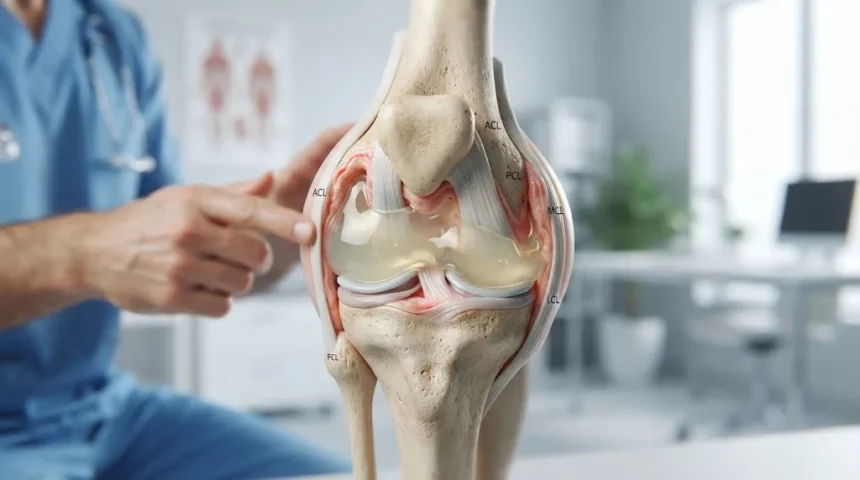
What Is Knee Joint Effusion?
Knee joint effusion means excess fluid has collected inside or around the knee joint. It is sometimes called “water on the knee” and can make the knee look swollen, feel tight, or become difficult to bend fully. Effusion is not a condition by itself but a sign that something is irritating the joint.
The knee naturally contains a small amount of synovial fluid that helps lubricate joint surfaces during movement. When the joint becomes injured, inflamed, or irritated, the body may produce more fluid than usual. This extra fluid can increase pressure inside the knee and contribute to stiffness, aching, and reduced range of motion.
Effusion can develop after an injury, overuse, arthritis flare, infection, or another medical condition affecting the joint. Some cases are mild and improve with conservative care, while others need prompt medical attention. The cause matters because treatment for a sports-related injury differs from treatment for infection or inflammatory arthritis.
Common Symptoms of Knee Effusion
Visible swelling is one of the most common signs of knee effusion. The kneecap may look less defined, and one knee can appear noticeably larger than the other. Some people notice swelling mainly above or around the kneecap, while others feel a more general fullness throughout the joint.
Stiffness often develops because excess fluid makes it harder for the knee to bend or straighten normally. You may notice difficulty squatting, climbing stairs, sitting with the knee bent, or fully extending the leg. The joint can feel heavy or pressured even when the pain itself is relatively mild.
Pain can vary widely depending on the underlying cause. An injury may produce sharp pain during certain movements, while arthritis-related swelling may cause a dull ache and morning stiffness. Warmth, redness, fever, locking, or inability to bear weight are more concerning symptoms that should not be ignored.
What Causes Fluid on the Knee?
Injuries are a common cause of knee effusion. Ligament sprains, meniscus tears, cartilage injuries, fractures, or a strong impact can irritate the joint and trigger fluid accumulation. Swelling that appears quickly after trauma may suggest bleeding or significant internal irritation and deserves appropriate assessment.
Overuse can also lead to swelling without one obvious injury. Repeated running, jumping, squatting, or sports activity may irritate structures around the knee when training volume increases too quickly. The joint can respond by producing more fluid, particularly when tissues are repeatedly loaded beyond their current capacity.
Medical conditions can also cause effusion. Osteoarthritis, rheumatoid arthritis, gout, infection, and other inflammatory conditions may all lead to knee swelling. Because these causes require different management, persistent or unexplained effusion should be evaluated rather than automatically treated as a simple exercise-related problem.
Knee Effusion After an Injury
The timing of swelling after an injury can provide useful clues. Rapid swelling within a few hours may occur after ligament damage, fracture, or another injury that causes bleeding inside the joint. Slower swelling over a day or two can happen with meniscus irritation or other inflammatory changes.
A knee injury may also cause instability, clicking, catching, or difficulty bearing weight. If the joint feels as though it might give way, a ligament or other stabilizing structure may be involved. A locked knee that cannot fully straighten can suggest a mechanical problem and should not be repeatedly forced through the blocked range.
Mild injuries can sometimes improve with reduced activity, gentle movement, and gradual rehabilitation. However, significant swelling after trauma should be taken seriously, especially if movement is severely limited. A healthcare professional can assess whether imaging or further testing is needed to identify the exact cause.
Arthritis and Knee Joint Effusion
Osteoarthritis can cause intermittent swelling when joint tissues become irritated. The knee may feel stiff after rest, achy during activity, or swollen after a demanding day. Symptoms can fluctuate, so some people have periods with very little swelling followed by temporary flare-ups.
Inflammatory arthritis can also produce effusion, often with warmth, stiffness, and pain. Conditions such as rheumatoid arthritis may affect more than one joint and can create symptoms that persist beyond normal exercise soreness. These problems usually require medical management rather than relying only on stretching or home remedies.
Managing arthritis-related effusion often includes activity adjustment, strengthening, and treatment for the underlying condition. Strong quadriceps and hip muscles can help support the knee during daily movement. However, repeated or severe swelling should be discussed with a clinician so treatment addresses the source rather than only the visible fluid.
Can Overuse Cause Knee Effusion?
Yes, overuse can sometimes lead to knee effusion, especially after a sudden increase in training. Running farther than usual, adding more squats, starting a new sport, or spending several days on your feet can increase joint stress. The knee may respond with temporary swelling when tissues become irritated.
The problem is often a rapid jump in workload rather than activity itself. Muscles, tendons, and joint tissues adapt over time when training progresses gradually. If the knee is asked to handle much more activity than usual without enough recovery, inflammation and fluid buildup can become more likely.
Reduce the aggravating activity temporarily while maintaining comfortable movement. Shorter walks, lighter exercise, or fewer repetitions may help during a flare. Once swelling settles, rebuild activity gradually instead of returning immediately to the same workload that triggered the problem.
How to Reduce Knee Swelling at Home
Relative rest can help when swelling follows overuse or a minor injury. This does not necessarily mean complete inactivity, but you may need to avoid heavy squats, long runs, repeated stairs, or other activities that clearly increase symptoms. Gentle walking and comfortable range-of-motion exercises can help prevent unnecessary stiffness.
Cold packs may provide temporary relief when the knee feels warm, swollen, or sore. Wrap the pack in a cloth and apply it for short periods rather than placing ice directly on the skin. Elevating the leg while resting may also help some people feel more comfortable, particularly after prolonged standing or activity.
Compression sleeves can provide light support and may reduce the feeling of swelling for some people. They should feel snug but not painfully tight or cause numbness or color changes in the foot. If swelling is significant or unexplained, home care should not replace medical assessment of the underlying cause.
Gentle Exercises for Knee Effusion
Heel slides can help maintain knee movement when swelling makes bending uncomfortable. Lie on your back and slowly slide the heel toward your body, then straighten the leg again within a comfortable range. Avoid forcing the knee into deep flexion because increased pressure can make the swollen joint feel more painful.
Quadriceps sets are another simple option. Keep the leg straight and gently tighten the thigh muscle by pressing the back of the knee toward the surface beneath you. Hold briefly, relax, and repeat without creating a sharp increase in pain or joint pressure.
Straight-leg raises may be added when you can tighten the quadriceps comfortably. Keep one knee bent for support and lift the other straight leg a short distance from the floor. These exercises help maintain muscle activity, but resistance and range should be increased only as swelling and pain begin to improve.
How Sitting Position Can Affect Knee Comfort
Long periods of sitting with the knee deeply bent can make a swollen joint feel tighter. The extra fluid limits available space inside the joint, so deep flexion may increase pressure and stiffness. Changing position regularly and occasionally straightening the leg can make prolonged sitting more comfortable.
If you are sitting at a desk, keep enough space under the table to move your legs rather than holding the knee in one fixed angle. A small footrest may also help some people shift position more easily. Frequent movement breaks are usually better than trying to maintain one perfect posture for several hours.
People managing both knee discomfort and radiating leg pain may need to consider how sitting affects several areas at once. This guide on how to sit with sciatica offers practical positioning ideas when nerve-related pain is also present alongside lower-body discomfort.
When Knee Effusion May Need Drainage
In some cases, a healthcare professional may remove fluid from the knee using a procedure called joint aspiration or arthrocentesis. This may be done to reduce pressure, examine the fluid, or help diagnose the cause. The procedure is not necessary for every swollen knee and depends on symptoms and clinical findings.
Testing the fluid can help identify infection, crystals associated with gout, blood, or inflammatory changes. This information can be especially important when the cause of swelling is unclear. Removing fluid may provide temporary relief, but swelling can return if the underlying problem is not treated.
Aspiration should be performed by a qualified healthcare professional using appropriate sterile technique. Do not attempt to drain a swollen knee yourself. Whether drainage is appropriate depends on the amount of fluid, severity of symptoms, and suspected cause of the effusion.
When Knee Effusion Could Be an Infection
A joint infection is an urgent medical condition because bacteria inside the knee can damage joint tissues quickly. Symptoms may include severe pain, marked swelling, warmth, redness, fever, or difficulty moving the joint. Some people may feel generally ill or weak in addition to having knee symptoms.
Infection can occasionally occur after surgery, injections, wounds, or bloodstream infections, although it may also appear without an obvious trigger. People with weakened immune systems or certain medical conditions may have higher risk. Any rapidly worsening hot and swollen knee should be assessed promptly.
Do not wait for home remedies to work if infection is possible. Joint aspiration, blood tests, and medical treatment may be needed quickly. Early assessment is especially important when swelling occurs with fever, chills, severe pain, or inability to bear weight.
When to See a Healthcare Professional
Seek prompt medical attention if knee swelling is severe, appears rapidly after an injury, or prevents normal weight-bearing. A loud pop, visible deformity, major instability, or inability to fully move the knee can indicate a significant internal injury. These symptoms should not be managed only with rest and ice.
Medical evaluation is also important when swelling keeps returning or persists for several weeks. Recurrent effusion can be associated with arthritis, meniscus problems, cartilage damage, gout, or another underlying condition. A clinician can examine the knee and decide whether imaging, blood tests, or joint fluid analysis is appropriate.
Urgent care is needed for a hot, red, swollen knee with fever or feeling seriously unwell. Sudden calf swelling, chest pain, or shortness of breath also requires immediate attention. These symptoms can indicate conditions beyond routine knee effusion and should not be treated as a simple overuse problem.
Conclusion
Knee joint effusion means excess fluid has collected in or around the knee, often causing swelling, stiffness, pressure, and reduced movement. Common causes include injuries, overuse, arthritis, gout, and infection. The appearance of swelling alone cannot identify the cause, so the surrounding symptoms and history are important.
Mild swelling after activity may improve with relative rest, cold therapy, gentle movement, and gradual strengthening. Exercises such as heel slides, quadriceps sets, and straight-leg raises can help maintain mobility and muscle function. Avoid forcing a swollen knee through deep or painful ranges while symptoms remain active.
Seek medical care for rapid swelling, major trauma, severe pain, instability, locking, fever, or a hot red joint. Persistent or recurring effusion also deserves evaluation. Identifying the cause early can help guide the right treatment and reduce the chance of ongoing stiffness or repeated flare-ups.
FAQs
What causes fluid to build up in the knee?
Knee fluid can increase because of injury, overuse, osteoarthritis, inflammatory arthritis, gout, infection, or other joint irritation. The exact cause depends on symptoms, history, and sometimes medical testing.
Can knee effusion go away on its own?
Mild swelling from overuse or a minor injury may improve with activity modification and gentle movement. Persistent, severe, or recurring swelling should be evaluated to identify the underlying cause.
Is walking good for knee effusion?
Gentle walking may be appropriate when pain and swelling remain manageable. Reduce distance or intensity if symptoms worsen significantly, and avoid forcing the knee through painful activity.
Should knee fluid always be drained?
No. Drainage is only needed in selected cases, such as significant swelling or when joint fluid needs to be tested. A healthcare professional should decide whether aspiration is appropriate.
When is knee effusion an emergency?
Seek urgent care for a hot, red, severely swollen knee with fever, major trauma, inability to bear weight, or rapidly worsening pain. These symptoms may indicate infection or serious injury.