


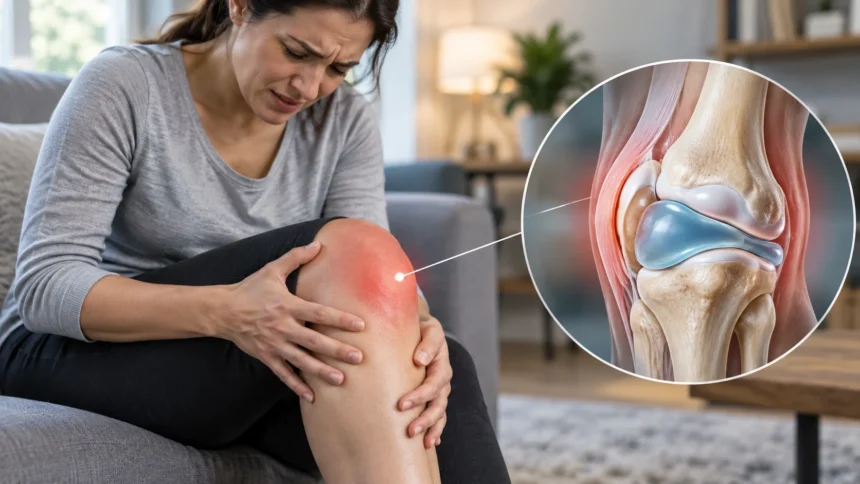
Joint effusion in the knee, often called “water on the knee,” happens when excess fluid collects inside or around the knee joint. This buildup can make the knee look swollen, feel stiff, and become uncomfortable during walking, bending, or weight-bearing activities. Effusion can develop suddenly after an injury or gradually because of arthritis, inflammation, infection, or other joint problems.
The knee normally contains a small amount of fluid that helps the joint move smoothly. When irritation or damage occurs, the body may produce more fluid as part of its inflammatory response. Understanding the likely cause is important because treatment for a sports injury can be very different from treatment for gout, arthritis, or an infected joint.
What Is Knee Joint Effusion?
Knee joint effusion means there is more fluid than normal inside the knee joint. The fluid may be synovial fluid, blood, inflammatory fluid, or another type depending on the underlying problem. This extra volume increases pressure inside the joint and can make the knee feel full, tight, or difficult to bend.
People sometimes use the term “water on the knee,” although the fluid is not actually water. It usually represents the body’s response to irritation, inflammation, trauma, or disease. The swelling can be mild and barely noticeable or significant enough to change the shape of the knee and limit normal movement.
Effusion is a symptom rather than a diagnosis by itself. A clinician usually tries to determine what is causing the excess fluid before recommending treatment. Factors such as recent injury, age, activity level, fever, joint warmth, and previous medical conditions can provide useful clues about the underlying cause.
Common Symptoms of Knee Effusion
Visible swelling is one of the most obvious symptoms of knee effusion. The kneecap may become less defined, and one knee may appear larger than the other. Some people notice fullness mainly above or around the kneecap, while others feel pressure throughout the entire joint.
Stiffness is also common because extra fluid makes it harder for the knee to bend and straighten normally. You may struggle to squat, climb stairs, kneel, or sit comfortably with the knee bent for long periods. The joint can also feel heavy or unstable, especially when the swelling is more pronounced.
Pain varies depending on the cause. An injury may produce sharp pain, arthritis may cause aching and stiffness, while infection can create severe pain with warmth and fever. The combination of swelling, pain, and reduced range of motion is usually more informative than swelling alone.
Injuries That Can Cause Knee Effusion
Sports injuries and falls are common reasons for sudden knee swelling. Ligament tears, including ACL injuries, can cause fluid or blood to accumulate inside the joint relatively quickly. Meniscus tears, fractures, and significant cartilage injuries can also trigger inflammation and visible swelling.
The timing of swelling can provide useful information. A knee that becomes very swollen within a few hours after injury may have bleeding inside the joint, while swelling that develops more slowly can occur with meniscus irritation or inflammation. However, timing alone cannot reliably identify the exact injury.
If swelling follows a twist, direct impact, or fall, avoid repeatedly testing the knee with running or deep squats. Significant instability, inability to bear weight, or a locked knee should be professionally assessed. Imaging may be recommended when the examination suggests ligament, meniscus, bone, or cartilage damage.
Osteoarthritis and Knee Fluid Buildup
Osteoarthritis is a common cause of recurring knee effusion, especially in older adults. As the joint changes over time, cartilage and surrounding tissues can become irritated. This irritation may lead to increased synovial fluid production and episodes of swelling after activity.
People with osteoarthritis often experience stiffness after rest, aching during walking, and reduced range of motion. The knee may swell more after prolonged standing, climbing stairs, or heavier activity. Symptoms can come and go rather than remaining at the same intensity every day.
Treatment usually focuses on managing the arthritis rather than simply removing the fluid. Strengthening, weight management when appropriate, activity modification, and pain treatment may all help. Persistent or frequent swelling may require medical evaluation to determine whether additional treatment is needed.
Gout and Inflammatory Arthritis
Gout can affect the knee and cause rapid swelling because uric acid crystals trigger intense inflammation inside the joint. The knee may become painful, hot, tender, and difficult to move. Symptoms can develop suddenly even when there has been no injury or unusual physical activity.
Other inflammatory forms of arthritis can also cause joint effusion. Rheumatoid arthritis and related conditions may affect several joints and produce recurring episodes of swelling, stiffness, and pain. Morning stiffness lasting longer than typical post-activity soreness can be another clue that inflammation may be involved.
These conditions need different treatment from a simple overuse injury. Blood tests, examination, imaging, or joint-fluid analysis may be used when inflammatory arthritis is suspected. Recurrent unexplained knee swelling should therefore be medically assessed rather than repeatedly treated only with rest and ice.
Infection Can Cause a Swollen Knee
A joint infection, also called septic arthritis, can cause significant knee effusion and requires prompt medical care. Bacteria or other organisms can enter the joint and produce rapidly increasing inflammation. The knee may become very painful, warm, swollen, and difficult or impossible to move comfortably.
Fever, chills, or feeling generally unwell can occur, although not everyone develops obvious systemic symptoms. Risk may be higher after recent surgery, joint procedures, certain infections, or in people with weakened immune systems. An infected knee can damage the joint quickly if treatment is delayed.
Urgent assessment is important when severe swelling occurs with fever, warmth, or intense pain. Doctors may remove fluid from the knee to test for infection and identify the organism involved. Treatment often requires antibiotics and sometimes drainage of the infected joint.
How Knee Effusion Is Diagnosed
Diagnosis usually starts with a physical examination and a detailed discussion of symptoms. A healthcare professional may ask when swelling started, whether there was an injury, and whether pain, fever, or stiffness is present. Comparing both knees can help identify changes in size, warmth, and range of motion.
Imaging may be recommended depending on the suspected cause. X-rays can identify fractures or arthritis-related changes, while ultrasound can detect fluid and certain soft-tissue problems. MRI may be useful when ligament, meniscus, cartilage, or other internal knee structures need closer evaluation.
Joint aspiration may be performed when the cause remains unclear or when infection, gout, or significant inflammation is suspected. A needle is used to remove fluid from the knee for analysis. The appearance and laboratory testing of the fluid can provide valuable information about what is happening inside the joint.
Treatment for Mild Knee Effusion
Mild swelling caused by temporary irritation may improve with reduced activity and time. Avoid movements that clearly increase pain, such as running, jumping, or deep bending. Gentle walking may still be appropriate when you can move without limping or significantly worsening symptoms.
Cold therapy can help reduce discomfort after recent activity or injury. Apply a cold pack wrapped in cloth for short periods rather than placing ice directly on the skin. Elevating the leg may also help with swelling, especially when the knee feels more uncomfortable after prolonged standing.
Over-the-counter pain medicines may be appropriate for some people, but they are not suitable for everyone. Kidney disease, stomach problems, blood-thinning medication, and other medical conditions can affect which options are safe. Ask a healthcare professional or pharmacist if you are unsure.
When Fluid May Need to Be Drained
Large effusions can create enough pressure to limit movement and cause significant discomfort. In some situations, a healthcare professional may perform joint aspiration to remove excess fluid. This can reduce pressure while also providing fluid that can be tested for crystals, infection, blood, or inflammation.
Draining the knee does not always solve the underlying problem. Fluid may return if arthritis, gout, injury, or another condition continues irritating the joint. The most effective treatment therefore depends on addressing the reason the effusion developed in the first place.
Aspiration should be performed using proper sterile technique because introducing bacteria into the joint can cause infection. It is not something to attempt at home. Your healthcare provider will determine whether drainage is necessary based on the amount of swelling, symptoms, and suspected diagnosis.
Exercises After Knee Swelling Improves
Once acute swelling and pain begin to settle, gentle exercises can help restore movement and strength. Simple knee bending and straightening within a comfortable range can reduce stiffness. The goal is to regain normal motion gradually rather than forcing the joint through painful positions.
Strengthening the quadriceps, hamstrings, hips, and calves can improve knee support as recovery progresses. Straight-leg raises, bridges, and controlled sit-to-stand exercises may be useful depending on the cause. Resistance should increase only when the knee tolerates the current level without becoming more swollen afterward.
Movement throughout the entire lower body also matters. Hip or groin discomfort can alter walking mechanics and affect how the knee is loaded, so understanding conditions such as inner thigh pain can be useful when symptoms extend beyond the knee. Persistent multi-area pain deserves professional assessment.
What Can Make Knee Effusion Worse?
Continuing high-impact exercise while the knee is clearly swollen can aggravate inflammation. Running, jumping, deep squats, and sports involving rapid direction changes may place additional stress on irritated tissues. Temporary activity modification is usually more sensible than repeatedly testing the swollen joint.
Aggressive stretching can also make symptoms worse when the joint is inflamed. A swollen knee often has reduced motion because excess fluid physically limits movement. Forcing the knee into deep flexion may increase pressure and discomfort without improving the underlying problem.
Ignoring recurring effusion is another mistake. If the swelling keeps returning after ordinary activity, there may be an untreated joint condition, structural injury, or inflammatory problem. Treating each episode only with ice may provide temporary relief while allowing the original cause to remain unaddressed.
How Long Does Knee Effusion Last?
The recovery timeline depends entirely on the cause. Mild overuse-related swelling may improve within several days, while effusion linked to ligament damage, meniscus injury, arthritis, gout, or infection can last longer. Some chronic conditions cause repeated episodes rather than one isolated period of swelling.
Improvement should usually include decreasing swelling, easier bending, less pain, and better walking. A knee that remains the same or becomes more swollen despite rest deserves further evaluation. The severity of the original problem often matters more than the amount of fluid visible at one moment.
Returning to demanding activity should happen gradually. Wait until everyday walking and basic movements are comfortable before adding high-impact exercise. If swelling returns after each increase in activity, reduce the workload and consider professional guidance to determine whether rehabilitation needs to change.
When Should You See a Doctor?
Seek medical care if the knee becomes severely swollen after an injury, especially if you cannot bear weight or the joint feels unstable. A locked knee, sudden loss of movement, or obvious deformity also deserves prompt evaluation. These symptoms can occur with significant structural injuries.
Urgent medical attention is important when swelling occurs with fever, redness, significant warmth, or severe pain. These symptoms can be associated with joint infection, which requires fast treatment. New calf swelling, chest pain, or difficulty breathing should also be evaluated urgently because they may indicate another serious condition.
Schedule a routine assessment if the effusion continues for several weeks or keeps returning without a clear reason. Recurrent fluid buildup may be linked to arthritis, meniscus problems, inflammatory disease, or other joint conditions. Identifying the cause can help prevent repeated episodes and unnecessary loss of mobility.
Conclusion
Joint effusion in the knee occurs when excess fluid accumulates inside or around the joint. Injuries, osteoarthritis, gout, inflammatory arthritis, infection, and repetitive irritation are common causes. Symptoms can include swelling, stiffness, pain, reduced movement, and a feeling of pressure or heaviness.
Mild cases may improve with temporary activity modification, cold therapy, elevation, and gradual return to movement. More significant effusions may require imaging, medication, rehabilitation, or joint aspiration. Treatment is most effective when it addresses the underlying cause instead of focusing only on reducing visible swelling.
Severe, recurrent, or unexplained knee swelling should be professionally evaluated. Fever, intense pain, inability to bear weight, or significant warmth are particularly important warning signs. Proper diagnosis allows treatment to be matched to the condition and can help protect long-term knee function.
FAQs
What causes joint effusion in the knee?
Common causes include ligament or meniscus injuries, osteoarthritis, gout, inflammatory arthritis, infection, and overuse. The exact cause usually depends on symptom timing, pain pattern, and whether an injury occurred.
Is knee effusion the same as water on the knee?
Yes. “Water on the knee” is a common term for knee joint effusion, although the excess fluid may actually be synovial fluid, blood, or inflammatory fluid rather than water.
Can knee effusion go away on its own?
Mild effusion from temporary irritation may improve with activity modification and time. Persistent, severe, or recurring swelling should be evaluated to determine whether an underlying condition requires treatment.
Should I exercise with knee effusion?
Gentle movement may be appropriate if it does not worsen symptoms. Avoid high-impact activities and deep bending while the knee is significantly swollen, and return to exercise gradually as discomfort improves.
When is knee effusion an emergency?
Seek urgent care if swelling occurs with fever, severe warmth, intense pain, inability to bear weight, major injury, or other serious symptoms. These signs can indicate infection or significant joint damage.