


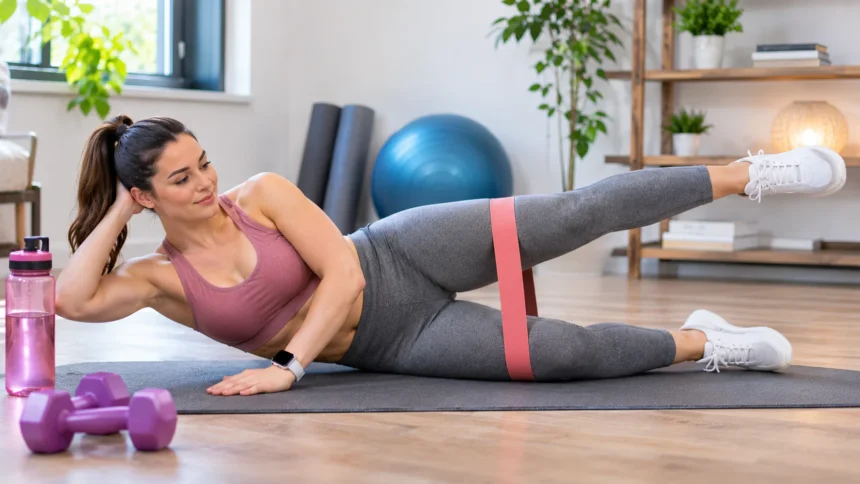
Hip abductions are simple movements that play an important role in lower-body strength, balance, and everyday mobility. Whether you are walking, climbing stairs, exercising, or standing on one leg, your hip muscles help stabilize your pelvis and control movement. Strengthening these muscles can support comfortable physical activity and improve coordination during common daily tasks.
Understanding what hip abductions are can help you perform exercises correctly and recognize their benefits. Hip abduction occurs when you move your leg away from the body’s midline. Several muscles around the outer hip contribute to this movement, including the gluteus medius, gluteus minimus, and other supporting muscles.
This guide explains the meaning of hip abductions, the muscles involved, and their importance for movement. You will also learn how to perform common hip abduction exercises, avoid mistakes, and incorporate them into a balanced fitness routine. These practical explanations can help beginners and experienced exercisers understand this important movement pattern.
What Are Hip Abductions?
Hip abduction is the movement of your leg away from the centerline of your body. For example, when you stand upright and move one leg sideways, you are performing hip abduction. This movement occurs at the hip joint and involves several supporting muscles. It is an essential part of many everyday activities.
The term abduction describes movement away from the body’s midline, while adduction refers to movement toward it. Both movements help the legs change position and maintain control. Hip abduction can occur while standing, lying down, or using exercise equipment. Different positions change how the muscles work against gravity or resistance.
Hip abductions are commonly included in strength training, physical therapy, and mobility programs. They help develop the muscles responsible for moving the thigh outward and stabilizing the pelvis. Although the movement appears simple, correct technique is important. Controlled hip abduction exercises can support functional movement without requiring complicated equipment.
Which Muscles Do Hip Abductions Work?
The gluteus medius is one of the primary muscles involved in hip abduction. Located along the outer portion of the hip, it helps move the thigh outward. It also plays a major role in maintaining pelvic stability when standing on one leg. This function is particularly important during walking and other weight-bearing activities.
The gluteus minimus works alongside the gluteus medius to support outward leg movement. This smaller muscle lies deeper within the hip region and contributes to joint control. The tensor fasciae latae, located toward the front and side of the hip, also assists with abduction. Together, these muscles help coordinate different lower-body movements.
Other muscles may contribute depending on hip position and the exercise being performed. Portions of the gluteus maximus can assist with certain abduction movements, especially when the hip is flexed. The surrounding core and pelvic muscles also provide stability during standing exercises. Understanding these roles helps explain why hip training involves more than moving the leg sideways.
Why Hip Abduction Matters for Everyday Movement
Hip abductors help keep your pelvis stable whenever you shift your body weight onto one leg. During walking, these muscles work to prevent excessive dropping of the pelvis on the unsupported side. This allows your body to move forward with greater control. Proper hip function is therefore important for efficient everyday movement.
Activities such as climbing stairs, stepping sideways, and changing direction also involve the hip abductors. These muscles coordinate with the core, thighs, and lower legs to maintain balance. When their strength or control is limited, some movements may become more challenging. However, balance and walking difficulties can have several different causes.
Developing hip abductor strength may support functional independence and comfortable physical activity. Strong muscles help the body manage the demands of walking, standing, and other routine tasks. They also contribute to movement control during recreational exercise. Hip abductions are therefore useful components of a broader lower-body fitness program.
Benefits of Hip Abduction Exercises
One important benefit of hip abduction exercises is improved strength around the outer hip. These movements challenge the gluteus medius, gluteus minimus, and assisting muscles. Greater strength can improve your ability to control your leg during different activities. Results depend on the exercise variation, resistance, and consistency of training.
Hip abduction exercises may also support balance and pelvic stability. When standing on one leg, the hip muscles help control the position of your pelvis. Strengthening them can improve your ability to manage certain movement demands. This is particularly helpful when exercises are combined with other balance and lower-body activities.
Another benefit is that hip abductions can be adapted for different fitness levels. Beginners can perform gentle side-lying or standing movements without extra equipment. More experienced individuals may use resistance bands, cables, or exercise machines. This flexibility makes hip abduction training accessible for home workouts, gyms, and supervised rehabilitation programs.
How to Perform Standing Hip Abductions
Standing hip abductions are a beginner-friendly exercise that requires little equipment. Begin by standing upright beside a stable chair, countertop, or wall for balance. Keep your feet comfortably apart and distribute your weight evenly. Hold the support lightly so you can focus on controlled movement rather than struggling to maintain balance.
Shift your weight onto one leg while keeping your standing knee slightly relaxed. Slowly move the opposite leg out to the side without leaning your upper body. Keep your toes generally pointing forward and maintain a comfortable range of motion. Return your leg toward the starting position in a slow, controlled manner.
Avoid lifting your leg so high that your pelvis tilts or your lower back arches. Focus on feeling the muscles along the outer hip working during the movement. Breathe normally and keep your shoulders relaxed throughout the exercise. If you experience discomfort, reduce the movement range or stop and seek appropriate guidance.
How to Do Side-Lying Hip Abductions Correctly
Side-lying hip abductions target the outer hip muscles while reducing the balance demands of standing exercises. Begin by lying on your side on a comfortable exercise mat. Keep your lower leg slightly bent for support and your upper leg extended. Align your shoulders, hips, and torso in a stable position.
Slowly lift your upper leg away from the lower leg while keeping the movement controlled. Maintain a comfortable hip position and avoid rotating your pelvis backward. Lift only as high as you can without shifting your body. Lower your leg gradually until you return to the starting position.
Keeping your toes slightly forward or neutral may help reduce excessive outward hip rotation. Avoid swinging your leg or using momentum to complete repetitions. The goal is to challenge the outer hip muscles through a manageable range. Side-lying hip abductions are commonly used in strengthening programs because they are easy to modify.
Seated Hip Abductions Using a Resistance Band
Seated hip abductions are another convenient option for strengthening the muscles around your hips. Sit upright on a stable chair with your feet resting comfortably on the floor. Place an appropriate resistance band around your thighs, above your knees. Make sure the band is secure and does not roll or create discomfort.
Keeping your feet grounded, gently move your knees outward against the resistance. Maintain an upright torso and avoid leaning backward to force the movement. Pause briefly when your knees reach a comfortable position. Slowly bring them back toward the starting position while maintaining control of the band.
Begin with a light resistance that allows smooth movement without excessive effort. Avoid forcing your knees beyond their natural range or pushing through hip discomfort. The seated position can be useful when balance makes standing exercises difficult. However, different variations challenge the muscles differently, so exercise selection should reflect your individual goals.
How to Use the Hip Abduction Machine
The hip abduction machine is a common piece of gym equipment designed to strengthen the outer hip muscles. Most machines position you in a seated posture with padded supports against the outside of your thighs. Resistance is applied as you move your legs apart. The machine provides a guided movement that may be convenient for beginners.
Adjust the seat and leg pads according to the machine’s instructions before beginning. Select a manageable resistance and sit with your back comfortably supported. Slowly push your thighs outward without jerking or leaning excessively. Return toward the starting position with control rather than allowing the weights to pull your legs inward.
Machine setup and movement range can vary between manufacturers. Avoid choosing heavy resistance that causes you to shift your torso or lose control. Stop if the exercise produces pinching, sharp pain, or unusual discomfort. A qualified fitness professional can help you understand the machine’s adjustments and appropriate technique.
Resistance Band Hip Abductions at Home
Resistance bands offer a convenient way to make hip abduction exercises more challenging. They are lightweight, portable, and available in different resistance levels. Bands can be used during standing, seated, or side-lying exercises. Their versatility makes them useful for home workouts where traditional gym equipment may not be available.
For standing band hip abductions, place a suitable loop band around your lower thighs or ankles. Stand beside a stable support and keep your posture upright. Slowly move one leg outward against the band’s resistance. Return your leg with control while preventing the band from pulling you into an uncomfortable position.
Choose a band that allows you to maintain proper movement without excessive strain. Inspect the material for tears or damage before each session. Avoid stretching bands beyond their recommended limits or using them near sharp surfaces. Controlled resistance training is generally more useful than increasing difficulty before you have developed reliable technique.
Hip Abductions vs. Hip Adductions
Hip abduction and hip adduction describe opposite directions of movement at the hip joint. Abduction involves moving the leg away from the body’s midline. Adduction involves bringing the leg toward the centerline. Both movements are essential for controlling leg position and maintaining coordinated lower-body movement.
Hip abduction primarily challenges muscles along the outer hip, including the gluteus medius and gluteus minimus. Hip adduction emphasizes muscles along the inner thigh, commonly called the adductors. These muscle groups work together during walking, balance activities, and changes in direction. Training both can contribute to balanced lower-body strength.
Many gyms provide separate machines for hip abduction and adduction exercises. However, both movement patterns can also be practiced using bodyweight exercises or resistance bands. Neither exercise automatically replaces the other because they emphasize different muscles. Including varied lower-body movements supports more complete strength and coordination.
Common Mistakes During Hip Abduction Exercises
One common mistake is using momentum instead of controlled muscle movement. Swinging the leg quickly may reduce your ability to maintain proper alignment. It can also make the exercise more difficult to control. Slowing down each repetition encourages better awareness of the muscles and movement pattern.
Another mistake involves leaning the torso excessively during standing hip abductions. This compensation can reduce the intended challenge and place unnecessary demands on other areas. Similarly, rotating the pelvis during side-lying exercises may change which muscles perform the movement. Maintaining a stable trunk helps keep the exercise focused.
Using too much resistance is another frequent problem. Heavy bands or machine settings can encourage jerky movements and shortened ranges of motion. Begin with a resistance level that allows comfortable, consistent technique. Gradually increase the challenge only when you can complete the movement without losing balance or control.
How Many Hip Abductions Should You Do?
The appropriate number of hip abductions depends on your fitness level, goals, and physical condition. Beginners often benefit from practicing a small number of controlled repetitions while learning the technique. Focus on comfortable movement rather than trying to reach a particular number. Exercise quality matters more than completing repetitions with poor alignment.
A general strengthening routine may include one or more manageable sets using a resistance that matches your ability. For example, some beginners may find approximately eight to twelve controlled repetitions comfortable. Others may need fewer repetitions or a simpler variation. Adjust the amount according to fatigue, movement quality, and professional guidance when necessary.
Allow enough recovery between challenging sessions, particularly when introducing unfamiliar exercises. Your muscles may need time to adapt to new movement demands. Avoid increasing resistance, repetitions, and frequency all at once. Gradual progression supports sustainable improvement while reducing the likelihood of excessive soreness or irritation.
Do Hip Abductions Help With Hip Stability?
Hip abductions can strengthen muscles that contribute to pelvic and hip stability. The gluteus medius and gluteus minimus help control the pelvis during single-leg support. These muscles become active during walking, climbing stairs, and other everyday tasks. Strengthening them may improve the body’s ability to manage certain movement demands.
However, hip stability involves more than the strength of one muscle group. The core, hip extensors, adductors, and surrounding joints also contribute to coordinated movement. Balance, proprioception, and movement technique influence how effectively your body responds to physical challenges. A comprehensive program should therefore include several types of exercises.
People recovering from injuries may receive hip abduction exercises as part of a rehabilitation program. The specific benefits depend on the underlying condition and individual movement needs. Strengthening alone does not guarantee that pain or instability will disappear. Professional assessment is important when symptoms persist or interfere with normal activities.
Hip Abductions for Runners and Active Individuals
Running places repeated demands on the hips because each stride involves briefly supporting body weight on one leg. The hip abductors help control pelvic position during this phase. Adequate strength and coordination can support efficient movement mechanics. Hip abduction exercises may therefore complement a balanced running and strength training routine.
Athletes participating in sports that involve sideways movement may also benefit from hip abductor training. Activities such as basketball, tennis, and football require coordinated changes in direction. The outer hip muscles work alongside other lower-body muscles during these movements. Strengthening them contributes to overall movement preparation rather than providing an isolated solution.
Hip abductions should not replace other essential exercises such as squats, lunges, and appropriate balance training. Different movements challenge the lower body in different ways. Combining exercises can help develop more complete strength and control. Runners experiencing persistent hip, knee, or leg pain should seek evaluation rather than assuming weakness is the only cause.
Are Hip Abductions Good for Beginners?
Hip abductions are generally accessible to beginners because the movement can be performed without heavy equipment. Standing and side-lying variations allow people to practice basic hip control. The difficulty can be adjusted by changing body position or using light resistance. This makes the exercise suitable for many introductory fitness routines.
Beginners should prioritize balance, comfortable movement, and correct positioning. A stable support can make standing variations easier to perform. Side-lying exercises may be preferable when balance is a concern. Starting with manageable movements helps build confidence before progressing toward more challenging versions.
Not everyone needs the same exercise variation or training intensity. People with recent injuries, significant pain, or certain joint conditions may require modifications. A physical therapist or qualified healthcare professional can recommend suitable exercises when necessary. The most effective beginner routine is one that supports gradual progress without creating unnecessary discomfort.
When Should You Avoid Hip Abduction Exercises?
Hip abduction exercises should be modified or avoided when they cause sharp pain, significant discomfort, or worsening symptoms. Mild muscle effort is expected during strengthening, but joint pain should not be ignored. Continuing through painful movements may aggravate certain conditions. Stop the exercise and seek guidance if discomfort persists.
People recovering from hip surgery, fractures, or significant injuries may have specific movement restrictions. Some medical conditions require avoiding certain hip positions during early recovery. Rehabilitation instructions should take priority over general fitness advice. A healthcare professional can determine when hip abduction exercises are appropriate and how they should be performed.
New or unexplained hip pain also deserves careful attention before beginning demanding exercises. Pain accompanied by major swelling, inability to bear weight, or symptoms following significant trauma requires prompt medical evaluation. Do not attempt to treat every hip problem through strengthening alone. Identifying the underlying cause is essential for safe exercise selection.
How to Include Hip Abductions in Your Workout Routine
Hip abductions can be included alongside other lower-body strengthening exercises. Many people perform them after a gentle warm-up or as part of a focused hip training session. They can complement squats, bridges, lunges, and suitable balance movements. The best arrangement depends on your overall training goals and available time.
Choose one or two hip abduction variations that you can perform with reliable technique. For example, you might practice standing hip abductions during a beginner routine and use resistance bands as your strength improves. There is no need to perform every variation in one session. Variety can be introduced gradually as your needs change.
Pay attention to how your hips respond during and after exercise. If you experience excessive soreness or reduced movement quality, allow additional recovery before increasing the challenge. Consistency and gradual progression are more valuable than forcing difficult workouts. A balanced training routine supports strength, mobility, and comfortable everyday movement.
Conclusion
Hip abductions are movements that take the leg away from the body’s midline and challenge important outer hip muscles. The gluteus medius, gluteus minimus, and tensor fasciae latae contribute to this action. These muscles also help maintain pelvic stability during walking and standing. Understanding their function explains why hip abduction exercises appear in many fitness programs.
Common variations include standing hip abductions, side-lying leg raises, resistance band exercises, and seated machine movements. Each option offers a different way to challenge the same general movement pattern. Proper form, controlled repetitions, and appropriate resistance are important for safe practice. Beginners can start with simple variations and progress as their abilities improve.
Including hip abductions in a balanced fitness routine may support lower-body strength, coordination, and movement control. However, these exercises are only one part of maintaining healthy hip function. Combine them with suitable mobility, balance, and strengthening activities. If you experience persistent pain or have an existing hip condition, seek professional advice before progressing.
Frequently Asked Questions
What are hip abductions?
Hip abductions are movements that take your leg away from the body’s midline. They primarily involve the gluteus medius, gluteus minimus, and tensor fasciae latae muscles.
What are the benefits of hip abduction exercises?
Hip abduction exercises strengthen outer hip muscles and may improve pelvic stability, balance, and movement control. They can support everyday activities such as walking, climbing stairs, and standing on one leg.
Can you do hip abductions every day?
Gentle hip abduction movements may be suitable for regular activity, but challenging strengthening sessions require appropriate recovery. Frequency should depend on your fitness level, exercise intensity, and individual needs.
Are hip abductions better with bands or machines?
Both methods can strengthen the outer hip muscles effectively. Resistance bands offer convenience and flexibility, while machines provide guided resistance. The best choice depends on comfort, equipment access, and training goals.
Do hip abductions help with hip pain?
Hip abductor strengthening may help certain conditions when included in an appropriate treatment program. However, hip pain has many causes, and exercises should be selected according to a professional assessment.