


Can You Get Gout in Your Knee?
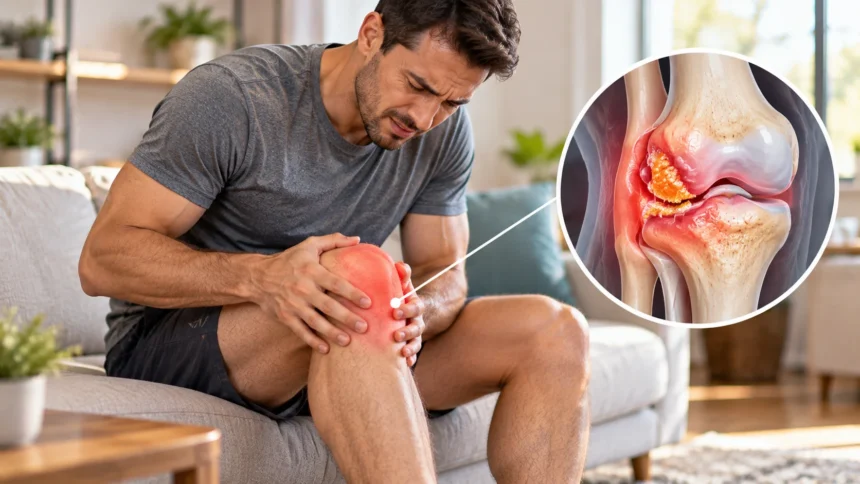
Yes, gout can affect the knee. Although gout is commonly associated with the big toe, uric acid crystals can accumulate in many joints, including the knees, ankles, wrists, fingers, and elbows. When these crystals trigger inflammation inside the knee joint, the result can be sudden pain, swelling, warmth, redness, and difficulty moving comfortably.
Knee gout can appear unexpectedly and may become painful within several hours. Some people wake with intense knee pain despite feeling normal the previous day, while others notice discomfort that gradually becomes more severe. The affected knee can become so sensitive that walking, bending the joint, or even light pressure from clothing feels uncomfortable.
Because several conditions can cause sudden knee swelling and pain, symptoms should not automatically be assumed to be gout. Joint infection, injury, arthritis, and other inflammatory problems can sometimes look similar. A healthcare professional may use your symptoms, medical history, blood tests, imaging, or joint-fluid analysis to determine the underlying cause.
What Is Gout and Why Does It Affect Joints?
Gout is a form of inflammatory arthritis associated with uric acid crystals accumulating in and around joints. Uric acid is produced when the body breaks down substances called purines, which occur naturally in the body and are also present in certain foods. Normally, uric acid dissolves in the blood and leaves the body mainly through the kidneys.
Problems can develop when the body produces too much uric acid or the kidneys do not remove enough of it. Higher uric acid levels can allow sharp crystals to form inside joints over time. These crystals can trigger a powerful inflammatory reaction when the immune system responds to them, creating the sudden pain and swelling associated with a gout attack.
Not everyone with elevated uric acid develops gout, and a single blood test does not always explain joint symptoms. Some people can have high uric acid without experiencing attacks, while uric acid may occasionally appear normal during an active flare. Diagnosis therefore depends on the overall clinical picture rather than one laboratory result alone.
What Does Gout in the Knee Feel Like?
Gout in the knee often causes intense joint pain that develops quickly. The pain may feel deep, throbbing, burning, or extremely tender, and it can make weight-bearing uncomfortable. Some people find that bending or straightening the knee becomes difficult because inflammation and swelling restrict the joint’s normal range of motion.
The knee may also look visibly swollen and feel noticeably warmer than the surrounding skin. Redness or skin discoloration can sometimes appear around the joint, particularly during a strong inflammatory flare. Even gentle contact can become uncomfortable, which distinguishes an acute gout attack from some types of mild muscular or activity-related soreness.
Symptoms can vary from person to person, so location alone does not confirm gout. Pain behind the knee, for example, can occur for many different reasons unrelated to uric acid crystals. Understanding other potential causes of back-of-knee pain can be useful when your discomfort is concentrated in the posterior part of the joint.
Common Symptoms of Knee Gout
Severe pain is one of the most recognizable symptoms of gout in the knee. A flare may begin suddenly and become highly uncomfortable within a short period, sometimes overnight. The strongest pain frequently occurs during the early portion of an attack before gradually improving, although soreness and joint sensitivity may remain after the most intense inflammation has settled.
Swelling is another common sign. Fluid and inflammation inside the joint can make one knee appear larger than the other, and bending the leg may feel tight or restricted. The area can also become warm and red because increased blood flow and inflammatory activity are occurring around the affected tissues.
Some people experience lingering discomfort between severe episodes, particularly when gout has been present for a long time. Recurrent attacks can eventually affect joint function if the condition is not properly managed. Repeated unexplained knee swelling deserves medical evaluation rather than relying only on home treatment or assuming each episode is caused by exercise.
What Causes Gout in the Knee?
The underlying cause of gout is the formation of urate crystals, usually associated with prolonged elevations in uric acid. These crystals may remain unnoticed until they trigger inflammation within a joint. Although gout often begins in smaller joints, the knee can also become involved, particularly in people who experience repeated or more widespread attacks.
Several factors can increase the likelihood of elevated uric acid. Kidney function, genetics, certain medications, alcohol intake, dehydration, some dietary patterns, and metabolic conditions can influence how uric acid is produced or removed. Body weight and certain health conditions may also be associated with a greater risk of gout.
Diet is only one part of the picture, which is important because gout is sometimes incorrectly treated as purely a food-related problem. A person can follow a generally balanced diet and still develop gout because genetics, kidney handling of uric acid, medication use, and other factors matter. Effective management therefore often requires more than simply avoiding a few foods.
What Can Trigger a Gout Flare in the Knee?
Gout attacks can sometimes appear after changes that influence uric acid levels or the body’s fluid balance. Dehydration, heavy alcohol consumption, illness, surgery, fasting, and sudden dietary changes are possible triggers for some individuals. Certain medications can also affect uric acid handling, so medication history is an important part of evaluating recurrent gout symptoms.
Some foods are naturally higher in purines, including certain organ meats, red meats, and selected seafood. Large amounts may contribute to gout risk in susceptible people, although individual responses vary. Beverages high in fructose and frequent heavy alcohol intake may also affect uric acid levels or increase the likelihood of attacks in some individuals.
It is useful to look for patterns without assuming every flare has an obvious trigger. Many people cannot identify one specific cause before each episode. Keeping notes about symptoms, hydration, alcohol use, medications, illness, and dietary changes may help identify personal patterns that can later be discussed with a healthcare professional.
How Is Gout in the Knee Diagnosed?
A healthcare professional usually begins by asking when the pain started, how quickly it developed, whether previous attacks have occurred, and which joints have been affected. They may examine the knee for swelling, warmth, redness, tenderness, and reduced movement. Your medical history and medication use can provide additional clues about the likelihood of gout.
One of the most definitive diagnostic methods involves removing a small amount of fluid from the swollen joint and examining it for urate crystals. Joint-fluid analysis can also help rule out infection, which is particularly important when a joint becomes suddenly hot, painful, and swollen. Blood tests may be used to measure uric acid and assess other health factors.
Imaging may sometimes support the diagnosis or identify alternative explanations for knee pain. Ultrasound and certain specialized scans can detect crystal deposits in some cases, while standard imaging can reveal other joint problems. The exact tests needed depend on how typical the symptoms appear and whether another condition needs to be excluded.
How Long Does a Knee Gout Attack Last?
An untreated gout attack may last several days and sometimes longer, although the exact duration varies. Pain is often most intense early in the flare and then gradually decreases. Swelling, stiffness, and sensitivity can persist after the strongest pain improves, particularly when the attack is severe or treatment begins later.
Early treatment can often reduce the severity or duration of symptoms. This is one reason people with a confirmed gout diagnosis are commonly given a plan for managing future flares. Following that plan promptly may be more effective than waiting until inflammation has become severe before taking action.
Repeated attacks should not simply be viewed as temporary episodes that can always be waited out. Frequent flares can indicate that uric acid remains above a level where crystals continue to form. Long-term management may therefore focus on preventing future attacks rather than only treating pain when it appears.
Treatment Options for Gout in the Knee
Treatment during a gout flare generally focuses on reducing inflammation and controlling pain. Depending on individual health factors, clinicians may use anti-inflammatory medicines, colchicine, or corticosteroids. The appropriate option depends on your medical history, kidney function, other medications, and possible risks, so treatment should be individualized rather than copied from another person’s plan.
Long-term treatment may be considered when gout attacks happen repeatedly, crystal deposits are present, or complications develop. Medications that lower uric acid can reduce crystal formation over time when used appropriately. These medicines are usually managed with follow-up because uric acid levels and treatment response may need monitoring.
Long-term gout care often combines medication, lifestyle adjustments, and management of related health conditions. The aim is to reduce both the frequency of attacks and the amount of crystal buildup over time. Stopping treatment without guidance can allow uric acid levels to rise again, so ongoing management is often important for people with recurrent disease.
At-Home Relief During a Knee Gout Flare
Resting the affected knee can help reduce unnecessary irritation while inflammation is active. Avoid forcing the joint through painful movement or continuing strenuous exercise simply to keep it mobile. Elevating the leg may also feel more comfortable when swelling is present, especially during the most painful part of an attack.
A wrapped cold pack may help with pain and swelling for some people. Apply it for short periods rather than placing ice directly against the skin. Hydration is also generally important, particularly if dehydration may have contributed to the flare, although people with fluid restrictions should follow their healthcare provider’s specific advice.
Home care should support, not replace, appropriate medical treatment when gout is suspected or confirmed. Over-the-counter medicines may not be suitable for everyone, especially people with kidney disease, stomach ulcers, blood-thinning medication, or certain cardiovascular conditions. Check with a healthcare professional or pharmacist if you are unsure whether a medication is safe for you.
Foods and Lifestyle Habits That May Help
A balanced eating pattern can support gout management alongside medical care. Drinking adequate water, limiting heavy alcohol intake, and reducing frequent consumption of high-purine foods may help some people manage uric acid levels. Changes should be realistic enough to maintain long term rather than relying on very restrictive diets that are difficult to sustain.
Weight management may also be relevant when appropriate, but rapid weight loss and extreme fasting are generally not ideal approaches because they may influence uric acid levels. Gradual lifestyle changes involving balanced nutrition and regular physical activity are usually more sustainable. During an active knee flare, however, high-impact exercise may need to be temporarily reduced.
It is also useful to manage other health factors that commonly occur alongside gout. Blood pressure, kidney function, blood sugar, and cardiovascular health may influence overall treatment decisions. Regular medical follow-up can help ensure that gout management fits safely within the broader context of your health rather than focusing only on joint symptoms.
Can Exercise Help After Knee Gout?
Exercise can be useful once an acute gout flare has settled and normal movement becomes comfortable again. Gentle walking, mobility exercises, and progressive strengthening may help maintain knee function and general fitness. Start gradually because the joint can remain sensitive even after the strongest pain and visible swelling have improved.
Strengthening the muscles around the knee can improve support for everyday movement, but exercise does not remove uric acid crystals by itself. Physical activity works best as part of a broader management plan that may also include medication, hydration, nutrition, and weight management. Avoid interpreting increased exercise as a replacement for treatment when gout is recurrent.
During a severe flare, pushing through intense pain is unlikely to be helpful. Rest the affected joint and return to exercise progressively as symptoms settle. If swelling or pain repeatedly returns when activity resumes, professional evaluation can help determine whether gout is still active or another knee problem is contributing.
When Knee Pain Could Be Something Other Than Gout
Many conditions can cause knee swelling and pain, so not every hot or painful knee is caused by gout. Osteoarthritis, pseudogout, ligament injuries, bursitis, tendon problems, and meniscus injuries can create overlapping symptoms. The pattern of pain, speed of onset, swelling, history, and physical examination can help distinguish these conditions.
Joint infection is particularly important because it can resemble a severe gout attack. A suddenly swollen, hot, painful joint accompanied by fever, feeling very unwell, or rapidly worsening symptoms needs prompt medical assessment. Infection can damage a joint if treatment is delayed, so it should not be managed as ordinary gout without proper evaluation.
Seek medical attention if this is your first severe episode, the diagnosis is uncertain, or symptoms are unusually intense. Medical review is also appropriate when the knee cannot bear weight, swelling persists, or repeated attacks continue. Getting the correct diagnosis helps ensure that treatment addresses the actual cause rather than only temporarily masking pain.
Conclusion
Yes, you can get gout in your knee. The condition occurs when uric acid crystals trigger inflammation within the joint, leading to sudden pain, swelling, warmth, tenderness, and reduced movement. Although gout commonly affects the big toe, larger joints such as the knee can also become involved.
Relief during an attack often involves reducing inflammation, resting the knee, and following an appropriate treatment plan. Long-term management may include uric acid-lowering medication, hydration, dietary adjustments, and attention to related health conditions. Preventing recurring attacks is usually more effective than treating each flare in isolation.
Because knee gout can resemble infection, injury, or other forms of arthritis, diagnosis matters. Seek medical care when symptoms are severe, unexplained, or accompanied by fever or feeling unwell. Identifying the cause early can help protect the joint and guide safer, more effective treatment.
FAQs
Can gout start in the knee?
Yes, gout can begin in the knee even though the big toe is a more common first location. Urate crystals can accumulate in many joints and trigger sudden inflammation wherever they are deposited.
What does knee gout look like?
Knee gout may cause visible swelling, redness, warmth, and tenderness around the joint. The knee can appear noticeably larger than the unaffected side and may become difficult or painful to bend.
Can gout in the knee go away on its own?
A gout flare may eventually settle without treatment, but untreated attacks can last longer and may return. Repeated episodes should be medically evaluated because ongoing crystal buildup can contribute to joint damage.
Is walking good for gout in the knee?
During a painful flare, limiting weight-bearing activity may be more comfortable. Once inflammation settles, gradual walking and gentle exercise can support mobility, provided movement does not significantly increase pain or swelling.
When should I see a doctor for knee gout?
Seek medical care for a first severe attack, persistent swelling, repeated flares, fever, inability to bear weight, or rapidly worsening symptoms. A hot swollen joint may require urgent evaluation to exclude infection.