


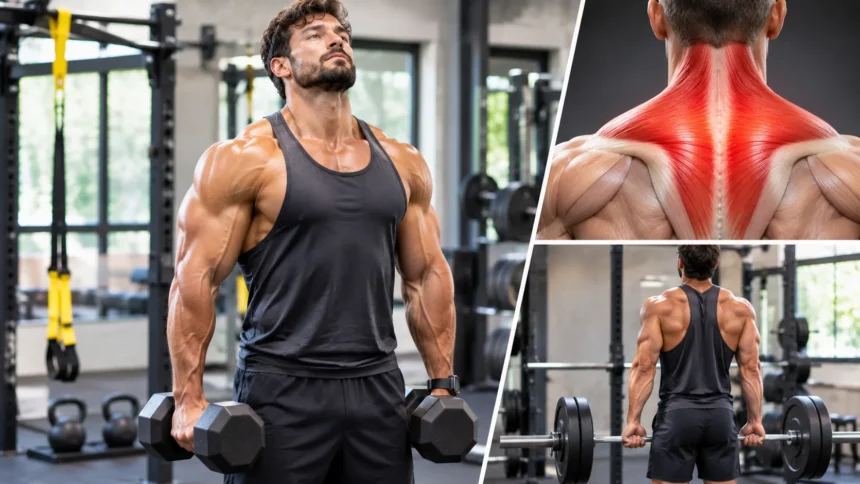
The trapezius muscles play an important role in shoulder movement, upper back stability, and everyday activities. Whether you are lifting objects, reaching overhead, or carrying a backpack, these muscles help control the position of your shoulder blades. A well-planned traps muscle workout can improve strength, coordination, and upper body function. However, proper technique is essential to avoid unnecessary strain around the neck and shoulders.
A traps muscle workout is a strength training routine that targets the trapezius muscles in the upper and middle back. Exercises such as shrugs, rows, face pulls, and selected shoulder blade movements can help strengthen different regions of these muscles. The best routine combines suitable resistance with controlled movement and adequate recovery. This guide explains trapezius anatomy, exercise benefits, proper form, workout variations, common mistakes, and practical training tips.
What Is a Traps Muscle Workout?
A traps muscle workout focuses on strengthening the trapezius, a large muscle extending from the neck across the shoulders and down the upper back. It helps control several movements of the shoulder blades. These movements include elevation, retraction, upward rotation, and depression. Different exercises emphasize different functions of the trapezius.
The trapezius is commonly divided into upper, middle, and lower regions. Each region contributes to shoulder blade movement and stability in a different way. A balanced training routine should consider all three rather than focusing entirely on shoulder shrugs. This approach supports more complete upper back function.
Trapezius exercises can be performed with dumbbells, resistance bands, cable machines, or bodyweight movements. The right equipment depends on individual experience and available resources. Beginners can start with lighter resistance and simple exercises. More experienced individuals may gradually increase the challenge while maintaining controlled technique.
Understanding the Trapezius Muscle Anatomy
The trapezius is a broad, superficial muscle covering part of the upper back and neck. It extends from structures near the base of the skull and spine toward the collarbone and shoulder blade. Its fibers run in different directions. This arrangement allows the muscle to contribute to several upper body movements.
The upper trapezius helps elevate and upwardly rotate the shoulder blade. The middle fibers contribute primarily to scapular retraction, which involves moving the shoulder blades toward each other. The lower fibers help with depression and upward rotation. These regions work together during many reaching and lifting activities.
The trapezius does not function independently from the surrounding muscles. The serratus anterior, rhomboids, levator scapulae, and rotator cuff muscles also influence shoulder movement. Coordination between these structures supports comfortable upper body activity. Understanding their relationships helps explain why a varied exercise routine is more useful than relying on one movement.
Major Benefits of Training Your Traps
One benefit of trapezius training is improved strength around the upper back and shoulders. The muscle contributes to controlling the shoulder blades during many movements. Developing this strength may support activities involving carrying, pulling, and reaching. However, results depend on consistent training and suitable exercise selection.
Traps exercises can also improve muscular endurance and movement control. The shoulder blades must remain appropriately positioned during many upper body tasks. Strengthening the muscles involved may help people perform these tasks more comfortably. Nevertheless, muscle training does not guarantee that shoulder or neck discomfort will disappear.
Another advantage is the ability to develop a more balanced upper body workout. Rows, face pulls, and other pulling exercises involve several muscles rather than isolating only one region. This can improve overall strength and coordination. Combining trapezius training with appropriate chest, shoulder, and arm exercises supports a well-rounded fitness program.
How to Warm Up Before a Traps Workout
A warm-up prepares the shoulders and upper back for exercise through comfortable movement. Gentle shoulder rolls, arm circles, and light pulling movements can be useful starting points. These activities help you become familiar with the range of motion required. The goal is preparation rather than stretching aggressively.
You can begin with slow movements that do not produce discomfort. Moving the shoulder blades forward and backward can help practice controlled scapular movement. Light resistance band exercises may also be appropriate. Avoid forcing the neck into extreme positions during preparation.
Before using heavier resistance, perform a few practice repetitions with a lighter load. This allows you to check your technique and comfort. Increase the challenge only when the movement feels controlled. A gradual warm-up helps make the workout more manageable without requiring a complicated routine.
Dumbbell Shrugs for Upper Trapezius Strength
Dumbbell shrugs are a familiar exercise for targeting the upper trapezius muscles. The movement involves lifting the shoulders toward the ears against resistance. It can be performed with two appropriately weighted dumbbells. Controlled shoulder elevation is more important than using the heaviest possible equipment.
Stand comfortably with a dumbbell in each hand and your arms resting by your sides. Keep your head in a relaxed position while slowly raising both shoulders upward. Pause briefly before lowering them with control. Avoid bending the elbows excessively or using your legs to create momentum.
Do not roll the shoulders in large circles during the exercise. The main action should be a controlled upward and downward movement. Choose a resistance level that allows smooth repetitions without neck discomfort. Beginners should prioritize technique and gradually increase resistance as strength develops.
Barbell Shrugs: Form and Common Mistakes
Barbell shrugs provide another way to strengthen the upper trapezius. The exercise uses a barbell held in front of the body while the shoulders move upward and downward. Because the barbell can support substantial resistance, careful load selection is important. Beginners may benefit from learning the movement with dumbbells first.
Stand with your feet comfortably apart and hold the bar using an appropriate grip. Keep your arms relatively straight and raise your shoulders without leaning backward. Lower the bar through a controlled movement. Avoid using sudden body movements to lift a weight that is difficult to manage.
One common mistake is allowing the neck to extend excessively while shrugging. Another is choosing resistance that causes uncontrolled movement. Both can make the exercise less comfortable and reduce attention to proper technique. Use suitable equipment and seek qualified instruction when learning unfamiliar weighted exercises.
Face Pulls for Upper Back and Shoulder Control
Face pulls are commonly performed with a cable machine or suitable resistance band. They involve pulling the resistance toward the upper face while the arms move outward. The exercise recruits several upper back and shoulder muscles, including portions of the trapezius. It can complement traditional shrugging movements.
Begin with the resistance positioned around upper chest or face height, depending on the equipment and exercise variation. Hold the attachment with both hands and step back to create suitable tension. Pull slowly while allowing the elbows to move outward comfortably. Return to the starting position with control.
Keep your neck relaxed and avoid leaning backward excessively. The movement should remain comfortable around the shoulders. Using lighter resistance can make it easier to focus on technique. Face pulls may be useful for upper back training, but they are not a guaranteed treatment for shoulder problems.
Resistance Band Pull-Aparts for the Traps
Resistance band pull-aparts are a simple exercise that can be performed at home. They challenge the muscles involved in moving the shoulder blades toward each other. The middle trapezius and other upper back muscles contribute to this action. A light resistance band is often sufficient for beginners.
Hold the band in front of your chest with both hands. Keep your shoulders relaxed and slowly move your hands apart to stretch the band. Allow your shoulder blades to move naturally without forcing them together. Return to the starting position under control.
Avoid raising the shoulders excessively or arching the lower back. If the band feels too difficult to stretch, choose lighter resistance. The movement should remain smooth and comfortable. Band pull-aparts can be included in warm-ups or strength sessions depending on the resistance and exercise plan.
Bent-Over Rows for Middle Trapezius Strength
Bent-over rows are compound pulling exercises that involve the middle trapezius, rhomboids, latissimus dorsi, and other muscles. They help develop upper back strength while challenging trunk stability. Rows can be performed with dumbbells, barbells, or suitable resistance equipment. The best variation depends on experience and comfort.
For a dumbbell version, hold the weights and hinge gently at the hips while maintaining a comfortable back position. Pull the dumbbells toward your torso with controlled elbow movement. Allow the shoulder blades to move naturally as you pull. Lower the weights slowly without jerking.
Avoid using momentum to lift resistance that is too heavy. A supported row variation may be more comfortable for people who find the bent-over position difficult. Choose a movement that allows steady breathing and controlled technique. Rows are useful for general upper back development rather than isolating the trapezius alone.
Lower Trapezius Exercises and Why They Matter
The lower trapezius contributes to shoulder blade depression and upward rotation. These functions are important during various overhead and reaching movements. Lower trapezius training is often overlooked when workouts focus mainly on upper trapezius shrugs. Including suitable exercises can create a more balanced shoulder training routine.
Prone Y raises are one option for challenging the lower trapezius. They involve lifting the arms in a Y-shaped position while lying face down or using a suitable supported setup. The movement should use light resistance and remain comfortable. Large arm movements are not necessary to achieve muscular engagement.
Other exercises, including certain wall slide variations, may also challenge muscles involved in upward shoulder blade rotation. Technique and shoulder comfort are especially important. Some individuals need modified movements because of limited mobility or discomfort. A qualified trainer or physical therapist can help select suitable options when necessary.
How to Perform Prone Y Raises
Prone Y raises are commonly used to strengthen muscles involved in shoulder blade control. They can be performed lying face down on an exercise mat or supported bench. The arms move into a Y-shaped position overhead. Light effort and controlled movement are more important than lifting heavy weights.
Begin with your forehead comfortably supported and your arms positioned diagonally above your shoulders. Gently lift the arms a small distance while keeping the neck relaxed. Focus on smooth movement rather than raising the hands as high as possible. Lower the arms slowly to complete the repetition.
Avoid excessive arching through the lower back or lifting your head to create momentum. If the exercise causes shoulder discomfort, reduce the movement range or stop. Beginners can perform the exercise without additional weight. Resistance should only be introduced when the movement is comfortable and controlled.
Wall Slides for Shoulder Blade Mobility
Wall slides are useful for practicing coordinated shoulder and upper back movement. They involve moving the arms along a wall while maintaining comfortable trunk positioning. The trapezius and serratus anterior contribute to controlling the shoulder blades. This makes the movement relevant to a balanced shoulder exercise routine.
Stand facing a wall with your forearms or hands supported against it. Slowly slide the arms upward within a comfortable range while allowing the shoulder blades to rotate naturally. Keep your neck relaxed and avoid forcing the shoulders into painful positions. Return to the starting position with control.
Wall slides can be performed without additional resistance, making them convenient for home routines. Some people find them useful during warm-ups or gentle mobility sessions. However, they should not cause sharp pain or unusual tingling. Modify the range according to comfort and seek advice if symptoms persist.
Traps Muscle Workout With Dumbbells at Home
A dumbbell-based traps workout can include shrugs, supported rows, and selected upper back movements. These exercises challenge different functions of the trapezius. You do not need several pieces of equipment to begin. A stable surface and appropriately weighted dumbbells may provide enough variety for a simple routine.
Start with controlled shrugs to emphasize shoulder elevation. Follow with a supported dumbbell row to challenge the upper back through a pulling movement. If comfortable, include a light shoulder blade control exercise. The exact number of exercises should reflect your experience and available time.
Choose weights that allow smooth repetitions without unnecessary neck or back strain. Rest between sets when needed and avoid continuing once technique deteriorates. A short routine performed consistently can be useful. Increase difficulty gradually as your movement control and strength improve.
Resistance Band Traps Workout for Beginners
Resistance bands offer a convenient way to train upper back muscles without large gym equipment. They are available in different resistance levels and can be used for pulling exercises. Band pull-aparts and suitably anchored rows are common examples. Correct attachment and band condition are important for safe use.
Begin with a light band that allows controlled movement. Perform pull-aparts with relaxed shoulders and steady breathing. A suitable row variation can challenge the muscles involved in scapular retraction. Avoid stretching the band beyond its recommended limits.
Inspect resistance bands for damage before use. Follow the manufacturer’s instructions for attachment and handling, and avoid insecure anchors. Progress by choosing suitable resistance rather than making abrupt changes. A simple band routine can complement other exercises in a balanced strength program.
How Many Sets and Reps for Traps Training?
The appropriate number of sets and repetitions depends on exercise experience and training goals. Beginners may start with one or two sets of approximately eight to twelve controlled repetitions. This provides an opportunity to learn technique without unnecessary fatigue. The exact amount should reflect individual comfort and ability.
As experience increases, some people gradually add sets or resistance. However, higher training volume is not automatically more effective. Proper movement, adequate recovery, and an appropriate overall program are important. The goal should be sustainable progress rather than completing excessive repetitions.
Different exercises may require different resistance levels and repetition ranges. A light prone Y raise, for example, may feel challenging with little or no added weight. Heavy shrugging movements involve different demands. Adjust each exercise according to its purpose and your ability to maintain technique.
How Often Should You Train Your Traps?
Trapezius training can be included within regular upper body or full-body strength sessions. Because the traps also participate in many pulling and carrying exercises, they may already receive substantial training. Additional isolated work is not always necessary. The appropriate frequency depends on total workload and recovery.
Beginners may include focused trapezius exercises once or twice weekly as part of a balanced program. More experienced individuals may distribute suitable exercises across several sessions. However, the muscles need adequate recovery after demanding training. Persistent soreness or declining performance can indicate that adjustments are needed.
Training frequency should also account for other activities that involve the upper back. Rows, pull variations, and certain overhead movements can contribute to trapezius workload. Avoid repeatedly training fatigued muscles without sufficient recovery. Consistent, manageable sessions are generally preferable to occasional excessive workouts.
Traps Workout for Shoulder Stability
The trapezius helps guide shoulder blade movement during many upper body activities. Strong and coordinated shoulder blade muscles contribute to effective reaching, lifting, and pulling. Trapezius exercises can therefore support general shoulder function. However, shoulder stability depends on several muscles and joints working together.
A balanced routine may include rows, lower trapezius exercises, and suitable movements for the serratus anterior and rotator cuff. These exercises challenge different aspects of shoulder control. Focusing on only the upper trapezius may leave other functions undertrained. Variety helps develop more complete movement capacity.
Exercise selection should reflect comfort and individual shoulder mobility. Some people may need to reduce overhead movements or use supported variations. Painful clicking, weakness, or persistent discomfort deserves professional assessment. Strength training should improve movement tolerance rather than repeatedly aggravate symptoms.
Common Traps Workout Mistakes to Avoid
One common mistake is choosing weights that are too heavy to control. Excessive resistance may encourage jerking, leaning, or unnecessary neck movement. These habits can reduce the quality of the exercise. Begin with a manageable load and progress only when technique remains consistent.
Another mistake is focusing entirely on shrugs. Although shrugs challenge the upper trapezius, they do not address every important function of the muscle. Rows and suitable lower trapezius movements provide additional training variety. A complete routine should consider the broader shoulder and upper back system.
Ignoring discomfort is another issue. Mild muscular effort is expected during exercise, but sharp pain or tingling should not be treated as normal. Stop movements that produce concerning symptoms. Persistent discomfort around the neck or shoulders should be evaluated by an appropriate healthcare professional.
How to Avoid Neck Pain During Traps Exercises
The upper trapezius is closely associated with neck and shoulder movement. Poorly controlled training can sometimes create unnecessary tension in this area. Keeping the head in a relaxed position may help during shrugs and rows. Avoid repeatedly extending or twisting the neck while lifting resistance.
Using an appropriate weight also supports comfortable movement. If the shoulders cannot move smoothly, the resistance may be excessive. Shortening the movement range or choosing a different exercise can sometimes help. Technique should remain controlled throughout each repetition.
People with existing neck pain may need modified exercises or professional guidance. Strength training is not a substitute for evaluating persistent symptoms. If pain spreads into the arm or is accompanied by numbness or weakness, seek medical assessment. Safe training requires responding appropriately to unusual discomfort.
Recovery and Stretching After a Traps Workout
Recovery allows muscles to adapt to exercise demands. After training, gentle movement and comfortable stretching may help some people feel less stiff. However, stretching is not required to eliminate soreness. Normal recovery also depends on overall activity, sleep, and appropriate nutrition.
A simple upper trapezius stretch can involve gently tilting the head toward one shoulder. The movement should remain mild and free from sharp discomfort. Avoid pulling forcefully on the neck or holding painful positions. Some individuals may prefer gentle shoulder movement instead.
Muscle soreness after unfamiliar exercise can occur, particularly when resistance increases suddenly. Mild soreness generally settles with time, but severe or unusual pain deserves attention. Avoid repeatedly training the same area intensely when it remains uncomfortable. Gradual progression and adequate recovery support more sustainable strength development.
Best Practices for Long-Term Trapezius Training
Effective trapezius training begins with understanding the muscle’s different functions. Upper, middle, and lower fibers contribute to distinct shoulder blade movements. A varied routine can challenge these functions through appropriate exercises. Selecting movements that feel comfortable is more important than using every available machine.
Progressive resistance can support strength development when introduced gradually. Start with manageable exercises and increase difficulty after gaining confidence in technique. Track your training without treating every session as a competition. Consistent effort and appropriate recovery are more useful than sudden increases in workload.
Finally, remember that trapezius exercises are only one part of overall fitness. A balanced program also includes suitable movements for the chest, arms, legs, hips, and trunk. Regular physical activity supports general strength and movement capacity. Combining practical exercise choices with comfortable technique creates a sustainable approach to upper body training.
Conclusion
A traps muscle workout helps strengthen the trapezius muscles that support shoulder blade movement and upper back function. Exercises such as shrugs, rows, face pulls, and prone Y raises challenge different regions of the muscle. Proper technique and controlled resistance are important for comfortable training. A balanced approach is more useful than focusing exclusively on one exercise.
Beginners can start with simple movements using light dumbbells or resistance bands. As strength and coordination improve, exercise difficulty may gradually increase. However, excessive resistance, poor technique, and insufficient recovery can contribute to discomfort. Training should remain manageable and should not produce sharp neck or shoulder pain.
The best trapezius workout supports strength, coordination, and everyday movement rather than following rigid performance targets. Choosing suitable exercises, allowing recovery, and maintaining consistent technique can improve training quality. Different regions of the traps should receive appropriate attention within a broader routine. With gradual progression, trapezius training can become a useful part of balanced upper body fitness.
Frequently Asked Questions (FAQs)
What Is the Best Exercise for Traps Muscles?
There is no single best exercise for every trapezius region. Shrugs emphasize the upper traps, while rows, face pulls, and suitable lower trapezius exercises provide additional training variety.
How Often Should You Train Your Traps?
Beginners may train their traps once or twice weekly within a balanced strength routine. The ideal frequency depends on other upper body exercises, training intensity, and adequate recovery.
Can You Train Traps With Dumbbells?
Yes, dumbbells can be used for shrugs, rows, and other suitable upper back exercises. Choose manageable resistance and focus on smooth movement rather than lifting excessive weight.
Do Traps Workouts Help With Posture?
Trapezius exercises can strengthen muscles involved in shoulder blade control. However, posture depends on many factors, and strength training alone does not guarantee relief from discomfort or a particular standing position.
Why Does My Neck Hurt After Traps Exercises?
Neck discomfort may result from excessive resistance, unnecessary tension, or unsuitable technique. Stop painful movements and adjust your workout. Persistent pain, numbness, or weakness should be assessed by a healthcare professional.