


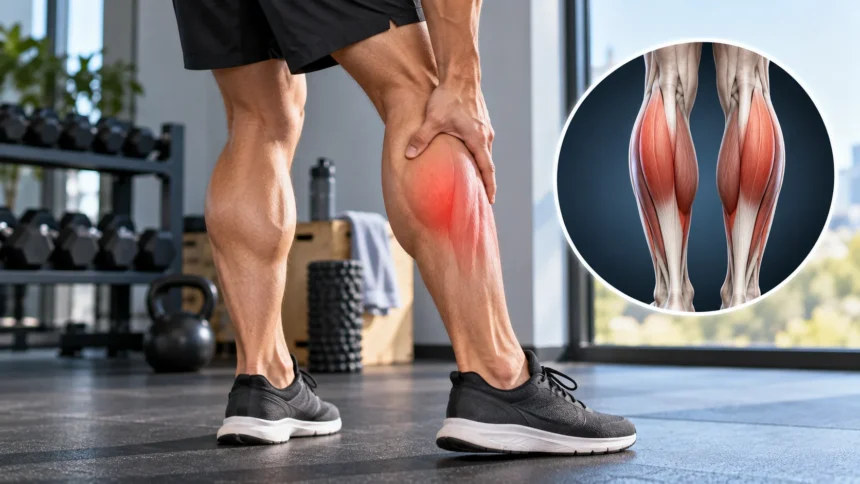
What Do Tight Calf Muscles Feel Like?
Tight calf muscles often feel stiff, shortened, heavy, or difficult to stretch comfortably. The sensation may affect one leg or both and can appear after exercise, prolonged standing, sitting, or waking in the morning. Some people notice tightness only when walking uphill, squatting, or trying to bring the knee forward over the toes.
Your calf contains several muscles, including the gastrocnemius and soleus, that help control the ankle and push your body forward during walking and running. When these muscles feel tight, ankle movement may become temporarily restricted. This can change how comfortable activities such as climbing stairs, running, or standing for long periods feel.
Calf tightness is usually a symptom rather than a specific diagnosis. Muscle fatigue, training habits, limited ankle mobility, dehydration, footwear, or an injury can all contribute. Paying attention to when the tightness starts and whether it occurs with pain, swelling, numbness, or weakness can provide useful clues about what may be happening.
Common Causes of Tight Calf Muscles
Physical activity is one of the most common reasons calves feel tight. Running, hiking, jumping, climbing stairs, and lower-body workouts repeatedly load the calf muscles. If activity levels suddenly increase, the muscles may become fatigued and temporarily stiff because they are being asked to handle more work than usual.
Prolonged inactivity can cause a similar sensation for a different reason. Sitting for many hours keeps the ankles and knees in relatively limited positions, which may leave the lower legs feeling stiff when you stand. Short walking breaks and gentle ankle movements can help restore comfortable movement after extended periods at a desk.
Other contributors can include poor-fitting shoes, limited ankle mobility, previous injuries, and changes in training surfaces. Sometimes tight calves reflect a combination of several factors rather than one obvious problem. Identifying patterns around activity, footwear, and recovery is often more useful than assuming every tight calf needs aggressive stretching.
Tight Calves After Running or Exercise
Running places repeated demand on the calf muscles because they help absorb force and push the body forward with every step. A longer-than-usual run, faster pace, hill training, or new workout can leave the calves feeling stiff afterward. This is particularly common when training volume increases more quickly than your muscles can adapt.
Exercise-related tightness does not always mean something is injured. Mild muscle fatigue can develop after challenging activity and may improve with rest, gentle walking, and normal recovery. However, sharp pain, sudden weakness, bruising, or difficulty pushing off the foot may indicate a strain rather than ordinary post-workout tightness.
Gradual training progression can help reduce repeated calf problems. Increase distance, intensity, or resistance in manageable steps instead of changing several variables at once. Appropriate recovery between demanding sessions gives the muscles time to adapt and may make future workouts feel more comfortable.
Can Limited Ankle Mobility Make Calves Feel Tight?
Limited ankle dorsiflexion can make the calf area feel tight during squats, lunges, walking, or running. Dorsiflexion happens when your shin moves forward over your foot while the heel stays down. The gastrocnemius and soleus can influence this movement, although muscles are not the only structures that affect ankle mobility.
When ankle movement is limited, the body may compensate in other areas. You might lift your heel during squats, turn your foot outward, shorten your stride, or change the way your knee and hip move. These compensations do not automatically cause injury, but they may make certain activities feel less natural or efficient.
Gentle knee-to-wall mobility exercises can help you explore ankle movement without forcing the joint. Keep the heel grounded and move the knee forward only as far as feels comfortable. If the ankle feels blocked, swollen, or sharply painful rather than simply tight, stretching harder is unlikely to solve the underlying issue.
Tight Calves From Sitting or Standing Too Long
Long periods of sitting can leave the calves feeling stiff because the lower legs remain relatively inactive. Blood flow and muscle movement change when you stay in one position for hours, and the ankles may not move through their normal range. Standing up periodically can help restore movement and reduce the feeling of stiffness.
Standing for long periods can also fatigue the calves because these muscles help maintain posture and control the body over the feet. People who work in retail, healthcare, warehouses, or other standing jobs may notice heaviness or tightness toward the end of the day. Supportive footwear and movement breaks can sometimes help.
Try changing positions throughout the day instead of searching for one perfect posture. Short walks, gentle heel raises, ankle circles, and brief periods of sitting or standing can vary the workload. Regular movement is often more practical than waiting until the calves become extremely tight before doing a long stretching session.
Can Dehydration Cause Tight Calf Muscles?
Dehydration may contribute to muscle cramping or tightness in some situations, particularly during prolonged exercise or hot weather. When you sweat heavily, you lose both fluid and electrolytes. Significant losses can affect normal muscle and nerve function, especially during endurance activities or physically demanding work.
However, not every tight calf means you are dehydrated or deficient in minerals. Muscle fatigue, workload, mobility, and injury are also common explanations. Drinking excessive amounts of water or taking supplements without understanding the cause is unlikely to solve calf tightness that is actually related to training or movement.
For most people, maintaining regular hydration and eating a balanced diet supports normal muscle function. People with kidney, heart, or other conditions may have specific fluid or electrolyte requirements and should follow professional advice. Persistent tightness deserves a broader look instead of automatically blaming hydration.
Gentle Stretches for Tight Calf Muscles
A standing calf stretch can target the gastrocnemius. Place both hands against a wall, step one foot behind you, and keep the back knee relatively straight. Keep the heel down and gently lean forward until you feel mild tension through the upper calf without bouncing or forcing the position.
To place more emphasis on the soleus, use a similar position but bend the back knee slightly while keeping the heel grounded. The stretch may feel lower and deeper in the calf. Use a small range at first, particularly if the Achilles tendon or ankle feels sensitive.
Stretching should feel like manageable tension rather than sharp pain. Holding a comfortable position for around 20 to 30 seconds can be enough for many people. If stretching consistently leaves the calf more painful afterward, reduce the intensity or consider whether the problem may involve something other than simple muscle tightness.
Strengthening Can Help With Recurrent Calf Tightness
Stretching alone may not solve calf tightness that keeps returning. Muscles also need enough strength and endurance to handle walking, running, standing, and exercise. Gradual strengthening can make the calf more capable of tolerating repeated loads, especially if fatigue is contributing to the sensation of tightness.
Calf raises are one of the simplest strengthening options. Stand near a stable surface, slowly lift your heels, pause briefly, and lower them with control. Bent-knee calf raises can place more emphasis on the soleus, while straighter-knee variations involve the gastrocnemius more strongly.
Lower-body and trunk strength matter as well because movement is shared across several regions. Hip, glute, and core exercises can complement calf training, and movements such as the Pallof press can build trunk stability. A balanced program is generally more useful than repeatedly stretching one tight area in isolation.
How Footwear Can Affect Calf Tightness
Shoes can influence how your feet, ankles, and calves work during walking and exercise. Changing suddenly from highly cushioned footwear to flatter shoes, for example, may increase demand on the calf and Achilles region. The muscles may need time to adapt to the different ankle position and loading pattern.
Poorly fitting shoes can also change how comfortably you move. Shoes that are excessively tight, unstable, or unsuitable for your activity may encourage altered walking or running mechanics. This does not mean one style is universally best, but footwear should fit well and support the demands of the activity you perform.
Transitions between footwear types should be gradual when possible. If you begin running in a new shoe or change heel height significantly, start with shorter sessions before using it for long distances. Sudden changes in training and footwear at the same time can make it harder to identify what is causing calf discomfort.
When Tight Calves May Be a Muscle Strain
A calf strain usually feels different from ordinary stiffness. It may begin with sudden sharp pain during running, jumping, or pushing off the foot. Swelling, tenderness, weakness, or bruising can develop afterward, and walking may become uncomfortable depending on the severity of the injury.
If you suspect a strain, avoid repeatedly stretching the muscle aggressively in the early stage. Reduce activities that reproduce sharp pain and allow symptoms to settle before gradually restoring movement and strength. More significant injuries may need professional rehabilitation to determine when it is safe to return to demanding exercise.
Seek medical advice when pain is severe, you cannot walk normally, or there is substantial swelling or bruising. A sudden snapping sensation or major loss of strength also deserves evaluation. Treating a significant injury as simple tightness can delay appropriate recovery and potentially aggravate the damaged tissue.
When Calf Tightness Could Be More Serious
Calf symptoms should receive prompt medical attention when they occur with significant one-sided swelling, warmth, redness, or unexplained pain. These signs can occasionally be associated with a blood clot or another circulation problem rather than muscle tightness. Risk can be higher in certain situations, including prolonged immobility or recent surgery.
Seek urgent care if calf symptoms occur alongside sudden shortness of breath, chest pain, fainting, or coughing up blood. These symptoms require immediate medical evaluation. Do not massage or aggressively stretch a swollen, unexplained calf while assuming the problem is simply muscular.
Numbness, tingling, persistent weakness, or pain traveling from the back into the lower leg can also suggest nerve involvement. A healthcare professional can determine whether symptoms are related to muscles, nerves, joints, circulation, or another condition. Persistent or unusual tightness should not be self-diagnosed indefinitely.
How to Prevent Calves From Feeling Tight
Build activity levels gradually so your calves have enough time to adapt. Sudden increases in running distance, hill training, jumping, or heavy calf exercises can create more fatigue than the muscles are prepared to handle. Consistent progression is generally easier on the lower legs than occasional large increases in workload.
Include both mobility and strength work in your routine. Gentle ankle movements, calf stretches, calf raises, and lower-body strengthening can help maintain comfortable movement and build capacity. You do not need to perform every exercise daily; regular manageable sessions are usually easier to maintain than long, exhausting routines.
Recovery habits matter too. Adequate sleep, appropriate hydration, nutrition, rest between demanding sessions, and comfortable footwear all support physical recovery. Pay attention to patterns rather than waiting for tightness to become severe, because recurring symptoms may reveal that training, recovery, or movement habits need adjustment.
Conclusion
Tight calf muscles can develop from exercise, prolonged sitting or standing, limited ankle mobility, footwear changes, dehydration, or muscle fatigue. The sensation is often temporary, but understanding when and why it occurs can help you choose a more appropriate response. Not every tight calf needs intense stretching.
Gentle mobility, comfortable stretching, progressive strengthening, and sensible training changes can help many people manage recurring calf tightness. Work on the entire lower body rather than focusing only on the calves. Stronger muscles and gradual workload progression may help improve how your legs tolerate everyday and athletic activities.
Pay attention to warning signs such as significant one-sided swelling, redness, warmth, severe pain, weakness, or breathing problems. These symptoms should not be treated as ordinary muscle tightness. When calf symptoms are persistent, unusual, or progressively worsening, professional evaluation can help identify the underlying cause.
FAQs
Why are my calves always tight?
Recurring calf tightness may relate to training load, prolonged sitting or standing, limited ankle mobility, footwear, or muscle fatigue. Persistent symptoms may need evaluation if basic mobility and activity changes do not help.
Is walking good for tight calf muscles?
Gentle walking can help temporary stiffness by keeping the ankles and calf muscles moving. Reduce your distance or intensity if walking causes increasing pain, limping, or worsening tightness.
Should I stretch tight calves every day?
Gentle calf stretching can be performed regularly if it feels comfortable. More stretching is not always better, so combine flexibility work with strengthening, normal movement, and appropriate recovery.
Can tight calves cause ankle problems?
Limited calf flexibility can contribute to reduced ankle dorsiflexion in some people, which may change how squats, walking, or running feel. Ankle restriction can also have causes unrelated to calf muscles.
When should I worry about a tight calf?
Seek prompt medical advice for unexplained one-sided swelling, redness, warmth, severe pain, or significant weakness. Urgent evaluation is needed if calf symptoms occur with sudden chest pain or shortness of breath.