

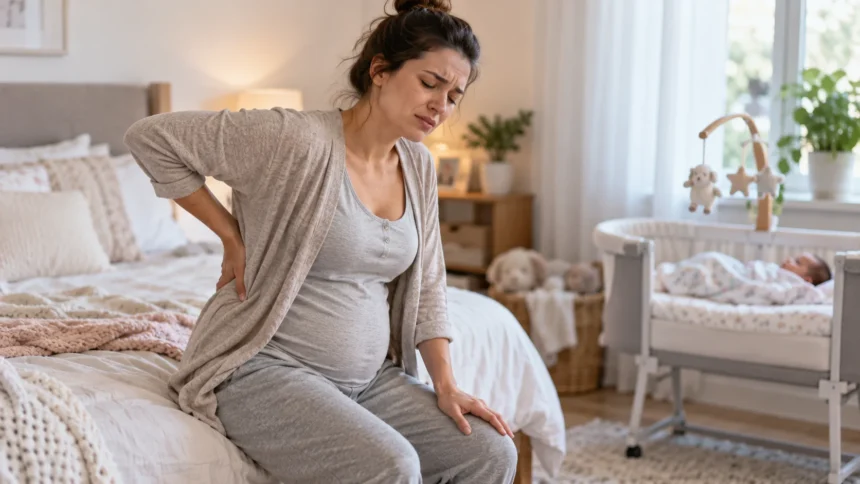
Back pain after a C-section is common and can develop for several different reasons. Pregnancy itself places extra stress on the lower back, pelvis, and abdominal muscles, while surgery adds another layer of recovery. After delivery, the body is also adapting to changes in posture, movement, sleep, and physical activity, which can make back discomfort more noticeable.
During pregnancy, abdominal muscles stretch and the body’s center of gravity shifts forward. This can increase the workload on the muscles around the spine and hips. After a cesarean birth, those muscles may still be weak or fatigued, making it harder to support the trunk efficiently during standing, walking, feeding, lifting, and carrying a baby.
C-section recovery also changes the way many people move during the first few weeks. It is natural to protect the incision by bending slightly forward or avoiding certain movements, but this can create extra tension in the lower back. Pain may improve gradually as healing progresses, strength returns, and everyday movements become more comfortable.
Weak Core Muscles After Pregnancy and Surgery
Your core includes more than the abdominal muscles you can see. It also involves deeper abdominal muscles, the pelvic floor, diaphragm, back muscles, and other tissues that help stabilize the trunk. Pregnancy can stretch and weaken these structures, while abdominal surgery may temporarily reduce your ability to engage them comfortably.
When the core is not providing as much support, the lower-back muscles may work harder during routine tasks. Standing for long periods, getting out of bed, carrying your baby, and pushing a stroller can all feel more demanding. This does not necessarily mean your back is injured, but it can contribute to fatigue, stiffness, and soreness during recovery.
Core strength should usually be rebuilt gradually rather than through intense abdominal workouts soon after delivery. Gentle breathing, comfortable walking, and simple activation exercises may be appropriate as healing progresses. More demanding exercises should be introduced only when your incision has healed adequately and your healthcare professional has cleared you for increased physical activity.
Posture Changes During Feeding and Baby Care
Feeding a newborn often involves sitting in the same position for extended periods. Many parents lean forward toward the baby, round their shoulders, or look downward for long stretches. These positions can increase muscle fatigue in the upper and lower back, especially when repeated many times throughout the day and night.
Try bringing the baby toward you rather than continuously bending your body toward the baby. Pillows can support your arms, back, and the baby’s weight so your muscles do not have to work as hard. Changing feeding positions when possible can also prevent the same areas of your back and shoulders from remaining under constant tension.
Baby care involves frequent lifting, bending, and carrying as well. Repeatedly reaching into a crib, changing diapers, or holding your baby on one side can contribute to muscle soreness. Small adjustments to your setup, such as keeping frequently used items at a comfortable height, may reduce unnecessary strain during the postpartum period.
Can Spinal or Epidural Anesthesia Cause Back Pain?
Some people notice tenderness or soreness around the area where spinal or epidural anesthesia was administered. Mild discomfort at the injection site may occur temporarily after delivery. This localized soreness is usually different from the more widespread lower-back discomfort that can develop from pregnancy-related changes, muscle fatigue, and postpartum movement patterns.
It is common for people to associate persistent back pain with an epidural because the symptoms are noticed after delivery. However, postpartum back pain can have many contributing factors unrelated to the injection itself. Pregnancy, reduced core strength, sleep positions, prolonged sitting, and the physical demands of caring for a newborn can all play a role.
If pain around the injection area becomes severe, worsens rather than improves, or occurs with fever, weakness, numbness, or changes in bladder or bowel control, seek medical advice promptly. These symptoms are not typical of ordinary post-procedure soreness and should be assessed by a healthcare professional.
Scar Protection and Compensated Movement
A C-section incision passes through several layers of tissue and naturally requires time to heal. During early recovery, you may instinctively avoid standing fully upright, twisting, or using your abdominal muscles because the area feels tender. These protective movement patterns can temporarily shift more work toward the back, hips, and legs.
Moving cautiously is understandable, but prolonged guarding may contribute to stiffness. As your healthcare team allows, gradually returning to comfortable upright posture and normal walking can help restore more balanced movement. There is no need to force yourself into painful positions, and progress should match how your incision and overall recovery feel.
Support the incision when coughing, sneezing, laughing, or changing positions if this makes movement more comfortable. Using your arms and legs to assist when getting out of bed can also reduce sudden strain. As healing progresses, your movement usually becomes more natural and less protective, which may help reduce secondary back tension.
Pelvic and Hip Changes After Pregnancy
Pregnancy affects the hips and pelvis as well as the abdomen and spine. Hormonal changes and the growing uterus influence how the body carries weight, while muscles around the pelvis adapt to months of altered movement. These changes do not disappear immediately after delivery, so stiffness or instability can continue during postpartum recovery.
Hip flexors, glutes, inner-thigh muscles, and pelvic floor muscles may all feel different after childbirth. Gentle mobility exercises can help restore comfortable movement when they are appropriate for your stage of recovery. Later in the healing process, simple pelvic stretches may complement walking and strengthening when stiffness around the hips and pelvis contributes to back discomfort.
Stretching should never pull strongly on the incision or cause pelvic pain, increased bleeding, or worsening symptoms. The goal is gradual mobility, not maximum flexibility. If you are unsure whether a particular stretch is appropriate after your C-section, ask your obstetric provider or a pelvic health physiotherapist for individualized guidance.
How to Relieve Back Pain After a C-Section
Gentle movement is often one of the simplest ways to manage uncomplicated postpartum back stiffness. Short walks around your home can help keep the hips and spine moving without placing excessive demand on recovering tissues. Begin with small amounts of activity and increase gradually according to your energy level, incision comfort, and medical guidance.
Heat may feel soothing when muscle tightness is contributing to discomfort. A warm pack can be placed on the back for short periods, provided your skin is protected and the heat is comfortable. Avoid placing heat directly over a fresh surgical incision unless your healthcare professional specifically advises that it is safe.
Rest also matters, but complete inactivity is rarely practical or helpful for long periods. Change positions frequently instead of spending hours in one posture. Alternating between walking, supported sitting, lying down, and gentle movement may help prevent stiffness while still giving your body enough recovery time after surgery.
Safe Ways to Get Out of Bed and Lift Your Baby
Getting out of bed can be uncomfortable after abdominal surgery because sitting straight up places significant demand on the abdominal wall. A log-roll technique may feel easier during early recovery. Roll onto your side first, move your legs toward the edge of the bed, and use your arms to help push your upper body upright.
When lifting your baby, bring the baby close to your body before standing rather than reaching forward with outstretched arms. Bend through your knees and hips when possible instead of repeatedly rounding your lower back. Move slowly, especially during the first few weeks when your abdominal muscles are still recovering and sudden movements may feel uncomfortable.
Avoid carrying unnecessary heavy objects during early C-section recovery. Your healthcare team may give you specific lifting restrictions based on your surgery and healing. Even once you are cleared to lift more weight, gradual progression is important because your core, back, and pelvic muscles may need time to rebuild endurance.
Gentle Exercises That May Help During Recovery
Walking is one of the simplest exercises to begin after a C-section when your healthcare provider allows it. Start with short, comfortable walks and gradually add time as your energy improves. Walking supports circulation and general mobility while helping your hips, back, and trunk return to more regular movement without requiring complex exercises.
Deep breathing can also be useful during early recovery. Lie or sit comfortably and take slow breaths that allow your rib cage and abdomen to expand gently. This encourages coordination between your diaphragm, abdominal wall, and pelvic floor without placing the same demand on the incision as traditional abdominal exercises.
Later, exercises such as pelvic tilts, gentle bridges, heel slides, and controlled core activation may be introduced if they feel comfortable and you have been medically cleared. Exercise should not increase incision pain, pelvic heaviness, bleeding, or back symptoms. A pelvic health physiotherapist can help customize exercises if recovery feels difficult or symptoms persist.
Sleep Positions for Post-C-Section Back Pain
Sleep can be challenging with a newborn, and uncomfortable positions may make back pain worse. Many people find side sleeping more comfortable after a C-section because it reduces direct pressure on the incision. Placing a pillow between the knees may help support the hips and keep the pelvis in a relaxed position.
Sleeping on your back may also be comfortable if it does not increase incision tenderness or other symptoms. A pillow beneath the knees can reduce tension through the lower back for some people. Choose a position that allows your body to relax rather than trying to maintain a theoretically perfect sleeping posture throughout the night.
The way you get into and out of bed matters as much as the position itself. Use slow, controlled movements and roll through your side when needed. If back pain consistently prevents sleep even when the baby is resting, mention it to your healthcare provider because severe or persistent pain deserves further assessment.
How Long Does Back Pain After a C-Section Last?
There is no single recovery timeline because postpartum back pain can come from several different sources. Mild muscle soreness and stiffness may begin improving over days or weeks as activity becomes easier. Weakness and movement changes related to pregnancy can take longer to resolve, especially if sleep, feeding demands, and reduced activity slow the rebuilding process.
C-section recovery itself also takes time, and healing continues beyond the point when the skin incision looks closed. Avoid judging your recovery only by how quickly someone else returned to exercise or normal activities. Your previous fitness level, pregnancy, surgical experience, sleep, pain levels, and available support can all influence how quickly you feel stronger.
If pain remains significant beyond the expected recovery period or becomes more limiting instead of gradually improving, contact your healthcare provider. Persistent discomfort may benefit from assessment for musculoskeletal problems, nerve irritation, pelvic floor dysfunction, or other postpartum conditions that cannot be identified through symptoms alone.
When Back Pain May Be a Warning Sign
Most postpartum back pain is related to muscles, movement changes, or general recovery, but certain symptoms require prompt medical attention. Seek care if your back pain is severe, rapidly worsening, or associated with fever or feeling acutely unwell. These signs may indicate infection or another complication rather than ordinary postpartum muscle soreness.
You should also seek urgent evaluation if back pain occurs with new weakness in one or both legs, significant numbness, numbness around the groin area, or loss of bladder or bowel control. These neurological symptoms need immediate assessment. Do not attempt to treat them only with stretching, massage, heat, or home exercise.
Contact your maternity or emergency care team if back pain occurs with heavy vaginal bleeding, severe abdominal pain, worsening incision redness or drainage, chest pain, shortness of breath, severe headache, or one-sided leg swelling. Postpartum complications can sometimes develop after leaving the hospital, so unusual or rapidly worsening symptoms should not be ignored.
When to Consider Pelvic Health Physical Therapy
A pelvic health physiotherapist can assess more than pelvic floor strength. They may look at abdominal function, breathing, posture, hip mobility, scar sensitivity, back strength, and how you perform everyday movements. This can be helpful when back pain continues even after the surgical incision has healed and your general activity level has increased.
Physical therapy may also be useful if you experience pelvic heaviness, urinary leakage, abdominal weakness, painful movement, or difficulty returning to exercise. Treatment is individualized and may include gradual strengthening, mobility work, movement retraining, and education about recovering safely after pregnancy and abdominal surgery.
You do not need to wait until symptoms become severe before asking for help. If back discomfort repeatedly limits lifting, walking, sleeping, or caring for your baby, a professional assessment can identify factors contributing to the problem. Early guidance may also help you rebuild confidence as you return to normal daily activities.
Conclusion
Back pain after a C-section can develop from pregnancy-related changes, weakened core muscles, protective movement, prolonged feeding positions, and the demands of caring for a newborn. Mild discomfort often improves gradually as the incision heals and your strength returns. Recovery should still be paced according to your individual symptoms rather than a fixed timeline.
Gentle walking, supportive positions, careful lifting, heat for muscle soreness, and gradual core rehabilitation may all help with uncomplicated postpartum back pain. Mobility exercises can also be useful later in recovery when hip or pelvic stiffness is contributing to discomfort. Avoid rushing into intense exercise before your body is ready.
Pay close attention to symptoms that are severe, worsening, or accompanied by neurological changes, fever, heavy bleeding, incision problems, or other unusual postpartum symptoms. These require medical assessment rather than home treatment alone. If ordinary back discomfort persists, your obstetric provider or a pelvic health physiotherapist can help determine the next appropriate step.
FAQs
Is back pain normal after a C-section?
Mild back soreness can occur after a C-section due to pregnancy changes, weakened core muscles, posture, and reduced activity. Persistent, severe, or worsening pain should be discussed with a healthcare professional.
Can an epidural cause long-term back pain after a C-section?
Temporary soreness around the injection site can occur, but postpartum back pain often has several other causes. Seek medical advice if pain is severe or accompanied by numbness, weakness, fever, or neurological symptoms.
What helps lower back pain after cesarean delivery?
Gentle walking, frequent position changes, supportive feeding posture, heat for muscle tension, and gradual strengthening may help. Exercise should progress according to healing and your healthcare provider’s recommendations.
When can I start stretching after a C-section?
The timing depends on your healing and the type of stretch. Gentle movement may begin early, but deeper stretching should wait until it feels comfortable and your healthcare provider has cleared you for increased activity.
When should I worry about back pain after a C-section?
Seek prompt care for severe or rapidly worsening pain, fever, leg weakness, groin numbness, bladder or bowel changes, heavy bleeding, shortness of breath, or worsening redness or drainage around the incision.