


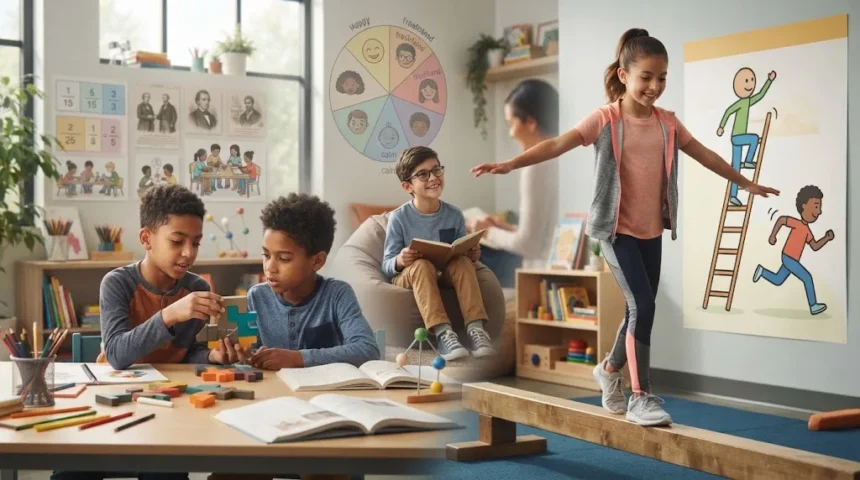
10-Year-Old Child Development: Milestones & What to Expect
Turning 10 can feel like an important transition for both children and parents because it sits between early childhood and the beginning of adolescence. A 10-year-old may seem remarkably independent one moment and still need reassurance or comfort the next. Physical growth, stronger friendships, more complex thinking, school expectations, emotional awareness, and the earliest signs of puberty can all develop during this period. However, there is no single checklist that every child must complete on the same schedule. Genetics, temperament, culture, health, learning style, family environment, and individual experiences all influence development. Understanding common 10-year-old developmental milestones can help parents support growth without unnecessarily comparing one child with another.
At age 10, many children become more interested in independence while also becoming increasingly aware of how they compare with classmates and friends. They may develop stronger opinions, question rules, care more about privacy, and become sensitive to comments about appearance or abilities. Their thinking is also becoming more organized, allowing them to plan projects, understand increasingly complicated ideas, and consider another person’s perspective. Friendships often become emotionally important, and peer acceptance can influence confidence and behavior. These changes can be exciting, but they may also produce new worries or conflicts. Knowing what is generally expected at this age can make it easier to recognize strengths, provide appropriate support, and notice when additional help may be useful.
What Is Typical Development for a 10-Year-Old?
A typical 10-year-old is developing across several areas at the same time rather than progressing in one straight line. Physical growth may accelerate, schoolwork can become more demanding, friendships may deepen, and emotional reactions can become more complex. A child who appears mature academically may still need substantial help managing frustration or disappointment. Another child may be socially confident but take longer to master certain school skills. These differences do not automatically indicate a developmental problem because strengths and challenges rarely develop at exactly the same pace. Looking at overall progress over time usually provides a more useful picture than measuring a child against one classmate or isolated milestone.
Independence often becomes increasingly noticeable during 10-year-old child development. Children may want more control over what they wear, how they organize belongings, which activities they join, and how they spend free time. They can usually handle more age-appropriate responsibilities such as preparing simple snacks, organizing school materials, completing basic household tasks, or remembering parts of their routine. However, planning and self-control are still developing, so forgetting instructions or becoming distracted remains common. Children may confidently insist they can handle something alone and then become overwhelmed when difficulties appear. Gradually increasing responsibility while remaining available for support gives children opportunities to practice independence without expecting adult-level judgment.
Many 10-year-olds become increasingly aware of fairness, rules, and social expectations. They may challenge adults when rules appear inconsistent or when siblings seem to receive different treatment. This questioning is not necessarily disrespect because children are developing stronger reasoning skills and beginning to evaluate situations from multiple viewpoints. They may also become interested in ethical questions, social issues, teamwork, or why certain rules exist. Parents can encourage this growth by explaining reasons for boundaries rather than relying only on authority. At the same time, clear limits remain valuable because children still benefit from predictable structure. Respectful discussions about rules can support problem-solving skills while teaching that disagreement can occur without hostility.
Personal interests may become stronger and more specialized around this age. A child may become deeply interested in sports, drawing, animals, science, gaming, books, music, technology, crafts, collecting, or another subject. These interests can provide valuable opportunities to build confidence and persistence, especially when school is challenging in other areas. Children may enjoy learning detailed facts, practicing skills repeatedly, or sharing their expertise with other people. Parents can support these passions without turning every hobby into a competition or achievement goal. Free exploration matters because children benefit from discovering what they genuinely enjoy. Interests can change rapidly at this age, so allowing experimentation may be more helpful than expecting a permanent commitment.
It is also normal for development to look uneven from day to day. A 10-year-old may demonstrate impressive reasoning during a calm conversation but have difficulty using those same skills when angry, tired, embarrassed, or overwhelmed. Children are still learning how to regulate emotions and apply judgment under pressure. Growth may become particularly uneven during periods of school stress, friendship problems, family changes, illness, or early puberty. Instead of expecting constant maturity, parents can focus on patterns across several months. When a child continues gaining skills, participating in daily life, learning, and maintaining meaningful relationships, occasional immature behavior is generally part of growing up rather than evidence that development has stopped.
Physical Development and Puberty at Age 10
Physical growth at age 10 can vary dramatically from one child to another. Some children remain relatively small and childlike in appearance, while others begin noticeable growth spurts or early pubertal changes. Height, weight, body proportions, muscle development, and coordination are influenced strongly by genetics and individual puberty timing. Comparing children of the same classroom age can therefore create unnecessary concern because biological development does not follow the school calendar. Regular health visits allow growth to be evaluated over time using the child’s own pattern rather than isolated measurements. A consistent growth pattern is generally more informative than whether a child is taller, shorter, heavier, or lighter than friends.
Puberty may begin for some children around this stage, while others may show little or no visible change. Early signs can include increased body odor, oilier skin, new body hair, changes in body shape, or rapid growth. Some girls may begin breast development, while some boys may begin changes involving the testicles and genital area as puberty progresses. These changes can feel confusing or embarrassing, particularly if a child develops earlier or later than close friends. Calm, factual conversations can reduce shame and make physical development feel normal. Parents do not need to wait until every change has begun before discussing puberty, because advance preparation can help children understand what their bodies are doing.
Motor skills are often becoming more refined during this stage of childhood. Many 10-year-olds demonstrate better balance, coordination, reaction time, and control during activities such as running, cycling, swimming, dancing, throwing, drawing, or playing sports. Fine motor skills also support increasingly detailed handwriting, crafts, musical instruments, construction projects, and other tasks requiring precise hand movements. Individual ability varies considerably, especially when children have different amounts of practice or interest. A child does not need to excel at organized sports to develop healthy physical competence. Opportunities for active play, outdoor movement, recreation, and noncompetitive physical activities can support coordination while allowing children to discover forms of movement they actually enjoy.
Body image may become more important as children notice physical differences between themselves and their peers. Comments about height, weight, skin, hair, clothing, athletic ability, or puberty can carry more emotional weight than adults realize. Parents can support a healthy body image by emphasizing what bodies can do rather than constantly discussing appearance, weight, or dieting. Avoiding negative comments about your own body can also matter because children frequently absorb adult attitudes toward food and appearance. Conversations about changing bodies should be respectful and private rather than teasing or embarrassing. If a child expresses repeated distress about appearance, eating, weight, or physical development, take those concerns seriously and respond with curiosity rather than criticism.
Growing children also benefit from regular physical activity, nutritious food, adequate hydration, and sufficient sleep. Movement supports cardiovascular health, muscles, bones, coordination, emotional well-being, and healthy sleep patterns. Activity does not need to come only from competitive sports because walking, cycling, playground games, dancing, martial arts, and active family outings all count. Food should ideally provide a varied mix of vegetables, fruits, grains, protein sources, dairy or appropriate alternatives, and healthy fats without making meals overly restrictive. Appetite may change during growth spurts, and hunger can vary significantly between days. Parents can provide predictable meals and snacks while allowing children to respond appropriately to their own hunger and fullness signals.
Cognitive, Language, and Learning Development at Age 10
A 10-year-old’s thinking is often becoming more logical and organized, particularly when dealing with situations they can understand through real examples. Children can generally follow multi-step instructions, recognize patterns, classify information, compare alternatives, and explain some of the reasoning behind their answers. They may begin approaching problems from more than one angle instead of assuming there is only one possible solution. Planning skills also improve, although children still need help breaking large assignments into manageable steps. These abilities support increasingly challenging schoolwork in mathematics, reading, science, writing, and other subjects. Cognitive growth is not simply about knowing more facts; it increasingly involves organizing information and using knowledge strategically.
Reading skills can vary widely at this age, but many children are moving from primarily learning how to read toward using reading as a major tool for learning. They may understand longer stories, follow multiple characters, recognize themes, and make simple inferences about information that is not stated directly. Vocabulary often expands rapidly through school, conversations, books, games, media, and personal interests. Children may begin recognizing humor, sarcasm, figurative language, and multiple meanings more easily. Reading preferences can also become highly individual, ranging from novels and comics to biographies, sports information, science books, or online content. Encouraging reading around genuine interests can be more motivating than insisting that every child enjoy the same type of book.
Writing and communication also become increasingly sophisticated during 10-year-old development. Many children can organize ideas into paragraphs, explain events in sequence, write stories with greater detail, and support opinions with simple reasons. Spoken communication may become more adaptable as children learn to speak differently with teachers, friends, younger children, and family members. They can usually participate in longer conversations, ask more specific questions, and understand that another person may have information or perspectives they do not share. Some children are naturally talkative, while others communicate more comfortably after having time to think. Communication ability should therefore be considered alongside temperament rather than judged solely by how much a child talks.
Executive functioning skills are also developing, but they remain far from fully mature. These skills include planning, organization, attention, working memory, emotional control, and the ability to start or complete tasks. A 10-year-old might understand perfectly well that homework needs to be finished but still forget materials, underestimate how long the assignment will take, or become distracted midway through. External supports such as checklists, calendars, routines, timers, and organized workspaces can help children practice these abilities. Parents can gradually transfer responsibility instead of managing every detail indefinitely. The goal is to provide enough structure for success while allowing children to experience manageable consequences and learn how to solve routine problems independently.
School performance should be viewed as more than grades alone. A child may struggle academically because of difficulty with reading, attention, organization, language processing, anxiety, sleep, hearing, vision, or another factor that is not immediately obvious. Conversely, high grades do not necessarily mean a child feels comfortable socially or emotionally. Teachers can provide valuable information about how a child learns, communicates, follows instructions, works independently, and interacts with classmates. If a difficulty persists despite appropriate support, discussing it with teachers and a pediatric or educational professional can help identify what the child needs. Early support can build confidence and skills without defining the child solely by an academic challenge.
Emotional Development and Self-Esteem at Age 10
Emotional development becomes increasingly complex around age 10 because children can recognize a wider range of feelings in themselves and others. They may understand that someone can feel excited and nervous at the same time or love a friend while still feeling angry with them. However, knowing what an emotion is does not always mean knowing how to manage it. Frustration, disappointment, embarrassment, jealousy, and worry can still produce intense reactions, particularly when a child is tired or socially stressed. Parents can help by naming emotions and discussing coping strategies after everyone is calm. The goal is not to eliminate uncomfortable feelings, because learning how to experience and manage them is an important developmental task.
Self-esteem often becomes more sensitive to comparison during this stage. Children may begin asking whether they are smart, attractive, athletic, popular, funny, or talented compared with classmates. Peer feedback can become especially powerful because children are increasingly aware of social hierarchies and group opinions. Parents can build healthier confidence by praising effort, improvement, kindness, creativity, persistence, and problem-solving rather than focusing only on winning or achievement. It is also helpful to avoid unrealistic praise that children can easily recognize as exaggerated. Confidence tends to develop when children successfully handle meaningful challenges with appropriate support. Feeling capable is often more valuable than repeatedly being told that everything they do is perfect.
Privacy may become more important as children develop a stronger individual identity. A 10-year-old may want to change clothes privately, keep personal thoughts in a journal, close a bedroom door, or have conversations with friends without adults listening to every word. Providing reasonable privacy communicates trust and respects growing independence. At the same time, parents remain responsible for safety and should maintain developmentally appropriate awareness of online activity, friendships, and significant behavior changes. The balance should evolve gradually rather than shifting from complete supervision to complete independence. Explaining why certain boundaries exist makes them easier to understand. Children are more likely to communicate openly when privacy is respected whenever safety does not require intervention.
Worries may also become more specific and realistic around this age. Children can think far enough into the future to worry about school performance, family finances, illness, friendships, appearance, world events, sports competitions, or whether they will fit in. Some worry is normal and can even motivate preparation, but anxiety becomes more concerning when it frequently interferes with sleep, school attendance, eating, friendships, or ordinary activities. Parents can encourage children to describe what they fear rather than immediately reassuring them that nothing bad could happen. Helping a child identify which parts of a situation are controllable can build coping skills. Persistent or intense anxiety deserves attention rather than being dismissed as simply part of growing up.
Mood changes can occur as children face increasing social pressure, academic demands, and physical development. Occasional irritability, tears, sensitivity, or wanting time alone can be normal, especially after stressful days. What matters more is whether changes become persistent, severe, or significantly different from the child’s usual personality. Ongoing sadness, frequent hopeless statements, loss of interest in favorite activities, major sleep changes, extreme withdrawal, or repeated talk about self-harm should receive prompt professional attention. Parents do not need to diagnose the cause before seeking support. Maintaining regular conversations about emotions makes it easier for children to speak up before a problem becomes overwhelming. Taking feelings seriously communicates that asking for help is acceptable.
Social Development, Friendships, and Peer Pressure
Friendships often become central to life at age 10. Children may move from simply playing with whoever is available toward choosing friends based on shared interests, loyalty, trust, humor, and personality. They may develop one or two especially close friendships while also participating in larger groups at school or during activities. Conversations between friends can become more personal, and children may share worries or secrets that they would not discuss with adults immediately. These relationships provide opportunities to practice cooperation, negotiation, empathy, and conflict resolution. Friendship problems can therefore feel genuinely painful rather than trivial. Listening before offering solutions can help children feel understood while encouraging them to think through possible responses.
Peer acceptance can have a stronger influence on behavior during this stage. A child may suddenly care about clothing, hobbies, games, language, music, or trends because classmates view them as socially important. Wanting to fit in is a normal developmental need, but it can sometimes make children participate in behavior they would otherwise avoid. Parents can prepare children for peer pressure by discussing realistic situations before they occur. Instead of simply saying, “Don’t follow the crowd,” help children practice phrases they could actually use to decline something uncomfortable. A strong sense of belonging at home can also make it easier for children to tolerate moments when fitting in with peers requires compromising their values.
Conflict between friends is common because social skills are still developing. Children may misunderstand messages, become jealous, exclude one another, argue about fairness, or struggle when best friends spend time with someone else. Adults can support problem-solving without automatically taking control of every disagreement. Ask what happened, how the child felt, what the other person might have been thinking, and what could happen next. This approach builds perspective-taking instead of simply deciding who was right. However, repeated humiliation, threats, deliberate exclusion, physical aggression, or online harassment may represent bullying rather than an ordinary disagreement. Those situations require closer adult involvement and coordination with school or other responsible adults when appropriate.
Group activities can support valuable social growth. Sports teams, clubs, music groups, community programs, art classes, volunteering, scouting, and similar activities allow children to interact around shared goals. They learn how to follow rules, accept feedback, take turns, handle winning and losing, and contribute to something larger than themselves. However, children do not need packed schedules to develop socially. Unstructured play and free time can provide equally valuable opportunities for creativity and independent decision-making. Parents should consider the child’s temperament, interests, school workload, and need for rest before adding activities. A quiet child may prefer one meaningful friendship and a small club rather than multiple large group environments, and that can be completely healthy.
Digital communication is increasingly part of children’s social lives, making online guidance important even before a child receives an independent smartphone. Games, messaging platforms, videos, group chats, and social spaces can extend friendships beyond school but also create new forms of pressure and conflict. Children need clear rules about sharing personal information, photographs, passwords, location details, and private conversations. They should also understand that messages can be copied, forwarded, or misunderstood even when they seem temporary. Parents can keep conversations about technology ongoing instead of relying on one warning about internet safety. A child who expects a calm response is more likely to tell an adult when something uncomfortable, frightening, or inappropriate happens online.
Sleep, Nutrition, Exercise, and Healthy Daily Routines
Sleep remains essential for learning, mood, physical development, attention, memory, and emotional regulation at age 10. Many school-age children need roughly 9 to 12 hours of sleep within a 24-hour period, although individual needs vary. A consistent bedtime and wake time can make it easier for the body to maintain a reliable sleep rhythm. Late homework, activities, gaming, television, and messaging can gradually reduce sleep if evenings are not structured. Children who regularly sleep too little may appear irritable, distracted, emotional, or unusually energetic rather than simply looking sleepy. Creating a predictable wind-down routine and keeping stimulating screens away from bedtime can support healthier sleep habits.
Nutrition during this stage should support growth without turning food into a source of anxiety or constant negotiation. Children benefit from regular meals containing a variety of foods, including fruits, vegetables, whole grains, protein sources, dairy or appropriate alternatives, and healthy fats. Appetite can fluctuate because activity and growth do not remain constant every day. Parents generally control which foods are available and when meals are offered, while children can gradually learn to recognize their own hunger and fullness. Strict dieting or frequent comments about weight can create unnecessary body concerns. Family meals, when practical, provide an opportunity to model balanced eating and conversation without requiring every meal to be nutritionally perfect.
Regular movement is equally important for physical and emotional health. Children can benefit from active play, sports, cycling, running, dancing, swimming, climbing, walking, or any other activity that gets the body moving. The best exercise is often something the child actually enjoys because enjoyment makes regular participation more likely. Not every child is competitive or naturally drawn to team sports, and physical activity should not become a punishment for eating. Outdoor play also provides opportunities for creativity, independence, social interaction, and time away from screens. Parents can encourage movement by participating together, providing safe opportunities for activity, and avoiding excessive focus on athletic performance or body shape.
Screen time becomes increasingly complicated at age 10 because technology serves many legitimate purposes. Children may use computers and tablets for homework, social communication, creative projects, entertainment, gaming, and learning. Instead of focusing exclusively on a single number of screen hours, families can consider whether technology is replacing sleep, exercise, school responsibilities, face-to-face relationships, or other important activities. Content and context also matter because creating digital artwork is different from repeatedly scrolling through distressing content late at night. Clear household rules about devices during meals, homework, and bedtime can create helpful boundaries. Parents can also model these habits because children quickly notice when adults follow different rules from those they enforce.
Daily responsibilities help children develop practical independence and a sense that they contribute meaningfully to family life. A 10-year-old may be capable of making the bed, packing a school bag, putting away laundry, helping prepare food, caring for a pet, or completing other age-appropriate chores. Responsibilities should be realistic and taught clearly before adults expect them to be performed independently. Checklists can help children remember multi-step routines without constant verbal reminders. Occasional forgotten tasks are part of learning and do not necessarily require punishment. Gradually increasing responsibility gives children practice with planning and accountability while reassuring them that adults remain available when a task becomes confusing or genuinely difficult.
How Parents Can Support a 10-Year-Old’s Development
One of the most helpful things parents can provide is regular time for conversation without turning every discussion into instruction or correction. Children are more likely to share experiences when adults show genuine interest in ordinary details about school, friendships, hobbies, and daily frustrations. Ask open questions that invite more than a yes-or-no response, but avoid making children feel interrogated. Some children talk most easily during car rides, walks, cooking, or bedtime rather than during formal face-to-face conversations. Listening carefully also helps parents notice gradual changes in confidence, relationships, or stress. Strong communication developed during middle childhood can become especially valuable as children move toward adolescence and naturally seek greater independence.
Boundaries remain important even as independence increases. Ten-year-olds still need predictable expectations around bedtime, homework, online behavior, respectful communication, safety, and family responsibilities. Rules are easier to follow when they are consistent and when adults explain the reasons behind them. Consequences should ideally relate to the behavior rather than simply being harsh enough to create fear. For example, misusing a device may lead to temporary limits on that device while expectations are reviewed. Parents can also involve children in discussing some household rules, which allows them to practice reasoning and responsibility. Giving children a voice does not mean they make every decision, but it can increase cooperation and teach respectful negotiation.
Supporting school development involves creating conditions for learning without taking ownership of every assignment. Provide a reasonably organized place for schoolwork, help children break large projects into steps, and teach them how to check deadlines. If they make a manageable mistake, allow space for problem-solving before stepping in immediately. Constantly rescuing children can unintentionally communicate that adults do not believe they can cope with difficulty. At the same time, struggling children should not be left without support in the name of independence. Communication with teachers can clarify whether a challenge is temporary or part of a recurring pattern. Effective support gradually transfers responsibility as skills improve rather than disappearing suddenly.
Parents can also strengthen resilience by changing how success and mistakes are discussed. Children benefit from hearing that ability can improve through practice, strategy, feedback, and persistence. Instead of praising only high grades or victories, recognize preparation, kindness, thoughtful decisions, and willingness to try again after disappointment. Avoid solving every uncomfortable situation because manageable frustration teaches children that difficult feelings can pass. When mistakes occur, ask what they learned and what they might try differently next time. Adults can model this by admitting their own errors without excessive self-criticism. A home environment where mistakes are treated as information rather than personal failure can make children more willing to take healthy risks and learn new skills.
Finally, remain alert to meaningful changes without becoming anxious about every developmental difference. Consider speaking with your child’s healthcare professional, teacher, counselor, or another qualified specialist if you notice persistent difficulties with learning, communication, movement, behavior, friendships, eating, sleep, or emotional regulation that interfere with daily life. Significant loss of previously established abilities also deserves evaluation. Seek more immediate help if a child talks about wanting to die, intentionally hurting themselves, or harming someone else, or if their safety appears at risk. Asking for professional guidance does not automatically mean something serious is wrong. Early evaluation can clarify whether a child needs reassurance, additional support, educational accommodations, or more specialized care.
Frequently Asked Questions About 10-Year-Old Child Development
What should a 10-year-old be able to do?
Many 10-year-olds can follow multi-step directions, manage basic responsibilities, develop deeper friendships, solve increasingly complex school problems, and communicate their opinions more clearly. Development varies considerably, so overall progress and functioning are more useful than expecting every child to meet an identical checklist.
Is puberty normal at age 10?
Yes, some children begin noticeable pubertal development around this period, while others begin later. Timing differs between children, so questions about development that seems unusually early, late, rapid, or concerning can be discussed with a pediatric healthcare professional.
How much sleep does a 10-year-old need?
Many children between ages 6 and 12 need roughly 9 to 12 hours of sleep during each 24-hour period. Individual needs vary, and persistent daytime sleepiness, significant snoring, or ongoing sleep difficulties can be worth discussing with a healthcare professional.
Are mood swings normal for a 10-year-old?
Occasional emotional ups and downs can be normal as children manage school demands, friendships, growing independence, and physical changes. Persistent sadness, severe anxiety, extreme withdrawal, major behavioral changes, or feelings that interfere with daily life deserve closer attention.
Why is my 10-year-old suddenly more emotional?
Children around this age become more socially aware and may react strongly to friendship difficulties, embarrassment, school pressure, comparison with peers, or early pubertal changes. Their ability to understand complex feelings often develops faster than their ability to regulate those feelings consistently.
How independent should a 10-year-old be?
A 10-year-old can usually handle increasing responsibility for routines, school materials, simple chores, personal hygiene, and age-appropriate decisions. Adults should still provide supervision, structure, and help because planning, judgment, and impulse control remain under development.
Is it normal for a 10-year-old to care a lot about friends?
Yes, friendships often become increasingly important during middle childhood. Children may care strongly about belonging and peer opinions, but family relationships and supportive adults remain important sources of security.
Should parents monitor a 10-year-old’s internet use?
Yes, age-appropriate supervision is still important because children may encounter inappropriate content, online bullying, scams, privacy risks, or unsafe interactions. Clear rules and ongoing conversations usually work better than relying only on secret monitoring or one-time warnings.
What are signs a 10-year-old may need extra support?
Persistent problems with learning, friendships, communication, sleep, eating, behavior, movement, anxiety, or mood that noticeably interfere with everyday life may justify professional guidance. A major loss of previously developed abilities is also a reason to discuss the child’s development with a qualified professional.
How can parents build confidence in a 10-year-old?
Give children opportunities to solve manageable problems, develop interests, contribute to family life, and improve skills through practice. Praise specific effort, persistence, kindness, and progress rather than focusing exclusively on appearance, grades, winning, or comparisons with other children.
::