


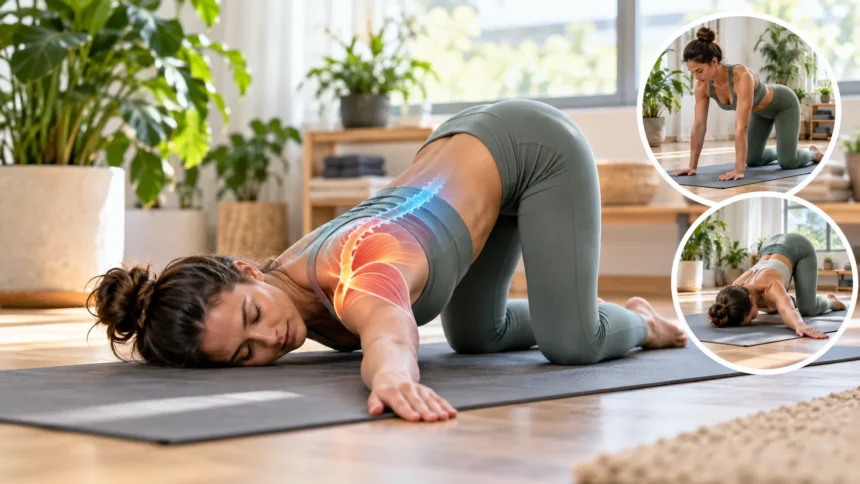
Thread the Needle Pose is a gentle yoga stretch that can help improve upper-back mobility, shoulder movement, and spinal rotation. It is commonly used in yoga classes, mobility routines, warm-ups, and recovery sessions because it requires no equipment and can be performed in a small space. The movement is especially useful for people who spend long periods sitting or working at a desk.
Although the pose looks simple, proper technique matters if you want to stretch comfortably without placing unnecessary pressure on the neck, shoulders, or lower back. Moving slowly, controlling your breathing, and staying within a pain-free range can make the exercise more effective. Understanding the correct form, benefits, modifications, and common mistakes can help you get more from Thread the Needle Pose.
What Is Thread the Needle Pose?
Thread the Needle Pose is a rotational yoga movement usually performed from an all-fours position. One arm reaches underneath the opposite arm while the upper body gently rotates toward the floor. The movement creates a stretch through the shoulders, upper back, and muscles around the shoulder blades while encouraging controlled thoracic rotation.
The exercise primarily targets the upper and middle portions of the spine rather than requiring large movement from the lower back. This makes it useful for people who want to improve rotational mobility without performing aggressive twisting. The supported position also allows you to control how far you rotate based on your comfort level.
Thread the Needle can be used as a standalone stretch or included in a broader mobility sequence. It works well before upper-body strength training, after prolonged sitting, or during a yoga session. Because the movement is gentle and adjustable, beginners can usually modify it easily while more experienced exercisers can explore a slightly deeper range.
Muscles and Areas Worked by Thread the Needle
Thread the Needle mainly affects the muscles around the upper back, shoulders, and shoulder blades. The trapezius, rhomboids, rear shoulder muscles, and surrounding connective tissues may all experience a gentle stretch. The exact sensation depends on your shoulder mobility, thoracic rotation, and how deeply you move into the pose.
The thoracic spine, which forms the middle and upper part of the back, also plays an important role. This region contributes to rotation and upper-body movement during reaching, lifting, and many everyday activities. Practicing controlled thoracic rotation can help you maintain a comfortable range of motion through the upper body.
The chest and side of the shoulder may also feel involved, particularly when you combine the threaded position with a gentle reach of the opposite arm. However, the goal is not to force every muscle into a deep stretch. The pose should feel controlled, comfortable, and focused on smooth movement rather than maximum flexibility.
How to Do Thread the Needle Pose Correctly
Begin on your hands and knees with your wrists roughly beneath your shoulders and your knees under your hips. Keep your spine in a comfortable neutral position and avoid aggressively arching or rounding your lower back. Spread your fingers on the floor to create a stable base through your supporting hand.
Lift one arm toward the ceiling while allowing your chest to rotate gently in the same direction. Then slowly bring that arm underneath the opposite arm, sliding the shoulder and side of the head toward the floor. Stop when you feel a comfortable stretch through the upper back and shoulder rather than forcing yourself deeper.
Hold the position for several slow breaths before pressing gently through the supporting hand to return to the starting position. Repeat on the opposite side. Move at a controlled pace and keep your hips relatively centered rather than shifting dramatically to create more rotation.
Benefits of Thread the Needle Pose
One of the main benefits of Thread the Needle Pose is improved upper-back mobility. Many daily activities involve sitting, driving, typing, or looking at screens, which can leave the thoracic spine feeling stiff. Gentle rotational movement can help restore variety to your movement routine and make the upper body feel less restricted.
The pose can also provide a comfortable stretch around the shoulders and shoulder blades. These areas may become tense after repetitive work, upper-body training, or prolonged static positions. Thread the Needle allows you to move through rotation without requiring heavy loading, which makes it useful during warm-ups and recovery sessions.
Another benefit is improved body awareness. Because the movement is slow and supported, you can pay attention to where the rotation comes from and whether one side feels more restricted than the other. This can help you adjust other exercises and build a more balanced mobility routine over time.
How Thread the Needle Improves Upper-Back Mobility
Thoracic mobility is important for many upper-body movements, including reaching overhead, rotating, lifting, and turning. When the upper back feels stiff, people may compensate by moving more through the neck, shoulders, or lower back. Thread the Needle encourages controlled rotation through the middle and upper spine.
The pose also combines rotation with shoulder movement, which can make it more practical than isolated stretching. The body rarely moves one joint at a time during everyday activities, so integrated mobility exercises can help maintain coordination between different regions. Thread the Needle offers that combination in a relatively simple position.
Improving mobility does not mean forcing yourself into extreme ranges. In practical terms, good mobility means being able to move comfortably and with control through the ranges you need. Thread the Needle can support that goal when practiced consistently and combined with strength exercises.
Thread the Needle for Shoulder Tension
Shoulder tension often develops when the muscles around the neck and upper back remain active for long periods. Desk work, driving, carrying bags, and upper-body workouts can all contribute to this sensation. Thread the Needle may provide temporary relief by gently moving and stretching tissues around the shoulder blade.
The threaded position can help lengthen muscles across the back of the shoulder while the supporting arm provides stability. You may feel the stretch between the shoulder blades or around the back of the upper arm. Keep the sensation mild rather than pushing into sharp or pinching discomfort.
If shoulder pain is significant, the pose may need modification. Placing a cushion under the shoulder or head can reduce the range and make the position more comfortable. Persistent shoulder pain, weakness, or instability should be evaluated rather than treated only with stretching.
How Long Should You Hold the Pose?
Beginners can usually hold Thread the Needle for around fifteen to thirty seconds per side. This gives the body enough time to settle into the position without creating unnecessary strain. Slow breathing during the hold can also help you relax rather than bracing against the stretch.
More experienced practitioners may hold the position for thirty to sixty seconds if it remains comfortable. Longer is not automatically better, especially if the shoulder or neck begins to feel compressed. The quality of the position matters more than staying in the pose for a specific amount of time.
You can also perform the movement dynamically instead of holding it. Rotate the arm upward, thread it underneath, then return to the starting position for several controlled repetitions. This variation works well in warm-ups when the goal is to prepare the upper back and shoulders for movement.
Common Thread the Needle Mistakes
One common mistake is shifting the hips too far backward or sideways. Excessive movement through the hips can reduce the amount of rotation occurring through the upper back. Try to keep your pelvis relatively stable while allowing the chest and shoulder to rotate gently.
Another mistake is forcing the shoulder toward the floor. Flexibility varies between people, so your shoulder does not need to reach the same position as someone else’s. Stop where you feel a useful stretch without pinching, numbness, or sharp discomfort around the joint.
Holding the breath is also common when a stretch feels intense. Slow breathing can help keep the movement relaxed and controlled. If you notice yourself bracing strongly or holding your breath, reduce the range until the pose feels easier to maintain.
Thread the Needle Modifications for Beginners
If reaching the floor feels uncomfortable, place a folded towel, yoga block, or cushion beneath the shoulder and head. This reduces the amount of rotation required and provides additional support. You can gradually remove the support as the movement becomes more comfortable over time.
Another option is to perform the movement from a higher position. Place your hands on a bench, sofa, or sturdy surface instead of starting on the floor. This can reduce pressure on the knees and wrists while still allowing you to practice upper-back rotation.
People with sensitive knees can also use extra padding underneath them. A folded mat or cushion can make the all-fours position more comfortable. Modifications are not a sign that the exercise is ineffective; they simply help match the movement to your current mobility and comfort level.
How to Make Thread the Needle More Challenging
To increase the stretch, extend the supporting arm forward once your threaded shoulder reaches the floor. This can create additional length through the side of the body and shoulder. Keep the movement controlled and avoid forcing the arm farther than feels comfortable.
Another variation involves reaching the top arm toward the ceiling before threading it underneath. The larger movement increases thoracic rotation and creates a more dynamic mobility exercise. Move slowly and follow the arm with your eyes only if this does not cause neck discomfort or dizziness.
You can also combine Thread the Needle with other upper-back exercises such as open-book rotations, wall slides, or cat-cow movements. Using several exercises provides movement in different directions. This can create a more complete mobility routine than relying on one stretch alone.
When to Use Thread the Needle in a Workout
Thread the Needle works well near the beginning of a workout as part of a mobility warm-up. A few slow repetitions on each side can prepare the upper back and shoulders for rowing, pressing, pulling, or overhead movements. Dynamic repetitions are usually more suitable than long static holds before strength training.
The pose can also be used after a workout when the goal is to relax and move gently. Longer holds may feel comfortable after upper-body exercise, especially around the shoulders and upper back. Keep the intensity light if the muscles are already fatigued from training.
Another useful time is during breaks from prolonged sitting. Performing a short set can add rotational movement after hours spent facing forward at a desk. Combining it with walking, shoulder rolls, and other simple movements can make workday mobility breaks more effective.
Can Thread the Needle Help With Posture?
Thread the Needle can support posture indirectly by improving movement through the upper back and shoulders. However, no single stretch can permanently correct posture. The body naturally changes position throughout the day, and variety is usually more important than trying to hold one ideal posture continuously.
Strengthening the upper back, shoulders, and core can complement mobility exercises. Rows, wall slides, resistance-band exercises, and general strength training help build the capacity to maintain comfortable positions during work and daily activity. Thread the Needle can be one part of that broader approach.
Regular movement breaks are also important. Even a technically good sitting position can become uncomfortable when held for several hours. Moving often, changing positions, and maintaining general fitness may have a greater effect on comfort than constantly trying to sit perfectly upright.
Safety Tips for Thread the Needle Pose
Thread the Needle should create a gentle stretch rather than sharp pain. Stop or reduce the range if you experience pinching in the shoulder, strong neck discomfort, numbness, tingling, or pain traveling down the arm. These symptoms may indicate that the position is irritating a sensitive structure.
People with recent shoulder, neck, wrist, or spinal injuries should be cautious before adding the pose. A physical therapist or healthcare professional may recommend modifications based on the specific condition. The all-fours position can also be adjusted if pressure on the wrists or knees is uncomfortable.
Move into and out of the pose slowly, especially if you are using it early in the morning or after long periods of inactivity. Sudden twisting is unnecessary. Smooth, controlled movement allows you to notice how your body responds before reaching a deeper range.
Best Practices for Better Results
Consistency is more useful than occasionally performing an intense stretch. Practicing Thread the Needle several times per week can help maintain upper-back movement, especially when combined with regular strength training and general physical activity. Short sessions are often enough when performed consistently.
Use your breathing to guide the movement. Inhale as you open the arm upward and exhale as you thread it underneath. This rhythm can help keep the exercise relaxed and may make it easier to move through a comfortable rotational range.
Avoid treating the pose as a competition for flexibility. The goal is to improve comfortable movement, not to force your shoulder or head into a predetermined position. Progress can be measured by better control, easier movement, and reduced stiffness rather than simply reaching farther.
Conclusion
Thread the Needle Pose is a simple and accessible exercise for improving upper-back rotation, shoulder mobility, and general movement comfort. It can be performed with no equipment and adapted easily for beginners. The supported position makes it useful for warm-ups, mobility sessions, and recovery routines.
Proper form involves keeping the hips relatively stable, moving slowly, and stopping within a comfortable range. You can hold the pose gently or perform controlled repetitions depending on your goal. Adding cushions, blocks, or a higher support surface can make the exercise more accessible when needed.
For the best results, combine Thread the Needle with strength training, regular movement, and other mobility exercises. Persistent pain, numbness, or weakness should not be treated as ordinary stiffness. When practiced appropriately, the pose can be a valuable addition to a balanced upper-body mobility routine.
FAQs
What muscles does Thread the Needle Pose stretch?
Thread the Needle mainly stretches muscles around the upper back, shoulders, and shoulder blades. It also encourages thoracic spine rotation and may create a gentle stretch through the rear shoulder and surrounding tissues.
How often should I do Thread the Needle Pose?
You can perform Thread the Needle several times per week or during daily mobility breaks if it feels comfortable. Start with a few controlled repetitions or short holds on each side.
Is Thread the Needle good for shoulder tightness?
It may help temporarily reduce the sensation of shoulder and upper-back tightness by introducing gentle movement and rotation. Sharp pain, weakness, or significant shoulder problems should be evaluated separately.
Should Thread the Needle hurt?
No. The pose should create a mild, comfortable stretch rather than sharp pain, pinching, tingling, or numbness. Reduce the range or stop if unusual symptoms appear.
Can beginners do Thread the Needle Pose?
Yes. Beginners can reduce the range, place a cushion under the shoulder, or perform the movement from a raised surface. These modifications make the exercise easier while preserving its mobility benefits.