


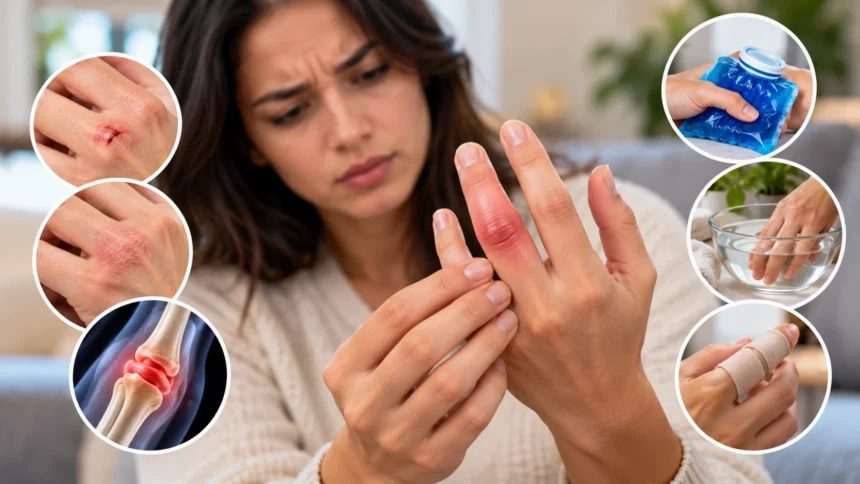
A swollen finger can make everyday activities such as writing, typing, gripping objects, or wearing rings uncomfortable. Sometimes, swelling develops after a minor injury, while other times, it appears without an obvious reason. Although mild finger swelling often improves with simple care, persistent inflammation may indicate an underlying condition that needs medical attention.
Understanding the causes of a swollen finger can help you recognize possible triggers and choose appropriate relief methods. Injuries, infections, arthritis, allergies, and fluid retention are among the common explanations. Knowing when to seek medical care is equally important, particularly if swelling occurs with severe pain, redness, numbness, or difficulty moving your finger.
What Causes a Swollen Finger?
Finger swelling occurs when excess fluid collects in the tissues or inflammation develops around muscles, joints, tendons, or other structures. This may cause the affected finger to appear larger, feel tight, or become difficult to bend. The severity of swelling depends on the underlying cause and how much surrounding tissue is affected.
Minor injuries are among the most common reasons for sudden finger swelling. Bumping your finger against a hard surface, overstretching a joint, or repeatedly using your hands can irritate surrounding tissues. The body’s natural inflammatory response may produce temporary swelling, tenderness, and stiffness while damaged tissues begin recovering.
However, not every swollen finger results from an injury or physical strain. Conditions such as arthritis, gout, infections, and allergic reactions can also cause noticeable inflammation. Understanding whether the swelling affects one finger or several fingers, and whether pain or redness is present, can help identify possible explanations.
Swollen Finger After an Injury
Finger injuries commonly cause swelling because damaged tissues trigger an inflammatory response. Sprains occur when ligaments supporting a joint become stretched or torn, while fractures involve broken bones. Both injuries may produce swelling, tenderness, bruising, and difficulty moving the affected finger, making it challenging to distinguish them without medical evaluation.
A jammed finger often occurs during sports or accidental impacts when force travels through the fingertip. This can injure ligaments, joint surfaces, or surrounding tissues, resulting in immediate discomfort and swelling. Although some minor injuries improve with rest, persistent pain or reduced movement may indicate a more significant problem.
Finger injuries should not be ignored when swelling develops alongside visible deformity or substantial tenderness. A fracture, dislocation, or tendon injury may require professional treatment to prevent lasting stiffness or impaired movement. Medical assessment is especially important when the finger appears crooked, cannot move normally, or becomes increasingly painful after an accident.
Finger Infections That Cause Swelling
Infections can cause finger swelling when bacteria enter through cuts, punctures, damaged skin, or irritated areas around the nails. The affected finger may become red, warm, tender, and noticeably larger. Some infections remain near the skin, while others can spread into deeper tissues and interfere with normal hand function.
Paronychia is an infection or inflammation involving the skin surrounding a fingernail. It may develop after nail biting, picking at cuticles, or minor damage to the nail fold. Symptoms often include localized swelling, redness, tenderness, and sometimes a collection of pus that requires evaluation and appropriate treatment.
More serious infections can affect deeper finger tissues or the tendon sheath. A swollen finger held in a bent position, with severe pain when someone gently attempts to straighten it, requires urgent medical assessment. Spreading redness, fever, rapidly worsening pain, or significant swelling also deserves immediate attention because delayed treatment may lead to complications.
Can Arthritis Cause Swollen Fingers?
Arthritis is a common cause of finger joint swelling, particularly when discomfort develops gradually or repeatedly. Osteoarthritis occurs when joint tissues change over time, potentially causing stiffness, tenderness, and enlargement around affected joints. Symptoms may become more noticeable during activities requiring gripping, twisting, or repeated hand movements.
Inflammatory arthritis, including rheumatoid arthritis, can also affect the fingers. Unlike ordinary temporary swelling, inflammatory joint conditions may produce prolonged morning stiffness, warmth, tenderness, and swelling involving several joints. Rheumatoid arthritis often affects matching joints on both hands, although symptom patterns vary between individuals.
Psoriatic arthritis can sometimes cause an entire finger to become swollen, creating a sausage-like appearance known as dactylitis. This may occur alongside joint pain, skin psoriasis, or nail changes. Persistent finger stiffness or repeated swelling should be evaluated by a healthcare professional to determine whether inflammatory arthritis requires treatment.
Gout and Sudden Finger Swelling
Gout is an inflammatory form of arthritis caused by deposits of urate crystals inside joints. Although it frequently affects the big toe, gout can also involve fingers and other joints. An attack may cause sudden swelling, significant tenderness, warmth, and redness, sometimes making even light pressure uncomfortable.
Gout symptoms often develop rapidly and may become especially painful within several hours. Some people experience repeated episodes separated by periods without noticeable discomfort. Factors such as kidney function, certain medications, and individual metabolic characteristics can influence uric acid levels and the likelihood of developing gout.
A suddenly swollen and painful finger should not automatically be attributed to gout. Joint infections can produce similar symptoms and may require urgent treatment to prevent damage. Healthcare professionals may use examinations and appropriate testing, sometimes including joint fluid analysis, to distinguish gout from other causes of acute inflammation.
Allergies, Insect Bites, and Skin Irritation
Allergic reactions can cause finger swelling when the skin responds to substances such as cleaning products, fragrances, metals, or certain chemicals. Contact dermatitis may produce redness, itching, irritation, and localized inflammation. Symptoms often develop in areas that directly touched the irritating material, although the appearance can vary depending on the reaction.
Insect bites and stings are another possible explanation for sudden finger swelling. The body’s response to the bite may cause temporary redness, itching, and tenderness around the affected area. Some reactions create more noticeable swelling than others, particularly when the finger has limited space for surrounding tissues to expand.
Mild reactions often improve when exposure stops and the skin is allowed to recover. However, increasing pain, spreading redness, or discharge may suggest an infection rather than simple irritation. If finger swelling occurs with breathing difficulty, throat tightness, or swelling of the tongue or face, seek emergency medical assistance immediately.
Fluid Retention and Swollen Fingers
Fluid retention can make fingers appear puffy, especially when several fingers are affected at the same time. Warm weather, prolonged inactivity, and certain medications may contribute to temporary changes in fluid distribution. Some people notice that rings feel tighter during hot conditions or after spending long periods in one position.
Finger puffiness may also develop during walking or exercise because physical activity changes circulation and fluid movement. This type of swelling is often temporary and improves after the activity ends. However, persistent swelling should not automatically be blamed on temperature or exercise, particularly when it appears alongside other unexplained symptoms.
Certain medical conditions involving the kidneys, heart, liver, or lymphatic system may contribute to swelling in different parts of the body. These problems are less likely to explain an isolated swollen finger but may be relevant when swelling affects both hands or additional areas. Ongoing generalized swelling deserves medical evaluation.
Why Is Only One Finger Swollen?
Swelling limited to one finger often suggests a localized problem rather than widespread fluid retention. Minor trauma, infection, joint inflammation, or irritation around a tendon can affect a specific finger. The exact location of swelling provides useful information, especially when discomfort centers around a joint, nail, or recently injured area.
A swollen fingertip may be associated with nail-fold inflammation, infection, or accidental injury. Swelling near the middle joint can occur after a sprain or with certain types of arthritis. When the entire finger becomes enlarged, healthcare professionals may consider inflammatory conditions, infections, or problems affecting several connected tissues.
The absence of an obvious injury does not necessarily mean that single-finger swelling is harmless. Small punctures or unnoticed skin injuries can occasionally develop into infections, while inflammatory disorders may begin in one location. Persistent or worsening swelling should be assessed, especially when movement becomes limited or the finger feels unusually warm.
Swollen Finger Without Pain: What Could It Mean?
A swollen finger without pain can occur because of mild fluid retention or temporary changes in circulation. Some individuals notice slight puffiness after spending time in warm weather or performing repetitive activities. When swelling disappears quickly and there are no other symptoms, the cause may be relatively minor.
Certain chronic joint conditions can also produce visible enlargement without severe discomfort. For example, osteoarthritis may cause gradual changes around finger joints, sometimes creating noticeable bumps or reduced flexibility. These changes often develop over time rather than appearing suddenly, although experiences differ from person to person.
Painless swelling still deserves attention when it continues, increases, or affects normal finger movement. A finger that becomes persistently enlarged may require examination to identify joint, tendon, or soft tissue problems. Changes in skin color, sensation, or circulation should also be evaluated promptly, even when pain is minimal.
How to Reduce Finger Swelling at Home
For mild swelling following a minor injury, resting the affected finger can help prevent additional irritation. Avoid activities that increase discomfort, including forceful gripping or repeated movements that strain the injured area. Keeping the hand comfortably elevated may also help reduce temporary swelling by supporting fluid drainage from surrounding tissues.
A cold compress can provide relief when swelling results from recent minor trauma. Wrap an ice pack in a thin towel and apply it for approximately 10 to 20 minutes at a time. Avoid placing ice directly against the skin, and stop if the finger becomes unusually numb or uncomfortable.
Remove rings promptly when swelling begins, provided they can be removed easily without force. A tight ring may interfere with circulation as swelling increases and can become difficult to remove later. If a ring is stuck or the finger changes color, becomes numb, or feels cold, seek urgent assistance rather than pulling forcefully.
What to Avoid When Treating a Swollen Finger
Certain home treatments may worsen finger swelling or delay appropriate medical care. Massaging a painful or infected finger aggressively can increase discomfort, particularly when underlying tissues are already inflamed. Avoid applying unnecessary pressure, forcing stiff joints to bend, or continuing activities that repeatedly aggravate the affected area.
Do not attempt to puncture, squeeze, or drain a swollen area that appears infected. Infections around the fingertip or nail sometimes require treatment by a healthcare professional using appropriate sterile techniques. Trying to manage a suspected abscess at home can introduce additional bacteria or damage delicate tissues.
Over-the-counter pain relievers may help certain people manage temporary discomfort, but they are not appropriate for everyone. Anti-inflammatory medicines can carry risks for individuals with kidney problems, stomach ulcers, or certain medication interactions. Ask a healthcare professional or pharmacist about suitable options, particularly when you have existing medical conditions or take other medicines.
When Should You See a Doctor for a Swollen Finger?
Medical evaluation is appropriate when finger swelling continues without improvement, repeatedly returns, or interferes with everyday activities. Persistent joint stiffness, unexplained tenderness, or changes in finger shape may indicate a condition requiring further investigation. Early assessment can help identify the cause and reduce the risk of prolonged discomfort or impaired function.
Seek prompt medical care when swelling occurs with increasing redness, warmth, fever, significant pain, or difficulty moving the finger. These symptoms can indicate an infection or substantial injury that may need treatment. A finger that becomes severely swollen after trauma, particularly with deformity or reduced movement, also deserves timely professional assessment.
Emergency care is necessary when the finger becomes blue, unusually pale, cold, or numb, particularly when a tight ring is present. Rapidly spreading infection, severe pain, or signs of a serious allergic reaction also require immediate attention. Waiting for home remedies to work in these situations can increase the risk of complications.
How Doctors Diagnose and Treat Finger Swelling
Healthcare professionals usually begin by asking when the swelling started and whether an injury, illness, or unusual activity occurred beforehand. They may examine the affected finger for tenderness, warmth, joint movement, skin changes, and circulation. Information about existing medical conditions, medications, and accompanying symptoms can also help narrow the possible causes.
Additional tests depend on the findings during the initial examination. X-rays may help identify fractures or certain joint changes, while blood tests may be useful when infection or inflammatory disease is suspected. Ultrasound or other imaging may occasionally be recommended to investigate tendons, soft tissues, or fluid collections.
Treatment varies considerably depending on the underlying condition and the severity of symptoms. Minor injuries may improve with protection and appropriate rehabilitation, while bacterial infections can require antibiotics or drainage by a clinician. Inflammatory arthritis, gout, and other chronic conditions may require targeted treatment to manage symptoms and protect long-term joint health.
Conclusion
A swollen finger can develop for many reasons, including minor injuries, arthritis, infections, allergic reactions, and temporary fluid retention. Although mild swelling sometimes resolves naturally, symptoms can also indicate a condition that requires professional care. Paying attention to the location, duration, and accompanying discomfort helps identify when further evaluation may be necessary.
Simple measures such as resting the hand, applying a wrapped cold compress after minor injuries, and avoiding irritating activities may help reduce temporary swelling. Removing tight rings early is also important for preventing circulation problems. However, home remedies should not replace medical treatment when swelling is severe, worsening, or associated with signs of infection.
If your finger remains swollen, becomes increasingly painful, or develops unusual color or sensation changes, seek appropriate medical attention. A healthcare professional can determine the underlying cause and recommend suitable treatment. Understanding the warning signs and using safe relief methods can help protect finger mobility and overall hand health.
Frequently Asked Questions (FAQs)
Why Is My Finger Swollen for No Reason?
Unexplained finger swelling may result from minor unnoticed injuries, fluid retention, arthritis, or inflammation. If swelling persists, worsens, or occurs with redness and pain, consult a healthcare professional.
How Do You Make a Swollen Finger Go Down Fast?
For mild swelling after an injury, rest the finger, elevate your hand, and apply a wrapped cold pack for 10 to 20 minutes. Seek care if symptoms worsen or circulation changes.
Can Arthritis Cause Only One Finger to Swell?
Yes, certain forms of arthritis can initially affect one finger or joint. However, infection and injury can produce similar symptoms, so persistent swelling should be evaluated before assuming arthritis is responsible.
Should I Be Worried About a Swollen Finger Without Pain?
Painless swelling is not always serious and may result from temporary fluid retention. However, persistent enlargement, reduced movement, or unusual skin changes should be examined by a healthcare professional.
How Long Does a Swollen Finger Take to Heal?
Recovery depends on the underlying cause and severity. Mild swelling may improve within days, while sprains, fractures, infections, or inflammatory conditions can require longer recovery periods and specific medical treatment.