


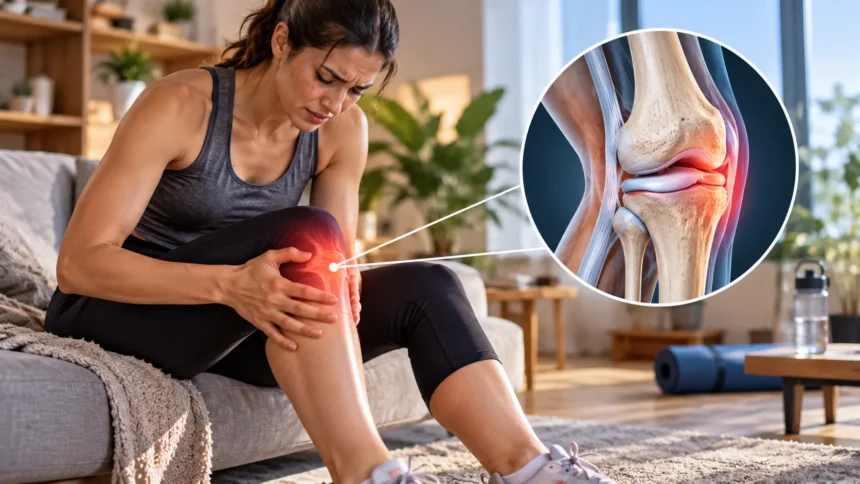
Pain inside the knee can make simple activities like walking, climbing stairs, bending, or standing uncomfortable. Some people experience a dull ache along the inner side of the knee, while others notice sharp pain during movement. This discomfort may develop suddenly after an injury or gradually from repetitive stress, joint changes, or irritation of nearby tissues.
The knee is a complex joint supported by bones, cartilage, ligaments, tendons, and surrounding muscles. When any of these structures become irritated or damaged, pain may occur around the inner knee, also called the medial knee. Identifying the location, intensity, and pattern of discomfort can provide useful clues about the possible cause.
Understanding what causes pain inside the knee is important for choosing appropriate relief strategies and recognizing warning signs. While some mild symptoms improve with activity modification and gentle movement, others require professional medical assessment. This guide explains common causes, symptoms, treatment options, prevention strategies, and when inner knee pain may indicate a more serious problem.
What Is Pain Inside the Knee?
Pain inside the knee usually refers to discomfort along the inner, or medial, side of the knee joint. This area faces the opposite leg and contains several important structures that help maintain stability during movement. People may experience tenderness near the joint line, around the kneecap, or slightly below the knee, depending on the affected tissues.
The inner knee contains the medial collateral ligament, medial meniscus, cartilage surfaces, tendons, and other supporting structures. These components work together to stabilize the knee, absorb pressure, and allow smooth bending and straightening. Injury, inflammation, or gradual joint changes can affect their function and cause discomfort during everyday activities.
Inner knee pain can feel different depending on its underlying cause. Some people notice stiffness after resting, while others experience sharp discomfort when twisting or putting weight on the leg. Swelling, clicking, or difficulty moving the joint may also occur. Because several conditions produce similar symptoms, pain location alone cannot establish an accurate diagnosis.
Common Causes of Pain on the Inside of the Knee
One common cause of inner knee pain is irritation or injury involving the medial collateral ligament, commonly called the MCL. This ligament supports the inner side of the knee and helps prevent excessive sideways movement. Sudden twisting, awkward landings, or impacts against the outer knee can stretch or damage the ligament, causing localized pain and tenderness.
The medial meniscus is another possible source of discomfort. This cartilage structure helps distribute pressure and stabilize the knee during movement. Meniscus injuries may develop after twisting movements or gradual tissue changes over time. Symptoms can include joint-line tenderness, swelling, and discomfort when squatting or turning, although these findings are not exclusive to meniscus problems.
Other causes include knee osteoarthritis, tendon irritation, bursitis, and referred pain from nearby structures. Osteoarthritis may cause stiffness and aching as joint tissues change over time. Irritation around the tendons below the inner knee can also produce localized tenderness. Identifying the actual cause often requires considering medical history, symptoms, and a physical examination.
Medial Meniscus Tear and Inner Knee Pain
The medial meniscus is a C-shaped piece of cartilage located between the thighbone and shinbone. It helps distribute forces across the knee and contributes to joint stability. A meniscus tear can occur during a sudden twisting movement, especially when the foot remains planted while the body turns. Degenerative tears may also develop gradually without a memorable injury.
People with a medial meniscus injury may experience pain along the inner joint line. Swelling can appear after the injury, and some individuals notice catching, clicking, or discomfort during deep knee bending. Occasionally, the knee may become temporarily stuck during movement. However, clicking alone does not necessarily indicate a meniscus tear or another serious condition.
Treatment depends on the type of tear, symptoms, activity requirements, and overall knee health. Some injuries improve with structured rehabilitation, appropriate activity modification, and progressive strengthening. Other cases may need specialist assessment or surgical consideration, particularly when the joint becomes mechanically locked. Imaging is sometimes useful, but it is not necessary for every person experiencing inner knee pain.
MCL Injury and Pain Along the Inner Knee
The medial collateral ligament runs along the inner side of the knee and connects the thighbone to the shinbone. Its main role is to resist excessive inward movement of the knee joint. An MCL sprain occurs when this ligament is stretched beyond its normal capacity, often during sports involving sudden directional changes or contact.
An MCL injury commonly causes tenderness along the inner knee and discomfort when moving or applying pressure. Swelling may develop, and some people experience a feeling of instability. The severity of symptoms varies according to the extent of ligament damage. Mild sprains may allow walking, while significant injuries can make weight-bearing uncomfortable or difficult.
Many isolated MCL injuries can recover without surgery through appropriate rehabilitation and protection during healing. Depending on injury severity, treatment may include temporary activity restrictions, a supportive brace, and guided strengthening exercises. Significant instability or suspected injury to additional knee structures requires medical evaluation. Returning to demanding activities too early can increase the risk of further problems.
Inner Knee Pain From Arthritis and Inflammation
Knee osteoarthritis is a common cause of ongoing joint pain, particularly in older adults. It involves changes in cartilage, bone, and other tissues within the joint. When the inner compartment is affected, discomfort may become more noticeable along the medial knee. Symptoms often include aching, stiffness, reduced mobility, and pain during weight-bearing activities.
Arthritis symptoms can change throughout the day and may become more noticeable after prolonged activity. Some people experience stiffness when first standing after resting, while others notice discomfort when climbing stairs. Swelling and reduced knee movement can also occur. Although osteoarthritis becomes more common with age, not every episode of knee pain indicates arthritis.
Inflammatory conditions such as rheumatoid arthritis and gout can also affect the knee. These problems may cause pronounced swelling, warmth, and pain, sometimes involving multiple joints. A suddenly hot, swollen knee can also indicate infection, which requires urgent assessment. Accurate diagnosis matters because different inflammatory conditions require different forms of treatment.
Pes Anserine Bursitis and Tendon-Related Knee Pain
Pes anserine bursitis is another possible explanation for discomfort along the inner knee. The pes anserine region is located slightly below the inner knee joint, where several tendons attach to the shinbone. A nearby fluid-filled sac called a bursa helps reduce friction between tissues. Irritation in this region may cause localized pain and tenderness.
People with pes anserine-related pain often notice discomfort when climbing stairs, rising from a chair, or performing repeated knee movements. Tenderness typically appears below the inner joint line rather than directly within the joint. Activities involving repeated loading may aggravate the area. However, nearby tendon problems can produce similar symptoms, making precise identification important.
Treatment usually focuses on reducing aggravating activities and gradually improving muscle strength and movement tolerance. A physiotherapist may recommend exercises that address relevant hip, thigh, and knee muscles. Gentle mobility work may also be appropriate when comfortable. Persistent tenderness or swelling should be assessed because the symptoms may overlap with other knee conditions.
Why Does the Inside of My Knee Hurt When Walking?
Pain on the inside of the knee during walking can occur when irritated tissues are repeatedly loaded. Each step places forces through the knee joint, ligaments, cartilage, and surrounding muscles. If one of these structures is injured or sensitive, ordinary walking may become uncomfortable. Symptoms sometimes increase when walking uphill, downhill, or across uneven surfaces.
Knee osteoarthritis, meniscus problems, and ligament injuries can all contribute to walking-related pain. The discomfort may appear immediately or develop after covering a longer distance. Some people begin limping or shortening their steps to avoid aggravating symptoms. Although these changes may temporarily reduce discomfort, persistent difficulty walking should be professionally evaluated.
For mild discomfort, temporarily reducing walking distance or choosing level surfaces may help manage symptoms. Comfortable movement is often preferable to prolonged inactivity, provided it does not worsen the condition. Supportive footwear may improve comfort for certain individuals. If walking becomes severely painful or the knee cannot support your weight, seek prompt medical attention.
Why Does Inner Knee Pain Get Worse When Bending?
Bending the knee changes the pressure and movement of structures within and around the joint. Activities such as squatting, kneeling, and sitting into a low chair can place additional demands on cartilage, tendons, and supporting tissues. When these structures are irritated, deeper knee bending may produce discomfort. The precise pain pattern varies between individuals.
Meniscus injuries sometimes cause discomfort during deep bending or twisting movements. Arthritis may also make bending difficult because of stiffness, swelling, or changes in the joint surfaces. Tendon-related problems can become noticeable during repeated squats or stair climbing. These patterns provide clues but cannot reliably distinguish one diagnosis from another without assessment.
Avoid forcing the knee into positions that cause sharp or increasing pain. Smaller, comfortable movements may help maintain mobility while symptoms settle. If bending repeatedly causes catching, significant swelling, or loss of movement, arrange a medical assessment. A knee that becomes physically locked and cannot straighten normally requires prompt evaluation rather than repeated attempts to force movement.
How to Relieve Pain Inside the Knee at Home
For mild inner knee pain, adjusting activities that aggravate symptoms is often a reasonable starting point. Temporarily reduce running, jumping, deep squatting, or other movements that increase discomfort. Gentle movement within a comfortable range may help prevent unnecessary stiffness. Complete immobilization is generally not needed for minor symptoms unless a healthcare professional specifically recommends it.
A cold pack may help relieve discomfort after a recent injury or when swelling is present. Wrap the pack in a towel and apply it for approximately 10 to 20 minutes at a time. Some people find gentle warmth more comfortable for longstanding stiffness without acute swelling. Avoid applying extreme temperatures directly to the skin.
An elastic knee support may provide comfort for some people, but it should not restrict circulation or replace an appropriate diagnosis. Over-the-counter pain relief may sometimes be suitable, depending on age, medical conditions, and other medications. Ask a healthcare professional or pharmacist before using medicines if their suitability is uncertain. Worsening pain should not be masked simply to continue demanding activities.
Exercises and Rehabilitation for Inner Knee Pain
Appropriate strengthening exercises can support knee function by improving the capacity of muscles surrounding the joint. The quadriceps, hamstrings, glutes, and calf muscles all contribute to lower-body movement and stability. Rehabilitation may begin with gentle muscle contractions and controlled movements. The best starting point depends on the underlying condition and whether an acute injury is present.
Simple exercises such as comfortable seated knee extensions or gentle heel slides may be appropriate for some people with mild symptoms. More demanding activities, including controlled step-ups and strengthening exercises, can be introduced when tolerated. Movement should remain within a comfortable range and progress gradually. Stop exercises that produce sharp pain, increasing swelling, or noticeable instability.
A physiotherapist can help determine which exercises are suitable and how quickly to progress them. Rehabilitation should address strength, mobility, balance, and activities relevant to everyday life. Recovery is not always linear, and occasional symptom changes may require adjustments. People with suspected ligament tears, joint locking, or substantial swelling should obtain an assessment before beginning independent rehabilitation.
When Should You Worry About Inner Knee Pain?
Seek urgent medical attention if knee pain follows a significant injury and you cannot bear weight or notice a visible deformity. Rapid, substantial swelling after trauma can also indicate a serious joint injury. A knee that becomes locked or feels severely unstable requires prompt evaluation. These symptoms should not be managed solely with home exercises.
A hot, markedly swollen knee accompanied by fever or feeling unwell can indicate a joint infection. This requires immediate medical assessment because delayed treatment may lead to serious complications. Significant redness, rapidly worsening pain, or severe symptoms without an obvious injury also deserve urgent attention. Do not assume that sudden intense knee pain is simply overuse.
For less severe symptoms, arrange a routine appointment if pain persists, repeatedly returns, or interferes with walking and sleep. A doctor or physiotherapist can evaluate the knee and determine whether imaging or specialist care is necessary. Early assessment may help prevent prolonged limitations. The appropriate treatment depends on the actual diagnosis rather than the location of discomfort alone.
Conclusion
Pain inside the knee can develop from several conditions, including medial meniscus injuries, MCL sprains, arthritis, and irritation of nearby tendons or bursae. Symptoms may include aching, tenderness, stiffness, swelling, or discomfort during walking and bending. Identifying how the pain started and which movements aggravate it can provide useful information about the possible cause.
Mild inner knee discomfort may improve with temporary activity modification, comfortable movement, and appropriately selected rehabilitation exercises. Strengthening the muscles supporting the knee can help improve function and movement tolerance. However, not every knee problem responds to the same approach, and persistent symptoms may require individualized treatment from a qualified healthcare professional.
Understanding when to seek medical attention is equally important. Severe pain, inability to bear weight, significant swelling, joint locking, or signs of infection require prompt assessment. By recognizing concerning symptoms and choosing suitable care, you can protect your knee health and work toward returning to comfortable everyday movement.
Frequently Asked Questions
What is the most common cause of pain on the inside of the knee?
Common causes include medial meniscus problems, MCL injuries, osteoarthritis, and pes anserine irritation. The most likely cause depends on age, activity, injury history, and accompanying symptoms.
Can inner knee pain go away on its own?
Some mild knee pain improves with activity modification and time. However, persistent pain, significant swelling, instability, or difficulty walking requires medical evaluation to identify the underlying cause.
Is walking good for inner knee pain?
Gentle walking may be helpful when symptoms remain mild and do not worsen. Reduce the distance or intensity if discomfort increases, and seek advice if walking becomes difficult.
How long does inner knee pain take to heal?
Recovery depends on the cause and severity. Mild irritation may improve over days or weeks, while ligament injuries, meniscus problems, or chronic joint conditions may require longer rehabilitation.
When should I see a doctor for pain inside my knee?
Seek medical care if pain persists, worsens, or affects normal movement. Severe swelling, fever with a hot knee, inability to bear weight, or a locked joint requires urgent assessment.