


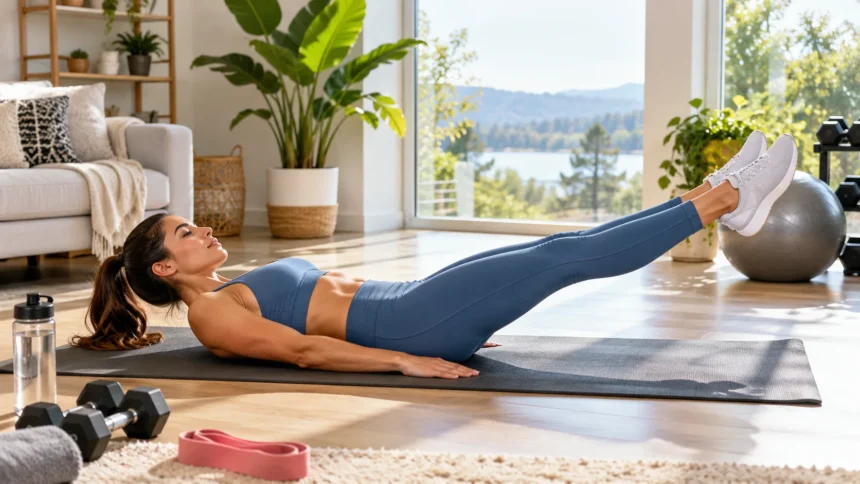
What Are Leg Lifts?
Leg lifts are a bodyweight exercise that involves raising one or both legs while maintaining a controlled body position. They are commonly used to strengthen the abdominal muscles, hip flexors, and other muscles responsible for supporting movement. Depending on the variation, leg lifts can be performed while lying on the floor, standing, or using exercise equipment.
The leg lifts exercise is popular because it requires minimal equipment and can be adapted to different fitness levels. Beginners may start with single-leg movements, while more experienced individuals may perform double-leg raises or supported hanging variations. Each version challenges the body differently, making proper technique and exercise selection important for comfort and effectiveness.
Understanding how leg lifts work helps people choose variations that match their abilities and training goals. While the exercise is frequently associated with abdominal workouts, it also requires coordination between the hips, pelvis, and trunk. Learning controlled movement patterns can support a balanced fitness routine without relying on unnecessary speed or excessive repetitions.
Muscles Worked During Leg Lifts
Leg lifts engage several muscle groups that work together to raise the legs and stabilize the body. The hip flexors play a major role in lifting the thighs toward the torso, while the abdominal muscles help manage pelvic movement. The exact contribution of each muscle depends on the exercise variation and body position.
The rectus abdominis and deeper abdominal muscles assist with trunk stability during many lying leg lift variations. These muscles help control unwanted movement through the lower back and pelvis. However, leg lifts do not isolate the lower abdominal muscles, despite being commonly described as a lower abs exercise in fitness discussions.
Other supporting muscles may include the quadriceps, gluteal muscles, and muscles surrounding the hips. Side-lying leg lifts place greater emphasis on the hip abductors, including the gluteus medius. Understanding these differences helps explain why different leg lift variations are used in strength training, rehabilitation, and general mobility programs.
Benefits of Leg Lifts Exercise
One important benefit of leg lifts is their ability to challenge the muscles responsible for controlling the hips and trunk. Performing the movement with appropriate technique encourages coordination between these muscle groups. Over time, gradually progressing suitable exercises can help improve muscular strength and control as part of a broader fitness routine.
Leg lifts are also accessible because many variations require only a comfortable exercise surface. People can perform modified movements at home, in a gym, or during an appropriately designed exercise program. This flexibility makes the exercise convenient for individuals who want to include bodyweight movements without purchasing specialized training equipment.
Another benefit is the availability of several variations for different movement goals. Supine leg lifts can challenge abdominal control, while side-lying versions target muscles supporting hip stability. These movements can complement walking, resistance training, and other physical activities, although no single exercise provides all the benefits associated with a balanced fitness program.
How to Do Lying Leg Lifts With Proper Form
Begin by lying on your back on a comfortable exercise mat with your arms resting beside your body. Bend your knees initially and position your feet on the floor while finding a comfortable pelvic position. If appropriate, gradually extend one or both legs without forcing your lower back into an uncomfortable position.
For a beginner-friendly version, keep one knee bent with the foot supported while slowly raising the opposite leg. Lift only as high as you can without pain or excessive movement through the lower back. Pause briefly at a comfortable height before lowering the leg with control and returning to the starting position.
Maintain steady breathing throughout the movement and avoid holding your breath unnecessarily. Focus on smooth, deliberate motions rather than trying to complete repetitions quickly. If raising both legs creates discomfort or makes it difficult to control your pelvis, return to a simpler variation until the movement feels more manageable.
How to Do Standing Leg Lifts
Standing leg lifts offer an alternative for people who prefer exercising without lying on the floor. Begin by standing upright beside a stable support, such as a sturdy chair or countertop. Position your feet comfortably, keep your shoulders relaxed, and hold the support lightly if additional balance assistance is needed.
Slowly raise one leg forward while maintaining a comfortable position through your trunk and supporting leg. Avoid leaning backward or swinging the leg to achieve greater height. Lower the leg with control, keeping the movement within a range that feels comfortable for your hips and lower back.
Standing leg lifts can also be performed to the side or backward, depending on the muscles you want to emphasize. Side movements involve the hip abductors, while backward movements recruit the hip extensors. Beginners should prioritize stability and controlled technique before attempting unsupported variations or adding resistance.
Side-Lying Leg Lifts for Hip Strength
Side-lying leg lifts are commonly used to challenge the muscles along the outside of the hips. Begin by lying on one side with your head supported comfortably and your body positioned in a stable line. Bend the lower knee slightly if necessary to improve balance and reduce unnecessary strain.
Keep the upper leg comfortably straight and slowly lift it toward the ceiling without rotating the pelvis backward. The movement does not need to be large to engage the muscles responsible for hip abduction. Pause briefly before lowering the leg with control, maintaining a steady breathing pattern throughout the exercise.
Side-lying leg lifts may be included in programs designed to strengthen the gluteus medius and related muscles. These muscles contribute to pelvic control during activities such as walking and standing on one leg. Individuals with hip pain or rehabilitation needs should follow exercise recommendations suited to their specific condition.
Hanging Leg Lifts and Their Benefits
Hanging leg lifts are a more demanding variation performed while supported by a suitable overhead bar or specialized exercise station. The movement requires grip strength, shoulder stability, and trunk control in addition to hip flexor activity. Because of these demands, hanging variations are generally more appropriate for people with an established strength-training foundation.
During the exercise, the legs move upward while the upper body remains supported. Raising bent knees is usually more manageable than lifting straight legs because it reduces the mechanical demands of the movement. Controlled pelvic movement can increase abdominal involvement, while excessive swinging makes it harder to maintain consistent technique.
Hanging leg lifts are not necessary for developing abdominal strength, and simpler floor exercises can provide useful training benefits. People with shoulder problems, grip limitations, or difficulty maintaining stable support should choose alternatives. Any hanging exercise should be performed only with appropriate equipment, adequate strength, and safe supervision when needed.
Common Mistakes During Leg Lifts
One common mistake is lifting the legs too quickly and allowing momentum to control the movement. Fast repetitions can make it harder to maintain a stable pelvis and may shift attention away from the intended muscles. Slower, controlled movements help people recognize their comfortable range and maintain consistent technique.
Another mistake involves forcing the legs lower than the body can comfortably control during supine variations. This may increase the demand on the hip flexors and lower back, particularly when both legs remain straight. Bending the knees or reducing the movement range can make the exercise more manageable without eliminating its training value.
Some people also hold their breath or create unnecessary tension through the neck and shoulders. These habits can make an otherwise manageable exercise feel uncomfortable. Relaxing the upper body, breathing steadily, and choosing an appropriate variation can improve the overall experience while supporting better movement coordination.
How to Protect Your Lower Back During Leg Lifts
Comfortable lower back positioning is an important consideration when performing lying leg lifts. Raising and lowering the legs changes the forces acting on the pelvis and lumbar spine. If the abdominal muscles cannot comfortably control these movements, a demanding variation may create unnecessary strain or discomfort.
Begin with a version that allows your lower back and pelvis to remain stable without forcing either into an extreme position. Single-leg raises, bent-knee movements, and a smaller range of motion can reduce the difficulty. The goal is to maintain comfortable control rather than achieving a particular leg height or keeping the legs completely straight.
Stop the exercise if you experience sharp pain, worsening discomfort, or unusual symptoms. Persistent lower back problems may require an individualized assessment before continuing certain movements. A physiotherapist or qualified healthcare professional can help determine whether leg lifts are appropriate and recommend modifications based on your needs.
Leg Lifts for Beginners
Beginners can approach leg lifts by learning basic movement control before progressing to more demanding variations. Starting with one leg at a time allows the body to practice coordinating hip movement and trunk stability. A comfortable exercise mat and adequate space are usually sufficient for these introductory movements.
Try a small number of smooth repetitions while paying attention to breathing, balance, and comfort. There is no need to complete a predetermined number if your technique becomes difficult to maintain. Resting between efforts and choosing manageable movements can make early practice more productive and enjoyable.
As the exercise becomes familiar, you may gradually explore a larger comfortable movement range or a different leg lift variation. Progression should depend on how well you control the movement rather than pressure to advance quickly. Combining leg lifts with other suitable exercises can help develop strength throughout the body.
How Many Leg Lifts Should You Do?
The appropriate number of leg lifts depends on your experience, the variation selected, and your overall exercise routine. Beginners may find that a few controlled repetitions provide enough practice to learn the movement. More demanding variations can require additional rest, even when the number of repetitions is relatively small.
Rather than aiming for a particular number, prioritize repetitions that feel controlled and comfortable. Stop when fatigue begins to interfere with your technique or you notice increasing strain. A qualified exercise professional can help establish suitable training volume for individuals following structured strength or rehabilitation programs.
Recovery is another important factor because muscles need time to adapt to exercise. Repeating difficult movements without sufficient rest may contribute to fatigue or discomfort. A balanced routine includes a variety of activities, appropriate recovery, and gradual adjustments based on physical ability and individual health needs.
Leg Lifts vs Leg Raises: What’s the Difference?
The terms leg lifts and leg raises are frequently used interchangeably in fitness discussions. Both usually describe movements in which one or both legs are lifted against gravity. However, exercise names can vary between instructors, training programs, and rehabilitation settings, so the specific movement matters more than its label.
Some programs use leg raises to describe abdominal-focused movements performed while lying on the back. Leg lifts may refer more broadly to exercises performed while standing, lying on the side, or using equipment. These naming differences are not universal, and neither term identifies one standardized exercise across every fitness setting.
When following a workout routine, focus on the demonstrated starting position, movement direction, and intended muscle groups. A side-lying hip lift differs significantly from a hanging straight-leg raise, even though both may be called leg lifts. Understanding the actual movement helps ensure that you select an exercise suited to your needs.
Can Leg Lifts Improve Core Strength?
Certain leg lift variations challenge the abdominal muscles as they stabilize the pelvis and trunk. These muscles contribute to everyday activities such as bending, walking, and changing positions. Practicing appropriate resistance exercises over time can improve muscular strength and endurance, although individual results depend on training consistency and progression.
Core strength involves more than the abdominal muscles visible at the front of the torso. Muscles around the spine, pelvis, and hips work together to support controlled movement. Leg lifts can contribute to this broader training goal, but they should not replace every other form of core exercise.
A balanced program may include movements such as modified planks, bird dogs, and other controlled exercises suited to an individual’s abilities. Different exercises challenge the trunk in different ways. Including variety can help strengthen multiple muscle groups while reducing the need to rely heavily on one repetitive movement.
Do Leg Lifts Help With Balance and Stability?
Leg lifts can support balance-related training when performed in variations that challenge controlled movement and body positioning. Standing on one leg while raising the other requires coordination between the hips, trunk, and supporting leg. The difficulty increases when external support is reduced, although safety should remain the first consideration.
Side-lying leg lifts can strengthen hip muscles that contribute to pelvic stability during walking and similar activities. These muscles help control movement when body weight shifts between the legs. However, improvements in muscle strength do not automatically guarantee better balance, which also depends on sensory information and coordinated movement.
People interested in improving balance may benefit from combining appropriate strengthening exercises with supervised or supported balance activities. Stable surfaces and nearby support are particularly important for individuals who feel unsteady. Exercises should be adapted to personal ability, and anyone experiencing frequent falls or significant dizziness should seek medical guidance.
Leg Lifts in a Full-Body Workout Routine
Leg lifts can fit naturally into a balanced exercise program that includes strength training, cardiovascular activity, and mobility work. They may be performed as part of a warm-up, a core-focused session, or a broader lower-body routine. Their role depends on the variation chosen and the other exercises included.
For example, side-lying leg lifts may complement exercises that challenge the hips and legs through different movement patterns. Supine variations can be combined with suitable trunk stability exercises when appropriate. These combinations allow the body to practice several skills without depending entirely on one movement for physical development.
Consistency and recovery are more important than trying to include every exercise in a single session. Choose activities that match your interests, available equipment, and physical capabilities. A well-rounded routine should support overall health, functional strength, and enjoyment rather than focusing exclusively on one muscle group or appearance-related goal.
Safety Tips Before Performing Leg Lifts
Before beginning leg lifts, make sure the exercise surface is stable and provides sufficient space for comfortable movement. Wear clothing that allows your hips and knees to move naturally without restriction. Starting with gentle movement can help you become familiar with the exercise and identify a comfortable range of motion.
Individuals with existing hip, back, or knee conditions may need modifications or alternative exercises. People recovering from surgery or managing a medical condition should follow any specific restrictions provided by their healthcare team. Painful movements should not be forced in an attempt to improve strength or flexibility more quickly.
Pay attention to warning signs such as sharp pain, persistent tingling, dizziness, or unusual weakness. Stop exercising if these symptoms occur, and obtain medical advice when appropriate. Choosing manageable movements, using stable support, and progressing gradually are practical ways to make leg lift exercises more comfortable and accessible.
Conclusion
Leg lifts are versatile bodyweight exercises that can challenge the hip muscles, abdominal muscles, and other structures involved in movement control. Different variations offer different benefits, making the exercise useful in a range of fitness and rehabilitation settings. The most appropriate version depends on your strength, mobility, comfort, and individual goals.
Proper technique involves controlled movement, comfortable joint positioning, and steady breathing throughout each repetition. Beginners can start with simpler variations before considering more demanding options. Paying attention to discomfort and adapting the movement when necessary helps create a safer and more productive exercise experience.
Including leg lifts in a balanced physical activity routine can support strength, coordination, and general fitness. However, no single movement is necessary for everyone, and exercise benefits develop through appropriate practice and recovery. Choose variations that feel manageable, respect your body’s limits, and seek professional guidance when medical concerns affect your ability to exercise.
Frequently Asked Questions (FAQs)
What are leg lifts good for?
Leg lifts can strengthen muscles involved in hip movement and trunk stability. Different variations emphasize different muscle groups, making them useful additions to balanced strength-training and mobility routines.
Do leg lifts work your lower abs?
Lying leg lifts engage the abdominal muscles as they help stabilize the pelvis and trunk. However, they do not isolate the lower abdominal region because abdominal muscles function together during controlled movements.
Are leg lifts safe for beginners?
Leg lifts can be suitable for beginners when the variation matches their physical abilities. Single-leg raises and bent-knee movements are often easier to control than demanding double-leg or hanging variations.
Can leg lifts cause lower back pain?
Some leg lift variations can cause lower back discomfort when the movement exceeds an individual’s comfortable control. Reducing the range, bending the knees, or choosing another exercise may help.
How often should you perform leg lifts?
Frequency depends on the exercise difficulty, fitness level, and overall training routine. Allow appropriate recovery between demanding sessions, prioritize comfortable technique, and adjust your program according to individual needs.