


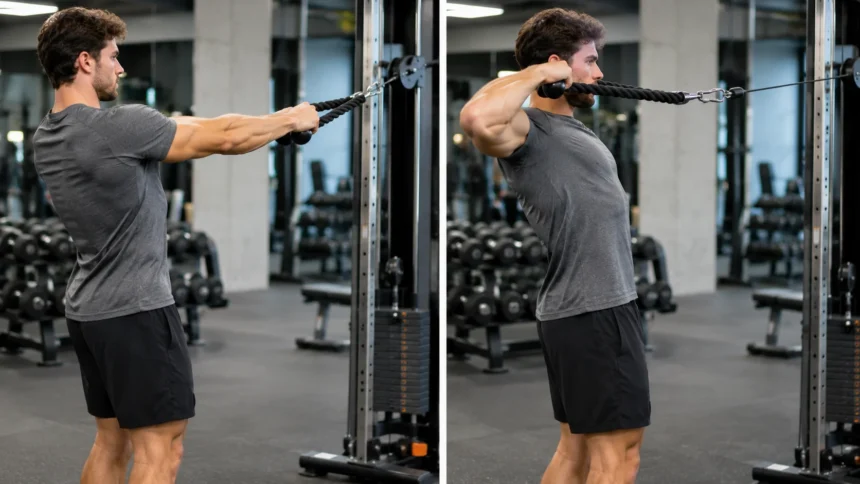
The cable face pull is a popular upper-body exercise that helps strengthen the shoulders, upper back, and muscles responsible for shoulder blade movement. It is commonly included in strength-training programs because it trains muscles that support controlled pulling movements and shoulder stability. When performed correctly, this exercise can complement other upper-body exercises and contribute to balanced muscular development.
However, using excessive weight, incorrect cable positioning, or poor pulling technique can make the exercise less effective and increase unnecessary strain. Understanding cable face pull proper form is important for choosing suitable resistance and maintaining comfortable shoulder movement. This guide explains the muscles involved, step-by-step technique, benefits, variations, common mistakes, and practical safety tips for performing cable face pulls.
What Is a Cable Face Pull?
A cable face pull is a resistance exercise performed using a cable machine, usually with a rope attachment. The movement involves pulling the rope toward the face while moving the elbows outward and controlling the shoulder blades. It primarily trains muscles around the rear shoulders and upper back that contribute to controlled arm movement.
Unlike exercises that focus mainly on pushing, cable face pulls emphasize horizontal pulling and shoulder external rotation when performed using an appropriate technique. This makes them a useful addition to balanced upper-body training programs. However, the exact muscle involvement depends on cable height, elbow position, grip, and individual movement mechanics.
Cable face pulls are suitable for many beginners and experienced exercisers when resistance and technique are appropriate. They can be included in shoulder workouts, upper-body sessions, or general strength-training routines. The goal is to perform controlled repetitions rather than lift the maximum possible weight or force the shoulders into uncomfortable positions.
What Muscles Do Cable Face Pulls Work?
Cable face pulls primarily target the posterior deltoids, commonly called the rear shoulder muscles. These muscles contribute to moving the upper arms backward and help control shoulder positioning. The exercise also involves the middle trapezius and rhomboids, which contribute to shoulder blade movement and stabilization during pulling activities.
The rotator cuff muscles can also contribute, particularly when the exercise includes controlled external rotation of the shoulders. The infraspinatus and teres minor help rotate the upper arms outward. However, the amount of rotator cuff involvement depends on the specific movement pattern and should not be assumed to be identical across variations.
Additional muscles, including parts of the trapezius and other shoulder stabilizers, help maintain appropriate positioning throughout the exercise. The abdominal and lower-body muscles also contribute to standing balance. Understanding these combined actions explains why face pulls are often described as a rear deltoid and upper-back exercise rather than an isolated shoulder movement.
Benefits of Cable Face Pulls for Shoulder Strength
One important benefit of cable face pulls is their ability to strengthen muscles around the rear shoulders and upper back. These muscles contribute to controlled arm movements during everyday activities and resistance training. Developing their strength can complement pressing exercises and support a more balanced upper-body workout.
Face pulls can also improve awareness of shoulder blade positioning during pulling movements. Learning to control the shoulder blades and upper arms may support better movement coordination. However, performing face pulls does not guarantee that someone’s posture will change or that existing shoulder discomfort will disappear.
Another advantage is the ability to adjust resistance using a cable machine. This makes it easier to select a manageable load and progress gradually as strength improves. The exercise can also be modified through cable height, grip, and body positioning, allowing different approaches based on comfort and individual training needs.
How to Perform Cable Face Pulls With Proper Form
Begin by attaching a suitable rope to an adjustable cable machine and positioning the pulley around upper-chest to face height. Select light resistance that allows smooth movement without excessive effort. Stand facing the machine with your feet comfortably apart, knees relaxed, and body balanced before holding the rope ends.
Step backward until the cable becomes gently tensioned, then extend your arms forward without locking the elbows forcefully. Pull the rope toward your face while moving your elbows outward and allowing your hands to separate. Keep your shoulders comfortable and avoid leaning excessively backward to move the weight.
Finish the pulling phase when your hands approach the sides of your face and your upper arms remain in a comfortable position. Pause briefly before returning the rope forward in a controlled manner. Maintain steady breathing, avoid sudden movements, and stop the exercise if it causes sharp pain or unusual joint discomfort.
Correct Cable Height and Rope Position
Cable height can influence the direction of resistance and how the shoulders move during face pulls. A pulley positioned around the upper chest or face is a common starting point. This arrangement allows the rope to travel toward the face without requiring unnecessary changes in trunk position.
If the cable is positioned too low, the exercise may become more similar to an upward rowing movement. A very high pulley can also change the pulling angle and affect shoulder comfort. Small adjustments may help different individuals find a position that supports controlled movement without forcing the arms into an awkward path.
Rope length and grip position also matter because the hands need enough room to separate during the pulling phase. Hold the rope securely without excessive wrist bending or gripping tension. The goal is to maintain a comfortable pulling angle that allows the rear shoulders and upper-back muscles to contribute effectively.
Common Cable Face Pull Mistakes to Avoid
One of the most common mistakes is selecting more resistance than can be controlled. Heavy weights may encourage backward leaning, excessive body movement, or shortened repetitions. These changes can shift the exercise away from the intended shoulder and upper-back muscles while increasing unnecessary strain.
Another mistake involves pulling the rope toward the chest instead of the upper face. This changes the movement pattern and may reduce the external rotation component often associated with face pulls. Keeping the intended pulling direction consistent helps maintain a more predictable technique throughout the exercise.
Rushing repetitions is another frequent problem, especially during the return phase. Allowing the cable to pull the arms forward suddenly reduces control and may create discomfort. Using lighter resistance, maintaining steady movement, and avoiding exaggerated shoulder positions can help improve exercise quality.
How to Keep Your Elbows and Shoulders Positioned
Elbow positioning influences which muscles contribute during cable face pulls. The elbows generally move outward as the rope approaches the face, creating a broad pulling motion. However, excessively high or uncomfortable elbow positions are unnecessary and may aggravate sensitive shoulders.
The shoulders should move naturally without excessive shrugging or forced stiffness. Some shoulder blade retraction occurs as the arms move backward, but it should not be exaggerated. Trying to squeeze the shoulder blades together as forcefully as possible may create unnecessary tension rather than improving the exercise.
Wrist positioning also deserves attention because the rope ends should remain comfortable to hold. Avoid bending the wrists sharply to compensate for limited shoulder movement. A controlled range of motion that respects individual anatomy is more important than forcing every repetition to match a particular visual example.
Cable Face Pull vs. Reverse Fly: Key Differences
Cable face pulls and reverse fly exercises both involve muscles around the rear shoulders and upper back. However, the movements differ in arm positioning and the direction of resistance. Face pulls generally combine horizontal pulling with some shoulder external rotation, while reverse fly movements emphasize moving the arms outward and backward.
Reverse fly exercises can be performed using dumbbells, cables, or specialized resistance machines. They commonly involve keeping the elbows slightly bent while moving the arms apart. Cable face pulls use a rope attachment and a more pronounced elbow-bending motion as the hands travel toward the face.
Neither exercise is automatically superior for every individual. Both can contribute to rear shoulder strength when performed correctly and included in a balanced routine. The best option depends on available equipment, shoulder comfort, movement preferences, and the specific objectives of a strength-training program.
Cable Face Pull Variations for Different Fitness Levels
Standing cable face pulls are the most familiar version because they allow resistance to be adjusted easily. Beginners can start with a light load while practicing comfortable movement mechanics. The exercise can become more demanding through gradual resistance increases, provided technique remains controlled and shoulder comfort is maintained.
A resistance band face pull offers an alternative when a cable machine is unavailable. The band must be attached to a secure and appropriate anchor before performing the movement. Because resistance changes as the band stretches, the exercise may feel different from a cable version and require adjustments to the starting position.
Seated face pulls are another option for individuals who prefer additional lower-body stability. They can reduce the temptation to use excessive body movement during repetitions. However, the seating arrangement and cable direction must still allow comfortable shoulder mechanics, and modifications should be based on individual needs rather than assumptions about difficulty.
How Many Sets and Repetitions Should You Perform?
The appropriate number of cable face pull repetitions depends on training experience, resistance, and overall workout goals. Beginners may find one or two controlled sets sufficient while learning the exercise. A moderate repetition range can provide opportunities to practice technique without encouraging unnecessary fatigue.
More experienced exercisers may include additional sets within a balanced upper-body strength routine. However, training volume should reflect the workload already placed on the shoulders through rowing, pressing, and other activities. Performing more repetitions is not automatically beneficial when technique deteriorates or recovery becomes insufficient.
Progression should be gradual and based on consistent movement quality. Increasing resistance may be appropriate when the selected load feels manageable and repetitions remain controlled. People who are still developing should prioritize age-appropriate training, supervision, and proper technique instead of pursuing maximum weights or excessive exercise volume.
Cable Face Pull Safety Tips and Shoulder Comfort
Safety begins with choosing resistance that allows controlled movement through a comfortable range of motion. A brief warm-up involving gentle arm movements and lighter pulling exercises can help prepare the upper body. The shoulders should feel stable and comfortable rather than strained during each repetition.
People with existing shoulder injuries, persistent pain, or limited mobility may need professional guidance before performing face pulls. Certain shoulder conditions can become aggravated by external rotation or high elbow positions. Pain should not be ignored or treated as proof that the exercise is effectively strengthening the targeted muscles.
Equipment safety is equally important because cable machines rely on adjustable pulleys, attachments, and weight stacks. Check that the rope is securely connected and the machine operates correctly before beginning. Avoid sudden movements and maintain appropriate distance from the equipment to reduce the likelihood of accidental injury.
How to Add Cable Face Pulls to Your Workout Routine
Cable face pulls can complement exercises that strengthen the chest, back, shoulders, and arms. They are often included near the end of upper-body sessions after larger compound movements. However, exercise order can vary depending on whether the main goal involves movement practice, general strength, or specific rehabilitation needs.
A balanced routine should include both pushing and pulling activities while allowing appropriate recovery between demanding sessions. Face pulls can contribute to this balance by training rear shoulder and upper-back muscles. However, they should not replace other important movements or become the only exercise used for shoulder strength.
Consistency and comfort matter more than performing large amounts of exercise. Choose manageable resistance, maintain controlled technique, and adjust training when fatigue affects movement quality. If shoulder symptoms persist despite modifications, a qualified physical therapist or healthcare professional can help determine whether the exercise is appropriate.
Conclusion
The cable face pull is a useful upper-body exercise that primarily strengthens the rear deltoids and upper-back muscles while involving shoulder stabilizers. Its combination of pulling and external rotation can complement other resistance exercises. Understanding the correct movement pattern helps make training more controlled and comfortable.
Proper form involves choosing suitable cable height, using manageable resistance, and pulling the rope toward the face without excessive body movement. Common mistakes include lifting too much weight, rushing repetitions, and forcing uncomfortable shoulder positions. Correcting these issues can improve movement quality and reduce unnecessary strain.
Cable face pulls can be included in balanced strength-training routines for many healthy individuals. However, they are not a guaranteed solution for poor posture or shoulder pain. With gradual progression, suitable technique, and attention to joint comfort, the exercise can support upper-body strength and coordinated movement over time.
Frequently Asked Questions (FAQs)
What muscles do cable face pulls work?
Cable face pulls primarily work the rear deltoids, middle trapezius, and rhomboids. The rotator cuff and other shoulder stabilizers also contribute, depending on the pulling technique and external rotation involved.
What is the correct cable height for face pulls?
Positioning the pulley around upper-chest to face height is a common starting point. Adjust the cable height to maintain a comfortable pulling direction without excessive leaning or awkward shoulder movement.
Are cable face pulls good for shoulder health?
Cable face pulls can help strengthen muscles supporting shoulder movement and stability. However, they do not prevent every shoulder injury or treat all causes of pain, and some conditions require professional guidance.
How many reps should I do for cable face pulls?
Beginners can start with a manageable number of controlled repetitions using light resistance. The appropriate amount depends on experience, technique, overall workout volume, and the ability to maintain comfortable shoulder movement.
What is the biggest mistake during cable face pulls?
Using excessive weight is a common mistake because it encourages leaning, swinging, and shortened movements. Choosing manageable resistance helps maintain control and keeps the exercise focused on the intended muscles.