


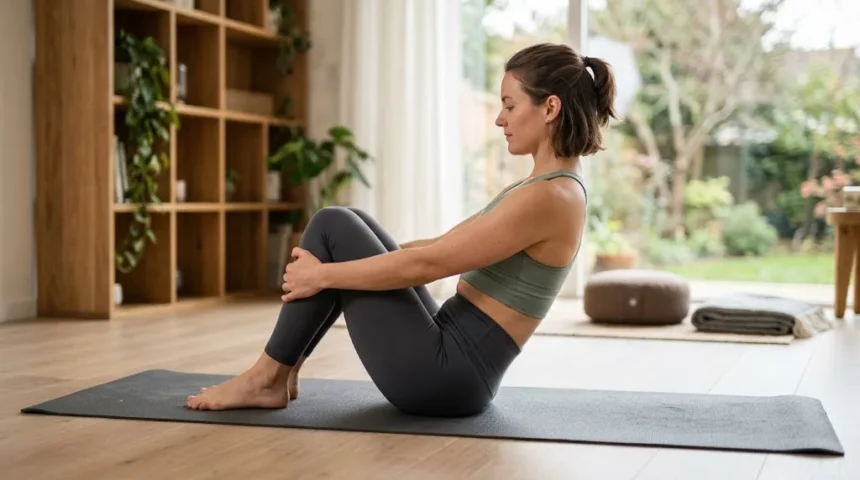
Tailbone discomfort can make sitting, standing up, exercising, and even relaxing feel uncomfortable. The tailbone, or coccyx, sits at the bottom of the spine and connects with muscles, ligaments, and pelvic floor structures. Gentle mobility and stretching may help reduce surrounding muscle tension when stiffness contributes to discomfort.
Tailbone stretches do not directly stretch the coccyx itself. Instead, they target nearby areas such as the hips, glutes, lower back, hamstrings, and pelvic muscles that can influence how pressure is distributed around the tailbone. Choosing comfortable movements is important because aggressive stretching can sometimes make an irritated area feel worse.
A good routine should focus on slow movement, relaxed breathing, and positions that do not increase pain. Some people benefit from child’s pose, knee-to-chest stretches, gentle hip stretches, or pelvic mobility work. Understanding proper form and knowing when to stop can make tailbone stretching safer and more useful.
What Are Tailbone Stretches?
Tailbone stretches are movements designed to improve mobility and reduce muscular tension around the coccyx and surrounding pelvis. Since the tailbone itself is a small bony structure, the goal is usually to address nearby muscles rather than trying to move the coccyx directly. This can include the glutes, hips, lower back, and pelvic floor region.
These stretches are often used when prolonged sitting, muscle tightness, or changes in movement make the area around the tailbone feel uncomfortable. Gentle positions can reduce stiffness and make it easier to move between sitting and standing. However, the usefulness of stretching depends on what is actually causing the pain.
Tailbone discomfort may result from a fall, prolonged pressure, childbirth, muscle tension, joint irritation, or other conditions. Stretching may help with some of these situations but not all of them. Persistent or severe symptoms should be assessed rather than managed only with home exercises.
Child’s Pose for Tailbone Mobility
Child’s pose is a gentle position that can relax the lower back, hips, and muscles around the pelvis. Begin on your hands and knees, then slowly move your hips backward toward your heels. Reach your arms forward while allowing your chest to lower toward the floor.
Keep the knees together or slightly apart depending on which position feels more comfortable. Avoid forcing your hips all the way toward your heels if doing so creates pressure or pain around the tailbone. Breathe slowly and allow the lower back to relax rather than actively pushing deeper into the stretch.
You can hold the position briefly and repeat it several times if it feels comfortable. A folded towel or cushion under the knees or torso may make the stretch easier. Stop if you notice sharp pain, numbness, or increased pressure directly over the coccyx.
Knee-to-Chest Stretch
The knee-to-chest stretch can help relax the lower back and gluteal muscles. Lie on your back with both knees bent and your feet resting on the floor. Bring one knee slowly toward your chest while keeping the other leg bent or extended, depending on comfort.
Hold behind the thigh or around the shin and gently guide the leg closer without forcing it. Keep the shoulders relaxed and avoid lifting the head from the floor. You should feel a mild stretch through the lower back, hip, or buttock rather than strong pressure around the tailbone.
Repeat on the other side and compare how each hip feels. You can also bring both knees toward the chest if that position feels comfortable. If pulling both legs inward causes tailbone pressure, stay with the single-leg version and use a smaller range.
Figure-Four Stretch for the Glutes
The figure-four stretch targets the glutes and deep hip muscles that can become tight from prolonged sitting. Lie on your back with both knees bent, then place one ankle across the opposite thigh. This creates a figure-four shape with the legs.
Gently bring the supporting leg toward your chest by holding behind the thigh. Keep your tailbone and upper back relaxed against the surface rather than twisting or lifting the pelvis. A stretch should be felt in the buttock and outer hip of the crossed leg.
Hold the position comfortably and breathe slowly. Avoid pushing the crossed knee downward with force because this can place unnecessary stress on the hip. If the position increases coccyx discomfort, move the supporting leg farther away or stop the stretch entirely.
Hip Flexor Stretch
Tightness through the front of the hips can influence pelvic position and lower-back movement, especially after long periods of sitting. A half-kneeling hip flexor stretch can gently open this area. Place one knee on a padded surface and step the opposite foot forward.
Keep your torso upright and gently shift your pelvis forward until you feel a stretch through the front of the hip on the kneeling side. Avoid arching the lower back to create a larger movement. A small pelvic shift is often enough to produce a useful stretch.
Hold the stretch without bouncing and repeat on the other side. If kneeling is uncomfortable, perform a standing version with one foot behind you instead. The goal is comfortable hip mobility, not forcing the pelvis into an extreme position.
Cat-Cow for Spinal and Pelvic Movement
Cat-cow is a gentle mobility exercise that moves the spine and pelvis through controlled flexion and extension. Begin on your hands and knees with your hands under the shoulders and knees under the hips. Slowly round your back upward, then reverse the movement by gently allowing the spine to extend.
The movement should remain smooth and comfortable rather than exaggerated. Think about allowing the pelvis and spine to move together instead of forcing the lower back into a deep arch. Breathe steadily and use a range that does not increase tailbone pain.
Cat-cow can be useful after prolonged sitting because it introduces movement without placing body weight directly on the coccyx. Perform several slow repetitions and stop if the exercise causes sharp pain. It should feel like gentle mobility rather than an intense stretch.
Piriformis and Deep Hip Stretching
Deep hip muscles can sometimes contribute to discomfort around the pelvis and buttocks. Gentle piriformis stretching may help when tightness in this region is part of the problem. A seated or lying variation can be used depending on which position creates less pressure on the tailbone.
Because some nerve-related symptoms can also affect the buttock and leg, it is important not to assume every deep hip sensation comes from muscle tightness. People with radiating leg pain may benefit from learning more about sciatica physical therapy rather than repeatedly stretching an irritated nerve pathway.
A deep hip stretch should create mild muscular tension without burning, tingling, or electric sensations down the leg. If those symptoms appear, reduce the range or stop. Nerve-related discomfort often requires a different approach from ordinary muscle stiffness.
Benefits of Tailbone Stretches
One potential benefit of tailbone stretches is improved mobility around the hips and lower back. When surrounding muscles are stiff, everyday movements can feel restricted and pressure may be distributed less comfortably. Gentle stretching can help restore movement without requiring forceful exercise.
Stretching may also reduce the sensation of muscular tension around the glutes and pelvis. This can be helpful for people who spend long periods sitting or who feel stiff after inactivity. However, relief varies depending on whether muscle tension is actually contributing to the symptoms.
Another benefit is improved awareness of movement and posture. Slow stretches encourage you to notice which positions increase or reduce pressure around the tailbone. This information can be useful when adjusting sitting habits, exercise technique, or daily movement patterns.
Common Tailbone Stretching Mistakes
One common mistake is stretching too aggressively. Tailbone discomfort can make people feel as if they need a deep stretch, but forcing the hips or spine can irritate sensitive tissues. Gentle movement is usually a better starting point, especially when the cause of pain is not yet clear.
Another mistake is spending too much time directly sitting on a painful coccyx while stretching. Seated stretches may increase pressure and make symptoms worse for some people. Lying, kneeling, or standing variations can often provide similar mobility benefits with less direct compression.
People may also assume that more stretching will automatically solve persistent pain. Tailbone symptoms can come from several structures, including joints, pelvic floor muscles, soft tissues, or referred pain from nearby areas. Stretching should be one part of a broader approach rather than the only strategy.
Tips for Sitting With Tailbone Pain
Reducing direct pressure on the coccyx can be just as important as stretching. Avoid sitting for very long periods without changing position. Standing up, walking briefly, or shifting posture regularly can reduce continuous pressure through the tailbone area.
A supportive cushion may make sitting more comfortable. Coccyx cushions are often designed with a cutout at the back to reduce direct pressure over the tailbone. The best option is one that feels stable and allows you to sit without leaning excessively to one side.
Pay attention to how you sit as well. Slumping backward may place more pressure on the coccyx, while sitting too rigidly can create unnecessary tension. Aim for a comfortable, supported position and change posture periodically rather than trying to maintain one “perfect” position all day.
When Tailbone Pain Needs Medical Attention
Tailbone pain after a fall or direct injury may require evaluation, especially if the pain is severe or makes sitting and walking difficult. Significant bruising, swelling, or worsening symptoms can indicate more than simple muscle tightness. Stretching aggressively after an injury is not appropriate without understanding what has been affected.
You should also seek medical advice if tailbone pain persists for several weeks, continues getting worse, or is accompanied by unexplained weight loss, fever, or significant bowel or bladder changes. These symptoms do not automatically mean something serious is present, but they deserve proper evaluation.
Numbness, weakness, loss of bowel or bladder control, or severe pain spreading through the legs requires prompt medical attention. These symptoms can indicate a nerve-related problem rather than ordinary coccyx irritation. In such cases, stretching should not delay appropriate medical assessment.
How to Build a Simple Tailbone Stretching Routine
A simple routine can begin with five to ten minutes of gentle movement once or twice a day. You might include child’s pose, knee-to-chest stretching, figure-four stretching, and a few slow cat-cow repetitions. Choose only positions that feel comfortable and do not increase symptoms afterward.
Hold each static stretch for around 20 to 30 seconds while breathing normally. There is no need to force a longer hold if discomfort begins increasing. Dynamic movements such as cat-cow can be performed for several controlled repetitions rather than being held in one position.
Monitor how you feel later in the day as well as during the routine. If symptoms become noticeably worse after stretching, reduce the intensity, range, or frequency. A useful routine should leave the area feeling the same or better rather than more irritated.
Conclusion
Tailbone stretches can help improve mobility and reduce muscular tension around the hips, glutes, lower back, and pelvis. Useful options include child’s pose, knee-to-chest stretches, figure-four stretches, hip flexor stretches, and gentle spinal mobility. None of these exercises should require forcing the body through pain.
Proper form matters because aggressive stretching can increase irritation around the coccyx. Move slowly, breathe normally, reduce direct pressure on the tailbone, and choose variations that feel comfortable. Short, consistent sessions are often more useful than occasional intense stretching.
Tailbone pain can have several causes, so stretching is not always the complete solution. Persistent, severe, or unexplained symptoms should be evaluated by a healthcare professional. Getting the cause identified makes it easier to choose the right combination of movement, pressure relief, rehabilitation, or other treatment.
FAQs
What is the best stretch for tailbone pain?
There is no single best stretch for everyone. Child’s pose, knee-to-chest stretches, and gentle glute stretches can be useful when surrounding muscle tightness contributes to discomfort.
Can tight muscles cause tailbone pain?
Tight or overactive muscles around the hips, glutes, and pelvic floor may contribute to discomfort in some people. However, tailbone pain can also result from injury, joint irritation, or other causes.
How often should I do tailbone stretches?
Gentle stretches can often be performed once or twice daily if they feel comfortable. Reduce the frequency or intensity if the area becomes more painful after stretching.
Should I stretch after falling on my tailbone?
Avoid aggressive stretching immediately after a significant fall. If pain is severe, persistent, or associated with swelling or difficulty walking, seek medical assessment before beginning a stretching routine.
How long does tailbone pain usually last?
Recovery time depends on the cause and severity. Mild irritation may improve within days or weeks, while injuries or persistent coccyx conditions can last longer and may require professional treatment.