


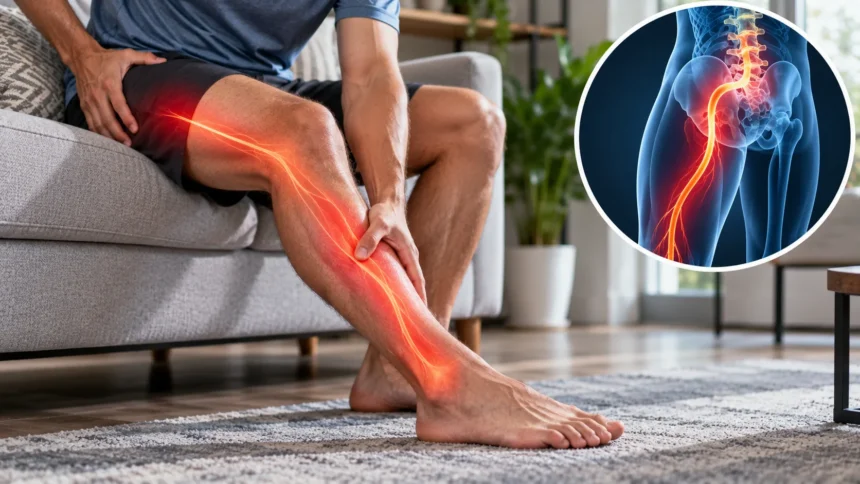
Shooting pain in the leg can feel sudden, sharp, electric, burning, or like a jolt traveling from one area to another. It may begin in the lower back, hip, thigh, knee, calf, or foot and can occur during movement or even while resting. Because several nerves, muscles, joints, and blood vessels run through the leg, many conditions can produce similar sensations.
Some causes are relatively minor, such as temporary nerve irritation or muscle tension, while others need medical attention. The location of the pain, how far it travels, and whether you also have numbness, weakness, swelling, or back pain can offer useful clues. Understanding the common causes can help you decide when home care may be reasonable and when professional evaluation is appropriate.
What Does Shooting Pain in the Leg Feel Like?
Shooting leg pain usually feels different from ordinary muscle soreness. People often describe it as electric, stabbing, burning, or shock-like, and the sensation may travel rapidly along part of the leg. It can occur in short bursts or remain present for longer periods depending on which structure is irritated.
The pain may follow a clear pathway from the lower back or buttock into the thigh, calf, or foot. In other cases, it may stay around the knee or lower leg and appear only during certain movements. Tingling, pins and needles, numbness, or unusual sensitivity can sometimes accompany the shooting sensation.
The pattern matters because nerve-related pain often travels in a line rather than staying in one small spot. Muscle or joint pain is more likely to remain localized, although overlap is possible. Persistent or worsening symptoms should be assessed rather than diagnosed solely by the way the pain feels.
Sciatica Is a Common Cause of Shooting Leg Pain
Sciatica refers to pain linked to irritation of the sciatic nerve or the nerve roots that form it. The discomfort often begins in the lower back or buttock and travels down the back or side of one leg. It can feel burning, electric, sharp, or like a sudden jolt.
Some people also experience numbness, tingling, or weakness in the affected leg or foot. Sitting for long periods, bending forward, coughing, or certain spinal movements may worsen symptoms. The exact pattern depends on which nerve root is irritated and how strongly it is being affected.
Sciatica can develop from disc problems, spinal narrowing, or other conditions affecting nerves in the lower back. Many cases improve with time, movement, and appropriate rehabilitation, but severe weakness or changes in bladder or bowel control require urgent medical attention.
Herniated Disc and Nerve Compression
A herniated disc occurs when part of a spinal disc pushes outward and irritates a nearby nerve. When this happens in the lower back, pain may travel through the buttock and down the leg. The sensation can be much sharper and more electrical than ordinary back or muscle pain.
Disc-related symptoms may change depending on posture. Sitting, bending, lifting, or coughing can sometimes increase pressure around the irritated nerve and make pain shoot farther down the leg. Some people have little back pain and mainly notice symptoms in the thigh, calf, or foot.
Not every herniated disc requires surgery. Many improve with activity modification, physical therapy, and gradual strengthening. However, progressive weakness, numbness around the groin, or difficulty controlling the bladder or bowel should be treated as urgent warning signs rather than routine nerve pain.
Piriformis and Deep Glute Muscle Irritation
The piriformis is a small muscle located deep in the buttock near the sciatic nerve. When muscles in this area become tight, irritated, or overloaded, pain may develop in the buttock and sometimes travel down the leg. Symptoms can resemble sciatica originating from the spine.
Long periods of sitting, repetitive exercise, running, or changes in hip mechanics may contribute to discomfort around the deep gluteal region. Pain can become more noticeable while sitting on the affected side or during movements involving hip rotation. Some people also describe tenderness deep in the buttock.
Because symptoms overlap with spinal nerve irritation, it can be difficult to identify the source without assessment. Aggressive stretching is not always appropriate, especially if it increases radiating pain. A physical therapist can help determine whether the symptoms are coming from the hip region or the lower back.
Knee Problems Can Sometimes Cause Radiating Pain
Not all shooting sensations begin in the back or hip. Knee injuries, inflammation, and irritated structures around the joint can sometimes cause pain that spreads into the thigh or lower leg. The discomfort may become more noticeable when bending, walking, climbing stairs, or bearing weight.
Swelling can provide another clue that the knee itself is involved. Conditions such as knee effusion can create pressure, stiffness, and pain around the joint, although true electrical shooting pain is more suggestive of nerve irritation. Paying attention to both swelling and neurological symptoms can help narrow down the likely cause.
Persistent knee pain that travels, locks, gives way, or significantly limits movement should be evaluated. A clinician may assess the joint, surrounding nerves, and nearby muscles to determine whether the pain is primarily mechanical, inflammatory, or neurological in origin.
Muscle Strain and Soft-Tissue Injuries
Muscle strains can sometimes produce sharp pain that people describe as shooting, especially when the injured tissue is suddenly stretched or contracted. Hamstring, quadriceps, calf, and groin muscles are common areas for strains. Symptoms usually begin after exercise, lifting, sprinting, or another physical activity.
Unlike classic nerve pain, a muscle strain often has a more localized tender area. Pain typically worsens when the injured muscle is used, stretched, or pressed. Bruising, swelling, or weakness may also appear when the strain is more significant.
Mild strains often improve with relative rest and gradual return to movement. Avoid stretching aggressively during the early phase because it may irritate healing fibers. Severe pain, major bruising, or inability to use the leg normally should be professionally assessed.
Peripheral Neuropathy and Nerve Damage
Peripheral neuropathy occurs when nerves outside the brain and spinal cord become damaged or irritated. Symptoms can include burning, stabbing, shooting pain, numbness, tingling, or sensitivity in the feet and legs. Some people notice symptoms on both sides rather than in only one leg.
Several health conditions can contribute to peripheral neuropathy, including diabetes, vitamin deficiencies, certain medications, and other medical problems. The symptoms may develop gradually and become more noticeable at night. Balance can also be affected when sensation in the feet becomes reduced.
Treatment depends on the underlying cause, so recurring nerve-like pain should not be managed only with stretching or massage. A healthcare professional may evaluate sensation, reflexes, strength, and medical history. Managing the condition causing nerve damage can be an important part of preventing further progression.
Could Circulation Problems Cause Leg Pain?
Circulation problems can cause leg discomfort, although the sensation may differ from classic nerve pain. Reduced blood flow to the legs can create cramping, aching, heaviness, or pain during walking that improves with rest. This pattern may be associated with peripheral artery disease.
Blood clots can also cause leg pain, especially when one calf becomes swollen, warm, or tender. A deep vein thrombosis does not always feel like shooting pain, but sudden unexplained leg discomfort with swelling should be taken seriously. Risk can increase after surgery, prolonged immobility, or long travel.
Seek urgent medical care if leg pain occurs with marked swelling, warmth, or redness, particularly when symptoms affect only one side. Emergency care is needed if leg symptoms appear with chest pain, shortness of breath, coughing blood, or sudden dizziness.
How Sitting and Poor Movement Habits Can Contribute
Long periods of sitting can increase stiffness in the hips, lower back, and surrounding muscles. Sitting may also aggravate an already sensitive nerve, particularly when symptoms begin in the lower back or buttock. Some people notice shooting leg pain after working at a desk or driving for extended periods.
Changing position regularly can help reduce prolonged pressure. Stand, walk briefly, or gently move the hips and spine every hour rather than remaining completely still. The goal is not to find one perfect posture but to avoid keeping the body in the same position for too long.
If sitting repeatedly causes pain to travel farther down the leg, note how quickly it happens and which positions trigger it. This information can be useful during assessment. Severe or progressive radiating pain should not be managed solely by changing chairs or adding cushions.
Home Relief Tips for Mild Shooting Leg Pain
If symptoms are mild and there are no warning signs, reducing activities that clearly worsen the pain can be a useful first step. Gentle walking may be comfortable for some people, while long sitting or heavy lifting may need to be temporarily reduced. Complete bed rest is rarely helpful for ordinary musculoskeletal pain.
Heat can feel useful when muscle tension or stiffness is present, while cold may help after a recent strain or irritated activity. Use either option for comfort rather than expecting it to fix the underlying problem. Protect the skin and avoid extreme temperatures for prolonged periods.
Over-the-counter pain medication may be suitable for some people but is not safe for everyone. Existing medical conditions, allergies, and other medicines can affect which products are appropriate. Ask a pharmacist or healthcare professional if you are uncertain about the safest option.
When Gentle Exercise May Help
Gentle exercise can be useful once severe pain has settled and normal movement feels reasonably comfortable. Walking, controlled hip movement, and light strengthening can maintain mobility without placing excessive stress on the irritated area. The correct exercise depends heavily on the cause of the symptoms.
If the pain comes from a muscle strain, gradual strengthening may help restore capacity. If a nerve is irritated, certain spinal or hip positions may either relieve or worsen symptoms. Exercises that cause pain to travel farther down the leg should generally be stopped until the movement is better understood.
Progress slowly and monitor how you feel afterward. A small increase in muscular effort can be acceptable, but significant worsening later in the day may mean the workload was too high. Professional guidance can be especially useful when pain repeatedly returns during exercise.
Warning Signs That Need Urgent Medical Care
Seek urgent care if shooting leg pain is accompanied by sudden or progressive weakness. Difficulty lifting the foot, repeatedly stumbling, or being unable to bear weight normally may indicate significant nerve or structural involvement. Rapid neurological changes should not be managed only with home exercises.
Loss of bladder or bowel control, numbness around the groin, or severe weakness in both legs requires emergency medical attention. These symptoms can indicate serious compression of nerves in the lower spine. Early treatment is important because delays can increase the risk of lasting neurological problems.
Emergency evaluation is also needed when leg pain occurs with chest pain, severe shortness of breath, or signs of a possible blood clot. Fever with severe leg or back pain should also be assessed promptly. These symptoms fall outside the usual pattern of uncomplicated muscle or nerve irritation.
When Should You See a Doctor?
Make an appointment if shooting pain continues for more than several days without improvement or keeps returning. Persistent numbness, tingling, weakness, or sleep-disrupting pain also deserves assessment. A doctor or physical therapist can examine strength, reflexes, sensation, and movement to identify likely sources.
Professional evaluation is particularly important when symptoms follow a significant fall or injury. Pain that becomes progressively stronger despite reducing activity may indicate a condition that needs more specific treatment. Imaging is not always required but may be recommended when the examination suggests a structural problem.
Early assessment can also prevent unnecessary self-treatment. Repeated stretching, massage, or strengthening may not help if the actual problem is nerve compression, circulation difficulty, joint inflammation, or another medical condition. The right diagnosis helps match treatment to the source instead of only treating the location of pain.
Conclusion
Shooting pain in the leg can come from irritated nerves, spinal disc problems, deep glute muscles, knee conditions, muscle strains, neuropathy, or circulation problems. The sensation often feels electric, burning, or stabbing and may travel from the back or hip toward the foot. Associated symptoms can provide important clues.
Mild symptoms may improve with temporary activity modification, comfortable movement, and sensible symptom management. Avoid aggressively stretching or exercising through radiating pain when the cause is unclear. If certain movements repeatedly send pain farther down the leg, reduce them until the problem has been properly assessed.
Seek medical attention for persistent symptoms, significant weakness, numbness, swelling, or pain following a major injury. Emergency care is necessary when leg pain occurs with bladder or bowel changes, groin numbness, severe neurological symptoms, or possible signs of a blood clot. Accurate diagnosis is the safest path to effective treatment.
FAQs
What causes shooting pain down one leg?
Sciatica and other forms of nerve irritation are common causes. Herniated discs, deep gluteal muscle problems, injuries, and certain joint conditions can also produce pain that travels down one leg.
Is shooting leg pain always sciatica?
No. Sciatica is common, but muscle strains, peripheral neuropathy, knee problems, circulation issues, and other conditions can produce similar symptoms. The pain pattern and associated signs help distinguish possible causes.
Can sitting cause shooting pain in the leg?
Yes. Prolonged sitting can aggravate lower-back or sciatic nerve irritation in some people. Changing positions and taking movement breaks may help, but persistent radiating pain should be evaluated.
When is shooting leg pain an emergency?
Emergency care is needed for severe weakness, loss of bladder or bowel control, groin numbness, chest pain, shortness of breath, or symptoms suggesting a blood clot or serious nerve compression.
Should I stretch if I have shooting leg pain?
Gentle movement may help some conditions, but aggressive stretching can worsen nerve irritation. Stop stretches that make pain travel farther down the leg and seek guidance if symptoms persist.