


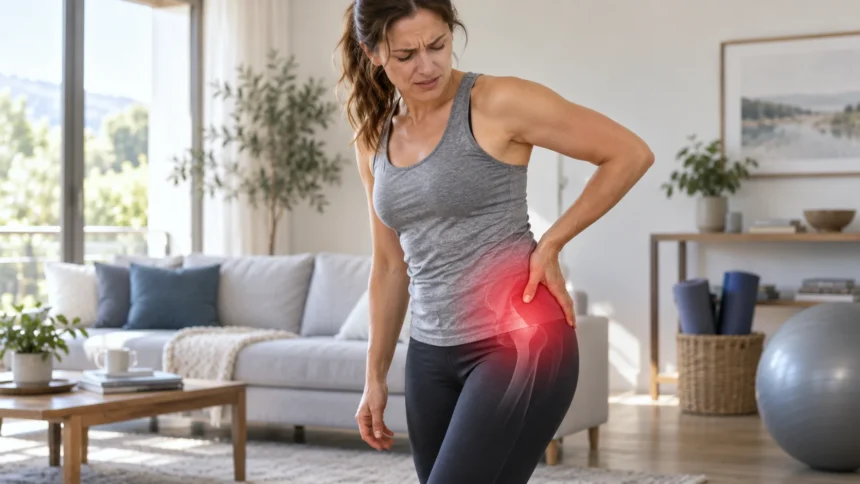
Pain in the left hip area in women can come from muscles, joints, nerves, reproductive organs, or structures in the lower abdomen and pelvis. The discomfort may feel like a dull ache, sharp pain, pressure, burning, or stiffness depending on the underlying cause. Some women notice symptoms only during movement, while others experience pain when sitting, sleeping, or resting.
The location of the pain can provide helpful clues, but it does not always reveal the exact problem. Pain around the outside of the hip often differs from deep groin or pelvic discomfort. Understanding common causes, warning signs, and simple relief strategies can help you decide whether home care is reasonable or medical evaluation is needed.
Common Causes of Left Hip Pain in Women
Muscle strain is one of the most common reasons for pain around the left hip. The hip flexors, glutes, hamstrings, and surrounding muscles can become irritated after exercise, lifting, sudden movements, or increased activity. Minor strains often cause localized soreness that becomes more noticeable when walking, climbing stairs, or moving the leg in certain directions.
Joint-related problems can also produce hip discomfort. Osteoarthritis, inflammation, cartilage problems, and other joint conditions may cause stiffness, reduced movement, or aching around the hip and groin. Symptoms may become more noticeable after long periods of inactivity or after activities that repeatedly load the hip, such as walking long distances or standing for many hours.
Women may also experience pain caused by reproductive, urinary, or digestive conditions rather than the hip joint itself. The ovaries, uterus, bowel, bladder, and pelvic muscles sit relatively close together, so discomfort can be difficult to pinpoint. This is why persistent left-sided hip or pelvic pain should not automatically be assumed to be a simple muscle problem.
Muscle and Tendon Problems Around the Hip
The muscles surrounding the hip help stabilize the pelvis and move the leg in several directions. Overuse, sudden exercise, repetitive movement, or poor recovery can leave these muscles sore and sensitive. Pain may occur around the buttock, side of the hip, front of the hip, or upper thigh depending on which muscle group is affected.
Tendon irritation can develop when repetitive loading exceeds the tissue’s ability to recover. Gluteal tendons along the outside of the hip are a common source of lateral hip pain, particularly when symptoms worsen during walking or lying on the affected side. Hip flexor tendon problems may cause discomfort closer to the front of the hip or groin.
Treatment for mild muscle or tendon irritation usually focuses on temporarily reducing aggravating activity while maintaining comfortable movement. Gentle strengthening can gradually restore the area’s ability to tolerate everyday loads. Persistent pain, significant weakness, or symptoms that repeatedly return during normal activity may benefit from assessment by a physical therapist or healthcare professional.
Bursitis and Pain on the Outside of the Hip
Small fluid-filled sacs called bursae reduce friction between tissues around joints. Irritation around the greater trochanter, the bony area on the outside of the hip, can contribute to tenderness and aching. The discomfort is often described as lateral hip pain and may extend down the outer part of the thigh.
Pain may become worse when lying directly on the left side, walking uphill, climbing stairs, or standing for extended periods. Some people also notice tenderness when pressing the outside of the hip. Although this problem is commonly called hip bursitis, nearby gluteal tendons may also contribute to similar symptoms.
Reducing direct pressure on the painful side can provide temporary relief. Sleeping with a pillow between the knees and avoiding repeated movements that strongly increase pain may help while symptoms settle. Long-term improvement often involves gradually strengthening the hip muscles rather than relying only on rest, stretching, or repeated anti-inflammatory treatments.
Arthritis and Other Hip Joint Problems
Hip arthritis can cause pain, stiffness, and difficulty moving the joint comfortably. Although discomfort may be felt around the outside of the hip, arthritis often produces deeper pain in the groin or front of the thigh. Symptoms may develop gradually and become more noticeable during walking, standing, or activities requiring greater hip movement.
Morning stiffness or discomfort after sitting for a long period can occur when the joint is irritated. Some women notice reduced ability to put on shoes, cross their legs, or move the hip through a full range. Clicking or stiffness can occur as well, although these symptoms alone do not necessarily confirm arthritis.
Maintaining comfortable physical activity can be helpful because complete inactivity may contribute to further stiffness and weakness. Strengthening the muscles around the hips and legs can support everyday movement. When joint pain becomes persistent, increasingly limits mobility, or interferes with sleep and normal activities, medical evaluation can help determine the cause and appropriate treatment.
Pelvic and Reproductive Causes of Left-Sided Pain
Pain near the left hip can sometimes originate from the reproductive system. Ovulation may cause temporary one-sided discomfort around the middle of the menstrual cycle when an ovary releases an egg. This pain is usually mild and short-lived, although its intensity and duration can vary between individuals.
Ovarian cysts may also produce one-sided pelvic or lower abdominal discomfort. Many cysts cause no symptoms and disappear naturally, while others can cause pressure, bloating, pain during intercourse, or irregular bleeding. Endometriosis and other gynecological conditions can also cause recurring pelvic pain that may be mistaken for discomfort coming directly from the hip.
Sudden severe one-sided pelvic pain deserves more caution, especially when it occurs with nausea, vomiting, dizziness, fainting, or heavy bleeding. These symptoms can occasionally indicate conditions requiring urgent treatment. Women who experience persistent pelvic pain, significant menstrual changes, or recurring pain during sex should discuss their symptoms with an appropriate healthcare professional.
Pregnancy-Related Hip and Pelvic Pain
Pregnancy can change how forces are distributed through the hips, pelvis, and lower back. As the abdomen grows and body weight changes, muscles and joints may work differently to maintain balance. This can contribute to aching around one or both hips, particularly during walking, sleeping, climbing stairs, or changing positions in bed.
Pelvic girdle discomfort can also develop during pregnancy and may be felt around the hips, pubic region, groin, or lower back. Some women experience pain primarily on one side. Supportive positioning, avoiding movements that strongly aggravate symptoms, and pregnancy-appropriate strengthening exercises may help manage uncomplicated musculoskeletal discomfort.
However, severe or unusual pain during pregnancy should not simply be blamed on normal body changes. Pain accompanied by vaginal bleeding, fever, dizziness, fainting, contractions, fluid leakage, or significant abdominal symptoms requires prompt medical attention. A maternity care professional can determine whether symptoms are related to muscles and joints or another pregnancy-related concern.
Lower Back and Nerve Pain That Travels to the Hip
Pain felt around the left hip does not always originate from the hip itself. Problems involving the lower back may produce referred pain into the buttock, side of the hip, groin, or thigh. This can happen even when back discomfort is relatively mild compared with the pain felt around the hip.
Nerve irritation may produce additional symptoms such as tingling, numbness, burning, or pain traveling down the leg. Sciatic-type symptoms commonly affect the buttock and back of the leg, although different nerves can create different patterns. Persistent weakness or changes in sensation suggest that the problem may involve more than ordinary muscle soreness.
Gentle movement and appropriate strengthening may help some mechanical back and hip problems. Core exercises such as side planks can strengthen the trunk when performed comfortably and appropriately. However, exercises should not be forced through sharp pain, and significant neurological symptoms require professional evaluation rather than relying entirely on home workouts.
Digestive and Urinary Problems That May Feel Like Hip Pain
The bowel and urinary system can sometimes produce discomfort that feels close to the left hip or pelvis. Constipation, trapped gas, or bowel irritation may cause pressure or aching in the lower abdomen. Symptoms often change with bowel movements, eating patterns, bloating, or other digestive changes rather than being triggered mainly by hip movement.
Urinary tract infections can also produce pelvic discomfort, although burning urination, urinary urgency, frequent urination, or cloudy urine may be more noticeable. If an infection travels toward the kidneys, pain may occur higher in the back or side. Fever, chills, nausea, or worsening flank pain alongside urinary symptoms require prompt medical assessment.
Left-sided abdominal pain can have many digestive causes, so repeated symptoms should not be self-diagnosed solely by location. Pay attention to whether pain changes with meals, bowel movements, urination, physical activity, or the menstrual cycle. These patterns can provide useful information when discussing persistent symptoms with a healthcare professional.
How to Relieve Mild Left Hip Pain at Home
When pain appears related to mild muscle irritation or overuse, reducing the activities that clearly aggravate it may provide relief. This does not necessarily mean avoiding all movement. Short walks and gentle daily activity can often continue if they do not cause a significant increase in pain during or afterward.
Heat or cold may temporarily improve comfort depending on personal preference. Some people use cold after an irritating activity, while others prefer warmth when the hip feels stiff or tight. Neither approach fixes the underlying cause, but both can be useful symptom-management tools while the tissues recover and activity is gradually restored.
Gentle mobility and strengthening may also help when the pain is musculoskeletal. Avoid forcing deep stretches simply because the hip feels tight, particularly when stretching reproduces sharp discomfort. Gradually strengthening the glutes, thighs, and core can often be more useful for long-term function than repeatedly stretching a painful area without addressing its ability to handle load.
Best Exercises for Supporting the Hips
Glute bridges are a simple exercise for strengthening muscles around the hips and pelvis. Lie on your back with the knees bent, gently brace your abdomen, and lift your hips while squeezing the glutes. The movement should feel controlled and should not reproduce sharp pain in the left hip, groin, or lower back.
Side-lying leg raises and controlled standing hip exercises can also strengthen the muscles responsible for stabilizing the pelvis. Start with a comfortable range and focus on slow movement rather than using heavy resistance immediately. If the outside of the hip is highly sensitive, certain exercises may need to be modified until the area can tolerate greater loading.
Squats, step-ups, and core exercises may be added as strength improves. The best program depends on the actual cause of your symptoms, so no single exercise works for every type of left hip pain. If exercise repeatedly makes symptoms worse for hours afterward, reduce the intensity and consider getting professional guidance before progressing further.
When Left Hip Pain Needs Medical Attention
Medical evaluation is appropriate when pain lasts for several weeks, repeatedly returns, or progressively becomes worse. You should also seek advice if discomfort significantly affects walking, sleeping, work, exercise, or normal daily activities. Persistent pain may require assessment of the hip joint, lower back, pelvic organs, or other nearby structures.
More urgent evaluation is needed after a serious fall or injury, particularly if you cannot put weight through the affected leg. Major swelling, obvious deformity, severe bruising, or sudden loss of movement may indicate a significant injury. Severe unexplained pain that develops suddenly should also be taken more seriously than mild soreness after familiar physical activity.
Women should seek prompt care when left-sided pelvic or hip-area pain is accompanied by heavy vaginal bleeding, fainting, severe dizziness, high fever, persistent vomiting, or significant pregnancy-related symptoms. New weakness, numbness around the groin, or loss of bladder or bowel control also requires urgent assessment because these may indicate a serious neurological problem.
Conclusion
Pain in the left hip area in women can develop from many different structures. Muscle strains, tendon irritation, hip joint problems, reproductive conditions, nerve irritation, pregnancy-related changes, and digestive or urinary problems can all create discomfort in a similar region. Paying attention to the exact location and triggers can help narrow down possible explanations.
Mild musculoskeletal pain may improve with temporary activity modification, comfortable movement, heat or cold, and gradual strengthening. Exercises for the hips, legs, and core can support long-term function when performed without significant pain. Avoid assuming that every hip problem requires aggressive stretching, complete rest, or the same treatment approach.
Persistent, severe, or unexplained pain deserves medical attention, particularly when it occurs with bleeding, fever, neurological symptoms, major weakness, or difficulty bearing weight. Because several organs and tissues can produce left-sided hip or pelvic pain, an accurate diagnosis is important. Appropriate treatment becomes much easier once the true source of the discomfort has been identified.
FAQs
What causes left hip pain in females?
Common causes include muscle or tendon irritation, bursitis, arthritis, lower back problems, ovarian conditions, menstrual changes, and pregnancy-related pelvic pain. The likely cause depends on the location, triggers, and accompanying symptoms.
Why does my left hip hurt when I sleep on it?
Pain while lying on one side can occur with irritation of the gluteal tendons or tissues around the outer hip. Changing sleeping position and reducing direct pressure may provide temporary relief.
Can ovulation cause pain near the left hip?
Yes. Ovulation can sometimes cause temporary one-sided lower abdominal or pelvic pain. It usually occurs around the middle of the menstrual cycle and often resolves without treatment.
Is walking good for left hip pain?
Gentle walking may be helpful when it does not significantly increase symptoms. If walking causes severe pain, persistent limping, or worsening discomfort afterward, reducing the activity and seeking an evaluation may be appropriate.
When should I worry about left hip pain?
Seek medical care for severe or persistent pain, inability to bear weight, major swelling, fever, heavy bleeding, pregnancy concerns, significant weakness, numbness, or sudden symptoms following an injury.