


Strong hamstrings support nearly every lower-body movement, from walking and climbing stairs to running, jumping, and lifting. These muscles run along the back of the thigh and help bend the knee, extend the hip, and stabilize the lower body. Training them properly can improve strength, movement control, athletic performance, and overall balance between the front and back of your legs.
Hamstring exercises are not limited to athletes or gym enthusiasts. Beginners, older adults, home exercisers, and people trying to build better lower-body strength can all benefit from appropriate hamstring training. The key is choosing movements that match your ability and learning how to hinge, bend, and extend without placing unnecessary stress on the lower back or knees.
Poor technique can reduce the effectiveness of an exercise and increase the chance of strain. Moving too quickly, lifting more weight than you can control, or stretching aggressively can all create problems. This guide explains the best exercises for hamstrings, proper form, common mistakes, and practical tips for building stronger legs safely and effectively.
What Are the Hamstrings and What Do They Do?
The hamstrings are a group of three muscles located along the back of each thigh. They help bend the knee and extend the hip, which means they are active during movements such as running, walking, climbing, squatting, and picking objects up from the floor. They also work with the glutes and other muscles to control lower-body movement.
Your hamstrings play an important role in slowing the leg during running and helping stabilize the knee during many activities. They contribute to hip extension when you stand up from a bent position or drive the hips forward during a deadlift. Weak or poorly controlled hamstrings can affect overall lower-body coordination and make certain movements feel less stable.
Hamstrings should be trained alongside the quadriceps, glutes, calves, and core rather than treated as an isolated muscle group. Balanced lower-body strength supports better movement patterns and may help reduce excessive stress on individual joints or muscles. A good program usually includes both hip-hinge exercises and knee-flexion exercises so the hamstrings are challenged in different ways.
Romanian Deadlift for Hamstring Strength
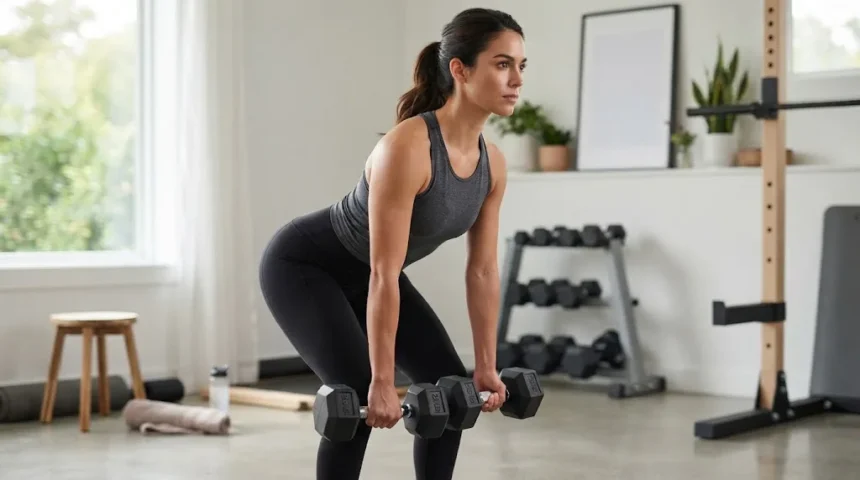
The Romanian deadlift is one of the most effective hamstring exercises because it trains the muscles through hip extension. Stand tall while holding dumbbells, a barbell, or another suitable weight in front of your thighs. Keep a slight bend in your knees, push your hips backward, and lower the weight while maintaining a controlled, neutral spine.
Continue lowering until you feel a comfortable stretch through the back of your thighs without rounding your lower back. The weight should stay relatively close to your legs throughout the movement. Once you reach your controlled range, press your feet into the floor and drive your hips forward to return to standing.
A common mistake is turning the movement into a squat by bending the knees excessively. Another is lowering the weight farther than your hamstring mobility allows, which may cause the back to round. Start with a light load and focus on learning the hip hinge before increasing resistance, especially if Romanian deadlifts are new to your routine.
Glute Bridge to Train Hamstrings and Hips
The glute bridge is a beginner-friendly exercise that trains hip extension while also engaging the hamstrings and core. Lie on your back with your knees bent and feet planted on the floor. Keep your feet about hip-width apart, gently brace your midsection, and press through your feet as you lift your hips upward.
At the top of the movement, your body should form a comfortable line from your shoulders toward your knees. Avoid pushing so high that you excessively arch your lower back. Pause briefly while squeezing your glutes, then slowly lower your hips to the floor instead of dropping them quickly between repetitions.
You can make the bridge more challenging by moving your feet slightly farther from your hips, adding resistance, or progressing to single-leg variations. However, the exercise should remain controlled and pain-free. If your hamstrings cramp repeatedly, shorten the range, adjust foot position, rest briefly, and make sure you are not trying to force more intensity than necessary.
Hamstring Curls for Direct Muscle Training
Hamstring curls emphasize knee flexion, making them a useful complement to hip-hinge exercises. At a gym, you can use seated or lying leg-curl machines, while home workouts can use resistance bands, sliders, or stability balls. The goal is to bend the knee against resistance while keeping the rest of your body stable.
When using a leg-curl machine, adjust the equipment so the pads and pivot points fit your body comfortably. Curl the weight smoothly without lifting your hips or jerking your torso. Pause briefly at the strongest contraction, then return slowly so the hamstrings remain active during both phases of the movement.
For home training, resistance-band curls can provide a similar pattern. Anchor the band securely, attach it around your ankle, and bend your knee while keeping your thigh controlled. Avoid using momentum or allowing the band to snap your leg back into the starting position, because controlled movement generally provides a better training stimulus and improves exercise quality.
Single-Leg Romanian Deadlift for Balance and Control
The single-leg Romanian deadlift challenges the hamstrings while also training balance, hip stability, and coordination. Stand on one leg with a soft knee, then hinge forward at the hips as the opposite leg extends behind you. Keep your pelvis relatively level and move slowly rather than trying to reach the floor as quickly as possible.
Your standing hamstring should feel loaded as your torso moves forward. Stop when you reach the limit of your balance or hamstring mobility, then drive through the standing foot and return to an upright position. Holding a dumbbell in the opposite hand can increase difficulty once you can perform the bodyweight version with good control.
Beginners can lightly hold a wall, chair, or stable surface for balance while learning the movement. The goal is not to prove how well you can balance but to train the hamstrings through a clean hip hinge. If your hips rotate open or your back twists, reduce the range and focus on controlled alignment.
Stability Ball Hamstring Curl for Home Workouts
A stability ball hamstring curl combines hip extension with knee flexion and can be surprisingly challenging. Lie on your back with your heels resting on top of a stability ball. Lift your hips so your body forms a straight, comfortable line, then bend your knees and roll the ball toward you using your hamstrings.
Keep your hips elevated while the ball moves inward and avoid allowing your pelvis to drop toward the floor. Once the ball reaches a comfortable position, slowly straighten your legs and roll it away again. The slower return phase can significantly increase the difficulty, so focus on control rather than trying to complete repetitions quickly.
If the full version is too difficult, start by practicing bridges with your heels on the ball before adding the curl. You can also work through a shorter range while building strength. More advanced users may eventually progress to single-leg variations, but only after the standard exercise feels stable and controlled from beginning to end.
Good Morning Exercise for the Hip Hinge
The good morning is another hip-hinge exercise that can strengthen the hamstrings, glutes, and muscles supporting the trunk. Begin with bodyweight or a very light load while learning the movement. Stand with your feet comfortable, maintain a slight knee bend, and push your hips backward while keeping your spine in a controlled position.
Lower your torso only as far as you can while maintaining good alignment and feeling tension through your hamstrings. Then squeeze your glutes and drive your hips forward to stand tall again. The movement should come primarily from the hips rather than rounding and straightening the spine repeatedly.
Because the resistance sits differently from a Romanian deadlift, beginners should be especially conservative with load. Heavy resistance is unnecessary when you are still developing hinge technique. If you experience back discomfort, stop and reassess your form, mobility, and resistance instead of assuming that pushing through discomfort will improve your hamstring strength.
How to Stretch Your Hamstrings Safely
Hamstring stretching can improve comfort and flexibility when it is performed gently and consistently. A simple option is lying on your back and raising one leg while keeping the knee slightly bent. Use your hands or a strap to support the leg, then move it toward you until you feel mild tension along the back of the thigh.
Avoid bouncing, forcing the leg higher, or stretching through sharp pain. Hamstrings do not need to feel extremely uncomfortable for stretching to be useful. Hold a comfortable position while breathing normally, then release slowly. Stretching after your muscles are warm may feel more comfortable than aggressively stretching them when your body is completely cold.
Whole-body positioning matters as well. Excessive spinal rounding or neck tension can turn a hamstring stretch into an uncomfortable full-body strain. If exercise positions regularly trigger neck or base-of-skull pain, adjust your setup and avoid forcing your head forward while stretching or performing floor-based movements.
Common Hamstring Exercise Mistakes
Using too much weight is one of the most common mistakes during hamstring training. When the load exceeds what you can control, the lower back, momentum, or other muscle groups may take over. Reducing the resistance can allow you to maintain better alignment and feel the hamstrings working through the intended range.
Another mistake is performing every hamstring exercise with the same movement pattern. Deadlifts and hip hinges emphasize hip extension, while curls challenge knee flexion. Including both patterns can provide more complete hamstring training than repeatedly performing only one exercise and assuming every part of the muscle group is being challenged equally.
Ignoring pain is also a poor strategy. Normal muscular fatigue or a controlled stretching sensation feels different from sudden sharp pain, pulling, or a feeling that something has strained. Stop an exercise when pain appears, particularly if symptoms are sudden or severe, and seek appropriate professional assessment when pain persists or follows an injury.
How Often Should You Train Your Hamstrings?
Many people can train their hamstrings two or three times per week as part of a balanced strength program. The ideal frequency depends on your experience, workout intensity, recovery, and other activities such as running or sports. Beginners usually benefit from leaving recovery time between challenging hamstring sessions instead of training the muscles heavily every day.
You also do not need a large number of exercises in every workout. Two or three well-chosen movements may be enough when they include appropriate resistance, good technique, and gradual progression. For example, pairing a Romanian deadlift with a hamstring curl can train both major movement functions without creating an unnecessarily complicated lower-body session.
Recovery matters because muscles adapt between workouts rather than only while you are exercising. Sleep, adequate nutrition, hydration, and sensible training volume all influence recovery. If your hamstrings remain extremely sore, weak, or uncomfortable for several days, reduce your workload before adding more sets, heavier resistance, or higher training frequency.
How to Progress Hamstring Exercises Over Time
Progressive overload means gradually making training more challenging as your body becomes stronger. You can increase weight, resistance, repetitions, sets, range of motion, or exercise difficulty over time. Progress should be gradual enough that you can maintain the same quality of technique rather than sacrificing form simply to lift a heavier weight.
Track your workouts so you know whether strength is actually improving. Record exercises, resistance, repetitions, and how difficult the sets felt. When you can complete your target repetitions comfortably with good control, a small increase in resistance may be appropriate. You do not need to make every workout harder than the previous one to achieve long-term progress.
Advanced variations should be earned through consistent control. Single-leg deadlifts, heavier hip hinges, Nordic-style curls, and more demanding stability exercises can challenge strong hamstrings, but they are not automatically better for everyone. Choose exercises that fit your current ability and goals rather than selecting movements simply because they look difficult or are popular online.
Conclusion
Effective hamstring training should include exercises that challenge both hip extension and knee flexion. Romanian deadlifts, glute bridges, hamstring curls, single-leg hinges, stability-ball curls, and good mornings can all strengthen the back of the thighs when performed correctly. You do not need to use every exercise at once to build a useful lower-body routine.
Technique should remain your priority throughout each workout. Use a controlled hip hinge, maintain comfortable spinal alignment, move through a range you can manage, and avoid excessive momentum. Start with resistance that allows you to feel the target muscles working and increase difficulty gradually as your strength and confidence improve.
Consistency is more valuable than attempting an extremely difficult hamstring session occasionally. Train regularly, balance hamstring work with exercises for the rest of your lower body, and allow adequate recovery between demanding sessions. When you combine good form with gradual progression, stronger hamstrings can support better movement, stability, and overall lower-body performance.
FAQs
What is the best exercise for hamstrings?
Romanian deadlifts are one of the best hamstring exercises because they strongly train hip extension. Hamstring curls are also valuable because they challenge knee flexion, so combining both movement patterns provides balanced training.
How many hamstring exercises should I do per workout?
Two or three hamstring exercises are often enough for a balanced session. Choose movements with different patterns, use appropriate resistance, and focus on controlled repetitions instead of adding unnecessary exercises.
Can I train hamstrings at home?
Yes. Glute bridges, sliding hamstring curls, resistance-band curls, single-leg Romanian deadlifts, and stability-ball exercises can all be performed at home with little or no heavy gym equipment.
Should I stretch my hamstrings every day?
Gentle stretching can be performed regularly if it feels comfortable and does not cause pain. Avoid aggressive bouncing or forcing range, and remember that strengthening is also important for healthy hamstring function.
Why do my hamstrings feel tight after exercise?
Temporary tightness can result from muscle fatigue, unfamiliar training, or delayed soreness after exercise. Persistent or painful tightness may require adjustments to training volume, technique, recovery, or professional assessment.