


Digestive Enzymes: Benefits, Types & How They Work
Digestive enzymes are proteins that help the body break food into smaller nutrients that can be absorbed and used for energy, growth, and repair. Every meal containing carbohydrates, proteins, or fats depends on enzymes produced by the mouth, stomach, pancreas, and small intestine. Without enough of the right enzymes, food may not be digested efficiently, which can contribute to symptoms such as bloating, gas, diarrhea, abdominal discomfort, or nutrient deficiencies. Most healthy people naturally produce the digestive enzymes they need and do not require additional supplements. Certain medical conditions, however, can interfere with enzyme production or activity and make replacement therapy useful. Understanding how digestive enzymes work helps separate medically necessary treatment from products marketed broadly for everyday digestive wellness.
Interest in digestive enzyme supplements has grown as people search for solutions to bloating, food intolerance, indigestion, and digestive discomfort. Products may contain combinations of protease, lipase, amylase, lactase, alpha-galactosidase, and enzymes derived from plants, fungi, or animal sources. Some have specific uses, such as lactase for lactose intolerance, while others make broad claims that are not equally well supported. Prescription pancreatic enzymes are different from general over-the-counter digestive supplements because they are used to treat diagnosed problems with pancreatic enzyme production. Choosing the right approach therefore depends on why digestive symptoms are happening in the first place. This guide explains digestive enzyme benefits, types, functions, supplements, food sources, possible side effects, and signs that professional evaluation may be needed.
What Are Digestive Enzymes?
Digestive enzymes are specialized proteins that speed up chemical reactions involved in breaking food into molecules small enough for the body to absorb. Large carbohydrates are broken into simple sugars, proteins are separated into amino acids and smaller peptides, and dietary fats are converted into fatty acids and other components. These nutrients can then move through the intestinal wall and enter circulation or lymphatic pathways for use throughout the body. Different enzymes are designed to act on different nutrients, which means no single enzyme performs every part of digestion. The digestive system therefore relies on a coordinated collection of enzymes working at several locations. This process happens automatically whenever a person eats or drinks nutrient-containing foods.
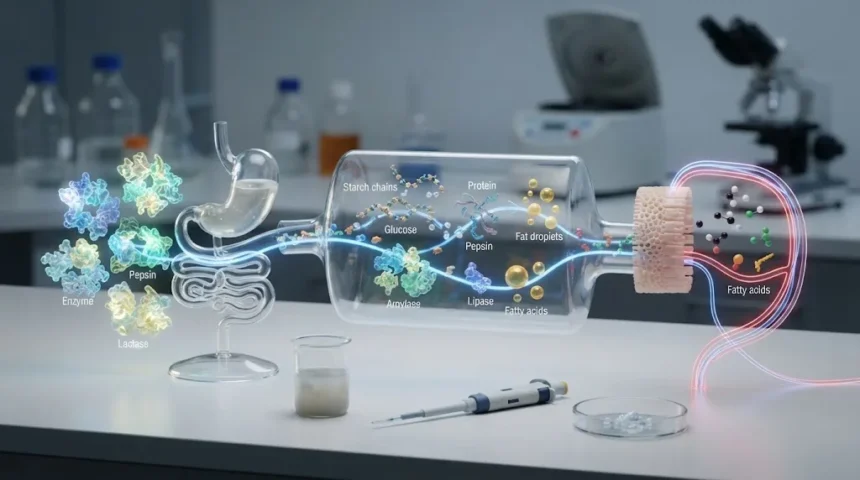
The digestive process actually begins before food reaches the stomach because enzymes are already present in saliva. Salivary amylase begins breaking down starches while food is being chewed, although much of its activity decreases after reaching the acidic stomach. The stomach produces substances that support digestion and releases pepsin, an enzyme involved in protein breakdown. Once partially digested food moves into the small intestine, pancreatic enzymes become particularly important. The pancreas releases amylase, proteases, and lipase into the intestinal tract to continue digesting carbohydrates, proteins, and fats. Enzymes located along the intestinal lining then complete many final digestion steps before nutrients are absorbed.
The pancreas plays one of the largest roles in digestive enzyme production. It is located behind the stomach and has both digestive and hormonal functions, including the production of insulin and pancreatic digestive secretions. When food enters the small intestine, chemical signals encourage the pancreas to release enzymes and bicarbonate. Bicarbonate helps neutralize acidic material arriving from the stomach so pancreatic enzymes can function more effectively. Pancreatic lipase breaks down fats, pancreatic amylase works on starch, and several proteolytic enzymes help digest proteins. When pancreatic function is significantly impaired, a person can develop poor digestion and malabsorption even if their diet itself has not changed.
The small intestine also produces or contains enzymes along its brush border, the microscopic surface where final digestion and nutrient absorption occur. Lactase breaks lactose into simpler sugars, while sucrase helps digest sucrose and maltase acts on maltose. Several peptidases help finish the digestion of small protein fragments into absorbable amino acids. Deficiency of a single brush-border enzyme can create symptoms after eating a particular carbohydrate even when the pancreas functions normally. Lactose intolerance is the best-known example because low lactase activity allows lactose to reach the colon without being fully digested. Gut bacteria then ferment that carbohydrate, potentially producing gas, bloating, cramping, and loose stools.
Digestive enzymes should not be confused with stomach acid, bile, or gut bacteria, although all contribute to digestion in different ways. Stomach acid helps unfold proteins and creates conditions that allow certain enzymes to function effectively. Bile, which is produced by the liver and stored in the gallbladder, helps disperse dietary fat so lipase can work on it more efficiently. Gut microorganisms ferment certain carbohydrates that human enzymes cannot completely digest and produce compounds that can affect intestinal health. Enzymes themselves perform specific chemical reactions rather than functioning like acids or microorganisms. Good digestion therefore depends on several coordinated systems rather than on digestive enzymes alone.
How Do Digestive Enzymes Work?
Digestive enzymes work by binding to specific food molecules and helping break chemical bonds within them. Each enzyme is shaped to interact with particular types of nutrients, which is why enzymes are often described as highly specific. Amylase primarily works on starches, lipase acts on fats, and proteases help break down proteins. After an enzyme assists with a reaction, it can often participate in additional reactions rather than being permanently consumed immediately. This efficiency allows relatively small amounts of enzymes to process substantial amounts of food. However, enzymes need suitable conditions, including an appropriate pH and temperature, to function effectively inside different sections of the digestive tract.
Carbohydrate digestion provides a clear example of how several enzymes work together. Salivary and pancreatic amylase begin breaking complex starch molecules into smaller carbohydrate fragments. Enzymes along the surface of the small intestine then break those fragments into simple sugars such as glucose. These smaller molecules can be absorbed through intestinal cells and transported into the bloodstream, where they are available for energy or storage. Not every carbohydrate can be digested completely by human enzymes because dietary fiber contains chemical bonds that human digestive enzymes cannot efficiently break. Instead, some fiber passes into the large intestine, where gut bacteria may ferment it and produce beneficial short-chain fatty acids.
Protein digestion requires another group of digestive enzymes known broadly as proteases or peptidases. Stomach acid first helps unfold dietary proteins, exposing structures that digestive enzymes can reach more easily. Pepsin begins splitting proteins within the stomach, while pancreatic enzymes such as trypsin and chymotrypsin continue digestion in the small intestine. Additional intestinal enzymes then reduce many remaining protein fragments into amino acids and small peptides. These products are absorbed and used to build muscles, enzymes, hormones, antibodies, and many other body structures. If protein digestion or absorption becomes seriously impaired, nutritional problems can eventually develop because the body depends on adequate amino acid availability for normal tissue maintenance.
Fat digestion depends heavily on bile and pancreatic lipase working together in the small intestine. Dietary fats do not mix well with water, so bile helps separate large fat droplets into smaller structures that enzymes can access more effectively. Pancreatic lipase then breaks triglycerides into components that can be absorbed by intestinal cells. The body packages many absorbed fats into particles that eventually travel through lymphatic pathways and the bloodstream. Problems affecting pancreatic enzyme production or bile flow can interfere with this process and may contribute to fatty, difficult-to-flush stools. Long-term fat malabsorption can also reduce absorption of fat-soluble vitamins such as vitamins A, D, E, and K.
The timing and location of enzyme activity are just as important as the enzymes themselves. An enzyme released too early, activated in the wrong place, or unable to reach food may not perform its normal function properly. The digestive system has therefore developed carefully coordinated mechanisms controlling secretion, activation, acidity, and intestinal movement. Several pancreatic proteases, for example, are initially released in inactive forms that become activated after reaching the small intestine. This helps protect pancreatic tissue from being digested by its own enzymes. Digestive enzyme replacement treatments are also designed with timing in mind because enzymes generally need to mix with food during meals to provide the intended digestive benefit.
Major Types of Digestive Enzymes and Their Functions
Amylase is one of the primary digestive enzymes responsible for carbohydrate digestion. It is produced mainly by the salivary glands and pancreas and helps break starch molecules into smaller carbohydrate units. Foods such as bread, rice, pasta, potatoes, and many cereals contain starch that requires this process before complete absorption can occur. Pancreatic amylase becomes especially important once food reaches the small intestine because it continues the work started in the mouth. However, amylase does not digest every type of carbohydrate, including most dietary fiber. Additional enzymes located on the intestinal surface are required to convert many smaller carbohydrate molecules into sugars that the body can absorb.
Proteases are digestive enzymes involved in breaking dietary proteins into smaller peptides and amino acids. Several different proteases work during digestion because proteins are chemically complex and require multiple steps to break down completely. Pepsin functions in the acidic stomach environment, while trypsin, chymotrypsin, and other pancreatic proteases operate mainly in the small intestine. Brush-border peptidases complete many of the final digestion steps. Foods such as meat, fish, eggs, beans, dairy products, and nuts supply protein that these enzymes help process. Adequate protein digestion is important because absorbed amino acids support muscle maintenance, immune function, tissue repair, hormone production, and numerous other biological processes.
Lipase is the digestive enzyme most strongly associated with fat digestion. Although small amounts of lipase activity can occur earlier in digestion, pancreatic lipase performs much of the important work in the small intestine. It breaks triglycerides from foods such as oils, nuts, seeds, dairy products, meat, and avocados into smaller components that intestinal cells can absorb. Because dietary fat is energy dense, poor fat digestion can lead to significant calorie loss when severe. It can also cause stools that appear oily, pale, bulky, foul-smelling, or difficult to flush. These symptoms can occur in exocrine pancreatic insufficiency and should not simply be treated with random supplements without identifying the underlying cause.
Lactase is an intestinal enzyme that breaks lactose, the natural sugar found in milk and many dairy products, into glucose and galactose. Lactase activity is highest in infancy for many people and may decrease with age, depending partly on genetics and population background. When lactose is not fully digested, it travels into the colon, where bacteria ferment it and produce gas and other compounds. This can cause bloating, abdominal cramps, flatulence, and diarrhea after consuming enough lactose. Lactase enzyme tablets or drops can help some people digest lactose-containing foods more comfortably. Lactose-free dairy products also contain lactose that has already been broken down, providing another practical option.
Alpha-galactosidase is an enzyme commonly found in supplements designed to reduce gas associated with certain beans, legumes, and vegetables. Human digestive enzymes have difficulty breaking some complex carbohydrates called oligosaccharides found in foods such as beans. When these carbohydrates reach the colon, gut bacteria ferment them and can produce significant amounts of gas. Alpha-galactosidase can break down some of these carbohydrates earlier in digestion when taken appropriately with the food. This can reduce gas for some people, although individual responses vary. Other specialty enzymes may target specific sugars or food components, but each should be evaluated based on its intended use rather than assuming that every digestive enzyme product improves overall digestion.
Digestive Enzyme Benefits and Who May Need Them
The most meaningful benefit of digestive enzyme replacement occurs when a person is genuinely deficient in an enzyme needed to digest food properly. In these situations, replacing the missing activity can improve nutrient absorption and reduce symptoms related to maldigestion. Someone with lactose intolerance, for example, may use lactase when consuming dairy products containing lactose. People with diagnosed exocrine pancreatic insufficiency may need prescription pancreatic enzyme replacement therapy to digest proteins, carbohydrates, and especially fats. These are targeted uses based on an identifiable digestive problem rather than general wellness supplementation. Matching the enzyme to the actual deficiency is therefore more important than choosing a product containing the largest possible number of enzymes.
Prescription pancreatic enzyme replacement therapy can provide major benefits for people whose pancreas does not release enough digestive enzymes. Exocrine pancreatic insufficiency may occur with chronic pancreatitis, cystic fibrosis, pancreatic surgery, pancreatic cancer, and certain other conditions. Symptoms can include weight loss, bloating, excessive gas, diarrhea, and fatty or oily stools, although symptoms vary. Pancreatic enzyme therapy is generally taken with meals and snacks so the enzymes can mix with food during digestion. Appropriate dosing may depend on meal size, fat content, symptoms, and the person’s medical condition. Treatment should be supervised by a healthcare professional because persistent malabsorption can cause significant nutritional deficiencies.
Lactase supplements provide another relatively straightforward benefit because they target a well-defined digestive enzyme deficiency. Someone with lactose intolerance may produce too little lactase to comfortably digest a particular amount of dairy sugar. Taking lactase near the time dairy is consumed can reduce symptoms for some individuals, depending on the dose and amount of lactose eaten. People can also manage lactose intolerance by choosing lactose-free products or adjusting portion sizes. Complete avoidance of dairy is not always necessary because tolerance varies greatly between individuals. The important point is that lactase has a specific substrate and problem it is designed to address, making its use more targeted than broad digestive enzyme blends.
Alpha-galactosidase may benefit people who experience predictable gas after eating beans or certain vegetables rich in fermentable carbohydrates. Taking the enzyme with the first bites of the relevant meal allows it to start breaking down particular oligosaccharides before they reach colon bacteria. This may reduce fermentation and gas formation in some people. However, it will not address every cause of bloating because abdominal distension can result from constipation, irritable bowel syndrome, food intolerances, swallowing air, or various medical conditions. Someone with persistent symptoms should therefore avoid assuming that gas always represents an enzyme deficiency. Targeted products are most useful when symptoms clearly relate to the food components they are designed to digest.
Healthy people with normal digestive function may not experience a meaningful benefit from taking broad digestive enzyme supplements routinely. The pancreas and intestinal tract generally produce sufficient enzymes to handle an ordinary mixed diet. Marketing claims that enzyme supplements automatically improve energy, remove toxins, accelerate metabolism, or compensate for overeating should be viewed cautiously. Feeling uncomfortable after a very large meal does not necessarily mean the body lacks enzymes. Meal size, fat content, alcohol, eating speed, reflux, constipation, and other factors can influence digestive symptoms. If discomfort is frequent or worsening, identifying the underlying cause usually provides more value than indefinitely taking a general enzyme supplement without evaluation.
Digestive Enzyme Supplements: Do They Really Work?
Digestive enzyme supplements are available in many forms, including capsules, tablets, powders, and chewable products. Some contain only one enzyme, such as lactase, while others combine amylase, protease, lipase, cellulase, bromelain, papain, and multiple additional ingredients. The usefulness of a product depends on whether those enzymes address a real digestive problem and remain active where they are needed. A broad formula may sound more impressive on the label without necessarily producing greater benefit. People should therefore look beyond the total number of listed enzymes. The most important questions are what symptom is being treated, which nutrient triggers it, whether an enzyme deficiency is likely, and whether reliable evidence supports the chosen product.
Over-the-counter digestive enzyme products differ significantly from prescription pancreatic enzyme replacement therapy. Prescription pancreatic enzymes are specifically formulated for people with medically diagnosed pancreatic insufficiency and contain standardized amounts of important enzyme activities. Treatment can be adjusted by a healthcare professional according to symptoms and nutritional needs. General digestive supplements, by comparison, may contain plant, fungal, or animal-derived enzymes in widely varying combinations. They should not be treated as substitutes for prescription therapy when pancreatic insufficiency is present. Someone losing weight or developing persistent fatty stools needs medical evaluation rather than experimenting with increasingly large supplement doses. Serious malabsorption requires diagnosis and appropriately monitored treatment.
Timing can influence whether certain enzyme products are useful. Enzymes generally need to encounter their target food components while those foods are being digested. Lactase is therefore taken around the time lactose-containing foods are consumed, and pancreatic enzyme replacement is typically taken with meals and snacks according to prescribed instructions. Taking an enzyme long after digestion has already progressed may offer less benefit. Supplement labels may provide timing directions, but people using prescription products should follow their healthcare professional’s instructions. More frequent or larger doses are not always better. Excessive supplementation can increase cost and may create side effects without improving digestion when the underlying problem is unrelated to enzyme activity.
Digestive enzyme blends are often promoted for bloating, but bloating is a symptom with many possible causes. It can occur with constipation, irritable bowel syndrome, lactose intolerance, celiac disease, food fermentation, delayed stomach emptying, and several other digestive conditions. An enzyme can help only if the symptom is related to something that particular enzyme can break down more effectively. For example, lactase may help lactose-related bloating but would not be expected to resolve symptoms caused primarily by constipation. This explains why reviews of enzyme supplements can vary dramatically between users. Different people may have completely different reasons for experiencing symptoms that feel similar.
Anyone considering long-term digestive enzyme use should think about whether supplementation could delay appropriate diagnosis. Recurrent diarrhea, unexplained weight loss, anemia, persistent abdominal pain, fatty stools, vomiting, or blood in the stool can signal medical conditions needing investigation. Suppressing occasional symptoms without understanding their cause may provide temporary reassurance while an underlying problem continues. Supplements can still have a role when used for a specific reason and tolerated safely. The goal should be targeted support rather than automatically adding enzymes whenever digestion feels imperfect. A clinician or registered dietitian can help determine whether symptoms suggest a particular intolerance, pancreatic problem, dietary pattern, or another gastrointestinal condition.
Digestive Enzymes vs Probiotics, Stomach Acid, and Bile
Digestive enzymes and probiotics are commonly marketed together, but they perform very different functions. Enzymes are proteins that help break particular food components into smaller molecules, while probiotics are live microorganisms intended to provide a health benefit when consumed in adequate amounts. A lactase supplement acts directly on lactose, whereas a probiotic works through interactions involving microorganisms and the gut environment. Some people may use both products, but one does not automatically replace the other. Probiotic effects are also strain-specific, meaning benefits observed with one microorganism should not be assumed for every probiotic product. Choosing between enzymes and probiotics depends on the problem someone is actually trying to address.
Stomach acid is also different from digestive enzymes. Hydrochloric acid produced in the stomach helps create an acidic environment that supports protein digestion and reduces survival of many swallowed microorganisms. Acid also activates pepsinogen into pepsin, allowing protein digestion to begin more effectively. However, stomach acid itself is not an enzyme and does not perform every step of digestion. People sometimes assume that digestive symptoms mean they have too little acid, but reflux, ulcers, medications, and other conditions can produce overlapping symptoms. Taking acid-promoting supplements without appropriate medical guidance may therefore worsen certain problems. Digestive symptoms should be evaluated based on their pattern rather than internet assumptions about stomach acidity.
Bile is another digestive substance frequently confused with enzymes. The liver produces bile, and the gallbladder stores and concentrates it between meals in many people. When dietary fat enters the small intestine, bile helps emulsify fat into smaller droplets, increasing the surface area available to pancreatic lipase. Bile does not directly perform the same chemical reactions as lipase, yet it makes efficient fat digestion possible. Conditions affecting the liver, gallbladder, bile ducts, pancreas, or small intestine can therefore influence fat digestion through different mechanisms. Someone with persistent pale stools, jaundice, dark urine, or severe upper abdominal pain should seek medical evaluation rather than assuming an enzyme supplement will solve the problem.
Fiber also plays an important role in digestion even though humans cannot digest most fiber using their own enzymes. Soluble and fermentable fibers can be processed by gut microorganisms, producing short-chain fatty acids and other compounds. Insoluble fiber can help add bulk and support regular bowel movements in many people. Some digestive enzyme supplements contain cellulase, an enzyme that can break cellulose, even though humans do not naturally produce cellulase in meaningful amounts. Whether supplemental cellulase provides useful benefits for ordinary diets remains uncertain. The fact that humans cannot digest every plant carbohydrate is not inherently a problem because reaching the large intestine is part of the normal physiological role of dietary fiber.
Good digestion therefore depends on far more than enzyme quantity. Stomach movement, bile secretion, intestinal transit, gut microorganisms, nerve signaling, hydration, meal composition, and digestive-organ health all influence how food is processed. This is why taking more enzymes does not automatically fix symptoms caused by another part of the system. A person with constipation may feel bloated despite producing completely normal digestive enzymes. Someone with reflux can experience discomfort from stomach contents moving upward rather than from poor nutrient breakdown. Understanding these distinctions helps people choose solutions that match the real cause of symptoms. Digestive enzymes are important, but they represent one part of a much larger digestive process.
Foods, Eating Habits, and Natural Support for Digestion
Many whole foods naturally contain enzymes, although eating enzyme-containing foods does not necessarily increase human digestive enzyme production. Pineapple contains bromelain, papaya contains papain, and several raw fruits and fermented foods contain various enzyme activities. Bromelain and papain are proteolytic enzymes capable of breaking down proteins, which is one reason these fruits can be used in culinary tenderizing. However, digestion exposes food enzymes to changing acidity and other conditions that may reduce their activity. A healthy person generally does not need to depend on food enzymes because the digestive system produces its own. Fruits and vegetables remain valuable primarily because they provide fiber, vitamins, minerals, water, and other beneficial compounds.
Chewing food thoroughly supports digestion even though it does not increase the body’s enzyme supply directly. Breaking food into smaller pieces increases surface area and allows digestive secretions to interact with it more efficiently. Eating at a comfortable pace can also reduce the amount of air swallowed and may help people notice fullness before they become uncomfortably overfilled. Large meals, particularly those high in fat, can take longer to leave the stomach and may worsen symptoms for some people. Smaller portions can therefore feel easier to digest when someone is prone to fullness or reflux. These simple behavioral changes may sometimes provide more noticeable relief than adding an unnecessary supplement.
Adequate fiber supports digestive health, but increasing fiber too quickly can temporarily worsen bloating and gas. Adults can obtain fiber from vegetables, fruits, whole grains, beans, lentils, nuts, and seeds. Fermentable fibers provide food for beneficial gut microorganisms, while other fibers help stool retain an appropriate amount of water and bulk. People who currently eat very little fiber may tolerate gradual increases better than a sudden dramatic change. Drinking sufficient fluids can also be important, particularly when increasing certain fiber-rich foods. Digestive enzyme supplements do not replace the broader benefits of a varied diet containing appropriate amounts of plant foods.
Meal patterns can influence digestive comfort as well. Some people feel better with moderate meals spaced throughout the day, while others tolerate larger meals without difficulty. Individuals with particular conditions may need more specific guidance, especially after gastrointestinal surgery or with disorders affecting stomach emptying or pancreatic function. Eating excessive amounts late at night can worsen reflux in people who are susceptible. High-fat meals may trigger symptoms in certain digestive disorders, although dietary fat should not automatically be eliminated without reason. Keeping a simple symptom and food record can sometimes reveal consistent triggers. Restrictive diets should be approached carefully because unnecessary food avoidance can make balanced nutrition harder.
Hydration, physical activity, sleep, and stress can also affect the way digestion feels. Water supports normal bodily functions and can be particularly helpful when combined with adequate fiber for people prone to constipation. Regular movement can support intestinal motility for many individuals and may reduce feelings of sluggish digestion. Stress can influence communication between the brain and gastrointestinal tract, sometimes changing bowel habits, pain sensitivity, or appetite. Poor sleep can similarly affect eating patterns and overall well-being. None of these habits should be presented as a cure for serious digestive disease, but they form part of everyday digestive health. Enzyme supplements are most useful when they target a specific need rather than replacing basic health practices.
Side Effects, Risks, and When to See a Doctor
Digestive enzyme products can cause side effects even when they are sold without a prescription. Depending on the ingredients and dose, users may experience abdominal discomfort, nausea, diarrhea, constipation, gas, or changes in bowel habits. Some products contain multiple enzymes and additional herbs, making it difficult to identify which ingredient caused a reaction. Allergic reactions are also possible, particularly with enzymes derived from foods such as pineapple or papaya. Anyone who develops swelling, difficulty breathing, widespread hives, or other symptoms of a severe allergic reaction needs urgent medical attention. Supplements should not be assumed harmless simply because their ingredients are described as natural or digestive.
Drug interactions are another reason to review enzyme supplements carefully. Certain plant-derived enzymes and herbal ingredients may affect medications or increase risks for people with particular health conditions. Combination products can be especially difficult to evaluate because they may contain many active substances beyond ordinary digestive enzymes. Pregnant or breastfeeding individuals, children, and people with chronic medical conditions should be especially cautious with products containing concentrated herbal ingredients. A pharmacist or healthcare professional can review the ingredient list against current medications. Choosing a targeted single-enzyme product when appropriate can sometimes be simpler than taking a large blend containing ingredients that do not address the actual problem.
Persistent symptoms of malabsorption deserve medical evaluation. Unintentional weight loss, chronic diarrhea, greasy stools, significant nutrient deficiencies, or difficulty maintaining weight can occur when food is not being digested or absorbed properly. Exocrine pancreatic insufficiency is one possible cause, but celiac disease, intestinal disorders, liver or biliary problems, and other conditions may also produce similar symptoms. Doctors can use medical history, laboratory testing, stool tests, imaging, and other assessments depending on the situation. Starting a broad enzyme supplement without evaluation could make symptoms harder to interpret. Proper diagnosis allows treatment to target the actual cause and may prevent complications related to inadequate nutrition.
Certain digestive symptoms require more urgent attention. Severe or rapidly worsening abdominal pain, repeated vomiting, black stools, visible blood in the stool, jaundice, fainting, fever with significant abdominal symptoms, or inability to keep fluids down should not be managed with supplements alone. New unexplained weight loss, persistent difficulty swallowing, or significant changes in bowel habits also deserve professional assessment. The urgency depends on the exact symptoms, age, medical history, and severity. A digestive enzyme product cannot safely substitute for emergency evaluation when serious warning signs are present. When symptoms feel clearly different from ordinary occasional indigestion, seeking medical care is the safer approach.
For people with mild, predictable food-related symptoms, a targeted digestive enzyme may still be reasonable when its purpose is clear. Lactase for lactose intolerance and alpha-galactosidase for certain gas-producing carbohydrates are examples where the mechanism is relatively specific. Prescription pancreatic enzymes can be essential when exocrine pancreatic insufficiency has been diagnosed. Broad enzyme combinations used for vague symptoms have a less predictable benefit because those symptoms may not involve an enzyme deficiency at all. The most useful question is therefore not whether digestive enzymes are generally “good” or “bad.” It is whether a particular enzyme addresses a particular digestive problem safely and effectively for the individual using it.
Frequently Asked Questions About Digestive Enzymes
What are digestive enzymes?
Digestive enzymes are proteins that help break carbohydrates, proteins, and fats into smaller components the body can absorb. They are produced mainly by the salivary glands, stomach, pancreas, and small intestine.
What are the three main digestive enzymes?
The three commonly discussed groups are amylase, protease, and lipase. Amylase helps digest carbohydrates, proteases break down proteins, and lipase is important for digesting dietary fats.
Do digestive enzymes help with bloating?
They can help when bloating results from a food component that a specific enzyme can digest, such as lactose or certain bean carbohydrates. They may not help when bloating is caused by constipation, irritable bowel syndrome, overeating, or another condition.
When should I take digestive enzymes?
Timing depends on the type of enzyme and why it is being used. Many targeted enzymes work best when taken with or immediately before the food they are intended to help digest, while prescription products should be taken exactly as directed.
Are digestive enzymes safe to take every day?
Safety depends on the product, ingredients, dose, and reason for taking it. People who need prescription enzyme replacement may take it routinely, but healthy individuals should not assume that daily over-the-counter enzyme blends are necessary.
What is pancreatic enzyme replacement therapy?
Pancreatic enzyme replacement therapy provides enzymes such as lipase, protease, and amylase for people whose pancreas does not produce enough digestive enzymes. It is commonly used for diagnosed exocrine pancreatic insufficiency and should be medically supervised.
Can digestive enzymes help lactose intolerance?
Lactase supplements can help many people with lactose intolerance digest lactose more comfortably. The effectiveness depends on how much lactase is taken, the amount of lactose eaten, and the individual’s remaining natural lactase activity.
Are digestive enzymes the same as probiotics?
No. Digestive enzymes are proteins that help break down food, while probiotics are live microorganisms intended to provide specific health benefits when consumed in adequate amounts.
Do healthy people need digestive enzyme supplements?
Most healthy people with normal pancreatic and intestinal function naturally produce the enzymes needed to digest a typical diet. Routine supplementation is generally unnecessary unless there is a specific food intolerance, diagnosed deficiency, or other appropriate reason.
What are signs that I may not be digesting food properly?
Persistent diarrhea, greasy or oily stools, unexplained weight loss, nutrient deficiencies, excessive bloating, or difficulty maintaining weight can suggest a digestion or absorption problem. These symptoms have many possible causes, so medical evaluation is more useful than assuming digestive enzymes are automatically the solution.