


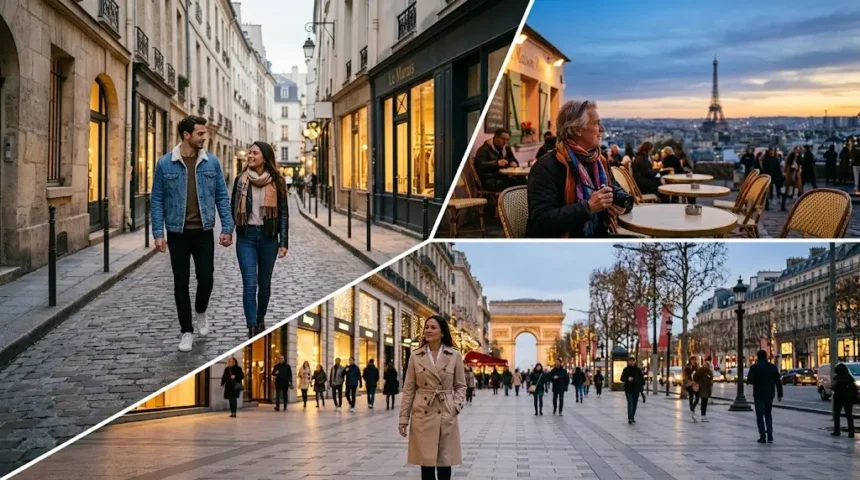
Best Neighborhoods to Stay in Paris for Every Traveler
Choosing where to stay in Paris can shape almost every part of your trip, from how easily you reach famous attractions to what your mornings and evenings feel like. Paris is divided into 20 arrondissements, but each area has its own atmosphere, architecture, restaurants, nightlife, shopping, and transportation advantages. Some neighborhoods put you within walking distance of major landmarks, while others offer quieter streets and a more residential Parisian experience. First-time visitors may prefer a central location, whereas couples, families, solo travelers, and budget-conscious visitors often have different priorities. Understanding these differences makes finding the best neighborhoods to stay in Paris much easier. The right base can turn a good Paris vacation into an unforgettable one.
Paris is not a city where one neighborhood works perfectly for every traveler. A couple planning a romantic getaway might love the atmospheric lanes of Montmartre or Saint-Germain-des-Prés, while a family could appreciate the parks and convenient connections around the 5th or 15th arrondissement. Travelers interested in nightlife may feel more at home in Le Marais, Bastille, or Canal Saint-Martin. Luxury travelers have elegant choices around the Champs-Élysées, Place Vendôme, and Saint-Germain-des-Prés. Budget travelers can often find better value farther from the historic center without sacrificing access to public transportation. Your itinerary, travel style, budget, and preferred pace should therefore guide your decision.
Location is particularly important because Paris contains attractions spread across several districts rather than concentrated in one small tourist zone. The Eiffel Tower sits in the 7th arrondissement, the Louvre is in the 1st, Montmartre dominates part of the 18th, and the Latin Quarter stretches across much of the 5th. Staying near one landmark does not necessarily mean you will be close to everything else. Fortunately, Paris has an extensive Metro and bus network that makes moving between neighborhoods relatively straightforward. Travelers who choose accommodation close to a Metro station can often explore the city efficiently even when staying outside the center. This flexibility greatly expands your accommodation options.
Your preferred atmosphere should also influence where you book a hotel or apartment. Central neighborhoods tend to be busy, energetic, and filled with attractions, restaurants, shops, and visitors throughout much of the day. Residential areas may offer bakeries, neighborhood markets, playgrounds, and cafés frequented by locals instead of large tourist crowds. Some travelers enjoy stepping outside their hotel directly into Parisian activity, while others prefer returning to a peaceful street after sightseeing. Nightlife is another consideration because lively neighborhoods can remain active well past midnight. Reading recent accommodation reviews about street noise and transportation access can help you avoid unpleasant surprises.
This guide explores the best neighborhoods to stay in Paris for different types of travelers, including first-time visitors, couples, families, luxury travelers, nightlife seekers, and visitors watching their budgets. Rather than simply choosing the most famous arrondissement, think about how you actually plan to spend your days. Consider walking distances, Metro connections, dining choices, evening atmosphere, and the attractions you expect to visit most frequently. Paris rewards travelers who choose a neighborhood that matches their personality rather than automatically selecting the geographic center. Every district covered below offers something distinctive. Once you understand those differences, deciding where to stay in Paris becomes considerably simpler.
Le Marais: Best for First-Time Visitors
Le Marais is one of the most appealing places to stay in Paris for travelers who want history, atmosphere, dining, and central convenience in one neighborhood. Stretching primarily across parts of the 3rd and 4th arrondissements, the district is known for narrow streets, historic mansions, fashionable boutiques, cafés, galleries, and beautiful squares. Unlike areas dominated by one major attraction, Le Marais feels like a destination throughout the entire neighborhood. Visitors can spend hours wandering without following a strict sightseeing plan. Its central position also places many important areas within reasonable walking distance. For a first trip to Paris, that combination of accessibility and character is difficult to beat.
One of the greatest advantages of staying in Le Marais is how naturally sightseeing becomes part of everyday exploration. Place des Vosges provides an elegant green space surrounded by distinctive architecture, while museums and cultural attractions are scattered throughout the surrounding streets. The Seine, Île Saint-Louis, Notre-Dame area, and Centre Pompidou are relatively accessible from many parts of the neighborhood. You can easily combine major sights with spontaneous stops at bakeries, shops, galleries, and cafés. Walking is often more enjoyable here than simply traveling from attraction to attraction underground. First-time visitors consequently get an immediate sense of Paris as both a historic city and a living neighborhood.
Le Marais is also excellent for travelers who organize their vacations around food and shopping. Traditional bakeries sit alongside contemporary restaurants, specialty food stores, wine bars, fashionable boutiques, and independent shops. The neighborhood has strong Jewish cultural heritage, particularly around Rue des Rosiers, adding another layer to its distinctive identity. Fashion ranges from international labels to smaller designers and vintage stores, making casual browsing surprisingly entertaining. Evening dining options are abundant, so visitors rarely need to travel far after a long sightseeing day. The streets remain lively without feeling entirely dedicated to large-scale nightlife. That balance makes Le Marais suitable for several different travel styles.
Accommodation in Le Marais ranges from intimate boutique hotels to upscale properties and apartment-style stays. Because the neighborhood is popular and central, prices can be relatively high, especially during busy travel periods. Rooms inside historic buildings may also be smaller than travelers accustomed to modern hotels expect. Checking whether a property has an elevator and air conditioning can be worthwhile, particularly when visiting during warmer months. Travelers sensitive to noise should look for rooms facing interior courtyards rather than active streets. Booking early generally provides a wider selection of well-positioned accommodation. Paying slightly more for the right location can sometimes reduce transportation time and make shorter Paris trips noticeably easier.
Le Marais works especially well for first-time visitors who want to explore Paris primarily on foot while remaining connected to the Metro. It provides history without feeling frozen in the past and contemporary energy without losing its traditional character. Couples, solo travelers, food lovers, and shoppers can all find plenty to enjoy here. Families can also stay comfortably in quieter sections, although room size and hotel pricing deserve attention. Visitors seeking a completely peaceful residential experience may prefer another district farther from the center. For most newcomers, however, Le Marais provides an excellent introduction to the city’s rhythm. It remains one of the most versatile answers to the question of where to stay in Paris.
Saint-Germain-des-Prés: Best for Couples and Romance
Saint-Germain-des-Prés has long represented the romantic image many travelers associate with Paris. Located primarily in the 6th arrondissement on the Left Bank, it combines elegant architecture, literary history, atmospheric cafés, art galleries, boutiques, and beautiful streets. Couples can begin the morning with coffee at a sidewalk café before walking toward the Seine or Luxembourg Gardens. The neighborhood feels sophisticated without requiring visitors to spend every moment sightseeing. Its central location also allows romantic evening walks instead of relying constantly on transportation. For honeymoons, anniversaries, and couples’ getaways, Saint-Germain-des-Prés remains one of the best neighborhoods to stay in Paris.
The neighborhood’s literary and artistic associations contribute heavily to its character. Writers, philosophers, artists, and intellectuals historically gathered in cafés around Boulevard Saint-Germain, creating a reputation that continues to attract culturally curious visitors. Today, the district blends this heritage with stylish boutiques, restaurants, galleries, bookstores, and upscale accommodation. Walking through its smaller streets reveals architectural details and quiet corners that can easily be missed when rushing between landmarks. The Seine is nearby, making evening riverside walks particularly convenient. Several bridges provide easy access toward central attractions on the Right Bank. Couples who enjoy wandering without a fixed itinerary will find plenty of opportunities for spontaneous discoveries.
Another advantage is proximity to Luxembourg Gardens, one of the most enjoyable green spaces in central Paris. Travelers can spend a slower morning walking beneath trees, watching everyday Parisian life, or relaxing after several hours of museum visits. The Latin Quarter, Île de la Cité, Notre-Dame area, and Louvre surroundings can also be reached relatively easily depending on where you stay. Numerous Metro connections make longer trips across the city manageable. This central positioning reduces the feeling of commuting back to your hotel after dinner. Instead, evenings can become part of the experience as you stroll through illuminated streets. That convenience is especially valuable during shorter romantic breaks.
Saint-Germain-des-Prés is generally not the cheapest place to stay in Paris. Its reputation, central location, and upscale atmosphere contribute to relatively high hotel rates, particularly at boutique and luxury properties. However, couples celebrating an important occasion may consider the location itself part of the experience rather than simply somewhere to sleep. Smaller independent hotels can provide considerable character, although room dimensions vary substantially. Travelers should compare amenities carefully instead of assuming every elegant property provides the same level of comfort. Staying slightly toward the edges of the 6th arrondissement may sometimes provide additional options. Advance booking is especially useful during popular spring, summer, and holiday periods.
Choose Saint-Germain-des-Prés if your ideal Paris vacation includes leisurely breakfasts, beautiful streets, sophisticated restaurants, art, history, and evening walks. It is particularly suited to couples who prioritize atmosphere over nightlife and convenience over bargain accommodation. First-time visitors can also appreciate its central location and easy access to several major attractions. Travelers focused heavily on clubs or late-night entertainment may find other neighborhoods more exciting. Families can stay here comfortably, but larger rooms may require a substantial accommodation budget. For romance, however, few Paris neighborhoods combine elegance and location so effectively. Saint-Germain-des-Prés delivers the classic Left Bank experience many couples imagine before arriving.
Latin Quarter: Best for History and Culture Lovers
The Latin Quarter is one of the most historic and energetic neighborhoods for visitors who want to experience the intellectual side of Paris. Centered largely in the 5th arrondissement, the area has been associated with students, scholars, universities, bookstores, and cultural institutions for centuries. Its streets combine impressive landmarks with cafés, inexpensive eateries, independent shops, and lively public spaces. The presence of students gives portions of the neighborhood an energetic atmosphere that distinguishes it from more formal districts. Visitors interested in architecture and history can discover something worthwhile around seemingly every corner. Staying here puts centuries of Parisian culture directly outside your accommodation.
Major attractions make the Latin Quarter particularly convenient for travelers building history-heavy itineraries. The Panthéon is among its most recognizable monuments, while the historic Sorbonne contributes strongly to the neighborhood’s academic identity. The Cluny Museum and ancient Roman remains reveal layers of history stretching far beyond modern Paris. Luxembourg Gardens lies nearby, providing an easy escape from crowded streets and museums. The Seine and Notre-Dame area are also accessible from many parts of the district. Instead of spending significant time commuting, visitors can often reach several major sights on foot. This makes the Latin Quarter particularly attractive for travelers who prefer walking between cultural attractions.
Food options vary considerably across the neighborhood, ranging from inexpensive student-friendly establishments to polished restaurants and traditional cafés. Some streets close to heavily visited attractions can feel extremely tourist-oriented, so walking several blocks away often produces a more relaxed experience. Bakeries and casual cafés make it easy to start sightseeing early without arranging a formal breakfast. Evening activity is noticeable but generally differs from the club-focused nightlife found in other districts. Bookstores remain another defining feature, encouraging visitors to slow down and browse rather than simply photograph landmarks. The overall atmosphere feels energetic, intellectual, and distinctly Parisian. It can be especially enjoyable for solo travelers and younger visitors.
Hotels in the Latin Quarter cover a relatively broad range, although central Paris pricing still applies. Small independent properties are common, often occupying older buildings with compact rooms and considerable architectural character. Budget-conscious travelers may find opportunities by comparing properties toward less tourist-heavy sections of the 5th arrondissement. Proximity to a Metro station should remain an important consideration, especially if your itinerary includes Montmartre, the Eiffel Tower, or attractions farther east. Street noise can vary significantly depending on the exact location. Checking recent guest feedback can therefore be useful before making a reservation. Travelers who prioritize neighborhood character frequently consider these minor compromises worthwhile.
The Latin Quarter is ideal for visitors who want museums, history, bookstores, architecture, and café culture within easy reach. First-time travelers who prefer the Left Bank can use it as a convenient alternative to Le Marais or Saint-Germain-des-Prés. Solo travelers may appreciate the active streets and abundance of casual places to eat without requiring reservations every evening. Couples can enjoy its smaller lanes, although Saint-Germain generally provides a more polished romantic atmosphere. Families interested in educational attractions may also find the neighborhood practical. Above all, the Latin Quarter encourages curiosity and exploration. It is one of the best areas to stay in Paris when cultural experiences matter more than luxury.
7th Arrondissement: Best for Eiffel Tower Views
For travelers who have dreamed of opening their hotel curtains and seeing the Eiffel Tower, the 7th arrondissement deserves serious consideration. This elegant Left Bank district contains the Eiffel Tower, Champ de Mars, major museums, government buildings, and some of Paris’s most recognizable architecture. The atmosphere tends to feel refined and relatively calm compared with busier entertainment districts. Wide avenues and attractive residential streets create a classic Parisian setting that appeals especially to couples and first-time visitors. Staying here makes early-morning and evening visits to the Eiffel Tower remarkably convenient. It can transform the city’s most famous landmark from a sightseeing stop into part of your everyday surroundings.
The ability to visit the Eiffel Tower at different times of day is one of the district’s greatest advantages. You can walk through Champ de Mars before large daytime crowds arrive, return after dinner, or simply admire the tower while exploring nearby streets. Musée d’Orsay and Musée Rodin are also accessible from portions of the arrondissement, expanding its appeal beyond a single landmark. The Seine provides scenic walking routes toward several other central districts. Depending on your hotel’s exact location, major monuments can feel surprisingly close. Travelers interested in photography often appreciate having repeated opportunities to capture changing light conditions. The neighborhood therefore works particularly well for visitors making their first memorable trip to Paris.
Despite its famous attraction, much of the 7th arrondissement has a residential and relatively quiet character. Local bakeries, specialty food stores, cafés, and neighborhood restaurants provide alternatives to the tourist-oriented businesses closest to the Eiffel Tower. Rue Cler is especially well known for food shopping and everyday Parisian atmosphere. Exploring several streets away from major sightseeing routes can reveal a noticeably calmer side of the district. Evenings generally feel less nightlife-focused than areas such as Bastille or parts of Le Marais. This can be ideal for travelers who want peaceful nights after busy sightseeing days. Couples and mature travelers often appreciate this balance between iconic scenery and residential comfort.
Accommodation can be expensive, especially when rooms advertise direct Eiffel Tower views. Travelers should examine room descriptions carefully because a hotel being near the tower does not guarantee that every room overlooks it. Some properties charge substantial premiums for balconies or specific view categories. If seeing the Eiffel Tower from your room is essential, confirm the exact room type rather than relying on general hotel photographs. Visitors who do not require a view can often broaden their options considerably. Transportation convenience also varies within the arrondissement, so checking nearby Metro stations is important. Strategic booking can help balance location, comfort, and budget without paying unnecessarily for prestige.
The 7th arrondissement is best for travelers who consider the Eiffel Tower central to their Paris experience. Couples planning romantic trips, families visiting Paris for the first time, photographers, and travelers celebrating special occasions may particularly enjoy staying here. The quieter evenings can also appeal to visitors who dislike heavily crowded nightlife districts. However, those wanting endless bars, clubs, and late-night activity may prefer a different neighborhood. Dining options are plentiful, but researching restaurants away from the busiest tourist zones can improve the experience. Staying here is partly about convenience and partly about emotion. Few things feel more unmistakably Parisian than repeatedly encountering the Eiffel Tower during an ordinary walk back to your hotel.
Montmartre: Best for Artists and Bohemian Charm
Montmartre offers a dramatically different experience from the formal boulevards and monumental architecture of central Paris. Located primarily in the 18th arrondissement, this hilltop neighborhood is famous for Sacré-Cœur, artistic history, winding streets, staircases, cafés, and panoramic views. Generations of artists helped create its bohemian reputation, and traces of that creative identity remain visible throughout the district. Certain streets can feel almost village-like, particularly during quieter mornings before sightseeing crowds arrive. Visitors willing to stay farther from the geographic center are rewarded with distinctive atmosphere and memorable scenery. Montmartre is especially appealing to photographers, couples, artists, and travelers seeking romantic Parisian character.
Sacré-Cœur dominates the neighborhood physically and visually, providing one of the most recognizable viewpoints in Paris. Staying nearby allows visitors to experience the area early in the morning or later in the evening when day-trip crowds may be lighter. Place du Tertre remains closely associated with painters and portrait artists, although it is also one of the area’s busiest tourist locations. Wandering away from these famous spots reveals quieter residential lanes, small gardens, cafés, and historic buildings. Montmartre rewards travelers who explore without constantly consulting an itinerary. Its hills create unexpected perspectives and dramatic street scenes. Comfortable walking shoes are particularly important because stairs and steep slopes are part of daily life here.
Food and nightlife options are abundant, but experiences vary depending on the exact section of Montmartre. Some streets near major attractions contain restaurants primarily aimed at visitors, while others offer neighborhood bistros, bakeries, cafés, and bars with a more local character. Areas closer to Pigalle become livelier at night and provide access to music venues and entertainment. Travelers seeking quieter evenings may prefer accommodation farther uphill or away from heavily trafficked nightlife streets. Exploring restaurant options before arriving can help distinguish atmospheric neighborhood spots from convenience-driven tourist establishments. The diversity of dining and entertainment contributes to Montmartre’s broad appeal. It is possible to create either a romantic or energetic stay depending on where you book.
Accommodation in Montmartre can sometimes provide better value than equally attractive hotels in the most central arrondissements. Boutique properties, smaller hotels, apartments, and budget options are distributed throughout the area. The trade-off is additional transportation time when visiting attractions such as the Eiffel Tower, Louvre, or Latin Quarter. Metro connections make these journeys manageable, but visitors should account for them when planning busy sightseeing days. Hills and staircases can also make some locations less suitable for travelers with mobility concerns or heavy luggage. Choosing a hotel near a convenient Metro station can significantly improve the experience. Location within Montmartre matters almost as much as choosing the neighborhood itself.
Montmartre is ideal for travelers who prioritize atmosphere, photography, creativity, and romantic streets over being within walking distance of every major landmark. Couples frequently appreciate its scenic corners and evening views, while solo travelers can enjoy exploring cafés and side streets independently. Budget-conscious visitors may also discover more accommodation choices than in neighborhoods such as Saint-Germain or the 1st arrondissement. Families can certainly stay here, although steep terrain and transportation requirements deserve consideration. Visitors with limited time may prefer somewhere more central. For travelers willing to commute slightly, however, Montmartre provides a memorable neighborhood experience. It demonstrates that the best place to stay in Paris is not always the closest place to the Louvre.
1st Arrondissement: Best for Sightseeing Convenience
The 1st arrondissement is difficult to beat when sightseeing convenience is your highest priority. Located at the historic center of Paris, it contains the Louvre Museum, Tuileries Garden, Palais Royal, and portions of the Seine riverfront. Numerous other major attractions sit within walking distance or a relatively short Metro journey. Travelers with only two or three days in Paris can particularly benefit from minimizing transportation time. Stepping outside your hotel places you directly into one of the city’s most monumental areas. The trade-off is that accommodation can be expensive and certain streets feel highly tourist-oriented. For convenience, however, few Paris neighborhoods can compete.
The Louvre naturally dominates sightseeing in this district, but the surrounding area deserves time of its own. Tuileries Garden provides an attractive route toward Place de la Concorde, while Palais Royal offers elegant architecture and peaceful spaces nearby. Walking south across the Seine quickly connects visitors with sections of the Left Bank. Heading east brings additional historic districts and cultural attractions within reach. The central location makes spontaneous itinerary changes easier because multiple areas remain accessible. Visitors can return to their hotel during the afternoon without sacrificing a large portion of the day. That flexibility is particularly valuable for families, older travelers, and anyone planning intensive museum visits.
Dining in the 1st arrondissement ranges from casual cafés to some of the city’s most sophisticated restaurants. Because the neighborhood receives enormous numbers of visitors, restaurant quality and pricing can vary considerably around the busiest attractions. Walking away from the Louvre’s immediate surroundings generally expands your choices. Nearby districts also provide additional dining possibilities without requiring lengthy transportation. Shopping is another major advantage, with luxury boutiques, department-store access, and fashionable streets within easy reach. Travelers interested in both culture and retail can create an extremely efficient itinerary from this base. Even ordinary evening walks can include illuminated monuments and elegant architecture.
Hotels in the 1st arrondissement generally command premium rates because travelers are paying for one of the most central locations in Paris. Luxury properties are prominent, although smaller boutique hotels and occasional mid-range choices are available. Rooms may still be compact despite expensive nightly rates, so comparing dimensions and amenities is important. Travelers should consider how much time they expect to spend at the hotel before paying heavily for elaborate facilities. For short sightseeing trips, location may provide greater practical value than extensive amenities. Properties near convenient Metro connections offer even greater flexibility. Booking well ahead can improve your chances of finding suitable accommodation within a specific budget.
Stay in the 1st arrondissement if you want major attractions immediately accessible and do not mind paying for convenience. It works particularly well for first-time visitors, luxury travelers, museum lovers, and people spending only a few days in Paris. Families may appreciate being able to return easily to their hotel between activities. Couples can enjoy the architecture and riverfront walks, although neighborhoods such as Saint-Germain or Montmartre may provide a more intimate atmosphere. Budget travelers will generally find better value elsewhere. The neighborhood’s greatest strength is efficiency rather than residential authenticity. When maximizing sightseeing time matters most, the 1st arrondissement remains one of the strongest places to stay in Paris.
Canal Saint-Martin: Best for a Local Paris Experience
Canal Saint-Martin is an excellent choice for travelers who have already seen the major landmarks or simply want a more contemporary neighborhood experience. Located mainly in the 10th arrondissement, the area centers around a picturesque canal crossed by bridges and lined with trees, cafés, restaurants, shops, and gathering spaces. The atmosphere tends to feel younger and more relaxed than the grand central districts. Locals frequently spend time along the canal, particularly during pleasant weather. Independent businesses contribute to the area’s distinctive personality. Staying here can make Paris feel less like a checklist of monuments and more like a city where people actually live, work, socialize, and spend weekends.
The canal itself shapes much of the neighborhood’s appeal. Walking beside the water provides a slower alternative to museum-heavy sightseeing, and the bridges create attractive photography opportunities. Cafés and casual restaurants make it easy to spend an afternoon without planning a formal activity. The area can become particularly lively during evenings and weekends when people gather around the waterfront. Travelers who enjoy observing everyday city life may find this more rewarding than staying beside a major tourist attraction. At the same time, central Paris remains accessible through Metro connections. You can explore famous landmarks during the day and return to a neighborhood atmosphere afterward.
Canal Saint-Martin has developed a strong reputation for food, coffee, independent shopping, and casual nightlife. Rather than focusing heavily on traditional tourist restaurants, the neighborhood offers a broad mix of contemporary dining concepts, bakeries, bars, and cafés. Younger travelers and repeat visitors often appreciate this variety. The area also makes it easy to experience Paris without planning every meal weeks in advance. Small shops and boutiques add interest during daytime walks. Nightlife exists without the entire neighborhood feeling like a dedicated party district. This combination of everyday activity and creative energy makes Canal Saint-Martin particularly attractive to solo travelers, couples, digital workers, and culturally curious visitors.
Accommodation prices can sometimes be more approachable than in the most prestigious central arrondissements, although popularity has increased demand. Travelers should compare properties throughout the 10th arrondissement rather than assuming everything immediately beside the canal offers the best value. Hotels near Metro stations provide convenient access to central sights, while properties directly overlooking active streets may experience more evening noise. The district is also relatively convenient for travelers using major railway stations in northern Paris. As always, exact location matters because the atmosphere can change within a few blocks. Reading recent accommodation reviews is useful. A thoughtfully selected hotel can provide an excellent balance between affordability, convenience, and neighborhood character.
Choose Canal Saint-Martin if you want your Paris stay to revolve around cafés, neighborhood walks, restaurants, and local atmosphere rather than famous landmarks alone. First-time visitors can certainly stay here, but they should expect to use public transportation more frequently than guests in Le Marais or the 1st arrondissement. Repeat visitors may find the neighborhood especially refreshing because it encourages exploration beyond the standard itinerary. Couples enjoy the canal-side setting, while solo travelers often appreciate the casual social atmosphere. Budget-conscious travelers may also find worthwhile options. Canal Saint-Martin shows a younger and more everyday side of Paris. For many visitors, that authenticity becomes one of the most memorable parts of their trip.
Bastille: Best for Nightlife and Evening Energy
Bastille is a strong choice for travelers who want restaurants, bars, nightlife, and convenient transportation without staying in Paris’s most expensive central districts. The area around Place de la Bastille connects several lively neighborhoods and sits close to parts of the 11th and 12th arrondissements. Its historical significance remains important, but modern Bastille is particularly known for social life after dark. Streets surrounding the main square contain an enormous variety of restaurants, cocktail bars, casual drinking spots, and entertainment venues. Younger visitors often appreciate the energy and variety. Travelers who dislike returning to a silent neighborhood after dinner may find Bastille especially appealing.
One advantage of staying around Bastille is the sheer number of dining choices available within walking distance. Visitors can move from traditional bistros to international restaurants, contemporary cafés, wine bars, and casual late-night food without traveling across the city. Rue de la Roquette and surrounding streets become particularly active during evenings. The nearby Marché d’Aligre area adds a different daytime experience with food shopping and neighborhood activity. Le Marais is also relatively accessible, giving visitors even more restaurant and nightlife choices. This makes Bastille convenient for travelers who prefer spontaneous evenings. You can finish sightseeing, return to your accommodation, and still have plenty happening nearby.
Transportation is another significant advantage because the area provides useful Metro connections to attractions across Paris. While you will not be able to walk to every famous monument, getting around is generally straightforward. This can make Bastille a sensible compromise between central convenience and potentially more manageable accommodation costs. The neighborhood also provides access to the Promenade Plantée, markets, and residential areas rarely prioritized by first-time itineraries. Travelers staying several days can therefore combine classic sightseeing with less obvious experiences. Walking toward the Seine or Le Marais expands the range of nearby attractions. Bastille works particularly well for visitors who enjoy moving between neighborhoods rather than remaining in one tourist center.
Hotel choices range from affordable and mid-range properties to stylish boutique options. Prices vary considerably depending on proximity to the main square, Metro stations, and fashionable sections of the 11th arrondissement. Noise should be an important consideration because bars and restaurants can remain active late into the evening. Light sleepers should specifically search for rooms facing courtyards or located on quieter side streets. Travelers primarily interested in nightlife may consider the activity an advantage rather than a problem. Comparing recent guest reviews can help identify properties that provide both convenience and comfortable sleeping conditions. Bastille’s variety means careful selection usually pays off.
Bastille is best suited to younger travelers, couples, groups of friends, and solo visitors who want active evenings. Food lovers can also enjoy the diversity of restaurants and markets throughout the surrounding districts. Families may prefer quieter sections nearby rather than accommodation directly beside nightlife streets. Travelers expecting postcard Eiffel Tower views from their window should obviously look elsewhere. The neighborhood’s attraction comes from energy, accessibility, and everyday urban life rather than monumental scenery. It provides a useful base for exploring eastern and central Paris. If restaurants and nightlife are major parts of your vacation, Bastille deserves a place near the top of your accommodation shortlist.
15th Arrondissement: Best for Families
The 15th arrondissement offers families a calmer and more residential alternative to the busiest central neighborhoods. Located in southwestern Paris, it contains broad residential sections, parks, shops, bakeries, markets, restaurants, and convenient public transportation. Visitors generally encounter fewer concentrated tourist crowds than around the Louvre, Eiffel Tower, or Notre-Dame. This quieter environment can make mornings and evenings considerably easier when traveling with children. Families may also find a broader selection of apartment-style accommodation and practical neighborhood services. Although it lacks the constant postcard scenery of central Paris, the district provides something equally valuable for longer stays: space, routine, and relative tranquility.
Daily convenience is one of the strongest reasons families choose the 15th arrondissement. Supermarkets, bakeries, pharmacies, playgrounds, cafés, and everyday shops are widely available throughout residential sections. Parents staying in apartments can purchase groceries easily rather than eating every meal in restaurants. Parks and open spaces provide children with opportunities to relax after museums and sightseeing. The atmosphere generally becomes calmer in the evening than in nightlife-focused neighborhoods. Families with younger children often appreciate returning to this quieter environment. The district allows visitors to experience a more ordinary side of Paris while maintaining relatively straightforward access to the attractions they came to see.
Transportation should play a major role when selecting accommodation because the 15th arrondissement covers a substantial area. A property near a useful Metro station can dramatically reduce travel time, while an inexpensive hotel far from convenient connections may become frustrating. Parts of the district are relatively close to the Eiffel Tower and Champ de Mars, giving families access to one of Paris’s major attractions. Other sections require longer journeys to central sights. Checking your expected itinerary against nearby Metro lines before booking is therefore worthwhile. Families using strollers should also consider station accessibility and walking distances. Convenience at street level can matter just as much as nightly accommodation cost.
Hotels and apartments in the 15th arrondissement can offer better value than comparable properties in highly tourist-oriented districts. Larger rooms remain far from guaranteed in Paris, but expanding your search outside the center can improve the selection. Apartment-style accommodation may be especially useful for families wanting kitchen facilities, laundry access, or separate sleeping areas. Travelers should compare the total cost carefully, including any service or cleaning fees associated with apartment rentals. Hotels can provide simpler check-in procedures and additional services. Either option can work well depending on family size and trip length. Booking near shops and transportation usually provides greater practical value than choosing a picturesque but inconvenient street.
The 15th arrondissement suits families, longer-stay visitors, and travelers who value peaceful evenings over nightlife. It can also appeal to repeat visitors who want to experience Paris beyond its heavily visited historic center. First-time tourists staying only two days may prefer a more central district to maximize sightseeing efficiency. Families spending four or more days, however, can benefit from the residential atmosphere and potentially greater accommodation value. The neighborhood does not constantly announce itself as a tourist destination, which is precisely part of its appeal. Everyday Paris becomes more visible here. For parents balancing sightseeing with comfort and practicality, the 15th arrondissement is one of the best areas to stay in Paris.
8th Arrondissement: Best for Luxury Travelers
The 8th arrondissement represents some of the most glamorous and prestigious accommodation choices in Paris. Home to the Champs-Élysées, Arc de Triomphe surroundings, elegant avenues, luxury shopping, and celebrated hotels, it appeals strongly to travelers seeking a polished high-end experience. The neighborhood’s grand architecture immediately creates a sense of occasion. Designer boutiques and sophisticated restaurants are readily accessible, while many properties provide extensive services and upscale amenities. Business travelers also frequently choose this part of Paris because of its central position and premium hotels. If accommodation is an important part of the vacation rather than simply a place to sleep, the 8th arrondissement deserves serious consideration.
Shopping is one of the district’s defining attractions. Famous luxury brands occupy prominent locations, while nearby avenues provide access to some of the world’s most recognizable fashion houses. Travelers interested in designer clothing, jewelry, beauty, and luxury goods can spend considerable time exploring without leaving the neighborhood. The Champs-Élysées itself remains one of Paris’s best-known avenues, connecting major landmarks and drawing visitors throughout the year. While parts can feel heavily commercial, quieter surrounding streets reveal elegant architecture and sophisticated establishments. Window-shopping alone can be entertaining even for visitors without plans for major purchases. The district makes luxury retail part of the sightseeing experience.
Location is another important advantage. The Arc de Triomphe provides immediate access to one of Paris’s signature landmarks, while transportation connections make other districts relatively easy to reach. Walking toward the Seine opens additional scenic routes and connections to neighboring areas. Depending on where your hotel is located, attractions around Place de la Concorde and Tuileries Garden may also be accessible on foot. This combination of prestige and transportation convenience distinguishes the 8th from luxury destinations farther outside the center. Guests can spend mornings sightseeing before returning easily to high-end hotel facilities. For travelers with generous budgets, convenience can be enjoyed without sacrificing comfort.
Accommodation ranges from internationally recognized luxury hotels to sophisticated boutique properties and premium business hotels. Rates can be among the highest in Paris, particularly for spacious rooms, suites, landmark views, or celebrated addresses. Travelers paying premium prices should compare exactly which amenities are included, such as breakfast, spa facilities, concierge service, and room categories. The surrounding atmosphere can also vary, with some locations feeling busy and commercial while others remain surprisingly quiet. Selecting accommodation one or two streets away from major avenues can sometimes create a more peaceful experience. Luxury travelers should therefore consider location as carefully as hotel reputation. The best property combines service with the atmosphere you actually want.
Choose the 8th arrondissement if luxury accommodation, designer shopping, prestigious addresses, and polished surroundings are important components of your trip. Couples celebrating milestones may appreciate the elevated experience, while business travelers benefit from high-quality hotels and transportation links. First-time visitors with flexible budgets can also use the district as a comfortable sightseeing base. Travelers seeking bohemian cafés, student energy, or budget nightlife will probably prefer other neighborhoods. The 8th arrondissement offers a more formal vision of Paris than Montmartre or Canal Saint-Martin. That sophistication is exactly what attracts many guests. For an elegant city break with premium services, it remains one of the best neighborhoods to stay in Paris.
Belleville: Best for Budget-Conscious Travelers
Belleville provides an alternative for visitors who want to control accommodation costs while experiencing a multicultural and creative side of Paris. Spread across portions of several eastern arrondissements, the neighborhood has historically attracted diverse communities, artists, independent businesses, and younger residents. It feels considerably different from the monumental center around the Louvre and Champs-Élysées. Street art, casual restaurants, neighborhood bars, markets, and residential streets contribute to its personality. Visitors who enjoy exploring cities beyond famous postcard locations may find Belleville particularly interesting. Staying farther from central landmarks also means relying more heavily on public transportation. For flexible travelers, that trade-off can result in better value and a more local experience.
Belleville’s cultural diversity is especially visible through its food scene. Restaurants represent numerous culinary traditions, giving visitors affordable alternatives to the more expensive dining found in heavily tourist-oriented neighborhoods. Bakeries, cafés, markets, and casual establishments make eating well possible without turning every meal into a major expense. The neighborhood also has an active creative identity reflected through murals, studios, independent venues, and street art. Travelers interested in contemporary urban culture may find this more engaging than polished luxury districts. Exploring Belleville reveals how varied Paris can be from one arrondissement to another. It is particularly appealing to repeat visitors who already know the city’s famous central attractions.
One of the neighborhood’s most attractive outdoor spaces is Parc de Belleville, which provides elevated views across parts of Paris. The park offers a pleasant break from dense streets and demonstrates that impressive city perspectives are not limited to famous tourist viewpoints. Nearby residential areas provide additional opportunities for walking and discovering local cafés. Travelers should remember that Belleville can feel busy, gritty, and distinctly urban rather than traditionally romantic. That character appeals to some visitors and disappoints others expecting uniformly elegant Parisian streets. Researching the exact location of your accommodation can therefore prevent mismatched expectations. The district rewards travelers comfortable exploring less polished parts of major cities.
Accommodation can be relatively affordable compared with highly central neighborhoods, although prices fluctuate with demand. Hostels, modest hotels, apartments, and smaller properties provide choices for travelers who prioritize budget over luxury facilities. Access to Metro stations is particularly important because most visitors will travel into central Paris frequently. Spending slightly more for accommodation near a convenient line can save considerable time and energy. Travelers returning late at night should also understand their route beforehand and choose locations where they feel comfortable walking. Recent accommodation reviews can provide useful information about noise, transportation, and the immediate surroundings. Value should always be considered alongside convenience rather than nightly price alone.
Belleville works best for budget travelers, younger visitors, repeat Paris travelers, artists, food lovers, and people interested in multicultural neighborhoods. It is less suitable for someone spending only one or two days in Paris and wanting every major attraction within walking distance. Families may prefer quieter residential districts depending on their needs, while couples seeking traditional romance may gravitate toward Montmartre or Saint-Germain. Solo travelers comfortable navigating public transportation can find Belleville particularly rewarding. The neighborhood provides evidence that memorable Paris experiences extend well beyond its most famous arrondissements. Saving money does not necessarily require staying somewhere without personality. Belleville combines relative affordability with one of the city’s most distinctive contemporary identities.
How to Choose the Best Paris Neighborhood for Your Trip
The best neighborhood in Paris ultimately depends on what you want your trip to feel like rather than which district receives the most recommendations. Begin by identifying your top three priorities, such as sightseeing, nightlife, romance, food, affordability, family convenience, or luxury. A traveler spending two days visiting major landmarks has very different accommodation needs from someone staying for two weeks and working remotely. Your daily itinerary can help reveal which location will save the most time. Plotting your most important attractions mentally or on a travel planner can make patterns obvious. Choosing based on your actual plans usually produces better results than selecting a neighborhood simply because it is famous.
Budget should be evaluated in terms of total trip value rather than nightly hotel price alone. A cheaper property located far from everything you plan to visit may require additional transportation and consume valuable sightseeing time. Conversely, paying premium central prices may be unnecessary if you enjoy using the Metro and prefer residential neighborhoods. Travelers should compare room size, amenities, cancellation policies, breakfast, transportation access, and taxes when evaluating accommodation. The cheapest advertised rate is not always the best deal. Location can be particularly valuable on short trips because every hour matters. Longer stays provide more flexibility to choose less central neighborhoods and experience everyday Paris at a slower pace.
Transportation access can compensate significantly for distance from major landmarks. A hotel several kilometers from the Louvre but located beside a useful Metro station may be more convenient than a seemingly central property requiring awkward connections. Before booking, check which stations are within comfortable walking distance and which lines serve them. Consider where you expect to spend evenings as well as daytime sightseeing hours. Returning from dinner becomes much easier when transportation connections are straightforward. Travelers with limited mobility, young children, or large luggage should pay additional attention to walking distances and station accessibility. Paris rewards visitors who think in terms of connections rather than geographic distance alone.
Noise and neighborhood atmosphere deserve more attention than many travelers give them. A hotel above a lively restaurant street may look perfectly positioned during daytime research but feel very different after midnight. Likewise, an extremely quiet residential area might disappoint travelers expecting bars and entertainment outside their door. Recent guest reviews often provide the most practical information about street noise, room insulation, nearby construction, and evening atmosphere. Looking at the immediate blocks surrounding a property is more useful than evaluating an arrondissement as a single uniform district. Paris neighborhoods can change noticeably within short distances. Choosing the right micro-location can make the difference between an exhausting stay and a comfortable one.
Finally, avoid searching endlessly for a universally perfect Paris neighborhood because it does not exist. Le Marais provides excellent all-around convenience, Saint-Germain excels at romance, the Latin Quarter suits culture lovers, Montmartre offers atmosphere, and the 7th arrondissement delivers iconic Eiffel Tower surroundings. Families may prefer the practical 15th, nightlife seekers can consider Bastille, and budget-conscious travelers can explore Belleville. Canal Saint-Martin provides a contemporary local experience, while the 1st and 8th arrondissements appeal to convenience and luxury respectively. Each involves trade-offs between price, atmosphere, location, and transportation. Match those trade-offs to your priorities. The best Paris neighborhood is simply the one that makes your particular trip easier and more enjoyable.
Conclusion
Finding the best neighborhoods to stay in Paris becomes much easier once you stop looking for one district that is supposedly perfect for everyone. Paris contains dramatically different experiences within relatively short distances, from the historic streets of Le Marais to the artistic slopes of Montmartre and elegant avenues of the 8th arrondissement. Every neighborhood offers advantages and compromises. Central locations usually provide easier sightseeing but can cost considerably more. Outer residential districts often offer additional value and local atmosphere while requiring more transportation. Understanding these differences allows you to spend your accommodation budget where it matters most. Your hotel location should support the vacation you actually want rather than someone else’s ideal itinerary.
For first-time visitors, Le Marais and the 1st arrondissement provide particularly convenient introductions to central Paris. Both make it relatively easy to reach major sights and explore significant portions of the city on foot. Travelers who prioritize the Eiffel Tower can choose the 7th arrondissement, while history enthusiasts may feel more at home in the Latin Quarter. Couples seeking classic romance have excellent options in Saint-Germain-des-Prés and Montmartre. These neighborhoods place atmosphere at the center of the experience rather than treating accommodation as merely practical. Staying somewhere you genuinely enjoy walking around can improve every morning and evening of your trip. That neighborhood connection often becomes an unexpected travel highlight.
Travelers interested in a more contemporary version of Paris should consider Canal Saint-Martin, Bastille, or Belleville. These neighborhoods demonstrate that the city extends far beyond museums, monuments, and luxury boutiques. They offer restaurants, bars, markets, street life, creative businesses, and opportunities to observe everyday Parisian routines. They can also provide more accommodation choices for visitors who cannot justify premium central prices. The trade-off is usually additional Metro travel, particularly when following a traditional first-time sightseeing itinerary. For repeat visitors, that may barely feel like a disadvantage. Exploring less obvious districts can reveal a more complex and memorable side of the French capital.
Families and travelers planning longer visits should prioritize practical details such as room size, supermarkets, parks, transportation, and evening noise. The 15th arrondissement can perform particularly well in these categories because of its residential character. Luxury travelers, meanwhile, may prefer the refined hotels and shopping opportunities of the 8th arrondissement. No matter which district you choose, checking the property’s precise location remains essential. A neighborhood recommendation covers a broad area, and two hotels within the same arrondissement can provide very different experiences. Look at nearby Metro stations, walking routes, restaurant choices, and recent accommodation reviews before confirming your booking. Those small checks can prevent significant inconvenience after arrival.
Paris is ultimately a city designed to be explored beyond the streets surrounding your hotel. Even if you stay beside the Louvre, you will eventually cross the Seine, ride the Metro, wander through residential districts, and discover neighborhoods you did not originally plan to visit. Choose accommodation that provides a comfortable starting and ending point rather than trying to position yourself beside every attraction. Whether that means romantic Saint-Germain, lively Bastille, artistic Montmartre, luxurious Champs-Élysées surroundings, or relaxed Canal Saint-Martin depends entirely on your priorities. The best neighborhoods to stay in Paris offer different versions of the same remarkable city. Choose the one matching your travel style, and allow the rest of Paris to unfold through exploration.
FAQs
What is the best neighborhood to stay in Paris for first-time visitors?
Le Marais is one of the best choices for first-time visitors because it combines a central location with historic streets, restaurants, shopping, and convenient access to major attractions. The 1st arrondissement and Latin Quarter are also excellent alternatives for sightseeing-focused trips.
Which area of Paris is best for couples?
Saint-Germain-des-Prés is particularly appealing for couples because of its elegant streets, cafés, galleries, restaurants, and proximity to the Seine and Luxembourg Gardens. Montmartre is another excellent choice for couples who prefer artistic character, hilltop views, and a more bohemian romantic atmosphere.
Where should families stay in Paris?
The 15th arrondissement is a practical choice for many families because it offers residential streets, shops, parks, supermarkets, restaurants, and convenient transportation. Families who prioritize central sightseeing may also consider quieter parts of the 5th or 7th arrondissement.
What is the best area to stay in Paris near the Eiffel Tower?
The 7th arrondissement is the most convenient option for travelers who want to stay near the Eiffel Tower. Some hotels offer tower views, but travelers should confirm the exact room category because not every room in an Eiffel Tower-area hotel provides a direct view.
Which Paris neighborhood is best for budget travelers?
Belleville can be a good option for budget-conscious visitors who are comfortable using the Metro and want a multicultural, creative neighborhood experience. Travelers can also look in parts of the 10th, 11th, 15th, 18th, and other outer arrondissements for accommodation that may offer better value than the historic center.