


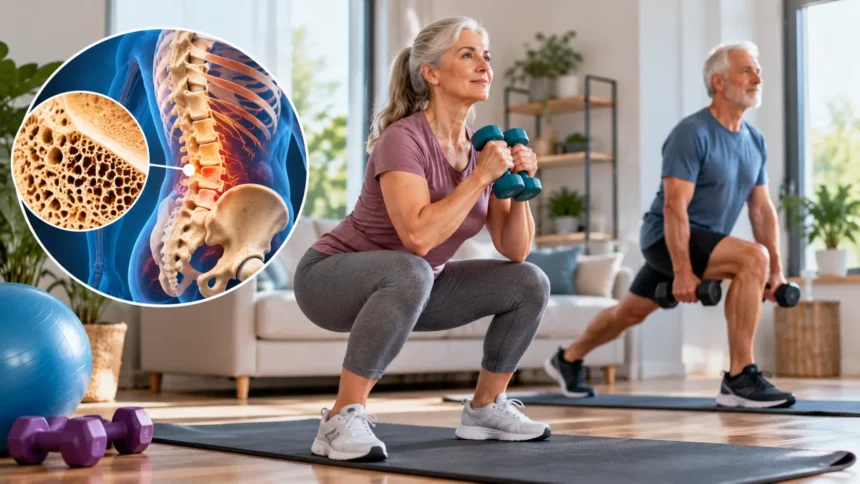
Osteoporosis is a condition that weakens bones and increases the risk of fractures, particularly in the spine, hips, and wrists. Although reduced bone density can make certain movements more challenging, staying physically active remains an important part of maintaining strength and independence. The right exercises for osteoporosis can support bone health, improve balance, strengthen muscles, and help reduce the risk of falls.
However, not every exercise is appropriate for someone with osteoporosis. Certain movements may place excessive pressure on fragile bones, especially when spinal fractures or advanced bone loss are present. Understanding which exercises are helpful, how to perform them safely, and when to seek professional guidance can make physical activity more comfortable and effective.
What Is Osteoporosis and How Does It Affect Movement?
Osteoporosis is a skeletal condition characterized by reduced bone strength and an increased likelihood of fractures. Bones continuously undergo a natural process of breaking down old tissue and replacing it with new tissue. When bone loss exceeds bone formation over time, the internal structure becomes weaker, making fractures more likely during falls or even ordinary movements.
The condition commonly affects the vertebrae, hips, and wrists, although fractures can occur in other bones. Many people do not experience noticeable symptoms until a fracture occurs, which is why osteoporosis is sometimes described as a silent disease. Changes in posture, unexplained height loss, or new back pain may indicate vertebral fractures requiring medical assessment.
Osteoporosis does not mean that physical activity must stop completely or that every movement is dangerous. Appropriate exercise can help maintain muscle strength, improve stability, and support everyday function while reducing inactivity-related problems. The safest approach depends on bone density, previous fractures, balance abilities, and individual medical recommendations rather than using one exercise routine for everyone.
Why Exercise Is Important for People With Osteoporosis
Regular physical activity supports bone health by placing appropriate mechanical demands on the skeleton. Weight-bearing and resistance exercises encourage bones and muscles to respond to physical loading, which may help maintain bone density and reduce further bone loss. However, exercise cannot guarantee that existing osteoporosis will reverse, and its effects depend on individual circumstances.
Exercise also strengthens the muscles responsible for supporting posture, walking, standing, and other everyday activities. Stronger muscles can improve movement control and make common tasks easier to perform. Balance and coordination exercises provide additional benefits because they may reduce the likelihood of falls, which are a major concern for people with fragile bones.
Beyond its effects on bones and muscles, regular movement supports cardiovascular health, confidence, and overall physical function. People who remain active may find it easier to maintain independence and participate in daily activities. A balanced osteoporosis exercise program should combine appropriate weight-bearing movement, strength training, balance practice, and posture exercises rather than focusing on only one activity.
Best Weight-Bearing Exercises for Osteoporosis
Weight-bearing exercises involve supporting your body weight while moving against gravity, making them an important part of many osteoporosis exercise programs. Walking is a practical starting option because it requires minimal equipment and can be adjusted to different fitness levels. Comfortable walking on stable surfaces may help maintain physical function while providing gentle loading through the lower limbs.
Other low-impact weight-bearing activities include suitable stair climbing, low-impact aerobics, and certain forms of dancing. These activities challenge the muscles and bones while offering opportunities to improve coordination and endurance. However, stair climbing and dancing may need modification for individuals with poor balance, previous fractures, or other conditions affecting movement safety.
Higher-impact activities such as running and jumping can provide greater mechanical loading but are not appropriate for everyone with osteoporosis. People with previous fragility fractures or a high fracture risk may need to avoid these movements. A healthcare professional can help determine the safest level of impact based on bone health, movement ability, and individual circumstances.
Strength Training Exercises for Osteoporosis
Strength training helps improve muscle function while placing controlled resistance on bones, making it a valuable component of osteoporosis management. Exercises can involve resistance bands, appropriately selected weights, machines, or bodyweight movements. The goal is to develop strength gradually while maintaining comfortable alignment and avoiding sudden movements that place unnecessary stress on fragile bones.
A supported sit-to-stand exercise is one practical example because it strengthens muscles used during everyday activities. Sit on a stable chair with your feet firmly planted, then stand using controlled leg movements while keeping your back comfortably aligned. Return to the seated position slowly, using the chair’s armrests for assistance when necessary.
Wall push-ups offer another option for strengthening the upper body without requiring floor exercises. Stand facing a stable wall, place your hands against it, and gently bend your elbows while maintaining controlled body alignment. Push back toward the starting position without holding your breath, and stop if the movement produces pain or excessive discomfort.
Balance Exercises to Help Prevent Falls
Balance training is particularly important for people with osteoporosis because preventing falls can reduce the likelihood of fractures. Exercises that challenge stability help improve coordination and confidence during everyday movements. However, balance activities should be selected carefully, especially for individuals who already experience dizziness, unsteadiness, or difficulty walking without assistance.
A supported standing balance exercise can begin by standing near a sturdy countertop or fixed railing. Place your feet comfortably together while maintaining an upright posture and keeping your hands available for support. Hold the position briefly, then return to a wider stance whenever necessary to maintain stability and avoid unnecessary strain.
Another option involves practicing controlled weight shifts while holding a stable support. Slowly transfer a comfortable amount of weight from one foot toward the other without lifting your feet or twisting your spine. More challenging balance movements should be introduced only when appropriate, preferably under professional supervision for people with a significant fall risk.
Posture Exercises for Osteoporosis and Spinal Health
Posture exercises can help strengthen the muscles that support an upright position and reduce excessive strain during everyday movements. Osteoporosis-related vertebral fractures may sometimes contribute to increased rounding of the upper back, known as kyphosis. Improving posture awareness and strengthening supporting muscles may help maintain comfortable movement, although exercises cannot always reverse structural spinal changes.
A gentle shoulder blade squeeze is one exercise that may support upper-back muscle function. Sit or stand upright with your arms relaxed, then slowly draw your shoulder blades slightly toward each other without forcing your chest forward. Hold the position briefly while breathing normally, then release the muscles and return to a comfortable resting posture.
Posture training may also include professionally selected back extensor strengthening exercises that encourage controlled spinal support. These exercises require careful modification when previous vertebral fractures, significant spinal curvature, or persistent back pain are present. Maintaining a comfortable, aligned spine during daily activities is generally more important than forcing the back into an exaggerated straight position.
Safe Lower-Body Exercises for Osteoporosis
Lower-body strengthening exercises help support walking, standing, climbing stairs, and other essential activities. The hips and legs contain large muscle groups that contribute to stability and movement control. Strengthening these muscles through appropriate resistance exercises can improve functional ability while supporting an overall bone-health program designed around individual needs and fracture risk.
Supported heel raises provide a simple example of controlled lower-body strengthening. Stand behind a sturdy chair or at a countertop, gently rise onto the balls of your feet, and lower your heels with control. Keep your body upright and avoid leaning forward, using sufficient hand support to maintain balance throughout the movement.
Small supported knee bends may also strengthen the muscles surrounding the hips and knees. Stand with your feet comfortably apart, hold a stable support, and bend your knees slightly while keeping your spine aligned. Return to standing without rushing, and avoid deep movements or positions that cause pain, instability, or excessive fatigue.
Exercises for Osteoporosis of the Spine
Spinal osteoporosis requires particular attention because weakened vertebrae may be vulnerable to compression fractures. Exercises should emphasize safe posture, appropriate back muscle strengthening, and controlled movement rather than repeatedly bending the spine forward. Individuals with previous vertebral fractures benefit from professional assessment before beginning unfamiliar back exercises or resistance training programs.
Gentle standing posture exercises may provide a practical starting point for improving awareness of spinal alignment. Stand comfortably with your feet supported and allow your shoulders to relax while keeping your head balanced above your trunk. Focus on maintaining an upright position without forcing the chest upward or excessively arching the lower back.
Some rehabilitation programs include specific back extension and trunk stabilization exercises to strengthen supporting muscles. These movements should be chosen according to spinal health, fracture history, and the person’s ability to maintain safe positioning. Aggressive forward bending, loaded twisting, and exercises that create excessive spinal pressure may need to be avoided or modified.
Exercises to Avoid or Modify With Osteoporosis
Certain movements can increase fracture risk in people with osteoporosis, particularly when bone loss is advanced or vertebral fractures have occurred. Exercises involving repeated or forceful forward bending of the spine may place additional stress on vulnerable vertebrae. Traditional sit-ups, abdominal crunches, and deep toe-touching exercises are common examples that may require avoidance or safer alternatives.
Activities involving forceful twisting, sudden directional changes, or uncontrolled impact can also be problematic for individuals at high fracture risk. Some yoga and Pilates positions involve deep spinal flexion or rotation and therefore require modification. This does not mean all yoga, Pilates, or flexibility exercises are unsuitable, but movement selection should reflect individual medical needs.
Heavy lifting and demanding resistance exercises also require appropriate technique, progression, and supervision when necessary. The amount of resistance someone can safely manage varies considerably, so there is no single weight limit suitable for everyone. People with existing fractures, significant spinal changes, or uncertain exercise tolerance should seek personalized guidance before attempting challenging movements.
How Often Should You Exercise With Osteoporosis?
Exercise frequency depends on bone health, physical ability, current activity levels, and the type of movement being performed. Many osteoporosis programs encourage regular weight-bearing activity alongside strength, posture, and balance training. However, someone recovering from a fracture may require a different schedule from a person with stable osteoporosis who has already been exercising consistently.
Walking and other comfortable weight-bearing activities can often be performed regularly when symptoms and balance abilities allow. Strength training usually benefits from recovery time between demanding sessions involving the same muscle groups. Balance and posture exercises may be practiced more frequently when the activities remain comfortable and appropriate for the person’s functional abilities.
Starting with short, manageable sessions can help people develop confidence without creating unnecessary fatigue. Exercise duration and intensity can increase gradually as strength and movement tolerance improve. Rather than concentrating on completing a specific number of minutes immediately, prioritize safe technique, regular participation, and steady progress based on individual circumstances.
How to Create a Safe Osteoporosis Exercise Routine
A well-rounded osteoporosis exercise routine should address several areas of physical function instead of concentrating only on bone density. Weight-bearing movement provides mechanical loading, strength exercises develop muscular support, and balance training helps reduce falls. Posture exercises can also encourage comfortable spinal alignment and improve awareness of movement patterns during everyday activities.
A practical routine might begin with comfortable walking followed by selected strength exercises and supported balance activities. The exact combination should depend on the person’s mobility, fracture history, medical conditions, and access to safe equipment. People who have experienced recent fractures or have a high risk of falling may require a professionally supervised program.
Consistency and appropriate progression are more important than performing difficult exercises or rapidly increasing intensity. Track changes in comfort, fatigue, stability, and movement confidence while adjusting activities when necessary. A physical therapist can help identify suitable exercises, recommend safer alternatives, and ensure the routine supports bone health without exposing vulnerable areas to unnecessary stress.
Safety Tips and When to Seek Professional Guidance
Before beginning an osteoporosis workout program, consider discussing exercise plans with a healthcare professional, especially if you have experienced fractures or significant bone loss. A medical assessment can help identify movements that require modification and determine whether additional supervision is appropriate. Personalized guidance is particularly valuable when balance problems, persistent pain, or other medical conditions affect physical activity.
During exercise, focus on controlled movements, comfortable breathing, and stable body positioning. Wear suitable footwear, use appropriate support when necessary, and keep the exercise area clear of obstacles that could cause falls. Avoid pushing through sharp pain, sudden weakness, or unusual discomfort, because these symptoms may indicate that an exercise is inappropriate.
New severe back pain, significant pain after a fall, or sudden difficulty standing or walking requires prompt medical evaluation. People with osteoporosis can sometimes experience fractures after relatively minor injuries, making early assessment important. If a fracture is suspected, avoid continuing exercise until appropriate medical guidance has been obtained and a safe recovery plan is established.
Conclusion
Exercise is an important part of maintaining strength, balance, and physical function for people living with osteoporosis. Appropriate weight-bearing activities, resistance training, posture exercises, and balance practice can support bone health while helping reduce fall-related risks. The most effective approach is one that matches individual abilities and avoids unnecessary stress on vulnerable bones.
Learning how to exercise safely is especially important when osteoporosis affects the spine or when previous fractures have occurred. Controlled movement, appropriate resistance, and gradual progression help make physical activity more manageable. Exercises involving forceful spinal bending, twisting, or excessive impact may need modification, particularly for people with a high risk of fractures.
A consistent and personalized exercise program can help people with osteoporosis remain active and maintain confidence in everyday movement. Physical activity works best alongside appropriate medical care, nutrition, and prescribed osteoporosis treatment when needed. With suitable guidance and careful exercise selection, staying active can become a valuable part of long-term bone health management.
Frequently Asked Questions
1. What is the best exercise for osteoporosis?
There is no single best exercise for everyone with osteoporosis. A combination of appropriate weight-bearing activity, strength training, balance exercises, and posture work generally provides the most comprehensive benefits for bone health and physical function.
2. Is walking good for osteoporosis?
Yes, walking is a weight-bearing activity that can support mobility, muscle function, and general bone health. However, walking alone may not provide all the benefits of a complete osteoporosis exercise program.
3. Can exercise reverse osteoporosis?
Exercise may help maintain bone density and sometimes produce modest improvements, but it cannot reliably reverse established osteoporosis. Medical treatment, appropriate nutrition, and individualized physical activity may all contribute to reducing fracture risk.
4. Which exercises should people with osteoporosis avoid?
People at increased fracture risk may need to avoid sit-ups, deep forward spinal bending, forceful twisting, and high-impact activities. Exercise restrictions depend on individual bone health, previous fractures, and professional recommendations.
5. How often should someone with osteoporosis exercise?
Many people benefit from regular weight-bearing movement, strength training several times per week, and frequent balance practice. The appropriate schedule depends on fracture risk, medical conditions, recovery needs, and individual physical abilities.