


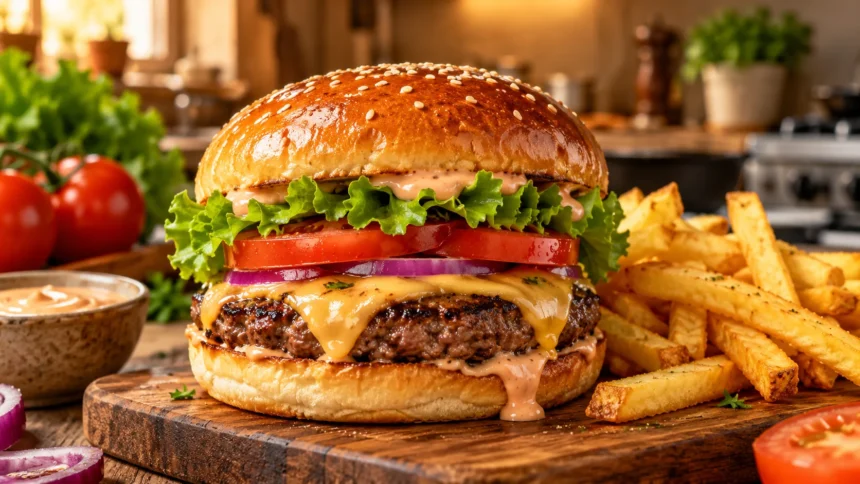
A homemade burger can be just as satisfying as one from your favorite restaurant when you use good ingredients and a simple cooking method. You do not need complicated seasonings or special equipment to create a juicy burger with a flavorful crust, melted cheese, fresh toppings, and a soft toasted bun. A few basic techniques can make a noticeable difference.
The best homemade burgers are simple enough for weeknight dinners but flexible enough for cookouts, family meals, or casual gatherings. You can adjust the meat, cheese, sauces, and toppings according to your preferences. Once you understand how to shape, season, and cook the patties properly, making consistently delicious burgers at home becomes surprisingly easy.
What You Need for a Simple Homemade Burger
Start with ground beef that contains enough fat to remain juicy during cooking. A blend around 80% lean and 20% fat is commonly used for burgers because the fat contributes flavor and moisture. You will also need salt, black pepper, burger buns, and any cheese or toppings you want to add.
For classic toppings, prepare lettuce, tomato, sliced onion, pickles, ketchup, mustard, and mayonnaise. Cheddar, American-style cheese, Swiss, or pepper jack can all work depending on the flavor you prefer. Keeping the ingredient list simple allows the flavor of the beef to remain the main focus.
A skillet, grill, griddle, or cast-iron pan can be used to cook the burgers. A spatula is essential for flipping, while a meat thermometer can help you check doneness safely. You may also want a small bowl for mixing burger sauce and a separate pan or surface for lightly toasting the buns.
How to Choose the Best Ground Beef for Burgers
Fat content is one of the most important factors when choosing beef for homemade burgers. Very lean meat can dry out quickly because there is less fat available to keep the patty moist. Beef with moderate fat generally produces a richer flavor and softer texture when cooked correctly.
Fresh ground beef is ideal, although properly frozen and thawed beef can also work well. Avoid meat that has been repeatedly frozen and thawed because the texture may suffer. If possible, choose beef with a coarse grind rather than an extremely fine texture, as this can create a more satisfying bite.
Handle the meat gently once you begin forming patties. Overmixing or repeatedly pressing the beef can create a dense, tough burger. The goal is to bring the meat together just enough to hold its shape while preserving some of the natural texture of the ground beef.
How to Shape Burger Patties Correctly
Divide the meat into equal portions before shaping so every burger cooks at approximately the same rate. For a standard burger, portions of roughly 4 to 6 ounces work well depending on your preferred size. Gently roll each portion into a loose ball before pressing it into a round patty.
Make each patty slightly wider than the bun because burgers shrink during cooking. Press the center gently with your thumb to create a shallow indentation. This can help the patty maintain a flatter shape instead of swelling significantly in the middle as it cooks.
Avoid packing the meat too tightly. A loosely formed patty tends to stay more tender than one that has been heavily compressed. Once the burgers are shaped, place them on a plate and keep them chilled until you are ready to season and cook them.
How to Season Homemade Burgers
Simple seasoning is usually enough for a good beef burger. Sprinkle both sides generously with salt and freshly ground black pepper shortly before cooking. Seasoning just before the patties hit the pan or grill helps create a flavorful exterior without changing the meat’s texture unnecessarily.
You can also add garlic powder, onion powder, smoked paprika, or another favorite seasoning blend. Keep additional spices moderate so they support rather than overpower the beef. If you are using strongly flavored cheese, sauces, or toppings, simple salt and pepper may be all you need.
Avoid mixing large amounts of seasoning directly into the ground beef unless you specifically prefer that style. Mixing salt deeply into the meat can create a firmer texture. For a classic burger, seasoning the exterior allows the patty to remain tender while developing plenty of flavor during cooking.
How to Cook Burgers in a Skillet
Heat a heavy skillet or cast-iron pan over medium-high heat until it becomes hot. Place the seasoned patties directly into the pan without overcrowding them. The patties should immediately begin sizzling, which helps develop the browned crust that contributes much of the burger’s flavor.
Allow the burgers to cook without moving them constantly. Once the first side has developed a strong brown crust, flip each patty using a spatula. Avoid pressing down on the burgers while they cook because this forces flavorful juices out into the pan.
Continue cooking until the burgers reach your preferred and safe level of doneness. If adding cheese, place a slice on each patty during the final minute and cover the pan briefly. The trapped heat helps the cheese melt evenly without requiring additional cooking time.
How to Grill Homemade Burgers
Preheat the grill so the cooking surface is hot before adding the patties. Lightly clean and prepare the grates according to your grill’s instructions. Place the seasoned burgers over direct heat and leave enough space between them for easier flipping and more even cooking.
Cook the first side until it develops grill marks and releases reasonably easily from the grate. Flip only when necessary rather than turning the burger repeatedly. Frequent flipping is not always harmful, but keeping the process controlled makes it easier to monitor browning and doneness.
Add cheese near the end of cooking and close the lid briefly so it melts. Remove the burgers once they are safely cooked and let them rest for a few minutes. This short rest helps the juices redistribute before the patties are placed inside the buns.
How to Make an Easy Burger Sauce
A simple burger sauce can add plenty of flavor without requiring complicated ingredients. Mix mayonnaise with ketchup and a small amount of mustard. Add finely chopped pickles or relish if you want more acidity and texture, then stir until everything is evenly combined.
You can adjust the sauce according to your preferences. Add a little hot sauce for heat, smoked paprika for a deeper flavor, or pickle juice for extra tang. The advantage of homemade burger sauce is that you can control the sweetness, creaminess, and acidity instead of relying on a single bottled condiment.
Prepare the sauce before cooking the burgers so it is ready during assembly. It can also be made earlier and refrigerated in a covered container. Spreading sauce on both halves of the bun helps distribute flavor throughout every bite without using an excessive amount.
Best Cheese and Toppings for Homemade Burgers
Cheddar is a classic burger cheese because it melts well and provides a strong but familiar flavor. American-style cheese is especially good for smooth melting, while Swiss, mozzarella, provolone, and pepper jack can create different flavor combinations. Use cheese that complements your other toppings rather than competing with them.
Fresh lettuce adds crunch, tomato adds juiciness, and sliced onion provides sharpness. Pickles are especially useful because their acidity balances the richness of the beef and cheese. You can use raw onion for stronger flavor or cook it slowly for a sweeter caramelized topping.
Additional toppings can include sautéed mushrooms, avocado, jalapeños, fried eggs, or crispy onions. However, adding too many toppings can make a burger difficult to eat and may hide the flavor of the meat. Choose a few ingredients that work well together instead of stacking everything available.
How to Toast Burger Buns
Toasting the buns improves both flavor and texture. Cut the buns in half and lightly spread the cut sides with butter or a small amount of oil. Place them cut-side down in a hot skillet or on the grill for a short time.
Watch the buns closely because they can brown quickly. You want a golden, slightly crisp surface rather than a hard or burned bun. Toasting creates a barrier that also helps prevent sauces and burger juices from soaking through the bread immediately.
Brioche, sesame seed buns, potato rolls, and standard burger buns can all work well. Choose buns that are soft enough to bite easily but strong enough to hold the burger. A very thick or tough bun can overpower the patty and make the finished burger less enjoyable.
How to Assemble the Perfect Homemade Burger
Start with the toasted bottom bun and spread a thin layer of burger sauce over it. Add lettuce if you want a layer that helps separate the juicy patty from the bread. Place the hot burger patty and melted cheese directly on top.
Add tomato, onion, pickles, and any additional toppings you have chosen. Spread more sauce on the top bun before placing it over the burger. Keeping wetter ingredients away from the bottom bread can help the burger stay together and reduce sogginess.
Serve the burger immediately while the patty is warm and the cheese is melted. French fries, potato wedges, onion rings, salad, or roasted vegetables all make easy side dishes. Homemade burgers taste best when assembled just before eating rather than sitting for a long time.
Common Homemade Burger Mistakes
One common mistake is overworking the ground beef. Squeezing, kneading, or repeatedly pressing the meat creates a denser patty. Shape each burger gently and stop handling it once it holds together well enough to cook.
Another mistake is pressing the burgers down with the spatula during cooking. This may create dramatic sizzling, but it also pushes juices and fat out of the patty. Let the hot cooking surface create the crust naturally while the inside remains as moist as possible.
Using a cold pan or grill can also reduce browning. The cooking surface should be properly heated before the burgers are added. At the same time, avoid using heat so extreme that the outside burns before the inside reaches a safe temperature.
How to Make Burgers Ahead of Time
Burger patties can be shaped several hours ahead and stored covered in the refrigerator. Place parchment paper between patties if you need to stack them. Wait to season the exterior until shortly before cooking for the best texture.
Toppings and sauces can also be prepared ahead. Slice onions, wash lettuce, prepare tomato slices, and mix burger sauce before dinner. Keeping these ingredients refrigerated in separate containers makes assembly much faster once the burgers finish cooking.
For longer storage, raw patties can be frozen individually and then transferred to freezer-safe packaging. Thaw them safely in the refrigerator before cooking. Preparing patties in advance can make homemade burgers almost as convenient as purchasing ready-made frozen options while giving you more control over ingredients.
Easy Side Dishes for Homemade Burgers
French fries are a classic burger side and can be baked, air-fried, or deep-fried depending on your preferred cooking method. Potato wedges and sweet potato fries are other easy alternatives. Season them simply with salt, pepper, garlic powder, or paprika.
For something lighter, serve burgers with a green salad, cucumber salad, coleslaw, or roasted vegetables. Corn on the cob also works well for summer cookouts. These sides can help balance the richness of a cheese-covered burger without requiring complicated preparation.
You can also serve burgers with pickles, baked beans, or a simple potato salad when feeding a larger group. Choose sides that can be prepared ahead so you are not trying to cook everything at once. This keeps burger night relaxed and easier to manage.
Conclusion
A simple homemade burger can taste amazing when you focus on a few important basics. Choose ground beef with enough fat for flavor, handle the meat gently, season the outside well, and cook the patties on a properly heated skillet or grill. These small details can significantly improve both texture and taste.
Fresh toppings, melted cheese, toasted buns, and a quick homemade sauce complete the burger without making the recipe complicated. You can keep things classic or experiment with different cheeses, vegetables, and seasonings. The basic method remains the same even when you change the flavor combinations.
Once you become comfortable shaping and cooking the patties, homemade burgers can become an easy option for family dinners, weekends, and casual gatherings. Prepare toppings ahead, keep the ingredients simple, and serve the burgers immediately for the best results. A good homemade burger does not require restaurant equipment—just careful cooking and quality ingredients.
FAQs
What ground beef is best for homemade burgers?
Ground beef around 80% lean and 20% fat is a popular choice because it provides enough fat for flavor and moisture. Leaner meat can work but may produce a drier burger.
How do I keep homemade burgers juicy?
Avoid overworking the beef, do not press the patties with a spatula while cooking, and avoid overcooking them. Using ground beef with moderate fat content also helps maintain moisture.
Should I put egg in homemade burger patties?
Egg is generally unnecessary for classic beef burgers because ground beef naturally holds together when shaped properly. Eggs and breadcrumbs are more commonly used in meatloaf-style patties or certain specialty burger recipes.
Why do my burgers puff up in the middle?
Burgers can swell as the meat contracts during cooking. Creating a shallow indentation in the center of each raw patty can help the burger maintain a flatter, more even shape.
Can homemade burger patties be frozen?
Yes. Shape the patties, separate them with parchment paper, and store them in freezer-safe packaging. Thaw them safely in the refrigerator before seasoning and cooking for the best texture.