


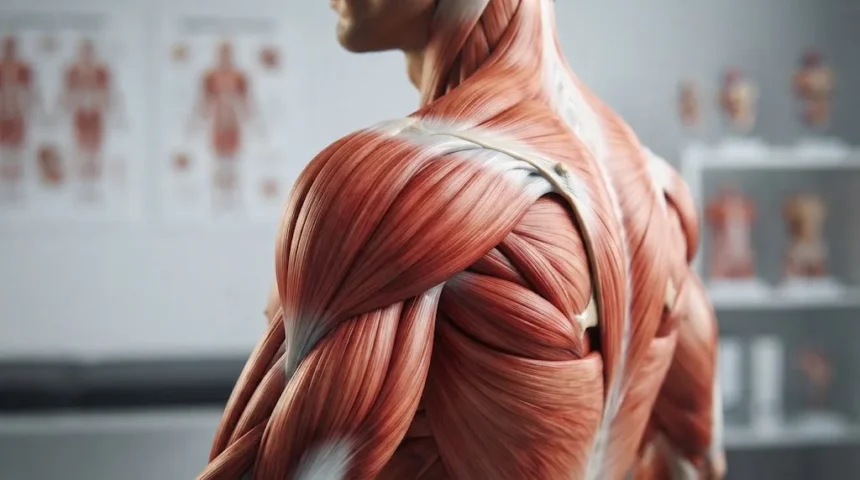
What Are the Deltoids?
The deltoids are large triangular muscles that cover the outer part of each shoulder. They play a major role in lifting, rotating, and stabilizing the arms during everyday movement and exercise. Because of their position and broad attachment points, the deltoids help control the shoulder through a wide range of motions.
Each deltoid is divided into three main sections: the anterior, lateral, and posterior fibers. These sections work together but emphasize different movements depending on arm position. The front fibers assist with lifting the arm forward, the middle fibers help raise it sideways, and the rear fibers contribute to moving the arm backward.
The deltoids are active during many common activities, including reaching for objects, carrying bags, pushing doors, lifting overhead, and throwing. They also contribute to shoulder appearance because they form much of the rounded contour of the upper arm. Strong deltoids can support both functional movement and athletic performance.
Deltoid Muscle Anatomy
The deltoid muscle attaches to several parts of the shoulder region. Its fibers begin around the collarbone, acromion, and spine of the shoulder blade before converging onto the upper arm bone. This broad arrangement allows the muscle to pull the arm in different directions depending on which fibers are most active.
The anterior deltoid originates mainly from the outer portion of the clavicle. The lateral fibers attach around the acromion, while the posterior fibers arise from the spine of the scapula. All three sections insert onto the deltoid tuberosity of the humerus, creating a strong connection between the shoulder girdle and upper arm.
Because the shoulder joint allows extensive movement, the deltoids must coordinate with other muscles rather than working alone. The rotator cuff, trapezius, serratus anterior, pectorals, and upper-back muscles all contribute to smooth shoulder mechanics. Balanced strength across these groups helps the arm move efficiently without relying excessively on one muscle.
Anterior Deltoid Function
The anterior deltoid is located at the front of the shoulder and contributes strongly to shoulder flexion. This means it helps raise the arm forward, such as when reaching toward a shelf or lifting an object in front of the body. It also contributes to internal rotation and horizontal movement across the chest.
Exercises such as front raises, overhead presses, and many pressing movements activate the anterior deltoids. Bench presses and push-ups also involve these fibers because the arms move forward while the shoulders help control the load. This means the front delts often receive significant training even when they are not targeted directly.
Overdeveloping the front deltoids while neglecting the posterior shoulder can create an unbalanced training routine. Most people benefit from combining pressing exercises with pulling and rear-delt work. Balanced programming supports shoulder function and may reduce the tendency to rely too heavily on the anterior shoulder during every upper-body exercise.
Lateral Deltoid Function
The lateral deltoid sits along the outer shoulder and is mainly responsible for lifting the arm away from the body. This movement is called shoulder abduction and occurs when you raise your arm sideways. The middle fibers give the shoulders much of their broad, rounded appearance when developed through resistance training.
Lateral raises are one of the most common exercises used to target this section. Overhead pressing also involves the lateral deltoid, although other muscles share the load. During daily activity, these fibers help with reaching sideways, lifting objects away from the body, and controlling the arm in overhead positions.
The lateral deltoid works closely with the rotator cuff and shoulder blade muscles. As the arm rises, the scapula must rotate while the upper arm remains controlled within the shoulder socket. This coordination helps prevent the deltoid from trying to perform a movement that depends on several muscles working together.
Posterior Deltoid Function
The posterior deltoid is located at the back of the shoulder and contributes to shoulder extension and horizontal abduction. It helps move the arm backward and away from the chest, making it especially important during pulling movements. These fibers also assist with external rotation in certain shoulder positions.
Rows, reverse flyes, face pulls, and rear-delt raises are common exercises that target the posterior deltoid. The muscle works alongside the upper back and rotator cuff to control the shoulder during pulling and reaching motions. Strong posterior delts can support balanced shoulder mechanics, especially in people who perform frequent pressing exercises.
The rear deltoids are sometimes neglected because they are less visible from the front. However, they are important for posture, shoulder stability, and upper-body control. Including pulling and rear-delt exercises can help create a more balanced program than training only the chest, front delts, and pressing muscles.
How the Deltoids Move the Shoulder
The deltoids can produce several movements because each section pulls the upper arm in a different direction. The anterior fibers help move the arm forward, the lateral fibers lift it sideways, and the posterior fibers pull it backward. Together, they allow smooth movement across many planes.
During overhead movement, the deltoids do not simply lift the arm on their own. The shoulder blade rotates upward while the rotator cuff helps keep the humeral head centered. This coordinated movement allows the arm to rise efficiently while spreading the workload across several muscles and joints.
Good shoulder function therefore depends on more than deltoid strength alone. Mobility, shoulder blade control, rotator cuff strength, and upper-back stability all matter. A well-designed training program should include movements that challenge the shoulder from different directions instead of relying on one exercise pattern repeatedly.
Deltoids in Everyday Movement
The deltoids are active whenever you raise or reposition your arms. Reaching into a cupboard, lifting a bag, putting on a jacket, or brushing your hair all require shoulder movement that involves the deltoids. Even simple tasks rely on the muscle’s ability to coordinate with surrounding structures.
Carrying objects also places demand on the shoulders. The deltoids help maintain arm position while other muscles support the shoulder blade and trunk. Repeated carrying can therefore fatigue the shoulder even when the arm is not moving through a large range.
Sports place even greater demands on the deltoids. Throwing, swimming, tennis, volleyball, and strength training all require fast or repeated shoulder movement. Athletes often need both deltoid strength and muscular endurance so the shoulder remains controlled as fatigue develops during longer sessions.
Deltoid Strengthening Exercises
Overhead presses are one of the most effective compound exercises for the deltoids. They train the front and lateral fibers while also involving the triceps and upper back. Dumbbells, barbells, machines, or resistance bands can all be used depending on experience, equipment, and shoulder comfort.
Lateral raises provide more focused work for the middle deltoids. Use light to moderate resistance and raise the arms under control rather than swinging the weights upward. The exercise does not require extremely heavy loads because maintaining smooth movement and shoulder control usually provides enough challenge.
Rear-delt flyes and face pulls can target the posterior fibers. These exercises are especially useful for balancing routines that contain large amounts of pressing. Combining overhead presses, lateral raises, and rear-delt work can train all three sections of the muscle more evenly.
Deltoids and Whole-Body Strength
The shoulders often work as part of full-body movement rather than in isolation. Lifting, carrying, throwing, and overhead pressing require force to travel from the legs and trunk into the upper body. Strong deltoids contribute to this chain by controlling the position of the arm as the rest of the body produces or transfers force.
Balanced training should therefore include lower-body and core work alongside shoulder exercises. Understanding how muscles interact across the body can make strength programs more complete, and this guide to the inner thigh muscles provides useful context on another major muscle group involved in stability and movement.
Whole-body strength can also improve how efficiently you perform demanding tasks. A strong trunk and lower body reduce the need for the shoulders to compensate during lifting or carrying. This does not reduce the importance of deltoid training, but it shows why isolated exercises work best as part of a broader program.
Common Deltoid Injuries
Deltoid strains can occur when the muscle is overstretched or overloaded suddenly. Heavy lifting, throwing, direct impact, or unfamiliar exercise can irritate the fibers. Symptoms may include localized shoulder pain, tenderness, weakness, or discomfort when raising the arm.
Not all shoulder pain comes from the deltoid itself. Rotator cuff problems, biceps tendon irritation, arthritis, joint injuries, and nerve-related conditions can create pain in a similar area. This makes diagnosis difficult when symptoms are severe or do not clearly match a muscle strain.
Mild muscular soreness after exercise usually improves within a few days, especially when training volume was recently increased. Severe weakness, major swelling, bruising, or pain after significant trauma should be evaluated. Persistent shoulder pain that limits movement also deserves professional assessment.
How to Protect Your Deltoids During Training
Warm up before demanding upper-body exercise by gradually increasing movement and resistance. Light shoulder circles, band work, and easy pressing or pulling sets can prepare the muscles for heavier loads. Jumping immediately into maximum-effort lifting may place unnecessary stress on the shoulder.
Use resistance that allows controlled form. Excessive weight can cause shrugging, swinging, or awkward joint positions that shift stress away from the intended muscles. Increase load gradually and prioritize consistent technique rather than choosing weight only based on how heavy it feels.
Recovery also matters because the deltoids are involved in many chest, back, and arm exercises. Training them heavily on consecutive days may create unnecessary fatigue if other workouts already place significant stress on the shoulders. Plan exercise volume so the muscle has enough time to recover and adapt.
Deltoid Flexibility and Mobility
The deltoids themselves can feel tight after repeated training or prolonged positioning. Gentle shoulder stretches can improve comfort, especially when combined with movement through a pain-free range. Cross-body stretches may target the posterior shoulder, while doorway stretches can affect the front of the shoulder and chest.
Mobility should not be forced. If a stretch creates sharp pain, tingling, or a pinching sensation deep inside the joint, reduce the range or stop. Stretching is most useful when it supports comfortable movement rather than becoming a test of how far the shoulder can be pushed.
Strength and mobility should complement each other. Flexible shoulders without adequate control can still feel unstable, while strong muscles with very limited range can make certain tasks difficult. Balanced shoulder training aims to preserve enough mobility while building the strength needed to control that movement.
Conclusion
The deltoids are large shoulder muscles divided into anterior, lateral, and posterior sections. Together, they help lift, rotate, and control the arms during everyday tasks, sports, and strength training. Each section has a slightly different role, which is why balanced shoulder training should include several movement patterns.
Strong deltoids contribute to pressing, pulling, carrying, and overhead activity, but they do not work alone. The rotator cuff, upper back, chest, and shoulder blade muscles all support shoulder movement. A balanced strength program should train these surrounding muscles alongside the deltoids.
Protect the shoulders by progressing resistance gradually, using controlled form, and allowing enough recovery between demanding sessions. Mild soreness is common after exercise, but severe pain, weakness, bruising, or persistent loss of movement deserves medical evaluation. Understanding deltoid anatomy can make shoulder training safer and more effective.
FAQs
What are the three parts of the deltoid?
The deltoid has three main sections: anterior, lateral, and posterior fibers. These correspond to the front, side, and back of the shoulder and contribute to different arm movements.
What is the main function of the deltoid?
The deltoid helps lift and move the arm in several directions. It also contributes to shoulder stability during reaching, pressing, pulling, carrying, and many everyday activities.
What exercises work the deltoids?
Overhead presses, lateral raises, front raises, rear-delt flyes, face pulls, and rows all involve the deltoids. Different exercises emphasize different sections of the muscle.
Can deltoid pain come from another shoulder problem?
Yes. Rotator cuff injuries, biceps tendon problems, arthritis, joint irritation, and nerve conditions can all cause pain near the deltoid region, making persistent symptoms worth evaluating.
How often should you train the deltoids?
Many people train the shoulders two or three times per week depending on overall program volume. Recovery needs vary, especially because the deltoids also work during chest and back exercises.