


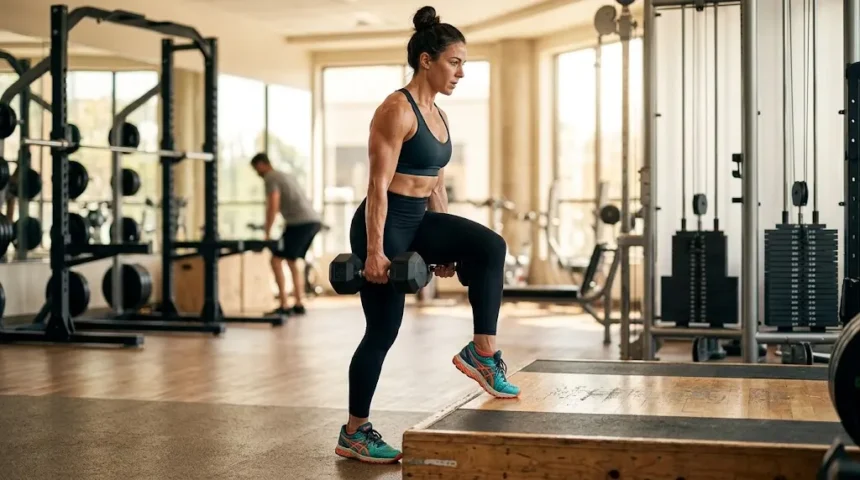
10 Calf Strengthening Exercises for Stronger Legs
Strong calves do far more than improve the appearance of your lower legs. The calf muscles help you walk, run, climb stairs, jump, maintain balance, and push your body forward during everyday movement. They also contribute to ankle stability and help absorb force when your feet contact the ground. Whether you are training for sports, building stronger legs, or simply trying to make daily movement feel easier, calf strengthening exercises deserve a place in your routine. The good news is that effective calf training does not always require complicated gym equipment. Many exercises can be performed with body weight, a step, resistance bands, dumbbells, or machines depending on your fitness level and available equipment.
The calves are often treated as one muscle, but several muscles contribute to lower-leg movement and stability. The gastrocnemius is the larger, more visible calf muscle, while the soleus sits deeper and plays an important role during activities such as standing, walking, and bent-knee movements. Training both muscles through straight-leg and bent-knee exercises creates a more complete approach. Calf strength also depends on controlled ankle movement, balance, range of motion, and gradual increases in training difficulty. Simply bouncing through hundreds of fast repetitions may not produce the same results as deliberate, well-controlled training. The following calf strengthening exercises provide practical options for beginners, gym users, runners, athletes, and anyone who wants stronger, more capable lower legs.
Why Calf Strength Matters for Your Legs
Your calf muscles help produce plantar flexion, which is the movement that points your foot downward and pushes your body away from the ground. This action occurs every time you take a step, climb onto your toes, jump, or accelerate during a run. The gastrocnemius contributes strongly when the knee is relatively straight, while the soleus remains heavily involved when the knee is bent. Together, these muscles help transfer force through the ankle and foot. Weak calves can reduce the efficiency of movements that depend on a strong push-off. Improving calf strength therefore supports much more than isolated lower-leg development. It can make many common lower-body exercises and activities feel more controlled and powerful.
Calf strength also contributes to balance because the muscles continually make small adjustments as your body shifts over your feet. Standing on one leg, walking on uneven terrain, and changing direction all require coordinated ankle and lower-leg control. Stronger calves cannot prevent every fall or ankle injury, but they can improve one important part of lower-limb stability. Single-leg calf exercises are particularly useful because they combine strength with balance demands. This can reveal differences between your right and left sides that are hidden during two-leg exercises. Addressing those differences gradually may improve movement confidence. Balance training is especially valuable when combined with foot, ankle, hip, and overall lower-body strengthening.
Athletes benefit from calf strength because running and jumping repeatedly expose the lower legs to substantial forces. During sprinting, the calves help create rapid force through the ground, while during distance running they contribute to repeated push-off over thousands of steps. Basketball, tennis, football, volleyball, and many other sports also require quick acceleration and changes in direction. Strong calf muscles support these movements, although sport performance depends on the entire kinetic chain rather than one muscle group. Hip strength, hamstrings, quadriceps, foot control, coordination, and technique remain equally important. Calf exercises should therefore complement a complete strength program. Training the calves in isolation while neglecting the rest of the legs is unlikely to produce balanced athletic development.
Calf strengthening may also help people tolerate everyday activities such as walking longer distances or climbing stairs. When muscles are stronger, a given task represents a smaller percentage of their maximum capacity. This can make ordinary movements feel less demanding over time. Older adults may particularly benefit from maintaining lower-leg strength because the calves contribute to walking speed, balance, and the ability to rise onto the toes. However, training should be scaled to the individual rather than copying an advanced athlete’s routine. Stable support, comfortable ranges of motion, and gradual progression are more important than heavy resistance at the beginning. Consistent moderate training can build useful strength without making every workout exhausting.
People recovering from an ankle, Achilles tendon, knee, or lower-leg problem may also encounter calf strengthening as part of rehabilitation. In those situations, exercise selection and loading should follow professional guidance because the appropriate progression depends on the specific injury and stage of healing. A calf raise that is perfectly suitable for a healthy person may be too demanding immediately after surgery or an acute tendon injury. Pain, swelling, and movement restrictions change how exercises should be performed. The exercises in this article are general fitness options rather than individualized rehabilitation prescriptions. If you have persistent lower-leg pain, significant swelling, recent injury, or difficulty bearing weight, seek appropriate evaluation before starting a demanding calf program.
10 Calf Strengthening Exercises to Build Stronger Legs
The standing calf raise is one of the simplest and most effective exercises for building calf strength. Stand with your feet roughly hip-width apart and keep your body tall while holding a wall or stable object for balance if needed. Slowly raise your heels until you are standing on the balls of your feet, pause briefly at the top, and lower with control. Avoid bouncing or allowing your ankles to roll dramatically inward or outward. Beginners can perform the movement with body weight, while stronger trainees can hold dumbbells or use a calf-raise machine. The single-leg calf raise is a natural progression because one leg must lift your entire body. It also helps identify side-to-side differences and increases the strength challenge without requiring large amounts of equipment.
The seated calf raise emphasizes the soleus because the knees remain bent throughout the movement. Sit on a chair or bench with your feet flat, position resistance across the thighs if appropriate, and raise your heels while keeping the balls of your feet on the floor. Pause at the top before lowering slowly until the heels return toward the ground. Dumbbells placed carefully above the knees can provide resistance, while gyms often have dedicated seated calf-raise machines. The bent-knee standing calf raise offers another way to train the soleus without sitting. Bend your knees slightly, maintain that knee angle, and perform controlled heel raises while holding support. Keeping the movement smooth helps ensure that the calves rather than momentum perform most of the work.
The calf raise on a step increases range of motion by allowing the heels to move below the level of the forefoot. Stand with the balls of your feet securely on the edge of a stable step and hold a railing or sturdy support. Lower the heels gradually until you feel a comfortable stretch, then push through the forefoot to rise onto your toes. Do not force the heels into an extreme stretch, particularly if you have Achilles or ankle symptoms. The single-leg step calf raise increases the challenge by performing the same motion with one leg at a time. Start with body weight and use support for balance rather than turning the exercise into a balance test. Resistance can be added later with a dumbbell once you can move through the range smoothly.
The resistance-band plantar flexion is useful when standing calf raises are inconvenient or when you want a lighter option. Sit with one leg extended, loop a resistance band securely around the forefoot, and hold the ends so there is gentle tension. Point the toes away from you against the band, pause, and return slowly without letting the resistance snap the foot backward. This movement trains the calf through ankle plantar flexion while reducing the need to support full body weight. The farmer’s walk on toes provides a more dynamic option for experienced trainees. Rise onto the balls of your feet and walk short, controlled distances while maintaining tall posture, using light weights only when you can stay stable. It challenges calf endurance, ankle control, and balance simultaneously.
The jump-rope calf exercise introduces a faster, more elastic form of calf loading when basic strength and impact tolerance are already adequate. Use small jumps, stay relatively light on the feet, and allow the ankles and knees to absorb each landing rather than repeatedly slamming into the floor. Beginners can start with short intervals and plenty of rest instead of trying to jump continuously for several minutes. The tenth option, calf raises in a split stance, allows you to emphasize one leg while keeping the other foot available for balance. Stand with one foot slightly behind the other, shift more body weight toward the working leg, and raise that heel under control. This can bridge the gap between two-leg and full single-leg calf raises. Across all ten exercises, quality repetitions and gradual progression matter more than chasing a large repetition count.
How to Perform Calf Raises With Better Form
Good calf-raise form begins with a stable foot position. Keep the ball of the foot in firm contact with the floor or platform while allowing the heel to move through a comfortable vertical path. Many people unintentionally roll toward the outside edge of the foot or collapse inward toward the big toe as fatigue develops. A more controlled approach is to keep pressure distributed across the forefoot while maintaining alignment through the ankle. Your toes do not need to grip aggressively. The goal is to create force through the calf while keeping the foot stable. If balance prevents you from focusing on the movement, hold a wall, rail, or machine so stability is no longer the limiting factor.
The upward portion of a calf raise should be deliberate rather than explosive unless you are intentionally training speed or plyometric ability. Push the ground away and rise as high as you comfortably can without shifting your body forward. At the top, pause briefly and feel the calf contract before beginning the lowering phase. A short pause discourages bouncing and makes each repetition more demanding. Keep your knees positioned according to the exercise rather than allowing them to repeatedly bend and straighten. Straight-leg calf raises generally emphasize the gastrocnemius more, while bent-knee variations increase the contribution of the soleus. Using both types over the course of a training week can create more balanced calf development.
The lowering phase deserves as much attention as the upward movement. Allow your heels to descend slowly while resisting gravity rather than simply dropping back to the floor. Controlled eccentric loading increases the time the muscles spend producing force and can make moderate resistance surprisingly challenging. When using a step, lower only through a range that feels comfortable and controlled. You do not need to force a dramatic heel drop to make the exercise effective. People with stiff ankles may initially have a smaller range, which can improve gradually through training and mobility work. If lowering produces sharp pain rather than normal muscular effort or stretching, stop the exercise and determine why before continuing.
Breathing should remain natural during calf strengthening exercises. Exhale during the demanding portion of the movement and inhale as you return if that rhythm feels comfortable. Avoid holding your breath for long periods during ordinary moderate calf training, particularly if you have cardiovascular concerns. Your torso should remain relatively still rather than rocking forward and backward to create momentum. During weighted exercises, brace your trunk enough to maintain posture but avoid unnecessary tension throughout the entire body. The calf should be the primary muscle producing the movement. If your shoulders, lower back, or arms are doing most of the work, the resistance may be too heavy or the exercise setup may need adjustment.
Range of motion should be individualized rather than treated as a competition. Some people can achieve a high heel raise and deep controlled lowering, while others have ankle mobility restrictions or structural differences that produce a smaller motion. Progress comes from training consistently within a useful range and gradually improving strength. Quality tends to deteriorate when people attempt to reach heights they cannot control. The heel may wobble, the knee may bend unexpectedly, or momentum may replace muscular effort. Film a few repetitions from the side or use a mirror if you are unsure about your technique. A consistent, controlled movement path usually provides more useful training than trying to exaggerate the range on every repetition.
How Many Calf Raises Should You Do?
Beginners can usually start with two or three sets of calf exercises performed two or three times per week. A common starting range is around eight to fifteen controlled repetitions per set, although the ideal number depends on resistance and exercise difficulty. The final repetitions should feel challenging while still allowing you to maintain good form. If you can perform thirty easy repetitions without slowing down, the exercise may no longer provide much of a strength challenge. You could progress to a single-leg variation, add resistance, increase range of motion, or slow the tempo. The purpose is not to reach one magical repetition number. The muscles simply need enough appropriate resistance and recovery to adapt over time.
Calves often tolerate relatively frequent training because they are used extensively during walking and standing. However, everyday activity does not mean they cannot become sore or overworked from structured exercise. Someone new to calf training may experience noticeable delayed muscle soreness after only a few sets, especially after slow lowering movements or step variations. Starting conservatively can make it easier to continue training consistently. Adding several hundred calf raises on the first day is unnecessary. Training quality generally falls as extreme repetition counts increase. Gradual progression also provides time for tendons and other tissues to adapt alongside the muscles, which is particularly important when moving toward heavier loads or jumping exercises.
For muscle growth, moderate and higher repetition ranges can both work when sets are challenging enough. Calves respond to mechanical tension just like other skeletal muscles, so progressive overload remains important. One person might use heavy standing calf raises for eight repetitions, while another uses a lighter single-leg variation for fifteen or twenty. Both can provide a meaningful stimulus if effort and technique are appropriate. Including straight-leg and bent-knee exercises can help train the gastrocnemius and soleus more comprehensively. For example, a program might use standing calf raises on one day and seated calf raises on another. Changing the exercise every workout is not necessary because repeating movements makes progress easier to measure.
Athletes may use different calf-training volumes depending on their running, jumping, and sport schedule. A runner already accumulating many miles places repeated loads on the calves before any gym exercises are added. Heavy calf strength work immediately before an important speed session may therefore reduce performance or increase soreness. Scheduling matters just as much as exercise selection. Strength sessions can be placed where there is enough recovery before demanding practices or races. During periods of high sport volume, fewer calf sets may be appropriate. During general strength phases, the athlete may tolerate more resistance work. The best program accounts for total lower-leg stress rather than considering gym exercises in isolation.
Progress can be tracked using repetitions, resistance, range of motion, tempo, and exercise difficulty. If you initially perform eight single-leg calf raises and eventually complete fifteen controlled repetitions, your strength endurance has improved even if you never added weight. Later, holding a dumbbell can create another progression. You can also increase the pause at the top or slow the lowering phase to make the same resistance harder. Progress should happen gradually rather than changing several variables at once. Keeping a basic training record can make improvements easier to recognize. When performance stops changing for several weeks, review sleep, recovery, exercise selection, total volume, and nutrition before assuming that you simply need to train the calves every day.
Common Calf Training Mistakes to Avoid
Bouncing through repetitions is one of the most common calf-training mistakes. Rapid bouncing uses elastic energy and momentum, which can reduce the amount of controlled muscular work performed during each repetition. This is especially common when people chase very high rep counts or use resistance that is too heavy. Slowing down immediately exposes whether the muscles can actually control the load. Aim for a deliberate rise, short contraction at the top, and controlled lowering during standard strength work. Fast calf actions have a place in jumping and athletic training, but they should be programmed intentionally rather than appearing because technique has deteriorated. Building a foundation of strength first makes explosive training more productive.
Using only partial repetitions is another common problem. Some trainees move the heels only a few centimeters because the weight is too heavy to control through a fuller range. Partial-range training can have specific uses, but it should not accidentally replace normal calf raises. Lowering the resistance often allows better movement and a stronger contraction. At the opposite extreme, forcing the heels excessively far below a step can create unnecessary discomfort. The goal is a comfortable, controlled range that challenges the muscle. Range may improve with practice, but forcing it does not automatically accelerate progress. If one ankle has dramatically less movement than the other, addressing mobility or previous injury history may be useful.
Training only standing calf raises can leave the program incomplete. Straight-leg exercises emphasize the gastrocnemius, but the soleus also contributes substantially to lower-leg strength and endurance. Bent-knee movements such as seated calf raises help target this deeper muscle more directly. Including both variations is especially useful for runners and people who want more complete calf development. This does not mean you need five different calf exercises during every workout. One straight-leg and one bent-knee movement across the week can provide a practical foundation. Variety should serve a purpose rather than simply making the routine more complicated. Consistent execution and progression usually matter more than using a large exercise menu.
Ignoring left-to-right differences can also limit progress. During two-leg calf raises, the stronger leg may quietly perform more work, allowing the weaker side to remain undertrained. Single-leg calf raises are useful for revealing these differences. If one side performs noticeably fewer repetitions or has poorer control, begin with that side and use a manageable workload. You do not necessarily need to perform excessive extra work on the weaker leg. Consistent unilateral training may gradually reduce the difference. Large or sudden strength differences accompanied by pain, numbness, or previous injury deserve professional assessment. Strength asymmetry can have many causes, and not every difference should be treated with more exercise alone.
Ignoring pain is another mistake, especially when training the Achilles tendon and lower leg. Muscular burning and fatigue during calf raises can be normal, but sharp pain, sudden popping, significant swelling, or worsening pain after training is different. Continuing to load an injured area aggressively can make recovery more difficult. Achilles tendon symptoms in particular deserve careful management because tendon loading often requires a structured progression rather than random high-volume exercise. Pain near the calf can also occasionally have causes unrelated to exercise. Sudden one-sided calf swelling, warmth, redness, and unexplained pain can require urgent medical evaluation because a blood clot is one possible cause. Exercise should never be used to “work through” symptoms that could represent a medical emergency.
How to Make Calf Exercises Harder as You Get Stronger
Adding external resistance is one of the simplest ways to progress calf strengthening exercises. Once bodyweight calf raises feel easy, hold a dumbbell, kettlebell, or other appropriate weight while maintaining stable technique. Gym users can progress to standing or seated calf-raise machines that make load changes straightforward. Start with small increases because calves can feel dramatically different after only a modest change in resistance. The goal is to make the final repetitions challenging without sacrificing range or control. If adding weight causes bouncing, shortened repetitions, or ankle wobbling, reduce the load. Gradual progression allows the muscles and connective tissues to adapt together rather than forcing rapid increases that the rest of the lower leg may not tolerate.
Moving from two legs to one leg is another effective progression. A two-leg calf raise distributes body weight between both sides, whereas a single-leg version makes one calf support nearly the entire task. This can substantially increase difficulty even without added weights. Use a hand for balance so the exercise remains focused on calf strength rather than turning into an unnecessary stability challenge. Once you can perform controlled single-leg repetitions, you can add resistance gradually. Single-leg work is also useful when equipment options are limited at home. A step, stable support, and your own body weight can provide a surprisingly demanding workout when the movement is performed slowly through a comfortable range.
Tempo manipulation can make calf raises harder without increasing the load. Try taking three seconds to lower the heel, pausing briefly in the stretched position, rising smoothly, and holding the top contraction for another second. This removes much of the momentum that makes fast repetitions easier. Isometric holds can also be added by staying on the balls of the feet for several seconds at the top of a repetition. These techniques increase muscular effort and can be useful when only light weights are available. However, slower does not automatically mean better in every context. Athletes also need faster force production, so tempo training should complement rather than replace sport-specific explosive movements once an appropriate strength foundation exists.
Increasing range of motion can provide another progression when ankle mobility allows it comfortably. Performing calf raises on a step lets the heel travel farther than it can on a flat floor. This can increase the amount of work performed during each repetition. The change should be introduced gradually, particularly if you are accustomed only to floor-level calf raises. Avoid dropping forcefully into the bottom position because the Achilles tendon and calf are under substantial tension there. Use support and maintain a smooth tempo. If increased range consistently produces tendon pain or pinching around the ankle, return to a comfortable range and determine whether mobility, technique, or another issue is responsible before progressing.
More advanced trainees can eventually introduce hopping, skipping, jumping, and other plyometric exercises when appropriate for their goals. These movements train the calf-Achilles complex to store and release energy rapidly rather than only producing slow strength. Jump rope, pogo hops, bounds, and sport-specific jumps can all increase the demand on the lower legs. Plyometrics should not be the first progression for someone who cannot yet perform basic controlled calf raises. Landing ability, overall leg strength, body weight, training history, and injury history all influence readiness. Begin with low volumes and allow adequate recovery between sessions. Explosive exercises create more impact than ordinary calf raises, so increasing both training volume and intensity simultaneously can overload the lower legs unnecessarily.
Build a Simple Calf Strengthening Routine
A beginner calf routine can be very simple. Start with standing calf raises for two or three sets of ten to fifteen repetitions, using a wall for balance if necessary. Add seated calf raises for another two or three sets to include more bent-knee work. Perform the routine twice each week with at least some recovery between sessions. Focus on smooth movement rather than trying to reach fatigue as quickly as possible. When all sets become easy, add a few repetitions or progress to a slightly harder version. This routine can be added after a general lower-body workout without taking much extra time. Consistency over several months will usually matter more than completing a huge amount of work during one week.
An intermediate routine can combine strength, unilateral control, and a larger range of motion. Begin with weighted standing calf raises, followed by seated calf raises and single-leg step calf raises. Use challenging but manageable resistance and keep the total number of hard sets appropriate for your overall training program. Some people may perform three exercises in one session, while others split them across two days. If your legs are already heavily trained with squats, lunges, running, or sports, additional calf volume may need to remain moderate. Notice whether performance is improving from week to week. More training is only useful when you can recover from it well enough to adapt.
Runners can build calf training around their running schedule rather than treating the two as separate activities. Heavy calf raises may fit well after an easier run or on a strength-training day. Seated calf raises can help strengthen the soleus, which works extensively during running. Single-leg exercises can improve control and expose differences between sides. Jump rope or low-level plyometrics may be added later when appropriate, but they increase total impact and should be counted as part of the lower-leg workload. Avoid introducing several new exercises during a sudden increase in running mileage. The calves and Achilles tendons need time to adapt to both strength and endurance demands.
People training at home can create an effective program without a calf machine. A sturdy step provides increased range of motion, while a backpack or dumbbell can add resistance. Resistance bands can be used for seated plantar flexion, and single-leg variations make bodyweight training significantly harder. A chair, wall, or railing provides balance support. The main limitation of home training usually appears when the trainee becomes strong enough that additional resistance is difficult to create safely. At that point, heavier dumbbells or gym equipment may make progression more convenient. Until then, tempo, unilateral exercises, pauses, and increased range provide several ways to keep training challenging without purchasing specialized equipment.
Recovery should remain part of the routine. Calves may feel tight or sore after a new exercise, but soreness does not determine whether a workout was effective. Allow enough time for performance to return before repeating very demanding sessions. Sleep, adequate protein, sufficient calories, hydration, and overall training management support muscular adaptation. Light walking may feel comfortable during mild post-workout soreness, while aggressive stretching is not necessary to prove that you are recovering. If soreness becomes progressively worse or affects normal walking, reduce the workload and reassess the program. A sustainable routine should make your calves stronger over time without constantly leaving you unable to move normally between sessions.
Frequently Asked Questions About Calf Strengthening Exercises
What is the best exercise for strengthening calves?
Standing calf raises are one of the best starting exercises because they are simple, scalable, and effective for developing calf strength. Combining them with a bent-knee movement such as seated calf raises creates a more complete routine by training both the gastrocnemius and soleus.
How many calf raises should I do per day?
You do not need to perform calf raises every day to become stronger. Two or three focused sessions per week with several challenging sets can be enough for many people, with volume adjusted according to experience, recovery, and other physical activity.
Do calf raises make your calves bigger?
Calf raises can contribute to calf muscle growth when performed consistently with sufficient resistance, progressive overload, and adequate nutrition. Genetics also influence calf shape and size, so the amount of visible growth differs from person to person.
Can I strengthen my calves without weights?
Yes, bodyweight exercises such as single-leg calf raises, step calf raises, split-stance calf raises, and controlled toe walking can create substantial resistance. You can make them harder by increasing range of motion, slowing the tempo, adding pauses, or progressing from two legs to one.
How long does it take to strengthen your calves?
Strength improvements can begin within several weeks of consistent training, although visible muscle growth generally takes longer. Your starting level, training frequency, exercise difficulty, nutrition, sleep, and consistency all influence how quickly progress becomes noticeable.