


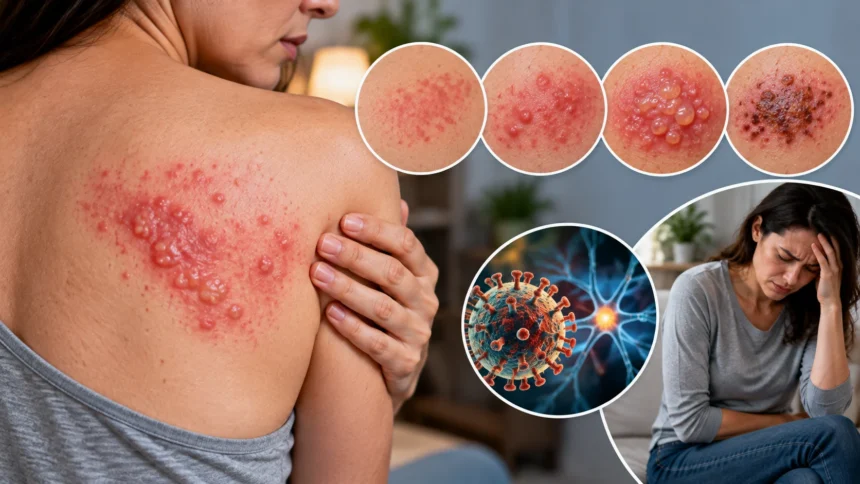
Shingles Images: Early Signs, Rash Stages & Symptoms
Shingles images often show a distinctive band of painful red or discolored skin covered with clusters of small fluid-filled blisters. However, shingles does not look exactly the same in every person or at every stage, which is why comparing a rash with online pictures cannot confirm a diagnosis. The appearance changes as the rash progresses from early redness or bumps to blisters, crusting, and healing skin. Shingles also tends to follow a particular nerve distribution, usually appearing on one side of the torso or face rather than spreading evenly across the body. Pain, burning, itching, tingling, or unusual skin sensitivity may begin before anything visible appears. Recognizing this combination of symptoms can help people seek treatment earlier.
Shingles, medically called herpes zoster, occurs when the varicella-zoster virus becomes active again after remaining dormant in nerve tissue following chickenpox. The virus can reactivate years or decades after the original infection, particularly as immune protection against it declines. A typical shingles rash develops within one or two neighboring dermatomes, which are areas of skin supplied by particular sensory nerves. This creates the characteristic stripe, patch, or belt-like distribution seen in many shingles rash pictures. The eruption usually remains on one side of the body and often stops near the midline. Some people experience relatively mild skin changes, while others develop dense clusters of painful blisters and considerable nerve pain.
The location of the rash matters as much as its appearance because shingles affecting the forehead, nose, eye area, or ear can cause serious complications. Antiviral treatment is most useful when started promptly, ideally early after the rash begins, so waiting several days for the rash to “look exactly like a picture” may delay helpful care. People with weakened immune systems can also develop more widespread or severe shingles than the classic examples commonly shown online. This guide explains what shingles looks like, early signs before blisters appear, the different rash stages, common locations, associated symptoms, conditions that can resemble shingles, treatment, healing, and warning signs requiring urgent attention. The aim is to help readers recognize patterns without encouraging diagnosis from images alone.
What Does a Shingles Rash Look Like?
A typical shingles rash initially looks like an area of irritated, red, pink, reddish-brown, purple, or otherwise discolored skin, depending partly on skin tone. Small raised spots then begin to develop within the affected region, eventually forming groups of fluid-filled blisters known as vesicles. The blisters often appear close together rather than being scattered randomly over the entire body. Many people describe the pattern as a stripe, belt, patch, or cluster following one side of the chest, back, abdomen, neck, or face. The surrounding skin may look inflamed and feel unusually tender. Importantly, pain or sensitivity can be much stronger than the visible rash appears to justify.
The clustered arrangement is one of the more recognizable features in shingles images. New blisters may continue developing for several days, meaning a person can have fresh vesicles beside older ones that are beginning to cloud, break, or dry. Individual blisters are often relatively small, but groups can merge visually into larger inflamed patches. The skin underneath may become swollen or intensely irritated. Scratching, friction from clothing, or rupturing of the vesicles can make the area look more raw and increase the possibility of secondary bacterial infection. Keeping the affected skin reasonably clean and avoiding unnecessary manipulation of the blisters can help protect the healing surface.
Another important visual clue is that shingles usually follows a dermatome rather than forming a perfectly circular or symmetrical rash. On the torso, this may create a horizontal or slightly diagonal band running from the spine around one side of the chest or abdomen. It generally does not form a matching band on the opposite side. On the face, shingles may affect part of the forehead, scalp, eyelid, cheek, or other region supplied by a particular branch of a cranial nerve. Because different nerves supply different areas, two cases of shingles can look very different despite being caused by the same virus. Distribution therefore provides useful information alongside color and blister appearance.
Shingles can be harder to recognize on darker skin because inflammation may not appear bright red. Instead, affected areas can look purple, grayish, dark brown, or simply deeper in color than nearby skin. Blisters, swelling, texture changes, and the one-sided pattern may be more noticeable clues than redness alone. After the rash heals, temporary darker or lighter pigmentation can remain, particularly when inflammation has been substantial. These changes may persist longer than the active blisters themselves. Medical descriptions that focus only on a “red rash” can therefore be misleading. Shingles should be assessed using the entire pattern of pain, distribution, texture, blistering, timing, and other symptoms.
Not every case produces dramatic blisters. Some people develop a relatively sparse eruption with only a few visible lesions, while others experience significant nerve pain with minimal skin findings. Rarely, symptoms resembling shingles nerve pain can occur without the typical rash, a presentation sometimes called zoster sine herpete. This is difficult to recognize without medical evaluation because many other conditions can cause localized burning, tingling, or pain. Conversely, a blistering rash does not automatically mean shingles because herpes simplex, contact dermatitis, insect reactions, and several other skin conditions can look similar. Pictures are most useful for understanding common patterns rather than serving as a substitute for clinical assessment.
Early Signs of Shingles Before the Rash Appears
One of the earliest signs of shingles is often abnormal sensation in the area where the rash will later develop. A person may notice burning, tingling, itching, stinging, aching, or unusually sensitive skin several days before visible lesions appear. Even light contact from clothing, bedding, or shower water may feel unpleasant. Some people describe the sensation as an electrical, shooting, or deep nerve pain rather than ordinary skin irritation. Because nothing may be visible yet, the discomfort can initially be mistaken for a pulled muscle, pinched nerve, kidney problem, heart issue, or another source of localized pain. The later appearance of a one-sided rash often makes the pattern easier to recognize.
The early pain usually follows the same dermatome in which the rash eventually appears. For example, someone developing shingles on the left side of the chest might first notice burning along a narrow band extending from the back toward the ribs. Another person may experience sensitivity on one side of the forehead or scalp before facial lesions become visible. The pain can be mild in some cases and severe in others. Older adults may experience particularly significant nerve discomfort. A distinctive feature is that the skin itself can become hypersensitive even though there is no obvious injury. This neurological quality reflects the involvement of sensory nerves as the varicella-zoster virus becomes active again.
General symptoms can also appear during the early phase. Some people experience headache, fatigue, malaise, chills, mild fever, or an upset stomach around the time the skin symptoms begin. Sensitivity to light may occur in some cases, particularly when neurological symptoms accompany the illness. These nonspecific symptoms can easily resemble the beginning of another viral infection, especially before the characteristic rash develops. Not everyone experiences systemic symptoms, so their absence does not rule out shingles. Likewise, having fatigue and a headache without localized nerve pain or a rash does not specifically suggest shingles. The overall pattern becomes more informative when abnormal skin sensation and a localized eruption develop together.
The first visible skin changes may be subtle. Instead of immediately forming obvious fluid-filled blisters, the area can begin with patches of discoloration and small raised bumps. During this stage, shingles may resemble an allergic rash, heat rash, insect bites, or general skin irritation. Over the next day or two, the bumps can develop into more characteristic vesicles. Taking note of whether the eruption stays within one side of the body and whether pain preceded the skin changes can help a clinician assess the pattern. Photographing the rash as it develops may also help document progression for a medical appointment, although photographs should never delay seeking care when symptoms involve the eye or other urgent areas.
Early recognition matters because antiviral medicines work best when treatment begins promptly. People who develop unexplained one-sided burning or pain followed by clustered blisters should contact a healthcare professional rather than waiting until every stage has developed. The same advice is especially important for adults at greater risk of complications, including older people and those with weakened immune systems. Even if more than a few days have passed, medical evaluation may still be worthwhile, particularly if new blisters continue forming or complications are suspected. Treatment decisions depend on the person’s age, health, rash location, symptom severity, and timing. Online shingles images can raise suspicion, but a healthcare professional should guide diagnosis and treatment.
Shingles Rash Stages From First Bumps to Healing
The first visible rash stage often begins with localized discoloration and small raised spots within the area of abnormal nerve sensation. The skin may look inflamed before clear blisters become visible. At this point, people sometimes believe they have developed an insect bite, allergic reaction, or irritation from clothing. The combination of burning pain and a one-sided distribution can provide a stronger clue than the appearance alone. Within a relatively short period, the raised areas may become more numerous and begin transforming into vesicles. Because the rash develops over time, an image captured early in the process can look quite different from a photograph taken only two days later.
During the blister stage, multiple small vesicles filled with clear fluid develop on the irritated skin. New blisters can continue appearing for approximately three to five days, so lesions may be at different stages simultaneously. The clusters can look similar to droplets sitting on an inflamed surface, although individual appearances vary. Blisters may become cloudy as they age and can rupture naturally through movement or friction. The fluid contains varicella-zoster virus, so direct contact with active lesions can transmit the virus to someone who lacks immunity, potentially causing chickenpox rather than shingles. Covering the rash when feasible and practicing careful hand hygiene can reduce transmission risk while lesions remain active.
As the active blistering phase ends, the vesicles begin drying and forming crusts or scabs. This commonly occurs within roughly seven to ten days after the rash develops. The crusted area can look darker, rougher, and less fluid-filled than earlier shingles images. Itching may become more noticeable during healing even when the sharpest pain has improved. Picking at scabs can delay healing and increase the possibility of bacterial infection or skin discoloration. Loose clothing and gentle skin care are often more comfortable than rubbing or scratching the affected area. Once every lesion has dried and crusted, the risk of transmitting varicella-zoster virus from active blister fluid drops substantially.
The skin usually continues healing over the following weeks, with many uncomplicated shingles rashes resolving within approximately two to four weeks. Scabs gradually fall away as healthier skin develops underneath. Temporary discoloration, sensitivity, itching, or altered sensation can remain after the visible eruption has disappeared. Some people recover with little lasting evidence, while others notice darker or lighter marks that fade slowly. Deep scratching or secondary infection can make scarring more likely. The disappearance of the rash does not always mean every symptom has ended because the affected nerve can remain irritated. This is particularly important when pain continues long after the skin has healed.
Postherpetic neuralgia is persistent nerve pain that remains after the shingles eruption resolves and is the most common significant complication. The pain may feel burning, stabbing, aching, or electrically sensitive, and even light touch can sometimes become uncomfortable. Risk increases with age and tends to be greater after more severe shingles episodes. Persistent pain does not mean the skin infection is still actively spreading. Instead, the nerves affected during shingles may continue generating abnormal pain signals after visible lesions have disappeared. Anyone experiencing ongoing pain should speak with a healthcare professional because treatments specifically aimed at nerve pain may be available. Recovery therefore needs to be judged by both skin healing and neurological symptoms.
Where Shingles Appears on the Body
The torso is one of the most common locations for shingles. Rash images frequently show a band extending along one side of the rib cage, chest, abdomen, or back. Because the virus travels along a sensory nerve, the eruption often follows a curved path rather than spreading randomly across the trunk. The band may begin near the spine and wrap toward the front without crossing substantially to the opposite side. People sometimes mistake early chest shingles for muscle strain because pain can start before the rash. If chest pain is new or concerning, however, it should not automatically be assumed to be shingles because heart, lung, and other conditions can also cause significant chest discomfort.
Shingles can also develop on the neck, shoulder, arm, hip, buttock, or leg depending on which nerve becomes involved. These locations sometimes cause diagnostic confusion because localized pain may initially resemble sciatica, joint pain, tendon problems, or another musculoskeletal complaint. Once the blistering rash appears within the same nerve distribution, shingles becomes easier to suspect. The eruption can be small and localized or extend over a longer strip of skin. Shingles usually remains unilateral, meaning one side is affected. A widespread rash involving many unrelated areas is less typical and deserves medical assessment, particularly in people with weakened immune systems, because disseminated herpes zoster can be more serious.
Facial shingles deserves greater caution because some branches of the trigeminal nerve supply the forehead, eyelid, nose, and eye structures. A rash on one side of the forehead or around the eye can represent herpes zoster ophthalmicus. Symptoms may include eyelid swelling, eye redness, tearing, light sensitivity, eye pain, blurred vision, or decreasing vision. Lesions on the tip, side, or root of the nose can also signal involvement of a nerve branch associated with the eye. Ocular complications can threaten vision, so shingles near the eye should receive prompt professional evaluation. People should not apply ordinary skin creams or eye drops around the affected eye without appropriate medical advice.
Shingles involving nerves around the ear can cause additional problems. A person may develop painful blisters on or near the ear along with ear pain, hearing changes, dizziness, ringing in the ear, or weakness of facial muscles. When shingles affects the facial nerve near the ear and produces characteristic neurological symptoms, the condition may be called Ramsay Hunt syndrome. Prompt medical treatment is important because facial movement and hearing can be affected. Ear symptoms should therefore not be treated as a routine skin rash simply because a few blisters are visible. Difficulty closing one eye, facial drooping, significant dizziness, or sudden hearing changes should lead to rapid medical assessment.
Widespread shingles is uncommon in otherwise healthy people but can occur more readily when immune function is significantly weakened. Instead of remaining within one or two neighboring dermatomes, lesions can appear in multiple separated areas and may resemble widespread chickenpox. This presentation can be associated with greater risk of internal complications and may require more intensive treatment. People receiving certain cancer therapies, transplant medications, high-level immune-suppressing treatment, or living with other significant immune problems should contact their healthcare team promptly if they suspect shingles. Classic online images showing one neat stripe are therefore not representative of every case. Immune status and rash distribution are important parts of deciding how urgently the condition should be evaluated.
Shingles Symptoms Beyond the Visible Rash
Pain is often the symptom people remember most strongly about shingles. The affected skin may feel burning, stabbing, aching, throbbing, or intensely sensitive even when the visible rash covers only a small area. Some people describe electrical jolts traveling through the affected dermatome. Others notice that clothing or a bedsheet touching the skin causes disproportionate discomfort, a phenomenon related to altered nerve sensitivity. Pain severity varies considerably, and a mild-looking rash can still be extremely uncomfortable. Conversely, some individuals have prominent blisters with relatively little pain. The mismatch between appearance and discomfort is another reason shingles should not be judged solely from photographs.
Itching and tingling are also common and may occur before, during, or after the blistering stage. Itching can become particularly frustrating as lesions begin crusting and healing. Scratching should be avoided as much as possible because opening the skin can increase irritation and the possibility of bacterial infection. Gentle cool compresses and other clinician-recommended comfort measures may be useful for some people. Numbness or altered sensation can occur in the affected region as well. These sensory symptoms reflect nerve involvement rather than ordinary superficial dermatitis. Persistent or worsening neurological changes deserve professional evaluation, particularly when weakness or problems with movement accompany the sensory symptoms.
Headache, fever, chills, fatigue, and general malaise can accompany shingles, especially around the beginning of the illness. Some people report feeling unwell before they know a rash is developing. Appetite changes or an upset stomach may also occur. These symptoms are nonspecific and can resemble many infections, which means they contribute more diagnostic value after the characteristic localized rash appears. Severe systemic illness is less typical of uncomplicated shingles and should raise concern for complications or another condition. People with widespread rash, high fever, confusion, breathing difficulty, or significant weakness should seek medical evaluation rather than assuming these symptoms represent a routine shingles episode.
Sleep can become difficult because nerve pain often continues when a person lies down and may be aggravated by contact with clothing or bedding. Reduced sleep can worsen fatigue, concentration, mood, and overall pain tolerance, making even a relatively localized rash disruptive to daily life. People may also avoid normal movement because clothing rubbing against the lesions is uncomfortable. Proper pain management is therefore an important part of shingles treatment rather than an optional comfort measure. A clinician can recommend appropriate treatments based on pain severity and medical history. When pain persists after the rash has healed, the management approach may change because postherpetic neuralgia behaves differently from acute skin inflammation.
Psychological stress can also develop when shingles symptoms are severe or long-lasting. Persistent nerve pain can interfere with work, exercise, sleep, social activities, and routine household tasks. Facial shingles may create additional worry because of visible skin changes and concern about eye or ear complications. People with postherpetic neuralgia can become frustrated when the rash looks healed but pain continues. These experiences are medically meaningful and should be discussed during follow-up care. Effective treatment should consider sleep, functioning, mood, and quality of life alongside the appearance of the skin. Shingles is fundamentally a nerve and viral disease with skin manifestations, not merely a temporary cosmetic rash.
Shingles vs Other Rashes That Can Look Similar
Herpes simplex can resemble shingles because both conditions can produce grouped fluid-filled blisters and both are caused by herpes-family viruses. Herpes simplex commonly recurs around the lips or genital area but can appear elsewhere, making visual distinction difficult in some cases. Shingles more typically follows a unilateral dermatome and often causes significant localized nerve pain before the eruption. Laboratory testing can help when the presentation is uncertain. People should avoid assuming that every clustered blister is shingles or that every recurrent blister is herpes simplex. An accurate diagnosis matters because counseling, recurrence patterns, and management can differ between the conditions.
Contact dermatitis can also produce redness, itching, swelling, and fluid-filled blisters, particularly after exposure to poison ivy, chemicals, adhesives, cosmetics, or other irritants and allergens. Unlike classic shingles, contact dermatitis often corresponds to the area where something touched the skin rather than following a sensory nerve. Itching may dominate more strongly than deep nerve pain. Linear streaks can develop after plant exposure and may initially resemble a stripe of shingles. Exposure history therefore provides useful clues. However, severe contact dermatitis and shingles can overlap visually enough that professional assessment may still be necessary, particularly when the rash is painful, localized, or associated with neurological symptoms.
Insect bites can form groups of itchy bumps that resemble the earliest stage of shingles. Bites may appear after sleeping, outdoor activity, travel, or contact with an infested environment and can occur on exposed skin in clusters or lines. They typically do not progress through the same dermatomal blistering pattern associated with herpes zoster. Localized allergic reactions can nevertheless create swelling and blister-like lesions. Pain before the rash is less characteristic of ordinary bites than it is of shingles. Rather than comparing the size of individual bumps, consider distribution, sensation, timing, exposure history, and whether new fluid-filled vesicles continue appearing along one side of the body.
Impetigo and other bacterial skin infections can create blisters, sores, crusting, and inflamed skin. Impetigo often develops characteristic crusted lesions and can spread through direct contact, particularly among children, although adults can also be affected. Shingles lesions themselves can become secondarily infected with bacteria, causing increasing redness, warmth, swelling, pus, or worsening tenderness after the original eruption develops. This means bacterial infection and shingles are not always mutually exclusive. If a rash becomes increasingly swollen or painful rather than gradually drying and healing, medical evaluation is appropriate. Fever developing alongside worsening skin inflammation can also suggest a secondary problem requiring attention.
Eczema, heat rash, fungal infections, folliculitis, and several autoimmune or inflammatory skin conditions can occasionally be confused with shingles depending on appearance and location. The most useful shingles clues remain a painful or unusually sensitive one-sided distribution followed by grouped vesicles within a dermatome. Still, exceptions occur, particularly in immunocompromised people and those with subtle eruptions. Dermatologists and other healthcare professionals can examine lesion shape, distribution, timing, and associated symptoms more reliably than an image comparison tool. When confirmation is important, testing of lesion material for varicella-zoster virus can sometimes be performed. A photo can suggest possibilities, but the complete clinical pattern determines whether shingles is actually the most likely diagnosis.
Shingles Treatment and What Helps the Rash Heal
Antiviral medication is the main treatment used to reduce viral activity during an acute shingles episode. Common prescription options include acyclovir, valacyclovir, and famciclovir. Treatment is generally most effective when started promptly, ideally within about seventy-two hours after the rash appears. Antivirals can shorten the period of active lesion formation, support faster healing, and reduce the severity of acute pain. Treatment may still be appropriate later in certain circumstances, including ongoing development of new blisters or suspected eye, neurological, or other complications. Because these are prescription medicines with individual dosing considerations, people should contact a healthcare professional rather than using leftover antiviral medication from another illness.
Pain treatment depends on severity and the person’s medical history. Mild discomfort may sometimes be managed with appropriate nonprescription pain relief, while more significant nerve pain can require prescription treatment. Healthcare professionals may use medications that specifically influence nerve-pain signaling when symptoms are severe or persistent. Postherpetic neuralgia may require a different treatment approach from the acute shingles rash. People with kidney disease, stomach ulcers, medication interactions, pregnancy, or other health concerns should ask a clinician or pharmacist before selecting over-the-counter pain medication. The goal is to keep pain manageable enough for sleep and ordinary activity without creating avoidable medication-related risks.
Skin care should be gentle while the blisters are active. Keeping the rash clean and reasonably dry can help reduce irritation, while loose clothing limits friction against sensitive skin. Cool wet compresses or soothing baths may provide temporary relief for some people. Blisters should not intentionally be punctured because opening them can irritate the skin and create additional opportunities for bacterial contamination. Avoid applying harsh chemicals or unproven home remedies that can burn already damaged skin. If a topical product causes increased stinging, swelling, or irritation, stop using it and seek appropriate advice. Medical treatment addresses the virus; supportive skin care mainly improves comfort and protects healing tissue.
People with active shingles should also take steps to reduce transmission of varicella-zoster virus. A person exposed to active shingles does not generally “catch shingles” directly; someone without immunity can instead develop chickenpox after acquiring the virus. Risk is greatest from contact with active blister material before the lesions have fully crusted. Covering the rash where practical, washing hands regularly, and avoiding scratching can reduce exposure. Extra caution is appropriate around pregnant people without immunity, newborns, and individuals with significantly weakened immune systems. Once all blisters have dried and crusted, the likelihood of transmission from the skin drops markedly.
Recovery often requires patience because the appearance of the skin improves faster than nerve symptoms in some people. Most uncomplicated rashes heal over several weeks, but fatigue, sensitivity, itching, or discomfort may continue during that period. Returning immediately to intense activity is not necessary if pain or systemic symptoms make normal exercise uncomfortable. Adequate rest, hydration, nutrition, and prescribed medication can support recovery, although no particular food or supplement has been proven to make shingles disappear overnight. Follow-up is important when pain remains severe, the rash spreads, new blisters keep appearing, or healing does not progress as expected. Persistent nerve pain should be treated as a legitimate complication rather than something a person simply has to tolerate.
Shingles Complications and When to Seek Medical Care
Shingles involving the eye is one of the most important situations requiring prompt medical attention. A rash on one side of the forehead, eyelid, scalp, or nose may involve the ophthalmic branch of the trigeminal nerve. Eye redness, pain, light sensitivity, tearing, blurred vision, or decreased vision increase the urgency. Inflammation can affect the cornea and other structures within the eye and, without appropriate management, can threaten vision. Even if the eye initially feels normal, a shingles eruption close to it deserves timely assessment because ocular involvement may develop during the illness. Waiting for the rash to finish blistering before seeking care is not advisable.
Ear involvement can also require urgent evaluation. Blisters around the ear combined with severe ear pain, facial weakness, dizziness, ringing, or hearing loss may indicate involvement of nerves serving the face and ear. Difficulty closing one eye or a newly uneven smile is particularly important to report promptly. Treatment can be time-sensitive, and complications may affect hearing or facial movement. Ear symptoms should therefore not be managed solely with topical skin treatments. A healthcare professional can examine the ear, evaluate cranial nerve function, and determine whether antiviral or additional therapy is needed. New neurological symptoms should always receive more attention than the visible rash alone might suggest.
Postherpetic neuralgia is the most common long-term complication. It occurs when pain remains in the previously affected area after the active rash has resolved. Risk increases substantially with age, and older adults can experience symptoms for months or occasionally much longer. The skin may look completely normal while touching it still causes burning or sharp pain. This mismatch can be frustrating because other people may assume recovery is complete once the blisters disappear. Several treatments can help manage neuropathic pain, so persistent symptoms should be discussed with a healthcare professional. Early shingles treatment does not guarantee that postherpetic neuralgia will never occur, but prompt clinical care remains important.
People with substantially weakened immune systems have greater risk of extensive skin disease and complications involving internal organs or the nervous system. A rash spreading widely beyond the original dermatome, severe headache, neck stiffness, confusion, weakness, breathing difficulty, or rapidly worsening illness requires urgent medical assessment. Hospital-based or intravenous treatment may sometimes be necessary for severe disease. Newborns and certain pregnant people exposed to varicella-zoster virus may also require individualized medical advice depending on immune history and circumstances. These situations go beyond the ordinary home management of a limited shingles rash. Calling a healthcare professional early allows risk to be assessed before complications progress.
Anyone who suspects shingles should consider contacting a healthcare professional soon after the rash begins because antiviral treatment provides the greatest benefit when started early. Prompt evaluation is especially important for people over fifty, those with severe pain, people with weakened immunity, and anyone with rash involving the face, eye, or ear. Medical attention is also appropriate when the diagnosis is uncertain, lesions become infected, symptoms worsen after initial improvement, or the rash fails to heal normally. Online images can help people recognize that their symptoms deserve attention, but they cannot show what is happening inside affected nerves or organs. The safest role of shingles pictures is recognition and education rather than definitive self-diagnosis.
Shingles Prevention and Reducing the Risk of Another Episode
Vaccination is the most effective established method for reducing the risk of shingles and its complications in people for whom the vaccine is recommended. Modern shingles vaccination is designed to strengthen immune protection against varicella-zoster virus so reactivation is less likely to cause disease. Recommendations vary somewhat by country, age, and immune status, so adults should check current guidance where they live. In the United States, vaccination is routinely recommended for older adults and for certain younger adults with weakened immune systems. People who previously experienced shingles may still be advised to receive the vaccine because having one episode does not guarantee permanent protection from another.
Shingles can occur more than once, although many people experience only one recognized episode. The virus remains in the body after the rash clears because antiviral treatment controls replication rather than eliminating every dormant viral particle from nerve tissue. A future decline in virus-specific immunity can potentially allow reactivation again. This is another reason previous shingles should not automatically be considered lifelong protection. Someone who develops a second similar rash should still seek evaluation rather than assuming recurrence is impossible. Repeated episodes may also prompt clinicians to consider whether medications or health conditions are affecting immune function, particularly when recurrence occurs unusually often.
General health habits can support immune function, but they should not be presented as substitutes for vaccination or medical treatment. Adequate sleep, balanced nutrition, physical activity appropriate for the individual, and management of chronic health conditions all contribute to overall well-being. However, there is no proven diet, supplement, detox program, or home remedy that guarantees shingles prevention. Marketing claims suggesting that one vitamin or herbal product can permanently suppress varicella-zoster virus should be viewed cautiously. People taking immune-suppressing medications should never stop prescribed treatment solely to reduce shingles risk. Instead, clinicians can help plan vaccination or other preventive strategies around the person’s condition and medication schedule.
Preventing transmission during an active episode is another important responsibility. Keep lesions covered when practical, avoid picking at blisters, and wash hands after touching the affected area or changing dressings. Avoid direct exposure of active lesions to people at particularly high risk from chickenpox until the rash has fully crusted. Household items do not need extreme sterilization, but ordinary hygiene and careful handling of dressings are sensible. People with extensive lesions or significantly weakened immunity may receive additional precautions from their healthcare team. The goal is to prevent susceptible people from acquiring varicella-zoster virus while allowing the person with shingles to recover without unnecessary isolation or stigma.
Recognizing shingles early remains an important form of secondary prevention because prompt treatment can reduce the burden of an active episode. Remember the basic pattern: localized nerve pain, burning, tingling, or sensitivity followed by a one-sided cluster of bumps and blisters. Watch especially carefully when symptoms involve the forehead, nose, eye, or ear because complications in these locations can be more serious. Do not wait for the rash to match an internet photograph perfectly before asking for medical advice. Shingles images are useful educational tools, but real cases vary with skin tone, disease stage, immune status, and rash location. Combining visual awareness with timely professional care provides a safer approach than relying on appearance alone.
Frequently Asked Questions About Shingles Images and Symptoms
What does shingles look like in the beginning?
Early shingles may look like a small area of discolored or irritated skin with scattered raised bumps before obvious blisters form. Burning, tingling, itching, pain, or unusual skin sensitivity often begins before the visible rash and can help distinguish the pattern from ordinary irritation.
What do shingles blisters look like?
Shingles typically produces groups of small fluid-filled vesicles on inflamed skin, often arranged in a stripe or patch along one side of the body. New blisters may develop for several days before they gradually cloud, dry, and form crusts.
Does shingles always appear on one side of the body?
Typical shingles affects one or two neighboring dermatomes and usually remains on one side without substantially crossing the body’s midline. More widespread disease can occur, particularly in people with weakened immune systems, and requires prompt medical evaluation.
How long does the shingles rash last?
The blisters commonly begin crusting within about seven to ten days, and uncomplicated skin lesions usually heal within approximately two to four weeks. Pain or abnormal sensitivity can last longer, particularly if postherpetic neuralgia develops.
When should shingles symptoms be treated as urgent?
Seek prompt medical care for shingles near the eye or ear, changes in vision or hearing, facial weakness, widespread rash, severe neurological symptoms, or symptoms in someone with significantly weakened immunity. Early medical evaluation is also recommended for a new suspected shingles rash because antiviral treatment is most beneficial when started promptly.
