


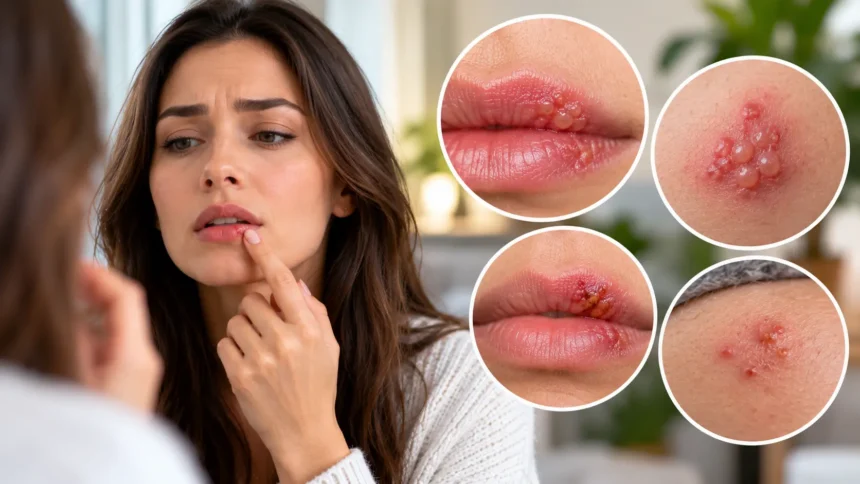
Pictures of Herpes: Symptoms, Stages & What It Looks Like
Herpes can look very different from one person to another, which is why pictures of herpes are useful for learning but unreliable for diagnosing an infection by appearance alone. Some outbreaks produce obvious clusters of small fluid-filled blisters, while others cause only a few tiny sores, shallow cracks, redness, itching, or areas that resemble pimples or razor burn. Herpes simplex virus type 1, or HSV-1, commonly causes oral herpes but can also infect the genital area. Herpes simplex virus type 2, or HSV-2, more commonly affects the genitals, although either virus can occur in either location. Symptoms may change as an outbreak progresses from tingling and redness to blisters, open sores, crusting, and healing.
Many people with herpes have mild symptoms or no recognizable symptoms at all, which means the infection may be present even when there are no obvious sores to photograph. When symptoms do occur, the first outbreak can sometimes be more uncomfortable than later recurrences and may include fever, swollen lymph nodes, body aches, painful urination, or multiple lesions. Skin tone, friction, hair, lighting, and the stage of an outbreak can also change how lesions appear in photographs. Conditions such as ingrown hairs, canker sores, syphilis, yeast infections, eczema, shingles, and bacterial skin infections can sometimes look similar. This guide explains what herpes may look like in pictures, common symptoms, stages of an outbreak, differences between oral and genital herpes, how doctors test for it, and when medical evaluation is important.
What Does Herpes Look Like?
The classic appearance of herpes is a group of small blisters located close together on a red or irritated base. These blisters are sometimes described as looking like tiny clear bubbles or droplets beneath the skin. They can contain clear, cloudy, or slightly yellowish fluid before breaking open. However, this textbook appearance is not present in every outbreak. Some people develop only one or two lesions rather than a cluster. Others notice tiny raw areas without ever seeing an obvious intact blister.
Before blisters appear, the affected skin may look mildly red, swollen, or irritated. On lighter skin, inflammation may appear pink or bright red, while on darker skin it may look purple, gray, deep red, brown, or simply darker than the surrounding area. The visual difference can make herpes harder to recognize in photographs that mainly show lighter skin tones. Some people also develop subtle bumps that resemble insect bites or acne. Tingling, itching, burning, or unusual sensitivity may occur before visible changes become obvious.
Once blisters rupture, they leave shallow open sores or ulcers. These areas can look moist, shiny, red, pink, or pale in the center. The edges may appear irregular, especially where several nearby blisters have merged together. Genital sores can become more irritated because of friction from clothing, moisture, urine, or sexual activity. Oral sores may crack or crust because the lips are exposed to air and movement. Open herpes lesions can be painful even when they appear small.
As healing begins, genital herpes lesions often become less moist and gradually close without forming the thick crust people commonly associate with cold sores. Oral herpes on the lips more often develops a visible yellowish or brownish crust or scab. The crust may crack before new skin forms underneath. Temporary discoloration can remain after the sore heals, especially on darker skin. Herpes typically heals without permanent scarring unless lesions are repeatedly traumatized or complicated by another infection.
A photograph cannot reliably distinguish herpes from every other skin condition. Razor burn, folliculitis, acne, friction blisters, allergic reactions, and other sexually transmitted infections can produce bumps or sores that appear similar. Conversely, herpes can be missed because lesions look too mild to match typical online pictures. When an unexplained blister or ulcer appears, especially after sexual or close skin-to-skin contact, testing is more accurate than visual comparison. A fresh lesion can often be swabbed for herpes simplex virus.
Early Herpes Symptoms Before Blisters Appear
Some herpes outbreaks begin with a prodrome, which is a group of warning sensations before visible sores develop. A person may notice tingling, burning, itching, sensitivity, or an unusual prickling feeling in the area where lesions later appear. These sensations can begin several hours or sometimes a day or two before an outbreak becomes obvious. In oral herpes, tingling often develops along the lip border. Genital outbreaks may cause similar sensations on the vulva, penis, scrotum, buttocks, thighs, anus, or nearby skin.
The skin may initially appear normal despite these sensations. This can make early herpes difficult to recognize from pictures because the most noticeable symptoms may be sensory rather than visual. Some people describe a small patch of skin as unusually tender when touched. Others notice mild swelling or faint discoloration before bumps appear. The prodrome can become easier to recognize after several recurrent outbreaks because symptoms tend to occur in a familiar location. First-time infections are less predictable.
A primary herpes infection can sometimes cause systemic symptoms before or during the skin outbreak. Fever, headache, body aches, fatigue, and swollen lymph nodes may occur, particularly with a first genital HSV infection. These symptoms can resemble influenza or another viral illness. Painful urination can develop when urine contacts genital sores or when inflammation affects tissues around the urethra. Some people have substantial symptoms, while others barely notice the infection. Severity cannot reliably predict which HSV type is responsible.
Recurrent outbreaks usually produce fewer lesions and milder symptoms than a symptomatic first episode. A person may experience the familiar tingling sensation followed by only one small blister or crack. The outbreak may heal faster as well. Recurrent genital HSV-2 tends to occur more frequently than genital HSV-1 on average, although individual patterns vary considerably. Stress, illness, lack of sleep, friction, and other factors may coincide with recurrences. Many outbreaks still occur without an obvious trigger.
Because herpes can be transmitted during the prodrome, people who recognize warning symptoms should avoid kissing or sexual skin-to-skin contact involving the affected area until symptoms and lesions have fully resolved. Viral shedding can also occur without symptoms, so absence of visible sores does not eliminate transmission risk. Barrier methods and suppressive antiviral therapy can reduce but not completely remove that risk. Understanding early warning signs can help people make more informed decisions about contact. Medical advice can also help determine whether episodic or daily antiviral treatment is appropriate.
Stage 1: Redness, Tingling and Small Bumps
The first visible stage of a herpes outbreak may be subtle. Skin can become slightly swollen, irritated, or discolored before classic blisters develop. Tiny raised bumps may appear in one area, sometimes resembling clogged pores or folliculitis. At this stage, pictures may not look obviously like herpes. The person may notice more discomfort than visual change. Tingling or burning around the bumps can provide an additional clue, although these symptoms are not exclusive to herpes.
Oral herpes often begins near the border of the lip, where a small area becomes tight, itchy, or sensitive. Within hours, several tiny bumps may become visible. The surrounding skin can look pink, red, or darker depending on complexion. Some people initially mistake this stage for a pimple. Unlike typical acne, herpes lesions often develop in a cluster and may quickly progress into small fluid-filled vesicles. They can also recur in approximately the same area.
Genital herpes can begin on mucosal surfaces where the appearance differs from ordinary skin. On the inner vulva, vagina, penis, or anus, early lesions may look like small raw spots rather than raised blisters. Moist surfaces do not always form obvious crusts later in the outbreak either. Hair can conceal lesions on the pubic area, making them easy to miss. People sometimes discover sores only because urination, wiping, or clothing causes discomfort. A mirror may reveal changes that were not obvious from sensation alone.
HSV lesions can also occur on the buttocks, upper thighs, or around the anus. These areas may develop a cluster of small bumps on an irritated patch of skin. Herpes on the buttocks may be mistaken for acne or insect bites, particularly when the lesions are not painful. Recurrent outbreaks can appear in nearby locations supplied by the same group of nerves rather than always returning to one exact point. The pattern and history can therefore matter more than a single photograph.
Not every outbreak progresses through perfectly distinct stages. Some lesions may begin healing while others are still forming. A person may have redness, intact blisters, open ulcers, and crusting present at the same time. This mixed appearance is especially common during a first outbreak when new lesions can develop over several days. Online diagrams often make herpes look more orderly than real-life outbreaks. Testing an active lesion remains the most reliable way to determine whether the bumps are caused by HSV.
Stage 2: Fluid-Filled Herpes Blisters
The blister stage is the appearance most commonly associated with herpes. Small vesicles containing clear or cloudy fluid develop close together, often forming a cluster. Individual blisters may be only a few millimeters wide and can look like tiny beads of water beneath the skin. The surrounding area may be swollen, tender, or discolored. Some clusters remain distinct, while others merge into a larger blistered patch. Lesions can be painful, itchy, or sensitive even before they open.
Cold sores caused by oral HSV often show this stage clearly because the lip is easy to observe. Several blisters may form along the lip border and become more obvious over a day. The skin can feel stretched because of swelling. Eating, talking, and touching the lips may increase discomfort. Blisters can occasionally appear around the nostrils, chin, or nearby facial skin as well. HSV should not be confused with canker sores, which usually occur inside the mouth and are not caused by herpes simplex virus.
Genital blisters may be harder to see because they can occur in folds of skin or on moist mucosal surfaces. On the penis, they may appear on the shaft, foreskin, or glans. On the vulva, lesions may form on the outer or inner labia, around the vaginal opening, or on nearby pubic skin. Herpes can also affect the anus and perianal area. Internal vaginal or cervical lesions cannot necessarily be seen without a clinical examination. Pain may therefore be present even when external pictures show little.
Blisters contain virus, and contact with fluid from an active lesion can facilitate transmission. People should avoid popping, squeezing, or intentionally draining herpes blisters. Doing so can increase irritation, contaminate fingers, and potentially introduce bacteria into the lesion. Wash hands after touching the affected area for hygiene or medication application. Avoid sharing lip products, razors, sex toys, or other objects that contact active lesions. Direct skin-to-skin contact remains the main concern during an outbreak.
Herpes blisters do not always contain obvious fluid. Very small vesicles may rupture before a person notices them, leaving only shallow sores. Friction from underwear or sexual activity can also break genital blisters quickly. Someone may therefore believe they never had blisters even though the ulcer stage represents ruptured vesicles. This is another reason pictures of fully formed blisters represent only one possible presentation. Mild outbreaks can look dramatically less obvious.
Stage 3: Open Herpes Sores and Ulcers
After herpes blisters rupture, shallow open sores remain. These ulcers may appear red, pink, raw, or slightly pale in the center. Nearby lesions can merge together and form a larger irregularly shaped sore. The tissue may feel very tender and can sting when touched. Genital sores may burn intensely when urine passes over them. This stage is often one of the most uncomfortable parts of a symptomatic outbreak.
Open cold sores on the lips may release a small amount of clear fluid before drying. The surface can look shiny or wet for a short time. Because lips move constantly while speaking and eating, the lesions may crack or bleed slightly. Saliva and food can also irritate them. Keeping hands away from the lesions can reduce unnecessary trauma. Antiviral therapy started early in an outbreak may shorten symptom duration in some people.
Genital ulcers may resemble sores from other causes, which makes visual diagnosis particularly unreliable. Syphilis can produce genital ulcers, although its classic primary sore is often painless. Chancroid, trauma, aphthous ulcers, bacterial infections, and inflammatory skin diseases can also produce genital erosions or ulcers. Some conditions can occur at the same time as herpes. A sexual health evaluation may therefore include testing for multiple infections rather than assuming every sore is HSV.
The first symptomatic genital herpes episode can sometimes involve many painful ulcers at once. Swelling of the vulva or penis may be significant, and urination may become difficult. Enlarged lymph nodes in the groin can accompany the outbreak. In severe cases, pain can make it difficult to drink enough fluids because the person tries to avoid urinating. Medical treatment can reduce symptoms and help prevent complications. Anyone unable to urinate normally because of severe genital pain or swelling needs prompt assessment.
Ulcers eventually begin closing as new skin grows across the surface. The amount of time required depends on whether the outbreak is primary or recurrent, immune health, treatment timing, and individual healing. First outbreaks can last longer than recurrences. Scratching or repeatedly irritating the sores can delay healing. If lesions become increasingly swollen, produce pus, develop a strong odor, or worsen instead of improving, a secondary bacterial infection should be considered. A clinician can determine whether additional treatment is needed.
Stage 4: Crusting, Scabbing and Healing
Cold sores commonly enter a visible crusting stage after the open lesions begin drying. A yellow, tan, brown, or reddish crust forms over the damaged skin. The scab can feel tight and may crack when the mouth moves. This stage is sometimes visually dramatic even though the active blistering has stopped. Picking off the crust can reopen the wound and prolong healing. Allowing it to separate naturally is generally better for the skin.
Genital herpes does not always form the same obvious scab because genital skin and mucosal surfaces are often moist. Instead, ulcers may gradually become shallower, less painful, and covered with new tissue. The area can look pink, smooth, or slightly shiny during recovery. Mild peeling may occur as damaged surface cells are replaced. People sometimes expect a thick crust because they have seen pictures of cold sores, but lack of crusting does not rule out genital herpes. Location changes the appearance of healing.
Temporary pigmentation changes can remain after a lesion has closed. Lighter or darker spots may persist for a while, especially in people with medium or dark skin tones. These areas are usually related to post-inflammatory pigment changes rather than active infection. They can slowly fade as the skin recovers. Herpes usually does not cause permanent scarring in otherwise uncomplicated outbreaks. Deeper injury from scratching, bacterial infection, or other causes can increase the chance of scars.
The risk of transmission is highest around active symptoms, but determining exactly when viral shedding has ended is impossible by looking at the skin. People are commonly advised to avoid sexual or oral contact from the first warning sensations until all sores are completely healed and normal skin has returned. Even after healing, asymptomatic shedding can still transmit HSV. This means a healed outbreak does not equal zero transmission risk. Suppressive antiviral therapy and barrier methods may lower ongoing risk.
Once the outbreak heals, the virus remains dormant in nearby nerve cells rather than disappearing from the body. Some people have frequent recurrences, while others experience one recognized outbreak and few or no further symptoms. Recurrent outbreaks are often shorter and milder because the immune system responds more quickly. Recognizing personal warning signs can allow antiviral treatment to be started earlier. A healthcare professional can explain whether episodic treatment at the first symptom or daily suppression makes more sense.
What Does Oral Herpes Look Like?
Oral herpes is most commonly associated with HSV-1 and often appears as cold sores or fever blisters around the lips. A typical outbreak begins with tingling, burning, or itching at the edge of the lip, followed by a small cluster of blisters. The blisters then rupture, form shallow sores, crust, and heal. The entire process may take roughly one to two weeks, although timing varies. Recurrent cold sores often appear in similar areas around the mouth. Some infections are so mild that they resemble chapped skin.
HSV can sometimes affect areas beyond the lip itself. Lesions may occur around the nostrils, nose, chin, or surrounding facial skin. Autoinoculation, or spreading the virus to another body site by touch, is possible but is more of a concern around an initial infection before the immune response is established. Good hand hygiene remains important during active outbreaks. People should avoid touching sores and then rubbing their eyes. Eye herpes requires urgent specialist evaluation because it can threaten vision.
Inside the mouth, primary HSV infection can sometimes cause widespread painful sores involving the gums, tongue, palate, or inner cheeks, especially in children or young adults experiencing their first infection. The gums can become swollen and may bleed easily. Fever, difficulty eating, and swollen lymph nodes may accompany this condition. Recurrent oral HSV more commonly affects the outer lip and nearby areas rather than repeatedly causing widespread mouth ulcers. Aphthous ulcers, or canker sores, are a separate condition and are not contagious herpes lesions.
Cold sores can be confused with pimples, angular cheilitis, impetigo, and cracked lips. A pimple typically develops around a clogged hair follicle and may contain a central plug or pus, while herpes commonly produces several small vesicles close together. Impetigo can create honey-colored crusting around the nose or mouth and may spread rapidly. Angular cheilitis tends to affect the corners of the mouth with cracks and irritation. Clinical evaluation is useful when the appearance is unusual or recurrent.
People with active oral herpes should avoid kissing and oral sex until lesions have fully healed because HSV-1 can be transmitted from the mouth to a partner’s genitals. This is one reason genital HSV-1 has become common. Sharing razors or lip products during an outbreak should also be avoided. Antiviral tablets can reduce the duration and severity of cold sores when started early. Some people with frequent outbreaks may benefit from preventive therapy. Treatment decisions depend on outbreak frequency and how disruptive symptoms are.
What Does Genital Herpes Look Like?
Genital herpes can produce small grouped blisters or shallow ulcers on the genital or surrounding skin. In people with vulvas, lesions can occur on the labia, around the vaginal opening, on the pubic area, buttocks, thighs, or around the anus. In people with penises, sores may develop on the shaft, glans, foreskin, scrotum, pubic skin, thighs, buttocks, or anal area. Internal lesions can also occur and may not be visible externally. Because the affected area can be hidden, pain or burning may be noticed before sores are seen.
The appearance may be much milder than common internet pictures suggest. Some genital outbreaks involve one tiny crack or shallow raw area instead of numerous blisters. Lesions may resemble shaving irritation, ingrown hairs, or friction burns. Mild outbreaks are especially easy to overlook when symptoms resolve quickly. This contributes to many people being unaware that they carry genital HSV. Testing is therefore more reliable than assuming that only dramatic clusters represent herpes.
A first recognized genital outbreak can be more extensive. Multiple groups of blisters may appear over several days, meaning some lesions are healing while new ones continue to develop. Painful urination, groin lymph-node swelling, fever, headaches, and body aches can accompany the skin symptoms. The vulva can become significantly swollen in some people. People with penises may develop painful lesions around the urethral opening. Severe urinary difficulty or inability to urinate requires urgent medical attention.
Recurrent genital herpes is usually milder and shorter. A person may notice tingling or nerve-like discomfort followed by just a few lesions. HSV-2 genital infections tend to recur and shed asymptomatically more often than genital HSV-1, although individual experiences vary widely. Some people have several outbreaks a year, while others have very few. Frequency can also change over time. Recurrence patterns alone cannot reliably determine HSV type.
Sexual activity during an active outbreak can increase pain, damage healing lesions, and raise transmission risk. Avoiding vaginal, anal, and oral sex until sores are fully healed is generally recommended. Condoms can reduce transmission risk but cannot cover every area from which HSV may shed. Daily antiviral medication can further reduce the chance of transmission in some couples. Open communication with partners and individualized medical advice can help manage the infection without unnecessary fear.
Herpes Appearance on Different Skin Tones
Many educational photographs of herpes have historically shown lighter skin, which can make recognition more difficult for people with darker complexions. On fair skin, inflammation is often described as red or pink. On brown or black skin, the same inflammatory response may appear deep red, purple, gray, violet, or darker brown. Subtle redness may be difficult to see under certain lighting. Texture changes, swelling, blistering, and tenderness can sometimes be more useful than color alone.
Intact blisters can still appear translucent, white, grayish, or fluid-filled regardless of skin tone. The surrounding skin may not have the bright red halo shown in many classic photographs. Once blisters open, ulcers can look pale, pink, red, or gray against the surrounding skin. Moisture may give the surface a shiny appearance. Photograph quality and camera flash can also distort colors. A close-up image therefore does not always represent how the lesion looks in person.
Healing may leave post-inflammatory hyperpigmentation on darker skin, creating a brown or dark patch where a sore previously existed. Less commonly, an area may temporarily become lighter. These pigment changes can persist after the lesion itself has healed. Someone may incorrectly think the darker mark represents ongoing active herpes. Active infection is better assessed through new symptoms such as vesicles, ulcers, pain, or tingling rather than residual pigment alone. Persistent unexplained skin changes can still be evaluated if concerning.
Herpes can also be confused with conditions that have different appearances across skin tones. Eczema, fungal infections, folliculitis, and contact dermatitis may not show the same classic redness on all complexions. This increases the importance of taking a history rather than relying purely on visual pattern recognition. Timing after sexual contact, recurrence in the same area, pain, and progression from blister to ulcer may provide useful clues. Laboratory testing remains the strongest way to confirm a suspected lesion.
Healthcare professionals should ideally evaluate lesions under good lighting and consider how inflammation presents on different skin tones. Patients can also take clear photographs early in an outbreak if lesions disappear before an appointment. Images showing both close-up detail and the surrounding area can be useful. However, photos should supplement rather than replace medical examination. A lesion that looks atypical in a picture can still test positive for HSV, and a classic-looking lesion can ultimately have another cause.
Herpes vs Pimples, Ingrown Hairs and Other Look-Alikes
Pimples and folliculitis are among the most common conditions mistaken for genital herpes. These lesions usually develop around hair follicles and may contain pus rather than clear fluid. A visible hair may emerge from the center, especially with an ingrown hair. Shaving, waxing, sweat, and friction can make folliculitis more likely. Herpes lesions are more likely to form grouped vesicles or shallow ulcers and may be preceded by tingling or burning. However, individual lesions can overlap enough in appearance that testing may still be needed.
Canker sores can resemble oral herpes but usually occur inside the mouth on movable tissues such as the inner lips or cheeks. They are commonly round or oval ulcers with pale centers and red borders. Canker sores are not caused by HSV and are not contagious. Recurrent cold sores, by contrast, typically develop around the lip border or nearby external facial skin. Primary oral herpes can cause internal mouth sores, which makes the distinction more complicated during a first infection. Clinical context matters.
Syphilis is another important cause of genital or oral ulcers. The primary syphilis sore is classically painless, firm, and solitary, but real presentations do not always follow textbook descriptions. Herpes ulcers are often painful and may occur in groups. Because someone can have more than one sexually transmitted infection at once, appearance alone should never be used to exclude syphilis. STI testing may be recommended when unexplained genital ulcers are present. Early diagnosis matters because syphilis requires antibiotic treatment.
Yeast infections can produce intense itching, redness or discoloration, swelling, and small cracks around genital tissues. Scratching may create raw areas that resemble sores. Unlike herpes, vaginal yeast infection commonly causes thick discharge and does not typically produce groups of fluid-filled vesicles. Contact dermatitis from soaps, lubricants, condoms, laundry products, or hygiene products can create similar irritation. Treatment differs substantially depending on the cause. Applying random creams may worsen some conditions or alter the appearance before examination.
Shingles can also produce grouped painful blisters because it is caused by another herpesvirus, varicella-zoster virus. Unlike herpes simplex, shingles usually follows a band-like distribution on one side of the body along a nerve pathway. Pain can begin before the rash and may be intense. Shingles near the eye requires urgent medical evaluation. Despite the shared word “herpesvirus,” shingles and herpes simplex are different infections. Laboratory testing can distinguish them when the appearance is uncertain.
How Herpes Is Diagnosed
When active blisters or ulcers are present, a swab from the lesion is generally the most useful way to confirm herpes. Polymerase chain reaction, or PCR, testing can detect HSV genetic material and can often determine whether HSV-1 or HSV-2 is present. Testing tends to work best when the lesion is fresh and has not fully crusted or healed. Waiting until symptoms disappear can make direct testing less informative. If a new unexplained genital sore develops, arranging an appointment promptly may improve the chance of obtaining a useful sample.
Viral culture can also be used in some settings, although PCR is generally more sensitive. Culture becomes less likely to detect HSV as lesions heal. A negative lesion test therefore does not always exclude herpes if the sample was taken late or poorly. The clinician may consider the appearance, symptom history, and timing when interpreting the result. Repeat testing during a future fresh outbreak may sometimes be useful. Type identification matters because recurrence and shedding patterns differ between genital HSV-1 and HSV-2.
Blood tests can detect type-specific antibodies to HSV, indicating previous exposure. They are most useful when no active lesion is available to swab or when clarification of infection status is important. Antibodies take time to develop after a new infection, so testing too early can produce a negative result despite recent acquisition. Blood testing also cannot identify the exact body location of an HSV-1 infection. Someone with HSV-1 antibodies may have an old oral infection rather than genital herpes. Results therefore require careful interpretation.
Routine herpes screening is not universally recommended for every person without symptoms because blood-test results can be difficult to interpret and false positives can occur, particularly at low index values on some assays. Confirmatory testing may sometimes be recommended when an initial result is uncertain. People with symptoms, a partner with genital herpes, or specific clinical concerns may have different reasons for testing. A sexual health clinician can discuss whether testing is likely to provide useful information. Testing should answer a clear clinical question rather than create unnecessary confusion.
Visual diagnosis alone is less reliable than many people assume. Even experienced clinicians may test because herpes can imitate many other skin conditions. Online image comparisons are even less reliable because lighting, zoom, skin tone, and lesion stage vary. A person should not diagnose themselves or a partner from photographs alone. If the result could influence treatment, sexual health decisions, pregnancy care, or a relationship, laboratory confirmation is especially valuable. Accurate diagnosis reduces both unnecessary anxiety and missed treatment.
Herpes Treatment and Outbreak Management
There is currently no treatment that removes herpes simplex virus from the body, but antiviral medicines can reduce symptoms and viral activity. Common prescription antivirals include acyclovir, valacyclovir, and famciclovir. A first genital herpes episode is usually treated because symptoms can be prolonged or severe. Treatment can shorten healing time and reduce new lesion formation. Starting medication promptly is generally most useful. A clinician can choose the appropriate medication and duration based on the situation.
For recurrent outbreaks, some people use episodic therapy. This means keeping antiviral medication available and starting it as soon as tingling, burning, or other warning symptoms begin. Early treatment can shorten the episode and sometimes prevent lesions from becoming as extensive. People who recognize a consistent prodrome may benefit most from this strategy. The prescribed regimen depends on the medication used. Leftover prescriptions should not be shared because dosing and medical considerations vary between individuals.
Suppressive therapy involves taking antiviral medication every day. It may be considered for people with frequent or particularly distressing outbreaks. Daily therapy can significantly reduce recurrence frequency and can also lower the risk of transmitting genital HSV-2 to a sexual partner, although it does not eliminate transmission completely. Some people use suppression for a specific period, while others continue longer term. Treatment can be reassessed periodically because recurrence frequency often decreases with time.
Comfort measures can help while lesions heal. Loose clothing can reduce friction around genital sores, and keeping the area gently clean and dry may improve comfort. Cool compresses can provide temporary relief. Urinating while pouring lukewarm water over the genital area or urinating in a shower may reduce stinging for some people with painful external sores. Avoid harsh antiseptics or fragranced products on irritated tissue. Severe pain or inability to urinate should be medically evaluated rather than managed solely at home.
Herpes treatment also includes emotional and sexual-health support. Receiving a diagnosis can create anxiety about relationships, disclosure, fertility, or future health, but HSV is a common and manageable infection. Having herpes does not prevent most people from having healthy relationships or a normal sex life. Understanding transmission patterns, recognizing symptoms, and using appropriate prevention strategies can make the condition much easier to manage. A clinician can also help answer questions about pregnancy, medications, and partner testing.
Herpes Transmission and Safety Facts
Herpes spreads primarily through direct skin-to-skin contact with an infected area. Oral HSV can spread through kissing and oral-genital contact, while genital herpes is commonly transmitted during vaginal, anal, or oral sexual contact. Transmission is particularly likely when blisters, ulcers, or warning symptoms are present. However, HSV can also be released from normal-looking skin during asymptomatic viral shedding. This is why people can transmit herpes without realizing they are having an outbreak. Visible sores are not required for transmission.
Condoms and other barrier methods reduce the risk of genital HSV transmission but cannot provide complete protection. HSV can shed from skin around the genitals, buttocks, thighs, or pubic region that a condom does not cover. Correct and consistent barrier use is still useful because it reduces exposure. Avoiding sexual contact during prodrome symptoms and active outbreaks provides additional protection. Daily suppressive antiviral medication can further reduce transmission risk for some people. Combining strategies generally offers better protection than relying on one method.
Oral herpes can be transmitted to the genitals through oral sex. A person with an active cold sore should avoid oral contact with a partner’s genitals until the lesion is completely healed. Transmission can still occur without a visible sore, although active outbreaks present greater risk. Genital HSV-1 acquired through oral sex may recur less frequently than genital HSV-2 on average. Nevertheless, either type can establish a lifelong genital infection. Knowing the HSV type can therefore help with counseling about expected recurrence patterns.
Herpes is not generally spread through toilet seats, swimming pools, bedding, or casual household contact because the virus does not survive well away from the human body under ordinary conditions. Direct contact is the primary route. Sharing objects that directly touch an active cold sore, such as lip balm or razors, is still best avoided. Normal household interactions such as hugging, sharing a room, or using the same toilet do not require isolation. Accurate transmission information helps reduce unnecessary stigma.
Pregnancy requires special attention because genital herpes can sometimes be transmitted to a baby during delivery, particularly when a pregnant person acquires genital herpes late in pregnancy. Anyone who is pregnant and develops new genital sores, or whose partner has genital herpes, should discuss this with an obstetric healthcare professional. Antiviral medication may be recommended later in pregnancy for people with recurrent genital herpes. Delivery planning can change when active genital lesions or prodromal symptoms are present at labor. Individual medical guidance is important.
When to See a Doctor for Suspected Herpes
Medical evaluation is appropriate when new genital blisters, ulcers, or unexplained painful sores appear. Testing is most useful when lesions are still fresh, so arranging care early can improve diagnostic accuracy. This is particularly important after a new sexual exposure or when STI status is uncertain. A clinician may swab the lesion and recommend testing for other infections at the same time. Treatment can often begin before final laboratory results if the appearance and symptoms strongly suggest herpes.
A first outbreak with severe pain, extensive sores, fever, or difficulty urinating should be assessed promptly. Some people develop enough genital swelling and pain that urination becomes extremely difficult. Inability to urinate is an urgent medical problem. Severe headache, neck stiffness, confusion, or neurological symptoms are uncommon but also require urgent evaluation. Most herpes outbreaks remain limited to skin and mucosal symptoms, but serious complications can occur in rare cases.
Eye symptoms require particular caution. HSV can infect the cornea and cause herpes keratitis, which may lead to eye pain, redness, light sensitivity, tearing, blurred vision, or a feeling that something is stuck in the eye. Repeated corneal infection can damage vision. Anyone with a known cold sore who develops significant eye symptoms should seek prompt medical assessment rather than using leftover eye drops. Steroid eye drops can worsen some herpes eye infections if used without appropriate specialist supervision.
People with weakened immune systems should seek medical advice earlier when herpes is suspected. Chemotherapy, organ transplantation, advanced immune disorders, and certain immune-suppressing medications can allow outbreaks to become more extensive or persistent. Lesions may heal slowly or spread beyond their usual locations. Antiviral treatment may need to be adjusted accordingly. A healthcare professional can also evaluate whether other infections are present. Severe or unusual skin eruptions should not be diagnosed from pictures alone in this group.
Pregnant people should contact their maternity care provider when new genital herpes is suspected, especially during the later stages of pregnancy. The timing of infection matters because a newly acquired infection near delivery can carry a greater neonatal transmission risk than a long-standing recurrent infection. Prompt testing and antiviral treatment may be appropriate. The presence of genital herpes does not automatically mean a pregnancy will have complications. Coordinated obstetric care allows delivery and prevention strategies to be planned safely.
Frequently Asked Questions
What does herpes look like at the beginning?
Herpes may begin as redness or darker discoloration, mild swelling, tingling, itching, burning, or a few tiny bumps. Small fluid-filled blisters may then develop, although some people never notice a clear blister stage.
What do genital herpes sores look like?
Genital herpes often appears as grouped small blisters that rupture into shallow, painful ulcers. Mild outbreaks may look like tiny cracks, irritated patches, razor burn, or one or two small sores rather than a dramatic cluster.
Can herpes look like a pimple or ingrown hair?
Yes. A mild herpes lesion can sometimes resemble a pimple, ingrown hair, or folliculitis, especially in areas with pubic hair. Because appearance overlaps, a swab from a fresh lesion is more reliable than diagnosing it from a photograph.
How long do herpes sores take to heal?
A first symptomatic outbreak can take several weeks to fully resolve, while recurrent outbreaks are often shorter and milder. Antiviral treatment started early can reduce symptom duration and help lesions heal faster.
Can you have herpes without visible sores?
Yes. Many people with HSV have no recognizable outbreaks or have symptoms so mild that they do not realize they are infected. The virus can also shed from normal-looking skin, so transmission can occur even when no sores are visible.
