


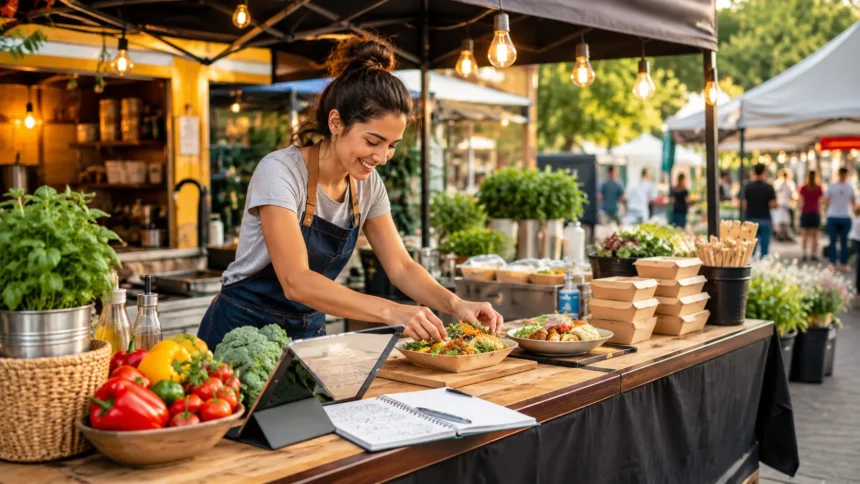
How to Start a Food Stall Business
Starting a food stall can be one of the most practical ways to enter the food industry without immediately taking on the expense and complexity of opening a full restaurant. A small stall can serve anything from burgers and tacos to coffee, desserts, regional street food, healthy bowls, snacks, or specialty drinks.
However, a successful food stall involves much more than finding a table, cooking a few dishes, and waiting for customers. You need the right food concept, reliable suppliers, sensible pricing, food safety procedures, permits, equipment, branding, and a location where enough people actually want what you sell.
The good news is that a food stall gives you room to start small and learn from real customers. You can test dishes, refine pricing, understand busy periods, improve service, and build a recognizable food brand before committing to a larger operation such as a permanent shop, restaurant, or food truck.
If you are wondering how to start a food stall business, this guide walks through the process from choosing your concept and estimating startup costs to creating a menu, finding the right location, marketing your stall, and building an operation that can grow sustainably.
Is Starting a Food Stall Business a Good Idea?
A food stall business can be attractive because the initial investment is often lower than opening a traditional restaurant. You may require less space, fewer employees, a smaller menu, and simpler equipment, depending on your concept. This gives new entrepreneurs an opportunity to test the food industry with comparatively manageable overhead.
Food stalls can also benefit from high-footfall environments. Markets, festivals, shopping areas, business districts, university areas, tourist destinations, community events, and food courts can place your products directly in front of customers who are already looking for something convenient to eat or drink.
The business model is also flexible. Some owners operate only on weekends, while others trade daily from permanent market spaces. You might begin with local events, expand into catering, develop packaged products, open additional stalls, or eventually move into a larger restaurant once demand has been proven.
Still, a food stall is not automatically profitable simply because it is small. Ingredient costs, stall fees, utilities, packaging, labor, transport, spoilage, permits, marketing, and equipment can quickly reduce margins. Success depends on disciplined planning and understanding your numbers before you begin trading.
Step 1: Choose a Food Stall Concept People Actually Want
Your first major decision is what type of food you will sell. Avoid choosing a concept only because you personally enjoy the food. A strong food stall business idea should balance customer demand, preparation speed, ingredient cost, competition, available equipment, and your ability to deliver consistent quality.
Start by observing what people buy in the locations where you may trade. Look at popular cuisines, price points, queues, peak hours, portion sizes, and products competitors appear to sell repeatedly. You are looking for a genuine opportunity rather than simply copying the busiest stall.
A good concept is often easy to understand quickly. Customers walking through a market may give your stall only a few seconds of attention. “Fresh grilled chicken wraps,” “loaded fries,” “artisan grilled cheese,” or “fresh fruit smoothies” communicates the offer more clearly than an overly complicated concept requiring a lengthy explanation.
Your concept should also have enough personality to stand apart. You might specialize in a regional recipe, unusual flavor combinations, convenient breakfast products, premium desserts, plant-based street food, spicy dishes, or affordable comfort food. Differentiation gives people a reason to remember and recommend your stall.
Step 2: Research Your Target Customers
A food stall becomes easier to plan once you know exactly who is most likely to buy from you. Your target customers might include office workers wanting quick lunches, students looking for affordable meals, families visiting weekend markets, tourists seeking local flavors, or late-night customers wanting convenient street food.
Each group has different priorities. Office workers may value speed and predictable service, while festival visitors might be more willing to try creative or indulgent dishes. Students may be particularly price-sensitive, whereas customers at premium food markets might care more about ingredients, presentation, and unique flavors.
Think about when your customers are hungry as well as what they want to eat. A breakfast stall has different peak periods from a dessert stand or late-night burger stall. Understanding purchasing times helps determine opening hours, ingredient preparation, staffing levels, and the amount of stock required.
Create a simple customer profile rather than trying to serve everyone. Identify approximate spending levels, favorite product types, preferred portions, common dietary needs, and likely locations. This information will shape almost every later decision, including your street food menu, pricing, branding, promotions, and trading schedule.
Step 3: Research the Local Competition
Competitor research helps you understand what customers can already buy and where your concept might fit. Visit food markets, street-food areas, fairs, shopping districts, and any other locations where similar stalls operate. Observe products, prices, service speed, presentation, queue lengths, and customer reactions.
Do not study only direct competitors selling the same cuisine. A burger stall competes for lunchtime spending with sandwiches, pizza, noodles, wraps, salads, and other convenient meals. Customers are deciding how to satisfy their hunger, so your competitive landscape may be wider than your exact food category.
Pay particular attention to weaknesses you could address. Perhaps existing stalls have long wait times, limited vegetarian choices, confusing menus, inconsistent presentation, or poor branding. A strong food business often wins by making an existing customer experience easier or better rather than inventing something completely new.
Competitor research should inspire decisions, not encourage imitation. Copying another stall’s menu, identity, and pricing gives customers little reason to choose you. Use what you learn to create a clearer position based on your own food quality, service style, menu focus, convenience, price point, or brand personality.
Step 4: Create a Simple Food Stall Business Plan
You do not need a hundred-page document to launch a small stall, but you do need a plan. A practical food stall business plan should explain what you will sell, who will buy it, where you plan to trade, how much you expect to charge, and what it will cost to operate.
List your expected startup expenses, including stall equipment, cooking appliances, refrigeration, signage, initial ingredients, packaging, permits, insurance, payment equipment, transport, and deposits. Then estimate monthly or event-based operating costs so you understand how much sales volume the business must generate.
Your plan should also include realistic revenue assumptions. Estimate how many customers you could serve during a typical trading period and multiply that by your expected average transaction value. Then compare that revenue with food costs, staffing, stall fees, utilities, waste, and other expenses.
Treat these numbers as working estimates rather than guaranteed results. Once trading begins, replace assumptions with real sales data. A food stall business plan becomes most useful when it evolves with the business and helps you make decisions based on evidence instead of intuition alone.
Step 5: Calculate Your Food Stall Startup Costs
The cost of starting a food stall depends heavily on your menu, equipment requirements, trading location, and local regulations. A stall selling packaged baked goods may need considerably less equipment than one producing grilled meals that require cooking appliances, refrigeration, ventilation, and extensive preparation.
Divide startup spending into essential and optional categories. Essential costs might include cooking equipment, food-safe storage, a stall structure, utensils, handwashing facilities, payment tools, safety equipment, licenses, and opening stock. Decorative upgrades and premium branding can often be added later if the initial budget is limited.
Also keep money aside for working capital. You may need to purchase ingredients, pay stall fees, cover transport, replace damaged equipment, or pay workers before you receive enough sales income. Starting with absolutely no cash reserve makes even small unexpected costs difficult to manage.
Avoid buying expensive commercial equipment simply because it looks impressive. Choose durable tools that genuinely support your menu and expected sales volume. As demand increases, you can upgrade equipment based on real operational needs instead of guessing what a new food business might eventually require.
Step 6: Check Licenses, Permits, and Food Safety Rules
Food businesses usually need to meet local requirements before serving the public. The exact food stall permits and licenses required vary considerably by country, city, market, and business structure, so you should check with the relevant local authorities before spending heavily on equipment or signing a stall agreement.
Requirements may relate to business registration, food handling, hygiene standards, market trading, fire safety, waste disposal, insurance, food preparation locations, employee training, or other operational areas. Never assume that permission to rent a stall automatically means you have every approval required to sell food.
Food safety must remain a priority even when the business is small. Establish clear procedures for receiving ingredients, temperature control, refrigeration, cooking, handwashing, cleaning, cross-contamination prevention, allergen management, storage, transportation, and waste disposal according to the rules that apply in your location.
Keep records where required and train anyone helping with preparation or service. Customers expect the same basic safety standards from a street-food stall as they do from a restaurant. Protecting customers also protects the reputation and long-term viability of your business.
Step 7: Build a Small Menu That Is Easy to Execute
One of the biggest mistakes new stall owners make is creating an enormous menu. More choices may seem attractive, but every additional dish can introduce new ingredients, equipment requirements, training needs, preparation steps, storage issues, and opportunities for food waste.
A focused food stall menu allows you to prepare faster and maintain better consistency. Start with a core selection of products you can execute extremely well. You can always introduce seasonal items, limited specials, or new variations once you understand what customers consistently buy.
Look for ingredients that can work across several menu items. For example, one protein, sauce, or vegetable preparation might appear in multiple dishes without making them feel identical. Smart ingredient overlap simplifies purchasing, improves inventory management, and can reduce unused stock.
Your menu should also be easy for customers to understand from a short distance. Clear product names, straightforward descriptions, visible pricing, and an uncluttered menu board help people decide quickly. Faster decisions can be particularly valuable when you have a queue during peak trading periods.
Step 8: Test Your Food Before Launching
Never assume friends saying “this tastes great” is enough product validation. Before launching publicly, conduct structured testing with people who resemble your real target customers. Ask them about taste, portion size, appearance, value, packaging, ease of eating, and whether they would genuinely pay your intended price.
Test the product under realistic conditions rather than only in your home kitchen. A dish that tastes excellent immediately after cooking may behave differently after sitting for several minutes, being placed in takeaway packaging, or being produced repeatedly during a busy service period.
You should also measure preparation and service times. If one item takes ten minutes to prepare but customers expect food within three, you may need to simplify the recipe, complete more preparation in advance, improve equipment, or reconsider whether the product fits the stall format.
Use testing to refine rather than defend your original idea. If customers consistently find something too spicy, expensive, messy, small, or difficult to eat, take that feedback seriously. Successful street food businesses adapt quickly when the market reveals a better approach.
Step 9: Calculate Food Costs Before Setting Prices
Never choose prices by simply copying another stall. First calculate how much each menu item costs you to produce. Include ingredients, sauces, garnishes, cooking oil where appropriate, packaging, napkins, and other direct components used for every sale.
Suppose a menu item sells well but uses expensive ingredients, large portions, and premium packaging. Revenue might look impressive while profit remains weak. Understanding your food cost per serving helps you identify products that contribute meaningfully to the business rather than simply generating turnover.
You must also account for indirect expenses such as labor, stall rent, payment processing, gas or electricity, transportation, insurance, marketing, licenses, equipment maintenance, and waste. Your selling price needs to contribute toward these costs as well as the ingredients themselves.
Review costs regularly because supplier prices can change. If an important ingredient becomes considerably more expensive, you may need to adjust portions, negotiate sourcing, reformulate carefully, or increase prices. Ignoring changing costs can gradually turn a profitable product into an unprofitable one.
Step 10: Price Your Menu for Profit and Value
Customers do not judge price in isolation; they compare it with portion size, food quality, presentation, convenience, competitors, location, and the overall experience. Your goal is therefore not automatically to be the cheapest stall but to make your pricing feel reasonable for what customers receive.
Research local price expectations before finalizing your menu. A meal that feels affordable at a premium festival might seem expensive at a student market. Location and audience matter, which is why pricing should connect directly with the customer research you conducted earlier.
Consider creating different spending options if they fit your concept. A basic product, meal combination, add-on, premium topping, or larger portion can let customers choose according to appetite and budget while potentially increasing your average order value.
Keep pricing easy to understand. Complicated combinations, hidden extras, or unclear portion differences slow customers down and can damage trust. Strong food stall pricing balances profitability with customer value while allowing enough margin to keep the business healthy.
Step 11: Find the Right Location for Your Food Stall
Location can be as important as the food itself. An outstanding stall placed where few people walk past will struggle to produce consistent sales. Look for areas with enough foot traffic, suitable customer demographics, reasonable trading costs, and demand during the hours you intend to operate.
Potential locations include street-food markets, farmers’ markets, shopping centers, office districts, festivals, fairs, tourist areas, university zones, business parks, community events, and dedicated food courts. Each environment attracts different customers and may require different menus, price points, or service speeds.
Do not judge a location only by total foot traffic. Hundreds of people passing quickly on their commute may be less valuable than a smaller number actively looking for lunch. Observe how people behave, where queues form, what they buy, and how long they remain in the area.
When possible, test a location before making a long-term commitment. Temporary markets and events can help you understand real demand. Keep detailed records of sales, average transaction value, peak periods, weather, event attendance, and menu performance so you can compare locations objectively.
Step 12: Choose Reliable Food Suppliers
Your suppliers directly influence food quality, costs, availability, and customer experience. Look for businesses capable of providing consistent ingredients at a quality and price that fit your concept. Reliability becomes particularly important when a missing ingredient could remove your bestselling item from the menu.
Do not automatically choose the cheapest supplier. Poor-quality ingredients, unreliable deliveries, inconsistent sizes, or frequent stock shortages can create hidden costs. Evaluate suppliers based on overall value, including product quality, delivery schedules, payment terms, minimum order quantities, and communication.
Maintain alternatives for important ingredients where possible. Depending completely on one source for a critical product leaves you vulnerable if that supplier suddenly runs out, changes pricing, experiences transportation problems, or stops carrying the item.
Build good professional relationships with suppliers as your business grows. Accurate ordering, timely payments, clear communication, and realistic forecasting can make cooperation easier. Strong restaurant and food suppliers can become important partners when you expand your menu, increase volume, or open additional locations.
Step 13: Buy the Right Food Stall Equipment
Your equipment list should be built around your actual menu. Depending on what you sell, you may require grills, fryers, hot plates, refrigerators, freezers, insulated containers, preparation tables, coffee machines, blenders, utensils, thermometers, storage containers, lighting, and cleaning equipment.
Space is often limited, so equipment must be practical as well as functional. Map out where preparation, cooking, storage, payment, handwashing, and serving will happen. Staff should be able to move safely and efficiently without constantly crossing paths during busy service periods.
Consider power, gas, ventilation, water, transport, and storage requirements before purchasing anything. A large appliance may fit inside the stall but still be impractical if the venue cannot support its electrical requirements or if transporting it between events becomes difficult.
Invest first in equipment that directly affects safety, consistency, and speed. Attractive decorative items can improve presentation later. The best food stall equipment setup is not necessarily the most expensive—it is the one that allows your team to produce quality food efficiently under real trading conditions.
Step 14: Create Branding Customers Can Remember
Your stall competes visually before customers ever taste the food. A clear name, recognizable sign, consistent colors, attractive menu board, clean counter, and thoughtful packaging can help your business look established and easier to remember.
Choose a food business name that is relatively simple to pronounce, spell, and search online. Ideally, it should support your concept without restricting future growth too much. A name tied to one product may become limiting if you later decide to expand your menu.
Your branding should also communicate the experience customers can expect. A playful dessert stall might use a completely different visual style from a premium coffee concept or traditional street-food brand. Design choices should support positioning rather than simply following trends.
Consistency matters across your stall signage, packaging, website, Google Business Profile where applicable, and social media. Repeated visual and verbal cues gradually build recognition. Effective food business branding helps customers remember where they bought that meal they want to have again.
Step 15: Design a Stall That Attracts Attention
People often decide whether to approach a food stall from several meters away. Your setup should therefore communicate quickly what you sell, what it costs, and why it looks appealing. Customers should not have to stand at the counter before understanding your concept.
Make your main signage easy to read and avoid overcrowding the stall with dozens of promotional messages. One clear brand sign, an organized menu, attractive food presentation, and visible cleanliness usually make a stronger impression than a wall covered with competing graphics.
Whenever appropriate, allow customers to see food being prepared. Movement, aroma, grilling, baking, pouring, and plating can attract attention naturally. An open preparation process can also create an element of theatre that makes a simple purchase feel more engaging.
Keep the working area clean throughout service. Overflowing bins, dirty surfaces, disorganized packaging, and food spills can quickly discourage potential customers. A professional street food stall design should combine visual appeal with cleanliness, safety, efficient movement, and easy ordering.
Step 16: Make Ordering and Payment Fast
Queues can be positive because they signal demand, but long and confusing waiting times can cost sales. Organize your ordering process so customers immediately know where to queue, how to order, when to pay, and where to collect their food.
Keep the menu readable before customers reach the counter. This allows them to make decisions while waiting instead of beginning to study every option only when it is their turn. Clear choices and limited customizations can help maintain service speed during rush periods.
Offer suitable payment options based on customer preferences and local infrastructure. Many shoppers expect contactless or digital payments, while cash may still matter in some markets. Whatever methods you accept, make sure staff can process transactions reliably and efficiently.
Design the preparation workflow around your busiest realistic period, not a quiet afternoon. A profitable food stall operation needs to serve multiple customers quickly while maintaining portion accuracy and food quality. Service speed should improve through preparation and organization, not by lowering standards.
Step 17: Reduce Food Waste From the Beginning
Food waste affects both profitability and sustainability. New operators often overestimate demand and prepare too much food because running out feels embarrassing. However, repeatedly throwing away unsold ingredients at the end of trading can quickly destroy otherwise healthy margins.
Start with conservative stock levels and increase quantities as your sales data improves. Record how many portions you sell by product, day, location, weather, and time. These patterns will gradually make purchasing and preparation forecasts more accurate.
Designing a focused menu also reduces waste because ingredients can be shared across products. Proper storage, stock rotation, portion control, and accurate ordering further protect your inventory. Train anyone working at the stall to follow the same procedures consistently.
Some products will occasionally sell out, particularly while you are learning demand. That is usually more manageable than preparing excessive quantities every day. Smart food inventory management aims to find the balance between product availability and minimizing unnecessary waste.
Step 18: Market Your Food Stall Before Opening
Do not wait until launch day to tell people the stall exists. Create simple social media accounts and begin sharing your concept, food preparation, test dishes, menu previews, location information, opening date, and behind-the-scenes progress before you start trading.
Visual platforms can work particularly well because food photography and short preparation videos naturally attract attention. You do not need expensive production. Clear lighting, appetizing presentation, genuine kitchen moments, and consistent posting can help build anticipation.
If you will trade at an established market or festival, ask whether the organizer can feature new vendors through their social channels, website, email newsletter, or event announcements. Their existing audience can give your launch valuable exposure.
Your pre-launch food stall marketing strategy should answer four simple questions for potential customers: what are you selling, why should they try it, where will you be, and when can they buy it? Make those answers easy to find every time you promote the business.
Step 19: Use Social Media to Build Repeat Customers
Social media can keep your stall connected with customers between visits. Post your trading schedule, new dishes, sold-out updates, special locations, behind-the-scenes preparation, customer favorites, and limited-time products so followers have a reason to keep checking your pages.
Food content should look appetizing but believable. Use real photographs of what customers actually receive rather than heavily edited images that create unrealistic expectations. Consistent presentation helps people recognize your products when they encounter the stall in person.
Encourage customers to tag your business when sharing their meals. Genuine customer posts can introduce your stall to people who trust recommendations from friends more than traditional advertising. Always obtain appropriate permission before republishing customer content through your own marketing channels.
Do not focus entirely on follower numbers. A smaller local audience that regularly visits your stall can be far more valuable than thousands of followers from locations you cannot serve. Effective social media marketing for food businesses should ultimately drive real-world orders and repeat visits.
Step 20: Encourage Reviews and Word-of-Mouth Marketing
Word of mouth can be especially powerful for small food businesses. When customers discover something they genuinely enjoy, they often tell friends, coworkers, family members, or social followers. Your first marketing priority should therefore be creating an experience worth recommending.
Make it easy for satisfied customers to leave reviews on relevant platforms. If your stall has an eligible Google Business Profile or appears on local food and delivery platforms, accurate information and genuine reviews can help future customers feel more confident about trying your food.
Never pressure people to leave only positive reviews. Authentic feedback gives you valuable information about service, taste, portions, prices, and consistency. Respond professionally when appropriate and look for patterns instead of becoming overly focused on a single negative comment.
Sometimes the simplest food stall promotion is excellent service. Remembering regular customers, serving consistently good portions, handling complaints fairly, and keeping the stall welcoming can create advocates who market the business voluntarily every time they recommend it to someone else.
Step 21: Track Daily Sales and Profit
Busy does not always mean profitable. A stall can have a constant queue while making very little money if portions are oversized, prices are too low, staffing is inefficient, or food waste is high. That is why financial tracking should begin from the first day.
Record daily sales, number of transactions, average order value, product quantities sold, ingredient costs, labor, stall fees, payment charges, transportation, waste, and other relevant expenses. Even a basic spreadsheet can reveal important trends if the data is updated consistently.
Identify which menu items provide the strongest combination of popularity and profit. Your bestseller might generate lots of revenue but weak margins, while another less obvious product may contribute significantly more profit per order. Menu decisions should reflect both demand and financial performance.
Review the numbers regularly rather than waiting until the end of the year. Strong food business financial management allows you to adjust pricing, portion sizes, staffing, suppliers, operating hours, and menu choices before small problems grow into serious ones.
Step 22: Know Your Break-Even Point
Your break-even point is the amount of sales required to cover your costs before the business begins generating profit. Understanding this number can transform vague financial goals into specific daily or weekly targets.
For example, if your fixed and operating expenses require a certain level of gross profit each trading day, you can estimate approximately how many meals or transactions are needed to cover those costs. This helps you evaluate whether a particular location or event is commercially worthwhile.
Break-even analysis can also guide pricing. If realistic customer numbers would never generate enough contribution at your current prices, something needs to change. You might need to increase prices, reduce costs, raise average order value, improve sales volume, or reconsider the location.
Do not treat profitability as whatever remains in your bank account after a busy week. A sustainable small food business should account for all genuine business expenses and ideally compensate the owner fairly for the time and effort required to operate it.
Step 23: Prepare for Weather, Quiet Days, and Unexpected Problems
Outdoor and event-based food stalls can be especially vulnerable to factors outside your control. Rain, extreme heat, transport disruptions, event cancellations, equipment failures, ingredient shortages, or unexpectedly low foot traffic can dramatically affect sales on a particular day.
Build contingency plans for the most likely problems. Know what you will do if a refrigerator fails, a key worker becomes unavailable, electronic payments stop working, an ingredient delivery is delayed, or weather conditions make your normal setup difficult.
Keep a sensible emergency reserve rather than spending every successful day’s earnings immediately. One strong weekend does not guarantee the next one will perform equally well. Seasonal businesses in particular need to manage cash carefully across busy and quiet periods.
Resilience matters in street food entrepreneurship because daily sales can fluctuate. The strongest operators do not panic after one weak trading day or overexpand after one exceptional event. They make decisions using longer-term data and realistic expectations.
Step 24: Build Systems Before You Start Growing
Once the stall becomes busy, it may be tempting to add another location immediately. Before expanding, make sure the first operation can run consistently using documented recipes, portion sizes, preparation methods, cleaning routines, supplier processes, stock controls, and customer service standards.
Standardization protects quality when more people become involved. If one employee produces a completely different portion from another, customers may receive inconsistent value. Written recipes, preparation guides, and simple checklists make training easier and reduce dependence on one person’s memory.
Your financial systems should also be reliable before expansion. Understand the genuine profit generated by your first stall after accounting for all costs. Growing an unprofitable operation simply creates a larger version of the original problem.
When the foundations are strong, expansion options may include additional stalls, festivals, catering, delivery, packaged products, wholesale supply, a food truck, or a permanent restaurant. Your food stall business can become the testing ground for a much larger food brand.
Common Mistakes to Avoid When Starting a Food Stall
The first mistake is offering too many dishes. A huge menu increases preparation complexity, slows service, ties up cash in inventory, and creates more waste. Start focused, identify what customers love, and expand only when additional products serve a clear purpose.
Another common mistake is underpricing. Entrepreneurs sometimes believe low prices are the easiest way to attract customers, but prices that do not cover real costs eventually make the business unsustainable. Compete on food, convenience, experience, or distinctiveness rather than price alone.
Ignoring location quality is equally dangerous. A beautiful stall with great food cannot perform well without sufficient relevant demand. Test locations, count customers, observe competitors, compare fees, and record real sales performance before committing to expensive long-term arrangements.
Finally, do not neglect food safety, customer service, or financial records because the business is “only a stall.” Customers judge the experience seriously, and regulators do too. Professional habits established early create a much stronger foundation for sustainable growth.
Final Thoughts on Starting a Food Stall Business
Learning how to start a food stall business is ultimately about combining great food with disciplined business decisions. Your concept needs demand, your menu needs manageable costs, your location needs suitable customers, and your operation needs to deliver quality consistently even during busy periods.
Start small enough to learn without exposing yourself to unnecessary financial risk. Test your menu, calculate costs, research locations, understand legal requirements, and listen carefully to customers. Every trading day can provide valuable information if you record and use it.
Do not chase growth before establishing profitability and consistency. A single stall with loyal customers, clear processes, strong margins, and recognizable branding provides a much better foundation than several locations struggling with quality control and unpredictable costs.
Most importantly, remember that people return because of the overall experience. Delicious food gets their attention, but reliable quality, fair value, friendly service, cleanliness, and convenience turn first-time visitors into regular customers. Build those qualities into the business from the very beginning.
Frequently Asked Questions
How much money do I need to start a food stall?
Startup costs vary based on your menu, equipment, location, permits, and stall setup. Create a detailed budget covering equipment, ingredients, packaging, registration, insurance, trading fees, and emergency working capital before launching.
What food sells best at a food stall?
Popular stall foods are usually flavorful, convenient, easy to eat, quick to prepare, and reasonably priced. Burgers, wraps, fries, tacos, grilled foods, desserts, beverages, and regional specialties can work well when they suit local demand.
Do I need a license to run a food stall?
Most locations require some form of business, food safety, market, or trading compliance, but exact requirements vary by jurisdiction. Check with your local authorities and market organizer before selling food to the public.
How do I make my food stall profitable?
Control food costs, price products correctly, reduce waste, choose high-traffic locations, keep service efficient, and focus on products with healthy margins. Track daily sales and expenses so decisions are based on real financial performance.
How can I attract customers to a new food stall?
Use clear signage, appealing food presentation, social media, local event promotion, genuine customer reviews, and launch offers where appropriate. Most importantly, provide consistently good food and service that encourages customers to return and recommend you.