


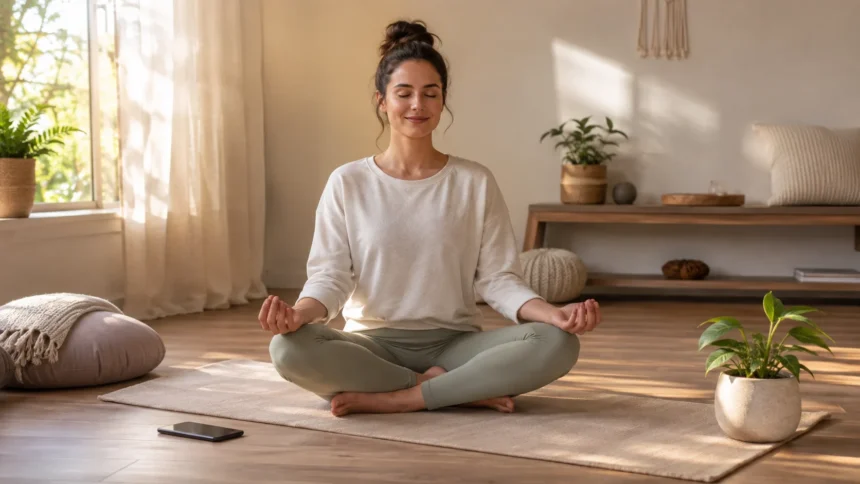
How to Meditate for Beginners in 5 Minutes: An Easy Daily Practice
Meditation can sound complicated when you are new to it. You may imagine that you need complete silence, special equipment, perfect concentration, or half an hour of free time before meditation becomes worthwhile. In reality, beginners can start with just five minutes and a comfortable place to sit.
If you want to learn how to meditate for beginners in 5 minutes, the basic process is simple. Sit comfortably, notice your breathing, allow thoughts to come and go, and gently return your attention to the breath whenever your mind wanders. You do not need to force your mind to become completely empty.
Five-minute meditation is particularly useful because it removes one of the biggest barriers to beginning: finding enough time. Almost anyone can fit five minutes somewhere into the day, whether after waking up, during a lunch break, before studying, after work, or as part of an evening routine.
The goal during your first meditation is not to become perfectly calm or immediately transform how you feel. Your goal is simply to practice paying attention. With repetition, those five minutes can become a small daily space where you notice your thoughts, breathing, physical sensations, and present surroundings more deliberately.
What Is Meditation in Simple Words?
Meditation is a practice of deliberately directing your attention. Depending on the type of meditation, you might focus on breathing, physical sensations, sounds, a phrase, an image, or simply what is happening in the present moment without immediately judging every thought or feeling that appears.
Mindfulness meditation is one of the easiest forms for beginners. It involves noticing what is happening right now and repeatedly bringing your attention back when the mind becomes distracted. You are not trying to stop thoughts from existing; you are learning to notice them without automatically following each one.
Imagine sitting quietly and concentrating on your breathing. A few seconds later, you suddenly remember an email you need to send. Meditation is the moment you notice that your attention has moved away and gently return to the sensation of your breath instead of criticizing yourself for becoming distracted.
That process may happen dozens of times during a session. It is still meditation. In fact, noticing distraction and returning attention is a central part of the practice. Beginners often become frustrated because they expect uninterrupted concentration, when learning to return is precisely what they are practicing.
Can Beginners Really Meditate for Just 5 Minutes?
Yes. You do not need to meditate for twenty, thirty, or sixty minutes before a meditation session counts. A five-minute practice can be a manageable starting point, especially when your primary goal is establishing a consistent meditation habit rather than attempting an advanced or intensive practice.
Long sessions can feel intimidating for someone who has never intentionally sat quietly with their thoughts. Five minutes provides enough time to understand the basic rhythm of observing your breath, noticing distractions, and returning your attention without making the practice feel like another demanding obligation.
A short meditation may also be easier to repeat every day. Consistency matters because meditation is a skill rather than a one-time experience. Practicing for five minutes regularly can be more realistic for many beginners than planning long sessions that repeatedly get postponed because everyday life becomes busy.
You can gradually increase the duration if you enjoy the practice. Five minutes might eventually become seven, ten, fifteen, or twenty minutes. There is no need to rush. Starting small allows meditation to become part of your routine before you decide whether longer sessions provide additional value for you.
How to Meditate for Beginners in 5 Minutes Step by Step
For the first minute, sit comfortably and settle into your position. Place both feet on the floor if you are using a chair, rest your hands naturally, and allow your shoulders to relax. Close your eyes if that feels comfortable, or keep them softly focused on one point.
During the second minute, bring your attention to your breathing. Do not immediately try to change it. Simply notice where you can feel the breath most clearly—the nostrils, chest, or abdomen. Observe one inhalation followed by one exhalation and continue following this natural rhythm.
During minutes three and four, your mind will probably wander. You might think about work, food, conversations, plans, memories, or whether you are meditating correctly. When you notice this happening, quietly recognize the distraction and gently bring your attention back to breathing without judging yourself.
During the fifth minute, continue following your breath and then slowly expand your awareness. Notice your body, sounds around you, and how you currently feel. When your timer ends, take one comfortable breath, open your eyes gradually, and return to your day instead of immediately rushing away.
Minute 1: Get Comfortable and Settle Your Body
Begin by choosing a position you can comfortably maintain for five minutes. You can sit on a chair, meditation cushion, sofa, floor, or another supportive surface. Contrary to popular imagery, you do not need to sit cross-legged or hold your hands in a particular position.
Try to keep your back comfortably upright rather than rigid. Let your shoulders fall naturally and relax your jaw. If you are sitting in a chair, placing your feet flat on the floor can create a stable position. Comfort matters because unnecessary physical strain quickly becomes a distraction.
Allow yourself several seconds to notice where your body contacts the chair or floor. Feel the weight of your body being supported instead of trying to hold yourself perfectly. Notice whether you are carrying tension in your shoulders, hands, forehead, or jaw and soften those areas if possible.
Do not worry if you are not instantly calm. You might begin meditation while feeling restless, distracted, tired, or impatient. There is no requirement to achieve a particular emotional state before you start. Meditation begins with noticing how you are right now rather than waiting until you already feel peaceful.
Minute 2: Focus Gently on Your Natural Breathing
Once you feel reasonably settled, bring your attention toward your breath. Choose whichever sensation is easiest to notice. It might be air moving through your nose, your chest rising and falling, or your abdomen expanding and relaxing as you breathe.
Allow the breathing to happen naturally rather than taking unusually deep breaths throughout the entire session. Meditation is generally about observing your current experience rather than continually controlling it. If taking one or two comfortable deeper breaths helps you settle initially, that is perfectly fine.
Follow each breath from beginning to end. Notice the inhalation, the subtle pause or transition, and the exhalation. You can quietly think “in” while breathing in and “out” while breathing out if using simple words helps prevent your attention from drifting immediately.
You may only stay focused for a few seconds before another thought appears. That is normal. The objective is not uninterrupted concentration. Each time you realize you have stopped observing your breathing, simply return to the next breath available to you.
Minutes 3 and 4: Notice When Your Mind Wanders
At some point, you will probably realize that you have been thinking about something completely unrelated to breathing. Perhaps you are planning dinner, replaying a conversation, worrying about tomorrow, or wondering how much time remains. This is a normal feature of how attention works.
Instead of treating the thought as a mistake, simply recognize what happened. You might mentally label it “thinking,” “planning,” or “worrying” and then return to the physical sensation of breathing. You do not need to investigate the thought or force it out of your mind.
The same distraction might return several seconds later. Bring your attention back again. If your mind wanders twenty times, you have twenty opportunities to practice noticing and returning. This repeated return is an important part of beginner mindfulness meditation rather than evidence that you are bad at it.
Try to approach yourself with patience. Harshly thinking “I cannot meditate” creates another thought to become caught in. A gentler response is simply, “My mind wandered; now I noticed.” Then allow the next inhalation or exhalation to become your focus again.
Minute 5: Finish Your Meditation Slowly
During the final minute, remain with your breath for several more cycles. Notice whether anything feels different without demanding that something must have changed. You may feel calmer, exactly the same, slightly restless, or even more aware of how busy your mind has been.
Gradually allow your attention to expand beyond breathing. Notice the weight of your body, your feet, your hands, and any sounds in the room. This creates a gentle transition from focused meditation back into your ordinary surroundings rather than suddenly ending the session.
When your timer finishes, avoid evaluating the entire meditation immediately as successful or unsuccessful. You completed five minutes of deliberate attention, and that is enough for the session. Some meditation periods naturally feel quiet while others contain constant distraction.
Open your eyes if they were closed and give yourself a few seconds before standing. You can stretch gently or take one comfortable breath. Then continue your day. The practice does not require a dramatic ending; it simply creates a brief period of intentional awareness within ordinary life.
What Should You Think About While Meditating?
Beginners often ask what they are supposed to think about during meditation. In breath meditation, you do not need to invent a special thought. Your main focus is simply the physical experience of breathing while allowing thoughts to appear and disappear without deliberately developing them.
If your mind generates a thought such as “I need to buy groceries,” you do not have to erase it. Notice that the thought appeared and redirect attention toward the breath. Meditation is less about controlling which thoughts arise and more about deciding where you place attention afterward.
Some beginners find counting breaths helpful. You can count “one” after the first exhalation, “two” after the next, and continue up to ten before starting again. If you forget which number you reached, simply return to one without treating it as a problem.
Other forms of meditation use phrases, visualizations, sounds, or body sensations as the focus. However, breath awareness is particularly accessible because your breath is always available, requires no equipment, and gives attention a simple physical anchor whenever thinking becomes distracting.
Do You Need to Clear Your Mind to Meditate?
No. Clearing the mind completely is one of the most common misconceptions about meditation. Human brains naturally produce thoughts, memories, predictions, images, and emotional reactions. Trying aggressively to prevent every thought can make a five-minute meditation more frustrating rather than more peaceful.
A better goal is awareness. When a thought arises, notice it. When your attention gets pulled into that thought, notice that too. Then return to your chosen meditation anchor. The process is more like watching clouds pass than trying to remove every cloud from the sky.
Some meditation sessions may naturally contain longer stretches of quiet attention. Others may feel extremely busy, particularly during stressful periods. Neither automatically determines whether the meditation was worthwhile. Your job remains the same: notice what is happening and return gently when possible.
Over time, you may become better at recognizing thoughts before automatically following them. That skill can sometimes extend beyond meditation, helping you create a small moment between having a thought or feeling and immediately reacting to it.
What Is the Best Meditation Posture for Beginners?
The best meditation posture is one that helps you remain reasonably comfortable and alert. Sitting upright in a chair is completely acceptable and may actually be easier for many beginners than attempting a traditional cross-legged position on the floor.
If you use a chair, sit with your feet supported and your hands resting comfortably on your thighs or lap. Your spine can remain naturally upright without becoming stiff. Let your shoulders relax and position your head so that you are not continually straining your neck.
Floor meditation is another option if it feels comfortable. Sitting on a cushion can raise the hips and make the position easier for some people. However, there is no benefit in forcing yourself into a posture that creates knee, hip, ankle, or back discomfort simply because it looks traditional.
You can also meditate lying down when necessary, although some people become sleepy in that position. Physical limitations and individual comfort matter. Meditation is an attention practice, not a flexibility test, so adapt your posture rather than trying to imitate someone else’s body position.
Should You Close Your Eyes While Meditating?
Closing your eyes can reduce visual distractions and make it easier to pay attention to internal sensations. Many beginners therefore prefer meditating with closed eyes, especially when practicing at home in a comfortable and safe environment.
However, closing your eyes is not required. You can keep them partially open and direct your gaze gently toward the floor or an uncomplicated object. Avoid staring intensely; the goal is to allow visual information to remain in the background rather than becoming your main focus.
Open-eye meditation can be useful if closing your eyes makes you unusually sleepy, uncomfortable, or internally overwhelmed. Some traditions routinely practice with the eyes partly open, demonstrating that there is no single correct method.
Experiment with both approaches and notice which allows you to maintain relaxed awareness more easily. What matters is not whether your eyelids are open or closed but whether you can repeatedly return your attention to the present meditation anchor.
How Should Beginners Breathe During Meditation?
For basic mindfulness meditation, your natural breathing pattern is usually enough. You do not need to make every inhalation extremely deep or count exact seconds unless you are intentionally practicing a separate structured breathing exercise.
Begin by simply observing how your body breathes without interference. Notice whether the current breath feels long, short, shallow, warm, cool, smooth, or uneven. There is no need to judge any of these qualities or deliberately correct them during basic breath awareness.
Some people notice that breathing initially feels unnatural once they begin paying attention to it. This is common because concentrating on an automatic process can make you feel as though you suddenly need to control it. Allow several breaths to pass and the sensation usually becomes easier.
If focusing on breathing feels uncomfortable, another meditation anchor may suit you better. You could notice sounds, the feeling of your feet touching the floor, or sensations in your hands. Meditation does not require forcing yourself to focus on breathing if another neutral anchor works better.
When Is the Best Time to Meditate for 5 Minutes?
Morning meditation works well for many people because there may be fewer interruptions before the day becomes busy. Five minutes after waking, washing your face, or drinking water can create a simple routine that does not require restructuring your entire schedule.
Other people prefer meditation during the middle of the day. A short session around lunch can create a transition between periods of work or study. If you spend hours looking at screens, quietly sitting for five minutes can also provide an intentional break from constant digital stimulation.
Evening meditation can help some people shift from daytime activity toward a quieter routine. You might meditate after changing out of work clothes, before your evening activities, or as part of a consistent pre-bed routine rather than scrolling through your phone until you feel sleepy.
The best time is ultimately the one you can repeat. A theoretically perfect morning meditation schedule is not useful if you consistently skip it. Choose a five-minute window already connected to something you do every day and make the meditation part of that existing routine.
Where Should Beginners Meditate?
You do not need a dedicated meditation room. A bedroom chair, sofa, quiet office corner, balcony, park bench, or even your parked car before going somewhere can provide enough space for a five-minute session when the environment is safe.
Choose a location where you are unlikely to be interrupted. Silence your phone or use its do-not-disturb mode if you are using it as a timer. Let anyone nearby know that you need five uninterrupted minutes if interruptions are otherwise likely.
Complete silence is not necessary. Traffic, birds, air conditioners, distant conversations, and ordinary household sounds can remain part of the environment. When a sound attracts your attention, notice it and then bring your awareness back to the breath.
Using the same place regularly can make meditation easier to remember because the environment becomes associated with the habit. However, avoid becoming so dependent on perfect conditions that you cannot meditate elsewhere. The long-term goal is flexibility rather than constructing a flawless meditation setup.
Should Beginners Use Guided Meditation?
Guided meditation can be especially useful when you are learning because a teacher or recording gives you clear instructions throughout the session. Instead of wondering what to do next, you simply listen and follow the guidance as closely as feels comfortable.
A five-minute guided meditation might remind you to relax your posture, notice breathing, recognize wandering thoughts, and return attention gently. Those reminders can help beginners understand the basic structure before practicing independently with only a timer.
However, you do not need guided audio forever. Once you understand the process, occasionally practicing without instructions can help you develop confidence in directing your own attention. You may eventually prefer silent meditation, guided meditation, or a mixture depending on the day.
Choose recordings that feel calm and straightforward rather than believing a particular voice, music style, or meditation app is essential. The quality of your practice depends more on regular participation and attentive awareness than on having sophisticated equipment or a premium subscription.
What If You Cannot Stop Thinking During Meditation?
Thinking during meditation is normal. The mind may become especially active when you finally sit quietly because you are noticing mental activity that was already present. This does not mean the meditation is causing you to fail.
When you become absorbed in a thought, simply return to the breath. Avoid arguing with yourself about why the thought appeared. Trying to eliminate it can give it even more attention, while recognizing it briefly and returning gives you a clear next step.
If a particular concern repeatedly appears, you can mentally label it once, such as “planning” or “worrying,” before returning to breathing. This can help create a little distance without requiring you to solve the problem during the meditation.
Remember that attention returning is the practice. A five-minute session containing fifty distractions can still involve fifty moments of recognizing where your mind went. Beginners often improve once they stop measuring meditation by how few thoughts they experience.
What If Five Minutes Feels Too Long?
Five minutes may sound short, but sitting quietly can initially make time feel much slower. If you become extremely restless after one or two minutes, that does not mean meditation is unsuitable for you. You may simply be adjusting to a new kind of activity.
Start with two or three minutes if necessary. Practice that duration consistently for several days before adding another minute. There is no advantage in forcing yourself through a session so unpleasant that you avoid meditation entirely the following day.
You can also try guided meditation because external instructions provide structure. Another option is walking meditation, where you pay attention to the sensations of each step rather than remaining still. Meditation does not have to mean sitting motionless with closed eyes.
Once shorter sessions become familiar, five minutes may begin to feel surprisingly quick. Habit formation often changes the experience more effectively than willpower. Gradual progress allows your attention and patience to develop without turning meditation into a test you must pass.
What If You Fall Asleep While Meditating?
Falling asleep occasionally is common, particularly when meditating at night, lying down, or practicing while physically exhausted. It may simply indicate that your body needs rest more than another mental exercise at that particular moment.
If staying awake is important, meditate while sitting upright instead of lying down. Try practicing earlier in the day, keep your eyes slightly open, or choose a brighter location. These small environmental changes can help you maintain alertness without adding unnecessary tension.
Meditation and sleep have different purposes. Meditation involves intentionally maintaining awareness, while sleep involves a different state of consciousness. Feeling deeply relaxed during meditation is fine, but repeatedly falling asleep means you may want to adjust your timing or posture.
Do not criticize yourself when it happens. Treat it as information. If you continually struggle to remain awake during daytime activities despite allowing adequate sleep, meditation techniques are not a substitute for addressing the underlying reason for persistent tiredness.
What Are the Benefits of 5-Minute Meditation?
A short meditation creates a deliberate pause in the day. During those five minutes, you step away from notifications, conversations, tasks, and constant decision-making and focus on one immediate experience. Many people value meditation because this temporary simplicity can feel restorative.
Mindfulness practices have been studied for areas including stress, anxiety, mood, sleep, and pain, although research quality and results vary depending on the condition and program. Meditation should therefore be viewed as a supportive wellbeing practice rather than a guaranteed treatment for every problem.
A five-minute routine can also improve awareness of your own patterns. You may notice that your mind constantly plans ahead, repeatedly revisits certain worries, or carries physical tension without you realizing it. Awareness alone does not solve everything, but it can provide useful information.
One of the most practical benefits is establishing a repeatable habit. When meditation becomes something you can genuinely fit into an ordinary day, you are more likely to continue practicing. A small sustainable routine often has more practical value than an ambitious routine you rarely complete.
Can 5 Minutes of Meditation Reduce Stress?
A brief meditation may help some people feel calmer in the moment because it redirects attention away from continuous mental activity and toward breathing or bodily sensations. Even a short intentional pause can change the pace of an otherwise hectic period.
However, do not expect five minutes to eliminate every source of stress. Meditation cannot remove an unreasonable workload, financial pressure, difficult relationship, or other external problem. It is a tool for changing how you relate to some experiences, not a replacement for solving practical problems.
The effects also vary between people and sessions. One day you may finish feeling noticeably calmer, while another meditation might simply reveal how tense or distracted you already are. Both experiences can occur within a normal practice.
Approach meditation without demanding an immediate result. If you sit down telling yourself that you absolutely must feel relaxed after five minutes, that expectation can create additional pressure. Focus on practicing attention and allow any sense of calm to be a possible outcome rather than a required one.
Can Beginners Meditate Before Bed?
Yes, many beginners like meditating during their evening routine. The transition away from work, social media, entertainment, and other stimulation can provide a natural time to practice slowing down and noticing the present moment.
A simple five-minute breathing meditation is usually enough. Dim the lights, sit comfortably, follow the breath, and gently return when your thoughts move toward tomorrow’s tasks or today’s events. Afterward, transition into the rest of your normal bedtime routine.
Try not to turn meditation into another performance requirement for sleep. If you tell yourself you must meditate perfectly or you will not sleep, the practice can become another source of worry. Meditation can support relaxation, but it should not become a condition you believe must always work.
Persistent sleep difficulties can have many causes, and meditation is not a replacement for appropriate professional evaluation when sleep problems are significant or ongoing. Use it as one possible part of healthy evening habits rather than treating it as a guaranteed cure.
How to Make 5-Minute Meditation a Daily Habit
Attach meditation to something you already do consistently. You might meditate immediately after brushing your teeth, before making morning coffee, after closing your laptop at work, or before beginning your bedtime routine. Existing behaviors make useful reminders because they already occur automatically.
Keep the starting process simple. If practicing requires finding headphones, selecting the perfect recording, arranging several cushions, lighting candles, and preparing a special room, there are many opportunities to postpone it. A chair and a five-minute timer are enough.
Track consistency rather than perfection. Your goal might simply be to meditate on most days during the next month. Missing one session does not erase previous practice. Return the following day instead of allowing one missed meditation to become a reason for abandoning the habit.
After several weeks, decide whether five minutes still suits you. You can keep the duration exactly the same or gradually increase it. There is no requirement to continually make meditation longer; a short practice that genuinely fits your life can remain valuable.
Common Beginner Meditation Mistakes to Avoid
The first mistake is expecting the mind to become blank. Thoughts are normal, and trying to fight every one of them usually creates frustration. Focus instead on recognizing when attention wanders and returning to your breathing without turning the experience into a battle.
Another mistake is forcing an uncomfortable posture. Meditation does not become more effective because your knees hurt or your back is strained. Choose a stable and comfortable position that allows you to remain reasonably alert throughout the five-minute practice.
Beginners also sometimes expect dramatic benefits after one session. Meditation is better understood as a skill developed through repetition. Some sessions may feel pleasant and others ordinary. Avoid judging the entire practice based on one particularly distracted day.
Finally, do not compare your meditation with someone else’s. A person who has practiced for years may sit comfortably for thirty minutes while five minutes feels difficult to you. Your starting point does not determine where your practice can eventually go.
A Simple 5-Minute Meditation Routine to Remember
Start by sitting somewhere comfortable and setting a gentle timer for five minutes. Place your hands naturally, relax unnecessary tension, and either close your eyes or soften your gaze. Give yourself several seconds simply to arrive rather than immediately trying to accomplish something.
Next, notice your natural breath. Choose one place where breathing feels easiest to observe and remain curious about the sensation. Follow one complete inhalation and exhalation at a time without trying to make every breath deeper or slower.
When thoughts, noises, physical sensations, or emotions take your attention away, notice what happened. Then gently return to your breathing. Repeat this as many times as necessary without counting distractions or deciding that you are doing the meditation incorrectly.
When the timer finishes, notice your body and surroundings before opening your eyes fully. Take one breath, move gradually, and continue with your day. That is a complete beginner meditation—no special equipment, perfect concentration, or complicated technique required.
Final Thoughts on How to Meditate for Beginners for 5 Minutes
If you have been wondering how to meditate for beginners for 5 minutes, remember that meditation does not need to be complicated. Sit comfortably, notice your natural breathing, recognize when your mind wanders, and gently return your attention. Those basic steps are enough to begin.
Do not measure success by whether you had zero thoughts. A busy meditation can still be genuine practice. Every time you recognize distraction and come back to the present moment, you are performing the central action of mindfulness-based meditation.
Start with a routine small enough to repeat. Five minutes in the morning, during a break, or before bed is easier to maintain than immediately committing to a long practice. You can increase the duration later if longer meditation naturally fits your goals and schedule.
Most importantly, approach meditation with curiosity rather than pressure. You do not need to become a different person in five minutes. You are simply learning how to stop briefly, pay attention to what is happening, and return to the present whenever your mind inevitably travels elsewhere.
Frequently Asked Questions
Is 5 minutes of meditation enough for beginners?
Yes. Five minutes is a practical starting point that allows beginners to learn basic breath awareness without making the routine overwhelming. You can gradually increase the duration if you want.
How should a beginner start meditation?
Sit comfortably, set a short timer, focus on your natural breathing, and gently return to the breath whenever your attention wanders. You do not need special equipment or complete silence.
What should I think about during 5-minute meditation?
You do not need to deliberately think about anything. Focus primarily on your breathing and allow thoughts to pass without following each one or trying to force them away.
Is it okay if my mind wanders while meditating?
Yes. Mind wandering is normal, including among experienced meditators. Notice that you became distracted and gently return your attention to your breathing without criticizing yourself.
Should I meditate for 5 minutes every day?
Daily practice can make meditation easier to remember and help you build consistency. However, missing a day is not failure—simply return to your normal routine at the next convenient opportunity.