


Chlorine Dioxide: Uses, Risks & Safety Facts
Chlorine dioxide is a powerful oxidizing chemical used mainly for disinfection, water treatment, industrial sanitation, and certain bleaching processes. It is valued because it can control many microorganisms and unwanted compounds without behaving exactly like ordinary chlorine bleach. At the same time, chlorine dioxide can irritate the eyes, skin, lungs, and digestive system when people are exposed to unsafe amounts. Confusion often develops because legitimate industrial uses are sometimes mixed with unsupported claims that chlorine dioxide products can be swallowed to treat illnesses. Those are very different situations and should never be treated as equivalent. Understanding what chlorine dioxide is, where it is appropriately used, and what its risks are can help people make safer decisions around this chemical.
The safety of chlorine dioxide depends heavily on concentration, method of use, ventilation, exposure time, and professional controls. Water-treatment facilities, manufacturers, and other regulated operations use carefully controlled systems designed to limit exposure and monitor treatment conditions. That does not make concentrated chlorine dioxide solutions or chemicals used to generate the gas safe for casual handling. Products marketed for industrial sanitation should always be used according to their approved labeling and workplace procedures. Chlorine dioxide should also never be viewed as a home medicine, dietary supplement, detox product, or substitute for evidence-based medical treatment. This guide explains the science, legitimate applications, potential health effects, and practical chlorine dioxide safety facts in clear language.
What Is Chlorine Dioxide?
Chlorine dioxide is an inorganic chemical compound with the formula ClO₂. At ordinary conditions it can exist as a yellow-green to yellowish gas with a strong, noticeable odor, although it is often generated and used in solution for commercial applications. The compound contains one chlorine atom and two oxygen atoms, but its behavior differs considerably from common household chlorine bleach. Chlorine dioxide is highly reactive and acts primarily as an oxidizing agent, meaning it can accept electrons from other substances during chemical reactions. This reactivity gives it useful disinfecting and bleaching properties. It also means that concentrated materials and uncontrolled exposure require careful management because reactive oxidizers can damage biological tissues and interact dangerously with other chemicals.
Unlike many chemicals that are manufactured in one location and transported in concentrated form, chlorine dioxide is often generated close to where it will be used. This is partly because the compound can be unstable at higher concentrations and is not handled like an ordinary long-term bulk chemical. Industrial facilities therefore use controlled equipment and trained personnel to generate appropriate amounts for specific processes. This approach helps organizations manage concentration, dosing, ventilation, and operational safety. The chemicals used in generating chlorine dioxide may themselves present hazards, so the process should not be improvised at home. Knowing that commercial systems exist does not mean that household preparation methods are safe or appropriate.
Chlorine dioxide belongs to a broader group of disinfecting and oxidizing chemicals used to control microorganisms or unwanted substances. Its effectiveness comes from chemical reactions with components of bacteria, viruses, fungi, and other microorganisms under appropriate treatment conditions. These reactions can interfere with structures and processes that microorganisms need to remain functional. However, antimicrobial activity does not make a substance automatically safe for human tissues or safe to swallow. Many disinfectants work precisely because they are chemically reactive enough to damage biological structures. The concentration and route of exposure therefore matter greatly when evaluating chlorine dioxide safety.
People sometimes assume chlorine dioxide is simply another name for chlorine, but these are separate chemical substances. Chlorine gas has the formula Cl₂, while chlorine dioxide has the formula ClO₂, and household bleach commonly contains sodium hypochlorite rather than either gas in a bottle. These chemicals can all be used in disinfection-related applications, yet their chemistry, byproducts, handling requirements, and appropriate uses are different. Using the terms interchangeably can create dangerous misunderstandings, especially when discussing cleaning or chemical mixing. Product labels should always be followed rather than assuming one disinfectant can replace another. Technical specifications are particularly important in professional settings where concentration and compatibility determine both effectiveness and safety.
The word “chlorine” in chlorine dioxide can also lead people to misunderstand how the compound behaves in treated water. Chlorine dioxide participates in oxidation reactions and can break down into other chlorine-containing compounds, including chlorite and chlorate under certain conditions. Water-treatment systems therefore require monitoring so that disinfectant performance and byproduct levels remain within appropriate limits. Professionals select treatment conditions based on water chemistry, microbial concerns, equipment, and regulatory requirements. This controlled approach is very different from adding an unknown amount of chlorine dioxide product to drinking water independently. Safe water treatment depends on measurement and oversight rather than assuming that more disinfectant produces better water.
How Chlorine Dioxide Works as a Disinfectant
Chlorine dioxide works mainly through oxidation, a chemical process that changes other molecules by transferring electrons. When the compound encounters certain components of microorganisms, it can react with proteins and other structures that help cells or viral particles function normally. These reactions can reduce the ability of targeted microorganisms to survive or remain active. The exact effectiveness depends on factors such as temperature, contact time, concentration, water quality, organic material, and the type of microorganism present. This is why professional disinfection processes use validated procedures rather than relying on appearance or odor. Successful treatment requires enough chemical activity to control contamination without creating unnecessary exposure or unacceptable byproducts.
One reason chlorine dioxide is useful in some water systems is that its chemistry differs from that of conventional chlorine-based disinfection. It can remain effective across a useful range of water conditions and can help control certain tastes, odors, and biological growth in addition to microorganisms. However, chlorine dioxide is not universally superior to every other disinfectant. Each treatment method has advantages, limitations, costs, equipment requirements, and potential byproducts. Water professionals often choose combinations of treatment processes based on the specific characteristics of the water source. Disinfection is therefore part of a larger treatment system rather than a single chemical decision.
Chlorine dioxide can also disrupt biofilms, which are communities of microorganisms attached to surfaces and protected by a surrounding matrix. Biofilms may develop inside pipes, cooling systems, industrial equipment, and other moist environments where microorganisms can persist. Because biofilms can reduce operational efficiency and create sanitation concerns, industries may use oxidizing biocides as part of carefully controlled maintenance programs. The ability of chlorine dioxide to reach and oxidize components within these systems can make it useful in specific applications. Nevertheless, effective biofilm management often requires mechanical cleaning, system design improvements, and ongoing monitoring as well. Chemical treatment alone does not necessarily correct the conditions that allowed biofilm growth to develop.
The effectiveness of chlorine dioxide can decrease when the chemical is consumed by substances other than the microorganisms being targeted. Organic material, reduced metals, sulfur compounds, and other reactive substances may compete for the oxidant. This concept is sometimes described as disinfectant demand because part of the applied chemical reacts before it can contribute fully to microbial control. Professionals therefore evaluate water or process chemistry when determining appropriate treatment conditions. Simply adding an arbitrary amount without understanding the system can lead either to ineffective disinfection or unnecessary chemical exposure. Controlled dosing is a fundamental reason industrial use should not be copied through unverified household methods.
Chlorine dioxide should also be understood as a chemical tool rather than a universal sterilizing solution. Different microorganisms vary in resistance, and environmental conditions strongly influence treatment performance. Some applications may require additional filtration, cleaning, temperature control, or another disinfectant to achieve the desired result. Claims that one chemical can safely eliminate every harmful organism in every environment oversimplify disinfection science. Professional sanitation programs typically combine multiple barriers because contamination can originate from surfaces, water, equipment, people, and raw materials. Chlorine dioxide can be effective within a properly designed system, but its usefulness depends on correct application and realistic expectations.
Common Uses of Chlorine Dioxide
Water treatment is one of the best-known legitimate uses of chlorine dioxide. Municipal and industrial systems may use carefully controlled amounts to help reduce microorganisms and manage certain taste, odor, or chemical problems in water. Treatment plants monitor the process because both disinfectant concentration and reaction byproducts matter for water quality. Chlorine dioxide may be generated on site and introduced at specific stages based on the design of the treatment system. Professionals also consider how long the chemical remains in contact with the water before it reaches later treatment stages or consumers. This carefully managed process should not be confused with independently adding concentrated chlorine dioxide products to drinking water.
Pulp and paper manufacturing represents another major industrial application. Chlorine dioxide can be used during bleaching processes to remove color-producing components from wood pulp while helping manufacturers achieve desired brightness and product characteristics. Modern pulp bleaching systems may use chlorine dioxide as part of a sequence involving several chemical and washing stages. Industrial operators carefully control temperature, chemical dosage, reaction time, and equipment conditions to produce consistent results. The process involves specialized engineering because bleaching chemicals can be corrosive, reactive, or hazardous when mishandled. Consumers do not normally interact with chlorine dioxide simply because paper products were manufactured using properly controlled industrial bleaching processes.
Food-processing and beverage facilities may use chlorine dioxide in certain sanitation or water-treatment applications when permitted and properly controlled. Potential uses can include treatment of process water, sanitation of equipment, or microbial management within specific parts of production systems. The allowed application, concentration, contact conditions, and rinsing requirements depend on the particular process and applicable rules. This distinction is important because authorization for one industrial food-related use does not mean chlorine dioxide is intended to be consumed as a health product. Food facilities operate under sanitation programs that include chemical controls, training, documentation, and verification. Household users should never assume that an industrial food-processing application proves a concentrated chemical is safe to drink.
Cooling towers, industrial water systems, and other large equipment may also use chlorine dioxide to help control microbial growth. Warm circulating water can create conditions where bacteria and biofilms develop on pipes, heat exchangers, and other surfaces. Excessive biological growth may reduce heat-transfer efficiency, contribute to corrosion-related problems, or create hygiene concerns. Industrial water-treatment professionals may therefore select chlorine dioxide or other biocides according to the system’s design and microbial risks. Continuous monitoring helps ensure that treatment remains effective without unnecessary chemical use. Mechanical maintenance and water-quality management usually remain important alongside chemical control.
Chlorine dioxide has also been used in specialized decontamination applications where microorganisms must be reduced on surfaces or within enclosed environments. Such work may involve carefully controlled gaseous or aqueous systems operated by trained personnel with appropriate protective equipment and monitoring devices. Because chlorine dioxide gas can irritate the respiratory tract and can become dangerous at excessive concentrations, these applications require strict access control and ventilation procedures. Professional decontamination is therefore very different from spraying or generating chlorine dioxide casually in occupied spaces. A chemical powerful enough to disinfect an environment can also injure people when exposure is not controlled. Legitimate industrial use always depends on matching the chemical method to the environment and managing human exposure carefully.
Chlorine Dioxide Risks and Health Effects
Inhalation is one of the most important chlorine dioxide exposure concerns because the gas can irritate the respiratory system. People exposed to excessive amounts may experience coughing, throat irritation, chest discomfort, shortness of breath, or other breathing symptoms depending on the level and duration of exposure. Individuals with preexisting respiratory sensitivity may be particularly uncomfortable when exposed to irritating gases. Serious exposures require prompt medical evaluation because respiratory irritation can sometimes worsen after the person has left the area. Strong odors should never be treated as a harmless sign that disinfection is working. If chlorine dioxide is being used professionally, ventilation and exposure controls should be part of the work procedure.
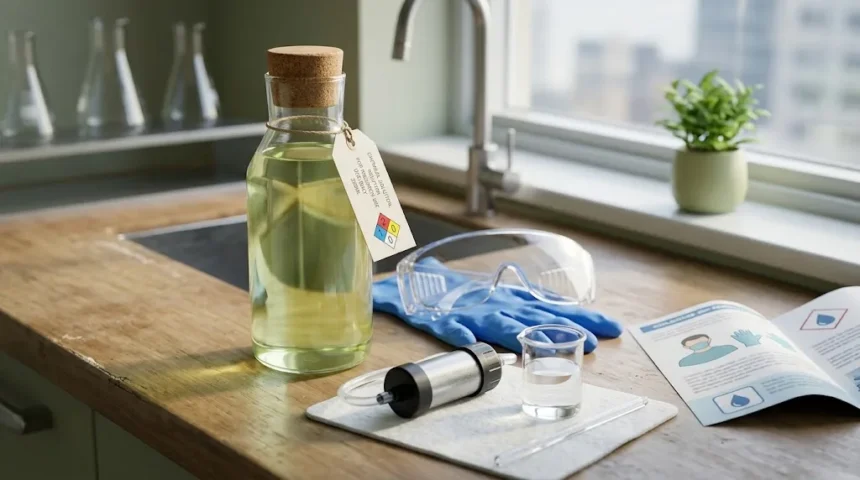
Chlorine dioxide can also irritate the eyes and may cause tearing, redness, burning, or discomfort after direct exposure. Concentrated solutions or chemicals used in chlorine dioxide systems can create additional hazards if they splash onto the skin or into the eyes. Appropriate protective equipment depends on the product and workplace procedure, but eye protection and chemical-resistant gloves are common considerations in controlled industrial settings. Anyone handling a commercial chemical should read the product’s safety information before use rather than relying on general advice from the internet. Different formulations can have different concentrations and associated ingredients. Proper protection must therefore be based on the exact material being handled.
Swallowing concentrated chlorine dioxide solutions or chemical mixtures promoted as chlorine dioxide treatments can be harmful. Possible effects can include irritation of the mouth and digestive system, nausea, vomiting, diarrhea, dehydration, and other serious complications depending on the product and amount involved. Ingestion is particularly concerning when products contain concentrated sodium chlorite or are mixed in ways that generate reactive chlorine dioxide. The fact that extremely low, controlled disinfectant levels may be used in regulated water treatment does not make concentrated chemical products safe to drink. Concentration changes risk dramatically. Chlorine dioxide products should never be consumed as a home remedy, detox treatment, or substitute for medical care.
The severity of chlorine dioxide exposure depends on several variables rather than the chemical name alone. Concentration, route of exposure, length of contact, ventilation, individual susceptibility, and whether other chemicals are present can all influence health effects. A brief exposure to a properly controlled water-treatment residual is fundamentally different from inhaling concentrated gas in an enclosed space. Similarly, incidental contact with a highly diluted professional process is not equivalent to swallowing concentrated chemical solutions. Understanding exposure context helps explain why the compound can have legitimate industrial uses while still presenting serious hazards when misused. Safe chemical management always distinguishes controlled application from uncontrolled personal exposure.
Repeated or occupational exposure should be managed through workplace safety systems rather than simply waiting for symptoms to appear. Employers handling chlorine dioxide or its precursor chemicals may use engineering controls, closed systems, ventilation, monitoring equipment, protective clothing, employee training, and emergency procedures. Workers should know how to recognize leaks, alarms, unusual odors, and exposure symptoms. Maintenance tasks can require special precautions because opening equipment may release trapped chemicals or gas. Safety procedures should also address storage and incompatible materials. Prevention is far more reliable than attempting to judge exposure solely by whether someone feels immediate irritation.
Chlorine Dioxide in Drinking Water and Food Safety
Chlorine dioxide can be used as a disinfectant in properly managed drinking-water treatment systems. Its purpose in that setting is to help control microorganisms and address certain water-quality issues under measured conditions. Treatment professionals calculate dosing according to water chemistry, contact time, microbial requirements, and applicable drinking-water standards. They also monitor reaction products because chlorine dioxide can form chlorite and chlorate as it reacts and decomposes. These byproducts are part of the reason treatment cannot be managed responsibly by guessing at doses. Safe drinking-water treatment is a controlled engineering process supported by testing rather than a do-it-yourself chemical practice.
The distinction between treated tap water and a bottle of concentrated chlorine dioxide product is essential. Many substances are safe or useful at one exposure level and hazardous at another, and disinfectants are a clear example. Water-treatment facilities use equipment designed to meter chemicals accurately and verify water quality before distribution. A consumer mixing concentrated products at home lacks the same instrumentation, process controls, chemical analysis, and professional oversight. Color and smell cannot reliably confirm that a mixture contains an acceptable concentration. Therefore, legitimate drinking-water disinfection should never be interpreted as proof that concentrated chlorine dioxide solutions are appropriate beverages.
Food-related uses require the same kind of distinction. Chlorine dioxide may be permitted in certain controlled sanitation or processing applications, but those uses are designed around defined conditions and intended outcomes. A treatment applied to equipment or process water is not equivalent to intentionally ingesting the concentrated chemical. Food processors may monitor concentration, contact time, rinsing, water quality, and other factors as required by the specific application. These steps reduce the chance that sanitation chemicals interfere with food quality or create unnecessary exposure. Consumers should follow food-handling guidance intended for homes rather than trying to reproduce specialized industrial sanitation processes.
Chlorine dioxide is sometimes discussed online as though its ability to kill microorganisms outside the body proves that drinking it can eliminate infections inside the body. That reasoning is incorrect because disinfecting a surface and treating a human disease are fundamentally different tasks. Chemicals capable of damaging microorganisms can also damage human cells and tissues when used at unsafe concentrations or by inappropriate routes. A disinfectant does not become a medication simply because it has antimicrobial properties in laboratory or environmental applications. Medicines require evidence showing appropriate dosing, effectiveness, safety, and acceptable risk for a particular condition. Chlorine dioxide products should not be consumed on the assumption that industrial disinfectant activity translates into medical benefit.
People concerned about the safety of their drinking water should rely on appropriate water-quality testing and recognized treatment methods rather than unverified chemical mixtures. If contamination is suspected, the correct response depends on the contaminant because bacteria, metals, chemicals, parasites, and other hazards require different approaches. Boiling can address certain microbial concerns but will not solve every chemical contamination problem. Filters also vary greatly in what they can remove. Professional water-treatment advice is therefore especially important when dealing with a private well, disaster conditions, or suspected contamination. Adding more disinfectant without knowing the underlying problem can create additional risks instead of making the water safer.
Chlorine Dioxide vs. Bleach and Other Disinfectants
Chlorine dioxide and household chlorine bleach are not the same substance. Household bleach typically contains sodium hypochlorite dissolved in water, while chlorine dioxide is ClO₂ and has different chemical properties. Both can function as oxidizing disinfectants, but they react differently with contaminants and require different handling procedures. Products designed around one chemistry should never be substituted casually for products based on another. Labels provide important instructions about surfaces, dilution, ventilation, contact time, and incompatibilities. Assuming that all “chlorine” products can be used in the same way can create ineffective cleaning or dangerous chemical reactions.
Chlorine dioxide also differs from chlorine gas, which is Cl₂. Chlorine gas has historically been used in water treatment and other industrial processes, but it is a highly irritating toxic gas that requires controlled handling. Chlorine dioxide is also hazardous when inhaled at excessive concentrations, even though its chemistry and treatment behavior differ from molecular chlorine. Both substances illustrate why industrial disinfection must be managed with engineering safeguards. The presence of a chlorine atom in a chemical formula does not make two compounds interchangeable. Chemical identity matters because structure influences reactivity, toxicity, stability, and appropriate use.
Hydrogen peroxide is another oxidizing chemical commonly associated with disinfection, but its properties and approved applications differ from those of chlorine dioxide. Peroxide-based products may be used for certain surfaces, industrial processes, or personal-care applications depending on formulation. Alcohol-based disinfectants are another category and are widely used for specific hand and surface sanitation purposes. Quaternary ammonium compounds, peracetic acid, ozone, and other technologies may also be selected for specialized settings. No disinfectant is automatically best for every microorganism, material, or environment. Selection depends on safety, compatibility, required contact time, residue considerations, organic load, equipment, and the intended application.
Mixing disinfectants is particularly dangerous because household and industrial chemicals can react unexpectedly. Some combinations can release toxic gases, generate heat, damage surfaces, or create corrosive compounds. Chlorine dioxide precursor chemicals should never be combined through improvised recipes obtained from social media, forums, or unofficial websites. The same principle applies to household bleach, which should not be mixed with other cleaners unless the product instructions specifically permit it. Using one correctly selected product according to its label is safer than creating a homemade chemical cocktail. More chemicals do not automatically produce stronger or more effective sanitation.
Choosing a disinfectant should begin with the surface, microorganism concern, environment, and approved product instructions rather than comparing chemical names alone. Hospitals, food facilities, water plants, factories, and homes have very different sanitation requirements. A chemical suitable for industrial pipes may be inappropriate for a kitchen counter, while a household surface disinfectant may be unsuitable for drinking-water treatment. Material compatibility matters as well because oxidizers can damage metals, fabrics, coatings, rubber components, or electronics. Professionals evaluate these factors before selecting a treatment program. Consumers can achieve the same basic safety principle by using products only for the purposes clearly stated on their labels.
How to Handle Chlorine Dioxide Safely
Safe handling begins with understanding the exact product rather than relying on the general name chlorine dioxide. Commercial products can differ in concentration, formulation, packaging, and intended application, and some may contain precursor chemicals rather than ready-to-use chlorine dioxide. The product label and safety documentation should explain hazards, required protective equipment, ventilation needs, storage conditions, and emergency procedures. Industrial users should receive task-specific training before handling reactive chemicals. People should never transfer concentrated products into unlabeled household bottles where they may later be mistaken for water or cleaning supplies. Clear identification is a basic but important step in preventing accidental exposure.
Ventilation is especially important because chlorine dioxide exposure through inhalation can irritate the respiratory tract. Professional applications that generate gas should use appropriately designed ventilation, closed equipment, monitoring systems, and restricted access when necessary. People should not intentionally generate chlorine dioxide gas in bedrooms, bathrooms, vehicles, or other occupied enclosed spaces. Odor is not a substitute for an exposure monitor because human smell does not provide precise concentration information. If a strong chemical odor appears unexpectedly, leaving the immediate area and seeking appropriate safety assistance is safer than investigating closely. Reentering an affected area should follow professional guidance when a significant release may have occurred.
Chemical storage also requires care because reactive oxidizing materials may become hazardous when exposed to incompatible substances or unsuitable conditions. Containers should remain closed, labeled, and stored according to manufacturer instructions. Heat, sunlight, contamination, or accidental mixing may increase the risk associated with certain formulations or precursor chemicals. Workplaces should separate incompatible materials according to their chemical safety procedures and maintain spill-response plans. Consumers should keep chemical products away from children and pets and avoid storing them alongside beverages or food. A safe storage system reduces both accidental ingestion and inappropriate mixing.
If chlorine dioxide or a related product contacts the eyes or skin, immediate decontamination generally involves moving away from the source and flushing the affected area with plenty of clean water. Contaminated clothing should be removed when it can be done safely, and persistent pain, burns, breathing problems, or significant exposure warrant prompt medical attention. Someone who inhales irritating gas should move to fresh air without entering a contaminated area to rescue belongings. If a chlorine dioxide product has been swallowed, professional poison or emergency medical advice should be obtained rather than attempting home treatments. Vomiting should not be induced unless a qualified medical professional specifically directs it. Product packaging can help healthcare professionals identify what was involved.
Emergency planning is especially important in workplaces where chlorine dioxide is generated or used regularly. Employees should understand alarms, evacuation routes, spill procedures, first-aid measures, and who is authorized to respond to a release. Appropriate respiratory protection requires professional selection and training because ordinary dust masks do not protect against chemical gases. Facilities may also need gas-detection equipment and procedures for confirming that an area is safe before workers return. Incident records can help identify equipment failures or procedural weaknesses that require correction. A well-designed safety program reduces reliance on individual judgment during a stressful chemical emergency.
Chlorine Dioxide Myths, Medical Claims, and Misuse
One of the most dangerous misunderstandings about chlorine dioxide involves products marketed under names such as “miracle mineral solution,” “miracle mineral supplement,” or similar wording. These products may involve sodium chlorite solutions that generate chlorine dioxide when mixed with an acidic substance. They are sometimes promoted online for infections, chronic diseases, detoxification, or other medical conditions despite the absence of a legitimate basis for treating people with an industrial oxidizing disinfectant. Swallowing such mixtures can cause harmful effects rather than safely destroying disease inside the body. People should not prepare or drink chlorine dioxide mixtures for health purposes. Medical conditions deserve treatments with evidence for both effectiveness and safety.
The idea that chlorine dioxide can “detox” the body is also misleading. Human organs such as the liver and kidneys already perform complex processes that metabolize and remove many substances from the body. A reactive oxidizer does not selectively search for harmful toxins while leaving healthy tissues untouched. Chemical oxidation is not the same thing as physiological detoxification, and exposing the digestive system to an oxidizing disinfectant can cause injury. Marketing claims often use scientific-sounding words without explaining realistic biological mechanisms or risks. Consumers should be especially cautious when a product claims to treat many unrelated conditions through one supposed cleansing mechanism.
Another misconception is that a chemical must be safe to drink because it is used in drinking-water treatment. The flaw in this argument is that treatment plants use carefully measured quantities within engineered systems and monitor both the disinfectant and its byproducts. Many useful water-treatment chemicals would be hazardous if consumed from concentrated containers. Safe exposure depends on dose, concentration, route, duration, and chemical form. Comparing a controlled residual in finished water with a concentrated solution is therefore misleading. The same distinction applies to numerous substances used in food manufacturing, sanitation, and industrial processing.
Online testimonials can make chlorine dioxide health claims appear persuasive because personal stories are emotionally powerful. However, an individual report cannot establish whether a treatment caused improvement, whether the original diagnosis was accurate, or whether symptoms changed for unrelated reasons. Testimonials also rarely capture people who experienced no benefit or suffered adverse effects. Reliable medical evidence requires systematic testing and careful comparison so that benefits and harms can be measured objectively. A product promoted primarily through dramatic personal stories, conspiracy claims, or suggestions that all conventional healthcare is hiding a cure deserves particular skepticism. Health decisions should be based on credible evidence rather than viral anecdotes.
The safest distinction to remember is straightforward: chlorine dioxide has legitimate controlled uses as an industrial and environmental disinfectant, but that does not make it an ingestible medicine. Professionals can use a hazardous chemical safely when systems control concentration, exposure, ventilation, storage, and disposal. Those safeguards disappear when concentrated products are mixed or swallowed at home. People considering chlorine dioxide because of a health concern should discuss the actual condition with a qualified healthcare professional rather than experimenting with oxidizing chemicals. People using chlorine dioxide professionally should follow the specific chemical safety procedures for their workplace. Respecting the boundary between industrial disinfection and medical treatment prevents one of the most serious forms of chlorine dioxide misuse.
Frequently Asked Questions About Chlorine Dioxide
What is chlorine dioxide used for? Chlorine dioxide is mainly used in controlled applications such as water treatment, pulp and paper bleaching, industrial sanitation, microbial control, and some specialized decontamination processes. Appropriate use depends on concentration, equipment, and safety procedures.
Is chlorine dioxide the same as bleach? No. Chlorine dioxide is ClO₂, while ordinary household bleach usually contains sodium hypochlorite. They have different chemistry and should never be treated as interchangeable products.
Is chlorine dioxide safe to drink? Concentrated chlorine dioxide products and mixtures sold as health treatments should not be swallowed. Legitimate drinking-water treatment uses carefully controlled processes and should not be confused with consuming concentrated disinfectant solutions.
What happens if you breathe chlorine dioxide? Excessive inhalation can irritate the nose, throat, and lungs and may cause coughing, breathing difficulty, or chest discomfort. Significant exposure or persistent respiratory symptoms require prompt medical evaluation.
Can chlorine dioxide cure infections or diseases? Chlorine dioxide is a disinfecting oxidizer, not an appropriate home medication for treating infections or chronic illnesses. Using it as an ingestible treatment can cause harm and should not replace qualified medical care.
