


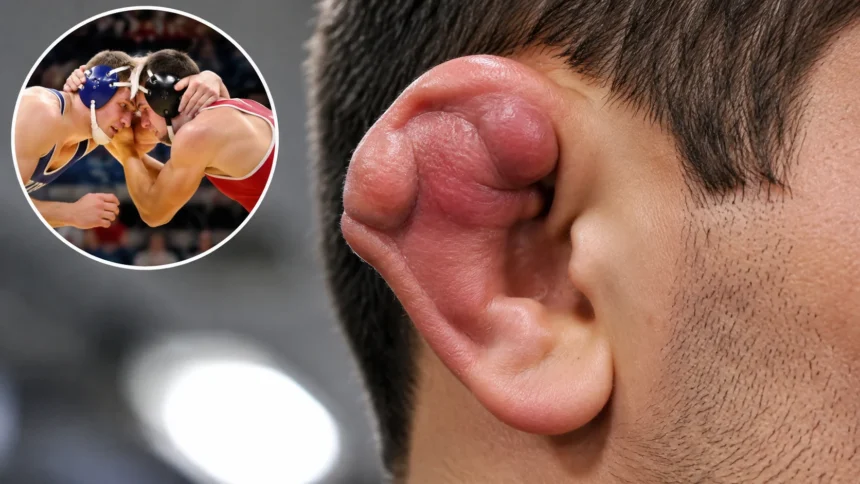
Cauliflower Ear: Causes, Symptoms & Treatment
Cauliflower ear is a permanent or potentially permanent change in the shape of the outer ear that usually begins after trauma causes blood to collect between the skin and cartilage. It is strongly associated with wrestling, boxing, mixed martial arts, rugby, and other activities where the ear experiences repeated friction, pressure, or blunt impact. Although the swollen ear may initially look like an ordinary sports injury, an untreated auricular hematoma can interfere with the cartilage’s blood supply and lead to scarring and abnormal new tissue. Early treatment matters because prompt drainage and compression can often prevent the characteristic thickened, irregular appearance. Once mature deformity develops, correcting the ear becomes considerably more difficult. Understanding the early stages can therefore help prevent permanent changes.
Cauliflower ear is sometimes treated casually within combat-sport culture and may even be viewed as evidence of years spent wrestling or fighting. However, the condition is more than a cosmetic change and may occasionally interfere with normal ear function. Severe deformity can alter the opening of the ear canal, make earbuds or hearing protection difficult to wear, increase problems with earwax, and sometimes contribute to hearing difficulties. Infection is another concern when traumatized cartilage or an untreated hematoma becomes involved. The safest response to a newly swollen ear after trauma is therefore not to wait for the shape to settle on its own. Early assessment by a healthcare professional can protect both the appearance and function of the ear.
This guide explains cauliflower ear causes, symptoms, auricular hematomas, diagnosis, treatment, recovery, complications, and prevention in clear and practical language. Related concepts such as wrestler’s ear, swollen ear cartilage, ear hematoma treatment, combat-sport ear injuries, perichondrium damage, ear swelling after wrestling, cauliflower ear surgery, compression dressings, and protective headgear are covered naturally throughout the article. Treatment information is focused on what patients need to understand rather than instructions for performing drainage themselves. Attempting to puncture or drain an ear hematoma at home may introduce infection and often fails because preventing the space from filling again is an essential part of treatment. Knowing when professional care is needed can make the difference between temporary swelling and permanent deformity.
What Is Cauliflower Ear?
Cauliflower ear is a deformity of the outer visible ear, medically called the auricle or pinna, that commonly develops after an auricular hematoma is not treated effectively. A hematoma is a collection of blood, and in this injury it forms within or around the thin tissue layers covering the ear’s elastic cartilage. The skin and perichondrium can separate from the underlying cartilage following trauma, disrupting the circulation that normally supplies nutrients to that cartilage. When blood remains trapped in this space, damaged cartilage may begin losing its normal structure. Healing can then occur abnormally, with scar tissue and new fibrocartilage contributing to thickening and distortion. The result is the irregular, folded appearance commonly described as cauliflower ear.
Understanding the anatomy explains why a relatively small-looking ear injury can create permanent changes. Cartilage itself does not have the same direct blood supply as many other tissues and depends substantially on the surrounding perichondrium for nourishment. When trauma separates these layers, the collection of blood occupies the space where the tissues should remain closely connected. The interruption can contribute to cartilage damage, inflammation, and abnormal healing if the hematoma persists. As damaged tissue heals, fibrous material and irregular cartilage may replace the smooth contours of the original ear. This is why simply waiting for swelling to disappear is not always a safe strategy after a significant ear injury. The underlying cartilage may already be losing its normal shape even while pain begins to decrease.
The term cauliflower ear technically describes the established deformity, while auricular hematoma describes the acute blood collection that commonly precedes it. People often use the phrases interchangeably because the conditions are closely connected, but recognizing the difference is important. A newly swollen, soft, tender ear after a wrestling match may still represent a treatable hematoma rather than permanent cauliflower ear. At that stage, medical treatment can often remove the trapped blood and restore contact between the tissue layers and cartilage. Once scar tissue and abnormal cartilage become established, simply draining fluid will no longer restore the original anatomy. The distinction between an early hematoma and mature deformity is therefore central to understanding why treatment timing matters so much.
Cauliflower ear most commonly affects the upper and central cartilaginous portions of the pinna rather than the soft earlobe because the earlobe does not contain the same cartilage structure. The ear may become thick, firm, folded, knobby, or asymmetrical depending on where trauma occurred. Some people develop only a relatively small irregularity, while repeated untreated injuries can create extensive deformity involving much of the outer ear. The bowl-shaped area near the ear canal may also become distorted in severe cases. This can make earbuds, hearing protection, or certain hearing devices difficult to use comfortably. Functional consequences are therefore possible even when a person is unconcerned about cosmetic appearance. The severity depends on how much cartilage is damaged and where the deformity develops.
Cauliflower ear is preventable in many cases, which makes awareness particularly important among athletes. The condition does not usually appear instantly as a fully formed deformity after one minor bump. Instead, it often begins with a hematoma that provides a window for prompt medical intervention. Preventing permanent change depends on recognizing the swelling, obtaining appropriate drainage when needed, preventing blood from collecting again, and protecting the ear during healing. Repeated trauma before recovery increases the likelihood of recurrence and lasting distortion. Athletes who accept ear swelling as an unavoidable part of their sport may therefore miss an opportunity to preserve normal cartilage. Fresh swelling after ear trauma deserves attention before it becomes the hard, irregular shape associated with mature cauliflower ear.
What Causes Cauliflower Ear?
Blunt force and repeated shearing trauma are the most common causes of cauliflower ear. Wrestling is strongly associated with the condition because an athlete’s ear may repeatedly rub against an opponent, shoulder, mat, head, or arm during grappling. Boxing and mixed martial arts create additional risk through direct strikes, clinching, takedowns, and ground fighting. Rugby players may experience ear trauma during tackles, scrums, or contact with other players. The important point is that the injury does not always require one dramatic blow. Repeated lower-force friction can also damage small blood vessels around the cartilage and create an auricular hematoma. Athletes who train frequently without consistent ear protection are therefore particularly vulnerable to developing the condition over time.
Shearing forces are especially important because they can cause the skin and perichondrium to shift relative to the underlying cartilage. This separation damages small blood vessels and allows blood to accumulate in the newly created space. A person may therefore develop a significant auricular hematoma even when there is no deep cut or obvious external wound. The affected ear can initially look bruised and swollen but otherwise remain intact. That appearance sometimes encourages athletes to continue training because the injury seems superficial. Continuing to wrestle, grapple, or take blows to the same ear can enlarge the hematoma and further disrupt the cartilage’s blood supply. Promptly stopping the activity and having the ear assessed can reduce the chance that a manageable injury becomes permanent.
Although athletes receive most of the attention, cauliflower ear can occur in people who do not participate in contact sports. Falls, assaults, motor-vehicle injuries, accidental blows, and other forms of trauma may produce an auricular hematoma. Any situation that causes enough pressure, friction, or impact to separate the tissue from the underlying cartilage can potentially trigger the process. Ear piercings involving cartilage can also lead to swelling and infection that may damage the ear, although not every swollen pierced ear is an auricular hematoma. Rarely, spontaneous swelling or certain medical conditions may resemble traumatic hematomas. This means the absence of wrestling or boxing history should not automatically rule out a serious ear problem. Unexplained focal swelling of the cartilaginous ear deserves medical attention.
Certain health factors can increase the likelihood of bleeding or make an ear injury more complicated. People taking anticoagulant or blood-thinning medications may develop more substantial bleeding after relatively minor trauma and should tell the treating clinician about their medication. Bleeding disorders can create similar concerns. Conditions involving inflammation of ear cartilage can also produce symptoms that resemble trauma-related swelling but require a very different approach. Infection, cellulitis, abscesses, cysts, and other disorders may mimic an auricular hematoma. This is another reason self-diagnosis and home drainage can be risky. A healthcare professional needs to determine whether the swelling contains blood, infected material, or another type of tissue before choosing appropriate treatment. Not every painful or swollen ear should be punctured.
Repeated trauma is one of the strongest risk factors for established cauliflower ear. An athlete may experience one hematoma, receive appropriate treatment, and heal without obvious deformity. Another person may repeatedly injure the same ear before it has fully healed, allowing inflammation, scarring, and cartilage remodeling to accumulate. Protective headgear can substantially reduce exposure during wrestling and other combat sports, although no equipment eliminates every possible impact. Consistency is particularly important because many athletes wear protection during competitions but remove it during everyday training when much of the repeated friction occurs. Properly fitted equipment, good technique, early injury recognition, and adequate healing time all work together. Prevention is much easier than trying to reconstruct severely deformed cartilage years later.
Cauliflower Ear Symptoms and Early Warning Signs
The earliest warning sign is usually new swelling of the outer ear after trauma. The swollen area may feel soft, fluctuant, or fluid-filled because blood has collected beneath the skin or around the cartilage. Pain and tenderness are common, especially when the ear is touched, pressed by protective equipment, or placed against a pillow. The skin may appear red, purple, bruised, or darker than usual depending on skin tone and the amount of bleeding. The natural curves and ridges of the ear can begin appearing smoother or distorted as the swelling expands. Pressure, fullness, warmth, and visible asymmetry may also develop. Recognizing these changes early is important because they may represent an auricular hematoma before permanent cartilage deformity has formed.
A sensation of fullness or pressure can accompany the visible swelling. Some people describe the affected ear as feeling heavier, tight, numb, unusually sensitive, or warmer than the opposite ear. If swelling extends near the bowl of the ear or external ear canal, hearing may seem temporarily muffled because the opening is mechanically narrowed. Significant hearing loss, however, should not automatically be blamed on cauliflower ear after a head injury. Trauma capable of injuring the pinna may also damage the eardrum, middle ear, inner ear, skull, or brain. New hearing loss, severe dizziness, loss of consciousness, repeated vomiting, intense headache, or neurological symptoms deserve broader medical evaluation. The visible swelling may be only one part of a more significant injury.
As an untreated hematoma evolves, the character of the swelling can change. Fresh blood may initially create a softer pocket, while clotting gradually makes the area more firm. Over the following days, damaged tissue may begin forming scar tissue and abnormal cartilage. The ear can become increasingly thickened, lumpy, folded, and fixed in an unusual shape. Pain may actually decrease as the condition becomes chronic, which can falsely reassure someone who delayed treatment. Reduced soreness does not mean the cartilage has returned to normal. It may instead indicate that the acute hematoma is progressing toward mature cauliflower ear. Waiting until the ear feels hard generally means the easiest opportunity for preventing permanent deformity has already passed.
Signs of infection require particular attention because infected cartilage can become difficult to treat. Increasing redness, warmth, worsening pain, pus, foul-smelling drainage, fever, chills, or rapidly spreading swelling should prompt urgent clinical review. An infected hematoma or inflammation around the cartilage can damage tissue and contribute to deformity independently of the original injury. Ear piercings through cartilage deserve special caution because infection in this region can become serious. Do not assume every swollen ear after piercing, grappling, or impact is simply a collection of blood. Treatment may require antibiotics, drainage, wound care, or specialist involvement depending on the underlying problem. Delaying assessment when infection is suspected may increase both medical complications and the likelihood of permanent changes in ear shape.
The safest approach is to treat new post-traumatic ear swelling as time-sensitive even when the pain remains manageable. A person does not need to wait for the ear to resemble a cauliflower before seeking care. The more preventable stage is usually the earlier one, when blood remains collected and the cartilage has not undergone extensive remodeling. An urgent care clinic, emergency department, sports medicine clinician, ENT specialist, or another qualified medical professional can evaluate the injury depending on local availability. Larger hematomas, recurrent swelling, delayed presentations, possible infection, or associated hearing and neurological symptoms may require specialist assessment. Early recognition matters because established cauliflower ear represents the result of tissue damage rather than the beginning of the problem.
How Cauliflower Ear Develops and Why Timing Matters
The progression begins when trauma damages small blood vessels around the ear cartilage and creates a collection of blood. The perichondrium normally lies closely against the cartilage and contributes to its nourishment. When a hematoma pushes these layers apart, the cartilage can lose part of that essential blood supply. Without proper circulation, damaged cartilage can begin deteriorating while inflammation and healing processes alter the surrounding tissue. The visible deformity is therefore not simply dried blood trapped permanently inside the ear. It reflects biological changes in the cartilage and the way the body repairs the injury after normal tissue relationships have been disrupted. This explains why removing fluid early can help while attempting the same thing weeks later usually cannot reverse the deformity.
During the earliest period, the collection may remain relatively fluid, but clotting gradually changes its consistency. Treatment options depend on factors such as the age of the injury, size of the hematoma, location, previous episodes, and whether infection is suspected. Very fresh and limited collections may be managed differently from larger or older hematomas. Once blood becomes more organized or the lesion repeatedly returns, a more involved drainage approach may be necessary. Patients do not need to decide which technique is suitable themselves. The important decision is seeking professional assessment promptly while the injury is still potentially reversible. Delaying because the swelling seems small can allow clot formation and cartilage damage to progress before the seriousness of the problem becomes obvious.
Removing accumulated blood is only one part of successful treatment. The separated tissues must be brought back into close contact so the perichondrium can reattach to the cartilage and the empty space does not immediately fill with blood again. This is why clinicians commonly use pressure dressings, bolsters, splints, or specialized suturing after drainage. Compression needs to remain in place for several days according to the treatment plan. Without it, the pocket may reopen and the hematoma may return even if the initial drainage seemed successful. This requirement explains why puncturing the ear at home often fails. Simply removing fluid without providing controlled compression, sterile care, and follow-up does not adequately address the underlying injury.
Reaccumulation can happen even after professional treatment, especially when compression is inadequate or the person returns to contact activities too quickly. Follow-up during the first several days is therefore an important part of care rather than an optional extra. Athletes should monitor for renewed swelling, increasing pressure, pain, redness, or changes around the dressing and follow instructions about when to return for review. Continuing to wrestle with a freshly treated ear can displace compression materials, reopen damaged blood vessels, and create another hematoma. Returning to training too early may undo otherwise successful treatment. Temporary restriction from contact sport is therefore not merely about pain control. It helps give the tissue enough time to heal in the correct position.
Once abnormal scar tissue and fibrocartilage have formed, management becomes considerably more complicated. A hematoma that has been present for several days may already be organizing and may require specialist treatment rather than a simple procedure. Established cauliflower ear cannot usually be restored by merely extracting old blood because the abnormal shape has become structurally incorporated into the cartilage. At that point, treatment may shift from prevention to reconstruction. An ENT or plastic surgeon may need to reshape, remove, or reposition abnormal cartilage if the person wants correction. This is why timing matters so strongly. Treating the original hematoma protects normal anatomy, while delayed treatment may eventually require surgery to recreate anatomy that has already been damaged.
How Cauliflower Ear Is Diagnosed
Cauliflower ear and auricular hematomas are usually diagnosed through medical history and physical examination rather than complicated testing. A healthcare professional asks about recent ear trauma, contact sports, falls, fights, piercings, previous hematomas, medication use, and how quickly the swelling appeared. The appearance and feel of the ear provide important clues, particularly when there is a new soft or tender collection after trauma. Both ears may be examined so the injured side can be compared with normal contours. The clinician may gently assess whether the swelling feels fluid-filled, firm, inflamed, or already scarred. In a straightforward sports injury, this clinical information is often enough to identify an auricular hematoma. Mature cauliflower ear is usually recognizable from its characteristic shape and history.
The ear canal and eardrum may also be examined because trauma can involve structures beyond the visible pinna. Hearing changes, blood or fluid from the canal, dizziness, significant head injury, or severe pain increase the importance of checking for additional damage. A normal-looking outer ear canal does not exclude every deeper problem, but examination helps determine whether the injury appears isolated. If hearing has changed significantly, formal hearing testing may eventually be recommended. The medical team may also ask about ringing in the ears, balance problems, or a feeling of blockage. The goal is to avoid focusing so heavily on the visible swelling that damage to the eardrum, middle ear, inner ear, or other head structures is overlooked.
Imaging is generally not necessary for an uncomplicated auricular hematoma. Ultrasound may occasionally help when it is unclear whether a swelling contains fluid or represents another type of lesion. CT scanning or other imaging becomes more relevant when the mechanism raises concern about facial fractures, skull injury, or significant head trauma. Neurological symptoms may require assessment for concussion or traumatic brain injury rather than being attributed to the ear itself. A person who lost consciousness during a collision should not assume the main concern is cauliflower ear simply because the pinna looks swollen. Healthcare professionals evaluate the entire injury mechanism and associated symptoms. The visually obvious ear injury may not always be the most medically important problem.
Diagnosis also involves distinguishing a hematoma from infection, abscess, cyst, keloid, cellulitis, inflammatory cartilage disease, and other causes of ear swelling. An infected ear may be particularly hot, red, painful, or draining pus, while inflammatory disorders can produce cartilage swelling without a clear history of trauma. Piercing-related problems deserve specific attention because cartilage infection may require antibiotic treatment rather than ordinary hematoma management. Attempting to drain what appears to be a hematoma without understanding the underlying diagnosis may spread infection or delay appropriate care. Medical assessment therefore determines both what the swelling is and what it is not. Accurate diagnosis is especially important when symptoms developed without an obvious blow, wrestling session, or other traumatic event.
Established cauliflower ear generally does not require imaging simply to prove that deformity is present. Specialist evaluation instead focuses on the amount and location of cartilage thickening, involvement near the ear canal, chronic discomfort, previous infections, and the person’s treatment goals. Someone seeking cosmetic reconstruction may be referred to an ENT, facial plastic surgeon, or plastic surgeon. Narrowing of the ear canal or hearing difficulties may lead to additional evaluation. Photographs can sometimes help document progression and guide reconstructive planning, but treatment depends primarily on the individual anatomy. A person comfortable with a mild stable deformity may decide against surgery, while another may want correction because of discomfort, equipment problems, hearing concerns, or dissatisfaction with appearance.
How Cauliflower Ear Is Treated
Treatment depends largely on whether a person has a fresh auricular hematoma or an established cauliflower-ear deformity. The priority after a recent injury is to remove accumulated blood, restore contact between the tissue layers and cartilage, and prevent the collection from returning. Treatment is performed using sterile technique and appropriate pain control when necessary. The exact approach varies according to the hematoma’s size, age, location, recurrence history, condition of the surrounding skin, and clinician experience. Small recent hematomas may sometimes be managed differently from larger or older ones. Patients should not attempt to choose or reproduce a drainage technique themselves based on descriptions found online. Safe treatment requires medical judgment because the wrong approach may cause infection, recurrence, or additional cartilage damage.
A fresh hematoma may be treated in an emergency department, ENT clinic, sports medicine setting, or another appropriately equipped medical facility. Depending on the injury, the clinician may remove the blood through a procedure designed to empty the collection completely. Larger, recurrent, or older hematomas may require a more involved technique because the blood can become clotted or organized. The provider also looks for skin injury, infection, and signs that cartilage damage has already progressed. A patient who presents after several days may be referred directly to an ENT specialist if the collection is no longer straightforward. The important point is that early evaluation keeps more treatment options available. Waiting until the swelling becomes hard can significantly reduce the usefulness of simple drainage.
Compression after drainage is one of the most important parts of treatment. Clinicians may use bolsters, molded splints, pressure dressings, or specialized sutures to hold the perichondrium closely against the cartilage. This helps prevent another pocket from forming and allows normal tissue contact to be restored during healing. The compression method generally remains in place for several days and must be monitored to ensure it is not excessively tight. Too little pressure may allow blood to return, while excessive pressure can impair circulation and cause additional tissue injury. This balance is difficult to achieve safely at home. Follow-up allows the clinician to inspect the ear, remove or adjust the dressing, and identify recurrence before it progresses toward permanent deformity.
Medication may be prescribed depending on the procedure, contamination, infection risk, and the patient’s medical history. Antibiotics may be appropriate in selected situations, while confirmed infection usually requires more targeted treatment. Pain relief can also be discussed with the healthcare professional according to the person’s existing conditions and medications. While waiting for assessment, a cold pack wrapped in cloth can be used briefly to reduce discomfort and swelling. Ice should never be applied directly to the skin or treated as a substitute for medical drainage when a significant hematoma exists. Patients should also avoid massaging, squeezing, cutting, or puncturing the swelling. These actions may worsen bleeding, introduce bacteria, and make later treatment more complicated.
Once mature cauliflower ear has developed, treatment becomes reconstructive rather than simply removing blood. Surgery may involve reshaping, trimming, repositioning, or reconstructing abnormal cartilage to restore a more natural contour. Procedures may fall under otoplasty or other forms of auricular reconstruction depending on the severity. The complexity varies according to how much of the ear is affected and whether repeated infections or injuries have changed the tissue extensively. Surgery can improve appearance and function, but it may not recreate the exact original ear in every case. Recovery also requires protecting the reconstructed cartilage from additional trauma. Preventing cauliflower ear by treating an acute hematoma promptly is therefore far easier than correcting a mature deformity after cartilage remodeling has already occurred.
Recovery After Cauliflower Ear Treatment
Recovery after treatment of an acute auricular hematoma usually requires protecting the ear while the tissue layers reattach and heal. A pressure dressing, bolster, or splint may need to remain in place for several days according to the clinician’s instructions. Patients should keep the dressing appropriately dry and follow specific wound-care directions rather than adjusting or removing it because it feels inconvenient. A dressing that becomes displaced, soaked, unusually painful, or associated with renewed swelling should be discussed with the treating team. Early follow-up is important because the hematoma can return even when the initial procedure was technically successful. The goal during recovery is to keep the tissue compressed, prevent infection, and protect the ear from additional trauma while healing progresses.
Contact sports and activities that expose the ear to rubbing or impact should be avoided during early recovery. The exact return-to-sport timeline depends on the severity of the injury, treatment method, healing progress, and clinician’s judgment. Many athletes may need to avoid strenuous exercise and direct contact for roughly one to two weeks or longer in complicated cases. Returning too soon can reopen damaged blood vessels or cause the treated area to separate again. Competitive pressure sometimes encourages wrestlers and fighters to ignore this restriction, especially near tournaments. However, one additional impact may be enough to recreate the hematoma. A short period away from contact can prevent a deformity that otherwise may last for life.
Pain and swelling should gradually improve after successful treatment. Mild soreness around the treated area can occur during healing, particularly where compression materials contact the skin. The ear should not progressively become more painful, hotter, increasingly red, or significantly more swollen. Those changes may suggest recurrence, infection, excessive pressure, or another complication. Patients should know how to contact the treating clinic if something changes between scheduled appointments. Waiting until the dressing is removed may allow another hematoma to become established. Monitoring does not require constantly touching or squeezing the ear. In fact, unnecessary manipulation should be avoided. Visual inspection and attention to symptoms are usually more helpful than repeatedly pressing the injured cartilage.
Once the initial dressing is removed, protective equipment becomes important when the person eventually returns to high-risk activities. Wrestlers, grapplers, and other athletes should use well-fitted ear guards consistently during training and competition. Returning without protection immediately after healing increases the chance of another injury to tissue that may still be vulnerable. Coaches should support gradual return rather than treating healed skin as proof that deeper structures are fully recovered. An athlete with repeated hematomas may need additional evaluation to determine whether cartilage irregularities or training habits are creating persistent risk. Prevention does not stop once the first injury has been treated. The weeks following recovery are an important opportunity to improve equipment use and reduce future trauma.
Most people treated promptly recover without major permanent deformity. Minor contour changes may occasionally remain depending on how long the hematoma existed and how extensively the cartilage was injured before treatment. Recurrent cases carry a greater risk of long-term thickening because every episode creates additional inflammation and tissue disruption. People who notice persistent distortion after healing can discuss the appearance with an ENT or plastic surgeon once the acute injury has settled. Surgery is not always necessary, particularly when the deformity is mild and causes no functional difficulty. The best recovery outcome is one where the ear remains comfortable, the canal stays open, hearing is unaffected, and the person understands how to prevent another episode.
Possible Complications of Cauliflower Ear
Permanent cosmetic deformity is the most recognizable complication. When cartilage loses its normal blood supply and heals irregularly, the ear may become thick, folded, knobby, or asymmetrical. The severity varies from a small ridge to extensive distortion involving much of the pinna. Some athletes accept the appearance and do not consider it a problem, while others may feel self-conscious or unhappy with the change. Because the deformity becomes part of the cartilage structure, mature cauliflower ear does not simply soften and disappear over time. Correcting it may require reconstructive surgery. This difference between temporary swelling and permanent structural change explains why medical professionals emphasize early treatment of an auricular hematoma rather than waiting until the condition becomes visually obvious.
Functional problems can also occur when deformity involves areas near the external ear canal. Thickened cartilage may narrow the opening and interfere with the normal movement of sound or the drainage of earwax. Some people find that earbuds, hearing aids, earplugs, helmets, or protective equipment no longer fit comfortably. Wax may become trapped more easily when the ear canal opening has changed shape. Severe distortion can occasionally contribute to conductive hearing problems, although hearing loss should always be evaluated rather than assumed to result from cauliflower ear. Chronic pressure from helmets or sleeping on the affected side may also become uncomfortable. The practical impact depends less on how dramatic the ear looks and more on which anatomical structures have become distorted.
Infection is another important complication. Damaged cartilage has limited blood supply, making infections involving the pinna potentially difficult to treat. Bacteria may enter through cuts, drainage procedures performed without sterile technique, piercings, or infected hematomas. Increasing redness, warmth, pain, swelling, drainage, or fever should therefore never be dismissed as normal healing. Infection can damage cartilage further and worsen deformity even when the original hematoma was relatively small. Medical treatment may involve antibiotics, drainage, wound care, or specialist management depending on severity. This is one of the strongest reasons people should not attempt to drain their own ears using needles or blades. Avoiding a permanent deformity is important, but preventing a cartilage infection is even more medically significant.
Recurrent hematoma is another common challenge, especially when the ear is not compressed properly after drainage. Blood can collect again in the same space and restart the process of cartilage separation and injury. Recurrence may happen because the pressure dressing shifts, the athlete returns to contact too early, or bleeding continues after the initial treatment. Repeated episodes create progressively more scarring and may make future treatment increasingly difficult. Someone who notices the ear becoming soft or swollen again after treatment should contact the healthcare provider promptly. Waiting for the next routine appointment may allow another collection to enlarge. Good aftercare is therefore just as important as the initial drainage procedure in preventing long-term complications.
Emotional and social effects should not be ignored either. While some athletes view cauliflower ear as part of their sporting identity, others may feel uncomfortable about permanent changes to their appearance. Young athletes can be particularly sensitive to teasing, unwanted attention, or pressure from teammates who glorify the deformity. A person should never feel obligated to accept a preventable injury simply because it is culturally common within a sport. Likewise, someone who already has cauliflower ear should not be judged negatively for choosing to leave it untreated when it causes no medical problems. Treatment decisions should reflect the individual’s health, function, comfort, and preferences. Prevention and early care provide the widest range of options while preserving personal choice later.
How to Prevent Cauliflower Ear
Protective headgear is one of the most effective practical strategies for athletes exposed to repeated ear trauma. Wrestling ear guards, grappling headgear, and sport-specific helmets reduce direct friction and shearing forces across the pinna. Equipment needs to fit properly because protection that moves constantly during practice may leave parts of the ear exposed. Athletes who dislike one style should try different models or adjustments rather than abandoning ear protection completely. Consistent use matters particularly during practice because repeated training sessions may produce more cumulative trauma than official competitions. Coaches can help by making protective equipment part of ordinary sports culture rather than something used only after an injury occurs. Prevention begins before the first hematoma develops.
Technique also matters because repeated rubbing during grappling can damage the ear even without a major strike. Athletes should learn how to move their head safely through tight positions without repeatedly folding or grinding the ear against an opponent or the mat. Training partners should recognize when someone’s ear has become tender or swollen and avoid unnecessary pressure on that area. Mats and shared equipment should be cleaned appropriately because small cuts and abrasions increase infection risk. Ear guards should also be cleaned regularly rather than left damp inside a sports bag. Prevention therefore combines mechanical protection, training technique, hygiene, and awareness. No single strategy eliminates all risk, but these measures can substantially reduce repeated trauma and the likelihood of developing cauliflower ear.
Early response to an injury is another important form of prevention. Stop contact activity when a new tender swelling appears and arrange medical evaluation promptly. A cold pack wrapped in cloth may help reduce discomfort temporarily while waiting for care, but it should not be used as a reason to delay assessment. Do not massage, puncture, repeatedly squeeze, or attempt to flatten the swelling yourself. These actions can worsen bleeding or introduce bacteria. A fresh auricular hematoma is much easier to treat than established cauliflower ear because normal cartilage structure may still be preserved. Recognizing the swelling as a medical issue rather than simply a bruise is therefore one of the most effective ways athletes can protect their ears.
Athletes who have previously experienced an auricular hematoma should be especially careful because reinjury may occur before the tissues have fully recovered. Follow return-to-sport recommendations rather than assuming that reduced pain means the ear is ready for hard contact. Once cleared, well-fitted protective headgear should be used consistently during both competition and training. Someone who already has mild cauliflower ear can still prevent the deformity from becoming more extensive. Protection remains worthwhile even if the ear is no longer perfectly shaped. Avoiding another hematoma can preserve the remaining normal cartilage and reduce future functional problems. Prevention is not an all-or-nothing strategy; every episode that is avoided reduces additional tissue damage.
Parents and coaches should pay particular attention to children and teenagers involved in wrestling, martial arts, rugby, or similar sports. Young athletes may not understand why a soft swollen ear needs prompt attention, especially when teammates treat the injury casually. Teaching athletes to report ear pain and swelling immediately can prevent the condition from becoming normalized. Coaches should never encourage athletes to intentionally develop cauliflower ear or treat it as a required symbol of toughness. Intentionally damaging the ear creates unnecessary risks of infection, pain, cartilage loss, and permanent deformity. Skill and experience should be demonstrated through athletic performance rather than preventable injury. Creating a culture where early treatment is respected can significantly reduce cauliflower ear within high-risk sports.
When to Seek Medical Care
A new soft, tender, or visibly swollen area of the outer ear after trauma should be evaluated promptly. Early treatment provides the best opportunity to prevent permanent cartilage remodeling and deformity. You do not need to wait until the swelling becomes large or extremely painful before seeking medical attention. A same-day urgent care clinic, sports medicine service, emergency department, ENT clinic, or other healthcare setting may be appropriate depending on availability. If the ear has already become firm or the swelling has been present for several days, specialist assessment may be especially useful. The central rule is simple: fresh post-traumatic swelling should be treated as a time-sensitive problem rather than something to monitor indefinitely at home.
Urgent evaluation is especially important when the ear becomes increasingly red, hot, painful, or begins draining pus. Fever, chills, or rapidly spreading swelling may suggest infection. People taking blood thinners or living with bleeding disorders should also seek advice because seemingly minor trauma can create a more significant hematoma. Painful swelling after a cartilage piercing deserves careful assessment because infection may require antibiotics or another treatment rather than routine hematoma drainage. Never insert a needle into an infected-looking ear at home. Cartilage infection can progress quickly and may permanently alter the ear if treatment is delayed. Worsening symptoms are more important than the original cause when deciding whether immediate medical care is needed.
Head-injury symptoms require a higher level of urgency. Seek emergency assessment when ear trauma occurs with loss of consciousness, confusion, repeated vomiting, severe or worsening headache, weakness, difficulty speaking, seizures, significant dizziness, or other neurological changes. Blood or clear fluid coming from the ear canal after major head trauma also needs urgent evaluation. Significant sudden hearing loss should be assessed as well. The pinna may be visibly swollen, but protecting the brain, skull, eardrum, and deeper hearing structures takes priority over preventing cauliflower ear. Do not allow an obvious external injury to distract from potentially serious symptoms elsewhere. Emergency services should be used when the injury suggests a significant head or neurological problem.
A hematoma that returns after drainage also requires prompt reassessment. Recurrence means fluid is collecting again between the tissue layers and cartilage, placing the ear at renewed risk. Do not remove, tighten, or rebuild a pressure dressing yourself unless the treating clinician has specifically shown you how to manage it. Excessive pressure may impair circulation, while insufficient pressure can allow the hematoma to return. Contact the treatment provider if the ear starts swelling beneath or after removal of the dressing. Follow-up visits are an expected part of management and do not mean the original treatment was necessarily unsuccessful. Proper monitoring during the first week greatly improves the chance of preserving normal cartilage.
People with old, stable cauliflower ear usually do not require emergency treatment simply because the ear remains misshapen. A routine appointment with an ENT or plastic surgeon is more appropriate when the concern involves cosmetic correction, chronic discomfort, difficulty using earbuds or hearing aids, recurrent wax blockage, or narrowing of the ear canal. The urgency changes if an established ear suddenly becomes painful, red, warm, swollen, or starts draining. Those symptoms could indicate a new hematoma or infection and should be assessed promptly. Understanding the distinction between chronic stable deformity and new acute swelling prevents both unnecessary panic and dangerous delays. Mature cauliflower ear can usually be discussed electively, while a fresh hematoma deserves quicker attention.
Frequently Asked Questions About Cauliflower Ear
Can cauliflower ear go away on its own?
A fresh ear hematoma may change as blood clots or is gradually absorbed, but leaving it untreated can allow permanent cartilage deformity to develop. Once mature cauliflower ear has formed from scar tissue and abnormal cartilage, it generally does not return to its original shape without reconstructive treatment.
Can you drain cauliflower ear yourself?
You should not attempt to drain an auricular hematoma yourself with a needle, blade, or other tool. Home drainage can introduce infection, may fail to remove clotted blood, and does not provide the controlled compression needed to keep the hematoma from returning.
How quickly can cauliflower ear develop?
The process begins soon after an auricular hematoma forms, and permanent tissue changes can start developing within days if the injury remains untreated. Seeking care while the swelling is still fresh gives the best chance of preserving the normal shape of the ear.
Can established cauliflower ear be fixed?
Mature cauliflower ear can sometimes be improved through reconstructive surgery or otoplasty performed by an ENT, facial plastic surgeon, or plastic surgeon. The achievable result depends on the amount and location of cartilage damage, previous injuries, and whether the ear canal or surrounding structures are affected.
How can wrestlers prevent cauliflower ear?
Wrestlers can reduce their risk by consistently wearing properly fitted headgear or ear guards during both practices and competitions. They should also stop contact activity when new ear swelling develops, obtain prompt medical assessment, and allow the ear to heal fully before returning to high-risk contact.