


Betaine Anhydrous: Benefits, Uses and Side Effects
Betaine anhydrous has become increasingly common in sports supplements, pre-workout formulas, and products marketed for cardiovascular or metabolic support. Also known as trimethylglycine or TMG, betaine is a naturally occurring compound found in foods such as beets, spinach, wheat products, and other plant-based foods. Inside the body, it performs several important functions, including acting as a methyl donor and helping cells maintain normal fluid balance. These biological roles have led researchers to investigate betaine for exercise performance, homocysteine metabolism, body composition, liver health, and other potential uses. However, evidence differs considerably depending on the goal, and supplement marketing often makes the benefits sound more certain than research actually shows.
Betaine anhydrous should not be confused with betaine hydrochloride, or betaine HCl, which is marketed primarily as a digestive supplement intended to increase stomach acidity. Betaine anhydrous does not provide hydrochloric acid and is used for completely different purposes. Research on exercise has generally used several grams of betaine per day, while medically prescribed betaine anhydrous is also used in certain inherited disorders of homocysteine metabolism under professional supervision. Recent evidence suggests possible improvements in selected measures of muscular strength, particularly lower-body strength, but findings for endurance and other performance outcomes remain inconsistent. This guide explains what betaine anhydrous is, how it works, potential benefits, common uses, side effects, dosage considerations, and what current science can reasonably support.
What Is Betaine Anhydrous?
Betaine anhydrous is a naturally occurring compound made from the amino acid glycine with three attached methyl groups, which explains its alternative name trimethylglycine. The term “anhydrous” simply means the compound is provided without associated water in its chemical form. The human body can obtain betaine directly from foods and can also produce it through the metabolism of choline. Once absorbed, betaine participates in biochemical reactions involving methyl-group transfer and cellular hydration. These functions influence several processes involving homocysteine, methionine, creatine metabolism, and cell protection. This broad biological activity explains why betaine has attracted interest in both clinical medicine and sports nutrition.
One of betaine’s most established roles is serving as a methyl donor. Methyl groups are small chemical units used throughout the body in reactions involving DNA regulation, amino-acid metabolism, neurotransmitter pathways, and other essential processes. Betaine donates a methyl group during the conversion of homocysteine into methionine, helping support normal one-carbon metabolism. This pathway is especially relevant in certain inherited metabolic disorders in which homocysteine becomes dangerously elevated. Prescription betaine anhydrous is used medically in these circumstances, where its effect on homocysteine is much better established than many of the claims made for ordinary sports supplements. Registry data in people with homocystinuria found meaningful reductions in plasma homocysteine during treatment.
Betaine also acts as an osmolyte, a compound that helps cells manage water balance and protect proteins during stressful conditions. Osmolytes help maintain cellular structure when cells encounter changes in hydration or other environmental stresses. This property has generated interest among exercise scientists because intense training can challenge fluid balance and cellular function. Researchers have proposed that improved cellular hydration could potentially influence muscle performance or recovery. However, a plausible biological mechanism does not automatically mean supplementation creates a large performance benefit in healthy athletes. The NIH Office of Dietary Supplements notes that several mechanisms have been proposed for betaine’s exercise effects but that research remains limited and findings historically have been inconsistent.
Betaine occurs naturally in food, so supplementation is not necessary for everyone who wants to obtain it. Beets are the food most closely associated with the compound, which is reflected in the name betaine itself. Spinach and whole-grain foods can also provide meaningful amounts, and average dietary intake varies depending on eating patterns. The NIH notes that typical daily betaine intake from food has been estimated at roughly 100 to 300 milligrams in some populations. Supplements commonly provide much larger amounts, often measured in grams rather than hundreds of milligrams. This difference is important because effects observed with supplemental doses cannot automatically be assumed to occur from ordinary dietary intake.
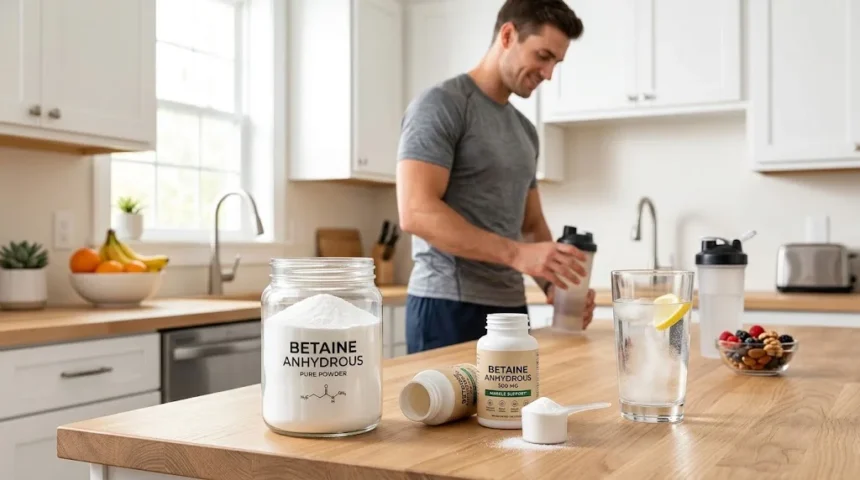
Commercial betaine anhydrous supplements are sold as powders, capsules, tablets, or ingredients within pre-workout and strength formulas. Product labels often provide approximately 1.5 to 2.5 grams per serving, although amounts vary substantially between manufacturers. The NIH Dietary Supplement Label Database includes products containing around 1,500, 2,200, and 2,500 milligrams per serving, illustrating this variability. Some products recommend taking betaine before training, while others suggest dividing the dose across the day. Research protocols are not uniform enough to establish one ideal timing strategy for every goal. Choosing a supplement should therefore begin with understanding why you are taking it rather than simply copying a label designed for marketing.
Betaine Anhydrous Benefits for Exercise Performance
Exercise performance is probably the most common reason healthy adults encounter betaine anhydrous supplements. The compound has been investigated for possible effects on muscular strength, power, endurance, training volume, and body composition. Proposed mechanisms include improved cellular hydration, altered creatine metabolism, methyl donation, and changes in other metabolic pathways related to exercise. Early studies produced mixed results, creating considerable uncertainty about whether betaine was genuinely useful or simply another performance supplement with an interesting biological theory. More recent systematic reviews have improved the evidence base, although the overall picture remains nuanced. Some outcomes appear more promising than others, and individual studies are generally relatively small.
A 2024 systematic review and meta-analysis evaluated 17 studies involving 317 participants who used betaine supplementation for at least seven days. The analysis found a statistically significant improvement in maximal strength overall, with the clearest effect appearing in lower-body strength. Vertical jump performance also showed a possible improvement after one lower-quality study was excluded from part of the analysis. However, the researchers found no significant benefits for several other outcomes, including upper-body strength, sprint cycling power, muscular endurance, and certain power measures. These findings suggest that betaine may offer a modest advantage in selected strength outcomes rather than producing a broad enhancement across every form of physical performance.
The lower-body strength findings are interesting for people involved in resistance training, but they should not be interpreted as proof that betaine builds large amounts of muscle or dramatically increases gym performance. Strength gains depend on training quality, progressive overload, sleep, energy intake, protein consumption, technique, and years of consistent practice. A supplement producing a relatively small statistical improvement cannot compensate for deficiencies in these fundamentals. Someone whose squat improves after months of training has probably benefited primarily from training adaptation rather than betaine alone. Supplements are most realistically viewed as small additions to an already effective program. This distinction prevents modest research findings from being converted into unrealistic bodybuilding promises.
Evidence for endurance performance remains considerably less convincing. A 2025 systematic review examined five studies involving healthy participants and found mixed outcomes involving oxygen consumption, power, and blood lactate. Importantly, all included studies were assessed as having a high risk of bias, and the authors emphasized that evidence remained too limited to draw strong conclusions about betaine’s endurance-enhancing effects. This means runners, cyclists, swimmers, and endurance athletes should not assume betaine offers the same level of support as established strategies involving training, carbohydrate availability, hydration, or appropriately used caffeine. More rigorous research is still needed before betaine can be confidently recommended as an endurance aid.
The most balanced interpretation is that betaine anhydrous may modestly improve selected strength outcomes in some people, particularly lower-body strength, while evidence for endurance, muscular endurance, and broad performance enhancement remains inconsistent. The NIH historically described betaine studies as small and conflicting, with typical research doses in the range of approximately 2 to 5 grams daily. Newer meta-analysis data make the strength evidence somewhat more encouraging, but they do not transform betaine into an essential supplement. Athletes who want to experiment with it should keep expectations modest and evaluate whether improvements are meaningful in actual training. Exercise performance still depends overwhelmingly on training, nutrition, recovery, and individual physiology.
Can Betaine Anhydrous Help Build Muscle?
Betaine is frequently marketed as a muscle-building supplement because several proposed mechanisms could theoretically support anabolic processes. Improved cellular hydration may create an intracellular environment associated with muscle function, while methyl donation could influence pathways related to creatine production and protein metabolism. Researchers have also investigated whether betaine affects hormones or signaling pathways involved in muscle growth. These mechanisms are scientifically interesting, but they should not be mistaken for direct proof of substantial hypertrophy in humans. Building muscle requires repeated resistance training and sufficient nutritional support over long periods. Betaine may influence the environment around those adaptations without acting like a direct muscle-building drug.
Research examining body composition has produced mixed findings. Some individual trials have reported reductions in fat mass or improvements in lean body composition during betaine supplementation, while other studies have found little meaningful difference compared with placebo. Differences in training programs, participant fitness levels, diet, supplement dose, and study duration make the results difficult to compare directly. The strongest recent meta-analytic findings focus more clearly on maximal strength than on dramatic increases in muscle size. A person should therefore avoid purchasing betaine with the expectation that it will visibly increase muscle without progressive resistance training. If muscle gain is the goal, betaine should remain secondary to established fundamentals.
Protein intake is considerably more important for hypertrophy than betaine supplementation. Resistance-trained adults need adequate dietary protein distributed across meals to provide the amino acids required for muscle-protein synthesis. Total calorie intake also matters because significant muscle gain becomes difficult when someone chronically consumes too little energy. Training must progressively challenge the muscles through additional weight, repetitions, sets, or increasingly difficult exercises. Sleep and recovery allow the adaptation process to occur between training sessions. These factors have much stronger practical evidence than betaine supplementation. Someone who ignores them while relying heavily on a TMG powder is focusing on the smallest part of the muscle-building equation.
Betaine may be more interesting when viewed as a potential performance-support supplement rather than a direct hypertrophy supplement. If supplementation allows someone to perform slightly better during certain lower-body strength tasks, that could theoretically support training progression over time. However, this is an indirect possibility rather than proof that betaine itself creates large muscle gains. The 2024 meta-analysis found a modest strength benefit but did not show universal improvements across every exercise-performance measure. Small performance differences can still matter to competitive athletes, yet recreational lifters may find that improving technique or adding an additional well-planned training session produces a much greater practical effect.
Bodybuilders should also be cautious about proprietary pre-workout formulas claiming that betaine dramatically increases muscle fullness through cellular hydration. A temporary change in fluid distribution is not the same as creating new muscle tissue. Muscular hypertrophy develops through repeated structural adaptation across weeks, months, and years. Someone may feel more pumped or notice changes in muscle fullness during a workout without actually gaining additional contractile tissue. This does not make the supplement useless, but it changes how the benefit should be interpreted. Betaine may offer small supportive effects for certain trainees, while the foundations of muscle growth remain progressive resistance, sufficient protein, appropriate calories, and recovery.
Betaine Anhydrous and Homocysteine Levels
The relationship between betaine and homocysteine is one of the compound’s most biologically established functions. Homocysteine is an amino acid produced during methionine metabolism, and the body normally recycles it through pathways requiring several nutrients and enzymes. Betaine can donate a methyl group that helps convert homocysteine back into methionine. This reaction is catalyzed by an enzyme known as betaine-homocysteine methyltransferase, primarily in organs such as the liver and kidneys. When this pathway functions appropriately, betaine contributes to normal one-carbon metabolism. This biochemical effect is much more clearly demonstrated than many of the performance claims associated with ordinary sports supplements.
Prescription betaine anhydrous is used in certain inherited metabolic conditions characterized by dangerously elevated homocysteine. These disorders are very different from the mildly elevated homocysteine sometimes seen in otherwise healthy adults. In a registry involving patients with homocystinuria, betaine treatment was associated with an overall average reduction of roughly 29% in plasma homocysteine levels. Long-term registry data have also provided information about clinical safety during medically supervised treatment. These results demonstrate that betaine can meaningfully affect homocysteine metabolism under specific medical circumstances. They do not mean that everyone should self-treat a high laboratory result with over-the-counter betaine.
Elevated homocysteine can be associated with deficiencies in folate, vitamin B12, or vitamin B6, genetic disorders, kidney disease, medications, lifestyle factors, and other conditions. A laboratory result therefore needs interpretation within the person’s broader health picture. Simply lowering a biomarker does not always prove that long-term cardiovascular outcomes will improve. Research on homocysteine and cardiovascular disease has become more nuanced over time, and interventions that reduce homocysteine do not automatically prevent heart attacks or strokes. This is why supplement advertisements claiming betaine directly “protects the heart by lowering homocysteine” can overstate what is known. Treating the cause of an abnormal result is more important than chasing one laboratory number.
A randomized clinical trial involving people with hypertension and elevated homocysteine tested a combination supplement containing folate, B vitamins, zinc, and 250 milligrams of betaine against high-dose folic acid. Both groups experienced substantial reductions in homocysteine, and the multi-ingredient formulation produced a greater reduction in that study. However, because the product contained several nutrients, the effect cannot be attributed entirely to betaine. This illustrates a common challenge in supplement research: combination formulas can produce encouraging outcomes without revealing which ingredient contributed most. People should therefore be cautious when manufacturers cite multi-ingredient trials as proof that their isolated betaine product will produce identical results.
Anyone with significantly elevated homocysteine should discuss the finding with a healthcare professional rather than treating it independently. Testing for vitamin deficiencies, kidney function, medication effects, and other possible causes may be appropriate. In rare inherited disorders, prescription betaine may be an important medical therapy administered at doses and schedules very different from ordinary sports supplementation. For healthy adults, the homocysteine-lowering mechanism remains biologically real, but the need for supplementation should be individualized. A normal laboratory value is not a reason to deliberately push homocysteine as low as possible. Nutritional and medical interventions work best when they address an actual problem rather than a theoretical optimization target.
Betaine Anhydrous for Hydration and Cellular Function
Betaine’s role as an osmolyte has generated considerable interest because cells need mechanisms for maintaining fluid balance under changing environmental conditions. An osmolyte helps stabilize proteins and cellular structures when water availability, salt concentration, temperature, or other stressors change. Betaine can accumulate within certain cells and help protect proteins from becoming destabilized. This function is well established at the biochemical level and occurs naturally in many organisms. Exercise researchers became interested because physical activity can alter hydration, temperature, and cellular stress. The possibility that supplemental betaine could improve the body’s response to those stresses provides one theoretical basis for performance research.
Cellular hydration should not be confused with drinking enough fluids. Taking betaine does not eliminate the need to replace water lost through sweat, particularly during exercise in hot or humid environments. Dehydration can reduce cardiovascular performance, increase perceived effort, and eventually become medically dangerous. Athletes still need appropriate fluid and electrolyte strategies based on exercise duration, temperature, sweat rate, and individual needs. Betaine’s osmolyte function occurs at the cellular level and does not act as a substitute for hydration. Marketing language that describes TMG as a powerful hydration supplement can therefore be misleading if it encourages people to neglect actual fluid intake.
Some researchers have proposed that betaine’s effects on cell hydration could influence strength or muscle function. A well-hydrated cell may maintain enzyme function and protein stability more effectively under stress. However, demonstrating that a biochemical mechanism exists is easier than proving that taking several grams of a supplement significantly improves athletic outcomes. The NIH notes that cellular water retention is among the proposed mechanisms for betaine’s potential ergogenic effects, while also emphasizing that the evidence has historically been limited. Recent evidence for strength is more promising, yet the osmolyte mechanism should still be described as one possible explanation rather than a proven reason for every observed benefit.
Betaine may also help protect cells in tissues exposed to naturally stressful conditions. The kidneys, for example, experience significant osmotic variation while concentrating urine, and osmolytes contribute to maintaining cellular stability in that environment. The liver is another major location where betaine participates in methylation reactions and metabolism. This has prompted research into betaine’s potential role in liver conditions. However, promising mechanisms in liver cells or animal studies have not consistently translated into clear clinical benefits for humans. Someone should not interpret the fact that betaine participates in liver metabolism as evidence that supplements detoxify the liver or prevent liver disease.
For recreational athletes, the most practical conclusion is that betaine’s osmolyte function provides a plausible scientific explanation for why the compound continues to be investigated. It may contribute to some performance effects, but it is not equivalent to a sports drink, electrolyte replacement plan, or proven heat-acclimation strategy. Staying adequately hydrated through appropriate fluid intake remains the priority. Carbohydrates and electrolytes may also be important during prolonged exercise depending on duration and conditions. Betaine can be viewed as a possible supplemental factor rather than the central component of hydration management. This perspective keeps the biochemical science intact without turning an interesting cellular mechanism into an exaggerated consumer claim.
Does Betaine Anhydrous Support Liver Health?
The liver plays an important role in betaine metabolism because it is a major site of methylation and homocysteine recycling. Betaine provides methyl groups that contribute to the conversion of homocysteine into methionine, which can influence other metabolic pathways involving compounds such as S-adenosylmethionine. These relationships have led researchers to explore betaine as a potential therapy for fatty liver disease and other metabolic liver conditions. Animal and laboratory studies have sometimes produced encouraging results involving lipid metabolism and oxidative stress. Human disease, however, is considerably more complex. A supplement should not be described as a proven liver treatment simply because its biochemical pathways appear relevant.
One notable randomized placebo-controlled trial evaluated high-dose betaine in people with biopsy-confirmed nonalcoholic steatohepatitis, now commonly discussed within the broader terminology of metabolic dysfunction-associated steatotic liver disease. Participants received 20 grams of betaine per day or placebo for 12 months. The study did not establish betaine as an effective general treatment capable of producing the hoped-for improvements in liver histology. The dose was also far higher than the amounts typically used in sports supplements. This trial provides an important reminder that promising biological mechanisms do not always translate into clinically meaningful improvements once carefully tested in people with established disease.
People with fatty liver disease should therefore prioritize treatments with stronger evidence. Depending on the individual, management may involve sustainable weight loss, improved dietary quality, regular physical activity, diabetes management, cholesterol control, alcohol reduction, and specific medications when clinically indicated. Medical recommendations continue to evolve as new liver treatments become available. Betaine should not replace these interventions or professional follow-up. Someone who already has liver disease should also be cautious about taking multiple supplements because some products can themselves cause liver injury. The safest approach is to review new supplements with the clinician managing the liver condition.
The phrase “supports liver health” also deserves scrutiny because it is broad enough to sound meaningful without specifying an actual clinical outcome. A compound can participate in normal liver metabolism without preventing cirrhosis, reducing fibrosis, or treating fatty liver. Many nutrients are essential to liver function, yet taking extra amounts does not automatically improve the organ beyond normal physiology. The same principle applies to betaine. Adequate intake from food contributes to normal metabolism, while high-dose supplementation for liver optimization remains a separate question requiring clinical evidence. Consumers should look for specific human outcomes rather than relying on general claims about detoxification or liver support.
Betaine’s medically established use in homocystinuria should also not be confused with liver-disease treatment. The liver participates in both conditions, but the therapeutic goal is completely different. In homocystinuria, prescription betaine helps alter a specific metabolic pathway to reduce homocysteine. In fatty liver disease, the underlying drivers often include insulin resistance, obesity, metabolic dysfunction, genetics, and other complex factors. One methyl donor cannot correct every contributor. Research may eventually identify selected liver-related uses for betaine, but current evidence does not justify describing ordinary betaine anhydrous supplements as proven treatments for fatty liver or other chronic liver diseases.
Betaine Anhydrous Side Effects
Betaine anhydrous appears reasonably well tolerated in many short-term sports studies, but the safety evidence is not as extensive as it is for commonly used nutrients with decades of large-scale research. The NIH notes that small studies in athletes taking betaine for several weeks reported no major safety concerns, while also emphasizing that research has not adequately evaluated its overall safety. This distinction matters because “no problems appeared in a small study” is different from “the supplement is proven safe for everyone.” Health status, dosage, treatment duration, medications, and individual sensitivity can all influence side effects. Long-term unsupervised use deserves more caution than short research protocols.
Digestive discomfort is among the more plausible side effects, especially at larger doses. Some users may experience nausea, stomach upset, diarrhea, cramping, or bloating after taking powdered or concentrated betaine. Splitting the daily amount or taking it with food may improve tolerance for some people, although research has not established one universally best strategy. High medically used doses differ substantially from common sports-supplement doses and should not be copied without supervision. In long-term registry data involving prescription betaine for metabolic disease, the treatment was generally well tolerated, although adverse events were still monitored carefully.
Another frequently discussed side effect is a fish-like body odor, which may occur when trimethylamine metabolism becomes overwhelmed in susceptible individuals or at high intakes. Trimethylglycine can contribute to metabolic pathways that ultimately generate trimethylamine-related compounds. This effect is not experienced by everyone and may depend on dose, gut microbiota, genetics, and other factors. An unusual odor is generally more socially inconvenient than medically dangerous, but it can be distressing. Persistent strong odor should not automatically be blamed on betaine because other medical or dietary causes are possible. Reducing or discontinuing a supplement may clarify whether it contributes.
Betaine supplementation may also influence blood lipid levels in certain circumstances. Some studies have reported changes involving total cholesterol or LDL cholesterol, particularly at higher intakes, although results vary. This possibility is relevant for people already managing elevated cholesterol or significant cardiovascular risk. Someone taking betaine specifically because it lowers homocysteine should not assume that every cardiovascular biomarker will move in a favorable direction. Human metabolism often involves tradeoffs between interconnected pathways. People with lipid disorders may therefore want professional guidance before using gram-level betaine chronically, particularly if laboratory monitoring is already part of their healthcare.
Anyone who develops allergic symptoms, severe gastrointestinal problems, persistent headache, unusual weakness, or other concerning reactions should stop treating the symptoms as evidence that a supplement is “working.” Supplements can produce adverse effects just like other biologically active substances. People with chronic diseases, those taking several medications, and pregnant or breastfeeding individuals should be especially cautious because high-quality safety data may be limited. Some commercial product labels specifically recommend consulting a physician when medical conditions are present and advise against use during pregnancy or lactation. Individualized advice becomes more important as the dose, duration, or medical complexity increases.
Betaine Anhydrous Dosage and How to Take It
Research on exercise performance has commonly used doses in the range of approximately 2 to 5 grams of betaine daily, although protocols vary. The NIH summarizes older studies as typically using this range for periods up to roughly two weeks, while newer research has evaluated chronic supplementation for at least seven days and sometimes longer. A frequently encountered commercial serving is around 2.5 grams, which reflects doses commonly used in sports-nutrition research. This does not mean 2.5 grams is the ideal amount for every person or every objective. The most appropriate dose depends on why betaine is being taken and whether it is being used medically.
Some athletes take the entire dose before training because many products are sold as pre-workout ingredients. Others divide the amount between morning and evening or across two meals. Existing research does not clearly establish that betaine must be consumed immediately before exercise to work. Many proposed effects relate to repeated supplementation and changes in metabolic or cellular function rather than an immediate stimulant-like action. Unlike caffeine, betaine does not need to create a noticeable feeling within minutes to have a potential effect. Someone evaluating the supplement should therefore focus more on consistent dosing within a researched range than on finding a precise pre-workout timing window.
Powdered betaine anhydrous is commonly mixed with water, juice, or another beverage. The compound can have a noticeable taste, which some people find unpleasant, so flavored beverages may improve tolerability. Capsules provide convenience but can require several pills to reach research-level gram doses. Accurate measuring matters with bulk powders because ordinary kitchen spoons are not precision dosing tools. Commercial labels may provide a scoop, but scoop volume and powder density vary between products. A small gram scale can be more accurate when someone uses bulk powder regularly. Taking much more than a researched dose simply because the supplement is inexpensive does not guarantee additional benefit.
Medical use follows entirely different dosing principles. Prescription betaine anhydrous for homocystinuria may be dosed according to age, body weight, laboratory response, and the underlying metabolic disorder. Registry research includes patients receiving considerably higher total daily amounts than typical gym users. These doses are administered because the patients have serious inherited metabolic conditions and are monitored by medical teams. Someone should never copy a therapeutic dose after reading a clinical study and assume it provides superior sports benefits. Medical dosing and dietary supplementation serve different purposes, even when the chemical compound is the same.
Starting with the lowest reasonable amount is a sensible approach for healthy adults who choose to experiment with betaine for performance. This gives the digestive system time to adjust and makes side effects easier to identify. Avoid simultaneously introducing several new supplements because doing so makes it difficult to determine which product caused either a benefit or a reaction. Someone who experiences no meaningful performance improvement after a fair trial does not necessarily need to keep increasing the dose. Supplements should provide measurable value rather than becoming permanent habits simply because they are widely promoted. Training logs can help determine whether strength or workout performance actually changes.
Betaine Anhydrous vs Betaine HCl
Betaine anhydrous and betaine hydrochloride share the word betaine, but they are not interchangeable supplements. Betaine anhydrous is trimethylglycine without hydrochloric acid and is used in research involving methylation, homocysteine metabolism, cellular hydration, and athletic performance. Betaine HCl combines betaine with hydrochloride and is marketed mainly for increasing stomach acidity or supporting digestion. Someone purchasing the wrong form could therefore end up taking a product designed for a completely different purpose. Sports-nutrition research investigating strength or exercise performance generally refers to betaine anhydrous, not betaine HCl. Checking the ingredient label prevents this surprisingly common confusion.
Betaine HCl is often promoted to people who believe they have low stomach acid. Claims may include improved protein digestion, better nutrient absorption, or relief from digestive symptoms. However, digestive symptoms such as bloating, reflux, fullness, nausea, and abdominal discomfort have many possible causes and cannot reliably diagnose inadequate stomach acid. Taking an acidifying supplement without confirming the problem can potentially worsen irritation in some people. Betaine HCl therefore should not be substituted for medical evaluation of persistent digestive symptoms. Its use requires a different safety discussion from the one surrounding trimethylglycine supplementation for athletic goals.
Betaine anhydrous does not significantly function as a stomach-acid replacement. Someone using TMG for strength, homocysteine metabolism, or general supplementation does not need the hydrochloride form to obtain the researched compound. Conversely, someone specifically using betaine HCl should not assume research on TMG and exercise performance applies to their product. Chemical form matters because the accompanying hydrochloride changes the intended use and how the supplement interacts with the digestive system. Supplement websites sometimes blur the distinction by using “betaine” broadly across several products. Looking for the terms anhydrous, trimethylglycine, or TMG helps identify the form discussed in sports and methylation research.
People taking medications that affect stomach acid should be particularly cautious about experimenting with betaine HCl. Proton-pump inhibitors, H2 blockers, antacids, and other gastrointestinal medications are prescribed or used for specific reasons, and deliberately increasing stomach acidity may work against the treatment plan. Someone with gastritis, ulcers, esophageal irritation, or significant reflux also deserves professional guidance. These concerns do not apply in exactly the same way to betaine anhydrous because it does not provide hydrochloric acid. Keeping the two supplements conceptually separate improves both safety and interpretation of research. Similar names should never substitute for checking the actual ingredient.
For the purposes of exercise and athletic performance, betaine anhydrous is the relevant form. The NIH exercise-supplement fact sheet specifically discusses betaine as trimethylglycine and describes research involving several grams per day. Products in the NIH label database also list betaine anhydrous and trimethylglycine together, confirming that these names are commonly used for the same supplement form. Anyone shopping for a TMG supplement should still compare ingredient amounts, serving sizes, added compounds, and quality testing. Choosing the correct chemical form is the first step; determining whether supplementation is actually useful is the second.
Food Sources of Betaine
Betaine is naturally available through food, meaning supplements are not the only way to obtain it. Beets are probably the best-known source and are responsible for the compound’s name, but they are far from the only option. Spinach, wheat products, quinoa, shellfish, and several other foods can contribute to dietary intake. The amount varies with food variety, farming conditions, processing, cooking, and portion size. Whole foods also provide fiber, vitamins, minerals, protein, or other beneficial compounds alongside betaine. Someone interested in general nutrition rather than a specific research-level sports dose may therefore prefer improving dietary variety instead of purchasing a supplement.
Whole grains can make an important contribution to betaine intake because wheat and related cereal products may contain substantial amounts. This relationship means someone following a highly restricted grain-free diet may consume less betaine than a person eating a varied diet, although overall intake depends on many foods. Spinach and other vegetables add additional sources while improving fiber and micronutrient intake. Beets can be eaten roasted, boiled, pickled, or added to salads and smoothies. Beetroot supplements should not automatically be assumed to provide the same standardized amount of betaine as purified TMG because their composition varies. Beet products may also be marketed primarily for nitrate content rather than betaine.
Dietary betaine intake is usually far lower than the gram-level amounts used in supplementation studies. The NIH cites average intakes of roughly 100 to 300 milligrams per day in some dietary assessments, whereas exercise studies often provide 2 to 5 grams daily. This difference explains why simply eating a serving of beets is not equivalent to taking a research-dose betaine supplement. That does not make the food inadequate; it simply means the dietary goal and supplemental research question are different. Foods contribute to long-term nutrition, while concentrated supplements are designed to test specific effects at much higher intakes.
Obtaining betaine from food may be especially sensible for people who are primarily interested in general health rather than marginal athletic gains. A diet containing vegetables, whole grains, legumes, seafood, and other minimally processed foods provides countless nutrients that TMG powder does not. Cardiovascular health, liver health, and exercise recovery all depend on broader dietary patterns rather than one methyl donor. Increasing spinach and whole grains may improve fiber, magnesium, folate, and numerous other nutrients simultaneously. Supplements can isolate a compound effectively, but they cannot recreate the complexity of a balanced diet. This distinction matters whenever a supplement is marketed as a shortcut to general wellness.
Athletes may still choose concentrated betaine because reaching several grams through food alone would be impractical. That decision should be based on a specific performance goal and realistic expectations rather than fear of dietary deficiency. Betaine is not considered a classic essential nutrient with a universally established recommended daily allowance that everyone must achieve through supplementation. The body can also produce betaine from choline, further distinguishing it from indispensable nutrients that must be obtained directly from food. A varied diet provides a nutritional foundation, while purified betaine remains an optional supplemental strategy. Most healthy people do not need TMG simply because they have heard it supports methylation.
Who Should Be Careful With Betaine Supplements?
People with chronic medical conditions should be more cautious with betaine than healthy adults using moderate amounts for a short trial. This is particularly relevant for kidney, liver, cardiovascular, or metabolic conditions because betaine participates in pathways involving methylation and amino-acid metabolism. A healthcare professional can determine whether the supplement could complicate laboratory interpretation or interact with an existing treatment plan. The absence of major adverse events in small sports studies does not prove safety for medically complex populations. Someone taking several prescription medications should also provide their clinician or pharmacist with a complete supplement list rather than assuming natural products cannot influence treatment.
People with abnormal cholesterol levels may want additional caution because betaine has been associated with lipid changes in some research. The clinical importance of these changes varies, and not every study produces the same result. Nevertheless, someone already being treated for elevated LDL cholesterol should avoid assuming that a homocysteine-lowering supplement is automatically beneficial for overall cardiovascular risk. Cardiovascular health depends on blood pressure, smoking status, lipids, diabetes, body composition, physical activity, genetics, and many other variables. Focusing on one pathway can obscure another. Monitoring established risk factors remains more useful than taking TMG solely because a supplement label mentions heart health.
Pregnant or breastfeeding people should seek medical guidance before using concentrated betaine supplements. Ordinary dietary intake from foods is different from taking several grams of purified TMG daily. Research evaluating high-dose sports supplementation during pregnancy is limited, so there is little reason to experiment without a clear medical indication. Some commercial supplement labels specifically advise avoiding the product during pregnancy or lactation or consulting a physician first. The same caution applies to children unless betaine is being used as part of medically supervised treatment. Pediatric prescription use for metabolic disorders should never be confused with recreational sports supplementation.
People with homocystinuria or another inherited metabolic disorder need specialist management rather than consumer dosing advice. Prescription betaine anhydrous can be clinically important in these diseases, but treatment is adjusted according to diagnosis and laboratory response. Long-term registry research includes patients receiving doses well above typical sports-supplement amounts under medical monitoring. Someone should not switch from prescription betaine to a dietary supplement simply because both labels contain the words betaine anhydrous. Pharmaceutical and supplement products can differ in regulatory standards, dosing instructions, and intended use. Medical treatment should remain coordinated through the healthcare team.
Finally, competitive athletes should consider supplement quality and contamination risk. Multi-ingredient pre-workout formulas may contain compounds beyond betaine that affect safety or eligibility under sporting rules. Even when betaine itself is permitted, contaminated or inaccurately labeled products can create unnecessary problems. Choosing third-party-tested supplements can reduce, although not eliminate, the risk of undeclared ingredients. Single-ingredient products also make it easier to know exactly how much betaine is being consumed. Athletes should evaluate the entire label rather than focusing only on the headline ingredient. A supplement is only as trustworthy as its manufacturing quality and the transparency of the company producing it.
Is Betaine Anhydrous Worth Taking?
Whether betaine is worth using depends heavily on the goal. For an experienced resistance-trained athlete who has already optimized training, nutrition, and recovery, a supplement associated with a modest improvement in maximal strength may be worth experimenting with. The 2024 meta-analysis provides stronger support for selected strength outcomes than older summaries did, particularly for lower-body strength. That still does not mean every user will notice an obvious difference. Athletic response varies, and small effects can be difficult to separate from normal improvements produced by training. Competitive athletes may value a marginal gain more than recreational exercisers.
For endurance athletes, the case is currently weaker. The 2025 systematic review found only five eligible studies and judged all of them to have a high risk of bias. Although some individual performance or physiological outcomes were encouraging, the authors concluded that more rigorous evidence was necessary. Runners and cyclists therefore have much stronger reasons to focus first on training volume, carbohydrate intake, hydration, pacing, sleep, and evidence-based ergogenic aids when appropriate. Betaine may remain an experimental option, but describing it as a proven endurance supplement would overstate current science. Supplements should be ranked according to evidence rather than popularity.
For muscle gain, betaine is similarly optional. The most persuasive evidence supports possible strength improvements rather than dramatic hypertrophy. Someone with inadequate protein intake, poor programming, insufficient calories, or inconsistent sleep will gain much more by correcting those problems than by adding TMG. Resistance training adaptations occur because muscles repeatedly encounter progressive mechanical demands and receive enough nutrition and recovery to adapt. Betaine might support parts of that process, but it cannot replace it. People should therefore spend their attention and budget in proportion to the expected return. A supplement producing a small possible benefit belongs near the top of the pyramid, not at its foundation.
For elevated homocysteine or metabolic disease, the decision should be medical rather than recreational. Betaine clearly participates in homocysteine metabolism and has an established prescription role in specific inherited disorders. However, someone with an unexpectedly high homocysteine result should investigate possible causes rather than independently purchasing high-dose TMG. Vitamin status, kidney function, medication use, genetics, and overall medical history may change the appropriate response. The fact that betaine lowers a biomarker does not automatically prove that self-supplementation improves cardiovascular outcomes. Personalized diagnosis remains more valuable than treating laboratory numbers in isolation.
For general wellness, most healthy people can obtain betaine naturally through a varied diet and probably do not need a concentrated supplement. Foods such as beets, spinach, whole grains, and other betaine-containing options provide additional nutritional benefits that isolated TMG cannot offer. Someone who enjoys those foods already receives dietary betaine alongside fiber, vitamins, minerals, and phytochemicals. A supplement becomes more relevant when a specific researched dose is desired for a defined purpose. Even then, expectations should remain realistic. Betaine anhydrous is a biologically active compound with some promising applications, but it is not an essential shortcut to better health or athletic performance.
Final Thoughts on Betaine Anhydrous
Betaine anhydrous, also called trimethylglycine or TMG, is more than a trendy supplement ingredient because it performs genuine biochemical functions in the human body. It acts as both a methyl donor and an osmolyte, contributing to homocysteine metabolism and cellular stability. These roles explain why it has legitimate medical applications and why researchers continue studying it in sports nutrition. The strongest established clinical use involves specific inherited disorders of homocysteine metabolism under medical supervision. In healthy athletes, the evidence is more modest. Understanding this difference helps prevent medically established effects from being used to exaggerate ordinary supplement claims.
Exercise research has become somewhat more encouraging in recent years. A 2024 meta-analysis found a modest improvement in maximal strength, particularly in the lower body, and possible improvement in vertical jumping under certain analytical conditions. These findings suggest that betaine may offer a small ergogenic benefit to selected resistance-trained individuals. However, the same analysis did not find significant improvements in several other performance measures. Evidence for endurance remains particularly uncertain, with a 2025 review emphasizing the small number and high risk of bias of available studies. Marketing claims should therefore remain narrower than the supplement industry often makes them.
Safety appears reasonably acceptable in many short-duration studies, but long-term evidence in healthy supplement users remains limited. The NIH notes that athlete studies lasting several weeks generally reported no major safety concerns while also acknowledging that betaine safety has not been adequately evaluated across all settings. Gastrointestinal discomfort, unusual body odor, and possible changes in lipid levels are among considerations worth recognizing. Medical doses used in rare metabolic diseases are not appropriate templates for recreational use. Higher intake should never be assumed to produce proportionally larger benefits. People with chronic conditions or prescription medications should seek individualized guidance before regular supplementation.
Choosing the correct form also matters. Betaine anhydrous and TMG refer to the form studied for methylation and athletic purposes, while betaine HCl is a different product marketed primarily for stomach-acid support. Confusing the two can result in taking a supplement inappropriate for the intended goal. Product labels should clearly state the amount of trimethylglycine or betaine anhydrous per serving. Third-party quality testing can provide additional reassurance, particularly for competitive athletes. Single-ingredient products are often easier to evaluate than complicated proprietary blends because the dose is transparent and side effects are easier to trace.
Ultimately, betaine anhydrous is best viewed as an optional supplement with interesting but goal-specific evidence. It may modestly improve certain strength outcomes, clearly influences homocysteine metabolism, and performs important cellular functions, but it is not a proven cure-all for muscle growth, liver disease, hydration, endurance, or cardiovascular health. A balanced diet, effective training program, appropriate protein intake, adequate sleep, and good medical care provide much larger foundations for health and performance. If those foundations are already in place, betaine can be considered as a supplemental experiment rather than a necessity. Evidence should guide expectations, and measurable benefit should determine whether continued use is worthwhile.
Frequently Asked Questions
What is betaine anhydrous used for?
Betaine anhydrous is used in supplements for potential strength and exercise support and medically for certain inherited disorders that cause elevated homocysteine. Its evidence varies substantially depending on the intended use.
Is betaine anhydrous the same as TMG?
Yes. Betaine anhydrous is commonly called trimethylglycine or TMG because its molecular structure contains three methyl groups attached to glycine.
Is betaine anhydrous the same as betaine HCl?
No. Betaine anhydrous or TMG is studied for methylation, homocysteine metabolism, and exercise performance, while betaine HCl contains hydrochloride and is marketed mainly for digestive or stomach-acid support.
Does betaine help build muscle?
Betaine may modestly improve certain strength outcomes, particularly lower-body strength, but evidence does not show that it independently produces dramatic muscle growth. Resistance training, protein intake, adequate calories, and recovery remain much more important.
What are the side effects of betaine anhydrous?
Possible side effects can include stomach discomfort, nausea, diarrhea, bloating, or an unusual body odor, particularly at higher intakes. Long-term safety data in healthy supplement users remain limited, so people with medical conditions should seek professional guidance.