


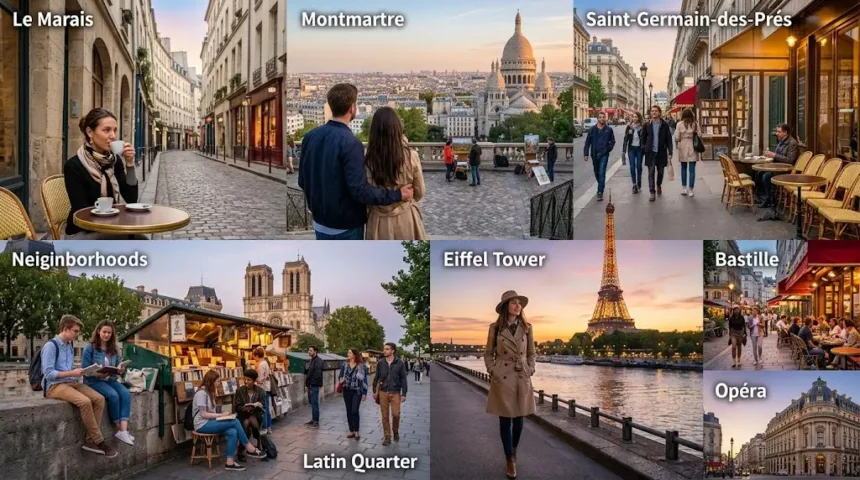
Best Areas to Stay in Paris: 10 Top Neighborhoods
Choosing where to stay in Paris can shape almost every part of your trip, from the cafés you visit in the morning to how easily you reach famous landmarks after dark. Paris is divided into 20 arrondissements, each with its own atmosphere, architecture, dining scene, and accommodation choices. Some neighborhoods put you within walking distance of the Eiffel Tower and Seine, while others offer cobbled streets, independent boutiques, lively nightlife, or a quieter residential experience. The best areas to stay in Paris therefore depend on your budget, travel style, sightseeing priorities, and preferred pace. First-time visitors often value central locations, whereas returning travelers may enjoy exploring less touristy districts. Understanding these differences makes finding the right Paris neighborhood considerably easier.
Paris accommodation ranges from luxury palace hotels and elegant boutique properties to family apartments, affordable hotels, and stylish hostels. Staying centrally can reduce transportation time, although hotel rates are usually higher around major attractions and fashionable districts. Neighborhoods such as Saint-Germain-des-Prés and the 1st arrondissement appeal to travelers who prioritize location, while Montmartre can provide a more atmospheric experience. Families may appreciate quieter streets near the Luxembourg Gardens, and younger travelers often enjoy areas around Le Marais or Canal Saint-Martin. Paris has an extensive public transportation network, so staying slightly outside the historic center does not necessarily mean feeling disconnected. The key is choosing an area that matches how you actually plan to spend your days.
The character of Paris can change surprisingly quickly from one neighborhood to another. Around the Louvre, monumental buildings, elegant avenues, and major attractions dominate the streetscape, creating a distinctly grand Parisian experience. Cross the Seine toward the Latin Quarter and the atmosphere becomes more youthful, historic, and energetic thanks partly to its academic heritage. Head north toward Montmartre and steep streets, artistic history, panoramic viewpoints, and neighborhood cafés create another side of the city entirely. Le Marais combines historic architecture with contemporary fashion, galleries, restaurants, and nightlife. These contrasts explain why there is no single best neighborhood in Paris for everyone, but there are excellent choices for nearly every type of traveler.
When comparing the best places to stay in Paris, consider more than the distance to famous attractions. Metro access matters because even travelers staying centrally will probably use public transportation at some point. Restaurants, supermarkets, bakeries, pharmacies, and cafés nearby can make everyday travel considerably more convenient. Noise levels should also influence your decision, particularly if your hotel overlooks a busy nightlife street or major boulevard. Travelers arriving with large luggage may prefer areas with straightforward transportation connections rather than picturesque accommodations reached through multiple transfers. Evaluating these practical details alongside atmosphere and sightseeing access can help you choose accommodation that remains comfortable throughout your Paris vacation.
This guide explores 10 of the best neighborhoods to stay in Paris for different travel styles, including first-time visitors, couples, families, culture lovers, nightlife seekers, and travelers wanting a more local atmosphere. Rather than treating every district as interchangeable, it explains what makes each area distinctive and who will benefit most from staying there. You will discover central neighborhoods close to major landmarks as well as character-filled districts worth considering beyond the obvious tourist zones. Each area offers advantages and trade-offs involving price, convenience, atmosphere, and accessibility. By comparing those factors before booking, you can avoid choosing a hotel simply because the room looks attractive online. The right neighborhood can turn Paris from a sightseeing destination into a place you genuinely enjoy experiencing every day.
1. 1st Arrondissement – Best for First-Time Visitors
The 1st arrondissement is one of the best areas to stay in Paris for travelers who want famous attractions almost immediately outside their hotel. Located in the historic center, the district places visitors close to the Louvre Museum, Tuileries Garden, Palais Royal, and stretches of the Seine. Its location makes walking between major sights particularly convenient, which can be valuable during a short Paris itinerary. Elegant architecture and impressive public spaces give the neighborhood the classic appearance many first-time travelers imagine before arriving. Restaurants, cafés, luxury shops, and hotels are widely available throughout the area. For travelers prioritizing sightseeing efficiency over a deeply residential atmosphere, the 1st arrondissement is difficult to beat.
Walking is one of the biggest advantages of staying here because numerous attractions lie within comfortable reach. Visitors can start the morning near the Louvre, walk through the Tuileries, continue toward Place de la Concorde, and explore the Seine without repeatedly entering the Metro. Île de la Cité, Saint-Germain-des-Prés, and parts of Le Marais are also accessible on foot depending on your accommodation location. This central position gives travelers considerable flexibility when changing plans during the day. Returning to your hotel for a break becomes much easier when you are not staying far from the sightseeing core. That convenience can be especially useful for families, older visitors, and travelers spending only two or three days in Paris.
Accommodation in the 1st arrondissement generally sits toward the expensive side of the Paris hotel market. Luxury hotels occupy prestigious addresses, while smaller boutique properties provide stylish alternatives without necessarily offering budget prices. Travelers searching for inexpensive accommodation may find fewer choices here than in neighborhoods farther from the center. However, paying more for location can sometimes reduce transportation expenses and save valuable vacation time. Booking early is advisable when traveling during popular periods because desirable rooms can disappear quickly. Before reserving a property, check its exact street rather than relying only on the arrondissement number, since location within any Paris district can affect transportation access, street atmosphere, and walking distances.
The neighborhood is sophisticated and visually impressive, but travelers seeking energetic nightlife or a strongly residential Parisian environment may prefer another district. Streets around major landmarks can become busy during daytime sightseeing hours, and restaurants near highly visited attractions may feel more tourist-oriented. Exploring smaller side streets around Palais Royal can reveal a calmer and more elegant atmosphere. Evenings can become considerably quieter once day visitors leave, giving parts of the arrondissement a peaceful character. Couples often appreciate this combination of central convenience and refined surroundings. Travelers interested primarily in independent nightlife, alternative culture, or budget dining may find Le Marais, the Latin Quarter, or Canal Saint-Martin more suitable.
Overall, the 1st arrondissement works exceptionally well for first-time travelers who want convenience, famous landmarks, and a prestigious central location. It minimizes the feeling that you are constantly commuting into central Paris because you are already surrounded by many of its historic highlights. The district is particularly attractive for shorter trips when every hour matters. Travelers willing to spend more on accommodation can gain valuable time and greater flexibility during their sightseeing days. Its polished atmosphere also makes it appealing for romantic celebrations and luxury city breaks. If your ideal Paris vacation involves stepping outside your hotel and quickly reaching some of the city’s most recognizable sights, this neighborhood deserves a place near the top of your list.
2. Le Marais – Best for Culture, Shopping and Nightlife
Le Marais is among the most popular neighborhoods in Paris for travelers who want history, fashion, restaurants, nightlife, and walkability in one area. Spreading primarily across parts of the 3rd and 4th arrondissements, it combines centuries-old buildings with contemporary boutiques, galleries, cafés, and cultural attractions. Narrow streets create an intimate atmosphere that contrasts with the broad boulevards found elsewhere in Paris. Place des Vosges provides one of the district’s most beautiful public spaces, while museums and historic mansions add considerable cultural depth. The neighborhood also has deep Jewish heritage and is an important center of LGBTQ+ life in Paris. These different identities create a lively district that rarely feels one-dimensional.
Le Marais is particularly appealing to travelers who enjoy exploring without following a rigid sightseeing itinerary. You can spend hours walking through side streets, browsing independent stores, discovering bakeries, visiting galleries, and stopping at cafés along the way. Its central position also makes reaching Notre-Dame, the Seine, Île Saint-Louis, and several other major areas relatively straightforward. Metro stations around the district provide connections when destinations are too far for comfortable walking. Because there is plenty to experience locally, travelers can also enjoy slower days without leaving the neighborhood. This makes Le Marais suitable for both first-time visitors and people returning to Paris who want to experience the city beyond its headline monuments.
Food and shopping contribute heavily to the area’s popularity. Visitors will encounter traditional bakeries, modern restaurants, casual eateries, cocktail bars, specialty shops, fashion boutiques, and food businesses representing several culinary traditions. Rue des Rosiers is particularly well known for its Jewish heritage and food scene, while surrounding streets contain an ever-changing selection of fashionable businesses. Shopping ranges from luxury labels to vintage stores and independent designers, making the area enjoyable even for visitors who do not plan major purchases. Weekends can become busy as Parisians and travelers converge on the neighborhood. Anyone who enjoys having restaurants and evening entertainment within walking distance of their accommodation will probably appreciate staying here.
The popularity of Le Marais also brings some disadvantages worth considering before booking. Accommodation can be expensive, particularly in attractive boutique hotels occupying historic buildings. Older properties may have compact rooms, narrow staircases, or smaller elevators, so travelers with accessibility requirements should examine hotel details carefully. Certain streets remain lively late into the evening, which can create noise for light sleepers. Choosing accommodation on a quieter side street can provide a better balance between accessibility and rest. The neighborhood’s fashionable reputation also means that restaurants and shops in prime locations can command premium prices, although affordable options remain available for travelers willing to explore beyond the busiest streets.
Le Marais is an excellent choice for couples, friends, solo travelers, shoppers, food lovers, and anyone who wants activity close to their hotel. It offers enough historic character to feel unmistakably Parisian while remaining contemporary and socially energetic. Travelers who prefer neighborhoods where they can explore spontaneously rather than commute to entertainment will find plenty to appreciate. Its central location also keeps traditional sightseeing relatively convenient, making it a practical alternative to staying directly around the Louvre. Families can enjoy the area as well, although selecting a quiet accommodation location becomes more important. For visitors wondering where to stay in Paris for a combination of culture, dining, shopping, and nightlife, Le Marais remains one of the strongest all-around options.
3. Saint-Germain-des-Prés – Best for Couples and Classic Paris
Saint-Germain-des-Prés captures the elegant café culture and literary atmosphere that many travelers associate with classic Paris. Located in the 6th arrondissement on the Left Bank, the neighborhood has long-standing connections to writers, artists, intellectuals, and publishers. Today, historic cafés sit alongside sophisticated restaurants, art galleries, fashion boutiques, bookstores, and luxury hotels. Its streets are attractive for leisurely walking, particularly for couples who prefer exploring slowly rather than rushing between landmarks. The Seine and Luxembourg Gardens are within convenient reach from much of the neighborhood. Although the district has evolved considerably over time, it continues to provide one of the most recognizable Left Bank experiences for visitors seeking atmosphere alongside location.
Couples frequently choose Saint-Germain because it offers romantic surroundings without sacrificing convenience. Morning can begin at a neighborhood bakery before a walk toward the Seine, Luxembourg Gardens, or nearby Latin Quarter. In the evening, intimate restaurants and wine bars make it easy to enjoy dinner without traveling across the city. The neighborhood feels lively enough to remain interesting but generally lacks the intense late-night atmosphere found in certain nightlife districts. This balance can make it particularly appealing for anniversaries, honeymoons, and relaxed weekend breaks. Photogenic streets, historic architecture, and café terraces also provide the type of everyday Parisian scenery many visitors hope to experience between scheduled attractions.
The central Left Bank location makes sightseeing relatively easy from Saint-Germain-des-Prés. Notre-Dame and Île de la Cité can be reached on foot from many parts of the area, while the Louvre sits across the Seine. The Musée d’Orsay is also conveniently positioned for art lovers staying nearby. Metro connections make longer journeys toward Montmartre, the Arc de Triomphe, or other districts manageable. Luxembourg Gardens offers valuable green space when travelers want a break from museums and busy streets. Because several significant attractions surround the neighborhood rather than being concentrated directly inside it, Saint-Germain can feel less overwhelmed by sightseeing crowds than locations immediately beside major monuments.
Travelers should expect accommodation prices to reflect the neighborhood’s prestige and central location. Luxury and boutique hotels are common, while genuinely inexpensive rooms can be harder to secure. Hotel rooms may also be smaller than international visitors expect, particularly inside older historic properties. Travelers prioritizing space or low prices might find better value farther from central Paris. Dining costs can vary substantially, so exploring side streets is useful when searching for casual restaurants and bakeries. Despite these considerations, many visitors decide that the combination of location, architecture, atmosphere, and walkability justifies paying a premium, especially when Paris is being visited for a special occasion.
Saint-Germain-des-Prés is best suited to couples, culture-focused travelers, repeat visitors, and anyone searching for a polished version of traditional Parisian life. It provides easier access to major attractions than many outer neighborhoods while maintaining a distinct identity of its own. Travelers who love cafés, bookstores, galleries, architecture, and evening walks will have plenty to enjoy without needing a packed itinerary. Those primarily interested in inexpensive accommodation or energetic clubbing should probably look elsewhere. Families can stay comfortably here as well, especially around quieter streets closer to Luxembourg Gardens. For a romantic Paris neighborhood that combines history, elegance, food, and excellent positioning, Saint-Germain-des-Prés remains one of the city’s most compelling choices.
4. Latin Quarter – Best for History and Lively Streets
The Latin Quarter is one of the best places to stay in Paris for travelers who appreciate history, energetic streets, affordable food choices, and a central Left Bank location. Covering much of the 5th arrondissement and extending into neighboring areas, the district has been associated with learning and student life for centuries. The Sorbonne and other academic institutions contribute to its intellectual identity, while historic churches, bookshops, cafés, cinemas, and restaurants fill the surrounding streets. Visitors can reach the Panthéon, Seine, and Luxembourg Gardens relatively easily. Parts of the neighborhood feel busy and tourist-oriented, while quieter side streets retain considerable residential charm. This variety makes the Latin Quarter particularly enjoyable for travelers who like exploring on foot.
History is present throughout the neighborhood in ways that extend beyond individual monuments. Medieval street patterns remain visible in certain sections, while Roman history can also be discovered around the district. Bookshops and academic institutions reinforce the area’s long-standing association with scholarship and literature. Walking toward the Panthéon reveals impressive architecture and streets that open onto attractive squares and cafés. The Seine forms the northern boundary of much of the area, placing Notre-Dame and the islands within easy reach. Travelers interested in architecture, literature, European history, and traditional urban neighborhoods can therefore find enough nearby to spend substantial time exploring without relying heavily on transportation.
The Latin Quarter also appeals to travelers looking for a broader range of food prices than some luxury districts provide. Student influence has historically encouraged casual restaurants, bakeries, crêperies, international eateries, and inexpensive takeaway options alongside more sophisticated dining establishments. Highly touristy streets close to major attractions can vary in quality, so wandering a few blocks away often produces a more enjoyable dining experience. Markets and specialty food stores also contribute to the neighborhood’s everyday character. Evening activity is noticeable without turning the entire district into a nightclub destination. Solo travelers and younger visitors often appreciate being able to find affordable meals and social surroundings close to their accommodation.
Accommodation ranges from small independent hotels to boutique properties and apartments, although prices have risen with the neighborhood’s enduring popularity. Rooms inside older buildings can be compact, and facilities vary considerably between properties. Staying slightly away from the busiest tourist streets can provide quieter nights without sacrificing central access. Metro and RER connections from surrounding stations help travelers reach destinations across Paris, while many central landmarks remain walkable. Families should check street conditions and hotel soundproofing when booking because some locations remain active late into the evening. Selecting the right micro-location within the Latin Quarter can significantly influence whether the experience feels pleasantly lively or unnecessarily noisy.
The Latin Quarter works particularly well for first-time visitors, solo travelers, students, history enthusiasts, and people who enjoy active street life. Its central location allows travelers to experience both the Left Bank and historic heart of Paris without long daily commutes. Compared with more polished neighborhoods, the district can feel busier and occasionally less refined, but that energy is part of its attraction. Travelers wanting complete tranquility may prefer residential sections of the 7th or 15th arrondissement. Those who enjoy bookshops, cafés, old streets, cultural landmarks, and easy walking will probably feel at home here. As a combination of history, accessibility, atmosphere, and varied dining, the Latin Quarter remains one of Paris’s most versatile neighborhoods.
5. 7th Arrondissement – Best for Eiffel Tower Views
For travelers dreaming of seeing the Eiffel Tower during their Paris stay, the 7th arrondissement is an obvious neighborhood to consider. This elegant Left Bank district contains the Eiffel Tower, Champ de Mars, Musée d’Orsay, Musée Rodin, Les Invalides, and several important government institutions. Broad avenues and refined residential streets give much of the arrondissement a calmer atmosphere than busier central entertainment districts. Accommodation ranges from luxury hotels to smaller boutique properties and apartments, with some rooms offering memorable Eiffel Tower views. The area feels sophisticated rather than nightlife-focused, making it particularly attractive to couples and families. Travelers seeking iconic scenery and a relatively peaceful home base can find an appealing balance here.
Not every hotel in the 7th arrondissement provides a direct Eiffel Tower view, so travelers should check room categories carefully before booking. Properties sometimes advertise proximity to the landmark even when only specific premium rooms actually overlook it. A room with a balcony and tower view can cost considerably more than a standard room in the same hotel. Travelers who consider the view an essential part of their experience should confirm exactly what is included rather than relying on general promotional photographs. Even without a tower-facing room, staying nearby makes early morning and evening visits much easier. Walking around Champ de Mars after daytime crowds decrease can become one of the most memorable parts of staying in this district.
The 7th arrondissement also offers considerably more than its famous tower. Musée d’Orsay attracts visitors interested in art, while Musée Rodin combines sculpture with beautiful garden surroundings. Les Invalides provides another major cultural and architectural landmark within the district. Rue Cler and nearby streets offer markets, cafés, bakeries, and shops that give visitors access to everyday conveniences alongside sightseeing attractions. Parts of the arrondissement are residential and quiet, creating a slower atmosphere after busy days exploring Paris. This makes the district particularly suitable for travelers who want to return to peaceful surroundings rather than continue directly into nightlife every evening.
Transportation requires slightly more planning depending on exactly where you stay because the arrondissement covers a relatively large area. A hotel close to the Eiffel Tower may not be equally close to attractions toward the eastern side of central Paris. Metro and RER stations nevertheless provide useful connections, and walking along the Seine can be an enjoyable alternative when weather permits. Families often appreciate the open spaces and quieter streets compared with more compact entertainment districts. Dining options range from casual bakeries to refined restaurants, although some establishments near major tourist zones can charge premium prices. Exploring residential streets usually reveals a more balanced selection of local businesses and neighborhood restaurants.
The 7th arrondissement is ideal for first-time visitors who consider the Eiffel Tower central to their Paris experience, as well as couples seeking romantic surroundings and families wanting a calmer neighborhood. It may be less suitable for travelers whose priorities are late-night bars, clubs, or highly affordable accommodation. The area offers a polished and visually impressive version of Paris, with significant landmarks integrated into residential streets and elegant architecture. Staying here can make the Eiffel Tower feel like part of your neighborhood rather than a destination requiring a dedicated journey. Travelers should simply choose their exact location carefully to balance transportation and sightseeing priorities. For iconic Paris views combined with sophisticated surroundings, the 7th remains a standout choice.
6. Montmartre – Best for Artistic Atmosphere and Views
Montmartre offers one of the most distinctive neighborhood experiences in Paris, combining hillside streets, artistic heritage, panoramic views, cafés, and recognizable landmarks. Located primarily within the 18th arrondissement, the area rises above northern Paris and centers around the famous Sacré-Cœur Basilica. Cobbled lanes, stairways, small squares, and older buildings create a visual character quite different from the grand avenues of central Paris. The neighborhood’s associations with artists continue to influence its identity, although modern Montmartre is also a busy residential and tourist district. Travelers who value atmosphere over immediate proximity to the Louvre or Notre-Dame often enjoy staying here. Its elevation also provides some of the city’s most impressive viewpoints.
Early morning and evening are particularly rewarding times to experience Montmartre because the busiest sightseeing groups are less dominant. Staying locally allows travelers to explore famous streets before many day visitors arrive, which can make the neighborhood feel dramatically different. Wandering away from Sacré-Cœur and Place du Tertre reveals quieter residential lanes, neighborhood bakeries, cafés, and small parks. Photographers will find countless architectural details, steep perspectives, and street scenes throughout the district. Couples may enjoy the area’s romantic appearance, especially during quieter hours. Because Montmartre rewards unstructured walking, it is a strong choice for visitors who prefer discovering neighborhoods rather than spending every day moving between major museums.
The biggest trade-off is location relative to central Paris. Travelers will generally use the Metro more frequently when visiting attractions around the Louvre, Latin Quarter, Eiffel Tower, or Le Marais. Hills and stairways can also make walking challenging for visitors with limited mobility, families using strollers, or travelers carrying heavy luggage. Funicular access near Sacré-Cœur can help with part of the climb, but it does not eliminate every steep street. Choosing accommodation close to a suitable Metro station can significantly improve convenience. Visitors should also study the exact location of hotels advertised as being in or near Montmartre because the character of surrounding streets can change considerably across the wider 18th arrondissement.
Montmartre offers accommodation across several price levels, and travelers can sometimes find better value than in the most central arrondissements. Boutique hotels and smaller properties suit couples, while budget-conscious visitors can find relatively accessible options around the wider district. Restaurant choices range from tourist-focused establishments near major landmarks to neighborhood cafés and modern dining spots on less crowded streets. Nightlife exists but tends to vary by micro-neighborhood, with busier entertainment areas toward Pigalle and quieter streets higher on the hill. Light sleepers should examine reviews regarding street noise before booking. Selecting accommodation based on both atmosphere and transportation access produces the best experience for most visitors.
Montmartre is best for couples, photographers, artists, repeat visitors, and travelers who want their accommodation neighborhood to feel like an attraction itself. It provides a strong sense of place and memorable scenery, particularly when explored outside peak sightseeing hours. First-time visitors can certainly stay here, but they should be comfortable taking public transportation into central Paris regularly. Families may enjoy the neighborhood if they choose accessible streets and plan around the hills. Travelers wanting immediate access to the Louvre and Seine will find central districts more convenient. For anyone willing to exchange some transportation convenience for character, elevated views, artistic history, and romantic streets, Montmartre can become one of the most memorable places to stay in Paris.
7. Opéra and the 9th Arrondissement – Best for Shopping
The 9th arrondissement is an excellent option for travelers seeking central convenience, impressive architecture, shopping, entertainment, and strong transportation connections. The spectacular Palais Garnier gives the Opéra district its visual centerpiece, while major department stores and commercial streets attract dedicated shoppers. The arrondissement extends north toward neighborhoods with a more residential and creative character, producing considerable variety within a relatively compact area. Hotels are widely available across different categories, making the district easier to search than some smaller historic neighborhoods. Restaurants, theaters, bakeries, cafés, and entertainment venues add activity throughout the day. Travelers who want a practical base without staying directly beside the most crowded historic attractions should consider this part of Paris.
Shopping is one of the neighborhood’s greatest strengths. Galeries Lafayette and Printemps attract visitors interested in fashion, beauty, accessories, home products, and luxury brands, while smaller shops spread throughout surrounding streets. Even travelers who are not serious shoppers may enjoy visiting the grand department stores for their architecture and city views. The district’s commercial character means everyday services are also readily available. Cafés and restaurants provide convenient places to take breaks between shopping or sightseeing. During busy periods, streets around the department stores can become crowded, so visitors seeking a quieter environment should consider accommodation toward the northern or eastern portions of the arrondissement.
Transportation connections make the 9th particularly useful for travelers planning to explore multiple parts of Paris. Numerous Metro lines pass through or near the district, providing relatively easy access to central attractions, railway stations, and neighborhoods farther east or west. Depending on your hotel location, the Louvre and Montmartre may also be reachable on foot. This positioning creates a useful compromise for visitors who do not need to sleep beside a famous landmark. Travelers arriving through major train stations can often reach hotels here without complicated journeys. When comparing accommodation, checking the nearest Metro station and available lines can help identify properties that provide especially convenient access for your planned itinerary.
The atmosphere changes significantly as you move through the arrondissement. Around Opéra, monumental architecture, busy roads, offices, tourists, and major retailers create a polished metropolitan environment. Farther north, streets around areas such as SoPi, or South Pigalle, introduce independent restaurants, cocktail bars, cafés, and a more neighborhood-oriented atmosphere. This variation means the 9th can suit both traditional tourists and younger travelers interested in contemporary Parisian life. Evening activity is easy to find without necessarily creating the constant intensity associated with dedicated nightlife districts. Choosing the right section allows travelers to tailor their stay toward luxury shopping, cultural entertainment, dining, or neighborhood exploration.
The 9th arrondissement works especially well for shoppers, couples, first-time visitors, business travelers, and people who prioritize transportation convenience. Hotel selection is broad enough to accommodate different budgets, although rates fluctuate considerably according to season and location. Families can also benefit from the accessibility and everyday amenities available throughout the area. Travelers looking specifically for medieval streets or a village-like atmosphere may prefer Le Marais or Montmartre. However, visitors who value practicality often discover that the 9th makes moving around Paris remarkably straightforward. With its combination of shopping, architecture, entertainment, restaurants, and transportation, it deserves consideration as one of the most convenient areas to stay in Paris.
8. Canal Saint-Martin – Best for a Local Paris Experience
Canal Saint-Martin offers travelers a more contemporary and neighborhood-focused experience than the heavily visited districts surrounding Paris’s major monuments. Located mainly within the 10th arrondissement, the canal is lined with trees, bridges, cafés, restaurants, and gathering spaces popular with local residents. The atmosphere feels youthful and relaxed, particularly during pleasant weather when people spend time beside the water. Independent shops and creative businesses contribute to the area’s modern identity without eliminating its traditional Parisian architecture. Travelers returning to Paris often choose this neighborhood when they want to experience everyday city life rather than remain surrounded by major tourist attractions. It is also appealing to younger couples and solo travelers.
Dining and social life are major reasons to stay around Canal Saint-Martin. The surrounding streets contain bakeries, coffee shops, casual restaurants, wine bars, international food options, and contemporary dining concepts. Instead of planning every meal around famous tourist districts, visitors can simply explore locally and discover plenty of choices within walking distance. Evenings are social and energetic, particularly on weekends, but the atmosphere is generally more casual than glamorous. Sitting beside the canal can provide a pleasant break after a day of intensive sightseeing. Travelers who enjoy observing local routines and exploring evolving food scenes may find this neighborhood more rewarding than areas dominated by souvenir shops and sightseeing groups.
The trade-off is that major Paris attractions are not immediately outside your door. Visitors will need the Metro or longer walks to reach landmarks such as the Eiffel Tower, Arc de Triomphe, and Musée d’Orsay. Fortunately, transportation connections around the 10th arrondissement make reaching central areas manageable. Gare de l’Est and Gare du Nord are nearby, which can also be useful for travelers arriving by train or taking onward journeys. Because the wider district varies significantly from street to street, checking the exact hotel location is important. Some travelers may prefer staying directly beside the canal, while others may prioritize a quieter side street with convenient Metro access.
Accommodation can sometimes provide better value than comparable properties in Saint-Germain or the 1st arrondissement, although the area’s growing popularity has increased prices. Boutique hotels, apartments, hostels, and mid-range properties create options for several travel styles. Rooms may still be compact, as is common throughout Paris, so checking measurements and facilities before booking remains worthwhile. Noise can become an issue near popular gathering areas, particularly during warm evenings and weekends. Travelers who need quiet nights should choose accommodation a few streets away from the busiest canal sections. This can preserve easy access to restaurants and cafés while creating a more comfortable sleeping environment.
Canal Saint-Martin is ideal for repeat visitors, couples, younger travelers, food lovers, and anyone searching for a more local-feeling Paris neighborhood. First-time tourists can stay here successfully as long as they are comfortable using public transportation regularly. It offers fewer monumental sights but compensates with restaurants, cafés, independent businesses, and a relaxed waterside atmosphere. Travelers who want to wake up surrounded by everyday neighborhood activity rather than tour groups may particularly appreciate the difference. Families should research their immediate street carefully, especially if evening noise is a concern. For visitors interested in modern Parisian lifestyle alongside reasonable access to traditional sightseeing, Canal Saint-Martin provides a refreshing alternative to the historic center.
9. Bastille and the 11th Arrondissement – Best for Food and Nightlife
The Bastille area and wider 11th arrondissement are excellent choices for travelers who prioritize restaurants, bars, nightlife, and a lively local atmosphere. Located east of central Paris, the district has developed into one of the city’s most dynamic areas for dining and evening entertainment. Historic connections remain visible around Place de la Bastille, but much of the modern appeal comes from what happens on surrounding streets. Independent restaurants, bakeries, cocktail bars, music venues, and casual cafés attract both residents and visitors. Accommodation can offer better value than in some central luxury districts while still providing strong transportation links. Younger travelers and repeat visitors often find the area particularly appealing.
Food enthusiasts have numerous reasons to consider the 11th arrondissement. The neighborhood contains everything from casual neighborhood restaurants and traditional bistros to modern tasting menus and international cuisines. Rather than being concentrated around a handful of famous tourist streets, dining options are scattered throughout the district, encouraging exploration. Markets and specialty food businesses add another layer to the local culinary experience. Reservations may be worthwhile at popular restaurants, especially during weekends. Travelers who enjoy structuring their vacations around meals can appreciate staying somewhere that provides exciting dinner options without requiring a lengthy return journey afterward. The neighborhood also makes finding casual breakfast and coffee relatively easy.
Nightlife is another major attraction, although its intensity depends heavily on the street. Areas around Rue Oberkampf and parts of Bastille contain bars, music venues, and late-night activity, making them appealing to visitors who enjoy social evenings. That same energy can become a disadvantage for light sleepers staying directly above busy establishments. Reading recent hotel feedback about soundproofing and street noise is therefore especially useful here. Travelers wanting access to nightlife without sacrificing sleep can choose quieter residential streets a short walk away. The 11th is large enough to provide both energetic and relatively peaceful pockets, making careful accommodation selection more important than simply choosing the arrondissement based on its overall reputation.
Transportation access helps compensate for being east of the traditional tourist center. Multiple Metro lines connect Bastille and surrounding stations with major parts of Paris, while Le Marais is within walking distance from portions of the district. Travelers can therefore reach historic central attractions relatively quickly while returning to a neighborhood with a more residential and contemporary character. Cycling and walking can also work well for nearby eastern districts. Families may appreciate quieter parts of the arrondissement, although the area is generally better known for dining and nightlife than child-oriented sightseeing. Solo travelers can benefit from active streets and abundant businesses, while still applying normal big-city awareness during late-night journeys.
The 11th arrondissement is best for food lovers, nightlife seekers, couples, groups of friends, solo travelers, and visitors who have already experienced Paris’s primary landmarks. It allows travelers to enjoy a side of the city shaped heavily by residents rather than sightseeing alone. Accommodation prices vary, but the area can deliver stronger value than prestigious central neighborhoods, particularly outside the most fashionable pockets. First-time visitors who want to walk everywhere may prefer Le Marais or the Latin Quarter. Those comfortable with the Metro can enjoy an excellent balance of accessibility and neighborhood life. If restaurants, bars, bakeries, and contemporary Parisian culture matter more than having an Eiffel Tower view, Bastille and the 11th are compelling choices.
10. Montparnasse and the 14th Arrondissement – Best for Families and Value
Montparnasse and the surrounding 14th arrondissement offer a practical alternative for travelers who prefer a quieter residential base with good transportation connections. Historically associated with artists, writers, and cafés, Montparnasse today combines commercial streets, residential neighborhoods, restaurants, cinemas, and transport infrastructure. The area lacks the concentrated tourist crowds found around the Louvre or Eiffel Tower, which can make everyday routines feel more relaxed. Families and longer-stay visitors may appreciate having supermarkets, bakeries, pharmacies, and neighborhood restaurants readily available. Hotel rates can also provide better value than prestigious central districts, depending on season and property type. Travelers interested in comfort and convenience rather than constant landmark views should consider this area.
Transportation is one of Montparnasse’s strongest advantages. Gare Montparnasse provides railway connections for travelers continuing toward destinations in western and southwestern France, while several Metro lines make central Paris relatively accessible. Visitors planning day trips or multi-city itineraries may find staying near the station particularly convenient. At the same time, choosing a hotel a short distance away can provide quieter surroundings than accommodations immediately beside a major transport hub. Luxembourg Gardens is reachable from northern portions of the area, while local parks and residential streets offer additional opportunities for slower exploration. The district therefore works particularly well for travelers balancing Paris sightseeing with practical transportation requirements.
Families may appreciate the neighborhood because it offers everyday amenities without requiring them to stay in the busiest sightseeing districts. Restaurants tend to include a broad mix of casual and traditional choices, making it easier to find meals suitable for different preferences. Wider streets in some sections can also feel more manageable with luggage or children than steep Montmartre lanes or narrow medieval streets. Apartment-style accommodation may be available for travelers wanting kitchen facilities and additional space. As elsewhere in Paris, room sizes vary, so families should verify sleeping arrangements rather than assuming standard hotel categories provide generous space. Access to Metro stations should also be considered when traveling with young children.
The neighborhood is not the best choice for travelers who want to walk out of their hotel directly into the postcard scenery of central Paris. Reaching the Eiffel Tower, Louvre, Le Marais, or Montmartre usually requires public transportation or substantial walking. However, this separation can be an advantage for visitors who prefer returning to quieter streets after busy sightseeing days. Montparnasse has its own cultural history, restaurants, and neighborhood identity, preventing it from feeling purely suburban or disconnected. Travelers can explore local markets and cafés while still reaching the historic center relatively efficiently. Staying here demonstrates that the best area in Paris does not necessarily need to contain the city’s most famous attractions.
Montparnasse and the 14th arrondissement are particularly suitable for families, budget-conscious couples, longer-stay travelers, and visitors using Gare Montparnasse. The neighborhood prioritizes practicality and local convenience over prestige, which can translate into a more relaxed daily experience. It also gives travelers an opportunity to see how residential Paris functions beyond its most photographed streets. Those planning a short luxury weekend may prefer Saint-Germain or the 1st arrondissement, while dedicated nightlife travelers could choose the 11th. For visitors seeking reasonable accommodation, transportation connections, neighborhood restaurants, and quieter evenings, however, the 14th is a dependable option. It proves that staying slightly outside the historic core can still provide an enjoyable and well-connected Paris vacation.
How to Choose the Best Area to Stay in Paris
Choosing the best area to stay in Paris begins with deciding what matters most during your trip. First-time visitors with only a few days may benefit from paying more for central accommodation near the Louvre, Le Marais, Latin Quarter, or Saint-Germain. Couples planning a romantic getaway might prioritize beautiful streets, restaurants, and atmosphere over transportation efficiency. Families often value quiet nights, nearby parks, straightforward Metro connections, and access to supermarkets or casual restaurants. Younger travelers may prefer neighborhoods where nightlife and dining remain active after traditional sightseeing hours. There is no universally perfect arrondissement because accommodation decisions depend on how you want to experience Paris rather than simply which district contains the most landmarks.
Budget should be considered alongside transportation costs and travel time rather than independently. A cheaper hotel far from the center can save money initially but may require more Metro journeys and longer daily commutes. Conversely, an expensive central hotel can allow travelers to walk to multiple attractions and return easily for midday breaks. Comparing the total experience provides a better perspective than choosing accommodation based solely on nightly price. Paris hotel rates also fluctuate significantly with demand, major events, holidays, and season. Booking early can increase your selection, especially when looking for family rooms, Eiffel Tower views, balconies, or highly rated boutique hotels in popular neighborhoods.
Your exact street matters almost as much as the arrondissement itself. Paris districts can contain quiet residential blocks, busy commercial avenues, nightlife streets, and tourist-heavy areas within relatively short distances. Two hotels located in the same arrondissement may therefore provide completely different experiences. Before booking, examine nearby Metro stations, major roads, restaurants, bars, supermarkets, and landmarks. Travelers sensitive to noise should pay particular attention to reviews discussing nighttime activity and soundproofing. Families and visitors with mobility limitations should also research stairs, hills, elevator availability, and station accessibility, because charming historic buildings do not always offer the same practical facilities as newer accommodation.
Public transportation can make staying outside the center much easier than first-time visitors expect. The Paris Metro connects most major sightseeing districts efficiently, while buses and RER services provide additional options depending on your destination. A hotel located several kilometers from the Louvre can still be convenient when positioned near a useful Metro line. Conversely, accommodation that appears geographically central may require inconvenient transfers for attractions on your itinerary. Checking routes between your hotel and three or four priority sights before booking can reveal whether a location actually works for your plans. Travelers should also consider airport or train-station connections, particularly when arriving late, departing early, or carrying significant luggage.
Ultimately, choose a neighborhood where you would enjoy spending time even when you are not actively sightseeing. Paris becomes more rewarding when breakfast at the local bakery, evening walks, neighborhood restaurants, and spontaneous café stops become part of the trip. Central attractions matter, but they occupy only a portion of each travel day. Your accommodation neighborhood determines what you see when leaving the hotel each morning and where you return each night. Selecting an area that matches your personality can therefore influence your overall impression of the city. Whether that means elegant Saint-Germain, energetic Le Marais, artistic Montmartre, local Canal Saint-Martin, or practical Montparnasse, the right choice is the one that complements your travel style.
Conclusion
The best areas to stay in Paris offer dramatically different experiences, which is one reason choosing accommodation can feel challenging at first. The 1st arrondissement provides exceptional access to famous attractions, while Le Marais combines history with fashion, restaurants, shopping, and nightlife. Saint-Germain-des-Prés delivers classic Left Bank elegance, and the Latin Quarter adds academic history and lively streets. Travelers dreaming of Eiffel Tower views can focus on the 7th arrondissement, while Montmartre provides artistic character and elevated scenery. Each neighborhood has advantages that appeal to particular travel styles. Rather than searching for a single universally superior district, visitors should identify the neighborhood whose strengths match their own priorities.
First-time visitors often benefit from staying relatively central because easy walking access simplifies sightseeing and helps them understand the city’s geography. The 1st arrondissement, Le Marais, Saint-Germain, and Latin Quarter are particularly convenient choices for this purpose. Travelers who have visited Paris before may enjoy moving farther from the traditional sightseeing core. Canal Saint-Martin, Bastille, and parts of the 9th or 14th arrondissement provide opportunities to experience neighborhoods shaped more strongly by everyday Parisian life. These areas can also offer interesting restaurants and nightlife away from major tourist concentrations. Using the Metro effectively means visitors do not need to remain within a few blocks of famous monuments to have a convenient trip.
Accommodation prices should always be balanced against location, comfort, and transportation requirements. Luxury districts may cost more but provide convenience that becomes especially valuable during short stays. Less central neighborhoods can offer better value, more residential surroundings, or potentially larger accommodation choices. Travelers should compare individual hotels carefully because quality and room size can vary significantly even within the same price category. Exact street location is equally important, especially for visitors concerned about noise, hills, transportation, or late-night activity. Reading recent property details and examining the immediate surrounding area before booking can prevent many common accommodation disappointments.
The neighborhood you choose will influence far more than where you sleep. It determines which bakery becomes your morning stop, which streets you walk after dinner, how long you spend commuting, and what kind of atmosphere surrounds you during quieter moments. Staying in Montmartre can create a completely different emotional impression of Paris than staying beside Opéra or Canal Saint-Martin. None of those experiences is inherently better; they simply emphasize different sides of an unusually diverse city. Thinking about these everyday experiences can make accommodation selection easier. Instead of asking only which arrondissement is most popular, consider which one fits the Paris experience you actually want.
Paris rewards travelers who choose their base thoughtfully but also remain willing to explore beyond it. Even if you stay beside the Eiffel Tower, spend time discovering eastern neighborhoods, local markets, and quieter streets elsewhere in the city. If you choose Canal Saint-Martin or Bastille, dedicate days to the historic center and Left Bank as well. The strongest Paris itinerary combines the convenience and character of your chosen neighborhood with exploration across multiple arrondissements. Whether you prioritize romance, nightlife, family convenience, history, shopping, food, or budget, Paris has an area capable of matching those needs. Choose carefully, book a well-connected property, and your neighborhood can become one of the most memorable parts of your Paris experience.
FAQs About the Best Areas to Stay in Paris
What is the best area to stay in Paris for first-time visitors?
The 1st arrondissement, Le Marais, Saint-Germain-des-Prés, and the Latin Quarter are excellent choices for first-time visitors because they provide relatively easy access to major landmarks and public transportation. The 1st arrondissement is particularly convenient for travelers who prioritize central sightseeing and walkability.
Where should couples stay in Paris?
Saint-Germain-des-Prés and Montmartre are popular choices for couples because both provide romantic streets, cafés, restaurants, and distinctive Parisian atmosphere. The 7th arrondissement is another strong option for couples who want to stay near the Eiffel Tower or book accommodation with an iconic view.
Which Paris neighborhood is best for families?
The 7th and 14th arrondissements can work particularly well for families seeking quieter surroundings and practical amenities. Families may also enjoy Saint-Germain near Luxembourg Gardens, although accommodation prices in the area can be considerably higher.
Where should I stay in Paris for nightlife?
Le Marais and the 11th arrondissement are among the strongest areas for visitors who want bars, restaurants, and evening entertainment within easy reach. Canal Saint-Martin also offers a lively social scene with a more casual neighborhood atmosphere.
What is the best affordable area to stay in Paris?
Montparnasse, parts of the 14th arrondissement, the wider 10th arrondissement, and selected areas around Montmartre can offer better value than prestigious central districts. Prices still vary considerably by season, so comparing hotels near convenient Metro stations is usually the best way to balance affordability with sightseeing access.