


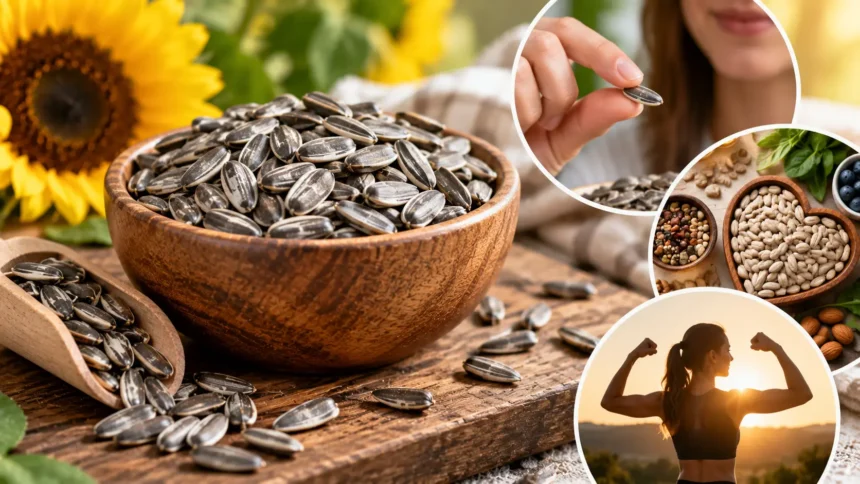
Are Sunflower Seeds Good for You? Benefits & Nutrition
Sunflower seeds are small, nutrient-dense seeds harvested from the flower heads of the sunflower plant. Despite their size, they provide a concentrated combination of healthy fats, plant-based protein, fiber, vitamin E, magnesium, selenium, copper, and several B vitamins. Their mild nutty flavor makes them easy to add to salads, oatmeal, yogurt, baked foods, trail mixes, and snacks. Because sunflower seeds are relatively high in calories, however, portion size matters if you eat them frequently. Salted and flavored varieties can also contain substantial amounts of sodium or added ingredients. When eaten in reasonable portions, plain sunflower seeds can be a nutritious part of a balanced diet.
Sunflower seeds have received particular attention for their unsaturated fats and vitamin E content, both of which support normal cardiovascular and cellular function. They may also contribute to better satiety because they combine fat, protein, and fiber in one food. However, sunflower seeds should not be treated as a cure for high cholesterol, diabetes, inflammation, or other medical conditions. Their benefits depend on the overall diet and what foods they replace. Choosing unsalted or lightly salted seeds and varying your sources of nuts, seeds, legumes, vegetables, and whole grains provides a broader nutritional profile. This guide explains sunflower seed nutrition, potential health benefits, possible risks, appropriate serving sizes, and practical ways to include them in your diet.
Sunflower Seed Nutrition Facts
Sunflower seeds are energy-dense because a substantial proportion of their calories comes from fat. A typical one-ounce serving of shelled, dry-roasted sunflower seeds contains roughly 160 to 170 calories, although exact values vary by brand and preparation. That serving generally provides around 5 to 6 grams of protein, several grams of carbohydrates, and approximately 14 grams of fat. Most of that fat is unsaturated rather than saturated. Sunflower seeds also provide a few grams of dietary fiber, which can support digestive health and fullness. Because the seeds are small, it is easy to eat several servings without realizing how much energy you have consumed.
The fat profile is one of the strongest nutritional features of sunflower seeds. They contain considerable amounts of polyunsaturated fat, particularly linoleic acid, along with some monounsaturated fat. Unsaturated fats are generally considered more heart-friendly when they replace foods high in saturated or trans fats. This does not mean unlimited quantities are beneficial because total calorie intake still matters. Eating sunflower seeds instead of heavily processed snacks can be a nutritious substitution. Adding large amounts on top of an already calorie-rich diet, however, may contribute to excess energy intake.
Vitamin E is another major nutrient found in sunflower seeds. Vitamin E functions as an antioxidant that helps protect cell membranes from oxidative damage. It also plays roles in immune function and other normal biological processes. Sunflower seeds are among the more concentrated commonly eaten food sources of this vitamin. Getting vitamin E from whole foods also provides accompanying nutrients rather than one isolated compound. A small serving of sunflower seeds can therefore make a meaningful contribution toward daily vitamin E intake.
Sunflower seeds also provide important minerals, including magnesium, selenium, copper, phosphorus, and manganese. Magnesium participates in hundreds of enzymatic processes and contributes to normal muscle, nerve, blood pressure, and energy functions. Selenium supports antioxidant enzymes and thyroid function, although requirements are relatively small. Copper contributes to connective tissue formation, iron metabolism, and nervous system function. The amounts vary depending on soil, processing, and serving size. Eating a varied diet remains preferable to depending on one seed for all mineral requirements.
Several B vitamins are present as well, including thiamin, vitamin B6, folate, and niacin in varying amounts. These nutrients contribute to energy metabolism, nervous system function, and normal cell processes. Sunflower seeds also contain plant compounds such as phenolic acids and phytosterols. Phytosterols have a structure similar to cholesterol and may modestly reduce intestinal cholesterol absorption when consumed regularly in sufficient amounts. However, ordinary portions of sunflower seeds should be viewed as nutritious foods rather than medicinal doses. Their overall nutrient combination is more important than any single compound.
Are Sunflower Seeds Good for Heart Health?
Sunflower seeds can fit well into a heart-supportive eating pattern because most of their fat is unsaturated. Replacing foods high in saturated fat with sources of unsaturated fat can help support healthier blood cholesterol levels. For example, using a small amount of sunflower seeds instead of processed chips, fatty meats, or certain baked snacks may improve the overall fat quality of a meal. The benefit depends on substitution rather than simply adding more calories. Heart health is influenced by the total dietary pattern, physical activity, smoking status, sleep, blood pressure, and other factors.
Linoleic acid is the primary polyunsaturated fatty acid found in many sunflower seed varieties. It is an omega-6 fatty acid that the body needs and cannot produce on its own. Despite common online claims that all omega-6 fats are inflammatory, normal dietary amounts of linoleic acid are not generally considered something healthy people need to avoid. Unsaturated fats can be useful replacements for saturated fats. Balance still matters, and eating a variety of fat sources such as fish, nuts, olive oil, seeds, and avocados helps create a broader fatty-acid profile.
Magnesium in sunflower seeds may also support cardiovascular function. Adequate magnesium intake is involved in normal blood vessel function, muscle contraction, and blood pressure regulation. Sunflower seeds should not be considered a treatment for hypertension, but they can contribute to overall mineral intake. Their usefulness can be undermined by choosing heavily salted varieties, particularly for people trying to reduce sodium. Reading the nutrition label helps reveal how much sodium a flavored or roasted product contains. Unsalted seeds are often the simplest choice for regular use.
The seeds also contain phytosterols, which may contribute modestly to cholesterol management. These naturally occurring plant compounds compete with cholesterol for absorption in the digestive tract. However, the cholesterol-lowering effect depends on overall phytosterol intake and dietary context. Eating sunflower seeds alone will not reverse high LDL cholesterol or replace prescribed medication. They work best as one component of a fiber-rich eating pattern that includes vegetables, fruit, whole grains, legumes, and other minimally processed foods. People with high cholesterol should continue following individualized medical recommendations.
Vitamin E adds another cardiovascular-related nutritional feature because it protects cell structures from oxidative damage. Still, antioxidant-rich foods should not be oversold as preventing heart attacks on their own. Whole foods are beneficial partly because they deliver combinations of nutrients, fiber, and plant compounds together. Sunflower seeds can contribute to this pattern in a convenient form. A tablespoon or small handful can add texture and nutrition without requiring major dietary changes. Consistency and overall food quality are more meaningful than eating large portions occasionally.
Sunflower Seeds and Weight Management
Sunflower seeds can support appetite control because they contain protein, fat, and fiber. These nutrients tend to slow digestion and can help a snack feel more satisfying than foods made mostly from refined carbohydrates. For example, a small portion of sunflower seeds paired with fruit may provide more lasting fullness than candy or sweetened crackers. This can make them useful for people trying to reduce frequent snacking. However, satiety does not make them low in calories. Portion awareness remains important for weight management.
Because sunflower seeds are small, eating directly from a large bag can make it difficult to judge how much has been consumed. Several handfuls can provide hundreds of calories relatively quickly. Pre-portioning a serving into a bowl or small container can make intake easier to manage. Seeds sold in shells may naturally slow eating because each seed has to be opened, although shell-on versions are often heavily salted. Choosing shelled seeds makes them convenient for meals but also easier to overeat. Neither form is automatically better for weight loss.
Sunflower seeds do not burn body fat or accelerate metabolism in a clinically meaningful way by themselves. Weight loss occurs when energy intake remains below energy expenditure over time, although food quality strongly affects how sustainable that process feels. Nutrient-dense foods such as seeds can make a reduced-calorie diet more satisfying. They provide healthy fats and minerals that may be lacking in highly restrictive eating plans. The useful question is therefore whether sunflower seeds help replace less nutritious foods while fitting within your overall energy needs.
Protein is another reason sunflower seeds may contribute to fullness, although they are not as protein-dense as foods such as Greek yogurt, eggs, fish, poultry, soy foods, or legumes. Combining seeds with another protein source can create a more balanced meal. For instance, adding sunflower seeds to yogurt, cottage cheese, oatmeal, lentil salad, or a grain bowl can improve texture and nutrient density. They are particularly convenient for vegetarian and vegan diets. Still, large quantities are not necessary to gain nutritional value.
People trying to gain weight can also use sunflower seeds strategically because they provide substantial energy in a small volume. Adding them to smoothies, cereals, salads, or nut-and-seed mixes can increase calorie intake without requiring very large meals. This can be helpful for individuals with reduced appetite when medically appropriate. The same energy density explains why portion size matters for someone pursuing weight loss. Sunflower seeds are therefore not inherently a weight-loss or weight-gain food. Their effect depends on quantity and the rest of the diet.
Sunflower Seeds, Blood Sugar and Diabetes
Sunflower seeds contain relatively little digestible carbohydrate compared with many common snack foods. Their fat, protein, and fiber can slow the overall digestion of a meal and may help moderate the speed at which glucose enters the bloodstream. Adding a small portion to carbohydrate-containing foods can therefore make a snack more balanced. For example, fruit with sunflower seeds may produce greater satiety than fruit juice alone. This does not mean sunflower seeds directly lower blood sugar. People with diabetes still need to consider total carbohydrate intake, medications, and individualized dietary goals.
The magnesium content of sunflower seeds is also relevant because magnesium participates in glucose metabolism and insulin function. Diets providing adequate magnesium are generally associated with better metabolic health, but associations do not mean one magnesium-rich food can treat insulin resistance. Sunflower seeds are simply one of many useful sources. Beans, whole grains, leafy vegetables, nuts, and other seeds also provide magnesium. Eating a variety of these foods improves overall diet quality. Supplements are not automatically superior to food sources and may not be appropriate for everyone.
Sunflower seeds can be a practical alternative to sweet snacks for people trying to reduce added sugar. Plain seeds contain very little sugar unless sweet coatings or flavorings have been added. Some commercial products, however, include honey, barbecue seasoning, sweet glazes, or other ingredients that change the nutrition profile. Nutrition labels are therefore more useful than assumptions based on the word “sunflower.” Unsalted, plain, or lightly roasted products are easier to incorporate into a diabetes-friendly eating plan. Serving size should still be considered because calories remain concentrated.
People with diabetes who also have high blood pressure should pay particular attention to sodium. Many roasted sunflower seeds contain large quantities of salt, especially when eaten in their shells because seasoning coats the outside. Frequent high sodium intake can make blood pressure management more difficult in salt-sensitive individuals. Choosing unsalted products allows you to benefit from the seeds without adding unnecessary sodium. Herbs, spices, or a small amount of seasoning can provide flavor at home. Individual sodium targets should follow medical guidance where relevant.
Sunflower seeds should not replace prescribed diabetes medication or individualized nutrition treatment. Blood glucose responses vary from person to person and also depend on what is eaten alongside the seeds. Anyone using insulin or medicines that can cause low blood sugar needs a broader meal plan rather than relying on general food claims. A dietitian can help determine suitable portions and meal combinations. For most people, sunflower seeds can simply be viewed as a nutrient-rich, low-sugar food that fits within a balanced eating pattern.
Other Potential Benefits of Sunflower Seeds
Sunflower seeds may support normal immune function because they provide vitamin E, selenium, copper, and other micronutrients involved in immune processes. Vitamin E helps protect cell membranes, while selenium is required for several antioxidant enzymes. These functions are important, but eating more than the body needs does not necessarily create a stronger immune system. The immune system depends on adequate nutrition overall, including protein, vitamins, minerals, sleep, activity, and general health. Sunflower seeds can contribute nutrients without being an immune-boosting cure. A varied diet remains more important.
The protein and mineral content may also support muscles and bones as part of an adequate diet. Magnesium and phosphorus contribute to normal bone structure and function, while protein provides amino acids needed throughout the body. Sunflower seeds alone do not supply everything required for bone health, particularly substantial calcium or vitamin D. They work best alongside dairy foods or fortified alternatives, vegetables, legumes, and other protein sources. Weight-bearing exercise also has an important role in maintaining bone strength. No single seed can replace these broader habits.
Sunflower seeds can contribute to digestive health because they contain dietary fiber. Fiber adds bulk to stool and helps support normal bowel regularity when consumed with adequate fluids. It also provides substrate that can influence the gut microbial environment. The amount of fiber in one serving is modest, so sunflower seeds should complement rather than replace fruits, vegetables, legumes, and whole grains. Increasing fiber too quickly may cause gas or bloating in sensitive individuals. Gradual changes are generally easier for the digestive system to tolerate.
Vitamin E and unsaturated fats are sometimes promoted for healthier skin and hair. Nutritional deficiencies can certainly affect skin and hair quality, and sunflower seeds can contribute useful nutrients to an adequate diet. However, eating sunflower seeds will not reliably cure acne, stop hair loss, or reverse skin aging. Hair loss can result from genetics, thyroid problems, iron deficiency, hormonal changes, medications, or other conditions. Skin concerns also have many possible causes. Food should be viewed as nutritional support rather than a targeted cosmetic treatment.
Sunflower seeds may be particularly useful for plant-based diets because they provide protein, minerals, healthy fats, and convenient energy. Sunflower seed butter can also serve as an alternative for some people who cannot eat peanuts or tree nuts, although seed allergies can still occur. The seeds are versatile enough to work in savory and sweet meals. They can be blended into sauces, sprinkled over soups, or added to homemade granola. This flexibility makes them easier to eat regularly than many specialized health foods. Practical foods are often the ones that contribute most consistently to diet quality.
Are Salted or Roasted Sunflower Seeds Healthy?
Roasting does not automatically make sunflower seeds unhealthy. Dry-roasted sunflower seeds retain much of their protein, fat, minerals, and vitamin content, although heat can reduce some heat-sensitive compounds to varying degrees. Roasting also changes flavor and texture, which can make the seeds more enjoyable. The larger nutritional issue is usually what is added during processing. Oil-roasted, heavily salted, sweetened, or flavored varieties may contain additional calories, sodium, or other ingredients. Plain dry-roasted seeds are generally a nutritious option.
Salted sunflower seeds can provide very high sodium amounts if eaten in large quantities. Shell-on products can be especially salty because people often place the shell in their mouth before cracking it. Much of the sodium may come from the coating rather than the kernel itself. People with high blood pressure, kidney disease, heart failure, or other conditions requiring sodium restriction should pay closer attention to labels. Choosing unsalted or reduced-sodium versions can significantly change the nutritional profile. Portion size still matters even with unsalted seeds.
Flavored varieties can contain ingredients such as sugar, starches, flavor enhancers, or significant added oils. These products are not automatically unhealthy, but they can be easier to overeat and may provide less nutritional value per calorie than plain seeds. Comparing labels can reveal meaningful differences between brands. Look at the serving size, sodium, added sugar, and total calories rather than relying on front-of-package claims. A product labeled “natural” or “protein snack” can still be heavily salted. Simple ingredient lists are often easier to evaluate.
Raw sunflower seeds are another option and provide a softer flavor. Some people prefer them in smoothies, homemade energy bites, or baked goods. Raw seeds should be stored properly because their high unsaturated-fat content makes them vulnerable to becoming rancid over time. Keeping them in an airtight container away from heat and light helps preserve freshness. Refrigeration or freezing can extend storage for larger quantities. A bitter, stale, or paint-like flavor can indicate that the oils have deteriorated.
Sunflower seed butter offers many of the same nutrients in a spreadable form. It can be used on whole-grain toast, fruit, crackers, or oatmeal and may be suitable in environments where peanut or tree-nut products are restricted. However, some commercial seed butters contain added sugar, salt, or oils. Checking the label helps distinguish simpler products from heavily sweetened versions. Because seed butter is calorie-dense and easy to spread generously, measuring portions can be useful. Plain sunflower seed butter can still be a valuable part of a balanced diet.
Possible Side Effects and Risks of Sunflower Seeds
The most common practical concern with sunflower seeds is excessive calorie intake. Their healthy fats make them nutrient-dense but also energy-dense. Someone eating several large handfuls every day may consume substantially more calories than expected. This is particularly easy with shelled seeds because there is no pause required to remove the outer shell. Measuring a portion occasionally can help you learn what a reasonable serving looks like. The goal is not to fear calories but to match portions to your needs.
Sodium is another potential issue with heavily salted seeds. High sodium intake can contribute to elevated blood pressure in susceptible people and may worsen fluid retention in certain medical conditions. The seeds themselves are naturally low in sodium, so the problem usually comes from added salt. Choosing plain varieties gives you more control over seasoning. If you enjoy flavored seeds, smaller portions can still fit into an otherwise lower-sodium diet. People with medically prescribed sodium limits should follow those recommendations.
Sunflower seed allergy is possible, although it is less common than some other food allergies. Symptoms can include itching, hives, swelling, vomiting, wheezing, or difficulty breathing. Severe allergic reactions can progress to anaphylaxis and require emergency treatment. People with known seed allergies should carefully check ingredient labels because sunflower ingredients can appear in breads, snack bars, spreads, and other foods. Sunflower oil may have different allergenic potential depending on how it is processed, but individual medical advice is important. Never intentionally test a suspected severe allergy at home.
Eating the shells themselves is not recommended. Sunflower seed hulls are tough, fibrous, and difficult to digest. Swallowing a few accidentally is unlikely to cause problems for most healthy adults, but consuming large quantities can contribute to digestive irritation or, rarely, intestinal blockage. Shell fragments can also be sharp and uncomfortable. Crack the shell, eat the kernel, and discard the hull. Young children should also be supervised because whole seeds and shells can present choking concerns depending on age and development.
Another issue sometimes discussed is cadmium, a naturally occurring heavy metal that plants can absorb from soil. Sunflower seeds can contain more cadmium than some other foods, but occasional normal portions are not generally a reason for healthy adults to avoid them. The more sensible strategy is dietary variety rather than eating very large quantities of one seed every day. Rotating sunflower seeds with pumpkin seeds, sesame seeds, walnuts, almonds, and other foods broadens nutrient intake. Variety also reduces dependence on any single food source.
How Many Sunflower Seeds Should You Eat a Day?
A common practical serving of shelled sunflower seeds is about one ounce, or roughly 28 grams. This amount provides a meaningful dose of healthy fats, protein, vitamin E, and minerals without contributing an excessive number of calories for most people. You do not need to eat this exact amount every day. A tablespoon or two may be enough when seeds are being used as a topping rather than a snack. Individual needs vary according to body size, activity, overall calorie intake, and dietary goals.
People pursuing weight loss may prefer smaller portions because sunflower seeds contain substantial energy in a compact form. Measuring out one serving rather than eating from the bag can prevent accidental overeating. Pairing seeds with high-volume foods such as fruit, vegetables, or yogurt can create a satisfying snack. This approach provides texture and healthy fats without requiring a large quantity. There is no special minimum amount required to receive health benefits. Regular moderate intake is more practical than large servings.
Athletes or people with higher energy needs may comfortably eat larger portions within their overall diet. Sunflower seeds can contribute calories, magnesium, protein, and unsaturated fats needed during periods of higher food intake. However, they should not replace complete protein sources, fruits, vegetables, or carbohydrate-rich foods needed for training. Variety remains essential. The seeds work best as an addition to meals rather than the foundation of an entire eating plan. Nutritional balance matters more than maximizing one nutrient-dense food.
Children can also eat sunflower seed kernels when developmentally appropriate, but portions should be smaller and whole seeds should be considered in relation to choking risk. Sunflower seed butter can sometimes be easier for young children when spread thinly and offered safely. Products should ideally contain little added salt or sugar. Children with food allergies or eczema may need individualized advice when introducing new foods. Age-appropriate feeding guidance should always take precedence over adult serving recommendations.
There is generally no need for healthy adults to count individual seeds. Looking at the overall eating pattern is more useful. If sunflower seeds regularly replace candy, fried snacks, or other heavily processed foods, they may improve diet quality even without perfect portion measurement. If several servings are being added daily on top of other calorie-dense foods, reducing the amount may make sense. A small handful is often a convenient rule of thumb. Consistency, variety, and moderation provide a more useful framework than searching for one perfect daily number.
Best Ways to Add Sunflower Seeds to Your Diet
One of the simplest ways to eat sunflower seeds is to sprinkle them over salads. They add crunch, nutty flavor, healthy fats, and a small amount of protein without requiring additional preparation. Seeds pair particularly well with leafy greens, tomatoes, roasted vegetables, beans, or whole grains. Using them in place of croutons can improve the nutrient density of a salad while maintaining texture. Unsalted versions allow dressings and other ingredients to provide most of the sodium. A tablespoon or two is usually enough to change the meal noticeably.
Breakfast foods provide another easy opportunity. Sunflower seeds can be added to oatmeal, overnight oats, yogurt, cereal, smoothie bowls, or homemade granola. Combining them with berries and a protein-rich food can create a balanced morning meal. Seed butter can be stirred into oatmeal or spread over whole-grain toast. Because seeds contribute fat and calories, small portions can make otherwise light breakfasts more satisfying. This may help reduce hunger before the next meal.
Sunflower seeds also work well in savory cooked dishes. They can be sprinkled over soups, grain bowls, roasted vegetables, or pasta immediately before serving. Blending soaked or toasted seeds with herbs, garlic, lemon, and water can create creamy plant-based sauces. This can be particularly useful for people who avoid dairy or certain nuts. Ground seeds can also be incorporated into veggie burgers or coatings. Their mild flavor adapts easily to different cuisines.
Baking is another common use. Sunflower seeds can be added to whole-grain bread, muffins, crackers, or homemade snack bars. They contribute texture and nutrients, although baked foods can still be high in sugar or calories depending on the recipe. Adding seeds does not automatically transform a dessert into a health food. The overall ingredient list remains important. Choosing recipes with whole grains, moderate added sugar, and reasonable portion sizes preserves more of the nutritional advantage.
Finally, sunflower seeds can simply be eaten as a snack. Combining a measured portion with fruit can provide a satisfying mix of carbohydrate, fat, protein, and fiber. Homemade trail mix with sunflower seeds, nuts, and unsweetened dried fruit is another option. Avoid assuming commercial trail mixes are automatically healthy because some contain candy, large amounts of salt, or added sugar. Making your own provides more control. Sunflower seeds are most useful when they make nutritious eating easier and enjoyable rather than becoming another food you feel obligated to consume.
Frequently Asked Questions
Are sunflower seeds healthy to eat every day?
Yes, sunflower seeds can be eaten regularly as part of a balanced diet. A moderate portion provides healthy fats, protein, fiber, vitamin E, magnesium, and several other nutrients without requiring a large serving.
Are sunflower seeds good for weight loss?
Sunflower seeds can support fullness because they contain protein, fat, and fiber, which may make them a satisfying snack. However, they are calorie-dense, so portion size matters when weight loss is your goal.
Are salted sunflower seeds bad for you?
Salted sunflower seeds are not automatically unhealthy, but some products contain a large amount of sodium. Choosing unsalted or reduced-sodium varieties is usually better for frequent use, especially if you have high blood pressure or need to limit sodium.
How many sunflower seeds should I eat per day?
About one ounce, or roughly 28 grams of shelled seeds, is a practical serving for many adults. You can eat less or more depending on your calorie needs, meals, activity level, and overall diet.
Are sunflower seeds good for cholesterol?
Sunflower seeds contain unsaturated fats and plant sterols that can fit into a cholesterol-friendly diet, particularly when they replace foods high in saturated fat. They should be part of an overall heart-healthy eating pattern rather than used as a treatment for high cholesterol.
