


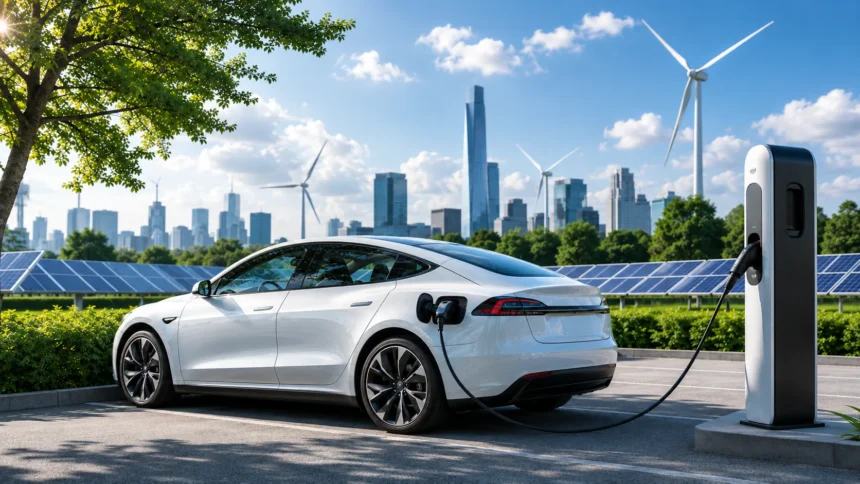
Are Electric Cars Better for the Environment?
Electric cars are often presented as a cleaner alternative to gasoline and diesel vehicles, but the environmental comparison is more complicated than simply looking at what comes out of the exhaust pipe. Battery electric vehicles produce no tailpipe emissions while driving, yet electricity generation, battery manufacturing, raw-material extraction, vehicle production, and eventual recycling all have environmental impacts. To understand whether electric vehicles are genuinely cleaner, the fairest approach is to examine the entire life cycle of both electric and conventional cars rather than focusing on a single stage.
The evidence increasingly shows that battery electric vehicles generally produce lower life-cycle greenhouse gas emissions than comparable internal-combustion vehicles, although the size of the advantage depends on the electricity used for charging, vehicle size, battery production, mileage, and other factors. The International Energy Agency notes that electric cars already provide life-cycle emissions benefits globally compared with internal-combustion cars, while recent European analysis has found substantially lower emissions for battery electric vehicles over their useful lives.
That does not mean electric cars have zero environmental impact. Manufacturing a large lithium-ion battery requires energy and materials such as lithium, graphite, nickel, manganese, iron, and other resources depending on battery chemistry. Mining and refining these materials can affect landscapes, water, energy use, communities, and ecosystems. Battery production can therefore give an electric car a larger environmental footprint before it has even traveled its first mile than a comparable gasoline vehicle.
The important difference appears after the vehicles begin operating. Gasoline and diesel cars continue burning fuel and generating carbon dioxide throughout their useful lives, while electric vehicles can become progressively cleaner as electricity systems add renewable and lower-carbon generation. For most drivers, the answer to “Are electric cars better for the environment?” is therefore generally yes when considering climate emissions over the full life cycle, but the environmental benefits become strongest when vehicles are efficient, batteries are responsibly produced, electricity is cleaner, and materials are recovered at the end of life.
Electric Cars Produce No Tailpipe Emissions
One of the clearest environmental advantages of a battery electric vehicle is that it does not burn gasoline or diesel inside an engine while driving. That means an EV produces no carbon dioxide, nitrogen oxides, carbon monoxide, or other combustion-related pollutants directly from a tailpipe. This is particularly important in busy urban areas where large numbers of internal-combustion vehicles operate close to homes, schools, workplaces, and pedestrians. The U.S. Environmental Protection Agency emphasizes that fully electric vehicles have no tailpipe emissions, although emissions may still occur where the electricity used to charge them is generated.
Conventional vehicles continue producing exhaust emissions throughout their useful lives because every mile generally requires additional fuel combustion. A typical passenger vehicle can emit several metric tons of carbon dioxide annually, although actual emissions depend strongly on fuel economy and driving distance. Electric vehicles shift much of their energy-related emissions away from the vehicle itself and into the electricity system, where the environmental impact depends on how that electricity is generated.
Removing tailpipe pollution can provide an important local air-quality benefit even when the electrical grid still uses some fossil fuels. Electricity generation is usually concentrated at power plants rather than occurring from thousands or millions of individual exhaust pipes inside densely populated streets. Cleaner grids increase the advantage further because renewable electricity can power additional vehicle miles without creating direct combustion emissions at either the car or, in the case of wind and solar generation, the point of electricity generation.
However, zero tailpipe emissions should not be confused with zero vehicle pollution. Electric cars still produce particulate matter through tire wear, road dust, and other non-exhaust sources, just as conventional vehicles do. Their environmental advantage is therefore strongest in eliminating exhaust pollution rather than eliminating every impact associated with road transportation. Walking, cycling, public transportation, efficient land use, and reducing unnecessary driving remain important parts of a broader sustainable transportation strategy.
Life-Cycle Emissions Give a More Complete Answer
The environmental impact of a vehicle should ideally be measured from the production of its materials through manufacturing, driving, energy production, maintenance, and eventual disposal or recycling. This approach is known as life-cycle or cradle-to-grave analysis. It prevents misleading comparisons in which one vehicle is judged only by exhaust emissions while another is judged by the environmental impact of its entire supply chain. U.S. energy guidance similarly defines vehicle life-cycle emissions as including fuel production, vehicle production, and end-of-life stages.
Electric cars generally begin with a disadvantage because producing batteries requires additional energy and material processing. Manufacturing emissions can therefore be higher than for an otherwise similar gasoline vehicle. Once the vehicle is being driven, however, electric motors use energy much more efficiently than combustion engines, and electricity can be generated from a mixture of renewable, nuclear, natural-gas, coal, and other energy sources rather than requiring petroleum combustion inside every vehicle.
Over enough driving, the lower operational emissions of an EV can compensate for the additional emissions created during battery production. Exactly when this occurs depends on battery size, manufacturing energy, the vehicle being compared, and the electricity source used for charging. An efficient electric car powered primarily by low-carbon electricity will generally overcome its manufacturing disadvantage sooner than a very large electric vehicle charged mostly from a carbon-intensive grid.
The overall evidence supports the conclusion that electric cars usually deliver a climate advantage across their full life cycle. The IEA reports global life-cycle emissions benefits for EVs compared with internal-combustion vehicles, while ICCT analysis of cars sold in the European Union in 2025 estimated substantially lower lifetime greenhouse gas emissions for battery electric vehicles than comparable gasoline cars.
Battery Manufacturing Has a Real Environmental Cost
The battery is responsible for much of the additional manufacturing impact associated with electric vehicles. Lithium-ion batteries require materials to be mined, processed, refined, manufactured into active materials, assembled into cells, and finally combined into battery packs. Every stage requires energy, infrastructure, and transportation, which means battery production can generate significant greenhouse gas emissions before an EV begins operating.
Battery chemistry strongly influences this environmental footprint. Some batteries use nickel and cobalt, while lithium iron phosphate batteries rely more heavily on iron and phosphate and avoid nickel and cobalt in their cathodes. Manufacturers are continually changing chemistries to improve cost, safety, energy density, longevity, and supply-chain resilience. These changes mean discussing “the EV battery” as though all batteries have exactly the same environmental impact can oversimplify the issue.
Battery size matters as well. A smaller electric car requires significantly fewer battery materials than a large electric SUV or pickup with an extremely long driving range. This creates an important environmental lesson that applies beyond electric vehicles: efficiency and vehicle size still matter. Electrifying every vehicle does not make resource consumption irrelevant, and choosing a smaller EV that meets real transportation needs can reduce both manufacturing emissions and material demand.
Battery manufacturing is also changing rapidly. The IEA has highlighted opportunities to reduce battery supply-chain emissions through cleaner electricity, improved manufacturing efficiency, more sustainable material production, recycling, and continued changes in battery chemistry. As these improvements spread, the environmental footprint created before an electric car reaches the road can decline further.
Mining Lithium and Other Battery Materials Creates Tradeoffs
Lithium is one of the best-known EV battery materials, but it is only one part of the supply chain. Depending on chemistry, batteries may also require graphite, nickel, cobalt, manganese, copper, iron, phosphate, aluminum, and other materials. Extracting these resources involves mines, processing facilities, water use, land disturbance, energy consumption, transportation, and waste management.
Different extraction methods create different environmental challenges. Lithium produced from underground brines can raise concerns about water use and local hydrology, particularly in dry regions, while hard-rock lithium mining involves conventional excavation and mineral processing. Nickel, cobalt, graphite, copper, and other battery materials have their own environmental and social impacts depending on where and how they are produced.
These issues do not mean electric vehicles are automatically worse than gasoline cars because conventional transportation also depends on an enormous extractive system. Petroleum must be explored, drilled, transported, refined, distributed, and continually replaced as drivers burn fuel. Battery materials differ because most of the material remains physically inside the vehicle and can potentially be recovered and reused rather than being consumed permanently during every journey.
The environmental challenge is therefore not choosing between extraction and no extraction. It is reducing the overall impact of the material and energy systems required for transportation. Cleaner mining, stronger environmental standards, diversified supply chains, smaller batteries, alternative chemistries, greater material efficiency, and effective recycling can all improve the environmental case for electric vehicles as adoption grows.
The Electricity Used for Charging Matters
An electric vehicle’s environmental impact during operation depends largely on the electricity used to charge it. If the local grid obtains much of its power from coal, charging can indirectly produce substantial greenhouse gas emissions. If electricity comes largely from wind, solar, hydroelectric power, nuclear energy, or other lower-carbon sources, operating emissions can be dramatically lower. The EPA explicitly notes that charging-related emissions vary depending on how local electricity is produced.
This means two identical electric cars operating in different regions can have different carbon footprints. A driver charging from rooftop solar may have very low operational emissions, while another driver using a fossil-heavy grid indirectly causes more emissions for the same amount of driving. Nevertheless, life-cycle assessments often find that EVs retain an overall emissions advantage across a wide range of electricity mixes.
Electricity systems also change over time. A gasoline car purchased today continues relying on gasoline unless its engine or fuel system changes fundamentally, while an electric vehicle can become cleaner during its lifetime without any modification to the vehicle itself. When a utility retires a fossil-fuel generator and adds renewable energy, every EV connected to that grid can benefit immediately from the cleaner electricity mix.
Charging time can potentially matter too. Electricity supply varies throughout the day as renewable production, customer demand, and generation resources change. Smart charging can increasingly shift some vehicle charging toward periods when electricity is cleaner, less expensive, or easier for the grid to supply. As EV adoption increases, coordinated charging could make transportation electrification work more effectively with expanding renewable electricity systems.
Electric Motors Use Energy More Efficiently
Electric motors convert a much larger portion of their input energy into vehicle movement than internal-combustion engines, which lose substantial energy as heat. This fundamental efficiency advantage means EVs generally need less energy input to move a similar vehicle the same distance. The U.S. Alternative Fuels Data Center notes that electric-drive technology improves vehicle efficiency compared with conventional approaches.
Regenerative braking further improves efficiency. Instead of turning all of the vehicle’s kinetic energy into waste heat through friction brakes, an electric drivetrain can use its motor as a generator during deceleration and return some energy to the battery. This is especially useful in urban driving where vehicles accelerate and slow down frequently.
Efficiency does not eliminate the importance of vehicle design. Heavy vehicles require more energy to accelerate and move, while poor aerodynamics increase energy consumption at higher speeds. Very large batteries also increase vehicle weight and require additional materials. Manufacturers can therefore improve environmental performance not merely by electrifying vehicles but also by reducing unnecessary mass and improving aerodynamics.
For consumers, this means the environmentally best EV is not necessarily the model with the largest battery or longest possible range. A smaller efficient vehicle matched to real driving needs can require fewer resources to manufacture and less electricity to operate. Electrification works best when combined with the same efficiency principles that improve transportation sustainability more broadly.
Electric Cars Can Improve Urban Air Quality
Vehicle exhaust contributes to urban air pollution, particularly along heavily traveled roads. Gasoline and diesel engines produce combustion-related pollutants that can affect respiratory and cardiovascular health. Because battery electric vehicles do not produce exhaust while driving, replacing combustion vehicles with EVs can reduce direct street-level emissions in communities where people live and work.
This advantage can be especially meaningful for buses, delivery vans, taxis, and other vehicles that travel frequently through dense neighborhoods. Electrifying a vehicle that operates many hours each day can eliminate a larger amount of local exhaust pollution than replacing a lightly used vehicle. The benefits therefore depend partly on which vehicles become electric first.
EVs do not eliminate every transportation-related pollutant. Tire wear remains a source of particulate matter, and heavier vehicles can potentially increase some forms of tire wear depending on design, driving style, and tire technology. Road dust also remains regardless of drivetrain. Regenerative braking, however, can reduce reliance on friction brakes and therefore lower some brake-related particulate emissions.
Improving urban air quality ultimately requires more than changing powertrains. Reducing congestion, improving public transport, designing walkable communities, supporting cycling, and reducing unnecessary car trips can lower pollution while also reducing traffic, noise, resource demand, and land devoted to parking. Electric vehicles are therefore an important tool for cleaner transportation rather than a complete solution to every transportation problem.
Are EV Batteries Recyclable?
Lithium-ion EV batteries contain valuable materials that can potentially be recovered when the battery is no longer suitable for vehicle use. Recycling processes can recover materials and return them to battery or industrial supply chains, reducing the need for some newly mined resources. The U.S. Department of Energy notes that recovered critical materials can be reintroduced into supply chains, although recycling methods vary in efficiency and processing requirements.
Before recycling, some batteries may also have opportunities for second-life applications when their remaining capacity is no longer ideal for a car but is still useful for stationary energy storage. Whether second-life use is economically and technically practical depends on battery condition, chemistry, testing requirements, safety, and the economics of new battery storage.
Recycling becomes increasingly important as the first large generations of modern EVs eventually reach end of life. Early in the transition, most battery material must come from primary production because there are not yet enough old electric vehicles available to supply recycled material for rapidly growing demand. Over time, a larger circulating stock of batteries can create more substantial recycling feedstock.
A circular battery system will not completely eliminate the need for mining because growing vehicle fleets still require additional material, and recycling cannot recover every atom indefinitely. However, higher recovery rates can reduce long-term primary material demand and prevent valuable battery resources from becoming waste. Designing packs for easier disassembly and recycling can strengthen this environmental advantage further.
Battery Longevity Matters for Environmental Performance
A battery that remains useful for many years distributes its manufacturing impact across more vehicle miles, improving the environmental performance of the car. Battery-management systems therefore control temperature, charging, discharge, and other conditions to protect battery health. Improvements in chemistry and engineering have also increased the durability of modern electric vehicle batteries.
Battery degradation is influenced by temperature, charging behavior, chemistry, usage, age, and operating conditions. A battery does not usually stop functioning suddenly when it loses some capacity. Instead, driving range can gradually decline, and the battery may continue serving the owner effectively for many years depending on their daily driving requirements.
Long vehicle life is environmentally valuable because manufacturing any new car requires substantial materials and energy. Replacing vehicles unnecessarily frequently can increase production impacts regardless of whether the drivetrain is electric or combustion-powered. Maintaining EVs well and using them for their practical service life helps maximize the benefit of the resources already invested in manufacturing.
Used electric vehicles can also spread environmental benefits to additional owners. As older EVs enter secondhand markets, consumers who could not afford new vehicles may gain access to lower-emission transportation without requiring an entirely new car to be produced specifically for them. Battery-health information and affordable repair systems will become increasingly important for making this secondary market work well.
Electric Cars Still Have a Manufacturing Footprint
An EV is not environmentally harmless simply because it has no exhaust pipe. Producing steel, aluminum, plastics, glass, electronics, tires, electric motors, power electronics, and batteries all requires resources and energy. Vehicle factories and their suppliers also generate emissions, meaning every new electric vehicle begins its life with a substantial environmental footprint.
The same is true for gasoline and diesel vehicles, which require engines, transmissions, exhaust-treatment systems, fuel systems, and many other components. The fair comparison therefore includes manufacturing impacts for both technologies rather than counting battery production for EVs while ignoring manufacturing for conventional vehicles.
Material choices can reduce future impacts. Using recycled aluminum and steel, renewable electricity in factories, low-carbon battery production, recycled battery materials, and more efficient manufacturing can lower embedded emissions. Vehicle manufacturers increasingly have opportunities to reduce environmental impacts before a car reaches the customer.
Consumers can support this principle by considering whether purchasing a new vehicle is necessary in the first place. If an existing efficient car still works well and is driven relatively little, replacing it immediately solely for environmental reasons may not always deliver the fastest overall resource benefit. The most sustainable decision depends on vehicle condition, mileage, energy source, replacement choice, and how long both vehicles would otherwise remain in use.
Vehicle Size Matters More Than Many People Realize
Electrification sometimes leads consumers to assume that vehicle size no longer matters because there are no tailpipe emissions. In reality, larger vehicles still require more steel, aluminum, tires, battery material, and manufacturing energy. They also require more electricity per mile because greater mass and larger frontal area typically increase energy consumption.
A large electric SUV can still have lower lifetime greenhouse gas emissions than a comparable gasoline SUV, but a smaller efficient EV will generally require fewer resources and less operating energy than a very large one. The environmental question should therefore involve both drivetrain and vehicle efficiency rather than treating all electric vehicles as equally sustainable.
Battery size is particularly important because long-range vehicles need more battery cells. Additional capacity provides valuable flexibility for drivers who frequently travel long distances, but consumers who normally travel short distances may carry a large unused energy reserve every day. More charging infrastructure can reduce the perceived need for extremely large batteries by making smaller packs more practical.
Right-sizing vehicles also provides benefits beyond climate emissions. Smaller cars occupy less road and parking space, typically use smaller tires, and generally require fewer materials. Electrification is therefore most effective when accompanied by thoughtful vehicle design rather than simply replacing every large combustion vehicle with an equally large battery-powered version.
How EVs Compare With Hybrid Cars
Hybrid vehicles combine an internal-combustion engine with electric assistance, allowing them to use less fuel than comparable conventional cars. They can therefore reduce greenhouse gas emissions without requiring drivers to rely entirely on charging infrastructure. For consumers who cannot conveniently charge an EV, an efficient hybrid may offer a practical reduction in fuel consumption.
Plug-in hybrids add a larger battery that can power a certain amount of electric driving before the gasoline engine is required. Their environmental performance depends heavily on how often they are actually charged. A plug-in hybrid that completes most daily trips electrically can use far less gasoline than one whose owner rarely plugs it in.
Battery electric vehicles remove gasoline combustion entirely from driving, which creates greater potential reductions as electricity becomes cleaner. They also use larger batteries than conventional hybrids, producing a higher battery-manufacturing footprint. The environmental comparison therefore depends on driving patterns, charging behavior, vehicle size, and regional electricity generation.
The best option can differ by household. Someone with reliable home charging and predictable daily driving may benefit strongly from a battery electric car, while a household without practical charging may find a highly efficient hybrid easier to use. Environmental progress does not necessarily require every driver to adopt exactly the same technology at the same moment.
What Happens When EVs Charge From Coal Power?
Critics sometimes argue that an electric vehicle powered by coal-generated electricity simply moves pollution from the exhaust pipe to the power plant. There is some truth in the idea that electricity source matters: an EV charged on a highly carbon-intensive grid produces more indirect greenhouse gas emissions than one charged primarily from renewables.
However, the comparison still has to account for vehicle efficiency and the entire fuel supply chain. Combustion vehicles require petroleum extraction, transportation, refining, distribution, and continuous burning, while electric motors convert energy into movement efficiently. This is why life-cycle studies frequently find electric vehicles competitive even before a grid becomes completely renewable.
The environmental advantage becomes significantly greater as coal generation decreases and cleaner electricity expands. An electric vehicle purchased today may remain on the road for well over a decade, during which the grid could change substantially. The same vehicle can therefore experience declining operating emissions during its lifetime as power generation improves.
This provides an important reason to coordinate vehicle electrification with electricity-sector decarbonization. Cleaner grids make EVs cleaner, while expanding electric transportation increases demand for electricity rather than petroleum. When renewable generation, energy storage, transmission, and smart charging grow together, transportation emissions can decline much more substantially.
Can Solar Power Make Electric Cars Even Cleaner?
Charging an EV partly or entirely with solar electricity can reduce operating emissions considerably. Homeowners with rooftop photovoltaic systems may be able to schedule some charging when their solar panels are producing electricity, particularly if the vehicle is parked at home during daylight hours.
Workplace and public solar charging can provide similar opportunities. Large parking areas can host solar canopies that generate electricity while also providing shade. The electricity may be consumed immediately by vehicles, sent into the building, stored in batteries, or exported to the grid depending on the system design.
Solar manufacturing itself has an environmental footprint, so solar-powered driving is not literally impact-free. Panels require materials and energy to manufacture. However, their emissions are spread across many years of electricity generation, and operating solar panels do not require continuous fuel combustion.
Combining efficient EVs with renewable electricity therefore strengthens the climate benefit of transportation electrification. The broader lesson is that EV sustainability cannot be separated from the energy system. Cleaner vehicles and cleaner electricity reinforce each other.
Electric Cars and Renewable Energy Can Support Each Other
Electric vehicles represent a large potential source of flexible electricity demand. Most cars remain parked for many hours each day, which means charging does not always need to occur immediately after the driver connects the cable. Smart chargers can potentially shift demand toward periods when electricity supply is abundant or overall grid demand is lower.
This flexibility becomes increasingly useful as wind and solar generation expand. Solar electricity may be abundant around midday, while wind production can be stronger during other periods depending on the region. Charging that responds to grid conditions can help use renewable electricity more efficiently.
Some vehicles and charging systems are also being developed with bidirectional capabilities, allowing energy stored in the battery to support buildings or the grid under certain circumstances. Vehicle-to-home technology could provide backup power, while future vehicle-to-grid programs may use coordinated EV fleets as flexible energy resources.
These opportunities require suitable hardware, electricity pricing, grid infrastructure, and consumer participation. They are not automatic benefits of every electric car. Nevertheless, they show how EVs can become part of a more integrated energy system rather than simply replacing gasoline with another form of transportation energy.
Do Electric Cars Create More Tire Pollution?
Electric cars can be heavier than comparable gasoline vehicles because batteries add substantial mass. Greater vehicle weight can increase tire wear in some conditions, which has led to concerns about non-exhaust particulate pollution. High torque and aggressive acceleration can also contribute to faster tire wear if drivers use that performance frequently.
However, tire pollution is not uniquely an electric-vehicle issue. Large gasoline SUVs and pickups can also be extremely heavy, and tire wear depends on weight, tire design, driving style, road surface, alignment, pressure, and other factors. Comparing vehicles by size and weight provides a more useful picture than treating all EVs as one category.
Manufacturers can reduce the problem through lower vehicle mass, improved tire compounds, better aerodynamics, efficient driving software, and responsible battery sizing. Drivers can help by maintaining correct tire pressures and avoiding unnecessarily aggressive acceleration.
The issue illustrates why electrification alone cannot solve every environmental consequence of road transport. Cleaner powertrains should be accompanied by improvements in materials, urban design, vehicle size, road usage, and transportation alternatives. Sustainability involves reducing several forms of impact simultaneously rather than optimizing only carbon dioxide emissions.
Are Electric Cars Really Better for Climate Change?
When the full life cycle is considered, the overall evidence indicates that battery electric cars generally generate lower greenhouse gas emissions than comparable gasoline and diesel cars. Their manufacturing emissions may initially be higher because of battery production, but lower operating emissions usually compensate for that difference during the vehicle’s useful life. The IEA describes life-cycle emissions reductions from EVs as already occurring at the global level.
The size of the climate advantage varies. An efficient EV powered by renewable-heavy electricity may have dramatically lower emissions than a gasoline vehicle. A very large EV charged from a carbon-intensive grid will have a smaller advantage. Battery manufacturing location and chemistry also influence the calculation.
The comparison improves further as electricity generation becomes cleaner. Unlike combustion cars, which remain dependent on carbon-containing fuels throughout their operation, EVs benefit directly when renewable and other low-carbon sources replace fossil electricity. This makes electrification compatible with long-term power-sector decarbonization.
Recent European life-cycle research provides an example of how large the gap can become in cleaner power systems. ICCT analysis published in 2025 estimated battery electric cars sold in the European Union had dramatically lower life-cycle greenhouse gas emissions than gasoline counterparts when projected electricity trends were included.
Are Electric Cars the Most Environmentally Friendly Transportation?
An electric car is generally cleaner than a comparable combustion car, but replacing every gasoline vehicle with an EV does not eliminate congestion, road construction, parking demand, tire pollution, traffic injuries, or the materials needed to manufacture vehicles. Cars remain resource-intensive objects regardless of drivetrain.
Public transportation can move many passengers with fewer vehicles, while walking and cycling require dramatically less energy and material for short journeys. Well-designed cities that reduce the distance people need to travel can lower environmental impact more fundamentally than simply changing the technology used for every trip.
That does not reduce the importance of electric vehicles. Many communities and trips will continue depending on cars, vans, buses, and trucks, making electrification an essential tool for reducing emissions from vehicles that remain necessary. The strongest transportation strategy can combine electrification with public transit, active transportation, and better urban planning.
Consumers therefore do not need to think of the question as EVs versus every other environmental solution. Electric cars address the environmental impact of motor vehicles, particularly combustion emissions, while other transportation policies address how much driving is necessary in the first place. Both approaches can work together.
How to Make an Electric Car Even More Sustainable
Choose the smallest vehicle that realistically meets your transportation needs. Smaller EVs generally require smaller batteries and fewer materials while using less electricity per mile. Purchasing extreme range simply for occasional hypothetical trips can increase environmental impact when a more efficient model would handle normal driving comfortably.
Keep the vehicle for a long useful life. Frequent replacement increases the number of vehicles that need to be manufactured and can reduce the environmental advantage obtained from the materials already invested in your existing car. Proper maintenance, sensible charging, and battery care can help extend useful life.
Charge with lower-carbon electricity when practical. Home solar, renewable electricity plans, or charging during periods when cleaner electricity is abundant can reduce operational emissions. The exact options depend on the electricity market and household circumstances, so not every driver will have the same choices.
Drive efficiently and combine trips where possible. Electric vehicles still consume energy, wear tires, and require infrastructure. Smooth acceleration, reasonable speeds, proper tire pressure, and reduced unnecessary travel improve efficiency just as they do with conventional vehicles. The cleanest mile is still one that does not need to be driven.
Common Myths About Electric Cars and the Environment
One common myth is that electric vehicles have no environmental impact. They clearly do: battery materials must be extracted, factories consume energy, electricity has to be generated, and vehicles eventually reach the end of their useful lives. The correct environmental claim is that EVs can substantially reduce several impacts compared with combustion vehicles, not that they eliminate every impact.
The opposite myth is that battery manufacturing automatically makes EVs worse than gasoline cars. Battery production can increase manufacturing emissions, but this comparison ignores years of gasoline combustion from conventional vehicles. Life-cycle research generally finds that lower operating emissions compensate for the initial manufacturing disadvantage.
Another misconception is that EVs are pointless unless electricity comes entirely from renewable sources. Cleaner electricity certainly improves the result, but power grids usually contain a mixture of generation sources, and electric drivetrains are highly efficient. Whether the advantage remains strong in a particular location depends on its electricity mix, yet EVs do not require a 100% renewable grid before they can provide benefits.
Finally, batteries do not simply become useless waste the moment their automotive performance declines. Materials can be recovered through recycling, and some batteries may be suitable for additional uses before recycling. Improving collection, recovery efficiency, pack design, and recycling economics will be increasingly important as the number of retired EV batteries grows.
The Environmental Future of Electric Cars
Electric vehicles are likely to become more environmentally favorable as several technologies improve simultaneously. Cleaner electricity reduces charging emissions, while cleaner battery factories lower manufacturing emissions. Changes in battery chemistry can reduce dependence on some constrained materials, and greater energy density can potentially reduce material use for a given driving range.
Battery recycling can also turn end-of-life vehicles into an increasingly valuable source of materials. As larger numbers of EVs eventually retire, recovered lithium, nickel, cobalt, copper, and other materials can supplement newly mined supply. The IEA continues to highlight battery manufacturing, material efficiency, and recycling as important parts of a more sustainable EV supply chain.
Vehicle design may become another major opportunity. Smaller batteries, lighter structures, improved aerodynamics, efficient heat pumps, better tires, and more efficient electronics can reduce energy demand without sacrificing everyday usefulness. Efficiency improvements also reduce the amount of renewable generation and charging infrastructure required for transportation.
Electric vehicles should therefore be understood as an evolving technology rather than a finished environmental solution. Today’s EVs generally provide significant emissions advantages over comparable combustion vehicles, but tomorrow’s vehicles can become cleaner still through better batteries, cleaner grids, circular material systems, and more efficient designs.
Final Thoughts
So, are electric cars better for the environment? In most life-cycle greenhouse gas comparisons, battery electric cars are generally better than comparable gasoline or diesel vehicles. They produce no tailpipe emissions, use energy more efficiently, and can become cleaner as electricity generation shifts toward renewable and other low-carbon sources. Global and regional life-cycle studies increasingly support this overall conclusion.
The environmental advantage is not absolute. Battery production requires significant materials and energy, mining has environmental consequences, electricity generation still produces emissions in many regions, and EVs continue contributing to tire wear, congestion, road demand, and other impacts associated with cars generally.
The best environmental outcomes come from combining electrification with efficiency. Smaller electric vehicles, appropriately sized batteries, renewable electricity, durable batteries, responsible mining, effective recycling, and long vehicle lifetimes can reduce impacts considerably. Public transportation, walking, cycling, and reducing unnecessary travel can complement EV adoption rather than competing with it.
Electric cars are therefore not a zero-impact technology or a complete solution to sustainable transportation. They are a substantially cleaner way to power many of the vehicles society continues to use, particularly as electricity and battery supply chains become cleaner. The question is increasingly not whether EVs can reduce environmental impact, but how effectively governments, manufacturers, energy providers, and consumers can maximize those benefits.
Frequently Asked Questions
Are electric cars really better for the environment?
Generally, yes. Life-cycle research finds that battery electric vehicles typically generate lower greenhouse gas emissions than comparable internal-combustion vehicles, although the exact advantage depends on battery production, vehicle efficiency, driving distance, and the electricity used for charging.
Are EV batteries bad for the environment?
EV batteries have environmental impacts because mining, refining, and manufacturing require resources and energy. However, battery materials can potentially be recovered through recycling, and the vehicle’s lower operating emissions can compensate for higher manufacturing emissions over its lifetime.
Do electric cars cause pollution when charging?
Charging can indirectly cause emissions when electricity comes from fossil-fuel generation. The amount varies according to the local electricity mix, and charging becomes substantially cleaner as renewable and other low-carbon energy sources increase.
How long does an EV need to drive before becoming greener than a gasoline car?
There is no universal mileage because the break-even point depends on battery manufacturing, vehicle size, electricity generation, fuel economy, and driving conditions. Cleaner electricity and smaller batteries generally allow an EV to overcome its manufacturing emissions disadvantage sooner.
Are hybrid cars better for the environment than electric cars?
Hybrids can reduce fuel use compared with conventional gasoline vehicles and may be practical where charging is difficult. Battery electric cars generally offer greater long-term emissions-reduction potential, especially when charged with increasingly low-carbon electricity.