


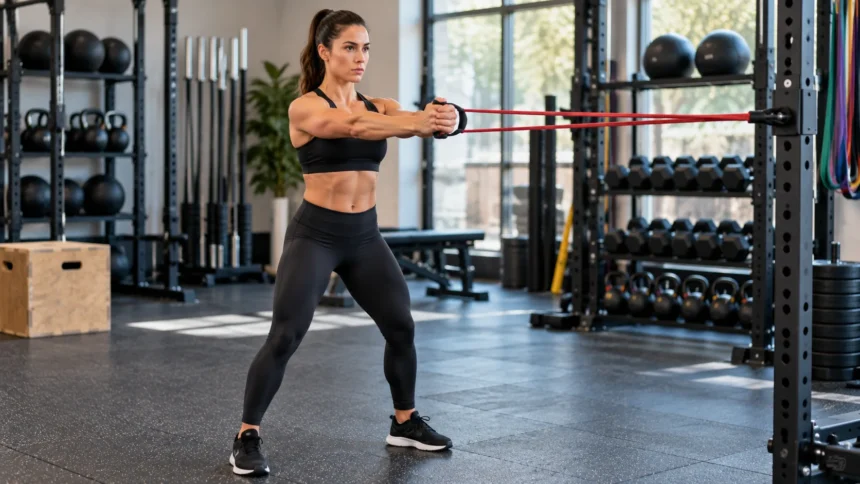
Building a strong and stable core is important for everyday movement, exercise performance, and maintaining comfortable posture. While traditional abdominal exercises often involve bending or twisting, some of the most effective core movements challenge your body to resist unwanted motion. The Pallof press exercise is a simple but useful movement that develops core stability, balance, and controlled muscle engagement.
Learning how to perform the Pallof press correctly can help you improve your workout technique and develop greater awareness of your core muscles. This exercise uses a resistance band or cable machine to challenge your ability to maintain a stable position. Whether you are beginning strength training or adding variety to an existing routine, understanding proper form is essential.
What Is the Pallof Press Exercise?
The Pallof press is a core stability exercise designed to help your body resist rotational forces. Instead of twisting your torso, you press a resistance band or cable handle away from your chest while maintaining a steady position. This movement challenges your abdominal muscles to prevent your upper body from turning toward the resistance.
The exercise is named after physical therapist John Pallof and is commonly included in strength training, athletic conditioning, and rehabilitation programs. It belongs to a category of movements called anti-rotation exercises because the primary challenge involves preventing unnecessary twisting. Unlike traditional crunches, the Pallof press emphasizes controlled stability rather than repeated spinal bending.
One advantage of the Pallof press is that it can be adapted to different experience levels and training environments. Beginners can use a light resistance band, while experienced individuals may use cable machines or more challenging positions. The exercise also requires relatively little space, making it suitable for many home workouts and gym routines.
What Muscles Does the Pallof Press Work?
The Pallof press primarily targets the core muscles responsible for stabilizing the trunk against rotational movement. These include the internal and external obliques, transverse abdominis, and rectus abdominis. Working together, these muscles help maintain a steady torso while resistance pulls sideways against the body during the pressing movement.
The deeper core muscles also contribute to controlling spinal position and supporting coordinated movement. Muscles surrounding the spine work alongside the abdominal muscles to maintain posture throughout the exercise. The exact level of muscle activation depends on resistance, body position, movement technique, and how effectively the individual maintains control during each repetition.
Although the Pallof press focuses on the core, other muscle groups also participate. The shoulders and arms help press and hold the handle, while the glutes and leg muscles provide a stable foundation. This coordination makes the exercise useful for practicing full-body stability rather than isolating one abdominal muscle group.
How to Set Up the Pallof Press Correctly
Proper setup is essential for performing the Pallof press safely and effectively. Start by choosing a resistance band with a secure anchor point or a cable machine with an adjustable pulley. Position the attachment approximately at chest height so the resistance pulls horizontally across your body instead of upward or downward.
Stand sideways to the anchor point, keeping your feet approximately hip-width to shoulder-width apart. Hold the band or cable handle with both hands near the center of your chest. Step away from the anchor until you feel gentle tension, making sure the resistance is manageable without pulling your torso out of position.
Keep your knees slightly bent and distribute your weight comfortably across both feet. Your shoulders and hips should face forward while the resistance comes from one side. Before beginning, check that the band is undamaged, the attachment is secure, and you have enough space to extend your arms without hitting nearby objects.
How to Do the Pallof Press Step by Step
Begin in a stable standing position with your body turned sideways to the resistance source. Hold the handle close to your chest using both hands, keeping your elbows comfortably bent. Engage your abdominal muscles gently and maintain a neutral spine while ensuring your shoulders and hips remain aligned throughout the starting position.
Slowly extend both arms straight forward until your hands reach a comfortable distance from your chest. As your arms move away, the resistance creates a stronger rotational challenge. Prevent your torso from twisting toward the anchor point, keeping your body steady and your movements controlled rather than trying to push the resistance as far as possible.
Pause briefly with your arms extended while maintaining normal breathing and balanced posture. Gradually bring your hands back toward your chest without allowing your shoulders or hips to rotate. Complete the desired repetitions, then turn around to face the opposite direction and repeat the movement so both sides of your core receive a similar challenge.
Proper Breathing and Core Engagement During the Pallof Press
Breathing correctly during the Pallof press helps maintain comfort and supports controlled movement. Many people find it helpful to breathe out gently while pressing their arms forward and breathe in as the hands return toward the chest. The goal is to maintain a steady breathing pattern rather than holding your breath throughout the exercise.
Core engagement should feel firm but comfortable, allowing the abdominal muscles to support the torso without excessive tension. Imagine preparing your midsection to remain steady while someone gently pushes from the side. This approach encourages controlled muscle activation without requiring you to forcefully tighten every muscle or restrict normal breathing.
Maintaining proper posture is equally important because leaning backward or arching the lower back changes the exercise. Keep your rib cage reasonably aligned above your pelvis and avoid unnecessary movement through the spine. If you struggle to remain stable, reduce the resistance or shorten the arm movement until you can perform each repetition comfortably.
Common Pallof Press Mistakes to Avoid
One common mistake is choosing resistance that is too heavy for the intended movement. Excessive tension may cause the torso to twist, the shoulders to shift, or the hips to rotate toward the anchor point. These adjustments reduce the exercise’s focus on controlled anti-rotation stability and can make proper technique harder to maintain.
Another mistake involves rushing through repetitions without paying attention to body position. Extending and returning the arms too quickly can encourage momentum instead of deliberate muscle control. Performing each movement slowly gives the core muscles an opportunity to respond to the changing resistance while helping you recognize unwanted movement through the shoulders or pelvis.
Some people also hold their breath, lock their knees, or lean away from the resistance to compensate for difficulty. These habits can interfere with comfortable positioning and reduce movement quality. Instead, maintain soft knees, relaxed shoulders, and steady breathing while adjusting resistance to match your current ability and experience.
Benefits of the Pallof Press for Core Stability
One of the main benefits of the Pallof press is improved control of the muscles that stabilize the trunk. Resisting rotational force encourages the core to work together while the arms move independently. This type of training can complement exercises that involve lifting, carrying, reaching, and changing direction during everyday activities.
The Pallof press also provides a way to train core stability without repeatedly bending or twisting the spine. Because the exercise can be performed with light resistance and controlled movements, it offers flexibility for different fitness levels. However, suitability depends on individual needs, and people with existing injuries may require professional guidance before including it.
Another benefit is its versatility within a balanced exercise program. The Pallof press can complement squats, deadlifts, walking, and other activities requiring coordinated trunk control. It is not a complete core workout by itself, but combining anti-rotation exercises with other suitable movements can help develop broader strength, stability, and movement confidence.
Pallof Press Variations for Beginners and Advanced Exercisers
The standing resistance band Pallof press is a practical starting point for beginners. It allows you to select gentle resistance and concentrate on keeping your torso stable while pressing forward. Starting with a comfortable stance and a small movement range can make it easier to understand the exercise before increasing the challenge.
A half-kneeling Pallof press provides another variation by changing how the lower body supports the movement. Place one knee on a comfortable padded surface and position the opposite foot in front, creating a stable kneeling stance. Maintain an upright torso and press the resistance forward while avoiding unwanted rotation through the hips and shoulders.
Experienced exercisers may explore a tall-kneeling Pallof press, a controlled extended-arm hold, or a slightly narrower standing stance. These variations change the stability demands without necessarily requiring heavier resistance. Progress gradually and choose positions that allow smooth movement, steady breathing, and consistent control rather than making the exercise unnecessarily difficult.
How Many Sets and Reps of Pallof Press Should You Do?
The appropriate number of Pallof press repetitions depends on your experience, training goals, and overall exercise routine. Beginners can often start with one or two sets of approximately eight to ten controlled repetitions per side. Using light resistance allows time to learn the movement while reducing the temptation to compensate with unnecessary body rotation.
As your coordination improves, you may progress toward two or three sets of eight to twelve repetitions on each side. Focus on maintaining the same quality of movement from the beginning of each set to the end. A repetition should remain comfortable and controlled, and there is no need to continue once fatigue significantly affects technique.
The Pallof press can be included in a strength training routine a few times per week, depending on other core activities and recovery needs. Some individuals prefer performing it during warm-ups, while others include it in a dedicated core session. The most useful schedule is one that supports consistent practice without unnecessary fatigue or discomfort.
Pallof Press vs. Planks and Traditional Ab Exercises
The Pallof press and plank both develop core stability, but they challenge the body in different ways. A standard plank emphasizes maintaining a steady trunk while supporting body weight through the arms and feet. The Pallof press introduces sideways resistance, requiring the core muscles to prevent rotation while the arms extend forward.
Traditional exercises such as crunches involve repeated movement through the trunk, particularly spinal flexion. These exercises may develop certain aspects of abdominal strength, while the Pallof press emphasizes resistance to movement. Neither approach is automatically superior because each trains different functions and can contribute to a balanced exercise program when performed appropriately.
Combining different core exercises can provide a broader training experience than relying on one movement alone. For example, a routine might include a plank for static stability, a Pallof press for anti-rotation control, and other suitable exercises for coordinated movement. Exercise selection should reflect individual goals, experience, comfort, and the demands of other physical activities.
How to Include the Pallof Press in Your Workout Routine
Adding the Pallof press to an existing routine does not require a complicated training plan. Start by selecting a resistance level that allows you to maintain good form through every repetition. You can perform the exercise after a general warm-up or alongside other strength exercises, depending on how your workout is organized.
The Pallof press works well within full-body workouts because it complements movements that require stable positioning. Some people include it after squats or other major exercises, while others prefer using light resistance before more demanding activities. Keep the total workload manageable and avoid treating core training as a competition to complete the most repetitions.
Pay attention to comfort and movement quality throughout the exercise. Mild muscular effort is expected, but sharp pain, dizziness, or unusual discomfort are reasons to stop and reassess. If you have a current injury or persistent pain, a qualified healthcare or exercise professional can help determine whether this movement is appropriate and suggest modifications.
Conclusion
The Pallof press exercise is a practical way to develop core stability by resisting unwanted rotational movement. It primarily challenges the abdominal and oblique muscles while encouraging coordinated support from the shoulders, hips, and legs. Learning proper setup, controlled pressing technique, and comfortable breathing helps make the exercise a useful addition to different training routines.
One of the biggest advantages of the Pallof press is its adaptability. Beginners can start with a light resistance band and a comfortable standing position, while experienced exercisers can explore kneeling variations and controlled holds. Regardless of experience level, maintaining steady posture and avoiding excessive resistance are more important than performing difficult variations.
Including the Pallof press in a balanced fitness routine can support better awareness of trunk positioning and coordinated movement. Start with manageable sets and repetitions, gradually refine your technique, and select variations that match your ability. With consistent, comfortable practice, the Pallof press can become a valuable exercise for developing core strength and stability.
Frequently Asked Questions (FAQs)
1. What muscles does the Pallof press work?
The Pallof press primarily targets the obliques, transverse abdominis, and other core stabilizing muscles. The shoulders, glutes, and leg muscles also contribute to maintaining balance and controlling resistance during the movement.
2. Is the Pallof press good for beginners?
Yes, the Pallof press can be suitable for beginners when performed with light resistance and proper technique. Starting with a comfortable stance and controlled repetitions helps develop familiarity with anti-rotation core training.
3. How many Pallof presses should I do?
Beginners can start with one or two sets of eight to ten repetitions per side. The appropriate amount depends on experience, comfort, and training goals, with proper technique taking priority over repetition count.
4. Can the Pallof press help with lower back stability?
The Pallof press trains muscles involved in stabilizing the trunk, which may support controlled movement. However, it is not a guaranteed treatment for back pain, and existing injuries may require individualized professional guidance.
5. Can I do the Pallof press at home?
Yes, you can perform the Pallof press at home using a suitable resistance band attached to a secure anchor point. Ensure the equipment is stable and begin with manageable resistance.
