


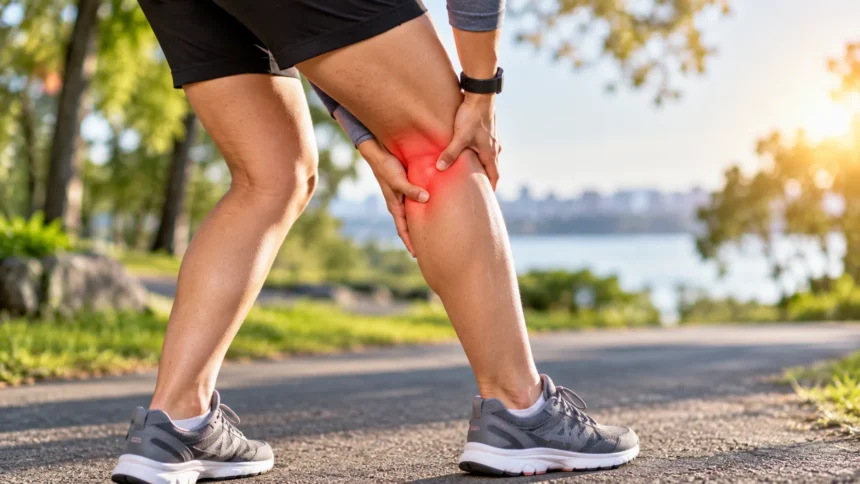
Pain in the back of the knee when straightening the leg can make walking, standing, exercising, or even getting out of a chair uncomfortable. The sensation may feel like tightness, pulling, aching, or sharp pain behind the knee. Sometimes it appears after activity, while in other cases it develops gradually without an obvious injury.
Several structures meet behind the knee, including muscles, tendons, ligaments, nerves, blood vessels, and the knee joint itself. Because of this, discomfort in that area can have many possible causes. Hamstring tightness, calf strain, tendon irritation, joint swelling, arthritis, or a Baker’s cyst are among the possibilities.
Most mild cases improve with activity modification and gradual movement, but persistent or severe symptoms deserve proper evaluation. Understanding when the pain appears, whether swelling is present, and what movements make it worse can provide useful clues. Knowing the common causes can also help you choose sensible relief strategies without repeatedly aggravating the area.
Why Does the Back of My Knee Hurt When I Straighten My Leg?
Straightening the knee places tension through several tissues that cross the back of the joint. The hamstrings, calf muscles, tendons, joint capsule, and other structures all change position as the leg extends. If one of these tissues is irritated, tight, or injured, reaching full knee extension may reproduce pain.
The location and type of discomfort can provide additional clues. A pulling sensation may be related to muscle or tendon tightness, while deeper pressure accompanied by swelling may involve the knee joint or a fluid-filled cyst. Sharp pain after a sudden movement may suggest an injury that deserves closer attention.
Pain can also occur because another part of the lower body is changing the way the knee moves. Limited hip mobility, ankle stiffness, or altered walking mechanics can place additional stress around the knee. Understanding related structures such as hip flexor anatomy can help explain why lower-body movement involves more than one isolated joint.
Hamstring Tightness or Strain
The hamstrings run along the back of the thigh and cross the knee joint, making them an important possible source of pain during leg straightening. Tight hamstrings can create a pulling sensation behind the knee, particularly when you straighten the leg while sitting or bending forward. The discomfort may also extend farther up the back of the thigh.
A hamstring strain can develop after sprinting, jumping, sudden acceleration, or overstretching the muscle. Mild strains may feel like localized soreness or tightness, while more significant injuries can produce sharp pain, weakness, swelling, or bruising. Continuing intense activity immediately after a strain can make symptoms more difficult to settle.
Gentle movement and temporary reduction of aggravating activities may help with mild muscular discomfort. Avoid aggressively stretching a recently injured hamstring because forcing the muscle into a painful position may increase irritation. Gradual strengthening and mobility work can usually be introduced as symptoms improve and comfortable movement returns.
Calf Muscle and Tendon Problems
The gastrocnemius, one of the main calf muscles, crosses the back of the knee before continuing downward toward the heel. Because of this anatomy, irritation or strain near its upper attachment can cause pain behind the knee. Discomfort may become noticeable when straightening the leg, pushing off the foot, climbing stairs, or stretching the calf.
Calf strains commonly occur during running, jumping, quick changes of direction, or sudden increases in exercise intensity. Pain can range from mild tightness to a sharp sensation that makes walking difficult. Tenderness and swelling may also develop depending on how much the muscle fibers have been affected.
Mild calf-related discomfort may respond to reducing demanding activities while maintaining comfortable movement. Gradual strengthening can help restore tolerance once pain begins settling. However, sudden calf swelling, warmth, redness, or unexplained severe pain should not automatically be treated as a muscle strain because blood-clot symptoms require urgent medical assessment.
Baker’s Cyst Behind the Knee
A Baker’s cyst is a fluid-filled swelling that develops behind the knee. It usually forms when excess joint fluid collects in a small sac at the back of the knee, often because another knee condition is producing irritation. The cyst can create pressure, tightness, or a noticeable lump behind the joint.
Symptoms may become more obvious when the leg is completely straight or deeply bent. Some people experience only mild tightness, while others notice stiffness, swelling, or difficulty moving the knee comfortably. The size of a Baker’s cyst can also change depending on activity and the amount of inflammation inside the knee.
Treatment usually focuses on the underlying reason the knee is producing extra fluid rather than simply addressing the cyst itself. Activity modification, rehabilitation, or medical treatment may be recommended depending on the cause. Sudden worsening pain and swelling in the calf deserves prompt assessment because a ruptured cyst can resemble other more serious conditions.
Tendon Irritation Around the Back of the Knee
Several tendons pass around the back and sides of the knee, including those connected to the hamstrings and calf muscles. Repetitive running, jumping, cycling, or strength training can sometimes irritate these tissues. Tendon-related discomfort often develops gradually rather than appearing from one dramatic injury.
Pain may be localized to one specific area and become worse during repeated movement or resistance exercises. Some people also notice stiffness after sitting or first thing in the morning. Unlike a major muscle injury, tendon irritation may initially feel manageable during exercise but become more noticeable afterward or the following day.
Managing training load is important when a tendon is irritated. Completely stopping movement is not always necessary, but repeatedly performing activities that significantly increase pain can delay improvement. Gradual strengthening, adequate recovery, and careful progression back into demanding exercise can help restore the tendon’s ability to tolerate load.
Arthritis and Joint-Related Knee Pain
Arthritis can contribute to pain behind or around the knee, particularly when the joint becomes stiff or inflamed. Osteoarthritis involves gradual changes to joint cartilage and surrounding structures and becomes more common with age. Symptoms can include aching, reduced range of motion, stiffness, swelling, and discomfort after prolonged activity.
Straightening the knee may feel difficult if swelling or joint changes limit normal movement. Some people notice stiffness after resting and improvement once they begin moving, while others experience increasing discomfort after extended walking or standing. The pattern can differ considerably depending on the severity and individual activity level.
Regular appropriate exercise can help many people maintain knee strength and mobility. Low-impact movement, progressive resistance training, and weight management when relevant may form part of a broader treatment approach. Persistent swelling, reduced motion, or increasing pain should be assessed so an appropriate management plan can be developed.
Meniscus Problems and Pain Behind the Knee
The menisci are pieces of cartilage that help distribute forces inside the knee joint. A meniscus can become irritated or torn through twisting injuries, sports movements, or gradual degenerative changes. Depending on the location of the affected tissue, discomfort may be felt along the joint line or toward the back of the knee.
Pain may become more noticeable during twisting, squatting, deep bending, or fully straightening the leg. Some people report clicking, catching, or a sensation that the knee temporarily gets stuck. Swelling may develop after activity, although not every meniscus problem causes obvious swelling or mechanical symptoms.
Not every meniscus injury requires surgery. Many cases can be managed with activity modification, progressive strengthening, and appropriate rehabilitation depending on symptoms and overall knee function. A knee that repeatedly locks, gives way, or remains significantly swollen deserves professional assessment to determine whether further investigation is needed.
Can Overuse Cause Pain Behind the Knee?
Overuse occurs when tissues are exposed to more activity than they can currently recover from. Rapidly increasing running distance, workout frequency, resistance, hills, or sports participation can overload muscles and tendons around the knee. Pain may initially appear only after exercise before becoming noticeable during normal activities.
This does not necessarily mean exercise itself is harmful. Problems often develop when training increases faster than the body’s ability to adapt. Returning to intense workouts after a long break can create similar issues, particularly if several variables such as duration, speed, and resistance are increased at the same time.
Reducing the most aggravating activities temporarily can give irritated tissues an opportunity to recover. Once symptoms begin improving, rebuild activity gradually instead of immediately returning to previous training levels. Tracking weekly exercise volume can help identify sudden changes that may have contributed to the problem in the first place.
At-Home Relief for Mild Back-of-Knee Pain
For mild discomfort without major swelling or injury, temporarily reducing activities that clearly trigger pain may help. You do not necessarily need complete bed rest or total inactivity. Comfortable walking and gentle movement can help maintain mobility while avoiding repeated stress from running, jumping, heavy lifting, or deep knee movements.
Cold therapy may feel useful after a recent activity-related irritation, while gentle warmth may be more comfortable for stiffness. Either method should be applied safely with a layer between the skin and the temperature source. Personal preference can guide which approach feels better because different people respond differently to heat and cold.
Over-the-counter pain medication may be appropriate for some people, but individual medical conditions, allergies, and other medications need to be considered. Follow product directions and seek professional advice if you are unsure what is suitable. Medication should not be used simply to hide significant pain so you can continue activities that repeatedly worsen symptoms.
Gentle Stretching and Mobility Tips
Gentle mobility can help when stiffness around the hamstrings, calf, or surrounding tissues contributes to discomfort. Begin within a comfortable range rather than forcing the knee completely straight. Slow knee bends, easy walking, and controlled ankle movement can help maintain motion without placing excessive stress on irritated structures.
Stretching should create mild tension rather than sharp pain. For a hamstring stretch, keep the movement gentle and avoid aggressively locking the knee. Calf stretches can also be useful when the muscles behind the lower leg feel tight, but stop if the exercise causes stronger pain directly behind the knee.
Flexibility work should usually be combined with strength rather than treated as the only solution. Muscles and tendons also need enough capacity to tolerate everyday activity and exercise. Once movement becomes comfortable, progressive strengthening of the quadriceps, hamstrings, calves, hips, and glutes can support better overall lower-body function.
Strengthening Exercises That May Help
Simple strengthening exercises can help restore knee support after mild symptoms begin settling. Exercises such as controlled sit-to-stands, bridges, calf raises, and appropriate hamstring work can target muscles that influence knee movement. Start with a manageable range and avoid exercises that reproduce sharp or increasing pain.
The quadriceps at the front of the thigh play an important role in controlling the knee during walking, stairs, and standing movements. Strengthening them gradually can improve overall knee capacity. Hip and glute strength also matters because these muscles help control the position of the thigh during weight-bearing activities.
Progress should occur gradually rather than by adding large amounts of resistance immediately. You might first increase repetitions, then range of motion, and eventually resistance as symptoms allow. If exercises repeatedly produce swelling or pain that remains significantly worse afterward, reduce the difficulty and consider seeking professional guidance.
When Should You See a Doctor?
Medical evaluation is appropriate when pain persists despite reducing aggravating activity or continues interfering with normal walking, sleep, work, or exercise. Recurrent swelling, significant stiffness, or difficulty fully bending or straightening the knee also deserves assessment. A healthcare professional can examine the joint and determine which structures are most likely involved.
Seek prompt care after a major injury if you cannot put weight through the leg, the knee appears deformed, or there is rapid swelling. A strong popping sensation followed by instability or major loss of function should also be evaluated. These signs can indicate an injury that requires more than basic home management.
Unexplained calf swelling, warmth, redness, or sudden severe pain requires urgent medical attention because these symptoms can sometimes indicate a blood clot. Chest pain, shortness of breath, coughing blood, or sudden difficulty breathing alongside leg symptoms is an emergency. Do not rely on stretching or massage when these warning signs are present.
How to Prevent Pain Behind the Knee
Gradual training progression is one of the simplest ways to reduce the risk of overuse-related knee problems. Increase running distance, workout volume, or resistance in manageable steps rather than making sudden jumps. Your muscles, tendons, and joints need repeated exposure and recovery time to adapt to higher physical demands.
A balanced exercise routine should strengthen muscles throughout the lower body. Training the quadriceps, hamstrings, calves, glutes, and hips can help distribute forces rather than repeatedly stressing one area. Include mobility work when needed, but avoid believing that extreme flexibility is required for healthy knees or good athletic performance.
Recovery matters as much as training. Adequate sleep, rest between demanding sessions, suitable footwear for your chosen activity, and attention to early discomfort can help prevent minor problems from becoming persistent. If the same pain repeatedly returns whenever activity increases, identifying the underlying movement or training issue may be more useful than repeatedly resting.
Conclusion
Pain in the back of the knee when straightening the leg can have several possible causes, including hamstring or calf strain, tendon irritation, a Baker’s cyst, arthritis, meniscus problems, or simple overuse. The pattern of pain, swelling, recent activity, and associated symptoms can provide useful clues, but they cannot always identify the exact cause.
Mild symptoms often respond to temporarily reducing aggravating activity, maintaining comfortable movement, and gradually restoring mobility and strength. Avoid forcing the knee into painful stretches or immediately returning to demanding exercise. A steady progression usually gives muscles, tendons, and other tissues a better opportunity to adapt.
Persistent pain, significant swelling, locking, instability, or difficulty walking should be assessed by a healthcare professional. Sudden calf swelling, redness, warmth, or breathing difficulty requires more urgent care. Paying attention to these warning signs helps distinguish common exercise-related discomfort from situations that should not be managed only at home.
FAQs
Why does the back of my knee hurt only when I straighten it?
Straightening the knee places tension on muscles, tendons, and joint structures behind it. Hamstring tightness, calf problems, tendon irritation, joint swelling, or a Baker’s cyst can therefore become more noticeable during full extension.
Can tight hamstrings cause pain behind the knee?
Yes. Because the hamstrings cross the back of the knee, tightness or strain can create pulling or aching during leg straightening. Persistent or sharp pain should be evaluated rather than assumed to be simple tightness.
Should I stretch pain behind my knee?
Gentle stretching may help certain muscular causes, but stretching should not produce sharp or worsening pain. If swelling, injury, or an unexplained lump is present, identify the cause before aggressively stretching the area.
Can a Baker’s cyst cause pain when straightening the leg?
Yes. A Baker’s cyst can create fullness, pressure, or tightness behind the knee that becomes more noticeable during full extension or deep bending. Treatment usually addresses the knee problem causing excess joint fluid.
When is back-of-knee pain an emergency?
Seek urgent care for sudden calf swelling, redness, warmth, severe unexplained pain, or major injury. Chest pain, shortness of breath, coughing blood, or sudden breathing difficulty alongside leg symptoms requires emergency medical attention.