


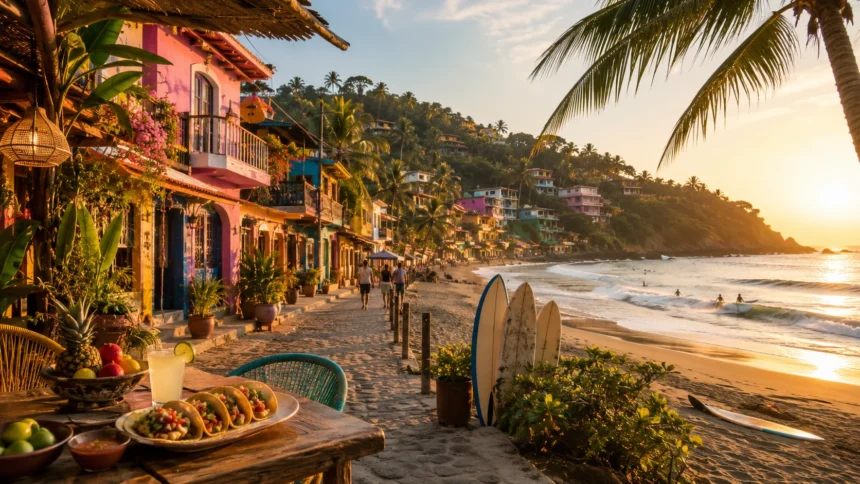
Sayulita, Mexico Travel Guide: Beaches, Food & Things to Do
Sayulita is one of those Mexican beach towns where the energy begins before you even reach the sand. Colorful papel picado hangs above cobbled streets, surfboards appear outside cafés and shops, taco stands compete with stylish restaurants, and the Pacific Ocean is rarely more than a short walk away. Located in Bahía de Banderas on the Riviera Nayarit, Sayulita has grown from a small coastal community into an internationally known surf destination and Pueblo Mágico. Official tourism information continues to highlight its surfing culture, local food, outdoor adventures, and lively town center, while Nayarit has positioned Sayulita as one of its signature destinations for 2026. The result is a place that feels simultaneously Mexican, international, relaxed, and energetic.
Sayulita is not the isolated backpacker secret it may have been decades ago, and arriving with realistic expectations makes the trip much more enjoyable. Popular weekends can bring busy streets, crowded central beaches, nightlife, boutique hotels, destination weddings, and restaurants aimed at international travelers. Yet you can still find quieter stretches of coast, jungle-backed walking routes, local seafood, traditional taco stands, yoga studios, surf schools, artisan shops, and nearby towns with a slower rhythm. The town’s appeal comes from having these options close together rather than from offering one perfectly untouched beach. Travelers can spend the morning surfing, eat fish tacos barefoot for lunch, walk to a quieter cove, shop in the plaza, and finish with sunset cocktails. Few Riviera Nayarit destinations make such variety so easy without a tightly planned schedule.
This Sayulita travel guide covers the best beaches, top things to do, surfing, food, accommodation, transportation, weather, day trips, nightlife, and practical safety considerations. Related SEO topics such as Sayulita beaches, things to do in Sayulita, Sayulita surfing, Riviera Nayarit travel, Sayulita restaurants, where to stay in Sayulita, Puerto Vallarta to Sayulita transportation, and best time to visit Sayulita are included naturally throughout the guide. The goal is not to present Sayulita as flawless or appropriate for every traveler. Instead, it explains what the destination does particularly well and how to experience it without spending the entire vacation inside the busiest streets around the central plaza. With three to five nights, most visitors can combine beach time, food, adventure, and relaxation without turning the trip into another exhausting checklist.
Why Sayulita Is Worth Visiting
Sayulita works particularly well for travelers who want a beach town with personality rather than a self-contained resort experience. Streets around the center are filled with cafés, galleries, surf shops, bars, small hotels, boutiques, taco stands, and colorful decorations, so walking between activities becomes part of the vacation. Mexico’s tourism authorities recognize Sayulita as a Pueblo Mágico, a designation it received in 2015, and highlight surfing, beaches, mountain biking, whale watching, birding, and its surrounding natural landscapes among its attractions. In 2026, Nayarit tourism officials have continued investing in the state’s Pueblos Mágicos and promoting Sayulita as one of the region’s leading destinations. The town therefore combines strong tourism infrastructure with a recognizable local coastal identity.
Surf culture is one of the biggest reasons Sayulita feels different from neighboring resort areas. Beginners carry soft-top boards toward lessons in the morning, experienced surfers watch conditions before entering the water, and surf shops remain an everyday part of the streetscape rather than a decorative theme. In July 2026, Visit Nayarit announced efforts positioning Sayulita as Mexico’s first “Surf City,” reinforcing just how central the sport has become to the town’s international reputation. You do not have to surf to appreciate the atmosphere, because the sport influences cafés, fashion, nightlife, wellness culture, and the pace of daily life. Watching a sunset session from the sand can be entertaining even if you never touch a board. For active travelers, however, being able to book a lesson within walking distance of your hotel is a major advantage.
Food provides another strong reason to stay longer than a quick day trip. Sayulita has developed a dining scene that ranges from roadside taco stands and fresh seafood to contemporary Mexican cooking, vegan cafés, bakeries, coffee shops, international restaurants, and creative cocktails. Nayarit tourism increasingly promotes gastronomy as a major regional attraction, with fresh seafood and dishes such as pescado zarandeado forming part of the state’s broader culinary identity. The variety means you can eat inexpensively one evening and book a polished dinner the next without leaving town. Breakfast culture is also surprisingly strong, especially for travelers who enjoy coffee, fruit, chilaquiles, pastries, smoothie bowls, or long post-surf meals. In Sayulita, deciding where to eat can easily become one of the day’s main activities.
The surrounding geography also keeps the destination interesting after you have spent several days on the central beach. Playa de los Muertos offers a smaller cove within walking distance, while Carricitos, Malpaso, and other beaches provide quieter alternatives depending on access and conditions. Nearby San Pancho has a more relaxed cultural atmosphere, Punta de Mita offers restaurants and water excursions, and the Islas Marietas can be reached through authorized boat tours departing from several parts of Bahía de Banderas, including Sayulita. These possibilities prevent Sayulita from feeling restrictive even if you stay five or six nights. You can use it as a compact base for exploring Riviera Nayarit while returning each evening to a walkable town with plenty of food and activity.
Sayulita is less ideal for travelers seeking complete silence, enormous all-inclusive resorts, perfectly empty beaches, or highly polished infrastructure. Weekend nightlife can be loud, central streets can become busy, and the main beach may feel crowded when surf schools, swimmers, vendors, and visitors all share the same shoreline. Travelers who want more privacy should choose accommodation farther from the plaza or spend part of the trip in nearby San Pancho or Punta de Mita. Those trade-offs do not make Sayulita a poor destination; they simply define who will enjoy it most. It suits couples, groups of friends, solo travelers, surfers, food lovers, younger visitors, and families comfortable with an active beach-town atmosphere. If you like destinations where there is always somewhere to walk, eat, swim, browse, or socialize, Sayulita is easy to enjoy.
Best Beaches in Sayulita
Sayulita Beach is the center of the town’s coastal life and the easiest beach to reach from almost any central accommodation. Surf schools, restaurants, umbrellas, vendors, board rentals, and beach clubs give it a lively atmosphere from morning until sunset. The waves are a major reason for its popularity, and Bahía de Banderas tourism authorities continue to identify surfing as Sayulita’s defining activity. Beginners often take lessons close to town, while more experienced surfers choose sections of the break according to conditions. The beach can also work for people who simply want to watch the action, eat beside the sand, or enjoy an easy sunset without arranging transportation. Travelers seeking complete peace, however, should explore beyond this central shoreline.
Playa de los Muertos is one of the most convenient alternatives and can be reached by walking south from town past the cemetery that gives the beach its name. Mexico’s federal tourism information lists Playa de los Muertos among Sayulita’s recognized coastal attractions. The cove is smaller than the main beach and can feel more protected, although swimming conditions still depend on swell, tide, and weather. Families and travelers wanting a shorter beach outing often appreciate being able to reach it without a taxi. Because the area is well known, it should not be expected to remain empty during high season or weekends. Go earlier in the day for a calmer atmosphere, bring water, and leave before dark if you are unfamiliar with the walking route back.
Playa Carricitos sits west of the town center and is especially appealing to travelers who want a more dramatic sunset setting. The beach generally feels less urban than Sayulita’s main shoreline because development is more limited and the surrounding vegetation creates a stronger sense of separation. Getting there can involve hilly roads or walking routes that become tiring in heat, so many visitors use a golf cart or local transportation depending on their accommodation. Ocean conditions can be stronger than at more protected beaches, making visual beauty a poor substitute for checking whether swimming is actually appropriate. Bring what you need because facilities are more limited than around the central beach. Carricitos works particularly well as a late-afternoon outing when the purpose is walking, photography, and sunset rather than an entire serviced beach day.
Malpaso and other northern stretches reward travelers willing to walk farther from central Sayulita. Official Mexican tourism information identifies Malpaso among the beaches associated with the destination, along with Playa de los Muertos and Patzcuarito. Reaching quieter areas can involve jungle paths, uneven terrain, heat, or sections where signage is less obvious than in town, so travelers should ask their accommodation about current routes before leaving. Do not assume a trail shown in an old blog post remains the best or safest approach today. Carry water, use insect repellent, and avoid arriving near sunset if you still have a long walk back through unfamiliar terrain. The reward is a coastline that feels much less connected with Sayulita’s restaurants and nightlife.
Beach conditions should always be treated as variable rather than permanent. Pacific waves, storms, rainy-season runoff, tides, erosion, and seasonal currents can change swimming conditions quickly, and water quality should be checked using current official information when concerns arise. Mexico’s federal COFEPRIS monitoring for summer 2026 found 284 of 289 monitored beaches nationwide suitable for recreational use, with the five listed failures occurring outside Nayarit. That result is reassuring for the monitoring period, but it should not replace local advisories after storms or infrastructure incidents. Ask lifeguards or local authorities when uncertain, avoid swimming near visible runoff after heavy rain, and respect red flags. The best Sayulita beach is ultimately the one matching current conditions and the experience you want that particular day.
Top Things to Do in Sayulita
Taking a surf lesson is the most obvious first activity because Sayulita’s identity is inseparable from the sport. Several schools operate around the main beach, making it possible to rent equipment, arrange instruction, or join a lesson without complicated transportation. Beginners should choose qualified instructors who explain board handling, etiquette, currents, and where to enter rather than simply pushing students toward crowded waves. More experienced surfers can ask about local conditions and nearby breaks instead of assuming the central beach provides the best wave every day. Sayulita’s 2026 push toward becoming Mexico’s first Surf City reflects the importance of surfing to both its culture and tourism economy. Even one lesson can help visitors understand the town’s rhythm much better.
Walking through central Sayulita is another essential experience because the town itself is more interesting than a simple strip of hotels behind the beach. Streets around the plaza contain colorful flags, murals, cafés, artisan shops, bars, small galleries, food stands, and independent boutiques selling everything from surfwear to locally inspired crafts. Visit Nayarit describes the central plaza as colorful and energetic, surrounded by boutiques, food stalls, and community life. Walk once in the morning when streets are calmer and again after dark when restaurants and bars create a completely different atmosphere. Avoid photographing people or small businesses intrusively just because the surroundings look picturesque. The best way to enjoy the town is to browse slowly, stop for food, and let interesting streets determine your route.
Nature lovers can add hiking, birding, mountain biking, or jungle excursions to the itinerary. Federal tourism information lists mountain biking, bird watching, whale watching, and natural landscapes among Sayulita’s attractions, while the municipal tourism authority promotes nearby trails and outdoor adventures. Guided experiences are useful when routes pass through unfamiliar jungle or private land because local access conditions may change. Early morning is generally more comfortable for physical activity, especially during warmer months when humidity and direct sun become tiring. Bring water and proper footwear rather than treating every trail as an extension of a beach walk. Sayulita’s surrounding hills are part of the destination’s appeal and offer a welcome change from crowded streets and sand.
Boat trips expand the experience beyond the town itself. Authorized excursions may include snorkeling, sailing, fishing, dolphin observation, whale watching in season, or trips toward the Islas Marietas. Bahía de Banderas tourism authorities list Sayulita among the departure points for Marietas excursions, while Mexico’s protected-area agency advises visitors to use providers holding the appropriate CONANP permission. The national park contains important marine and bird habitat, so responsible tours should follow conservation rules rather than promising unrestricted access to every beach or wildlife encounter. Weather and sea conditions can cancel departures, making flexible scheduling useful. Book important boat activities near the beginning of your stay rather than the final morning before checkout.
Some of Sayulita’s best moments require no formal tour at all. Wake early and buy coffee while the streets are still quiet, watch surfers before breakfast, take an afternoon swim, browse the plaza after sunset, or eat tacos standing beside a busy street stall. The destination rewards repeated small experiences more than constant activity booking. Travelers who schedule surfing, hiking, sailing, yoga, massage, and a cooking class every day can leave feeling more tired than when they arrived. Keep at least half of each day flexible and allow weather, appetite, and energy to determine what happens next. Sayulita’s real advantage is proximity: beach, food, shops, and social life exist close enough that spontaneous plans are easy. That freedom is one of the strongest reasons people return.
Surfing in Sayulita: What Beginners Should Know
Sayulita has become internationally associated with surfing because waves close to town can work for several ability levels under appropriate conditions. Beginners appreciate the availability of schools and board rentals, while experienced surfers use Sayulita as a base for exploring additional breaks along Riviera Nayarit. Official tourism organizations repeatedly identify the town as one of Nayarit’s leading surf destinations, and the state’s 2026 Surf City initiative reinforces that status. The convenience is difficult to beat because you can walk from breakfast to a surf lesson in minutes. However, “beginner-friendly” should never be interpreted as “always safe.” Wave size, currents, crowds, rocks, and tides change, so first-time surfers should rely on local instruction instead of entering unfamiliar water alone.
A good beginner lesson should include more than standing on a board. Instructors should explain how to carry the board, position yourself, paddle, identify safe zones, avoid other surfers, fall correctly, and understand basic surf etiquette before spending significant time in the lineup. Crowded beaches create collision risk when beginners do not understand who has priority on a wave. Soft-top boards are commonly used during lessons because they provide stability and reduce some injury risk compared with hard performance boards. Ask how long the session lasts and whether the price includes equipment, rash guards, or photographs. Do not choose an instructor based solely on whoever approaches you cheapest on the beach. Experience, communication, and attention to safety matter far more than saving a small amount on your first session.
The best time of day often depends on surf conditions rather than a universal rule, although mornings may bring lighter winds and more comfortable temperatures. Local instructors can recommend the appropriate section of beach based on your ability and the day’s swell. Travelers should also recognize that surf seasons vary, and stronger swells may create conditions better suited to experienced riders rather than absolute beginners. If the main beach is unsuitable, a reputable school should be willing to explain alternatives instead of pretending conditions are ideal simply to keep the booking. Sun exposure is easy to underestimate when you are spending an hour or more in reflective ocean water. Use reef-conscious sun protection, wear appropriate surf clothing, and drink water before and after the lesson.
More experienced surfers should explore respectfully because local surf culture deserves the same courtesy you would expect at your home break. Do not paddle directly into crowded lineups without observing where people enter, how waves are breaking, and whether rocks or currents create hazards. Renting a board is easy, but choosing the correct equipment for conditions still requires judgment. Ask surf shops about break characteristics without expecting them to reveal every quiet local spot to a short-term visitor. Nearby coastlines can offer excellent waves, yet reaching them may require transportation, guides, boats, or knowledge of tides and access. Surf tourism works best when visitors support local instructors and businesses rather than treating the coastline like an unlimited recreation facility created only for vacationers.
If you discover surfing is not for you, Sayulita still offers several ways to enjoy the ocean. Paddleboarding may suit calm days and protected conditions, while swimming, boat excursions, beach walks, and watching experienced surfers provide less technical alternatives. Punta de Mita is another regional option for paddleboarding and gentler water experiences, with the local tourism authority describing its generally calm, shallow conditions and popularity among beginners. Never force yourself to surf because everyone else appears to be doing it. A vacation should match your comfort level rather than an imagined Sayulita checklist. The town’s surf identity is fascinating even from the beach, and some of the best evenings involve nothing more complicated than watching the last riders catch waves beneath a Pacific sunset.
What to Eat in Sayulita
Tacos should be one of your first food priorities because Sayulita’s street-food culture remains one of the easiest ways to eat well without turning every meal into an expensive restaurant reservation. Fish tacos, shrimp tacos, grilled meat, birria, al pastor, and creative vegetarian fillings appear around town, with stands and casual counters often becoming busiest after sunset. Follow places with steady turnover rather than assuming the most polished storefront serves the best food. Add salsa cautiously until you understand its heat level, and notice which condiments locals are choosing. Several smaller taco meals during a stay can be more memorable than one heavily researched “best restaurant” dinner. Sayulita’s social energy feels particularly natural when you eat outdoors while people move through the nearby streets.
Seafood is equally important because the destination sits within a region whose cuisine is strongly connected with Pacific fish and shellfish. Nayarit tourism promotes fresh seafood and pescado zarandeado among the state’s defining food experiences. In Sayulita, menus may include ceviche, aguachile, grilled fish, shrimp, octopus, tostadas, and catches prepared with regional flavors. Ask what is fresh rather than automatically ordering the most expensive seafood on the menu. Ceviche or aguachile is especially satisfying during warm afternoons, while grilled fish works well for a longer dinner. Travelers with seafood allergies should communicate clearly because cross-contact can be common in kitchens where fish and shellfish are prepared throughout the day. Freshness and simplicity often matter more than elaborate presentation.
Breakfast has become a major part of Sayulita’s restaurant culture. Cafés serve Mexican dishes such as chilaquiles and huevos alongside pastries, fresh fruit, smoothies, specialty coffee, avocado toast, and internationally influenced brunch plates. This range reflects the mix of local residents, surfers, digital workers, and international visitors that shapes the modern town. Early risers can eat before the strongest heat, while surfers often prefer something lighter before entering the water and a larger meal afterward. Popular brunch restaurants can develop queues, especially on weekends, so keeping several nearby options prevents unnecessary waiting. Try at least one traditional Mexican breakfast rather than eating the same café food you could order at home. Food becomes more memorable when it strengthens your connection with the destination.
Sayulita also accommodates vegetarian, vegan, gluten-conscious, and wellness-focused travelers better than many small beach towns. Plant-based restaurants, juice bars, smoothie shops, cafés, and international kitchens have expanded alongside the town’s yoga and surf communities. This variety can be especially useful during longer stays when travelers want breaks from rich seafood or tacos. However, people with medically necessary dietary restrictions should communicate requirements carefully rather than assuming labels follow identical standards everywhere. Spanish phrases describing allergies can be useful even in a town where English is common within tourism businesses. Markets and small stores also provide fruit, snacks, water, and simple food for beach days. Mixing restaurant meals with casual groceries can control both spending and the feeling of constantly eating heavily.
Budget expectations should remain realistic because Sayulita’s popularity has pushed some restaurant prices above what travelers may expect from a small Mexican town. Beachfront dining, imported ingredients, fashionable cocktails, specialty coffee, and international concepts can quickly raise daily costs. You can still eat economically by using taco stands, casual local restaurants, bakeries, and smaller establishments away from the most tourist-heavy streets. Carry Mexican pesos because small businesses may prefer cash or encounter occasional card and connectivity problems. Tipping customs should be understood before paying rather than guessed from your home country. Most importantly, avoid turning the trip into a competition to visit every restaurant trending online. The best meal may be the taco stand you discovered while walking back from the beach with no reservation at all.
Where to Stay in Sayulita
Staying near the central plaza is the best option for travelers who want restaurants, bars, shops, cafés, and the main beach within a few minutes’ walk. This location makes daily logistics extremely easy because you can leave the hotel repeatedly without arranging transportation. The trade-off is noise, particularly on weekends or near nightlife venues where music may continue late into the evening. Light sleepers should read recent accommodation reviews carefully and identify comments specifically mentioning street or club noise. A property described as “steps from everything” may be wonderful for a group of friends and frustrating for someone planning sunrise yoga. Central Sayulita works best when your priority is energy and walkability rather than complete peace. Location should match your actual travel habits.
The north side of town can offer a useful balance between access and quieter evenings. Depending on the exact property, travelers can remain within walking distance of the beach and center while avoiding the most concentrated nightlife immediately around the plaza. Boutique hotels, villas, apartments, and smaller guesthouses provide options across different budgets. Families and couples often prefer these areas when they want easy beach mornings but do not need to hear downtown activity after midnight. Check whether your route involves steep streets because short map distances can feel very different while carrying luggage in tropical heat. Properties farther uphill may provide views but require more effort each time you return from dinner. Read the map topographically, not just geographically.
Travelers who prioritize quiet beaches and privacy may prefer accommodation toward Carricitos or other areas farther from the core. Villas and boutique stays can feel more secluded, with jungle vegetation and sunset views replacing constant pedestrian traffic. The compromise is that meals, shops, and nightlife may require a golf cart, taxi, or longer walk. That can become inconvenient if you expect to eat every meal in central Sayulita or return to your room several times each day. Ask your hotel how guests typically move around after dark and whether local transportation is easy to arrange during rain. A beautiful property becomes less enjoyable when the location conflicts with the way you want to spend your time. Seclusion works best for travelers deliberately seeking a retreat.
Budget travelers can find hostels, guesthouses, shared accommodations, and simpler rooms, although Sayulita is no longer universally cheap. Solo travelers may appreciate social hostels because surfing and communal spaces make meeting people relatively natural. Couples often gravitate toward small boutique hotels or apartments, while groups may find villas cost-effective when divided among several people. Before booking, prioritize air conditioning or effective fans, mosquito protection, water availability, noise information, and recent comments about cleanliness. Pools can be surprisingly valuable during hot afternoons when the main beach feels crowded. Reliable Wi-Fi matters for remote workers but should be verified through recent guest feedback rather than assumed from marketing language. The right accommodation can determine whether Sayulita feels energizing or exhausting.
Book earlier during winter, major holidays, destination-wedding periods, and peak spring travel because desirable properties can fill quickly. December through spring attracts visitors seeking drier conditions and escape from colder climates, while weekends bring additional travelers from regional cities and Puerto Vallarta. Rainier months may produce lower rates but require greater flexibility around streets, outdoor spaces, and beach plans. Confirm cancellation terms during hurricane season or other periods when weather uncertainty is greater. Travelers should also verify the exact property entrance because central streets can be narrow and drivers may not stop directly beside every hotel. Sayulita is compact enough that location matters more than luxury category for many visitors. Choose the neighborhood first, then decide how much comfort and style you want inside it.
Best Day Trips From Sayulita
San Pancho, officially San Francisco, is the easiest nearby escape when Sayulita begins feeling too busy. The town lies only a short distance north but offers a noticeably quieter atmosphere built around a long beach, restaurants, galleries, community projects, and slower evenings. Visit Nayarit promotes San Pancho as a more relaxed option associated with yoga, beach time, and sunsets, contrasting it with Sayulita’s stronger surf and nightlife identity. Spend several hours walking the main street, eating lunch, visiting the beach, and comparing the two towns rather than arriving with a long sightseeing list. Some travelers actually discover that San Pancho better matches their preferred pace. It is easy to visit for the day without relocating accommodation.
Punta de Mita works well when you want calmer water, restaurants, boating, or access toward the Islas Marietas. The municipal tourism authority describes Punta de Mita’s beach as generally calm, shallow, and suitable for families and beginner paddleboarders, with numerous tour providers operating in the surrounding area. It is also one of the closest common departure points for Marietas boat trips, making it useful when you want to reduce time spent crossing the bay. Eat seafood beside the water, try paddleboarding when conditions are suitable, or use the town as a staging point for an authorized excursion. Punta de Mita feels more spread out and polished than central Sayulita, providing an interesting contrast without requiring a long journey.
The Islas Marietas are among the most famous nature excursions in the region. The national park protects islands, reefs, beaches, marine life, and large seabird colonies, while authorized activities include boat trips, wildlife viewing, snorkeling, diving, and limited beach experiences. CONANP specifically advises visitors to use tourism providers holding the required national-park permissions. Bahía de Banderas tourism information lists Sayulita as one of several departure areas for Marietas excursions. Access to famous areas such as Playa del Amor is regulated and capacity-limited, so never assume every “Marietas tour” includes exactly the same experience. Ask what is included before booking, choose conservation-minded operators, and understand that sea conditions can change the itinerary.
Whale watching becomes another major option during winter. Visit Nayarit states that humpback whale season in Bahía de Banderas and surrounding waters generally runs from December through March, when whales migrate into warmer regional waters. Federal regulations define authorized observation seasons and zones, including restrictions designed to protect whales with calves and sensitive areas near the Islas Marietas. Choose an authorized operator that follows distance and behavior rules rather than one advertising unusually close encounters. Wildlife sightings can never be guaranteed because the whales are moving freely through their natural environment. A responsible trip should still feel worthwhile through ocean scenery, knowledgeable interpretation, and the chance of observing other marine life even when whales remain distant.
Puerto Vallarta can also work as a contrasting urban day trip if Sayulita forms the main base of your vacation. The larger city offers the Malecón, galleries, markets, restaurants, nightlife, beaches, and a more developed range of cultural attractions. It is especially useful for travelers who want one day of shopping or city exploration before returning to Sayulita’s smaller streets. Traffic can make the journey longer than distance alone suggests, so avoid planning a tight airport-style schedule for the return. Alternatively, spend your extra day exploring Riviera Nayarit rather than automatically heading south because San Pancho and Punta de Mita require less transportation. The best excursion depends on what Sayulita is not already giving you. Use day trips to create contrast rather than duplicate another surf beach with similar activities.
How to Get to Sayulita and Get Around
Many international travelers reach Sayulita through Puerto Vallarta International Airport because it provides convenient access to Bahía de Banderas and the southern Riviera Nayarit. The drive from the airport to Sayulita can take roughly an hour in favorable conditions, although traffic around Puerto Vallarta, Nuevo Nayarit, Bucerías, and Highway 200 can add considerable time. Nayarit’s tourism authorities emphasize Puerto Vallarta as an important access point for the region, while newer air connectivity through Tepic–Riviera Nayarit Airport has expanded travel options for the state. Compare flights and ground-transfer time before choosing an airport purely on airfare. For most first-time international visitors staying only in Sayulita, Puerto Vallarta remains the most straightforward route.
Private transfers and taxis provide the easiest airport-to-hotel experience, particularly after a long flight or when traveling with surfboards, children, or substantial luggage. Arrange pricing and pickup instructions before arrival when using a private company so you know where to meet the driver outside the terminal. Budget travelers can use regional bus transportation, although this requires greater comfort with luggage, highway stops, and finding the correct service. Rental cars are unnecessary if you plan to remain mainly in central Sayulita because walking covers most everyday needs. A car becomes more useful when your itinerary includes multiple Riviera Nayarit towns or remote beaches. Parking inside Sayulita can be inconvenient, so renting a vehicle only to leave it unused beside your hotel rarely makes sense.
Once you arrive, walking is the easiest way to experience the center. The main beach, plaza, surf shops, restaurants, cafés, boutiques, and nightlife are concentrated within a compact area. Streets can be cobbled, uneven, steep, or crowded, making comfortable sandals or walking shoes more practical than delicate footwear. Heavy rain may temporarily make some roads muddy or awkward, particularly away from the busiest paved or cobbled sections. Carry only what you need and leave large luggage at your accommodation rather than dragging suitcases around while waiting for check-in. Sayulita’s pedestrian scale is one of its greatest advantages because spontaneous decisions require very little transportation planning. Most days can begin with walking out the door and deciding what sounds good.
Golf carts are popular among visitors staying farther from town, traveling with children, or exploring hilly accommodation areas. Rental availability is widespread, but drivers should treat the vehicle as actual transportation rather than a toy. Ask about parking, charging or fuel arrangements, insurance, and roads that may become difficult after rain. Do not drive onto beaches or restricted natural areas simply because a golf cart appears capable of reaching them. Taxis are another useful option for Carricitos, San Pancho, or other nearby locations when you do not want the responsibility of a rental. Prices should be confirmed before longer journeys. Many travelers find that walking plus occasional taxis provides a better balance than paying for a cart throughout the entire stay.
Departure planning deserves more buffer than arrival because missing a flight creates much more stress than reaching Sayulita slightly later than expected. Traffic toward Puerto Vallarta can become unpredictable during commuting periods, holidays, construction, accidents, or busy travel weekends. Ask your accommodation for a realistic departure recommendation based on the day and flight time rather than using a generic one-hour estimate. If your flight leaves early, reserve transportation the evening before instead of assuming a driver will appear immediately at dawn. Keep Mexican pesos available for unexpected transport needs, tolls, or businesses that cannot process cards. Sayulita is easy to reach compared with many smaller Pacific towns, but a relaxed trip still depends on respecting regional traffic rather than treating airport transfers like short urban taxi rides.
Best Time to Visit Sayulita and Essential Travel Tips
The most popular time to visit Sayulita is generally during the drier winter and early-spring period, when warm days and lower rainfall attract travelers escaping colder climates. December through March also overlaps with the regional humpback-whale season, making those months especially appealing for people combining beach time with wildlife excursions. Visit Nayarit identifies December through March as the typical whale-watching season around Bahía de Banderas. The trade-off is stronger accommodation demand, busier streets, more crowded beaches, and higher prices around holidays. January and February can feel particularly pleasant for people who dislike extreme heat. Book early if your dates are fixed, especially around Christmas, New Year, spring breaks, or destination-wedding weekends.
Late spring brings increasing heat and humidity before the rainier summer period becomes established. Surfers may value seasonal swell patterns differently from ordinary beach travelers, so anyone planning a surf-focused vacation should research expected conditions rather than choosing dates solely on rainfall statistics. Summer and early autumn tend to be hotter, wetter, and less predictable, with tropical downpours often occurring in bursts rather than necessarily eliminating an entire day. Streets can become more difficult after heavy rain, while jungle vegetation turns especially lush. Accommodation prices may be more attractive during parts of the low season, but savings come with greater weather uncertainty. Flexible travelers can still have an excellent trip if they are comfortable shifting beach time around rain rather than demanding perfectly dry conditions every day.
Tropical cyclone season is another factor during the warmer part of the year because Pacific storms can affect Nayarit’s weather and transportation even without making a direct landfall near Sayulita. Travelers visiting during summer and autumn should use refundable or flexible reservations where practical and monitor official Mexican weather and civil-protection information rather than relying entirely on generic phone apps. Heavy rain can create rough surf, runoff, transportation delays, or temporary changes to boat excursions. Do not pressure tour operators to sail when conditions are unsafe simply because your vacation ends the next day. Travel insurance can provide useful protection when it includes weather-related situations relevant to your itinerary. Shoulder-season travel is rewarding precisely because there are fewer visitors, but flexibility must replace the certainty people expect during peak dry months.
Safety requires balanced rather than alarmist planning. The current U.S. travel advisory lists Nayarit at Level 2, advising travelers to exercise increased caution because of crime and terrorism risks, while noting no specific travel restrictions for U.S. government employees in the state. Travelers should consult the advisory issued by their own government because risk guidance differs by nationality and can change. In Sayulita itself, ordinary precautions include using reputable transportation, securing valuables, avoiding isolated beaches after dark, watching drinks, carrying only necessary cash, and not assuming a busy tourism destination is immune to crime. Nayarit also operated coordinated tourism security and mobility measures during the 2026 summer vacation period. Awareness is more useful than fear.
Pack for a relaxed tropical town rather than a polished resort. Useful items include breathable clothing, swimwear, comfortable sandals, walking shoes, mosquito repellent, sun protection, a reusable water bottle, a lightweight rain layer, and waterproof protection for electronics during wetter months. Bring some pesos for street food, taxis, tips, and small businesses, while keeping larger amounts secured at your accommodation. Do not drink tap water unless your accommodation specifically confirms a properly treated source; use purified drinking water and follow sensible food hygiene. Check beach flags and local water-quality information when conditions have recently been affected by heavy rain. Most importantly, leave enough empty time in the itinerary. Sayulita is at its best when you can change plans because the surf looks good, lunch lasts longer than expected, or sunset suddenly becomes the only activity that matters.
Frequently Asked Questions About Sayulita, Mexico
How many days do you need in Sayulita?
Three nights provide enough time for the main beach, town, food, a surf lesson, and one nearby excursion, but four or five nights create a much more relaxed experience. Stay longer if surfing, yoga, remote work, or slow beach days are the main reason for your trip.
Is Sayulita good for first-time surfers?
Yes, Sayulita is widely known for surf instruction and has a large number of schools and rentals close to the main beach. Conditions still change daily, so beginners should take a proper lesson and follow local guidance instead of assuming the ocean is always easy.
What are the best beaches near Sayulita?
Sayulita Beach is best for surfing and convenience, Playa de los Muertos offers a smaller nearby cove, and Carricitos appeals to travelers seeking a quieter sunset setting. Malpaso and Patzcuarito are additional options for visitors willing to travel or walk farther from the town center.
Is Sayulita safe to visit?
Sayulita is a major tourism destination, but visitors should use normal precautions around valuables, transportation, nightlife, and isolated areas. Nayarit is currently listed at Level 2 under the U.S. travel advisory, meaning travelers are advised to exercise increased caution; visitors should always check the latest guidance issued for their nationality before departure.
Is Sayulita better than Puerto Vallarta?
Sayulita is better for travelers wanting a compact surf town, walkable streets, boutique accommodation, beach culture, and a bohemian atmosphere, while Puerto Vallarta offers a much larger city with broader nightlife, shopping, resorts, restaurants, and cultural attractions. Many travelers combine both destinations because they provide very different experiences despite being relatively close to each other.