


Isla Holbox Travel Guide: Beaches, Food & Top Things to Do
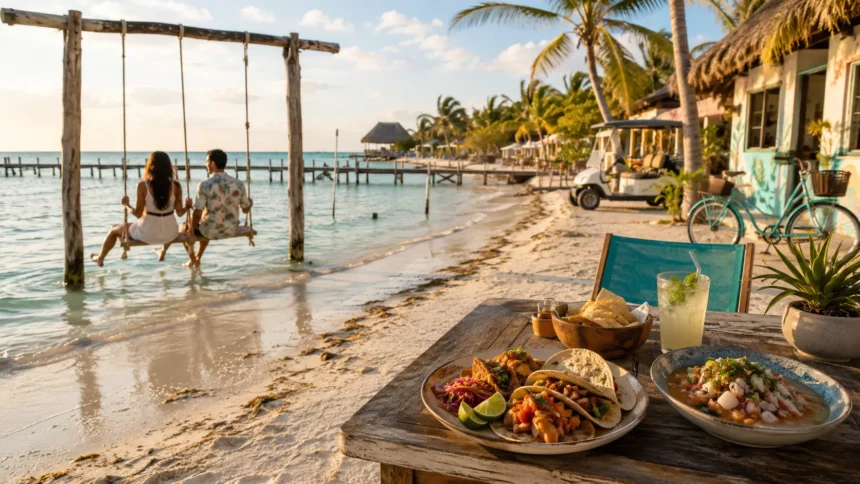
Isla Holbox feels different from the larger resort destinations of Mexico’s Caribbean coast almost as soon as you arrive. Instead of multilane roads and towering hotels, you find sandy streets, colorful buildings, bicycles, golf-cart taxis, open-air restaurants, shallow water, and an atmosphere that encourages you to slow down. The island lies off the northern coast of Quintana Roo and forms part of the environmentally important Yum Balam protected area. Its appeal comes from the combination of relaxed beach life and unusual wildlife experiences rather than conventional sightseeing. Visitors come for long sunsets, whale sharks, flamingos, bioluminescent water, seafood, and quiet mornings beside the sea. This Isla Holbox travel guide explains how to experience those highlights without rushing through them.
Holbox has changed considerably as its popularity has grown, so it is useful to arrive with realistic expectations rather than imagining a completely undiscovered island. Boutique accommodation, stylish restaurants, beach clubs, wellness experiences, and organized tours are now easy to find alongside the traditional fishing character that shaped the community. Yet the island still feels physically different from Cancún or Playa del Carmen because streets remain sandy and much of the wider landscape is protected. Mexico’s official tourism information describes Holbox as a barrier island known for natural beauty, sandy streets, bioluminescence, whale sharks, and the surrounding Yum Balam area. Travelers who appreciate nature but still want comfortable places to eat and sleep often find this balance especially appealing.
A successful Holbox vacation depends on understanding that the island is shaped by weather, tides, wildlife seasons, and limited infrastructure. Heavy rain can turn sandy streets into large puddles, wildlife sightings are never guaranteed, and some remote coastal areas have conservation restrictions that deserve serious respect. You should therefore build flexibility into your itinerary instead of scheduling every hour around photographs you saw online. Three or four nights give most travelers enough time for beaches, a boat excursion, local food, sunset, and one or two nature experiences without turning the trip into a checklist. Longer stays work beautifully for people who genuinely enjoy slow beach days and quiet mornings. With that mindset, Holbox can become one of the most memorable stops on a Yucatán Peninsula itinerary.
Why Isla Holbox Is Worth Visiting
Holbox is most rewarding for travelers who want a beach destination where nature is still central to the experience. The water around much of the island is shallow, the horizon feels enormous, and development becomes increasingly sparse as you move away from town. Sunsets often become the main evening event rather than something people notice between scheduled activities. During the day, you can walk the beach, ride through sandy streets, photograph murals, eat fresh seafood, or simply remain under a shaded palapa with nowhere urgent to go. Mexico’s Caribbean tourism authority highlights whale sharks, bioluminescence, flamingos, Punta Mosquito, and nature excursions among the island’s signature experiences. That combination makes Holbox particularly attractive to couples, solo travelers, nature lovers, and anyone needing a slower vacation.
The island’s connection to Yum Balam is an important part of what makes it special rather than merely a detail for nature enthusiasts. The protected area contains mangroves, coastal dunes, wetlands, forests, lagoons, and marine habitat used by an extraordinary variety of wildlife. Mexico’s National Commission of Natural Protected Areas notes that species using these waters include whale sharks, Caribbean manatees, marine turtles, fish, and numerous invertebrates. The wider area also supports substantial birdlife, which explains why flamingos, pelicans, frigatebirds, herons, and other species feature so prominently in Holbox tours. Visitors benefit from these ecosystems, but they also have a responsibility to avoid disturbing them. Responsible tourism here means treating the island as habitat first and a recreation area second.
Another reason to visit Holbox is that everyday movement feels pleasantly simple. There are no conventional paved city streets running through the tourist center, and people commonly get around on foot, bicycle, or in golf-cart-style transportation. Official Mexican tourism information still emphasizes the island’s sandy roads and low-rise character, while recent travel reporting continues to describe Holbox as a car-free destination. This slower form of transportation changes the mood of a vacation because many journeys become short walks rather than taxi rides through traffic. You can wake up, wander into town for breakfast, continue toward the beach, and return through mural-covered streets without planning complicated transfers. For many visitors, that simplicity becomes as memorable as the major excursions.
Holbox also works well because you do not need an ambitious sightseeing schedule to justify the journey. A full morning can consist of coffee, swimming, reading, and walking through town, while the afternoon may involve ceviche and a nap before sunset. Travelers accustomed to vacations built around famous monuments sometimes need a day to adjust to this rhythm. The island rewards people who measure a good day by atmosphere rather than the number of attractions completed. Even organized activities are usually connected to the natural environment, such as kayaking, wildlife watching, fishing, swimming, or boating. This gives a Holbox itinerary a consistent personality instead of feeling like a random collection of excursions. It is a destination where doing less often creates a stronger sense of place.
That does not mean Holbox is perfect for every traveler. People seeking large shopping centers, major nightlife districts, archaeological ruins within walking distance, or all-inclusive mega-resorts may prefer other parts of Quintana Roo. Travelers with strict accessibility needs should also research carefully because sandy streets, uneven surfaces, boats, and weather-related puddles can create practical difficulties. Mosquitoes can be intense in certain seasons and locations, particularly around mangroves and after rain. Prices can also feel higher than expected because nearly everything visitors consume must reach an island that depends heavily on tourism logistics. If these trade-offs sound manageable, however, Holbox offers a refreshing alternative to more developed Riviera Maya destinations. Its greatest luxury is not extravagance but the permission to slow down.
Best Beaches in Isla Holbox
The main stretch of Holbox beach is the easiest place to begin because it runs close to town and requires almost no planning. Water is typically shallow near shore, creating a gentle environment for wading, floating, and cooling down between walks. Beachfront accommodation and casual restaurants make this section convenient for travelers who want chairs, shade, drinks, or food nearby. The atmosphere becomes livelier around popular access points, but walking farther in either direction usually creates more space. Unlike beaches dominated by enormous resort complexes, Holbox retains a lower-rise visual character that keeps the horizon feeling open. If you have only a short stay, spending your first afternoon here is an excellent way to understand the island’s pace before committing to longer excursions.
Punta Cocos sits toward the western end of the inhabited portion of Holbox and is especially popular around sunset. The setting feels quieter than central beach areas, with shallow water and more open views toward the western horizon. Many visitors arrive in the late afternoon, swim or walk along the shore, and remain until the sky begins changing color. Punta Cocos is also associated with Holbox’s bioluminescence because glowing microorganisms can sometimes be observed in darker water nearby under favorable conditions. The effect depends heavily on moonlight, weather, water movement, and plankton concentration, so it should never be treated as guaranteed. Even without visible bioluminescence, Punta Cocos earns its place on a Holbox itinerary simply because sunset here can be spectacular.
Punta Mosquito is very different because it belongs to a sensitive coastal ecosystem rather than functioning like an ordinary recreational beach. The eastern area is famous for pale sandbanks, exceptionally shallow turquoise water, and opportunities to observe birds from an appropriate distance. However, the official Yum Balam management program specifically designates the beaches of Punta Mosquito as a preservation subzone because of fragile habitat, including important marine-turtle nesting areas. Visitors should follow current signs, ropes, ranger instructions, and access boundaries instead of relying on older online guides that encourage people to wander anywhere they like. You can enjoy the approach and coastal scenery without entering restricted sections. Respecting those limits helps keep the landscape worth visiting in the first place.
Tides matter when exploring the eastern side of Holbox because sandbanks and shallow channels can look completely different over the course of several hours. A route that appears like an easy walk in ankle-deep water may become deeper or less comfortable as conditions change. Before setting out, ask locally about current tides, weather, and permitted access rather than assuming yesterday’s conditions still apply. Bring drinking water because facilities become scarce as you move away from the developed hotel zone. Sun protection is equally important because there is little shade across exposed stretches of sand and shallow water. Wildlife should be observed without approaching closely, feeding animals, or creating noise that changes their behavior. The goal is to experience the landscape without leaving evidence that you were there.
Whichever Holbox beach you choose, resist the temptation to spend the entire day moving between “best beach” photo locations. Beach conditions naturally change with tides, wind, storms, seasonal vegetation, and marine material arriving on shore. A perfect-looking stretch one morning can appear quite different two days later, and that variability is normal on a living coastline. Ask your accommodation staff which nearby section currently has pleasant swimming conditions instead of depending entirely on photographs from previous years. Carry a reusable bottle, avoid leaving plastic waste, and respect turtle-nesting areas or temporary closures when you encounter them. Holbox is most enjoyable when beaches are treated as ecosystems rather than outdoor sets. That approach creates a better experience for travelers and helps protect the island’s long-term appeal.
Top Things to Do in Isla Holbox
One of the easiest things to do in Holbox is simply explore the town slowly on foot. Streets around the center contain murals, small shops, cafés, restaurants, local businesses, colorful façades, and scenes of ordinary island life that make wandering surprisingly enjoyable. Public art has become an important part of the island’s visual identity, so keep your phone or camera available while walking without turning the experience into a scavenger hunt. The central square becomes more animated later in the day as temperatures soften and people begin gathering for dinner. Walking also gives you a better understanding of distances before deciding whether you actually need a bicycle or golf-cart taxi. Most first-time visitors discover that the central town and beach are closer together than expected.
A classic boat excursion is the Three Islands experience, which generally combines wildlife and lagoon scenery around Holbox. Common stops or viewing areas are associated with Isla Pájaros, Pasión Island, and Yalahau, although exact itineraries can vary by operator, weather, environmental rules, and current conditions. Mexico’s Caribbean tourism authority promotes the Three Islands tour as one of Holbox’s characteristic nature activities and specifically highlights Yalahau and birdlife. The excursion works especially well early in a trip because it gives visitors a broader geographic understanding of the waters surrounding the island. Choose an authorized operator that explains wildlife rules rather than one promising unusually close encounters. Good nature tours should make you appreciate animals without needing to chase, feed, or surround them.
Kayaking is another excellent way to see Holbox at a quieter pace, particularly when routes enter mangrove environments under appropriate guidance. Paddling removes engine noise and allows you to notice birds, small marine life, reflections, and changes in vegetation that are easy to miss from faster boats. Guided excursions are preferable in protected or unfamiliar areas because local guides understand routes, tides, weather, and conservation boundaries. Early morning can be especially rewarding because temperatures are cooler and wildlife activity may be more noticeable. Some tours focus on sunrise or mangroves, while others operate after dark when conditions favor bioluminescence. You do not need advanced paddling skills for every excursion, but always check the expected distance and difficulty before booking. Nature feels much closer from water level.
Cycling through Holbox can be enjoyable when roads are dry, but bicycles should not be treated as the perfect transportation solution in every season. Sandy surfaces can become soft, and heavy rain can leave large puddles that make certain streets difficult or messy to cross. A bike is most useful for leisurely rides around town and accessible roads rather than journeys into environmentally restricted beaches. The Yum Balam management framework limits vehicle movement on protected beach areas, so transportation should remain on permitted routes. When weather makes cycling unpleasant, golf-cart taxis are readily used for longer distances within the inhabited area. The important lesson is to choose transportation according to actual ground conditions rather than automatically renting something the moment you arrive.
Finally, protect some time in your Holbox itinerary for activities that are not really activities at all. Watch fishermen and boats near the water, find a quiet place for breakfast, stay on the beach after most day visitors disappear, or take a long evening walk through town. Sunrise is worthwhile for early risers because the island feels remarkably calm before restaurants and tour activity become busy. Sunset creates the opposite atmosphere, drawing people toward the western side and waterfront while music and dinner service begin around town. These unstructured moments often become more distinctive than another paid excursion because they allow you to notice the island’s personality. Holbox is not a destination that improves when every available hour is monetized. Leave space for boredom to turn into discovery.
Whale Sharks, Flamingos and Bioluminescence
Swimming near a whale shark is the experience that made Holbox internationally famous for many travelers, but it should be understood as a regulated wildlife encounter rather than an amusement activity. Whale sharks are the world’s largest fish, yet they feed primarily on plankton and other small organisms rather than hunting people. Their seasonal presence in waters around northern Quintana Roo creates opportunities for controlled observation and swimming excursions. Mexico’s current whale-shark management framework lists the Caribbean season from May 15 through September 17, while official tourism guidance broadly promotes encounters from May through September. Conditions vary within that window, and sightings are never guaranteed. Travelers should view seeing one as a privilege rather than a product guaranteed by payment.
Choosing the right whale shark operator matters because conservation rules exist to reduce pressure on these animals. Official management guidelines require authorized activity and regulate how tourism operates within protected waters, including guide responsibilities and the way vessels interact with wildlife. Avoid operators using language that suggests touching, riding, feeding, crowding, or otherwise manipulating whale sharks for photographs. Ask whether the boat has the appropriate authorization and whether guides explain swimming procedures before departure. Responsible tours may feel more controlled and less dramatic than social-media videos, but that is exactly the point. Wildlife experiences should prioritize the animal’s natural behavior rather than a visitor’s desire for a perfect close-up. Your best photograph is never worth stressing a protected species.
Flamingos are another major reason nature lovers visit Holbox, particularly around shallow feeding areas and nearby bird habitats. Seeing them in the wild can be far more impressive than viewing them in captivity because their behavior makes sense within the broader wetland environment. However, visitors should bring binoculars or a zoom lens rather than attempting to close the distance physically. The Yum Balam ecosystem supports numerous bird species beyond flamingos, so a good birding excursion may reveal pelicans, frigatebirds, herons, cormorants, and other coastal birds. Official protected-area information identifies birdwatching as an appropriate activity in Yum Balam when conducted responsibly. Watching quietly for twenty minutes often produces better encounters than continuously moving toward wildlife. Patience is one of the most useful pieces of equipment you can bring.
Holbox’s bioluminescence provides a completely different wildlife experience because the attraction is microscopic rather than enormous. Certain microorganisms can produce visible flashes of light when water is disturbed, making footsteps, swimming movements, or kayak paddles appear surrounded by tiny sparks under good conditions. The effect is easiest to appreciate when skies and surroundings are dark, which means bright moonlight and artificial lighting can reduce visibility considerably. Punta Cocos and darker offshore areas are commonly associated with the phenomenon, while guided kayak trips may reach locations with less light pollution. Mexico’s national and Caribbean tourism sites both identify bioluminescence as a characteristic Holbox experience. Expectations matter because real bioluminescence often looks subtler to human eyes than long-exposure photographs.
Planning wildlife experiences around nature rather than convenience will make your trip more satisfying. Whale-shark excursions can be canceled because of weather or maritime conditions, and birds naturally move according to feeding patterns, seasons, tides, and disturbance. Bioluminescence changes with moonlight, clouds, water movement, and concentrations of organisms that nobody can control. Build at least one flexible day into a wildlife-focused itinerary so an unfavorable morning does not ruin the entire trip. Never pressure guides to ignore safety or conservation rules simply because your departure date is approaching. Holbox is special precisely because natural systems still shape what visitors can and cannot do. Accepting uncertainty is not a weakness in the experience; it is evidence that the wildlife remains genuinely wild rather than staged for tourism.
What to Eat in Isla Holbox
Seafood should be near the top of your food list because Holbox developed as a fishing community long before it became a fashionable vacation destination. Fresh fish, shrimp, octopus, ceviche, and lobster appear in numerous forms across island menus, from simple preparations to contemporary restaurant dishes. Mexican tourism information identifies lobster as an important local fishing product and notes its strong presence in Holbox cuisine. Instead of automatically choosing the most elaborate restaurant, try a mixture of casual seafood meals and more polished dining experiences. A grilled fish lunch near the beach can be just as memorable as a carefully plated dinner. When ordering seafood, ask what is fresh and locally available rather than insisting on one particular species regardless of season.
Lobster pizza has become one of the foods most commonly associated with Holbox, and visitors will see versions advertised throughout town. The combination can sound unusual, but it reflects the way tourism, local seafood, and casual beach dining have blended over time. Whether it becomes your favorite meal is subjective, so treat it as something fun to try rather than the definitive expression of island cuisine. More traditional seafood preparations often reveal the quality of the catch more clearly because fewer ingredients compete with the fish or shellfish. Sharing a pizza can also be useful for groups wanting an easy meal after a full-day excursion. If lobster is out of season or availability seems questionable, choose another seafood dish instead. Responsible eating includes respecting seasonal supply.
Holbox also offers much more than seafood, which matters if you stay longer than two or three nights. Tacos, quesadillas, breakfast dishes, Yucatecan flavors, burgers, pizza, vegetarian meals, smoothie bowls, baked goods, coffee, and international cuisine are all easy to find around town. The growth of tourism has created a dining scene that ranges from inexpensive street-style food to sophisticated tasting menus and beachfront restaurants. This variety means couples or families with different preferences generally do not need to struggle over meal choices. Vegetarian and vegan travelers will usually find more options than they might expect from a small fishing island. Still, trying regional Mexican ingredients gives the trip greater connection to place than eating familiar international dishes every evening. Balance curiosity with whatever makes you comfortable.
Breakfast is worth treating as a proper part of your Holbox experience rather than fuel before a tour. Slow mornings suit the island, and cafés around town make it easy to combine coffee, fresh fruit, eggs, pastries, juices, or Mexican breakfast dishes before the heat becomes intense. If you have an early whale-shark departure, confirm what food is available beforehand because some businesses may not yet be open. Keeping a few snacks in your room helps on days when tours or transportation disrupt normal meal times. Hydration is particularly important during hot months because beach days and boat excursions can quietly become dehydrating. Choose sealed or safely prepared drinking water rather than assuming tap water is suitable. Carrying your own refillable bottle also reduces unnecessary disposable plastic.
Food costs can vary dramatically, so travelers should not assume Holbox will match budget destinations elsewhere in Mexico. Beachfront seating, imported ingredients, elaborate cocktails, premium seafood, and fashionable restaurant concepts can raise the bill quickly. Eating a few blocks away from the beach, choosing local lunch spots, and balancing higher-end dinners with casual tacos can keep spending more reasonable. Cash remains useful because connectivity interruptions and payment-system problems can occasionally make cards less dependable than they are in major cities. Avoid arriving with no pesos and assuming an ATM will always solve the problem immediately. Most importantly, do not spend the entire trip chasing the most photographed restaurant or dish online. The best Holbox food memories often come from a meal chosen because it smelled good while you were wandering.
Where to Stay in Holbox
Staying near the center of Holbox is the most convenient option for first-time visitors who want restaurants, shops, the main square, ferry access, and the beach within relatively easy walking distance. You can go out for dinner without arranging transportation and return to your room quickly if afternoon heat becomes tiring. The trade-off is that central streets can feel busier and may carry more evening noise than accommodation farther from town. Rooms immediately beside popular bars or gathering areas may not suit light sleepers, even though the location looks perfect on a map. Read recent guest reviews with particular attention to noise, water pressure, air conditioning, mosquitoes, and access after heavy rain. On Holbox, practical comfort often matters more than having an especially fashionable lobby.
The western side toward Punta Cocos appeals to travelers who want quieter surroundings and easy access to sunsets. Accommodation becomes more spread out as you move away from the center, creating a stronger sense of escape from town activity. The disadvantage is that restaurants and services may require a longer walk, bicycle ride, or golf-cart taxi, particularly at night or after rain. This area can work beautifully for couples, honeymooners, and visitors who expect to spend substantial time at their hotel or on the beach. Before booking, check exactly how far the property sits from the town center rather than trusting phrases such as “minutes from downtown.” Distances feel very different when streets are sandy, wet, or dark. Location should match your daily habits rather than your idealized vacation image.
The eastern hotel zone can suit travelers who prioritize quieter beaches and access toward the Punta Mosquito side of the island. Properties here may offer a more secluded atmosphere while remaining connected to town by beach walks, bicycles, or golf-cart transportation. Again, distance is the important compromise because spontaneous dinners in the center become less effortless when your room is farther east. Visitors should also remember that protected areas begin beyond developed sections, so staying nearby does not grant special access to restricted ecological zones. Check whether your accommodation provides transportation assistance during bad weather and whether nearby roads become difficult after heavy rainfall. Travelers who appreciate early mornings and peaceful evenings may consider the additional distance worthwhile. Nightlife-focused visitors probably will not.
Budget accommodation is available, but Holbox is no longer a destination where every traveler should expect extremely low prices simply because the streets are unpaved. Hostels and simple guesthouses can reduce costs, particularly for solo travelers who would otherwise pay for an entire private room. Mid-range boutique properties dominate much of the market and often place greater emphasis on design, pools, breakfast, and beach access. Luxury travelers can choose more secluded experiences, but they should still expect island limitations such as weather-related transportation issues or occasional infrastructure disruptions. Booking early matters during popular winter travel periods and holiday weeks when desirable properties fill quickly. During wetter or lower-demand periods, availability can be greater, but weather becomes a more significant consideration. Value depends on season as much as hotel category.
Whatever area you choose, examine the details that matter specifically on a tropical island. Strong air conditioning or effective fans can transform sleep quality, while window screens and mosquito control become important when insects are active. Ask whether the room is reached by sandy pathways or stairs if mobility is a concern. Properties offering filtered water stations can help reduce single-use bottles, which is particularly valuable inside an environmentally sensitive destination. Reliable Wi-Fi should not be assumed if you must work remotely, so recent reviews are more useful than broad marketing claims. Travelers visiting during the rainy and cyclone season should also understand cancellation and rebooking policies before paying nonrefundable rates. The best Holbox hotel is ultimately the one that makes your preferred version of the island easier to enjoy.
How to Get to Holbox and Get Around
Most travelers reach Holbox by first traveling overland to Chiquilá, the mainland port facing the island. Chiquilá can be reached by bus, shuttle, private transfer, taxi, or rental car from major regional transportation points, including Cancún and other destinations on the Yucatán Peninsula. Mexico’s protected-area information specifically identifies Chiquilá as the mainland gateway before visitors continue by ferry to Holbox. If driving, you leave the vehicle on the mainland because ordinary cars are not part of visitor transportation around Holbox town. Allow extra travel time rather than planning a flight connection immediately after the ferry. Road delays, weather, ferry demand, and luggage handling can all make a theoretically simple journey longer than expected. Arrival day should feel relaxed, not like a race.
Ferry services cross between Chiquilá and Holbox throughout the day, and schedules should always be checked close to travel because operators can change times or fares. For a useful 2026 reference, Holbox Express currently lists hourly departures from Chiquilá between 6:30 a.m. and 9:30 p.m., with an adult fare of MXN 330, while return services from Holbox run on the operator’s published schedule. Another operator also serves the route, which means actual departure opportunities can be more frequent than one company’s timetable suggests. Do not build your itinerary around prices copied months earlier from a blog because ferry companies explicitly state that schedules and rates may change. Arriving with some cash provides an additional layer of flexibility.
Once you step off the ferry, golf-cart taxis are commonly waiting to carry passengers and luggage to accommodation. This is particularly helpful during hot weather, after rain, or when your hotel is farther from the center. Travelers staying near town may be tempted to walk from the pier, but dragging wheeled suitcases through sand can become frustrating quickly. Save the scenic walking for after you have checked in and left your bags behind. Around the central area, walking is often the easiest transportation because restaurants, shops, and beaches sit relatively close together. Bicycles can be enjoyable during dry weather, while carts make longer trips easier. Holbox transportation is simple once you stop expecting it to function like a paved mainland city.
Rain deserves special attention because the island’s sandy, low-lying streets can hold substantial water. A ten-minute walk that seems effortless during dry conditions may require navigating puddles or taking an alternate route after a downpour. Pack shoes or sandals you do not mind getting wet and avoid bringing luggage that can only function on perfectly smooth pavement. Accommodation staff often know which roads are currently passable and can arrange a golf-cart taxi when conditions are difficult. If you rent a bike or cart, ask about areas you should avoid rather than assuming every mapped path is suitable. Tropical island travel rewards adaptability, especially during summer and early autumn. Complaining that sand behaves like sand will not improve the weather, but good preparation certainly improves the trip.
You should also remember that transportation restrictions help protect Holbox’s most sensitive areas. The official Yum Balam management program prohibits ordinary vehicle traffic on designated protected beaches, apart from specific management and conservation purposes. A rental cart is therefore not permission to drive wherever the terrain appears physically accessible. Follow local signs, stay on authorized roads, and leave vehicles where access rules require you to continue on foot. Similar respect applies to boats operating around wildlife zones, where authorized operators and conservation procedures matter. Choosing slower transportation is part of experiencing Holbox rather than an inconvenience to overcome. The island’s unusual character survives because not every place has been converted into a road, parking area, or unrestricted recreational zone.
Best Time to Visit Isla Holbox and Plan Your Trip
The best time to visit Holbox depends on whether your priority is classic beach weather or seasonal wildlife. The drier winter period is generally popular with visitors seeking sunnier conditions, lower humidity, and comfortable beach days, which also creates stronger demand for accommodation. December through early spring is therefore attractive for relaxed vacations when whale sharks are not essential to the itinerary. Even then, tropical weather can produce unexpected clouds, wind, or rain, so no month guarantees perfect conditions. If you dislike intense heat and humidity, winter can feel more comfortable for walking and cycling around town. The trade-off is that popular travel weeks may bring higher prices and more visitors. Booking desirable accommodation in advance becomes more important during these periods.
Travelers specifically hoping to see whale sharks should plan around the regulated season rather than the driest weather. Current Mexican management documents place the Caribbean observation and swimming season between May 15 and September 17. Historically, stronger concentrations have often occurred during the middle portion of that period, but wildlife distribution varies naturally from year to year. Summer also brings hotter, wetter conditions, so a whale-shark trip involves accepting the possibility of showers, rougher water, or canceled excursions. Give yourself multiple potential mornings rather than scheduling the tour immediately before leaving the island. Seasickness medication may be worth discussing with a pharmacist or doctor if you are prone to motion sickness. The journey to whale-shark areas can involve substantial time on open water.
Rain and tropical cyclone risk become more relevant during the warmer part of the year. Quintana Roo’s 2026 civil-protection planning identifies June 1 through November 30 as the regional rainy and tropical-cyclone season, matching the broader North Atlantic hurricane period recognized by Mexican travel authorities. This does not mean visitors should automatically avoid Holbox for six months because many trips during this period experience normal tropical weather. It does mean you should monitor official forecasts, choose sensible travel insurance, and understand accommodation cancellation policies. Heavy rainfall can affect roads and boat excursions even when no hurricane is nearby. Flexible bookings become more valuable when weather risk increases. Never ignore evacuation or maritime instructions because a prepaid hotel room is not more important than personal safety.
Three nights is a practical minimum for many first-time visitors, although four nights creates considerably more flexibility. With three nights, you can spend an arrival afternoon on the beach, devote one day to a boat or wildlife excursion, explore Punta Cocos and town, and still enjoy several relaxed meals. Four or five nights provide breathing room if rain cancels an activity or you simply discover that you would rather spend another day doing nothing. Day trips from Cancún are technically possible but miss much of what makes Holbox appealing because several hours are consumed by road and ferry transportation. The island becomes more atmospheric after day visitors leave and evening settles over the sandy streets. Staying overnight is therefore strongly recommended if your schedule permits.
Pack lightly and prioritize items that match the island rather than a generic resort vacation. Useful basics include breathable clothing, sun protection, mosquito repellent, a reusable water bottle, swimwear, a light rain layer, waterproof protection for electronics, and footwear that can handle sand and puddles. Bring some Mexican pesos, especially for smaller purchases, transportation, tips, or moments when electronic payments are unavailable. Download important confirmations and maps before arrival rather than assuming mobile data will always cooperate perfectly. Most importantly, bring realistic expectations about nature, infrastructure, and pace. Holbox can feel wonderfully luxurious when you define luxury as time, water, wildlife, and sunsets. Travelers expecting a flawlessly engineered resort island may miss what makes the destination distinctive in the first place.
Frequently Asked Questions About Isla Holbox
How many days should I spend in Isla Holbox?
Three to four nights work well for most first-time visitors because that gives you time for the beach, town, sunset, a boat trip, and a wildlife experience without rushing. Stay five nights or longer if slow beach days are the main purpose of your vacation.
Is Isla Holbox expensive?
Holbox can cost more than travelers expect from a small Mexican island, especially for beachfront hotels, premium restaurants, private transfers, and wildlife excursions. Budget travelers can save by staying near town, eating casual local meals, walking instead of renting transportation, and choosing only the tours that genuinely matter to them.
Can you swim with whale sharks in Holbox?
Yes, regulated whale-shark observation and swimming excursions operate seasonally in the surrounding region, with current Mexican rules listing May 15 through September 17 for the Caribbean season. Use an authorized operator and remember that sightings remain dependent on wildlife and weather conditions.
Is Holbox a car-free island?
Visitors do not normally move around Holbox in conventional cars; walking, bicycles, and golf-cart-style transportation define the inhabited area’s travel experience. The sandy-road environment is one of the characteristics repeatedly highlighted by Mexican tourism information and travel authorities.
Is Isla Holbox better than Cancún or Tulum?
Holbox is better for travelers prioritizing a slower atmosphere, shallow beaches, wildlife, sandy streets, and small-scale accommodation, while Cancún offers more resort infrastructure and Tulum combines beaches with major archaeological and dining attractions. The best destination depends on whether you value convenience and variety or a quieter island experience.