


Heel Spur: Causes, Symptoms and Treatment Options
Heel pain can make the first steps out of bed, a normal workday, or even a short walk feel surprisingly difficult. One possible finding behind that discomfort is a heel spur, a bony growth that develops on the heel bone after repeated stress on surrounding tissues. Heel spurs are commonly associated with plantar fasciitis, but the two conditions are not exactly the same. In fact, many people have heel spurs without experiencing pain from the spur itself. Cleveland Clinic notes that heel spurs affect roughly 15% of people and are often discovered only when someone has an X-ray for heel pain. Understanding this distinction can prevent unnecessary worry and help treatment focus on the actual source of discomfort.
Heel spurs usually develop gradually rather than appearing after one ordinary day of walking. Repeated tension where the plantar fascia, tendons, or other tissues attach to the heel can stimulate the body to produce additional bone over time. Activities involving running, jumping, prolonged standing, poorly supportive footwear, and altered foot mechanics can contribute to the repetitive stress associated with heel problems. However, seeing a spur on an X-ray does not automatically mean the extra bone is responsible for every symptom. Mayo Clinic specifically notes that heel spurs seen on imaging in people with plantar fasciitis generally do not cause the pain and usually do not need to be removed. Treatment therefore usually targets inflammation, tissue loading, flexibility, footwear, and underlying biomechanics before surgery is even considered.
What Is a Heel Spur?
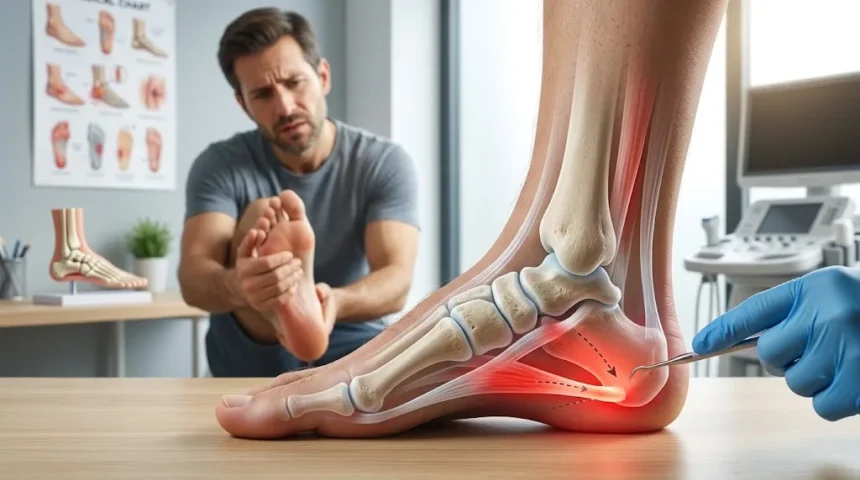
A heel spur is an extra growth of bone that develops along the calcaneus, the large bone forming the heel. The most familiar type forms underneath the heel near the point where the plantar fascia attaches, although bony growth can also develop around the back of the heel near the Achilles tendon. The spur often forms slowly as the bone responds to repeated traction or stress from surrounding tissues. Rather than appearing like a sharp object suddenly growing into the foot, it is generally part of a gradual remodeling process. On an X-ray, the growth may extend outward from the heel bone and look pointed or hook-shaped. Its appearance can seem dramatic even when it causes few or no symptoms.
The plantar fascia is particularly important when discussing heel spurs because it runs along the bottom of the foot from the heel toward the toes. This strong band of connective tissue helps support the arch and absorbs force as you walk or run. Repeated stress at its attachment to the heel can contribute to plantar fasciitis and may also encourage new bone formation over time. Cleveland Clinic explains that heel spurs can develop as the body’s response to ongoing stress and inflammation involving the plantar fascia. The extra bone therefore often reflects a history of tissue loading rather than functioning as the original cause of pain. That difference becomes important when choosing treatment.
Heel spurs and plantar fasciitis are frequently mentioned together because they can occur in the same foot, but they are separate conditions. Plantar fasciitis involves irritation or degeneration of the plantar fascia, while a heel spur is a structural change in the bone. A person can have plantar fasciitis without a spur, and another person can have a visible spur without painful plantar fasciitis. Mayo Clinic states that plantar fasciitis commonly causes sharp heel pain with the first steps in the morning and that bone spurs seen on X-rays generally are not responsible for that pain. This is why clinicians generally treat symptoms rather than simply trying to eliminate an X-ray finding.
Heel spurs also should not be confused with every other condition that causes pain at the back or bottom of the heel. Achilles tendinitis, heel-pad irritation, bursitis, stress fractures, nerve problems, arthritis, plantar warts, and other disorders can produce symptoms in the same general area. Mayo Clinic lists plantar fasciitis and Achilles tendinitis among the most common causes of heel pain while recognizing several other possible explanations. Location, timing, tenderness, activity patterns, and associated symptoms help distinguish these problems. When pain persists, obtaining an accurate diagnosis is more useful than assuming a heel spur must be responsible simply because the heel hurts.
Once a heel spur has formed, it usually does not simply dissolve through stretching, massage, medication, or changing shoes. Cleveland Clinic notes that surgical removal is the only way to physically eliminate a spur, but surgery is rarely necessary because the spur itself often does not hurt. Most treatment instead focuses on reducing stress and irritation in tissues around the heel so walking becomes comfortable again. Someone can therefore become completely or substantially pain-free while the spur remains visible on an X-ray. This is an important expectation because successful treatment should be measured by improved function and reduced pain rather than whether the bone growth disappears.
What Causes Heel Spurs?
Heel spurs generally develop in response to repeated stress where connective tissues attach to the heel bone. Every step places mechanical force through the foot, and normally the muscles, tendons, ligaments, fat pad, and bones distribute this load effectively. Problems can develop when the same tissues experience more stress than they can comfortably tolerate for long periods. The body may respond to ongoing tension by laying down additional bone at the attachment site. Cleveland Clinic describes heel spurs as a response to stress and strain affecting the foot’s ligaments and tendons. This process usually develops over months or years rather than overnight.
Plantar fasciitis is one of the conditions most closely associated with plantar heel spurs. The plantar fascia experiences substantial tension when you stand, walk, run, or push off through the toes. When that tissue becomes repeatedly overloaded, microscopic damage and irritation can occur near its heel attachment. Over time, chronic traction may be accompanied by bony growth in the same region. This relationship explains why an X-ray may reveal both a heel spur and symptoms typical of plantar fasciitis. However, the presence of the spur does not prove that the bone itself is generating pain, and Mayo Clinic notes that plantar-fasciitis pain commonly persists independently of the spur.
Running and jumping can increase stress through the heel, especially when training volume rises too quickly. Hard surfaces, sudden increases in mileage, repetitive sports, or inadequate recovery may increase strain through the plantar fascia and surrounding tissues. Cleveland Clinic lists running and jogging among activities associated with heel-spur risk and advises reducing repetitive impact when heel symptoms develop. This does not mean running inevitably causes heel spurs, because millions of runners never develop problematic symptoms. Training load, footwear, foot structure, body weight, age, and previous injury all influence how much stress a particular foot can tolerate.
Foot mechanics can contribute as well. People with very flat feet, unusually high arches, altered walking patterns, or reduced ankle flexibility may distribute pressure through the heel differently from someone with more neutral mechanics. Cleveland Clinic identifies flat feet, high arches, and gait abnormalities among factors associated with heel problems. Tight calf muscles can further influence how the ankle moves during walking and may increase strain through the plantar fascia. None of these characteristics automatically means pain will develop, but they can become relevant when combined with high activity or prolonged standing. A physical examination can help identify which mechanical factors matter for a particular person.
Body weight and time spent on the feet can also influence cumulative heel loading. People who stand or walk for many hours on hard floors may experience repeated pressure that makes irritated tissues harder to recover between days. Higher body weight can increase the forces passing through the plantar fascia during each step, although weight is only one factor and should not be treated as the sole explanation for heel pain. Mayo Clinic identifies prolonged standing, running, foot shape, and body weight among contributors to plantar-fasciitis-related heel pain. Supportive footwear, gradual changes in activity, and appropriate conditioning can sometimes reduce these stresses before they become persistent.
Heel Spur Symptoms and What the Pain Feels Like
Many heel spurs cause no symptoms at all. A person may have a substantial-looking bony growth and remain completely unaware of it until an X-ray is taken for another reason. Cleveland Clinic specifically notes that most people do not realize they have a heel spur until they seek care for heel pain and that heel spurs themselves often do not hurt. When pain is present, it frequently comes from plantar fascia irritation or another nearby tissue rather than directly from the spur. This distinction explains why some people with tiny spurs experience severe heel pain while others with much larger spurs walk comfortably. Imaging findings and symptom intensity do not always match.
Pain associated with plantar fasciitis commonly feels sharp or stabbing underneath the heel, particularly during the first few steps after getting out of bed. Mayo Clinic describes this classic pattern and notes that pain may ease as a person moves around, only to return after prolonged standing or when getting up after sitting. This “first-step pain” can be extremely characteristic because the plantar fascia tightens during periods of rest and becomes loaded again when walking begins. Someone may therefore feel significantly better after warming up during the morning but experience another flare later in the day. The pattern can be more informative than simply saying the heel hurts.
Tenderness is usually concentrated around the bottom of the heel when plantar fascia irritation is involved. Pressing near the inner underside of the heel may reproduce the pain, and pulling the toes upward can sometimes increase tension through the fascia. Walking barefoot on hard floors may be particularly uncomfortable because there is less cushioning and arch support. People may begin changing how they walk to avoid pressure on the painful area, which can create secondary discomfort in the opposite foot, knee, hip, or back. Persistent limping is therefore worth addressing rather than simply tolerating. Early load modification can sometimes prevent a short-term problem from becoming more difficult to manage.
Pain at the back of the heel may suggest a different pattern involving the Achilles tendon, retrocalcaneal bursa, or a posterior bony prominence. It may become worse when shoes rub against the back of the heel or after activities requiring repeated push-off and jumping. Because people often use the phrase “heel spur” to describe any bony heel problem, location matters when discussing diagnosis. Mayo Clinic notes that heel pain can arise from Achilles tendinitis, bursitis, Haglund’s deformity, heel spurs, plantar fasciitis, and several other conditions. A clinician can usually narrow the possibilities by identifying precisely where pain occurs and which movements trigger it.
Certain symptoms are less typical for uncomplicated plantar-fascia-related heel pain and deserve closer evaluation. Numbness, tingling, burning pain, marked swelling, redness, fever, or pain following a significant injury may suggest another condition. Severe pain that prevents weight-bearing can occur with fractures or acute injuries and should not automatically be blamed on an existing spur. Night pain that is progressive or pain accompanied by systemic illness also deserves medical attention. Even common heel pain can have uncommon causes. If symptoms do not fit the classic pattern or continue despite reasonable treatment, reassessing the diagnosis is more sensible than repeatedly treating the same presumed heel spur.
How Heel Spurs Are Diagnosed
Diagnosis starts with the history of the heel pain rather than an X-ray alone. A healthcare professional may ask when symptoms started, whether the pain is worst in the morning, which activities aggravate it, and whether there has been a recent increase in running, standing, or exercise. Previous injuries, footwear, work demands, medical conditions, and the location of pain can all provide useful clues. This information helps distinguish plantar fasciitis from Achilles problems, nerve irritation, stress fracture, arthritis, or other conditions. Heel pain can have several causes, so understanding the pattern is often more valuable than immediately looking for a spur. A correct diagnosis prevents treatment from becoming focused on an incidental imaging finding.
During the physical examination, the clinician typically checks the heel and surrounding tissues for tenderness. They may examine the arch, ankle motion, calf flexibility, foot alignment, Achilles tendon, and the way the person stands or walks. Mayo Clinic notes that plantar fasciitis is often diagnosed from medical history and physical examination, with the precise location of tenderness helping distinguish it from other conditions. The examiner may also ask the patient to move the ankle or toes to see whether certain positions reproduce symptoms. These simple tests can provide a great deal of information without requiring advanced imaging.
X-rays can show heel spurs clearly because extra bone is visible on standard radiographs. Cleveland Clinic lists X-rays among the most common tests used to identify heel spurs. However, finding a spur does not necessarily identify the source of pain because many asymptomatic people have similar bony growths. Mayo Clinic specifically states that X-rays in people with plantar fasciitis may reveal bone spurs that generally are not responsible for the pain. Imaging is therefore interpreted alongside the physical examination rather than treated as the final answer. The symptoms still need to make anatomical and clinical sense.
Most people with a typical presentation of plantar fasciitis do not require MRI or other advanced scans. Imaging may be considered when symptoms are unusual, persistent, severe, or suggest another diagnosis such as a stress fracture or soft-tissue injury. Mayo Clinic notes that X-ray or MRI can sometimes be ordered specifically to rule out other causes of heel pain. Ultrasound may also be used in certain clinical settings to examine the plantar fascia or guide selected procedures. The need for testing depends on the person’s history and examination findings. Ordering every available scan generally adds little when the presentation is straightforward.
A strong diagnosis should ultimately answer two different questions: whether a heel spur exists and what is actually causing the pain. Those are not always the same question. A person may have an incidental spur alongside plantar fasciitis, Achilles tendinopathy, nerve irritation, or another condition. Treatment should address the painful structure rather than simply the most visible abnormality on imaging. Cleveland Clinic emphasizes that heel pain attributed to spurs often results from plantar fasciitis and improves when that underlying condition is treated. This is why symptom patterns, physical examination, and functional limitations remain central even when an X-ray shows a clear bony growth.
Heel Spur Treatment Options That Usually Help
Most heel-spur-related pain is treated without surgery. Reducing the activities that repeatedly aggravate the heel can provide irritated tissues with an opportunity to recover while maintaining as much comfortable movement as possible. Someone who runs daily may temporarily switch to cycling, swimming, or another lower-impact activity rather than stopping all exercise. Cleveland Clinic recommends resting the heel and reducing running or jogging when these activities provoke symptoms. Mayo Clinic similarly notes that many people with plantar fasciitis improve within several months using conservative treatments such as stretching, icing, and avoiding painful activities. Complete prolonged inactivity is rarely necessary for uncomplicated cases.
Ice can provide short-term symptom relief, particularly after activity. Mayo Clinic recommends applying ice to the heel for approximately 15 minutes several times daily, with a protective layer between the ice and skin. Rolling a frozen water bottle underneath the foot combines cooling with gentle massage and can feel comfortable for some people. Ice does not remove the heel spur or permanently repair plantar fascia tissue, so its role is symptom management rather than structural correction. Someone who finds heat more comfortable may prefer that approach in certain situations, but swelling and acute irritation often respond well to cold. Avoid prolonged direct ice exposure that could damage the skin.
Stretching the calf and plantar fascia is one of the most commonly recommended treatments for plantar-fascia-related heel pain. Tight calf muscles can limit ankle movement and increase tension through the bottom of the foot during walking. Mayo Clinic and AAOS both recommend stretching the plantar fascia and Achilles tendon as part of conservative treatment. A physical therapist can teach exercises that target these structures without creating excessive pain. Stretching usually works best when performed consistently rather than aggressively. The goal is gradually improving tissue mobility, not forcing the foot into painful ranges because someone believes a stronger stretch will break down the spur.
Footwear changes can make a substantial difference because every step places pressure through the heel. Shoes with adequate cushioning, arch support, and a stable sole can reduce strain compared with very flat, worn-out, or poorly supportive footwear. Mayo Clinic recommends supportive shoes and replacing athletic shoes once their cushioning and support have significantly deteriorated. Heel cups or arch supports can also distribute pressure differently and may improve comfort for some people. Custom orthotics are not required for everyone because many people respond well to appropriately selected over-the-counter inserts. The best device is the one that improves symptoms and fits comfortably inside the shoes actually worn.
Over-the-counter pain relievers may help selected people manage symptoms while the underlying tissues recover. Nonsteroidal anti-inflammatory drugs such as ibuprofen or naproxen can reduce pain, although they are not appropriate for everyone and should be used according to label instructions or professional advice. Mayo Clinic includes these medicines among treatment options for plantar fasciitis. People with kidney disease, stomach ulcers, bleeding problems, certain cardiovascular conditions, or medications that interact with NSAIDs should seek guidance before using them regularly. Medication should support movement and rehabilitation rather than become the only strategy. Addressing loading, footwear, flexibility, and strength generally provides a more complete plan.
Physical Therapy, Orthotics and Other Nonsurgical Treatments
Physical therapy can be especially useful when heel pain persists despite basic home care. A therapist can assess ankle mobility, calf tightness, foot strength, gait, balance, and the specific activities that repeatedly trigger symptoms. Mayo Clinic notes that physical therapists may teach plantar fascia and Achilles stretches as well as strengthening exercises for lower-leg muscles. Strengthening can help the foot and ankle manage repetitive loads more efficiently rather than relying entirely on stretching. The therapist may also recommend temporary changes to training or work activities. Rehabilitation works best when exercises are progressed according to symptoms rather than followed as a rigid one-size-fits-all routine.
Taping can provide temporary mechanical support to the foot while irritated tissues recover. Physical therapists sometimes use athletic or specialized tape to reduce strain through the plantar fascia during walking and exercise. Mayo Clinic includes taping among techniques a therapist may use for plantar fasciitis. The benefit usually lasts only while the tape remains applied, so taping is generally considered a short-term management tool rather than a permanent solution. Skin sensitivity can also limit its use in some people. If taping consistently improves symptoms, that response may provide useful information about whether arch support or footwear modifications could offer similar relief.
Night splints are another option for people whose first morning steps are particularly painful. These devices hold the ankle and foot in a gently stretched position while sleeping so the plantar fascia and Achilles tendon do not shorten as much overnight. Mayo Clinic and AAOS both list night splints among conservative treatment options for plantar fasciitis. Some users find them uncomfortable or difficult to sleep in, so adherence can become a challenge. A less bulky design may be easier for certain people to tolerate. Night splints are most useful when morning pain is a prominent symptom rather than as a universal requirement for everyone with a heel spur.
Orthotics and heel cups can redistribute load through the foot. A supportive insert may reduce tension through the plantar fascia by improving arch support and cushioning the heel. Mayo Clinic notes that both store-bought and custom arch supports can help distribute pressure more evenly. Custom orthotics may be worth considering when foot structure is unusual or symptoms continue despite simpler options, but expensive custom devices are not automatically more effective for every patient. Inserts should also be paired with appropriate footwear because even a good orthotic may function poorly inside an unstable or worn-out shoe. Comfort and functional improvement matter more than price.
If symptoms remain significant for several months, clinicians may discuss additional procedures. Mayo Clinic lists corticosteroid injections and certain minimally invasive or ultrasound-guided interventions among options considered after simpler treatments have not worked. Steroid injections can reduce pain temporarily but are generally used cautiously around the plantar fascia because repeated injections can increase risks such as fascia weakening or fat-pad damage. Other interventions vary in availability and quality of evidence. None should be viewed as an automatic next step simply because pain has lasted several weeks. A careful reassessment of the diagnosis and adherence to rehabilitation is sensible before escalating treatment.
When Is Surgery Needed for a Heel Spur?
Surgery is rarely the first treatment for heel-spur-related pain. Most people improve with conservative approaches directed at plantar fasciitis or another underlying condition, making removal of the bony growth unnecessary. Cleveland Clinic specifically notes that healthcare professionals rarely perform surgery solely to remove heel spurs. Mayo Clinic likewise explains that bone spurs seen on X-rays in plantar fasciitis generally do not cause the pain and therefore usually do not need removal. This is reassuring because many people initially assume that a visible spur must be surgically “cut off” before they can walk comfortably again.
Surgery may be discussed when severe heel pain continues after months of well-performed nonsurgical treatment and significantly interferes with daily function. The actual procedure depends on the underlying source of pain rather than the spur alone. In stubborn plantar fasciitis, a surgeon may release part of the plantar fascia from its attachment to reduce tension. Mayo Clinic describes plantar fascia release as a potential option when symptoms fail to improve after several months of other treatment. A heel spur may sometimes be removed during surgery when it contributes to mechanical problems, but spur removal itself is not always necessary. Surgical decisions should therefore be based on symptoms, examination, and treatment history.
Every operation has risks, and foot surgery is no exception. Potential complications can include infection, nerve irritation, persistent pain, scarring, altered foot mechanics, or difficulties during recovery. Removing too much plantar fascia can theoretically affect arch stability, which is one reason surgeons carefully control how much tissue is released. Recovery can also temporarily limit walking, work, and exercise depending on the procedure performed. Someone considering surgery should understand what improvement is realistically expected and what symptoms may remain afterward. The presence of a heel spur does not guarantee that surgery will solve every form of heel discomfort.
Before surgery, clinicians generally confirm that other common causes of heel pain have been adequately considered. A stress fracture, nerve entrapment, Achilles disorder, inflammatory arthritis, or another problem may require a very different procedure or no surgery at all. Imaging or additional evaluation may therefore become more important when conservative treatment repeatedly fails. The goal is to avoid operating on an incidental spur while overlooking the actual pain generator. A second opinion can be reasonable when the diagnosis remains uncertain or when surgery is being recommended primarily because an X-ray looks abnormal. Structural findings should always be interpreted in the context of symptoms.
For most people, surgery never becomes necessary. Cleveland Clinic notes that even though heel spurs remain permanently unless surgically removed, treating the condition associated with the spur can successfully relieve symptoms. This means someone can return to normal walking, exercise, and work while the spur remains exactly where it was. The practical goal is therefore restoring function rather than normalizing an X-ray. Surgery has an important role for selected persistent cases, but it belongs near the end of the treatment pathway. Conservative care deserves enough time and consistency before assuming that removal of the bone growth is the only solution.
How to Prevent Heel Pain and Reduce Recurrence
Supportive footwear is one of the simplest ways to reduce repeated stress through the heel. Shoes should fit properly, provide enough room for the toes, and offer cushioning and support appropriate to the activity being performed. Cleveland Clinic recommends supportive footwear and avoiding prolonged barefoot walking on hard surfaces for people prone to heel-spur symptoms. Mayo Clinic similarly recommends shoes with good arch support, thick soles, and adequate cushioning for plantar fasciitis. Worn athletic shoes should be replaced when the midsole has clearly lost its ability to absorb impact. The right shoe cannot prevent every problem, but poor footwear can make irritated tissues harder to calm.
Exercise progression matters just as much as footwear. A sudden jump from very little activity to frequent running, long walks, or high-impact classes can overload tissues that have not had time to adapt. Increase training volume gradually and allow recovery after unusually demanding sessions. Runners may benefit from varying terrain and alternating harder sessions with easier days instead of repeatedly training on unforgiving surfaces. Cleveland Clinic recommends choosing softer running surfaces such as tracks or grass when appropriate rather than relying only on hard pavement. Gradual adaptation usually allows tendons, fascia, muscles, and bones to become more tolerant of load.
Maintaining calf and foot mobility can also help, particularly for people who have previously experienced plantar-fascia pain. Gentle calf stretches and plantar fascia stretches can be included regularly instead of waiting until symptoms become severe. Strengthening the calf, intrinsic foot muscles, hips, and other lower-limb structures may improve the body’s ability to tolerate repetitive forces. Physical therapists often combine mobility with strengthening rather than treating flexibility as the only problem. A balanced program should feel progressively challenging without recreating intense heel pain. Consistent moderate work is generally more useful than occasional aggressive stretching.
Body weight may influence heel loading, but prevention should not become narrowly focused on the scale. Mayo Clinic notes that excess body weight can place additional stress on the plantar fascia, and gradual weight management may reduce pressure for some people. However, people of every body size can develop plantar fasciitis and heel spurs, particularly runners, workers who stand all day, and individuals with specific foot mechanics. A broader strategy includes supportive footwear, reasonable activity progression, strength, mobility, recovery, and treatment of symptoms early. Weight management is one possible factor rather than a universal explanation for heel pain.
Finally, respond to early warning signs instead of training through progressively worsening pain. Mild soreness after an unusually active day may settle quickly, but repeated first-step morning pain or increasing heel tenderness suggests that the tissue may need load modification. Continuing the same provoking activity at the same intensity can prolong symptoms. Switching temporarily to lower-impact exercise allows fitness to continue while reducing repetitive heel stress. Returning to running or jumping gradually after symptoms improve can decrease the chance of another flare. Prevention is less about guaranteeing that a heel spur never forms and more about keeping the tissues surrounding the heel healthy enough that the spur never becomes clinically important.
When Should You See a Doctor for Heel Pain?
Medical evaluation is appropriate when heel pain remains persistent despite several weeks of sensible home treatment. Resting from aggravating activities, wearing supportive shoes, stretching, and using ice should usually produce at least some gradual improvement in uncomplicated plantar-fascia-related pain. Cleveland Clinic advises contacting a healthcare provider when heel pain does not improve with treatment because another condition may be responsible. Persistent symptoms do not automatically mean something serious is wrong, but they may indicate that the diagnosis, exercise load, or treatment plan needs adjustment. Earlier assessment can also help prevent compensatory walking patterns from creating additional problems elsewhere.
Severe pain following a fall, sports injury, or other trauma deserves more prompt attention. The heel bone can fracture, and the Achilles tendon can rupture, both of which require very different management from a chronic heel spur. Mayo Clinic lists calcaneal fracture and Achilles tendon rupture among injury-related causes of heel pain. Inability to bear weight, significant swelling, bruising, or a sudden snapping sensation should therefore not be dismissed as ordinary plantar fasciitis. Acute injuries can sometimes look superficially similar to a severe flare but require imaging or urgent treatment. The timing and mechanism of injury provide important clues.
Numbness, tingling, burning, or electrical sensations deserve evaluation because they may indicate nerve involvement rather than a purely mechanical plantar-fascia problem. Tarsal tunnel syndrome and peripheral neuropathy are among conditions Mayo Clinic lists as possible causes of heel pain. People with diabetes or known neuropathy should be especially careful about new foot symptoms because reduced sensation can hide injuries or pressure damage. Skin changes, wounds, or infections around the heel also deserve attention. A heel spur itself does not normally create widespread numbness, so neurological symptoms should prompt consideration of another diagnosis.
Swelling, redness, warmth, fever, or rapidly worsening pain can suggest inflammation, infection, gout, or another condition requiring medical assessment. These symptoms are not the classic presentation of an uncomplicated plantar heel spur. Pain that regularly wakes someone from sleep, unexplained weight loss, or systemic illness also warrants further evaluation rather than repeated home treatment. Most heel pain is not dangerous, but common symptoms can occasionally overlap with less common conditions. A clinician can decide whether blood tests, imaging, or referral to a specialist is appropriate. Persistent uncertainty is a reasonable reason to seek care.
You should also consider professional advice when heel pain begins limiting normal life. Avoiding stairs, reducing walking, missing work, stopping exercise completely, or developing a persistent limp indicates that the problem has become functionally important even if the pain is not medically urgent. Physical therapy, podiatry, sports medicine, or orthopedic evaluation can help identify practical ways to restore movement. Treatment does not need to wait until pain becomes unbearable. Earlier guidance can sometimes shorten the cycle of irritation and compensatory movement. The goal is to return to comfortable activity rather than simply proving whether an X-ray does or does not show a spur.
Final Thoughts on Heel Spurs
A heel spur is a bony growth on the heel bone that usually develops gradually in response to repeated stress. It is closely associated with plantar fasciitis, but the spur itself is not necessarily the structure producing pain. Cleveland Clinic emphasizes that many people with heel spurs have no symptoms and that pain attributed to the spur commonly comes from surrounding plantar fascia irritation. This is one of the most important facts for anyone who receives an X-ray report mentioning a heel spur. The finding can sound alarming, but it does not automatically mean surgery or invasive treatment is necessary.
Symptoms are more useful than imaging when planning treatment. Sharp pain underneath the heel during the first steps of the morning strongly suggests plantar-fascia involvement, while pain at the back of the heel may point toward Achilles or other structures. Mayo Clinic notes that plantar fasciitis typically causes stabbing heel pain that is worse after rest and may improve temporarily with movement. Because several conditions can cause heel pain, an examination becomes particularly useful when the pattern is unusual or persistent. Correctly identifying the painful tissue prevents unnecessary focus on an incidental bone spur.
Most people improve with conservative treatment. Reducing aggravating activities, using ice, stretching the calf and plantar fascia, wearing supportive shoes, and using appropriate inserts can all help. Physical therapy may add strengthening, taping, gait advice, and a structured return to activity. Mayo Clinic reports that most people with plantar fasciitis recover within several months using straightforward nonsurgical approaches. Improvement may not happen overnight because connective tissues often respond gradually to changes in load. Consistency matters more than constantly switching treatments after only a few days.
Surgery is generally reserved for persistent cases in which substantial pain continues despite months of appropriate nonsurgical care. Even then, treatment may focus on the plantar fascia or another painful structure rather than simply removing the spur. Cleveland Clinic notes that heel-spur surgery is rarely required and that the bony growth itself remains harmless in many people. Someone can therefore recover fully while the spur remains present. This is why pain relief, walking tolerance, and return to normal activities are better measures of success than whether an X-ray eventually looks different.
Ultimately, a heel spur should be viewed as one part of the larger picture of heel health. Repeated foot stress, plantar fasciitis, footwear, activity level, calf flexibility, body mechanics, and recovery can all influence symptoms. Supportive shoes, gradual exercise progression, appropriate strengthening, and responding early to recurring pain can help prevent future flare-ups. If heel pain becomes severe, unusual, persistent, or accompanied by numbness, swelling, injury, or systemic symptoms, professional evaluation is appropriate. For most people, however, heel-spur-related discomfort can be managed successfully without surgery, allowing a return to comfortable walking and exercise.
Frequently Asked Questions
What does a heel spur feel like?
Many heel spurs cause no symptoms. When heel pain occurs alongside a spur, it often feels like sharp or stabbing pain underneath the heel, especially during the first steps after getting out of bed or after sitting for a long time.
Do heel spurs go away on their own?
The bony spur generally remains once it has formed, but symptoms can disappear completely without removing it. Cleveland Clinic notes that surgery is the only way to physically remove a heel spur, yet surgery is rarely necessary.
Are heel spurs the same as plantar fasciitis?
No. A heel spur is a bony growth, while plantar fasciitis involves irritation of the thick connective tissue running from the heel toward the toes. The conditions frequently occur together, but either can exist without the other.
What is the fastest way to relieve heel spur pain?
Reducing painful activities, wearing supportive shoes, using ice, and performing appropriate calf and plantar fascia stretches can help reduce symptoms. Persistent pain often improves more reliably with several weeks of consistent treatment than with a single quick remedy.
Do heel spurs require surgery?
Usually not. Conservative treatment successfully manages symptoms for most people, and surgery is typically considered only when substantial pain remains after months of appropriate nonsurgical care.