


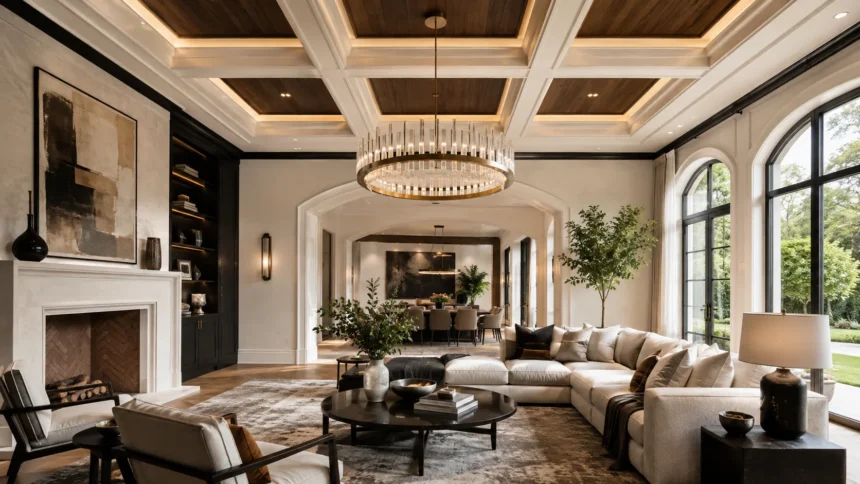
How to Decorate a Ceiling and Make the Whole Room Feel More Designed
The ceiling is often called the fifth wall, yet it is one of the most overlooked surfaces in interior design. Most rooms receive careful attention at eye level while the ceiling is simply painted white and forgotten. Thoughtful ceiling decor ideas can change that completely by adding depth, warmth, pattern, or architectural interest overhead. Even a subtle update can make a room feel more intentional without requiring new furniture. The key is choosing a treatment that supports the proportions and style of the space instead of making the ceiling feel disconnected from everything below.
Decorating a ceiling does not always mean creating something dramatic. A soft contrasting paint color, simple ceiling molding, or one beautiful light fixture can give the room more personality while remaining easy to live with. Larger spaces may support exposed beams, decorative paneling, wallpaper, or coffered details. Smaller rooms can benefit from quieter treatments that draw the eye upward without making the ceiling feel heavy. The best ceiling design ideas respond to scale first and trend second.
The function of the room should influence your choices as well. A bedroom may benefit from a soft painted ceiling that makes the space feel cocooning, while a dining room can handle richer pattern or an eye-catching chandelier. Living rooms often suit beams, molding, or understated texture, while kitchens need finishes that are practical and easy to maintain. When the ceiling treatment relates to how the room is used, it feels like part of the design rather than an isolated decorative experiment.
Lighting is especially important because ceiling decor and light fixtures naturally interact. A decorative medallion can make a chandelier feel more architectural, while recessed lighting can highlight beams or paneling. Cove lighting can emphasize layered ceilings and create softer ambience. Before installing permanent decorative features, think about where lighting, vents, detectors, and electrical access need to remain. A beautiful ceiling should still function comfortably in everyday life.
Most importantly, ceiling decor should connect visually with the rest of the room. Repeat colors, materials, or shapes already present in furniture, flooring, trim, or architectural details. Warm wood beams can relate to wood furniture, while ceiling molding may echo wall paneling or traditional trim. A bold ceiling color can repeat a smaller accent elsewhere in the space. These connections help decorative ceilings feel integrated and thoughtful rather than added purely for effect.
Start With Ceiling Height, Room Size, and Proportion
Before choosing paint, beams, wallpaper, or molding, consider the height of the room. Ceiling treatments that look impressive in a high-ceilinged space may feel overwhelming in a smaller room. Dark colors, deep beams, and heavily layered molding can visually lower a ceiling, which may create intimacy in one space but unwanted heaviness in another. Lighter colors and vertical visual cues can help preserve openness. Understanding proportion makes it easier to choose a treatment that enhances rather than fights the architecture.
Room size matters just as much as ceiling height. A large living room can support broader beams, a generous medallion, or an elaborate coffered design because the visual scale is large enough to balance those details. In a compact bedroom or hallway, a smaller pattern or subtle color shift may be more appropriate. The goal is not to use the most dramatic treatment available. The strongest ceiling decorating ideas are usually those that feel naturally proportional to the room.
Consider the shape of the ceiling too. Flat ceilings offer the greatest flexibility for paint, wallpaper, molding, and paneling, while vaulted ceilings naturally create architectural drama and may need less decoration. Tray ceilings provide built-in opportunities for color contrast, lighting, or molding. Sloped ceilings can become more interesting when treated as part of the wall rather than something separate. Working with the existing geometry often produces a more cohesive result than trying to disguise it.
Look at the room from several viewpoints before deciding where visual emphasis should sit. A ceiling visible immediately from the entrance may deserve stronger treatment than one mostly hidden by low sightlines. In open-plan spaces, the ceiling can also help define different functional zones. A wood treatment over the dining area or a painted section above a seating zone can subtly separate spaces without adding walls. This makes the ceiling a useful tool for both decoration and spatial organization.
Finally, consider how much visual activity already exists below. Rooms with bold wallpaper, patterned rugs, ornate furniture, or large artwork may benefit from a quieter ceiling. Simpler rooms can support stronger overhead details because there is more visual space available. Balance matters more than matching. A successful ceiling interior design considers the entire room as one composition rather than treating the upper surface as a separate project.
Use Paint to Create an Instant Ceiling Feature
Paint is one of the easiest and most affordable ways to transform a ceiling. Instead of defaulting to bright white, consider a softer version of the wall color, a warm neutral, or a contrasting shade that adds personality. Even a small difference in tone can make the architecture feel more intentional. Painting the ceiling is particularly effective because it changes the atmosphere without adding physical bulk. This makes it suitable for both large and small rooms.
A lighter ceiling usually preserves a sense of height and openness. Warm white, pale beige, soft gray, muted blue, or gentle green can introduce subtle color while keeping the room airy. This approach works well in living rooms, kitchens, and bedrooms where you want visual interest without a dramatic statement. Using a slightly lighter version of the wall color can also create a smooth transition between vertical and horizontal surfaces.
Dark ceilings create a different effect. Charcoal, navy, deep green, chocolate brown, or black can make a room feel more intimate and dramatic, especially when the walls are lighter. This works particularly well in dining rooms, media rooms, offices, and bedrooms where a cocooning atmosphere feels appropriate. Good lighting becomes more important with deeper colors because the ceiling will reflect less light. A dark painted ceiling can look sophisticated when the rest of the room has enough contrast and warmth.
You can also paint the ceiling and walls the same color for an enveloping look. This technique removes the hard visual line where the wall meets the ceiling and can make architectural details feel more unified. Mid-tone or muted colors often work particularly well because they create atmosphere without becoming excessively dark. In smaller rooms, this approach can actually feel calmer than a strong contrast between white ceilings and colored walls.
Finish should be considered as carefully as color. Flat or matte paint is commonly used because it hides minor imperfections and avoids unwanted glare. Satin or higher-sheen finishes may emphasize surface irregularities but can also reflect more light and create a distinctive effect in carefully prepared spaces. Always test large samples in both daylight and evening lighting. Ceiling paint ideas can change significantly depending on natural light, bulb temperature, and surrounding wall colors.
Add Wood Beams for Warmth and Architectural Character
Wood beams can completely change the personality of a room by introducing texture, warmth, and a strong sense of structure. They work particularly well in farmhouse, rustic, Mediterranean, transitional, organic-modern, and even contemporary interiors. Exposed beams can make a plain ceiling feel architectural without requiring detailed ornamentation. Depending on their color and spacing, they can either blend gently into the room or become one of its strongest focal features.
Natural wood tones create an inviting contrast against white or pale ceilings. Oak, walnut, reclaimed timber, and similar finishes can connect beautifully with flooring, furniture, or cabinetry elsewhere in the room. The beams do not need to match other wood perfectly. In fact, slight variation often creates a more natural and collected appearance. Repeating a related warm tone elsewhere helps the wood beam ceiling feel integrated.
Painted beams offer another option when natural wood feels too rustic. White beams against a white ceiling can create subtle dimension, while black or charcoal beams add strong graphic contrast in modern spaces. Painted treatments can also suit coastal, cottage, or traditional interiors depending on shape and spacing. The structure itself provides interest even when the color remains restrained. This allows beams to feel architectural rather than purely decorative.
Faux beams can sometimes achieve a similar look without the weight or structural requirements of solid timber. They may be useful when you want the visual effect but do not need actual structural beams. Regardless of material, spacing and proportion should suit the ceiling size. Very thick beams on a low ceiling may feel oppressive, while extremely narrow beams on a large vaulted ceiling can look insignificant.
Lighting, ceiling fans, and vents should be planned around the beam layout. Fixtures positioned between or along beams can make the overall design feel more intentional. Recessed lighting may disappear neatly between darker beams, while a central chandelier can become more prominent when framed by wood. Thoughtful coordination allows decorative ceiling beams to improve both the architecture and overall atmosphere of the room.
Use Ceiling Molding and Medallions for Elegant Detail
Ceiling molding can add architectural character without covering the entire surface. Crown molding creates a finished transition between walls and ceiling, while more decorative trim can frame sections or emphasize symmetry. This approach works particularly well in traditional, transitional, Parisian-inspired, and classic interiors. Even simple molding can make an ordinary room feel more refined because it introduces shadow lines and detail where the wall meets the ceiling.
A ceiling medallion can turn a chandelier or pendant light into a stronger focal point. Traditionally associated with ornate interiors, medallions are now available in both detailed and simplified designs. A clean circular medallion can suit transitional rooms, while carved patterns work beautifully with classic architecture. The size should relate to both the fixture and the overall ceiling area. A medallion that is too small may disappear, while one that is too large can overpower the light fitting.
Painting molding the same color as the ceiling creates a subtle, layered effect. This is useful when you want architectural interest without strong visual contrast. Painting trim in a slightly different shade can make the detail more noticeable, while contrasting colors create a stronger decorative statement. Consider the room’s existing trim, doors, and baseboards so the ceiling molding design feels connected to the wider interior.
Molding can also be used to create geometric ceiling layouts. Simple trim arranged in rectangles or squares can mimic the appearance of traditional paneling without requiring a full coffered structure. This works especially well in dining rooms, bedrooms, and formal living spaces. Keeping the molding depth modest can make the technique suitable for standard ceiling heights where deeper treatments might feel too heavy.
Do not assume decorative molding must always feel formal. Streamlined profiles painted in the same tone as the ceiling can work beautifully in modern interiors. The subtle shadows create dimension while preserving a clean aesthetic. The most successful approach uses molding to reinforce the architecture rather than adding ornamentation simply because the ceiling feels empty.
Try a Coffered Ceiling for Strong Architectural Impact
Coffered ceilings create a grid of recessed panels that can make a room feel substantial and architecturally detailed. Traditionally used in formal interiors, they can also be adapted to transitional and modern homes through simpler profiles and cleaner colors. The repeated pattern introduces rhythm overhead and can help large rooms feel more defined. Because the treatment has considerable visual weight, it works best where ceiling height and room proportions can support it.
Traditional coffered ceilings often use white or painted trim with recessed panels in the same or contrasting color. Dark wood versions create a richer and more classic effect, while simplified white grids can feel lighter. Modern designs may use broad flat beams with minimal ornamentation. The exact style should relate to the architecture below. A highly detailed coffer can feel out of place in a room with otherwise minimal finishes.
Spacing is critical. The grid should relate to the room’s dimensions, lighting plan, and furniture layout. Ideally, recessed lights, chandeliers, or pendants align logically with the coffer pattern rather than appearing randomly positioned inside panels. This level of planning is what makes a coffered ceiling design feel integrated rather than decorative trim added after everything else.
Color can make the ceiling either subtle or dramatic. Using one color across beams and panels creates a quieter architectural effect. Contrasting the recessed sections introduces greater depth and makes the grid more noticeable. Wood centers, painted trim, or even wallpaper inside selected panels can create a customized appearance. However, complex combinations should be used carefully so the ceiling does not overwhelm the room.
Because coffered ceilings involve more construction than simple paint or molding, they should be considered as a longer-term architectural investment. If you like frequently changing your decor, choose a relatively timeless profile and color scheme. Furniture, rugs, and accessories can evolve around it. A well-proportioned coffered ceiling can remain attractive across many interior trends because its appeal comes from architecture rather than surface decoration alone.
Use Wallpaper on the Ceiling for Pattern and Personality
Wallpaper can turn a plain ceiling into an unexpected decorative feature. Florals, geometrics, clouds, botanical prints, stripes, and subtle textures all create different moods when viewed overhead. This technique works particularly well in bedrooms, powder rooms, dining rooms, nurseries, and smaller spaces where you want a memorable design moment. Because the ceiling is less frequently interrupted by furniture or artwork, pattern can sometimes appear even more striking there than on the walls.
The scale of the pattern should match the room. Large motifs can work beautifully in generous spaces because they remain visible from below, while tiny prints may become difficult to appreciate at ceiling height. In compact rooms, however, smaller repeating patterns can create charm without dominating the architecture. Testing a sample overhead helps you understand how the design will actually read from normal viewing distance.
Color also affects how visually close the ceiling feels. Light wallpaper with subtle pattern can create softness without lowering the room, while dark or richly patterned paper produces a more dramatic, intimate atmosphere. Pairing a bold ceiling with relatively calm walls often creates better balance. If both walls and ceiling carry strong pattern, the space may feel visually intense unless that maximalist effect is intentional.
Wallpaper can also highlight specific architectural areas rather than covering the entire ceiling. Inside a tray ceiling, alcove, or coffered panel, pattern becomes a framed decorative detail. This approach can feel more controlled and may require less material. It is particularly useful when you want to experiment with ceiling wallpaper ideas without committing to a fully patterned room.
Installation quality matters because flaws can be noticeable in overhead lighting. Ceiling surfaces should be properly prepared so seams and imperfections remain minimal. If the wallpaper has a strong directional print, consider how the pattern will align with the room’s entrance and furniture layout. A well-planned ceiling wallpaper treatment can make the space feel custom and memorable rather than simply trendy.
Add Paneling or Shiplap for Texture and Depth
Ceiling paneling can introduce texture while maintaining a relatively calm appearance. Tongue-and-groove boards, beadboard, shiplap, and broader wood panels all create subtle linear movement that adds architectural interest. These treatments suit farmhouse, coastal, cottage, transitional, Scandinavian, and organic-modern interiors depending on the material and finish. They are particularly effective in rooms where walls remain simple and the ceiling can carry more texture.
White-painted paneling can make a ceiling feel detailed without darkening the room. The grooves create soft shadows that become more noticeable throughout the day as natural light changes. This makes the ceiling visually interesting even when the color remains neutral. White paneling works especially well in kitchens, porches, bathrooms, and bedrooms where you want character without a heavy material palette.
Natural wood paneling creates a warmer and more immersive effect. Pale timber suits Scandinavian and modern organic interiors, while darker wood can add richness to studies, living rooms, or vaulted spaces. Covering the entire ceiling with wood creates strong visual impact, so surrounding walls and furniture may need to remain simpler. Wood ceiling panels can make large rooms feel more intimate while highlighting natural materiality.
The direction of the boards can influence how the room is perceived. Running planks along the longest dimension may emphasize length, while installing them across a narrow room can visually broaden the space. On vaulted ceilings, boards can follow the roofline and highlight the architecture. These subtle layout decisions make paneling more than a decorative surface; they can also influence visual proportions.
Consider practical factors such as access to lighting, vents, and maintenance before installation. In humid rooms, choose materials and finishes appropriate for moisture. In kitchens, surfaces may need to withstand grease and cleaning. A beautiful ceiling treatment should remain practical over time. When selected thoughtfully, ceiling paneling ideas can add long-lasting character without relying on short-lived decorative trends.
Make Lighting Part of the Ceiling Decor
Lighting is naturally one of the most important decorative elements on a ceiling because fixtures are often positioned at the center of attention. A chandelier, pendant, flush mount, or sculptural fixture can function almost like overhead artwork. Instead of treating lighting as a purely practical necessity, choose a design that relates to the scale and style of the room. One striking fixture can sometimes provide enough character that additional ceiling decoration becomes unnecessary.
Dining rooms are ideal places for statement lighting because the fixture can align with the table below. Oversized pendants, linear chandeliers, and sculptural designs help define the dining zone while creating vertical connection between furniture and ceiling. In living rooms, a central fixture can anchor the seating arrangement, while bedrooms benefit from softer decorative lighting. The correct size is essential because a fixture that is too small can feel visually weak.
Ceiling medallions, beams, and molding can be designed around lighting to create a stronger composition. A chandelier centered within a medallion gains architectural importance, while pendant lights aligned between beams appear intentionally integrated. Recessed lighting can highlight texture without competing visually. This coordination creates a polished ceiling lighting design because decorative and functional elements support one another.
Cove lighting offers a different effect by concealing the light source and allowing illumination to wash across the ceiling. It works particularly well with tray ceilings, layered plaster details, or modern architectural recesses. The indirect glow can make the room feel softer in the evening and emphasize ceiling depth. Dimmable lighting adds flexibility so the space can shift between bright everyday use and relaxed ambience.
Avoid adding too many competing fixtures. A dramatic chandelier, numerous pendants, heavy beams, and decorative spotlights can become visually overwhelming when combined. Decide what should be the focal point and let other lighting support it. Good ceiling decor depends on hierarchy. When the lighting and architectural details work together, the room feels designed rather than merely filled.
Use a Tray Ceiling to Add Depth Without Overdecorating
Tray ceilings feature a recessed central section that naturally creates an opportunity for decorative emphasis. Rather than leaving both levels the same color, you can highlight the inner area with paint, wallpaper, wood, or lighting. This makes the ceiling feel layered while retaining a relatively clean appearance. Tray ceilings work particularly well in bedrooms, dining rooms, and living rooms where a subtle sense of formality or architectural detail is appropriate.
Color is the easiest way to emphasize the recessed section. A darker inner shade can create depth, while a lighter center maintains openness. Using the same color family at different intensities produces a sophisticated effect without strong contrast. If the walls already contain a distinctive accent color, repeating a softer version overhead can create cohesion. Tray ceiling paint ideas work best when the color supports the overall palette.
Wallpaper inside the central recess can create a stronger statement. A botanical print, metallic texture, subtle geometric design, or grasscloth-style surface can turn the tray into a framed feature. Because the surrounding border naturally contains the pattern, it feels more controlled than wallpapering an entire flat ceiling. This technique works especially well in dining rooms and bedrooms where you want a clear decorative focal point.
Lighting can make tray ceilings more atmospheric. Concealed LEDs within the perimeter create a floating effect and emphasize the ceiling’s depth. A chandelier or pendant centered within the recessed section strengthens symmetry. Recessed lighting around the outer area can provide practical illumination while preserving the central feature. Combining decorative and functional lighting carefully makes the architecture more noticeable after dark.
Keep the treatment simple if the tray already contains several layers or detailed molding. Adding strong pattern, contrasting colors, multiple lights, and additional ornamentation at once can make the ceiling feel unnecessarily busy. Choose one main decorative idea and allow the existing architecture to provide the rest. Restraint often makes a tray ceiling feel more luxurious because the details have room to be appreciated.
Decorate Vaulted Ceilings Without Losing Their Sense of Space
Vaulted ceilings already create dramatic architecture, so decoration should usually emphasize their height rather than compete with it. Exposed beams, wood paneling, oversized lighting, or carefully placed color can highlight the upward lines and make the room feel even more intentional. Because the ceiling occupies a larger visual area than a standard flat surface, material choices have a stronger effect on the overall atmosphere.
Wood beams are particularly effective because they trace the roofline and create visual structure. Dark beams against a light ceiling produce strong contrast, while pale wood creates a softer organic look. If the ceiling is very high, larger beam proportions may be necessary so they remain visually substantial from floor level. Small details can disappear when viewed across a tall space.
Paneling can also emphasize the shape of the vault. Running wood boards along the slope creates continuous lines that draw attention upward. White-painted paneling adds texture while maintaining brightness, whereas natural wood creates warmth and intimacy. In large open-plan rooms, the ceiling material can help define the space without adding physical divisions.
Lighting needs careful scale in tall rooms. A fixture that looks substantial in a showroom may appear tiny once suspended beneath a vaulted ceiling. Larger chandeliers or clusters of pendants can better occupy the vertical volume. The hanging height should connect visually with furniture below while still celebrating the height above. Well-proportioned lighting is one of the most important vaulted ceiling decor ideas.
Avoid feeling obligated to decorate every section of a vaulted ceiling. The architecture itself already provides strong visual interest. One or two carefully chosen features may be enough. If you add beams, keep wall decor restrained. If you use a dramatic chandelier, allow open ceiling space around it. Preserving some visual simplicity helps the ceiling maintain the expansive quality that makes it special.
Choose Ceiling Decor That Matches Your Interior Style
Modern interiors usually benefit from clean ceiling details rather than excessive ornamentation. Simple beams, linear paneling, recessed lighting, painted ceilings, or subtle geometric molding can provide character while maintaining a streamlined look. Warm neutrals, pale wood, charcoal accents, and matte finishes work particularly well. The ceiling should reinforce the room’s architecture without becoming visually cluttered.
Traditional interiors can support crown molding, ceiling medallions, coffered patterns, decorative trim, and classic chandeliers. These details create depth and connect naturally with paneled walls, rich wood, and formal furniture. However, traditional does not have to mean heavily ornate. Simplified molding painted in one color can preserve architectural character while making the room feel fresher and more current.
Farmhouse interiors often suit exposed beams, white shiplap, natural wood paneling, and simple statement lighting. Using authentic-looking materials is more important than adding excessive rustic decoration. Warm timber against a light ceiling creates enough texture without requiring signs, themed accessories, or distressed finishes everywhere. Farmhouse ceiling ideas feel most timeless when they rely on structure and material rather than novelty.
Organic-modern spaces work beautifully with pale timber, textured plaster, warm paint, and softly integrated lighting. The emphasis should remain on natural materials and calm visual rhythm. A wood-clad ceiling or several simple beams can create warmth while maintaining contemporary lines. Avoid overly shiny finishes or complicated molding if the rest of the room depends on soft, tactile simplicity.
Eclectic and maximalist interiors allow more freedom with wallpaper, bold paint, decorative pattern, and contrasting trim. The ceiling can become a major expressive surface when the rest of the room already embraces color and layering. Even then, some visual connection is helpful. Repeating a wall color, furniture tone, or pattern element overhead helps ceiling decor styles feel intentional instead of random.
Common Ceiling Decorating Mistakes to Avoid
One common mistake is choosing a treatment that is too visually heavy for the room. Large beams, dark paint, deep coffers, and ornate molding may look beautiful in spacious interiors but can overwhelm low or compact rooms. Always consider ceiling height and floor area before selecting the scale of decorative features. A subtle treatment often creates more character than an oversized one that dominates everything below.
Another mistake is ignoring lighting and utilities until after decorative work begins. Ceiling fans, smoke detectors, vents, sprinklers, recessed lights, and electrical access all need to remain functional. Installing paneling or molding without planning around these elements can lead to awkward cutouts and expensive adjustments. Create the technical layout first, then design the decorative treatment around it.
Using too many ceiling ideas at once can also create visual confusion. A strong paint color, beams, wallpaper, molding, and multiple decorative lights may all be attractive individually, but together they can compete. Select one main feature and perhaps one supporting detail. This hierarchy helps the ceiling feel intentional. Stylish ceiling decor depends on editing as much as creativity.
Ignoring the walls and furniture is another problem. A dramatic ceiling may look disconnected if none of its colors or materials appear elsewhere. Repeat at least one element subtly below eye level. Wood beams might connect with a coffee table, while a painted ceiling can relate to upholstery or artwork. These small relationships help unify the room without making every element match exactly.
Finally, avoid decorating the ceiling simply because current trends make it seem necessary. Some rooms genuinely look best with a clean, simple surface and one beautiful fixture. Architecture, natural light, and furnishings may already provide enough character. The most successful design choice is not always the most decorative one. Add detail only when it improves the room’s balance, atmosphere, or sense of identity.
Conclusion: Turn the Fifth Wall Into a Real Design Feature
The ceiling has far more design potential than many rooms take advantage of. Paint, beams, molding, wallpaper, paneling, lighting, and architectural details can all transform a plain overhead surface into something memorable. The best approach begins with the room’s dimensions and function rather than a decorative trend. When scale and proportion are right, even a simple change can make the entire space feel more complete.
Paint remains one of the easiest places to begin because it requires relatively little physical alteration. A soft tonal shift can create subtle depth, while a darker shade can make bedrooms and dining rooms feel more intimate. For stronger architectural impact, beams, coffers, molding, and paneling introduce texture and structure that can remain attractive for many years.
Lighting should always be considered part of the overall ceiling composition. Chandeliers, pendants, recessed fixtures, medallions, and cove lighting can either enhance architectural details or compete with them. Planning these elements together creates a more polished result. A ceiling should look intentional both during the day and when artificial lighting becomes the main source of illumination.
Material and color choices should also connect with the rest of the interior. Repeat wood tones, paint colors, shapes, or finishes already present below so the ceiling feels integrated with the room. You do not need perfect matching. Small visual relationships are enough to make the design feel cohesive and thoughtfully layered.
Ultimately, the best ceiling decor ideas that add instant character combine proportion, architecture, lighting, and personal style. Whether you choose a painted ceiling, warm wood beams, elegant molding, patterned wallpaper, or one statement fixture, focus on creating a feature that belongs naturally in the room. A well-designed ceiling can make even a familiar space feel more distinctive, finished, and memorable.
Frequently Asked Questions
What is the easiest way to decorate a ceiling?
Paint is usually the simplest option because it can add color and depth without structural changes. You can also use a statement light fixture or simple molding for quick visual impact.
What ceiling decor makes a room look more expensive?
Well-proportioned crown molding, ceiling medallions, wood beams, paneling, and carefully chosen lighting can create a more refined look. Good installation and restraint matter more than using expensive materials.
Can you decorate a low ceiling?
Yes. Use light paint, subtle molding, slim lighting, or shallow panel details that add character without visually lowering the ceiling. Avoid overly deep beams or bulky architectural features.
Is a dark ceiling a good idea?
A dark ceiling can create a cozy, sophisticated atmosphere in bedrooms, dining rooms, and media spaces. It works best when the room has enough light and the darker color is balanced by lighter elements below.
What are the best ceiling decor ideas for a modern home?
Modern homes often suit wood slats, simple beams, matte paint, clean molding, recessed lighting, and subtle paneling. Keep the design streamlined and coordinate it with materials already used elsewhere in the room.